-7.4 C
New York
Home Blog Page 678

Qatar Petroleum enters into a 1.25 MTPA long term LNG supply agreement into Bangladesh

0

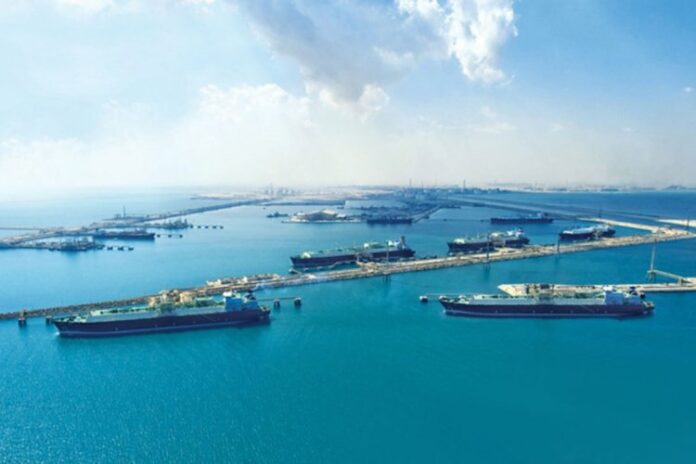
Qatar Petroleum entered into a long term Sale and Purchase Agreement (SPA) with Vitol for the supply of 1.25 million tons per annum (MTPA) of liquefied natural gas (LNG) to Vitol’s final customers in Bangladesh.

Under the agreement, LNG deliveries will commence later this year, further demonstrating the State of Qatar’s continued commitment to meeting the growing needs of its customers for reliable LNG supplies.

His Excellency Mr. Saad Sherida Al-Kaabi, the Minister of State for Energy Affairs, the President and CEO of Qatar Petroleum, welcomed the signing of the agreement and said:

“We are pleased to sign this SPA with Vitol, and we look forward to commencing deliveries under the SPA to further contribute to meeting Bangladesh’s energy requirements.” 

H.E. Minister Al-Kaabi concluded his remarks by saying:

“This SPA also highlights our strong ability to meet the requirements of our partners and customers. We are proud to continue to be the supplier of choice for our customers and partners around the globe.”​

Gasum to supply LNG to Wasaline and to Wärtsilä’s new technology hub

0

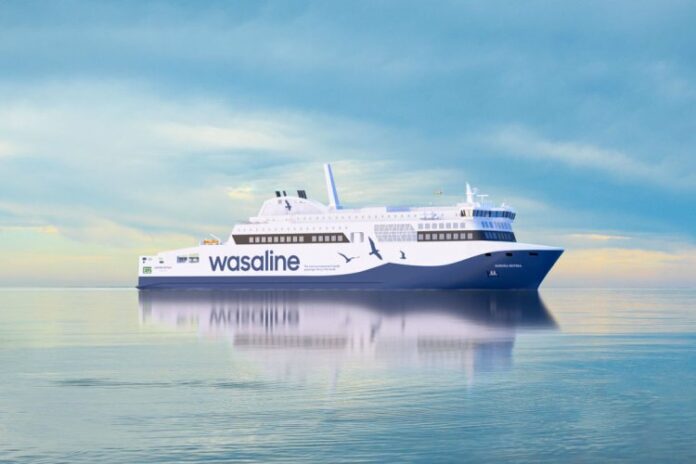
Nordic energy company Gasum has entered into an agreement with the City of Vaasa, NLC Ferry Oy and Wärtsilä Finland Oy to supply liquefied natural gas (LNG) to Wasaline, which operates the Vaasa-Umeå ferry route, and for use in Wärtsilä’s new Smart Technology Hub. Gasum is to build a local LNG customer terminal in Vaskiluoto from where tanker trucks will take LNG to customer sites.

Gasum is to build a customer terminal in Vaskiluoto in Vaasa, from where the company will flexibly supply LNG to cargo and passenger shipping company Wasaline’s new LNG-fueled ferry M/S Aurora Botnia, which will start operating later this year, and to Wärtsilä’s new Smart Technology Hub, a place for research, product development and engineering, which will be completed in the fall. Gasum will also be able to serve other customers through the terminal.

Tomas Häyry, Mayor of Vaasa, says:

“In the City of Vaasa’s Energy and Climate program, the ambition is for the city to be carbon-neutral in the 2020s. The city is committed to the goal of reducing emissions between different actors in the urban area. It’s good news that this cooperation helps us to increase the availability of gas across the Vaasa region. Our cooperation is also an example of how we in Vaasa are combining our expertise in the energy industry and creating cleaner energy solutions.”

Vesa Riihimäki, Director, Delivery Management, Wärtsilä Finland, says:

“It’s good news that an LNG customer terminal is to be built in Vaskiluoto. We believe that the use of liquefied natural gas will increase both on land and at sea and that demand for more environmentally friendly fuels will show further growth. At Wärtsilä’s Vaasa site, we develop LNG engines and other maritime innovations for example.”

Peter Ståhlberg, CEO of Wasaline, says:

”The new ferry, M/S Aurora Botnia, which will operate the Vaasa-Umeå route, is nearing completion. Our ship will be the most eco-friendly passenger and car ferry currently under construction. The ship’s engines will run on liquefied natural gas and moving forward also on renewable biogas. The ferry will accommodate 800 passengers and have a cargo capacity of 1,500 lane meters for trucks and cars. Sustainability is increasingly important to our customers and also to the entire Vaasa region.”

Tommy Mattila, Sales director, Industry, Gasum, says:

“We are continuously developing new ways to reduce emissions together with our partners and customers. We want to help our customers to lower their own carbon footprint. Gas delivers significant cost-effective options to reach emission reductions both in maritime and road transport. This project will strengthen availability and enable customers to smoothly switch to using biogas.”

LNG is the most environmentally friendly maritime transport fuel and meets all existing and future IMO environmental requirements. Use of LNG makes it easy to switch to using renewable liquefied biogas (LBG) since its distribution uses the existing LNG infrastructure. LBG has the same properties as LNG and is suitable as a fuel for road and maritime transport and for industrial use.

Siemens Gamesa receives an order for Courseulles-sur-Mer offshore wind project

0

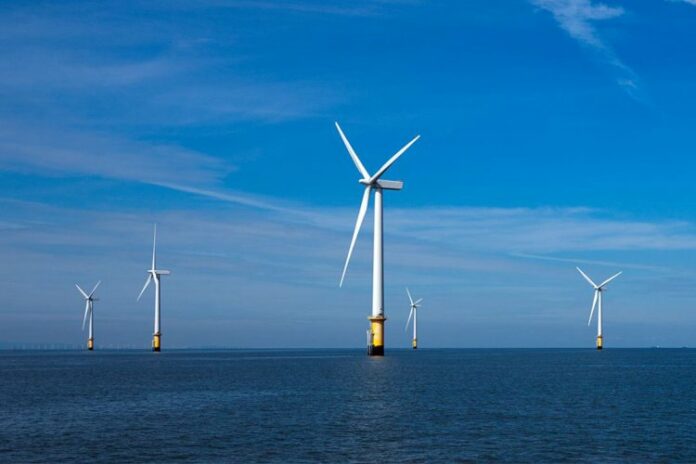
Leading France’s wind power revolution, Siemens Gamesa Renewable Energy has been awarded the firm order from the EDF Renewables-Enbridge-wpd consortium for the 448 MW Courseulles-sur-Mer offshore wind power project.

Located 10 km off the Bessin coast, the project brings the total capacity awarded to Siemens Gamesa by the consortium in France to approx. 1 GW. Both the wind turbine nacelles and blades for the Courseulles-sur-Mer project are scheduled to be produced at the Siemens Gamesa facility currently under construction in Le Havre.

Marc Becker, CEO of the Siemens Gamesa Offshore Business Unit comments:

“We are delighted to again be the partner of choice for EDF Renewables, Enbridge, and wpd, and to deliver our second firm French offshore order to them. As we unlock more of the future of wind in France, we thank them for their vote of confidence in our technology, people, and ambitious growth plans in the country. Our facility in Le Havre and the Courseulles-sur-Mer project including service will provide local jobs and value for years to come.”

The 448 MW project will rely upon the stable technology of the SWT-7.0-154 Direct Drive offshore wind turbine, a part of the world’s most installed offshore turbine fleet. Installation and commissioning of the Courseulles-sur-Mer project is scheduled for 2024.

Together with the 497 MW Fécamp offshore wind power project signed with the EDF Renewables-Enbridge-wpd consortium in 2020, Siemens Gamesa has now signed firm orders with them for approx. 1 GW, further cementing the company as the leader in the French offshore wind power industry. Siemens Gamesa has an additional firm order in France for the 496 MW Bay of Saint Brieuc offshore wind power plant with Ailes Marines. Siemens Gamesa has furthermore been named preferred supplier for the 496 MW Dieppe le Tréport and 496 MW Yeu Noirmoutier offshore wind projects.

The Siemens Gamesa facility under construction on the Quai Joannès Couvert in the Port of Le Havre will be the first in the world to manufacture complete offshore nacelles and blades under one roof. It is the largest industrial project in the French renewable energy industry to date and will be used to supply Siemens Gamesa offshore wind projects in France and potentially abroad. Start of operation for the plant is scheduled to take place in the first half of 2022.

Expected to create approximately 750 direct and indirect jobs when fully operational, particularly in the fields of composite materials, mechanical assembly, and logistics, the facility has already begun recruiting employees.

Over 1,000 Siemens Gamesa Direct Drive offshore wind turbines have been installed in all major offshore wind markets globally. They include the UK, Germany, Denmark, The Netherlands, Belgium, Taiwan, and the USA, among others. Furthermore, confirmed orders for more than 1,000 additional Offshore Direct Drive turbines have been received, for these markets and new offshore markets.

Danfoss releases ABS-certified display for marine market

0

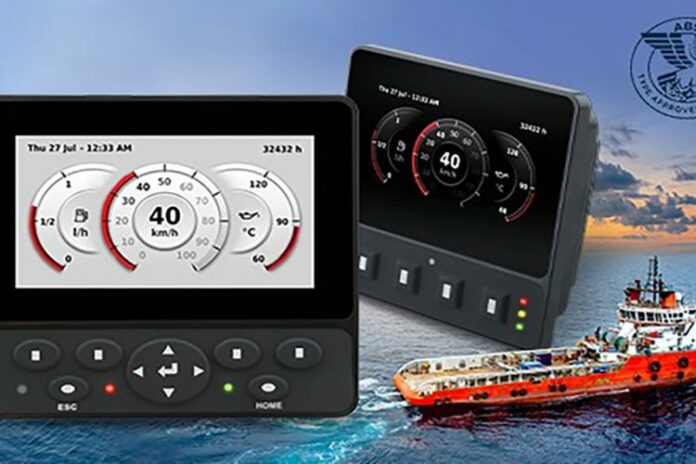
Danfoss Power Solutions has introduced its first display specifically for marine applications.

Ankit Shrivastava, Program Manager for Marine, Oil and Gas at Danfoss Power Solutions, said:

“After years specializing in making components dirt-proof, dust-proof, weather-proof, vibration-resistant and much more, we are excited to offer the same rugged durability for marine markets.”

“We have expanded our rigorous testing process — verifying operational, physical and environmental requirements — to include certification from the American Bureau of Shipping.”

Key features include:

  • Built and certified for marine environments — This marine display from Danfoss is certified for the marine market with the ABS Type Approval, meaning customers will not have to independently test and document its performance. It also meets strict electromagnetic emissions requirements to ensure no radio interference, meaning it can be seamlessly integrated into any vessel. Our testing standards and certifications significantly streamline time-to-market.
  • IP66/67 compliant — This display meets the most rigorous requirements for operating in harsh conditions. Whether used on the deck or in the engine room, the DM430M is built to perform.
  • Superior viewability in all lighting conditions — The optically-bonded and anti-glare coated screen is optimized to provide outstanding viewability at all times of day. Using the integrated light sensor, the DM430M display series can be programmed to automatically switch between day and night modes and adjust brightness from high-peak sunlight to the darkest hours at sea.
  • Customizable screen — Increased control over what information is displayed and how it looks also increases overall flexibility. Ship-owners can use one product in multiple places and determine the best inputs based on the application. As a PLUS+1®-compliant product, this display can be programmed with easy-to-use screen editing features and a widget library, all done on the latest edition of the PLUS+1 Platform.
  • Streamlines electrification integration — As more and more shipbuilders integrate electrification systems, there are more digital components to monitor and control. The DM430M is designed to work seamlessly with digital systems, as up to five extra inputs can be added without an additional I/O module. Plus, it’s engineered to pair with the extremely efficient marine DC system from Danfoss Editron.

Vattenfall awards Van Oord 4-year O&M framework contract

0

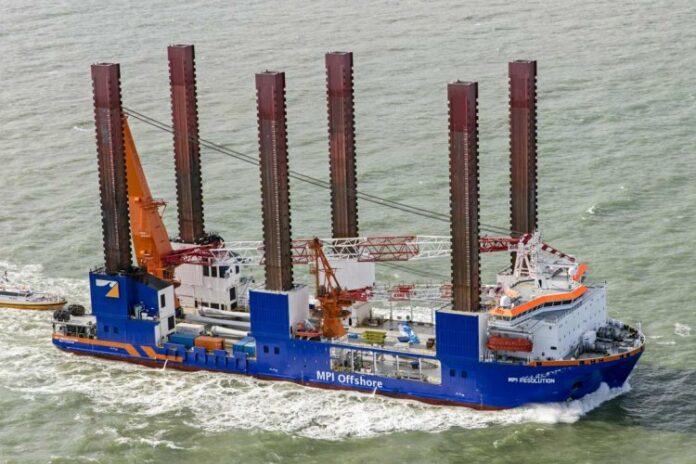
Working through its MPI Offshore organisation, Van Oord will provide jack-up and associated lifting services for main component exchanges across Vattenfall’s portfolio of offshore wind farms. 

The contract includes planned and unplanned maintenance campaigns for approximately 600 Vattenfall wind turbine generators (WTGs). The parties both have the option of extending the contract for another year.

Catrin Jung, Head of Offshore Wind Vattenfall, said:

“Van Oord is a trusted partner that can help us improve our O&M activities even further. Guaranteed availability of jack-ups for main component exchanges will ensure faster response times and ultimately reduce downtime and lost revenue. We look forward to extending our relationship and will continue working together to achieve Vattenfall’s ambition of making fossil-free living possible within one generation.”

Vattenfall is a market leader in offshore wind, with 10 offshore wind farms in Sweden, Denmark, Germany, the Netherlands and the UK. During the contract period, its offshore portfolio will be extended to 622 turbines with a combined capacity of 2.6 GW. Wind power is a growing pillar in Vattenfall’s strategy. Its ambition is to operate 15 GW of commissioned offshore wind capacity by 2030.

Arnoud Kuis, Managing Director Van Oord Offshore Wind, said:

‘We are very proud that we have been selected by Vattenfall for this 4-year framework contract. This award builds upon what is already an excellent relationship between Vattenfall and Van Oord and fits right in with our strategic views of the market. We look forward to continuing to provide the level of service that Vattenfall have come to expect.’

MPI Offshore is responsible for all Operations & Maintenance (O&M) activities in the European offshore wind market. In 2018, this UK-based specialist in offshore wind installation became part of Van Oord. For several years now, MPI Offshore has delivered O&M services across Vattenfall’s entire portfolio of offshore wind farms in Europe. Offshore installation vessel MPI Resolution will be the main vessel executing the works.

Abu Dhabi Maritime and ADNOC Seal Waterways Safety Agreement

0

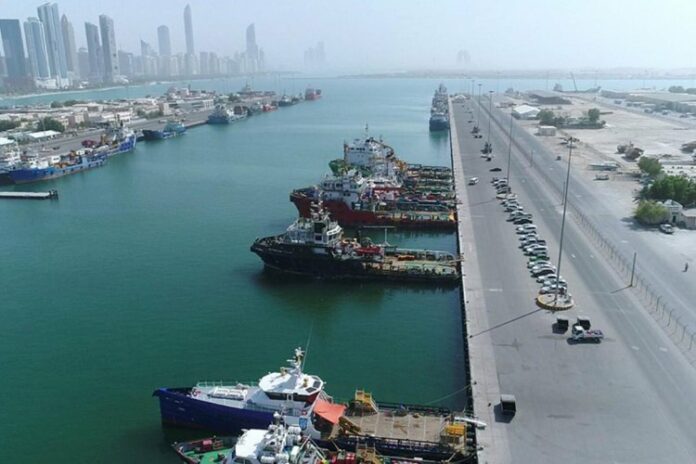
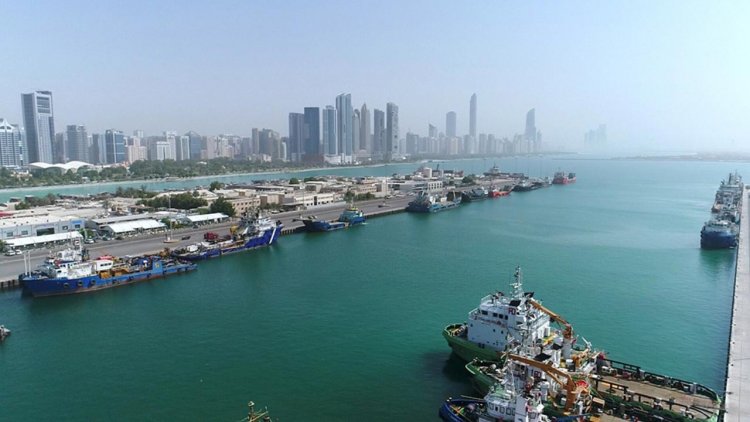
In a joint effort to boost maritime safety and to enhance Abu Dhabi’s maritime regulations, Abu Dhabi Maritime and the Abu Dhabi National Oil Company (ADNOC) have signed a five-year agreement with the aim of enhancing the safety of Abu Dhabi’s waterways.

The agreement will allow for enhanced exchange of information, data and expertise concerning the regulation and management of maritime activities, infrastructure developments and facilities across Abu Dhabi’s waterways.

Under the terms of the agreement, both parties will implement robust and responsive monitoring, risk-mitigation, business continuity and crisis management systems through coordinated development plans, maritime activities, as well as marine traffic and infrastructure projects within Abu Dhabi’s waters.

Captain Saif Rashid Al Mheiri, Managing Director of Abu Dhabi Maritime, said:

“Abu Dhabi Maritime’s co-operation agreement with ADNOC is another important step in boosting our emirate’s position as a global maritime centre by promoting sustainability as a critical driver in achieving economic success.“

Working closely with a leading and a highly accomplished national driver of economic activity such as ADNOC, allows our maritime community to optimise environmentally friendly and efficient rules and regulations to govern the safe passage of maritime traffic within our ports and across our waterways.” 

ADNOC is a leading contributor to Abu Dhabi’s maritime sector providing shipping, maritime, port, logistics and oil field services for its customers by operating dedicated petroleum ports located in Jebel Dhanna, Ruwais, Das, Zirku and Mubarraz.

Captain Jasim Al Khamiri, Senior Vice President for the Petroleum Ports Authority unit at ADNOC, said:

“We are pleased to work in partnership with Abu Dhabi Maritime as we aim to secure safe waterways and to ensure sustainable traffic flow, particularly for products from the oil and gas industry.”

The measures outlined in the agreement will assist Abu Dhabi Maritime in fulfilling its mandate to provide an effective maritime regulatory environment – one that is responsive to the needs of Abu Dhabi’s maritime community and backed by state-of-the-art services, infrastructure, health, safety and quality standards.

Captain Al Mheiri said:

“As the primary custodian of all of our emirate’s waterways and marine ecosystems, Abu Dhabi Maritime is committed to unlocking the full potential of our maritime domain, one that not only fulfils the needs of our commercial and recreational sectors, but also one that can be enjoyed for generations to come.”

Equinor: Planning for shutdown of the Veslefrikk field

0

The field was discovered in 1981, and when it came on stream in 1989, Veslefrikk’s development concept, as a first on the Norwegian continental shelf, consisted of a floating production unit.

The partnership has invested some NOK 20 billion in Veslefrikk, and the field’s productive life has been extended several times. When the plan for development and production (PDO) was submitted the field was expected to be shut down as early as in 2009.

Geir Sørtveit, Equinor’s senior vice present for Operations West, says:

“Veslefrikk was a technologically pathbreaking development which has paved the way for new, lighter offshore structures after the era of concrete giants in the North Sea.”

“In recent years a formidable job has been done to increase the efficiency at Veslefrikk, extending the field’s productive life and maximizing value creation. Once the field is shut down Veslefrikk will have produced more than 400,000,000 barrels of oil equivalent. This is equivalent to the energy demand for 22 years from all of Norway’s single-family houses, and has created great value for Equinor, the partners, owners and society.”

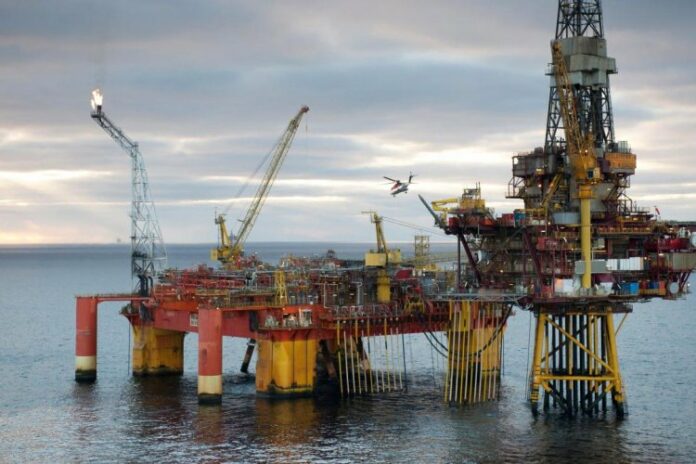
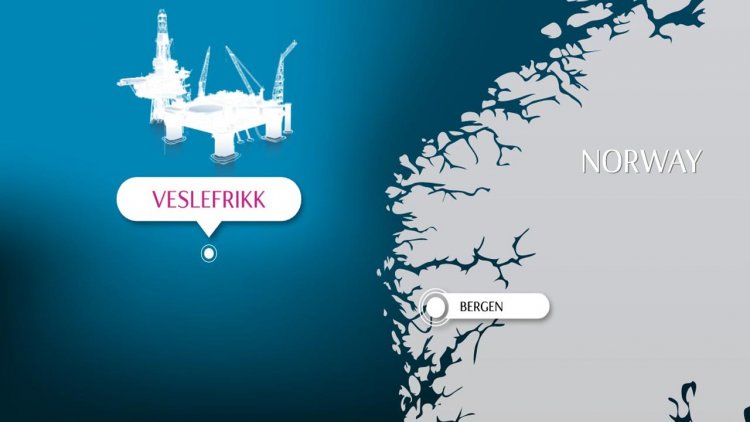
The floating unit Veslefrikk B is a semi-submersible production platform tied in to the fixed wellhead platform Veslefrikk A. In 2002 the field also became the host of Huldra with a shared control room and crew, in addition to processing condensate from this now decommissioned field. Veslefrikk is operated from Sandsli outside Bergen, where it is organised together with the operation of the Oseberg area.

The Veslefrikk development was important to the development of regulations for the use of floating installations in the petroleum industry, which have seen a sharp increase. Veslefrikk B was originally the West Vision drilling rig, owned by Smedvig in Stavanger. The rig was purchased by the then Statoil for conversion to petroleum production, and Smedvig won the contract for staffing maritime crews and drilling services.

An environmental impact assessment has been conducted and a decommissioning plan for Veslefrikk was sent to the authorities in the autumn of 2020. The newly established Field Life Extension (FLX) business area has the corporate responsibility for implementing decommissioning projects for Equinor on the Norwegian continental shelf.

Camilla Salthe, Equinor’s senior vice president for FLX, says:

“As the biggest operator we have much infrastructure that must be gradually decommissioned on the Norwegian continental shelf. We have solid project capabilities in the area, and have developed good plans for removing Veslefrikk in a safe and efficient manner.”

“Priority number one for a successful removal project is having no injuries, serious incidents, or emissions to the environment.”

Before Veslefrikk B can be brought ashore, wells must be plugged, platform systems must be shut down and cleaned, and oil and gas export pipelines must be cleaned and disconnected. The plugging of wells started in January this year. The well plugging will be performed under existing framework contracts, where Archer has the contract for rig operations, and Baker and Ardyne deliver most other drilling and well services. A total of 24 wells will be plugged from the drilling system at Veslefrikk.

Veslefrikk B will be towed to shore for dismantling in the autumn of 2022 and Veslefrikk A is scheduled to be removed in 2025/26.

Three large-size contracts associated with the removal work are scheduled to be awarded in the first half of 2021:

a) The removal and dismantling of Veslefrikk A, which is an “Engineering, Preparation, Removal and Disposal” (EPRD) contract that covers all work in connection with the removal of the platform and subsequent dismantling and recycling.
b)     The dismantling and recycling of Veslefrikk B.
c)     Work on the seabed in connection with export pipeline cleaning and disconnection.

In addition, contracts for the planning, management and implementation of the towing of Veslefrikk B to shore will be established in the same way as in 1999, when Veslefrikk B was at Stord for upgrading.

1.27 million euros for development of the cruise terminal in Bremerhaven

0

The Port Committee has paved the way for the project and voted unanimously in favour of the relevant resolution submitted by the Senator for Science and Ports. The planning costs are estimated at 1.27 million euros.

Senator Claudia Schilling stated:

“Cruise shipping is a topic of great economic and emotional significance in Bremerhaven. I am confident that this tourist sector will enjoy immense growth again after the end of the pandemic. This investment is intended to help us exploit the economic potential for the port and the city even more effectively.”

The plans envisage that the central section of the building ensemble will be demolished and rebuilt. In addition to the actual terminal, the complex will also include an integrated car park and several storeys of office space.

Senator Schilling explained:

“We want to satisfy the demands of a modern cruise terminal in the best possible way. Moreover, in accordance with the requirements of the Coalition Agreement, the detailed plans will specify that the new building and subsequent operations have to satisfy the latest ecological standards and strengthen Bremerhaven’s role as a tourism and event location.”

The entire planning process is to be completed by 2022. Subsequent planning phases will also include a study to ascertain how the cruise shipping business as a whole and at Bremerhaven in particular will develop in light of the Covid pandemic and the period that follows. Senator Schilling added:

“These structural and organisational measures will, of course, have to be taken into account when building the new terminal to ensure we will also be able to respond in future to the circumstances of a pandemic, such as distance and hygiene requirements.”

Lakes isolated beneath Antarctic ice could be more amenable to life than thought

0

The work could even provide insights into similar lakes beneath the surfaces of icy moons orbiting Jupiter and Saturn, and the southern ice cap on Mars.

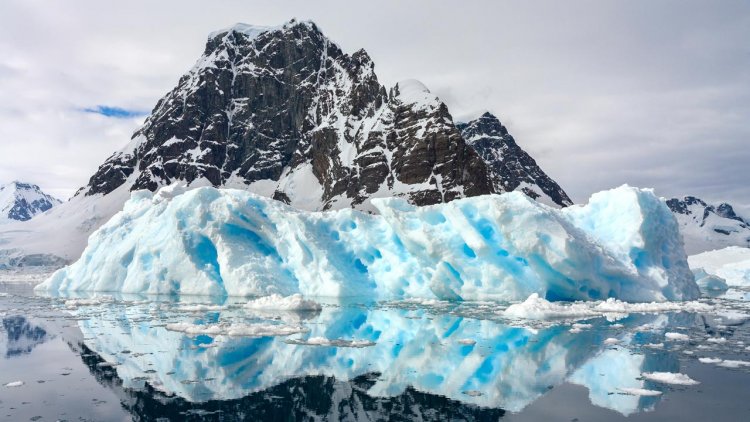
Lakes can form beneath the thick ice sheet of Antarctica where the weight of ice causes immense pressure at the base, lowering the melting point of ice. This, coupled with gentle heating from rocks below and the insulation provided by the ice from the cold air above, allows pools of liquid water to accumulate.

More than 400 of these ‘subglacial’ lakes have been discovered beneath the Antarctic ice sheet, many of which have been isolated from each other and the atmosphere for millions of years.

This means that any life in these lakes could be just as ancient, providing insights into how life might adapt and evolve under persistent extreme cold conditions, which have occurred previously in Earth’s history.

Expeditions have successfully drilled into two small subglacial lakes at the edge of the ice sheet, where water can rapidly flow in or out. These investigations revealed microbial life beneath the ice, but whether larger lakes isolated beneath the central ice sheet contain and sustain life remains an open question.

Now, in a study published in Science Advances, researchers from Imperial College London, the University of Lyon and the British Antarctic Survey have shown subglacial lakes may be more hospitable than they first appear.

As they have no access to sunlight, microbes in these environments do not gain energy through photosynthesis, but by processing chemicals. These are concentrated in sediments on the lake beds, where life is thought to be most likely.

However, for life to be more widespread, and therefore easier to sample and detect, the water in the lake must be mixed—must move around—so that sediments, nutrients and oxygen can be more evenly distributed.
In lakes on the surface of the Earth, this mixing is caused by the wind and by heating from the sun, causing convection currents. As neither of these can act on subglacial lakes, it could be assumed there is no mixing.

However, the team behind the new study found that another source of heat is sufficient to cause convection currents in most subglacial lakes. The heat is geothermal: rising from the interior of the Earth and generated by the combination of heat left over from the formation of the planet and the decay of radioactive elements.

The researchers calculated that this heat can stimulate convection currents in subglacial lakes that suspend small particles of sediment and move oxygen around, allowing more of the water body to be hospitable to life.

Lead researcher Dr. Louis Couston, from the University of Lyon and the British Antarctic Survey said:

“The water in lakes isolated under the Antarctic ice sheet for millions of years is not still and motionless; the flow of water is actually quite dynamic, enough to cause fine sediment to be suspended in the water. With dynamic flow of water, the entire body of water may be habitable, even if more life remains focused on the floors.”This changes our appreciation of how these habitats work, and how in future we might plan to sample them when their exploration takes place.”

The researchers’ predictions may soon be tested, as a team from the UK and Chile plan to sample a lake called Lake CECs in the next few years. Samples taken throughout the depth of the lake water will show just where microbial life is found.

The predictions could also be used to generate theories about life elsewhere in the Solar System, as co-author Professor Martin Siegert, Co-Director of the Grantham Institute—Climate Change and Environment at Imperial, explains:

“Our eyes now turn to predicting the physical conditions in liquid water reservoirs on icy moons and planets. The physics of subglacial water pockets is similar on Earth and icy moons, but the geophysical setting is quite different, which means that we’re working on new models and theories.

“With new missions targeting icy moons and increasing computing capabilities, it’s a great time for astrobiology and the search for life beyond the Earth.”

Orcelle Wind: Wallenius Wilhelmsen’s first full-scale wind-powered RoRo ship

0

The transoceanic shipping industry might be the most carbon efficient mode of transport, but the fact remains that it still accounts for nearly 3% of global man-made greenhouse gas emissions.

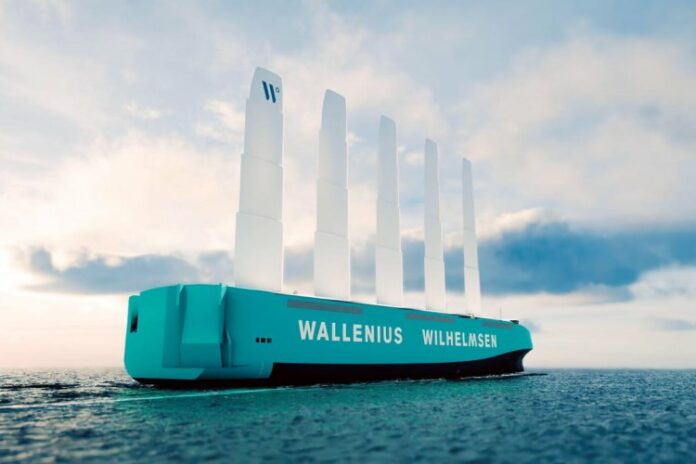
Wallenius Wilhelmsen has launched its the most significant sustainability project to date: the world’s first full-size wind-powered pure car and truck carrier.

Craig Jasienski, CEO of Wallenius Wilhelmsen, says:

“Since 2008, we have been able to reduce CO2 intensity by 33%, which is a significant step. But the journey towards zero emissions requires great strides forward. We believe Orcelle Wind is one of them.”

Once completed, Orcelle Wind will have the capacity to carry 7,000 vehicles at speeds of 10-12 knots under sail – a speed that can be increased with the help of an onboard supplemental power system. In addition to cars, the wind-powered vessel will also be able to transport heavy machinery and breakbulk products.

Erik Noeklebye, EVP and COO of shipping services at Wallenius Wilhelmsen, says:

“Orcelle Wind will be our technical and operational testbed for zero emission innovation, where we can assess and develop various zero-emission fuels and technology.” 

Plans are in place to have a design ready for contracting with a shipyard by mid-2022, with the finished vessel expected to set sail by 2025, subject to a comprehensive viability evaluation. To pass muster, Orcelle Wind must satisfy regulatory standards relating to safety and technical performance. Operational needs must also be meet, such as the suitability for deployment on multiple global trade lanes and the ability to manoeuvre in port in bad weather.

Jasienski adds:

“It will take the dedicated collaboration of our world-class customers, partners and employees to make such a bold initiative as Orcelle Wind succeed. More than just evaluating the concept, we are committed to making this a success.”