-9.4 C
New York
Home Blog Page 675

Deltamarin introduces the new LNG-powered Kielmax Container Feeder design

0

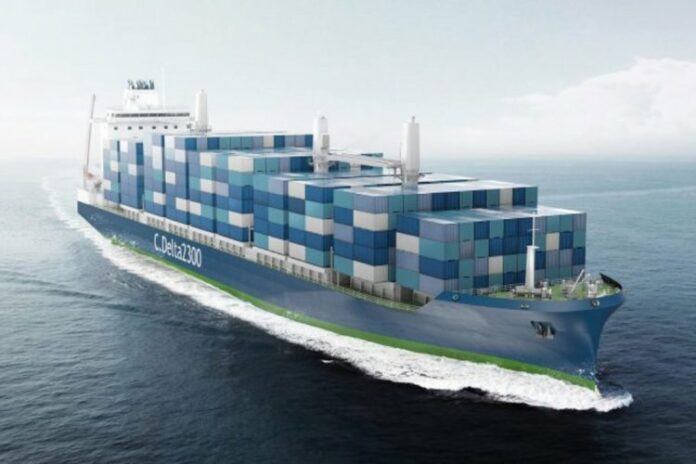
Deltamarin has introduced the new state-of-the-art LNG-powered Kielmax container vessel of the C.Delta series, C.Delta2100. 

This new design is based on extensive research and development work to establish the best-in-class design in terms of cargo capacity, flexibility and fuel economy, as well as the proven performance of the built Polar Code C.Delta2150 design. It provides a flexible platform for a whole series of designs, which can be adapted to various customers’ requirements as a result of several optional feature studies. The platform design is “future-proof”, taking into consideration possibilities to use alternative fuels to reduce carbon footprint or even zero-emission power production.

The choice of the main dimensions (length, breadth, block coefficient in combination with a larger propeller) in total results in a higher speed respective in less power demand at the design speed/contract point compared with reference designs.

The platform design includes ice class 1A for unlimited Baltic Sea operation. The vessel is equipped with lashing bridges to access reefer containers.

The C.Delta2100 provides a container capacity of 2,100 TEU in four cargo holds and on deck. The increased cargo hold breadth improves stability in the fully laden condition. This results in an increased utilisation rate of about 75% (1,595 TEU) of nominal container intake in the homogeneous loading condition at scantling draught carrying a’ 14t TEU containers. Furthermore, intake can be optimised to a specific cargo profile and even further improved by considering route-specific loading.

Container sizes L 20’/40’/45’x B 8’/2500mm x H 8’6/9’6, able to accommodate pallet wide, HC containers in holds (max. 5 tiers) and on hatches, 45’ container bays arranged on some of hatch covers as well as one bay in the hold.

The high flexibility of the C.Delta2100 allows pallet-wide 40’ container stowage as well as three tiers of high cube containers in the cargo hold without losing container slots. Additionally, a high number of reefer plugs allows smart stowage and the reduction of unnecessary container movements. These features provide efficient and fluent stowage.

Extensive effort has been focused on the C.Delta2100 hull form development to ensure low resistance combined with high propulsion efficiency. This included dozens of CFD calculations and three series of model tests at the Hamburg Ship Model Basin (HSVA). The performance has been proven in C.Delta2150 sea trials.

The daily main-engine fuel oil consumption using LNG (tier III) 30.8 t/day + pilot oil 0.8 t/day at a 18-knot service speed results in superior fuel efficiency of less than 0.015t LNG/TEU/day at design draft.

A low deadweight per TEU ratio of about 15.2 DWT/14t TEU is thus achieved, which is commonly gained only in larger container ships. The vessel complies with EEDI Phase 3.
IMO launches a year of action for seafarers

0

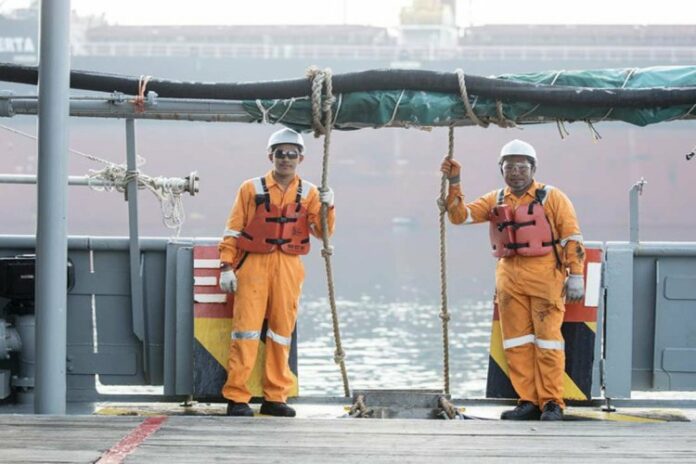
IMO has chosen to make 2021 a year of action for seafarers, who are facing unprecedented hardship due to the COVID-19 pandemic, despite their vital role as key workers for global supply chains. The World Maritime Theme for 2021, ‘Seafarers: at the core of shipping’s future’ seeks to increase the visibility of seafarers by drawing attention to the invaluable role they play now and will continue to play in the future.

The COVID-19 pandemic has placed extraordinary demands on seafarers, with hundreds of thousands of men and women stranded on ships for months beyond their original contracts, unable to be repatriated due to national travel restrictions. A similar number of seafarers are unable to join ships and earn a living. This crew change crisis, which has been ongoing for nearly a year, is a humanitarian emergency that threatens the safety of shipping.

Launching the World Maritime theme on 16 February, IMO Secretary-General Kitack Lim said more Governments must step up to end the crew change crisis.

Mr Lim said:

‘We all must do better to support our brave professionals who continue to deliver global trade. The dedication and professionalism of more than one and a half million seafarers worldwide deserve our great admiration and gratitude – but most importantly, immediate action. A first step would be for all countries to designate seafarers as key workers, as outlined in the United Nations General Assembly Resolution adopted in December.’

Key worker designation is crucial to ensure seafarers can travel to and from ships and will facilitate access to priority vaccination. To date, 55 IMO Member States and two Associate Members have designated seafarers as key workers (click here for the full list).

Throughout the year, the World Maritime Theme will also put the spotlight on other issues related to the human element of shipping, including the safety and security of life on board ships, seafarers’ wellbeing, and the importance of ensuring an appropriately trained and qualified workforce, ready to meet the challenges and opportunities of digitalization and automation.

The focus on seafarers is also in line with the work carried out by the Organization, since the beginning of the pandemic and before. ‘At IMO, seafarers have always been at the centre of all our work – be it in the area of safety, maritime security, or environmental protection,’ IMO Secretary-General said.

As part of its efforts to put seafarers at the heart of discussions, IMO is launching a series of profiles in which seafarers express their views on their work and the future of shipping.

In the first profile, Chief Engineer Matt Forster (United Kingdom) highlighted the importance of making seafarers more visible, particularly in the context of the crew change crisis.

Mr Forster said:

‘We’re the pillars of the supply chains around the world. Trade is coming by sea. But because people are not aware of us, we don’t get the support we need. We want people to know that it is the men and women within our industry that provide them with everything they need for their day-to-day lives. It’s not for praise, it’s to assist us in being recognised, to help us to get home, to see our families, to be with our loved ones, and to continue this supply chain going.’

Seafarers are vital to supply chains, delivering 80% of global trade, including food, medicine and energy. The World Maritime Theme for 2021, ‘Seafarers: at the core of shipping’s future’, will address many of the issues confronting the maritime workforce, including recruitment and retention of seafarers, diversity, training, environment protection and digitalisation of shipping. The 2021 theme is also a continuation of, and is directly linked to the 2020 theme ‘Sustainable Shipping for a Sustainable Planet’ to highlight the role that seafarers will play in ensuring the sustainable future for shipping.

Waiting for future alternative fuels ‘not an option’, says SEA-LNG

0

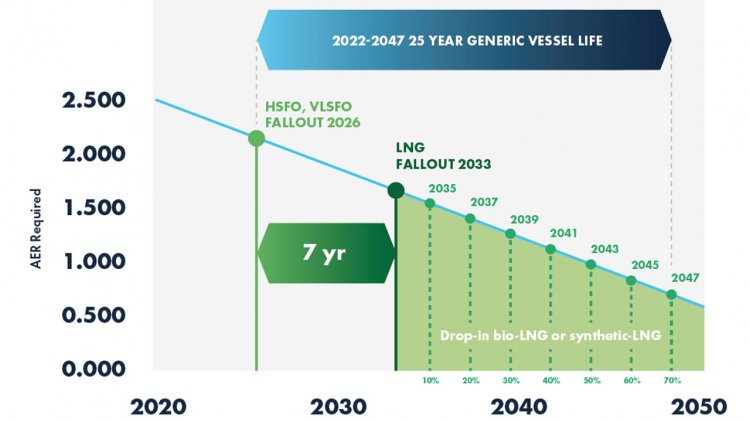
New analysis from SEA-LNG, the coalition for accelerating LNG as a marine fuel, has determined that for every 10% of bio-LNG dropped in and blended with LNG as a marine fuel, a vessel can achieve two extra years’ compliance with the Annual Efficiency Ratio (AER) curve used to secure preferable funding under the Poseidon Principles. This extends the average seven-year additional competitive advantage for Poseidon Principle loans achieved with LNG alone.

The analysis compares LNG plus bio-LNG from a zero-carbon, sustainable source with conventional vessel fuels such as HFO, VLSFO and MGO. Bio-LNG is fully compatible with existing LNG infrastructure and technologies and increasingly recognised as a sustainable fuel that can be ‘dropped in’ and blended with LNG.  Therefore, it represents one of the most viable pathways to decarbonisation currently available to owners.

LNG fuel delivers greenhouse gas (GHG) reductions of up to 21% Well-to-Wake and up to 28% Tank-to-Wake. This means that LNG vessels perform well according to Poseidon Principles’ funding criteria, which were instigated by financial institutions to improve strategic decision-making and shape a better future for the shipping industry and society.

The Poseidon Principles measure progress towards these objectives using an AER scoring. This follows an ever-tightening decarbonisation trajectory index to 2050, requiring a vessel’s aggregate carbon emissions intensity to improve. This measure is intended to align with and incentivise the IMO’s goals of reducing the total annual GHG emissions by at least 50% by 2050.

John Hatley, SEA-LNG investment committee chairman, commented:

“As banks increasingly align with green finance principles, LNG offers benefits for emissions reduction and provides an ‘extended compliance runway’ for Poseidon Principle sustainability linked loans.  An investor preserves more favourable financing terms compared to conventional marine fuels such as HSFO, VLSFO, and MGO.  The use of bio-LNG as a drop-in fuel may extend this runway even further- an additional two years for every 10% dropped-in.  This means lower ship emissions now and a compliance extension that yields long term competitive advantage.”

The recent CE Delft study concludes that bio-LNG is a scalable solution for the maritime sector. Estimated sustainable global supplies potentially exceed the future energy demand of the global shipping fleet.  It also showed that bio-LNG will likely be commercially competitive relative to other low- and zero-carbon fuels.

This analysis is supported by a recent report by the IEA on the outlook for biogas and biomethane. The IEA report concludes that feedstocks available for sustainable production of biogas and biomethane are huge, but only a fraction of this potential is used today. For biomethane to realise its potential as a major zero-emissions energy carrier, policies should remove barriers to scaling and create a single, cross-border market for biomethane and bio-LNG. Policy will also play a key role in allocating biomass resources to the hardest to abate sectors such as shipping, heavy goods transportation, and aviation.

Bio-LNG has particular advantages when it is produced from domestic and agricultural waste. The process can capture methane that would otherwise be vented into the atmosphere, resulting in a fuel that is not just zero GHG emissions but has the potential for negative emissions. By assisting with the reprocessing of waste materials, bio-LNG can support the circular economy and help abate yet another global concern; waste management. The potential GHG reduction benefits from capturing and reusing the global economy’s waste streams are significant and need to be considered in any serious discussion of alternative fuels. Ensuring a level playing field for assessing alternative fuel options will require Well-to-Wake analysis being implemented by regulators including the IMO.

Peter Keller, Chairman of SEA-LNG, added:

“As GHG emissions are cumulative, the decarbonisation challenge only gets tougher the later we take steps to address it. Waiting for options is not an option. The Industry must act now using LNG and bio-LNG that we know provide benefits today and into the future.”

“With the introduction of bio and synthetic variants, LNG not only provides a pathway to decarbonisation in its own right, but also provides the physical infrastructure and asset base that can be used by other alternative fuels, when and if they become commercially viable.”

METIS refined its cloud-based data acquisition and ship performance reporting solution

0

METIS Cyberspace Technology has refined its cloud-based data acquisition and ship performance reporting solution to offer shipping’s first tool to predict the trade-off between emissions reduction and debt servicing for ships financed under the Poseidon Principles.
 
Designed to incentivise maritime de-carbonisation, the Poseidon Principles offer a framework for financial institutions to lend in line with International Maritime Organization goals to halve greenhouse gas emissions by 2050. 20 institutions have signed up, representing over US$150 billion in loans – more than a third of shipping’s global financing. Assessing whether ships merit further investment to keep pace with the IMO average efficiency ratio (AER) underpinning the Principles will be key but, to date, exact emissions targets have not been forthcoming.      
 
Serafeim Katsikas, Chief Technical Officer, METIS says the data analytics specialist has nonetheless created the first viable methodology allowing owners to predict whether their ships would benefit most from investment, a change in operating profile or disposal in response to advancing emissions rules. The unique METIS Poseidon Principles Emissions INDEX could even help owners outperforming AER seek to lower borrowing costs.

Katsikas says:

“The owner calculates an individual ship’s standard deviation from the AER target, then considers the impact of investments or operating guidance on overall costs including outstanding debt. These calculations also offer a prediction on the costs of servicing debt in the context of emissions restrictions and therefore an assessment of the ship’s viable lifespan.”

If the output is straightforward, the solution’s algorithms draw on hundreds and even thousands of data points, depending on the vessel, while artificial intelligence and machine learning support a ship-specific METIS Poseidon Principles Index sensitive to the realities of operations. Today, over 250 ships use the METIS cloud platform, which combines automated data acquisition with high-grade analysis for fleet managers, chartering departments and ship personnel.

Katsikas says:

“We have built on the METIS infrastructure, drawing on signals from the ship and external sources to create structured and meaningful indexes for the Poseidon Principles. Following the recent launch of METIS Charter Party Agreement ship performance monitoring, we are bringing another maritime game changer to market. Already, a pilot has seen one owner conclude that, while some of its ships may never need investment to cut emissions and others need action now or at a future date, while two should be disposed of immediately.”

An owner facing suboptimal AER can also use the METIS Index to identify the impact of different shortcomings on ship performance, Katsikas says. In its next phase METIS would add its widely used scenario-based analysis to predict the impact of individual technology upgrades.  

Katsikas says:

“The machine learning METIS deploys retrains automatically every month and evaluates itself every seven days, so we can find out the correlation between weather, hull fouling, power use, fuel efficiency and so on. This is invaluable for evaluating new technologies, but also for voyage analysis for correcting common errors.”

IMO regional pollution centre assists with oil spill incident in Israel

0

The IMO-administered Regional Marine Pollution Emergency Response Centre for the Mediterranean Sea (REMPEC) is assisting the competent authorities of Israel with technical expertise regarding the beaching of a large quantities of tar balls on the Israeli shoreline.  

On Wednesday 17 February, REMPEC received a request of assistance from the competent authorities of Israel, with regards to the beaching of a large quantities of tar balls, on the Israeli shoreline.

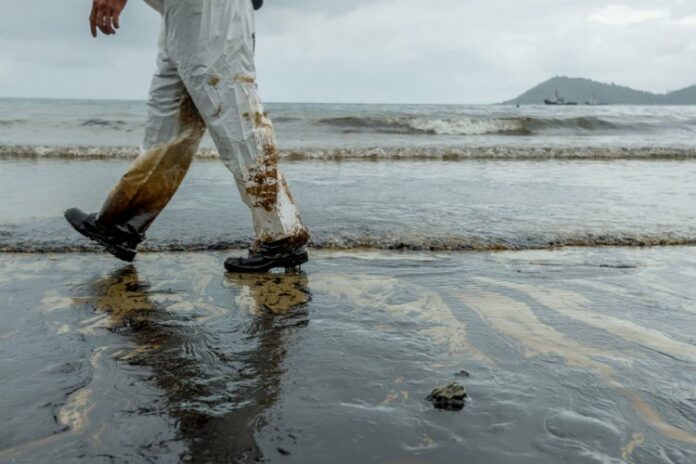
Most of the pollution has already reached the shores. As of 23 February 2021, 1,000m3 of tar balls were collected. 
The cause of the pollution is yet to be identified. 

On behalf of Israel, REMPEC liaised with the Maritime Support Service (EMSA) and the Emergency Response Coordination Centre (ERCC) to obtain satellite image of possible source of pollution.

REMPEC invited the Eastern Mediterranean countries to report any pollution in the last three weeks. No pollution was reported by countries who responded. 
Based on identified potential source of pollution using satellite images, and Authentication Information System (AIS) data, provided by the EMSA Maritime Support Service, 10 vessels were found in the vicinity of the possible original position of the spill. Further investigations are ongoing.

REMPEC activated the Mediterranean Assistance Unit, to obtain results of forecasting model from the  Mediterranean Operational Network for the Global Ocean Observing System (MONGOOS), with a view to assessing the potential impact to neighbouring countries.

The Centre is also in contact with the Lebanese Competent Authorities, following reports of pollution of the Lebanese shoreline.  

WE Tech to supply its energy solutions to four new LPG carriers

0

WE Tech Solutions Oy will deliver its market leading permanent magnet shaft generator solution that will decrease fuel consumption, cut carbon emissions, and reduce operational costs for the new vessels.

The shaft generator solution comes with frequency drive technology and can produce all required electrical power needed for the vessel over a wide main engine speed range. This gives substantial fuel savings and reduction of maintenance cost by reducing auxiliary generator operation. 

Mr Martin Andtfolk, Sales Manager of WE Tech Solutions, says:

“Our solution is very compact and fits perfectly to this type of gas carriers. With permanent magnet shaft generator technology, the energy efficiency of the solution reaches unmatched levels in the marine industry.”

The solution builds on WE Techs system integration platform, used for easy integration with other control systems on board of the vessel, also has an intelligent redundancy feature which minimises the risk for a blackout when the shaft generator is the only power source online for producing electrical power.

Mr Martin Andtfolk says:

“This further minimises the need for running auxiliary engines and thus also further cuts carbon emissions.”

KVH partners with Smart Ship Hub for KVH Watch Maritime IoT Solution

0

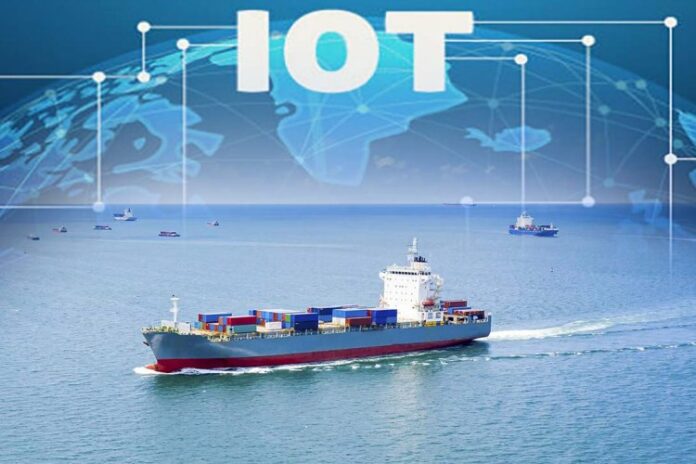
KVH Industries, Inc., has announced that remote vessel and voyage management platform Smart Ship© Hub is now a KVH Watch® Solution Partner and will offer KVH Watch® services as part of its wide range of remote technical and operational management solutions.

The Smart Ship Hub platform provides performance advisory and predictive diagnostics for vessel performance optimization as well as remote video-based maintenance and surveys and a wide range of related services that rely on real-time data feeds.

Joy Basu, CEO of Smart Ship Hub, says:

“The pillars of Smart Ship Hub’s services include remote tracking, monitoring, and providing actionable insights to our customers so their vessels operate as safely and efficiently as possible. We look forward to using KVH Watch connectivity to enable video, image, and real-time machine data that provides situational awareness and the most accurate assessment of vessel condition at any moment.”

Sven Brooks, senior director of IoT business development for KVH, says:

“It is exciting to see the possibilities for operational and cost benefits that a platform such as Smart Ship Hub can produce for maritime businesses. KVH Watch will enable Smart Ship Hub to have access to the real-time data that will make their digital platform all the smarter and will allow them to conduct troubleshooting sessions to solve critical issues at sea. More importantly, it will allow SmartShipHub to deploy more digital services and features than ever before as KVH Watch removes the technical constraints and limitations imposed by the traditional satellite connection onboard.”

Getting information from a vessel to shore is essential for bringing the maritime ecosystem into the digital age. Real-time data from the vessel’s equipment is the starting point for performance optimization. However, the ship’s bandwidth is constantly contested by other users, so there are data limits that prevent an IoT service company from scaling its digital business properly. Furthermore, this limited bandwidth poses a bottleneck for any required video troubleshooting. There needs to be high-speed Internet connectivity to enable video troubleshooting while the vessel is at sea, which saves time and money in port. Network management and cybersecurity issues must also be addressed as shipowners often restrict access for external parties. Therefore, a dedicated IoT connectivity solution is critically important for reducing cyber risks by keeping OT (operational technology) data flow separate from the vessel’s IT (information technology) data flow. Satellite connectivity designed for IoT is the key to being able to provide these services while the vessel is at sea and out of range of cellular signals.

KVH Watch is an IoT Connectivity as a Service solution that provides Flow, secure 24/7/365 machine-to-cloud satellite connectivity for remote monitoring of onboard equipment plus the ability to perform on-demand Remote Expert Interventions using video, voice, or text via KVH’s global HTS network. KVH Watch is designed for maritime equipment manufacturers, multicard service providers, and shipyards seeking affordable monthly subscription-based connectivity that L-band and cellular services cannot deliver at deep sea.

KVH is a mobile tech innovator that provides connectivity solutions for commercial maritime, leisure marine, and land mobile applications on vessels and vehicles, including the award-winning TracPhone® and TracVision® product lines, the global mini-VSAT BroadbandSM network, KVH Watch maritime IoT solutions, and AgilePlans® Connectivity as a Service (CaaS). The company’s KVH Media Group provides news, sports, and entertainment content with such brands as NEWSlink™ and SPORTSlink™.

Innovation site Borssele Wind Farm Site V fully commissioned

0

Borssele V features two Vestas 9.5 MW turbines, generating sufficient energy to provide renewable energy to 25,000 Dutch households. 

Borssele site V has been designated as an innovation site, situated within site III of the Borssele Wind Farm Zone. 

To contribute to the energy transition towards renewable energy in the Netherlands and to ensure a cost-efficient fulfilment of the 2030 renewable energy targets, several innovations are incorporated at the Borssele Wind Farm Site V. It is the first time anywhere that a submerged Slip Joint has been used on a full-sized offshore wind turbine on a fully commercial basis. The design and manufacturing of the Slip Joint were certified by DNVGL in the autumn of 2019. At the Borssele V Site, technologies such as Thermally Sprayed Aluminium (TSA), Impressed Current Cathodic Protection (ICCP) optimisation and oval cable entry holes are also incorporated. The seabed surrounding the two Borssele V wind turbines is fitted with Eco-friendly scour protection. This sustainable technology is used to explore how nature and renewable energy generation can be mutually enhancing. Oysters will be placed on the protective layer of rock on the seabed to improve biodiversity and the natural habitat for aquatic wildlife.

Erik de Boer, Managing Partner Investri, said:

‘We are extremely pleased to have finished the construction phase of our project on time, within budget and with a seamless implementation of the technical innovations. This would not have been possible without the strong cooperation from our construction partners Van Oord and Vestas and with respect to the grid connection, TenneT. Our applied innovations will not only contribute to a further reduction of LCOE of Offshore Wind but also improve the Health & Safety profile of the industry.’

By testing and demonstrating these innovations the Borssele site V contributes to lowering both the LCOE (Levelised Cost Of Energy) and the environmental impact of offshore wind farms. Two Towers also entered into a partnership with Dutch energy company Vandebron. This partnership means that consumers can purchase their renewable electricity directly from this project.

Niels Jongste, Managing Director Green Giraffe, said:

‘Through the deployment of several important design improvements, in particular the slip joint, Two Towers plays an important role in further reducing the LCOE of offshore wind. Supporting partners in implementing their innovative projects is in our DNA. Green Giraffe is proud to have contributed to this exciting project and congratulates all parties involved in reaching this important milestone’.

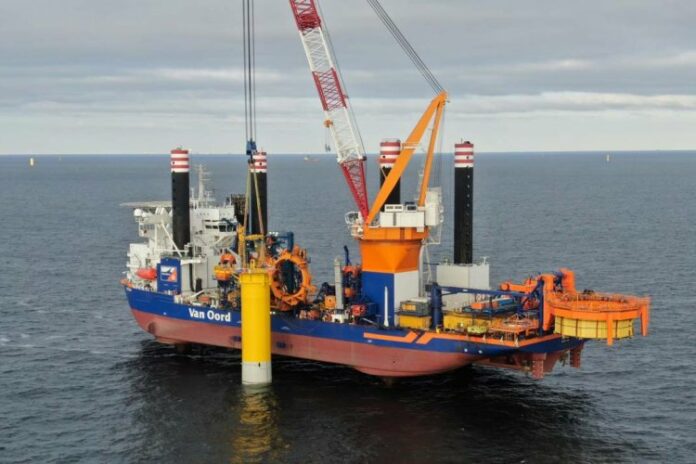
Van Oord was contracted as the Balance of Plant contractor for this project. The project has been completed on time and within budget during the COVID-19 pandemic. Van Oord deployed a wide range of equipment at the project, including offshore installation vessel Aeolus, the trencher Dig-It and cable-laying vessel Nexus. All of the innovations at the Borssele Site V have been developed by Van Oord in cooperation with other research partners. The Slip Joint is a full in-house design by Van Oord.

Jan-Willem Elleswijk, Director Van Oord Offshore Wind, said:

‘We are very proud to have reached this milestone. Our team did an excellent job and the good cooperation with Blauwwind, our neighbours at Borssele offshore windfarm III & IV, was of great importance for the execution of this project.’

Rolls-Royce secures UK MOD funding for innovative technology to support naval autonomy

0

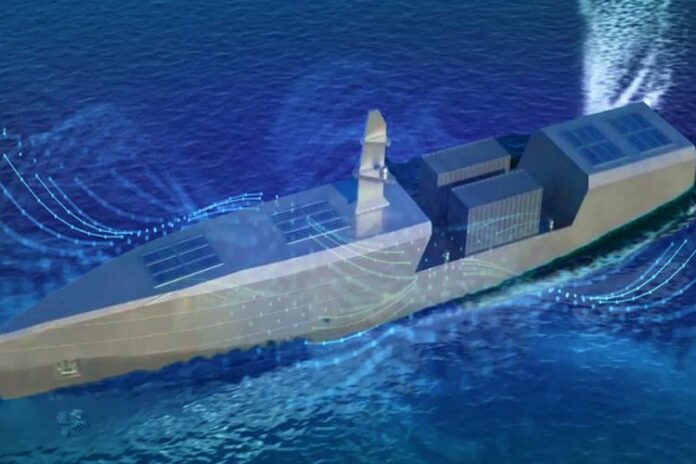
The Artificial Chief Engineer® technology – an autonomous machinery control system which allows Naval vessels to undertake long endurance missions with less human interaction.

Developed by Rolls-Royce, Artificial Chief Engineer® is a critical enabler for autonomous missions by acting as the equivalent of the engineering department responsible for the health and the operation of an unmanned vessel’s machinery. Navies intend to increase their use of optionally-manned and unmanned vessels to project power further for less cost by reducing reliance on manpower, allowing higher-risk or longer-endurance missions, and by lowering the procurement and operating costs of future platforms.

The funding to continue the development, has been awarded under the UK MOD’s Defence and Security Accelerator Intelligent Ship Phase Two programme, which is used to de-risk and evaluate technologies and approaches to enhance the armed forces’ technical advantage.

Rapid growth in automation, autonomy, machine learning and artificial intelligence (AI) has prompted the need to investigate how human-machine teaming can effectively take place. This 16-month programme aims to investigate how effective human-AI collaboration can be best exploited to improve decision-making and planning within complex operating environments.

Ben Thorp, Programme Executive for Naval Electrical, Automation and Controls, Rolls-Royce Defence said:

“This is incredibly good news for our Artificial Chief Engineer capability, which we launched at DSEI in 2019. Our involvement in this funding programme, certainly strengthens our position with the UK MOD for Unmanned Surface Vessel enablers. This funding will also increase the technical maturity of Artificial Chief Engineer for further applications across the breadth of the marine market, both Naval and Commercial where we are seeing increasing levels of demand for this type of technology.”

Artificial Chief Engineer is an on-board, secure, decision-making control system designed to intelligently operate the machinery of lean-manned and unmanned naval vessels. The technology makes condition-based decisions about how best to operate the machinery – including the engines, propulsion system, electrical network and fuel system – using algorithms to optimise the ship for maximum efficiency, lowest noise, top speed or to preserve damaged equipment as required by the ship’s mission. This reduces the workload of remote operators and allows increased mission and system complexity in future unmanned ship designs.

Intelligent Ship is a Defence Science and Technology Laboratory (Dstl) project to develop novel and innovative technologies and concepts to facilitate the use of intelligent systems within future platforms, with potential for utilisation across defence. The aim is to de-risk and evaluate technologies and approaches to enable revolutionary future platform, fleet, and cross-domain concepts to enhance UK military advantage.

ITF: Fiji government must step in over ferries scam, rights violations

0

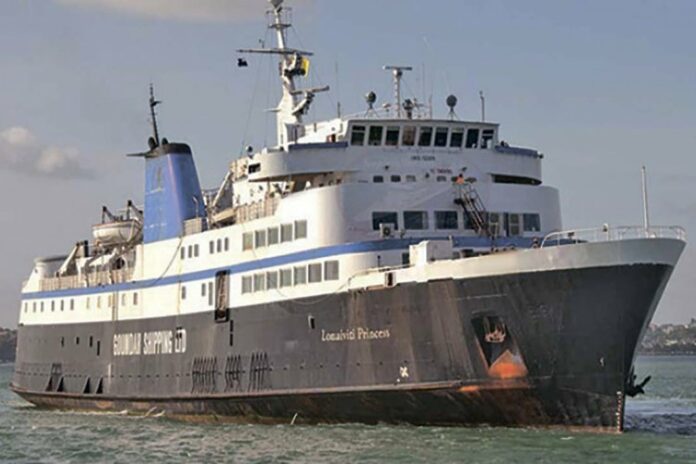
Goundar Shipping tricked more than 20 Filipino seafarers into flying to Fiji to operate and maintain its fleet of passenger and cargo ferries with promises of decent wages and conditions. When they arrived, the company informed the seafarers that they would be paid 60-70 percent less than what they were promised.

With many of the seafarers unable to afford return tickets, they agreed to stay on with the company with fresh promises of repatriation following an additional year of work. The company then said that flights and quarantine costs were too expensive due to Covid, and refused to honour its obligations to get the weary seafarers home.

Sarah Maguire, an International Transport Workers’ Federation (ITF) Inspector based in Australia, said:

“Goundar Shipping has scammed these seafarers in to coming thousands of kilometres across the Pacific to help make George Goundar a small fortune. Not content with underpaying these workers by as much as 70 percent of what they promised them, Goundar Shipping has been keeping them as virtual slaves by refusing to send them home as agreed.”

Maguire has been working on the case for the last few weeks. She said that Goundar Shipping has orchestrated one of the worst ‘double-booking’ seafarers scams she had seen in the industry. The consequence of the underpayments was indenturing the affected crew to work for Goundar for months, even years, beyond their initial contracts, she said.

Maguire said:

“Right now, many of Fiji’s ferries are being operated by workers who don’t want to be there. They haven’t wanted to be there for more than a year, but they can’t break free from the trap that Goundar Shipping has set for them with its underpayments and lies about flights home. These workers just want to see their families, they want to be free.”

By February 2021, many of the Filipino seafarers were now more than 18 months over their initial contracts and are desperate to get home. When three of the seafarers told the company that they wanted take leave to travel to speak to union representatives about their rights and options to get home, the company fired them.

Being sacked by the employer who brought them to Fiji meant the workers were instantly made homeless without any support networks. They spent their first night sleeping on a dock in a remote port town, before making their way back to Suva. The seafarers are still homeless and relying on the support of local trade unions and individuals.

Maguire said:

“Goundar shipping sacked these workers because they dared to ask ‘how can this nightmare end?’. This company has now been exposed for tricking these workers and ripping off their wages for more than a year. Instead of owning up, paying back the wages, and getting the crew on the first flight home – Goundar has doubled down on being a nasty, law-breaking employer.”

Maguire said the ITF was now calling on the Fijian government to intervene – both to end Goundar’s ongoing seafarer scam, but also to force the company to pay for the flights home of the three seafarers left stranded by the company’s sacking:

“We want to see Goundar Shipping punished for scamming these seafarers, ripping off their wages, and effectively keeping them as slaves. We call on Fiji to intervene and make an example of George Goundar’s empire of exploitation.”

“The Fijian government should suspend Goundar Shipping’s licence to operate until the company settles all its outstanding obligations to its workers, including its responsibilities to arrange and pay for all flights home. If the government doesn’t act, it will have a growing number of homeless seafarers to take care of on its streets.”

Fiji is also currently in consultation with the UN’s International Labour Organization over how best to put into local law the provisions of the Maritime Labour Convention, which it signed up to in 2014. The convention is often described as the ‘seafarers’ bill of rights’.