-12.4 C
New York
Home Blog Page 671

EPS, OCI, and MAN partner to adopt methanol and ammonia as marine fuel

0

Eastern Pacific Shipping (EPS) have announced that it has signed a Memorandum of Understanding (MOU) with OCI N.V. (OCI) and MAN Energy Solutions (MAN) to develop methanol and ammonia as marine fuels to aide in industry-wide decarbonisation and environmental preservation efforts.

The partnership involves using select conventional vessels from EPS’ existing tanker fleet that use MAN engines to be retrofitted, allowing them to be powered by methanol and ammonia which will be supplied by OCI. Also, EPS will construct newbuild vessels with MAN engines powered by the same two alternative marine fuels. OCI intends to charter the first retrofitted vessel from EPS. 

The announcement is in line with EPS’ agnostic approach to its alternative marine fuel programme.

EPS CEO Cyril Ducau said:

“EPS is proud to partner with industry-leaders OCI and MAN with a shared vision to push our industry towards decarbonisation and environmental preservation. As a leading tonnage provider, EPS has taken a firm stance that sustainability begins with accountability. This means we have a responsibility to implement emission lowering solutions available today while simultaneously developing solutions for tomorrow. Converting our existing conventional fleet to burn methanol creates a unique opportunity to continue lowering our carbon footprint significantly and rapidly. In the meantime, developing ammonia-fuelled conversion and newbuilding projects will help develop more mature zero-carbon solutions in the longer-term. We are excited about the next steps and to share our findings with the industry.”

The partnership is an example of different industry players with aligned values coming together to lower greenhouse gas emissions. The MOU is also an example of not letting the perfect be the enemy of the good, as the technology to retrofit vessels to run on methanol exists today while using methanol and ammonia on newbuilds is still a few years away. 

Ahmed El-Hoshy, Chief Executive Officer of OCI NV, commented:

“Methanol and ammonia are the fuels of the future and we are excited to continue to play a part in the transition to zero carbon through this partnership. The use of ammonia or methanol as a shipping fuel is particularly promising as these products are among the best-placed alternatives to help this sector decarbonize in a cost-effective way. We are confident that, in addition to the exciting developments on new-builds, existing vessels can economically convert their engines to use our low-carbon products and help the industry meet its goals.

We see this as starting with the adoption of grey/blue methanol and ammonia and then shifting to green as production costs come down, customer appetites move towards green and regulations continue to develop. Our products are perfectly positioned to fuel the transition and we believe the push towards low carbon fuels in the coming years will be met with the adoption of both methanol and ammonia as industry-standard fuels on a grey, blue and green basis. We are therefore pleased that we have signed this agreement with a leading tonnage provider in the shipping industry and the leading engine manufacturer, bringing together a comprehensive representation of the maritime value chain.”

Brian Østergaard Sørensen, Vice President and Head of R&D, Two-Stroke Business at MAN Energy Solutions, said:

“We view these initiatives as closely aligned with our own strategy of cooperating with external partners to develop sustainable technologies. Methanol and ammonia are very interesting candidates as zero-carbon fuels. In fact, we have already introduced a methanol-burning two-stroke engine, while we expect to deliver the first ammonia-fueled engine in 2024. MAN Energy Solutions is fully committed to the maritime energy transition and the development of technology that exploits alternative, clean fuels.”

Jens Seeberg, Head of Retrofit & Upgrade at MAN PrimeServ Denmark, said:

“For us, the path to decarbonizing the maritime industry starts with fuel decarbonization. Happily, the flexibility of the ME-C engine enables us to retrofit the existing fleet into methanol-fueled vessels that have a significantly reduced environmental impact. We look forward to moving with our industry partners towards these sustainable goals.”

The technology to retrofit a vessel to accept methanol as a fuel is available today and the intention is for OCI to charter the first retrofitted methanol fueled vessel operated by EPS using already in-service MAN engines and technology in the next two years.

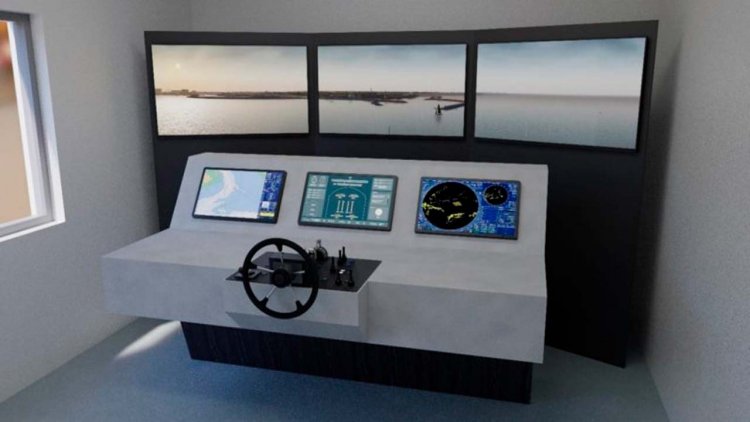
ROC Friese Poort signs a new deal with VSTEP to get the NAUTIS simulators

0

The educational institution also provides a wide selection of training courses. These courses range from short, intensive, tailor-made to multi-year programs that are suitable for individuals as well as groups. The courses offered by ROC Friese Poort are designed to be delivered in other organizations and training institutions.

The new two-fold deal with ROC Friese Poort (Urk) is a part of Regjodeal Flevoland. The first part entails a brand-new professional sea-going Full Mission Bridge Simulator along with upgradation of 3 console simulators with the latest software, a premium control plate and replacement of all old hardware. In addition, the deal would include creation of new realistic and interactive large environments.

The second part of the deal involves upgrading the existing simulators like 240˚Inland Bridge Simulator and other smaller ship handling simulators with advanced software.  Additionally, a new vessel handling simulator will also be delivered. All the inland simulators at ROC Friese Poort (Urk) will be compliant to CESNI 2018-||-14 standards.

New and upgraded simulators will ensure that trainees receive the opportunity to train on highly realistic hydrodynamics and visuals, improved communication, new elements, and fixes and many more advanced features, all of which w ill make their learning experience smoother, more interactive and immersive.

Our Inland Specialist at VSTEP, Kimberly Stolk says:

“We are always committed to ensuring that future Inland vessel handlers are trained on the highest-fidelity models and receive the best quality training so that they can safely navigate the ships to the shore, making inland waters hazard-free & sustainable for all.”

LR completes purchase of C-MAP Commercial from Navico Group

0

LR has acquired the C-MAP commercial marine business from Navico Group.

The transaction for the leading provider of commercial marine cartography and digital publications, shore-side and shipside voyage optimization, cloud-based fleet management and fleet analytics software was completed on 3 March 2021.

C-MAP will be integrated with the i4 Insight platform, strengthening the existing performance platform ecosystem and this acquisition builds on Lloyd’s Register’s vision of solving problems with integrated digital solutions that will conquer the challenge of isolated and disconnected maritime systems. It follows recent partnership agreements between i4 Insight and other maritime players including Greensteam, FNT and Laros.

Andy McKeran, LR’s Director of Maritime Performance Services, said:

“LR is determined to become a trusted advisor for operational efficiency solutions. Our i4 Insight platform, which is being enhanced by the acquisition of C-MAP, will enable our customers to optimise their vessel performance assets, making their businesses more sustainable in an increasingly competitive world.”

Joel Meltzner, Chief Executive Officer of i4 Insight, said:

“C-MAP’s navigation products and optimisation tools not only enhance our platform but also provide further evidence of how LR is rapidly building up our maritime digital solutions. This acquisition enables us to strengthen how we help our clients, and the maritime industry more broadly, accelerate operational efficiency improvements. I am excited to work with this talented team as we continue to help our customers solve key challenges.”

Knut Frostad, Chief Executive Officer, Navico Group, said:

“C-Map Commercial is a fantastic business with great potential, and this is exciting news for anyone associated with the business. Lloyd’s Register is an ambitious organisation that has a long history in shipping and outstanding relationships with its customers. They are focussed on taking C-MAP Commercial to the next level.”

Neptune Energy, EDF to pilot novel method to measure offshore methane emissions

0

Neptune Energy and Environmental Defense Fund (EDF) today announced a scientific collaboration to test a first-of-its-kind approach for measuring oil and gas methane emissions from offshore oil and gas facilities. 

EDF will coordinate a team of international researchers that includes Scientific Aviation, a provider of airborne emissions sensing, and Texo DSI, a UK-based drone platform provider, to evaluate advanced methods for quantifying facility-level offshore methane emissions, identify key sources and prioritise mitigation actions. 

Methane is the primary component of natural gas and is a potent greenhouse gas. To meet the Paris Agreement climate goals, methane emissions need to be reduced from production and throughout the gas value chain.

State-of-the-art drone, aircraft and methane sensing technologies will be deployed on the Neptune-operated Cygnus platform in the UK Southern North Sea to provide a close-up view of operations typical of a North Sea offshore facility, such as gas separation, drying and compression technology, and flaring and venting. 

Global investment firm The Carlyle Group, a shareholder in Neptune Energy, is supporting and observing the project to help drive research learnings and improved standards.

Pete Jones, Neptune Energy’s VP Operations Europe, said:

“Neptune Energy already has one of the lowest methane intensities in the sector, at 0.01%, compared with the industry average of 0.23%. But we want to go further and have set a target of net zero methane emissions by 2030. This study will help us identify where we need to take further action and how we can apply new measurement techniques across our global operated portfolio.”

Mark Brownstein, EDF’s Senior Vice President for Energy, said:

“Data transparency is paramount. Oil and gas companies have made commitments to tackle emissions, but you can’t just assert strong environmental performance. You must show it. Having credible data is the first step and we recognise Neptune Energy for valuing emissions reporting that is based on rigorous science.” 

Last October, the European Commission introduced a strategy that calls for oil and gas methane regulation in the EU and gives consideration to a performance standard for gas used or sold in the EU. The EU is the world’s largest natural gas importer, with 85% of its consumption coming from outside the EU.

A key research objective is to establish a reliable benchmark for assessing total oil and gas methane emissions in an offshore environment. Studies show that official inventories can often underestimate overall emissions because reports are based on desktop calculations versus empirical data.

Neptune is a member of the Oil and Gas Methane Partnership (OGMP) and is a signatory to OGMP’s new 2.0 framework, which aims to improve the reporting accuracy and transparency of methane emissions. Organised by the UN Environment Programme, the European Commission, the Climate & Clean Air Coalition and EDF, OGMP will create a robust set of measures for participating companies to document and report their emissions performance to better inform customers and regulators. Currently, there are 65 global oil and gas companies participating in OGMP. 

The study is due to commence in July this year with initial results expected in October. The outcomes will be published in a scientific peer-reviewed paper in 2022.

Damen starts a specialised Financial Services division

0

This unit supports clients in the financing of new ships by means of both operational and financial lease constructions.

Jan Willem van Helden, managing director of Damen Financial Services, explains:

“The demand for lease solutions is increasing. By making it a separate entity within the group, we can work with external investors, banks and specialists to optimise our offering on both a large and a smaller scale, with ships and services as one package.”

The advantage for Damen’s customers is that they can treat their capital investment as operational costs (OPEX). For Damen, the extra service means that a broader package, including maintenance, is offered, so that, for example, better management can be done towards a more sustainable use of the ships. Jan Willem van Helden says:

“Ship-as-a-Service and circularity in shipbuilding come a step closer. Moreover, the new service means that, from a governance perspective, we have a better overview of how the financing works.”

The working method of the new division opens the way to new business models for Damen Shipyards Group. Jan Willem van Helden, explains: “In the past, we would first sell a ship and then support our customer with the financing structure. In the new set-up, the operating structure and financial framework are created first, after which customers are approached to purchase ships. This generally include a long term, low risk element such as a concession or charter contract.”

Damen expects to be able to announce the first tangible projects of the new division shortly.

Intertek and Greenlink secure Marine Licence for the Greenlink Interconnector

0

Intertek has announced that after three successful years of working closely with Greenlink Interconnector Ltd (“Greenlink”), a Marine Licence has been granted by Natural Resources Wales for the Greenlink Interconnector. The Greenlink Interconnector is a €450million electrical underground and submarine interconnector spanning approximately 190 km with a nominal capacity of 500MW, linking the power markets in Great Britain and the Republic of Ireland.

Intertek’s subject-matter experts have worked on marine environmental quality assurance solutions with Greenlink since 2013, providing marine route development, landfall identification, survey management, environmental studies and assessment and ultimately submitting the Marine Licence (Wales) and Foreshore Licence (Ireland). Robust environmental impact assessment and environmental risk management have been core themes for Greenlink, as the proposed route crosses several European Protected Sites. In Wales, the Intertek team carried out comprehensive Environmental Impact Assessment, in-depth Habitats Regulations Assessment and prepared environmental studies as well as draft mitigation plans to support the Marine Licence application.

A key aspect in de-risking the permitting process was the Intertek experts’ proactive approach to stakeholder engagement by connecting with Natural Resources Wales during route development, marine survey, environmental assessment and identification of appropriate proportionate mitigation. This open collaborative engagement with Natural Resources Wales has ensured that the nationally significant infrastructure project can be permitted with due consideration of the important offshore sensitive habitats and species.

Greenlink has been recognised as a “Project of Common Interest” by the European Union following support received from both the Irish and UK governments. It has also received funding from the European Commission through the Connecting Europe Facility. Onshore planning consents in Wales were granted in 2020 and in Ireland decisions are expected soon on the onshore planning application and the Foreshore Licence. Construction is scheduled to start in the fourth quarter of 2021.

Anna Farley, Intertek Project Manager, commented:

“Greenlink is a valued long-term client, and we are delighted to have secured this important milestone permit for the project. As a Total Quality Assurance solutions provider, Intertek is committed to supporting Greenlink in identifying and applying environmentally sound solutions that meet the technical and commercial requirements for one of the most important infrastructure projects in Europe.”

Nigel Beresford, CEO of Greenlink Interconnector Ltd said:

“With the award of the Marine Licence, we have reached a significant milestone in the development of the project, having added this major marine permit to the onshore permits already secured. This achievement has been a collaborative effort with Intertek and we value the environmental and technical expertise that Intertek bring to the project team. The team’s proactive approach, working in partnership with key stakeholders to identify practical environmental and technical solutions to project challenges, ultimately resulted in a proposal we can all stand proudly behind. We look forward to continuing our successful relationship as we move forward into the construction phase.”

Investing in further development of the Åsgard field

0

The partners in the Åsgard licence have decided to invest just under NOK 1.4 billion to further develop the field and implement the Åsgard B low-pressure project.

Geir Tungesvik, Equinor’s senior vice president for projects, says:

“We’re pleased that the Åsgard owners have given their go-ahead for the low-pressure project. The project will increase production from the current Smørbukk wells and contribute to achieve planned production from the field. We’re also awarding a contract to Aker Solutions which will provide valuable activity and help maintain jobs in a difficult time.” 

The Åsgard field in the Norwegian Sea started producing in 1999 and the transition to low-pressure production is important to secure improved recovery from the field.

Randi Hugdahl, vice president for Åsgard operations, says:

“We can still produce 400-500 million barrels of oil equivalent from the field. This means value creation in the order of NOK 150 – 200 billion. The current recovery rate for the field is almost 50 percent, but our ambition is to extract 60 percent of the hydrocarbons in the reservoirs before the field will have to be shut down.”

The selected concept is a modification of the platform to reduce inlet pressure by replacing the reinjection compressors and rebuilding parts of the processing facility.

A FEED contract (front-end engineering and design) was awarded to Aker Solutions in December 2019 for modification work on Åsgard B in connection with the low-pressure project. The contract has now been expanded into an EPCI contract (engineering, procurement, construction, and installation).

The EPCI contract is valued at around NOK 800 million and will represent about 415 work-years and distributed over four years for the supplier. Project management and engineering will involve 240 work-years and be carried out at Aker Solutions’ office in Trondheim, while prefabrication will involve 45 work-years and take place at the yard in Egersund. The work will start immediately and is planned to continue through 2024.

More than 20 years have passed since the Åsgard B gas processing platform came on stream. Gas from Åsgard is piped through Åsgard Transport to Kårstø, north of Stavanger.  Overall, the installations at Åsgard have delivered more than 2.8 billion barrels of oil equivalent, with a gross value of more than NOK 1,000 billion.

Planned start-up of low-pressure production is in 2023.

Partners in the Åsgard licence: Equinor (operator) 34.57%, Petoro AS 35.69%, Vår Energi AS 22.06%, Total E&P Norge AS 7.68%.

e5 Lab establishes Marindows Inc. and offers global maritime solutions

0

e5Lab is a joint venture of four companies: Asahi Tanker Co., Ltd., Exeno Yamamizu Corporation, Mitsui O.S.K. Lines Ltd., and Mitsubishi Corporation that aims to develop electrically powered, zero-emission vessels.

Looking at logistics in Japan—a maritime nation surrounded by the sea—marine transport accounts for 45% of Japan’s domestic cargo transport and 99% of overseas cargo transport. In recent years, the maritime industry, which serves as Japan’s lifeline, has faced extremely complex and difficult-to-solve social, environmental, and economic issues. These include a shortage of manpower due to a sharp decline in the working-age population, long working hours and dangerous work for crewmembers, global-scale environmental issues, and intense competition from overseas such as China and South Korea. The depressed Japanese maritime industry leads not only to problems in logistics, but also a decline in overall national strength, bringing various negative impacts on all types of land-based businesses. Considering this situation, Japan’s Ministry of Land, Infrastructure, Transport and Tourism has promoted legislation aimed at improving productivity and creating a more attractive work environment in the maritime industry and enhance the business foundation of the Maritime sector. 

As typified by Smart City, the digital transformation (DX) has been promoted beyond individual corporate frameworks by national and local governments. The nextgeneration services and systems inspired by DX create completely new values and businesses. On the other hand, the maritime industry, with a market scale exceeding ¥8.5 trillion, got behind of DX due to various hurdles such as difficulty in development of communication environment and longstanding business practices. Under such circumstances, an ocean broadband (ocean BB) service, using a next-generation satellite, will start in 2022.

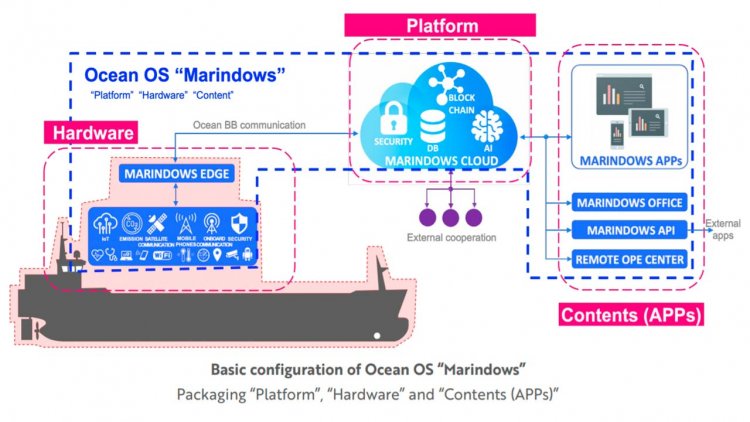
Looking toward the coming of ocean BB communication, Marindows will develop a streamlined digital platform (ocean OS “Marindows”), which allows for evolution and expansion by drawing upon the power of the information and communication revolution (incorporating ocean BB communication/DX/AI). With the OS “Marindows” as the driving force, the company will address social, environmental, and economic issues facing the maritime industry. Marindows will create new value and markets in the Maritime industry along with partners of various leading companies having good business relationship with e5 Lab which is mother company of Marindows.

The Ocean OS “Marindows” is easy-to-use on existing ships as well as newbuilding ships. In Phase 1, the team will start developing services to improve operations for seafarers, shipowners, and shipping companies through the use of existing operation DX and data, in parallel with promotion of ocean BB communication. 

Mr.Hirofumi Takano, Executive Vice President, Director of Innovation Development Division, ClassNK, said:

“Innovation utilizing digital technology and cyber risks are two sides of the same coin. For the development and the spread of innovation to be conducted under a safe environment, ClassNK supports the initiative through the provision of best practices constructed based on international trends and up-to-date information on cyber security.”

Mr.Kazuma Waimatsu, Director/Divisional General Manager, Marine Electronic Products Division, Furuno Electric Co., Ltd., said:

“Furuno engages in engineering related to gathering onboard data, beyond its traditional role as a manufacturer of marine equipment. We design onboard IT networks depending on the application, enhance connection with onboard equipment using the Furuno Open Platform (FOP), and aim for efficient use by integrating and centralizing onboard IoT data. We are honored that, along with Marindows and co-creation partner companies, we will be able to direct and co-create the future of the next-generation maritime industry, through use of a new form of ship – shore communication and IoT data based on our experiences as maritime system integrator. Furthermore, we are thinking of ways to contribute to the project and put our activities securely in the forefront of practical innovation in the marine industry.”

DNV assisted PGE Baltica in setting up the joint venture with Ørsted

0

DNV has been retained by PGE Baltica (a subsidiary of PGE Capital SA, responsible for offshore wind developments) for the provision of technical and commercial advisory services in connection to setting up a joint venture structure between PGE (Polska Grupa Energetyczna S.A.) and Ørsted for the development of two offshore wind projects in the Baltic Sea with a total potential capacity of up to 2.5 GW.

Following the passing of Poland’s first Offshore Wind Act in January this year, it is expected that these offshore wind farms would play a key role in energy transformation of Poland towards a low-emission economy, contribute to ensuring energy security of the state while significantly reducing its CO2 emission in line with Poland’s National Energy and Climate Plan.

The 50/50 joint venture investment agreement between PGE (the largest power producer and Distribution Network Operator in Poland) and Ørsted (multinational power company and offshore wind developer) is designated to develop, build, and operate Baltica 2, with a capacity of approximately 1.5 GW and Baltica 3 with a capacity of approximately 1 GW.

Prajeev Rasiah, Executive Vice President & Regional Manager Northern Europe of DNV’s business area Energy Systems, said:

“The Baltic Sea has always been the Polish window on the world and the offshore wind industry brings new opportunities. Our 10 years’ experience as a leading technical advisor in Poland’s wind projects coupled with over 30 years’ experience in offshore wind in other markets in Europe contributed to supporting PGE Baltica during the negotiation process and in gaining a better understanding of contracting in the offshore wind farms development, construction, and operation phases. Projects like Baltica 2 and 3 will contribute to the growth of the Polish economy, giving renewables, and particularly offshore wind, a key role in the energy transition in Poland.” 

To assist PGE Baltica in setting up its offshore wind practice and the joint venture with Ørsted in relation to the project, DNV has been providing a series of technical and commercial workshops on offshore wind and typical provisions of offshore wind related contracts. DNV has also provided advice to PGE Baltica on the market standard conditions as part of its negotiations on the set up of the joint venture.

The evaluation and review of the agreement documentation includes aspects such as the service development agreement (SDA); the development expenditures plan (DEVEX); the construction management agreement (CMA); the operation and maintenance agreement (OMA), which were ultimately recognized to be in line with typical practice and market standards.

According to McKinsey & Company, in the years to come it is estimated that the construction of 6 GW in the Baltic Sea will create 77 thousand jobs and bring approximately PLN 60 billion of added Gross Domestic Product (GDP) value and PLN 15 billion of Corporate Income Tax (CIT) and VAT revenues, as a result it could be said that in favourable environment offshore wind will become the key development path of the energy sector in Poland.

Logimatic signs contract during pandemic with the German container line Hapag-Lloyd

0

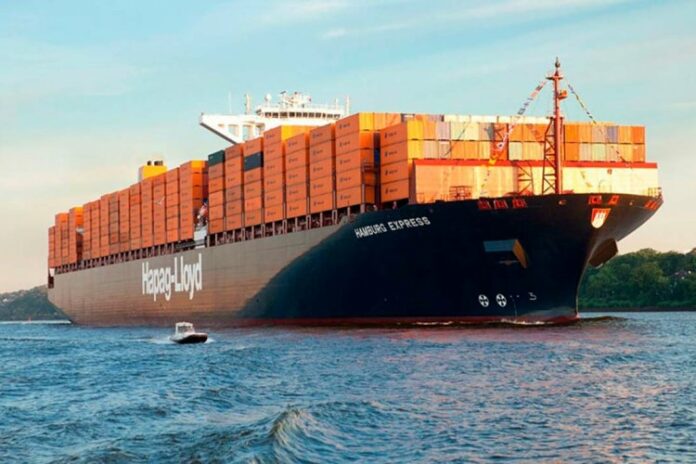
Hapag-Lloyd initiates a digital transformation implementing SERTICA on more than 70 of the largest container vessels in the world. The goal is to provide a common Technical Fleet Management System for its fleets both in Hamburg and Dubai.

Jan Rüsch, Business Project Manager at Hapag-Lloyd tells:

“With a smooth transition to a shared fleet management software platform across two fleets, we expect to increase efficiency and reduce costs. We aim to achieve a higher degree of transparency, lean approval processes and a fast order process.”

Claus Krogholm Pedersen, Senior Project Manager from Logimatic will be responsible for the implementation of SERTICA and he explains:

“With one single data entry for the crew onboard the vessels, Hapag-Lloyd will see a decrease in duplicates and an increase of transparency for spare parts and materials ordered by the vessels.”

When Hapag-Lloyd decided to invest in a modern and IoT ready software platform for both ship and shore operations, it was important to find a system that is easy to use for the crew.

Jan Rüsch from Hapag-Lloyd explains:

“We have chosen a user-friendly and flexible system with a nice reporting functionality. Our investment is, however, larger than just a new software as we plan to optimize our internally processes. To achieve this, we need support from a partner who possesses the necessary maritime knowledge – this partner is Logimatic.”

Despite the global pandemic, the entire process was managed and conducted in a safe manner with online presentations, test scenarios, workshops and contract negotiations.

Hans Chr. Jensen, Head of Sales at Logimatic concludes:

“People working from home was no issue at all during this process. Hapag-Lloyd is a professional and modern shipping company, who manage to continue the daily business despite various restrictions. We have full confidence that this will be a very successful partnership.”