-7.4 C
New York
Home Blog Page 667

BV’s expertise in offshore wind farms reaffirmed with EolMed project certification

0

Bureau Veritas (BV), a world leader in testing, inspection, and certification, has been awarded project certification for EolMed, an offshore wind farm pilot project in France developed by Qair and involving Total, Ideol and Vestas Wind Systems A/S.

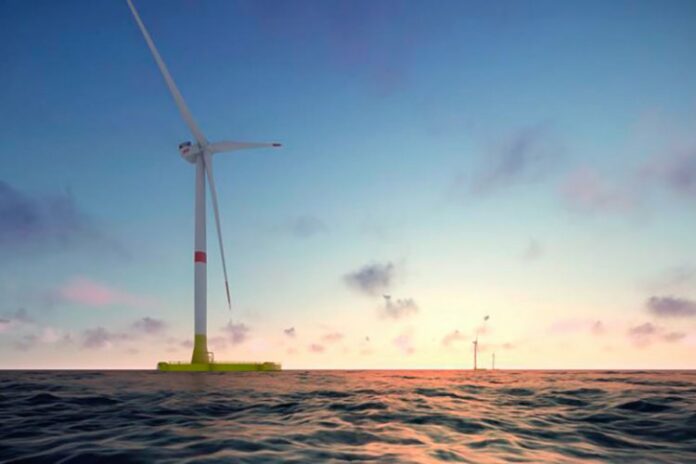
Located in the Mediterranean Sea, off the coast of Gruissan in the Aude region, EolMed is one of four floating pilot farms under development in France. It will consist of three Vestas V164-10 MW wind turbines which will have a total capacity of 30MW and will be able to meet the energy needs of 50,000 people. The wind turbines will be installed on floating foundations more than 18 km from the shore and anchored at an average depth of 60 meters.

The square-shaped floating foundations with a central opening have been manufactured to Ideol’s patented Damping Pool®, design which reduces swell impact. The wind turbine is fixed at the back of the floater.

Bureau Veritas will provide technical expertise and assessment of the floating foundations, their mooring system and the dynamic sections of the inter array cables. The Bureau Veritas certification process will encompass:

  • The design specifications, including a review of applicable standards and appropriate design methodologies
  • The integrated load analysis, covering an assessment of the aero-hydro coupled loads with an independent model
  • The design evaluation with a review of analysis reports, structural drawings and specifications. Bureau Veritas will also perform independent strength and fatigue analysis.

Matthieu de Tugny, Executive Vice President Marine & Offshore at Bureau Veritas, commented:

“Being the trusted certification partner for the EolMed project is an opportunity to validate floating foundation technology. The floating wind farm sector is fast-transitioning, from prototypes to pilot farms and, ultimately, commercialisation. This is an exciting time for the offshore wind market. Bureau Veritas is well positioned to support wind farm initiatives and provide confidence in both fixed and floating wind energy.”
Veson Nautical launches Veson Partner network

0

Veson Nautical formally launched the Veson Partner Network – a program that extends the value of the Veson IMOS Platform (VIP) through strategic integrations with other leaders in the maritime technology space.

In line with its vision to serve as the standard platform that propels maritime commerce, Veson recognizes that an open system with deep connectivity is essential to streamlining client workflows and unlocking the standardized data needed to make decisions that drive efficiency and profitability.

Eric Christofferson, Chief Product Officer at Veson Nautical, commented:

“Our clients build their commercial workflows on top of VIP, but we recognize that VIP is not the only solution that plays an important role in their business, nor is it the only solution capable of adding value. That is why we developed the Veson Partner Network; to extend the value of VIP as a Platform by providing clients a rich and turnkey integration experience that unlocks transformative business benefits.”

The Veson Partner Network builds upon Veson’s long-standing history of cross-system integration, formalizing two levels of integration partnerships as part of the new program: Platform Partners and Interface Partners.

Platform Partners include organizations that have been strategically chosen for robust and native integrations with VIP. These integrations are developed collaboratively by Veson and the Platform Partner and are offered free of charge with the Veson system for joint customers. Veson launches the Partner Network with four Platform Partners: ZeroNorth, Chinsay, Maritech, and Marcura.

Interface Partners include the organizations that Veson clients regularly integrate into, with whom Veson forms intentional, one-time interfaces based on API endpoints. These integrations are shaped by client needs and require engagement with the Veson Global Services team to complete. Interface partnerships represent a depth of familiarity and knowledge of interface points among the Veson Services team.

While the Veson Partner Network provides clients the opportunity to benefit from added capabilities and turnkey integrations, it requires no change for Veson clients’ existing interfaces, which will remain fully supported moving forward. VIP also remains fully system-agnostic, and Veson will continue to work with clients to connect the Platform with their business-critical systems, regardless of status in the Veson Partner Network.

Fugro joins forces with dCarbonX on decarbonisation exploration

0

Fugro has signed a strategic framework agreement (SFA) with dCarbonX, a pioneering geo-energy resource company, for decarbonisation exploration projects supporting the development of offshore geo-energy resources in the UK and Ireland.

The SFA will enable Fugro and dCarbonX to collaborate on decarbonisation exploration projects at the earliest opportunity and to share relevant data, technological insights and operational scheduling.

Both Fugro and dCarbonX, which specialises in finding and adapting offshore subsurface assets to facilitate the transition from fossil-based to renewable energy systems, are committed to challenging the energy status quo to create a safe and liveable world. Fugro will apply their consultancy mindset to help progress opportunities, and their Geo-data acquisition, analysis and advice will provide dCarbonX with critical information to characterise sites and support decision-making at the project concept stage.

Fugro’s consultancy services in the SFA will include comprehensive desktop studies to derisk ground conditions, recommendations on the survey or ground investigation data required, baseline environmental, geochemical and bathymetric surveys, and geophysical and geotechnical site investigation campaigns. As projects progress, the two companies will also collaborate on monitoring methods to ensure that operations are performed safely, efficiently and in an environmentally responsible manner.

Laura Hughes, Fugro Country Director UK, said:

“We’re excited to work with dCarbonX and use our combined expertise to explore decarbonisation opportunities. Fugro is deeply committed to accelerating the energy transition by developing geo-energy resources such as CCS, hydrogen storage and geothermal energy, which have the potential to transform the way we live and interact with the planet.”

Founding Partners announced for ‘The PIER’ at the Seaport living lab

0

‘The PIER’ at the Seaport announces the founding partners who will work together, tactically and strategically, to develop solutions to the supply chain challenges the port and its customers encounter and to develop commercial opportunities globally and locally. PIER is short for Port Innovation, Engagement and Research.

The founding partners for ‘The PIER’ include CN, a leading North American transportation and logistics company; PSA Halifax, a member of PSA International (PSA), a global port group and trusted partner to cargo stakeholders with over 50 locations in 26 countries around the world; OMC International, an Australian maritime engineering company that has developed award-winning e-Navigation technology to improve transit for large commercial ships; and the Port of Halifax, a full-service deepwater international gateway and regional economic engine.

JJ Ruest, President and CEO, CN, said:

“The relationship between CN and the Port of Halifax goes back generations, to the very early days of both our organizations. We are proud to be involved in this latest development which is another positive step on this long journey together.”

Enno Koll, Head of Americas for PSA, said:

“’The PIER’ project is an excellent fit for our organization and our vision for the future. We are committed to continuously upgrading our services and innovating every aspect of our business. ‘The PIER’ creates a collaborative space that will allow us to work with like-minded companies.”

Peter O’Brien, CEO, OMC International, said:

“OMC and DUKC® were born out of the complex challenges being faced by ports three decades ago. The innovations that have followed since have been undertaken alongside our clients, those forward-thinking ports that are searching for opportunities to do things better.” 

“At OMC, we’re excited to be partnering with the Port of Halifax and members of ‘The PIER’ to deliver solutions to meet both existing and emerging challenges being faced by the port and maritime industry. ‘The PIER’ is a logical next step for us as we continue to grow our presence in Canada and North America. Being able to do so alongside other global companies in a collaborative way is a win-win scenario.”

Captain Allan Gray, President and CEO, Halifax Port Authority, said:

“Bringing partners together in a living lab environment will create the conditions that allow us to solve the intricate problems facing the transportation sector. No one party can tackle these challenges on their own, but together, we can develop sustainable solutions with benefits that reach well beyond the shipping industry.”

With founding partners in place, ‘The PIER’ at the Seaport will operate virtually as the physical space is developed. 

Industry backs United Nations $5 Billion ‘Moon-Shot’ programme to decarbonise shipping

0

Industry partners welcome “moon-shot” proposal from governments to set up a $5 billion USD fund to catalyse the vital research and development needed to help shipping meet UN decarbonisation goals.

The proposal, being submitted by governments controlling a major share of the world’s shipping tonnage to the UN International Maritime Organization (IMO) is to establish a $5 billion USD “IMO Maritime Research Fund” using mandatory contributions from the world’s shipping companies.

This new $5 billion USD Fund will support a new International Maritime Research and Development Board (IMRB) to commission collaborative programmes for the applied research and development R&D of zero-carbon technologies, specifically tailored for maritime application, including development of working prototypes. It will also assist CO2 reduction projects in developing countries, including Pacific island nations.

The shipping industry is urging all governments to approve this mature moon-shot proposal – led by major shipping nations including Georgia, Greece, Japan, Liberia, Malta, Nigeria, Singapore, Switzerland – at a critical IMO meeting in London in November 2021, which will coincide with the next UN Climate Conference (COP 26) in Glasgow. This is the only fully detailed proposal available to deliver the speed and scale called for by UN Secretary-General, António Guterres. Failure by UN member states to support this initiative could significantly set back progress towards the decarbonisation of shipping.

Decarbonisation can only take place with a significant acceleration of R&D, as zero-carbon technologies do not yet exist that can be applied at scale to large ocean-going ships. A well-funded R&D programme, which the industry has agreed to pay for within a global regulatory framework, needs to commence immediately under the supervision of the UN IMO.

Recognising the urgency and ambition required to decarbonise, shipping industry groups are calling for all governments to be on the right side of history in supporting this ambitious proposal.

International shipping transports more than 80 per cent of global trade and emits 2 percent of global emissions. The big challenge is not building a single zero carbon ship, the big challenge is creating the technologies needed to decarbonise the entire global fleet at speed and scale. The sooner the IMO Maritime Research Fund is established, the sooner industry can develop zero emission ships to decarbonise maritime transport.

CWind completes sale of 18.5m catamaran to Wood Marine

0

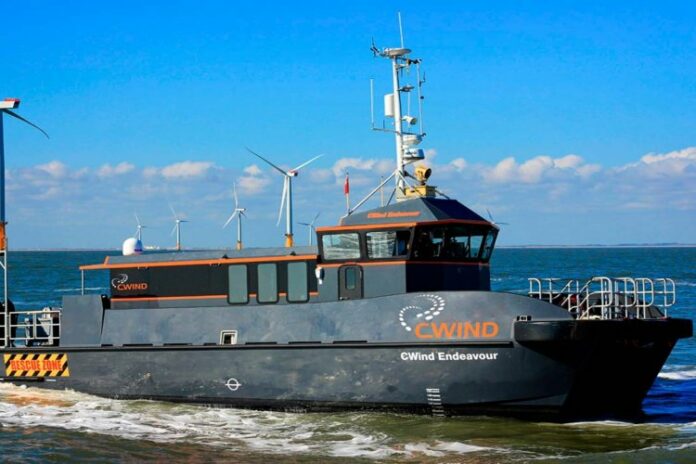
The sale of Endeavour, an 18.5m catamaran with a maximum speed of 27kts, is part of CWind’s strategic plan to remodel its CTV fleet and enables CWind to pursue new vessels, including the world’s first Hybrid SES CTV, which is currently under construction and will join the CWind fleet in February 2021.

Joshua Brennan, Operations Director at CWind, said:

“We continuously review the composition of our fleet of over 20 CTVs, to actively divest tonnage and upgrade our fleet to suit market requirements. The sale of Endeavour means we can focus on introducing new vessels to our fleet as part of our commitment to lower emissions and provide comfortable, cost-effective CTVs for our customers.”

Endeavour will join Wood Marine’s two other multipurpose workboats, providing port services including crew and stores transfers, hydrographic surveying, ATV support and dive support.

Andrew Wood, Managing Director at Wood Marine, said:

“We’re pleased to welcome Endeavour to our fleet, providing us with a cost-effective crew and stores transfer solution with greater deck capacity for stores and surveying activities, with a large cabin for crew transit. With the addition of the Endeavour, we can service multiple vessels simultaneously to support all of our diverse customers’ needs.”

CWind, which celebrated its 10th anniversary last year, successfully completed more than 43,000 crew transfers in 2020.

ABB technology to support iconic U.S. ferry’s move to hybrid-electric operations

0

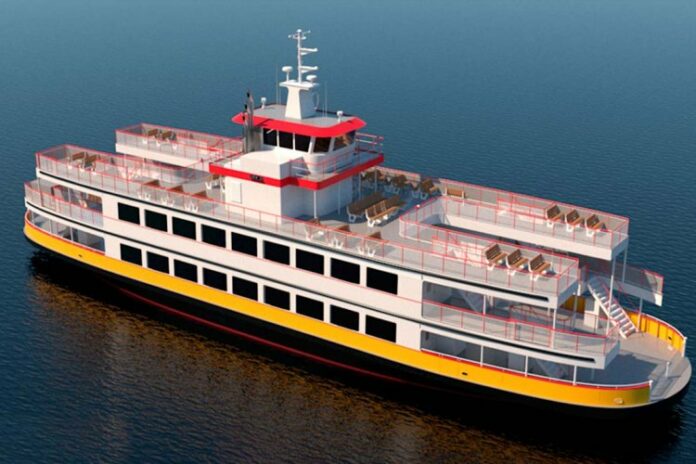
Maine ferry operator Casco Bay Lines has committed to an integrated hybrid-electric power and propulsion solution from ABB for its new vessel, in a technology step change along one of the longest-established ferry routes in the United States

The new ferry is expected to cut up to 800 tons of carbon dioxide per year, significantly improving air quality in Portland, Maine.

The new 50-meter ferry will feature ABB Marine & Ports’ hybrid power, propulsion and a shore charging system, supporting diesel-electric and zero-emissions battery-powered modes, as well as a combination of both. With the ferry operating in zero-emission mode, the passengers will benefit from a smoother, cleaner and quieter ride.

In line with U.S. governmental commitments to reduce the environmental impact of public service transit systems nationwide, the ferry project has been partially funded by federal and state grants, with a 15-vehicle and 599-passenger capacity vessel to replace an existing diesel-powered ferry for the Portland–Peaks Island service along the coast of Maine.

Bruce Strupp, Senior Account Manager, New Build, ABB Marine & Ports, said:

“Momentum for lower carbon footprint ferry operations continues to grow worldwide, and ABB is honored that its integrated electric, digital and connected solutions are being considered integral as more and more U.S. operators replace obsolete vessels to match regulatory and societal demands.”

Hank Berg, General Manager of Casco Bay Lines, said:

“Hundreds of thousands of passengers ride the Casco Bay Lines ferry between Portland and Peaks Island each year. Increasingly, ferry passengers prioritize sustainability as a service expectation, in addition to reliability and comfort. The ability to switch to zero-emission battery power in port is also a clear environmental benefit for residents in Portland and Peaks Island. We look forward to a close collaboration with ABB and we can’t wait to see the end result.”

Within its integration, engineering, automation and equipment supply roles, ABB will deliver the award-winning Onboard DC Grid™ power distribution system to give full control over when and how the vessel uses its diesel generators, the 904-kWh battery energy storage system or a combination of the two to optimize energy consumption at any load. ABB is also supplying an automated shore charging system for installation at the Port of Portland, which automatically connects at the dock and will not require any additional port time to charge the vessel.

Smooth running, remote monitoring and predictive maintenance will be supported through the inclusion of the ABB Ability™ Remote Diagnostics System in the vessel.

Hybrid and electric solutions for ferries are on the rise, with over 130 battery-powered ferries already in operation and more than 90 on order, according to the Maritime Battery Forum. ABB’s complete, integrated solutions for hybrid and electric vessels are increasingly selected by ferry operators worldwide and in the U.S. Recent successes have included a fleet renewal project for Washington State Ferries, the largest ferry system in the country, while ABB also supplied power and propulsion package for the latest ‘Maid of the Mist’ Niagara Falls tour ferries – the first fully-electric vessels built in the U.S.

Port of Kalundborg orders Konecranes Gottwald Mobile Harbor Crane

0

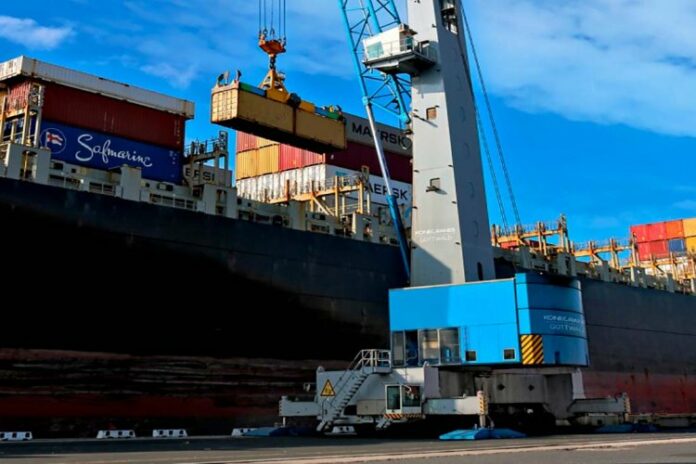
Denmark’s Port of Kalundborg has ordered an eco-efficient Model 7 Konecranes Gottwald Mobile Harbor Crane to meet expected container and general cargo demand at its newly developed New West Port.

The order, booked in Q1 2021, underscores Konecranes’ commitment to helping customers and industries grow and transform so they run more efficiently, sustainably and safely.

The port placed the order as it prepares to start operations in Spring 2021. The crane will be operated by APM Terminals in agreement with A.P. Moller (Maersk), which recently added Kalundborg to their locations. The crane joins an older Konecranes Gottwald Model 6 currently on site and will be delivered in May 2021.

Bent Rasmussen, Managing Director of the Port of Kalundborg, says:

“We’re preparing our new berths to start operations, and need a newer crane with more capacity and height. Our experience with Konecranes has been excellent, and we’re pleased they can provide this eco-efficient crane quickly so operations can start smoothly.”

Hans-Juergen Schneider, Regional Sales Manager for Konecranes Port Solutions, says:

“This crane will give Kalundborg’s clients the flexibility to handle a wider range of loads and the productivity and reliability needed to meet their deadlines. We look forward to a long-term partnership with the opportunity to provide more harbor lifting equipment as business continues to grow.”

Saltfleet to Gibraltar Point Beach Management scheme awarded to Van Oord

0

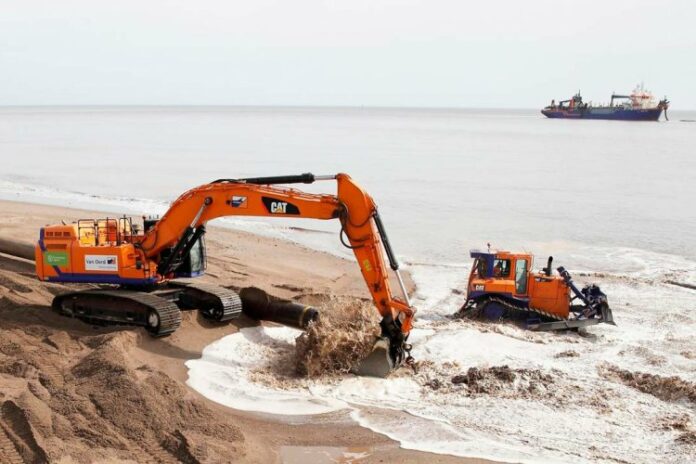
The contract encompasses beach nourishment over the length of 20 kilometres and requires around 400,000 cubic metres of sand each year and continues the works Van Oord has been undertaking there since 2015. 

Van Oord will also be providing technical advice to the Environment Agency in relation to the implementation of their flood risk management strategy. Implementation of this strategy will involve working with nature to provide a more sustainable approach to coastal management and greater resilience to the local community. In line with the client’s aim to achieve net zero carbon by 2030, trailing suction hopper dredger HAM 316 will be using a sustainable biofuel during the first campaign in 2021. The feedstock for the biocomponent of the fuel is primarily used cooking oil.

Paul Hesk, Regional Manager UK, said:

‘I am delighted that the Environment Agency has chosen Van Oord as its partner for continuing the protection of the Lincolnshire coastline over the next 4 years. We look forward to working together to implement their new strategy for defending this coastline and, by realising sustainability gains whilst doing so, assisting them to achieve their goal of net zero carbon by 2030.’

Sustainability will be a primary focus of the new contract, with constant monitoring to ensure the project delivers against the UN Sustainability Goals. Van Oord will also be undertaking a Civil Engineering and Environmental Quality assessment (CEEQUAL) of the project. Rigorous evidence-based assessment will enable the team to identify and deliver year-on-year sustainability gains.

The coastal defences along the 38 kilometre Lincolnshire coastline protect 45,000 residential properties and static caravans, businesses, infrastructure and 35,000 hectares of agricultural land from coastal flooding. 

Approval in Principle for EXMAR ammonia-fuelled gas carrier

0

Lloyd’s Register (LR) has awarded an Approval in Principle to EXMAR for its ammonia (NH3) fuelled 40,000 m3 Midsize Gas Carrier, a significant milestone for the progression of alternative fuels in shipping. 

Jiangnan Shipyard was responsible for the ship design while Wärtsilä Gas Solutions provided all input for the ammonia fuel gas supply system.
The Novel Technology Evaluation included an overall examination of fundamental aspects of the design and compliance with LR’s Rules and Regulations for the Classification of Ships and for the Carriage of Liquefied Gases in Bulk (for Gas Ships), incorporating the International Code of the Construction and Equipment of Ships Carrying Liquefied Gases in Bulk (IGC Code).

A risk assessment was also conducted, using EXMAR’s extensive knowledge and experience of operating Ammonia carriers, to ensure that risks arising from the use of ammonia fuel affecting persons onboard, the structural strength or the integrity of the ship are addressed in accordance with LR’s ShipRight Procedure for Risk-Based Designs (RBD). This included a Hazard Identification (HAZID) study which led to the Approval in Principle.

Ed Fort, LR’s Global Head of Engineering Systems, said:

“Lloyd’s Register is immensely proud to have awarded EXMAR Approval in Principle for its ammonia-fuelled Medium Gas Carrier, demonstrating our commitment to shipping by supporting clients with novel designs. This is a significant milestone in progressing alternative fuels for shipping’s transition to zero-carbon, proving the possibility of the use of ammonia as a fuel and how adaptable the fuel is to gas carriers, especially if carrying ammonia as cargo.”

Jens Ismar, Executive Director Shipping at EXMAR, said:

“This approval in principle is an important milestone in the process of developing low CO2 emission gas carriers. EXMAR continues its steps towards further innovation and decarbonisation by demonstrating the possibility of using ammonia as fuel onboard gas carriers. This follows EXMAR’s initiative of introducing LPG as a fuel in 2012 which is being implemented on our world’s first order of two dual fuel VLGCs currently under construction.” 

Kjell Ove Ulstein (Director Sales and Marketing) at Wärtsilä Gas Solutions, said:

“This work, together with EXMAR, Jiangnan and Lloyd’s Register for an Ammonia fuelled MGC, is an important step along the road towards decarbonising the shipping fleet. During the AiP process, we have provided the details for the Ammonia fuel system developed by WGS and also jointly conducted required studies for evaluating the readiness of the systems. We are proud to have played our part in having the AiP granted from Lloyd’s Register.”

Hu Keyi, Chief of Corporate Technology of Jiangnan Shipyard, said:

“Jiangnan is continuously making the effects to find practical solutions for carbon natural and zero carbon transportation. Jiangnan, as leading gas carrier shipbuilder in China, has cooperated with LR and WGS, to deliver gas fuelled gas carriers to reputable ship owners, like EXMAR. We believe this project of ammonia-fuelled Medium Gas Carrier is not only a low CO2 emission ship, but it will be also a significant landmark on the roadmap of IMO 2050.”