-10.7 C
New York
Home Blog Page 665

Total reinforces its commitment to develop Singapore into a major LNG maritime hub for Asia

0

The Maritime and Port Authority of Singapore (MPA) has awarded a third Liquefied Natural Gas (LNG) bunker supplier license to Total’s subsidiary in charge of worldwide bunkering activities, Total Marine Fuels Private Limited, for a five-year term starting January 1st, 2022.

This achievement follows a 10-year agreement signed by Total back in 2019, to develop an LNG bunker supply chain in the port of Singapore. It reaffirms the Company’s commitment to contribute to the country’s ambition in becoming a key LNG bunkering hub for Asia. It also underscores Total’s confidence in the role of natural gas for the global maritime industry’s energy transition and in its potential to further reduce carbon emissions from ships, through the development and future introduction of carbon-neutral bioLNG. 

Alexis Vovk, President, Marketing & Services at Total, underlined:

“We are proud to be awarded by the Maritime and Port Authority of Singapore the licence to supply LNG. Singapore, as the world’s largest conventional bunkering hub with a market share of 20 percent, is well positioned to become a major hub for LNG as a marine fuel. Asia’s demand for LNG bunkering is growing and the contribution of Singapore is of essence for the development of a global LNG bunkering market. Moving forward, Total will continue to step up investments to bring greater value of our integrated natural gas supply chain to customers serving this important region, ultimately contributing to our target of serving more than 10% of the global LNG bunker market.”

Total has actively invested in LNG infrastructure, critical to support its shipping customers’ uptake of LNG as a marine fuel. Since November 2020, Total has been operating the world’s largest LNG bunker vessel, the “Gas Agility”, at the Port of Rotterdam. By 2022, the Company will launch another newly built LNG bunker vessel in Marseille (France), while serving the port of Singapore through a third one. As part of its strategy to reduce greenhouse gases emissions in maritime transportation, Total has in parallel chartered two VLCCs (Very Large Crude Carriers) and four Aframax-type vessels, all equipped with LNG propulsion, which will be delivered in 2022 and 2023 respectively.

Total’s active efforts to develop LNG bunkering for maritime transport are in line with the Company’s climate ambition to get to net-zero emissions by 2050, together with society. Furthermore, it embodies Total’s broader marketing strategy towards the industries it serves, focusing on solutions to reduce the carbon intensity of the energy products used by its customers worldwide.

Port of Antwerp and PSA Antwerp upgrade Europa Terminal as part of sustainable growth

0

To this end, the current quay wall will be completely demolished and replaced by a new one. In order to limit the operational impact, the works will be carried out in three phases. With this deepening project, Port of Antwerp and PSA Antwerp confirm their ambition to make the best and most sustainable use of the existing space at the port.

The Europa Terminal was put into operation in 1990 as the first tidal container terminal at the port of Antwerp. The current maximum draught for vessels that can moor at the quay wall is 13.5 metres. In order to also accommodate container shipping with larger dimensions, the depth of the terminal will be brought in line with the maximum draught of approximately 16 metres at inlet.

Extensive maritime works will be necessary to achieve this deepening. The current quay wall, with a length of almost 1200 metres, needs to be completely demolished. PSA Antwerp is responsible for the renovation of the layout of the adjacent front quay, including new flooring and the installation of large container cranes. The quay wall will be equipped with all no-regret infrastructure measures to enable implementation of shore power. An underwater dam will protect the nearby Galgenschoor nature reserve.

In order to limit the operational impact, the works will be carried out in three phases.This allows a large part of the terminal to remain in operations at all times, while another part of the capacity is diverted to PSA’s Noordzee Terminal. The works are expected to start at the end of 2021.

As the engine of the Belgian economy, the port of Antwerp is evolving along with social and global developments. To continue playing at the top level of world ports, the port must be able to offer extra container capacity to its customers. To this end, the port is permanently working on both expansion, such as with the ECA project, and the optimisation of the existing capacity. The renovation of Europa Terminal is an important step in the further development of a sustainable port.

Jacques Vandermeiren, CEO Port of Antwerp:

“Containers are the most important segment at our port and a growth segment in the world, our yearly figures in 2020 prove this once again. And the trend towards more containers for transporting goods will only continue. This deepening is in line with our ambition to continue to grow as a port in a sustainable way and will contribute towards maintaining our position as a world port.”

Jan Van Mossevelde, MD PSA Antwerp:

“Thanks to this deepening, the Europa Terminal will join the league of mega-vessel ready container terminals. This major investment meets the needs of the major shipping alliances. When the works are completed, we’ll be able to handle 2 megamax ships simultaneously at a brand new and innovative terminal.”

Annick De Ridder, Port Alderman:

“For our worldwide economic position and the prosperity of current and future generations, it’s essential that we can continue to receive the largest container ships. With this investment, we are building the port of the future. Only in this way world players will continue to choose our port as the gateway to Europe and can we continue to position ourselves as a container port.”

Woodside and Trafigura collaborate on first carbon offset condensate cargo from Pluto LNG

0

Woodside Burrup Pty Ltd (Woodside) and its Pluto LNG joint venture participants Kansai Electric Power Australia Pty Ltd (Kansai Electric) and Tokyo Gas Pluto Pty Ltd (Tokyo Gas) have delivered their first cargo of carbon offset condensate to independent commodity trading company Trafigura Pte Ltd (Trafigura). The cargo was loaded at Pluto LNG in Western Australia.

The carbon dioxide equivalent emissions associated with extraction, storage and shipping of the 650,000-barrel cargo will be offset through a combination of efficiency measures, which reduce emissions, and surrender of high-quality carbon offsets. Trafigura is working with the vessel owner to minimise actual emissions associated with transporting the cargo.

High-quality carbon offsets have been sourced from nature-based projects located in the Asia-Pacific region, independently validated and verified by the Gold Standard or Verified Carbon Standard.

Carbon dioxide equivalent emissions generated by extraction, storage and shipping of the cargo will be calculated jointly by Woodside and Trafigura. Calculation of emissions associated with extraction and storage will be based on data gathered by Woodside, as operator of Pluto LNG. Calculation of carbon emissions associated with shipping will be based on data collated by Trafigura, specific to the cargo voyage.

Woodside Vice President Marketing Trading & Shipping Mark Abbotsford said this could be the first carbon offset condensate cargo traded globally, demonstrating opportunities for carbon offset condensate. He said:

“The transaction brought all the participants in the joint venture responsible for producing the condensate together with the customer, a global trading company, in support of our recently announced emissions reduction targets.

“We are pleased to be partnering with Trafigura, Kansai Electric and Tokyo Gas to deliver our first carbon offset condensate cargo. The transaction provided an opportunity to further develop our carbon offset marketing capability and gain an understanding of the carbon market in its early phases.”

In addition to the transaction, Woodside and Trafigura have signed a non-binding memorandum of understanding (MOU) to explore opportunities for carbon management in the marketing of carbon offset condensate, crude oil and liquefied petroleum gas in the future.

Mr Abbotsford said:

“The MOU is consistent with Woodside’s and Trafigura’s respective objectives to explore a market for carbon offset products over the long term and reduce emissions intensity across the value chain.”

Dmitri Croitor, Global Head of Naphtha and Condensates for Trafigura said:

“We are very pleased to be working with Woodside and its Pluto LNG joint venture participants on what we believe to be the first carbon offset condensate cargo, and for Trafigura our first carbon offset shipment. We’ve set ambitious targets to reduce our operational greenhouse gas emissions and by working with Woodside, which has similar ambitions, it is now possible to offset emissions associated with the cargo from wellhead to delivery. We are developing this offering for other oil products for our customers around the world.”

NPRC: Subsidy granted for construction of first hydrogen-powered cargo ship

0

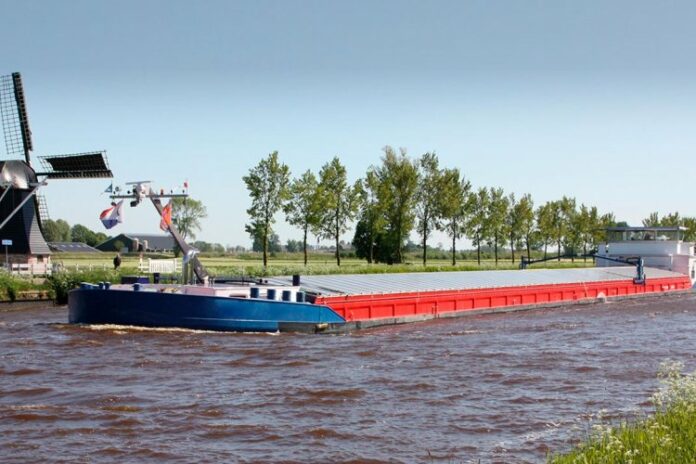
Dutch Minister of transport Cora Van Nieuwenhuizen visited Rotterdam to grant 4 million euros for the first hydrogen-powered cargo ship of Lenten Scheepvaart, a member of the inland shipping cooperative NPRC.

This subsidy is an important step in the realization of this ship, which will be part of a salt transport shuttle for the multinational chemical company Nobian (a Nouryon company) between Delfzijl and Rotterdam. Furthermore, this grant helps the inland navigation transport sector in becoming more sustainable and is a big step in the implementation of the Green Deal. The ship is scheduled to enter service in 2023 and will run on green hydrogen.

This supply chain project is an important contribution to a system change towards emission-free transport over water and the reduction of CO2 emissions in the Netherlands. The newly built ship is expected to transport 250,000 tons of salt per year within the Netherlands and will be propelled by an electric drive with a hydrogen fuel cell providing the power. The motor vessel Antonie will therefore be the first newly built hydrogen-powered dry bulk barge in the world. Nobian and NPRC are also partners in the Rh2ine project, for the development of a hydrogen infrastructure for the salt transport fleet in ports and charging stations along the Rhine.

NPRC CEO Femke Brenninkmeijer said:

“The success of this project is the cooperation. Between shipper, barge owner, cooperative and the government. Only with the support of all stakeholders is it possible to move from dreams to reality, from words to deeds, towards zero-emission transport over water. The strength of our cooperative lies in long- term cooperation between supply chain partners in the field of logistics and sustainability, which can now be seen in concrete results in terms of zero-emission and digitalization of the supply chain. The NPRC is the frontrunner of this development.”

The use of hydrogen in inland navigation is still in its infancy. There are already examples of ships that run on hydrogen, but these are existing ships that have been converted to run on hydrogen. Developing a new vessel that runs on hydrogen, gives the opportunity to optimize the design. With the practical experience gained in this pilot project, more ships can be fitted with a fuel cell in the future.

Additionally, this pilot project makes it possible to experiment with production, storage and transport of hydrogen applications. The gained knowledge will further help to accelerate the transition from gas oil driven engines to clean propulsion of inland vessels. Lenten Scheepvaart is building a completely new 135-meter, 3,700-ton inland navigation vessel that will be propelled by a hydrogen-electric fuel cell.

Inland waterway shipping makes an important contribution to the modal shift of goods transport from road to water and the reduction of emissions. The Dutch government, the Dutch provinces, ports, maritime industry associations, shippers, shipping agents, banks and research institutions have joined forces in 2019 with the ‘Green Deal Maritime Shipping, Inland Waterway Shipping and Ports’ to make shipping more sustainable.

The construction of this vessel is a great example for the success of cooperation in inland waterway shipping, where shippers and inland shipping cooperatives are committed to making the supply chain more sustainable.

Hydrogen is safer than LNG and can be largely treated in the same way. The fuel is widely available in Delfzijl and Rotterdam, completely clean and has no CO2 emissions, but pure water. The initiative is part of the ‘Green Deal’ of the Dutch Minister of Transport Van Nieuwenhuizen, which is full of initiatives to make transport over water as emission-free as possible. In total, the minister grants 15 million euros to the inland shipping sector to stimulate innovations.

Crystal Cruises launches new close-to-home Bahamas escapes from Nassau and Bimini

0

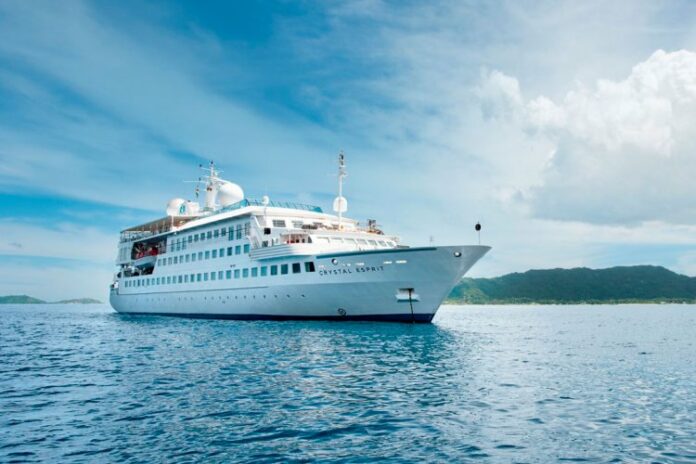
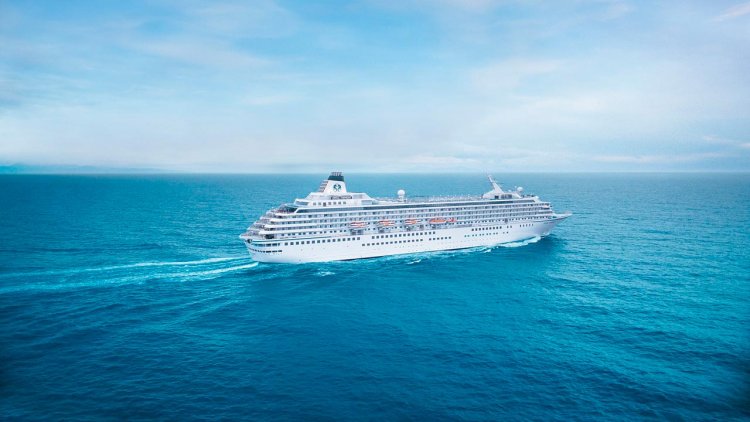
Crystal Cruises has announced its plans to restart cruising with new close-to-home Bahamas Escapes beginning July 3, 2021 with a series of 16 seven-night, round-trip cruises from Nassau on its award-winning flag ship, Crystal Serenity.

In addition to its Nassau itineraries, Crystal will also offer 16 seven-night voyages round-trip from Bimini beginning on July 4, 2021. With her new Bahamas Escapes cruises, Crystal Serenity becomes the first ship to homeport in The Bahamas, as well as the first ocean ship to sail from the Americas since the cruise industry’s voluntary halt in operations almost a year ago.

Jack Anderson, Crystal’s interim president and CEO, said:

“Like our guests, we have been eagerly looking forward to the day we can welcome them back on board, and we’re thrilled that this day will come in The Bahamas. The new Bahamas Escapes cruises will allow travelers to enjoy luxury cruising now, as well as bring much-needed benefits to the local workforce, airlines, restaurants, retailers and hotels for pre- and post-cruise stays. The launch of these cruises will also drive economic growth to The Bahamas, which, like other destinations around the world, has been negatively affected by the global pandemic.”

Dionisio D’Aguilar, Minister of Tourism & Aviation for The Commonwealth of The Bahamas, said:

“The Bahamas is ready and delighted to welcome cruise visitors back to the islands and to partner with Crystal Cruises in the effort to restore and help re-activate our tourism industry and protect jobs and businesse. Crystal Cruises will go on record as the only cruise line offering Bahamas-only voyages that highlight the signature features and experiences travelers can find here in our islands, and the support that these cruises will bring to multiple communities within the country will be tremendous.”

Svitzer introduces ROV Hull Cleaning for fleet performance optimisation

0

Svitzer SeaBadger is a Hull Cleaning ROV (remotely operated vehicle), which is a more efficient and environmentally conscious solution that supports fleet performance optimisation, improves fuel efficiency, and reduces carbon footprint.

The diver-less method makes the service safer than traditional hull cleaning, and as the Svitzer SeaBadger can operate in the harshest conditions and cleans up to 1,200 sqm per hour, it is also one of the most efficient and powerful ROV solutions in the market. Furthermore, the proven brushless water jet technology can adjust the water pressure in real time and thus help protect and preserve the customers’ investment in anti-fouling coating.

Svitzer’s global CCO, Videlina Georgieva, says:

“To ensure we continue to meet our customers’ needs and demands, we must always strive to rethink and innovate what we do. The Svitzer SeaBadger is a good example of how we as a global towage provider can use our knowledge and experience to offer a new solution that not only delivers value to our customers, but also supports the efforts to reduce the environmental footprint of shipping and make the industry more sustainable in the future. As part of A.P. Moeller – Maersk, we naturally have a strong focus on contributing to a green transition.“

The Svitzer SeaBadger is currently operating in Panama with the ambition is to expand this service to a wide range of the ports Svitzer services globally.

Hull cleaning with the Svitzer SeaBadger is offered in collaboration with a local partner. Underwater inspections, propeller polishing, surveys and other diving services are also provided and can be booked through Svitzer.

K LINE’s car carrier obtains world’s first remote survey notation as newly-built ship

0

“K” LINE’s car carrier “CENTURY HIGHWAY GREEN” completed by Tadotsu Shipyard Co., Ltd., the Imabari Shipbuilding Group, became the world’s first newly-built vessel to obtain Nippon Kaiji Kyokai (ClassNK) notation certifying that the ship is adapted for remote surveys.

Use of the remote surveys will enable “K” LINE to perform inspections without being constrained by location, and also enables surveys to be conducted while lowering the risk of infection of the crew during the COVID-19 pandemic because it is not necessary to visit the vessel. It is expected that safe operation will be enhanced through the appropriate and timely implementation of surveys.

In February 2021, ClassNK published guidelines for appropriate operation of remote surveys using information and communication technology (ICT). The “Guidelines for Remote Surveys” (Ver. 2.0) summarizes the judgment standards for ensuring reliability equivalent to conventional witness surveys with transparency in the application of remote surveys. The guidelines also include class notation requirements for the vessel with reliable telecommunications equipment and is adapted for remote surveys.

CENTURY HIGHWAY GREEN has significantly enhanced on-board and ship-to-shore telecommunications equipment compared to conventional vessels and obtained the remote survey class notation in recognition of this point.

Examples of Enhanced Telecommunications Equipment:

  • Expansion of on-board Wi-Fi: In addition to living quarters, efficiency of vessel operations has been improved by installing Wi-Fi on the cargo deck and in the engine room and LNG fuel-related equipment compartment.
  • Introduction of wireless communication equipment supporting explosion-proof areas:
    Explosion-proof LCX wireless communications equipment has been introduced in explosionproof areas to ensure communications.
  • Introduction of 4G/LTE: The communication environment with relevant personnel and operational efficiency has been improved by utilizing high-speed broadband communication on a land cellular phone network while docked.

Oil in the ocean photooxides within hours to days, new study finds

0

A new study lead by scientists at the University of Miami (UM) Rosenstiel School of Marine and Atmospheric Science demonstrates that under realistic environmental conditions oil drifting in the ocean after the DWH oil spill photooxidized into persistent compounds within hours to days, instead over long periods of time as was thought during the 2010 Deepwater Horizon oil spill. This is the first model results to support the new paradigm of photooxidation that emerged from laboratory research.

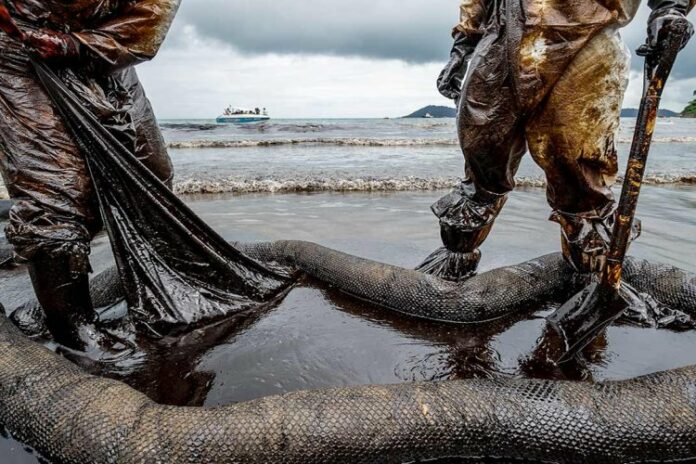
After an oil spill, oil droplets on the ocean surface can be transformed by a weathering process known as photooxidation, which results in the degradation of crude oil from exposure to light and oxygen into new by-products over time. Tar, a by-product of this weathering process, can remain in coastal areas for decades after a spill. Despite the significant consequences of this weathering pathway, photooxidation was not taken into account in oil spill models or the oil budget calculations during the Deepwater Horizon spill.

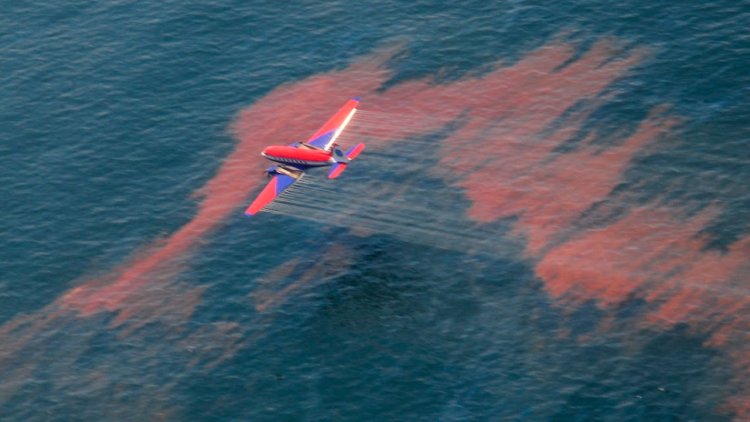
The UM Rosenstiel School research team developed the first oil-spill model algorithm that tracks the dose of solar radiation oil droplets receive as they rise from the deep sea and are transported at the ocean surface. The authors found that the weathering of oil droplets by solar light occurred within hours to days, and that roughly 75 percent of the photooxidation during the Deepwater Horizon oil spill occurred on the same areas where chemical dispersants were sprayed from aircraft. Photooxidized oil is known to reduce the effectiveness of aerial dispersants.

Photo: The University of Miami (UM)

Claire Paris, a UM Rosenstiel School faculty and senior author of the study, said:

“Understanding the timing and location of this weathering process is highly consequential. It helps directing efforts and resources on fresh oil while avoiding stressing the environment with chemical dispersants on oil that cannot be dispersed.”

Ana Carolina Vaz, assistant scientist at UM’s Cooperative Institute for Marine and Atmospheric Studies and lead author of the study, added:

“Photooxidized compounds like tar persist longer in the environment, so modeling the likelihood of photooxidation is critically important not only for guiding first response decisions during an oil spill and restoration efforts afterwards, but it also needs to be taken into account on risk assessments before exploration activities.”

The study, titled “A Coupled Lagrangian-Earth System Model for Predicting Oil Photooxidation,” was published online on Feb 19, 2021 in the journal Frontiers in Marine Science. The authors of the paper include: Ana Carolina Vaz, Claire Beatrix Paris and Robin Faillettaz.

James Fisher wins significant cable termination contract at Triton Knoll

0

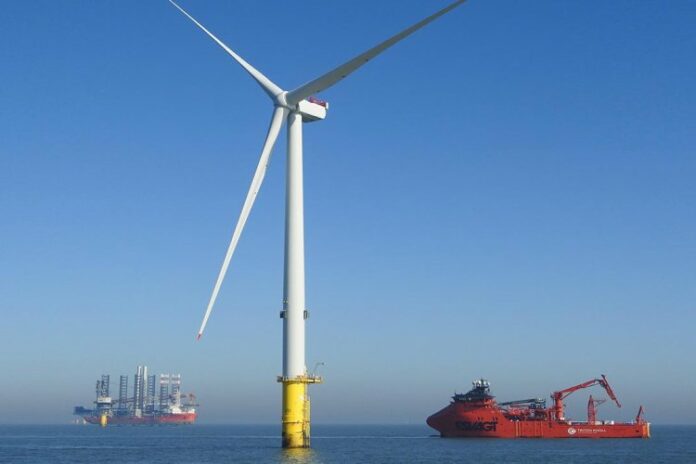
EDS HV Group, part of James Fisher and Sons plc, has been awarded a critical cable termination and testing contract on the 90 wind turbines that make up RWE’s latest offshore windfarm development, Triton Knoll.

The project involves the installation and termination of high voltage cables between the offshore foundations and the turbine switchgear, with pre-testing, mock-up trials and cable preparation having already been undertaken in late 2020. 

EDS’s strong safety, performance and quality records enables a ‘no snag’ approach, completing the work in 36-hour windows to ensure progression of the time-critical project. This eliminates return site visits, helping keep the safety risk associated with getting crew to the site, the emissions associated with the vessels required, and the cost to the project owner, to a minimum. 

The award represents the latest in a series of recent project wins for James Fisher in the renewables market: EDS has completed over 9000 terminations without failure, and this contract builds on previous site preparation / UXO removal work undertaken at Triton Knoll in 2019. 

Lee Glendening, Termination and Testing Business Manager at EDS HV, who will lead the project execution as part of the onshore project management team, commented on the contract win:  

“We are highly experienced in this type of complex work, which requires multi-skilled teams working in rotation to meet a scheduled deadline. We have an enviable reputation for high-quality termination experience and engineering expertise. 

“This particular project includes onshore project management supported by an EDS HV HSE Advisor with technical engineering support. Due to the location we can work from the strategically positioned EDS HV base in Grimsby that supports the local economy and RWE Renewables’ aspiration of achieving at least 50% local content during construction of Triton Knoll.” 

Glendening added:  

“When we first started working with Triton Knoll, we struck up a very natural relationship. With projects like this where there is complex work taking place within tight deadlines, our clients need the confidence that we can deliver – we have demonstrated expertise and experience in this work and are proud to be playing our part in supporting the transition to renewable energy sources.” 

Kongsberg Maritime delivers waterjets drives for innovative 60M high-speed superyacht

0

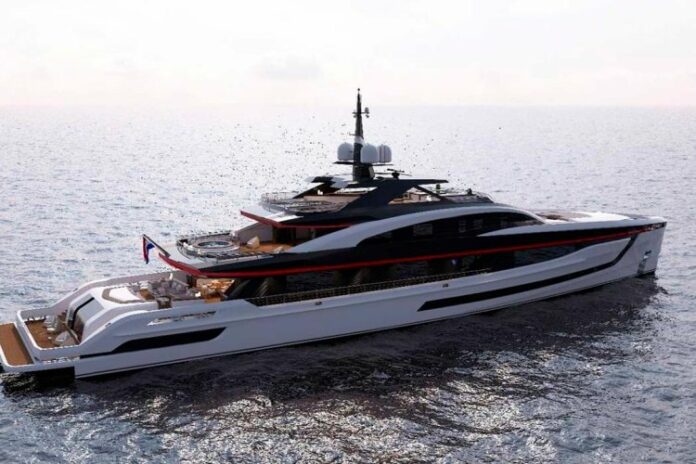
Kongsberg Maritime has been selected to supply four Kongsberg Kamewa waterjets and their associated control system for installation on board the innovative, high-speed superyacht Skyfall. 

The use of waterjets on Skyfall reduces vibration by up to 40% compared with a conventional shaft drive, and has allowed the 60m yacht to be designed with a draught of less than three metres – impossible with propellers, which would have required diameters exceeding this figure to absorb the available horsepower. 

Tommi Viiperi, General Manager, Sales – EMEA, Kongsberg Maritime, explains:

“Our type S90-4 waterjets offer the best efficiency and durability on the market thanks to their innovative mixed-flow pumps, delivering maximum performance for minimum weight. Their compact reversing buckets and steering nozzles enable superior position keeping and manoeuvrability at both high and low speeds. These advantages, combined with low vibration levels and extremely shallow draught, make our waterjets an attractive concept for superyacht propulsion, enabling owners to benefit from comfort, safety and reliable operation.”

Waterjets also have the benefit of eliminating shaft and propeller noise and – because they avoid the varying torques associated with propellers – there is no risk of overloading the engines, lengthening their life. On board Skyfall, the four S90-4 steel series waterjets will be teamed with four engines delivering a total of 22,000 horsepower. The outer engines will drive steerable and reversible jets, while the centre engines will operate as booster units.

The fully-featured control system supplied by Kongsberg Maritime will use the latest technology, including joystick control and automatic position keeping. Based on signals from the GPS, wind sensor and gyro, the automatic positioning system compensates for wind and current, allowing the vessel to maintain both position and heading using the installed propulsion systems. All parameters are manually adjustable via touch screens.

Skyfall features a lightweight aluminium Fast Displacement Hull Form (FDHF) that Heesen claims will result in an almost flat ride at speeds exceeding 30 knots. Heesen’s General Manager of Design and Development, Peter van der Zanden, explains:

“We did a lot of calculations and discovered that we could achieve the required speed with this horsepower and these dimensions with either a semi-displacement or a fast displacement hull form, which will be much more comfortable. Rather than raising the bow out of the water to reach high speeds, this hull will run nearly flat, no more than a 10-degree angle versus 35 degrees for the semi-displacement form at top speed.”

Three gyro stabilisers will keep the yacht steady at low speeds.

Designed by Frank Laupman of Netherlands-based Omega Architects and with an interior by British studio Harrison Eidsgaard, Skyfall is tailored to reflect the owner’s joint passions: speed, as demonstrated by her powerful waterjet drive system; and fishing, catered for with a huge ‘fishing cave’ with stowage for 40 rods. Accommodation for up to 10 guests, an expansive aft-facing owner’s suite with private terrace and whirlpool spa, a multi-tiered swim deck and dedicated cinema, bar, alfresco dining area and games room complete Skyfall’s comprehensive specification.