-12.2 C
New York
Home Blog Page 664

Ardmore Shipping confirms joint venture to deliver hydrogen fuel cells to the marine sector

0

Ardmore Shipping Corporation has announced that it has formed and invested in a new joint venture with Element 1 Corp. (E1) and Maritime Partners, LLC to bring E1’s unique methanol-to-hydrogen technology to the marine sector.

The three parties will establish an equal share partnership to form ‘e1 Marine’. The new company will have a worldwide remit for the marketing, development, licensing and sale of E1’s hydrogen generation systems for the marine industry, including shipping, refrigerated containers, offshore energy, renewable energy, passenger and leisure, and certain port infrastructure and related applications.

Element 1 Corp., headquartered in Bend, Oregon, is a leading developer of advanced hydrogen generation systems used to power fuel cells with broad use in mobile applications and remote locations such as marine, trucking, automotive, off-road vehicles, rail, warehousing, and backup power supply sectors. E1’s proprietary technology produces hydrogen on demand at the point of consumption, eliminating the logistical challenges and costs inherent in distributing compressed hydrogen.

Maritime Partners, LLC, headquartered in New Orleans, Louisiana, is a leading provider of flexible financing solutions and newbuilding support to the maritime industry, with a focus on Jones Act vessels and inland marine transportation.

Anthony Gurnee, Ardmore’s Chief Executive Officer, commented on the announcement:

“We are very pleased to establish a strategic relationship with E1 and Maritime Partners to deliver this unique hydrogen delivery system to the marine sector. The establishment of e1 Marine and our investment in E1 advance our Energy Transition Plan, which includes a focus on transition technologies aimed at reducing carbon emissions in the shipping industry and utilizing Ardmore’s engineering and marketing capabilities to accelerate their deployment.

“We are excited about the market opportunity for E1’s methanol-to-hydrogen technology. We believe it is safer and cheaper than other alternatives for onboard hydrogen delivery and, when using standard methanol, is operationally cost competitive with diesel engines even today, while emitting zero particulates, zero NOx, zero SOx, and 30-50% less carbon than a diesel engine of the same power rating. The E1 system is carbon-neutral when run on renewable methanol, should prove to be very cost competitive with other alternatives, and if desired can be built or retrofitted to run on ammonia.”

Dr. Dave Edlund, Co-Founder and CEO of Element 1 Corp., commented on the announcement: 

“Element 1 is delighted to ally with Ardmore and Maritime Partners to deliver commercial solutions for the marine sector that will significantly reduce the carbon intensity as well as other harmful emissions (particulate matter, NOx, and SOx) traditionally associated with burning fossil fuels. This strategic relationship is the direct result of our partners’ vision as well as their commitment to environmental responsibility.

“Whereas fuel cell technology has matured substantially over recent decades, the supply of hydrogen as feedstock to fuel cells has lagged considerably, resulting in significant logistic and economic challenges to the wide-scale deployment of fuel cells. E1’s methanol-to-hydrogen technology offers a broad solution to this challenge. Importantly, Ardmore and Maritime Partners provide unique access to existing markets in international shipping and inland waterways.”

Mr. Bick Brooks, Co-Founder and CEO of Maritime Partners LLC, commented on the announcement:

“We are pleased to partner with E1 and Ardmore to drive the adoption of E1’s hydrogen purification technology across the global maritime landscape. We are particularly excited about the applications for this technology within the inland marine industry, as it offers the potential to materially lower carbon emissions in the near-term and provide a clear path to achieving a zero-carbon footprint. Importantly, we believe this technology is currently cost competitive with diesel internal combustion engines.

“Ardmore has an excellent track record of financial discipline. Accordingly, we look forward to aligning with Ardmore beyond the joint venture and to supporting Ardmore’s accretive growth ambitions through our preferred equity investment.”

Ardmore’s interest in the joint venture and its investment in E1 will be held by Ardmore Ventures, a newly incorporated holding company for existing and future potential investments related to Ardmore’s Energy Transition Plan.
Innovez One signs agreement with R W Marine Services in Singapore

0

Innovez One, one of the world’s leading providers of port management information software for the world’s busiest ports, towage and marine services operators, has signed a multi-year contract with R W Marine Services, one of Singapore’s leading sea transportation operators, to digitise its fleet operations.

R W Marine Services will use Innovez One’s maritime sector-specific marineM solution to streamline its ordering, vessel and job planning, real-time updating, and billing operations.

marineM will enable R W Marine Services to dispatch jobs wirelessly to mobile devices and monitor its fleet’s movements and the progress of every single job simultaneously using GPS and AIS tracking. Additionally, real-time communications between marineM users and live operations of the fleet will boost communications in an often-siloed operating environment.

The platform will also provide information management systems that link together each stage of the sea transportation chain, covering job management, planning & dispatch, tracking & monitoring and billing, improving R W Marine Services’ visibility of its operations.

Innovez One will roll out the marineM services in the coming months to R W Marine Services fleet made up of outer port limits (OPL) and in-port supply boats vessels. The vessels are used for sea transportation handling, conveying passengers, tank cleaning, de-slopping and cargoes handling to or from ships in the Singapore anchorages, outside port limits, South China Sea and Malacca Straits.

This partnership reflects the growing urgency for marine services to digitise operations more efficiently. Many ‘Tier 2 and below’ ports – 80% of ports worldwide – still use manual, paper-based processes, Excel spreadsheets or legacy computer systems to arrange and execute jobs and rely on personal interaction and paper-based transactions as the norms for shipboard, ship-port interface and port-hinterland-based exchanges. This leads to a range of inefficiencies in ordering, execution, and billing, as well as a lack of sustainability and competitiveness.

David Yeo, group CEO and founder of Innovez One, said:

“We’re delighted that R W Marine Services has decided to partner with Innovez One to digitise its sea transportation operations. Our marineM modular platform will revolutionise R W Marine Services’ management of sea transportation services by turning difficult, manual tasks into a streamlined, efficient process underpinned by cutting-edge digital.”

Digitising essential processes can deliver substantial cost savings every year for fleets by reducing waiting times for vessel port calls, optimise fuel consumption, utilisation of its fleet and personnel.

Ben Tan of R W Marine Services, said:

“In the marine services market it’s becoming essential that we can add value and differentiate ourselves with increased reliability and greater transparency for customers. We look forward to working with Innovez One to digitise our operations, and ultimately improve the competitiveness of the port by reducing costs, saving time, and tackling GHG emissions immediately.” 

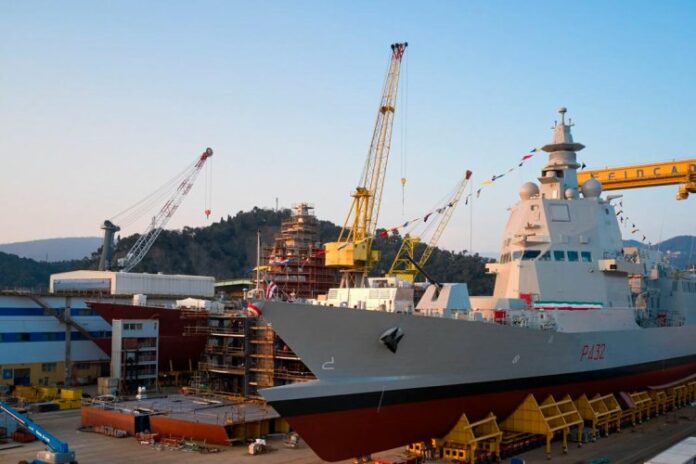
Fincantieri launched the third PPA Raimondo Montecuccoli in Riva Trigoso

0

This vessel, third of seven, will be delivered in 2023 and it is part of the renewal plan of the operational lines of the Italian Navy vessels, approved by the Government and Parliament and started in May 2015 (“Naval Act”) under the aegis of OCCAR (Organisation Conjointe de Cooperation sur l’Armement, the international organization for cooperation on arms).

The multipurpose offshore patrol vessel is a highly flexible ship with the capacity to serve multiple functions, ranging from patrol with sea rescue capacity to Civil Protection operations and, in its most highly equipped version, first line fighting vessel. There will be indeed different configurations of combat system: starting from a “soft” version for the patrol task, integrated for self-defence ability, to a “full” one, equipped for a complete defence ability. The vessel is also capable of operating high-speed vessels such as RHIB (Rigid Hull Inflatable Boat) up to 11 meters long through lateral cranes or a hauling ramp located at the far stern.

•133 meters long  
•Speed more than 31 knots according to vessel configuration and operational conditions 
•171 persons of the crew  
•Equipped with a combined diesel, a gas turbine plant (CODAG) and an electric propulsion system
•Capacity to supply drinking water to land
The Multipurpose Offshore Patrol ships will be built at the Integrated Shipyard of Riva Trigoso and Muggiano, with deliveries expected until 2026.

About Raimondo Montecuccoli

Raimondo Montecuccoli, from Modena, was a general in service within the Austrian Empire. He participated with great success in all the wars fought in Europe – between 1625 and 1675 – by the Habsburg monarchy against the Dutch, Swedes, Turks and French. Initiated to a career in the church, he instead chose the military career with determination, serving the Empire and standing out in several campaigns during the Thirty Years’ War. From 1648, he held a series of very important diplomatic positions in Italy and Europe. At the peak of his career, he became the rank of General Lieutenant of the Empire (1609-1681).

He was a man with a unique culture, a very successful military writer (he was the first to further explore his studies in personnel and logistics), and was mentioned by Ugo Foscolo as the greatest and most learned Italian men at arms.

His name was previously attributed to a light cruiser of the same-named class. Unit characterized by the reputation of a lucky ship, in the headlines since 1937, when she was sent, with only twenty-four hours notice, to China. Protagonist of the battle of Pantelleria, on June 15, 1942, the vessel resulted in the loss of the destroyer “Bedouin”, the “Kentucky” tank, as well as in the damage to the cruiser “Cairo”, the destroyers “Ithuriel” and “Partridge”, and the minesweeper “Hebe”.

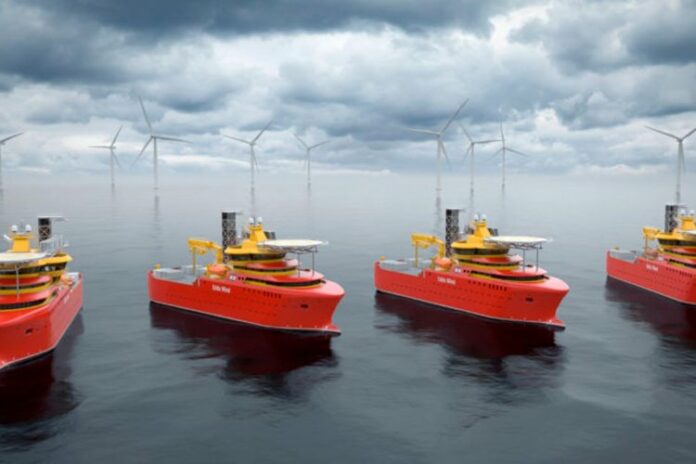
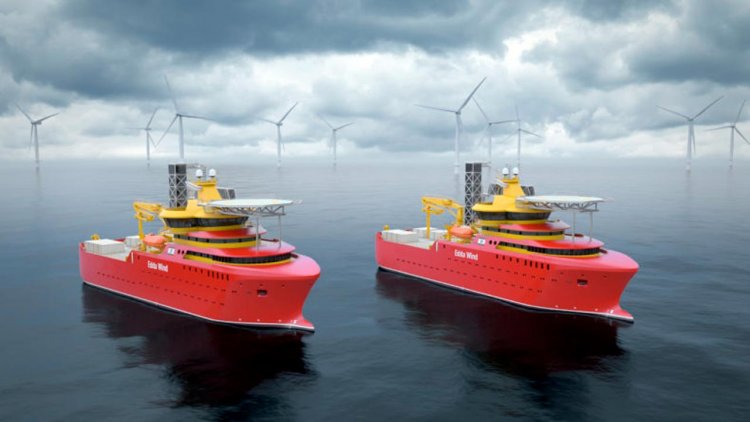
Edda Wind orders two additional CSOVs and prepares for initial public offering

0

The vessels are specially designed for service operations during the commissioning and operation of offshore wind farms. All six vessels are being prepared for installment of zero-emission technology. Following the growth of the company, it has been decided to prepare for an initial public offering of Edda Wind on Euronext Growth.

Edda Wind has a strong track record and has been operating in the wind segment since 2015. Including the two latest newbuildings, the company will have a fleet of eight vessels, of which four are contracted on long term agreements with key clients like Ørsted, Vestas and Ocean Breeze. In addition, the company has options with the yard to build more vessels.

Kenneth Walland, CEO of Edda Wind, says:

“Ordering two more purpose-built CSOVs will further strengthen Edda Wind’s leading position within offshore wind. Tremendous growth is expected in the offshore wind market over the next decades, and Edda Wind intends to be a world-leading provider in this segment.”

Based on the anticipated growth of the company, the board has decided to invite investors to take part in the growth of Edda Wind and will seek listing on Euronext Growth. The two owners, Østensjø and Wilhelmsen, both acknowledge Edda Wind’s enormous potential.

Håvard Framnes, chair in Edda Wind, says:

“We believe this is the right timing to commence a process of listing Edda Wind. Within the next decade, the world’s need for renewable energy will see exponential growth. With our ambitions, this journey will require significant investments to capitalise on the market opportunities ahead of us.”

The newbuilds will be built at Astilleros Gondan in Spain, with a planned delivery in 2023 and 2024. The Østensjø Group has a long and successful relationship with Gondan. These two latest CSOVs will be vessel number 16 and 17 built at the yard by Østensjø. In addition, two Service Operation Vessels (SOV) are being built at Astilleros Balenciaga, also in Spain.

Walland says:

“It is crucial to be able to deliver quality vessels with predictable delivery times in the wind segment. We are very happy to see Gondan as the shipyard for these latest vessels in addition to the vessels they are already building for Edda Wind. We know their capabilities well, and the yard has proven to deliver the quality we require within the agreed delivery times.”

The 89.3 meters in length vessels will function as mother ships for wind turbine technicians as they perform commissioning and maintenance work on the wind turbines. Comfortable cabins and high standard common areas can accommodate up to 97 technicians and 23 marine crew onboard. Anti-heeling and roll reduction systems will provide good working conditions onboard. The motion compensated gangway system with an adjustable pedestal will ensure safe and optimal connections to the turbines, even in harsh weather conditions. The design is optimised for an efficient logistical operation for the turbine technicians.

Walland says:

“The main design objective has been to build the most environmentally friendly vessels without compromising operational capabilities. The vessel design will reduce emission of greenhouse gases significantly. The vessels will also be prepared for zero-emission operation. The technology is based on Liquid Organic Hydrogen Carrier (LOHC), which will ensure safe and efficient use of hydrogen as an energy source. We are, however, dependent on support to green shipping projects by the Norwegian government to be able to develop, build and optimize these solutions.”

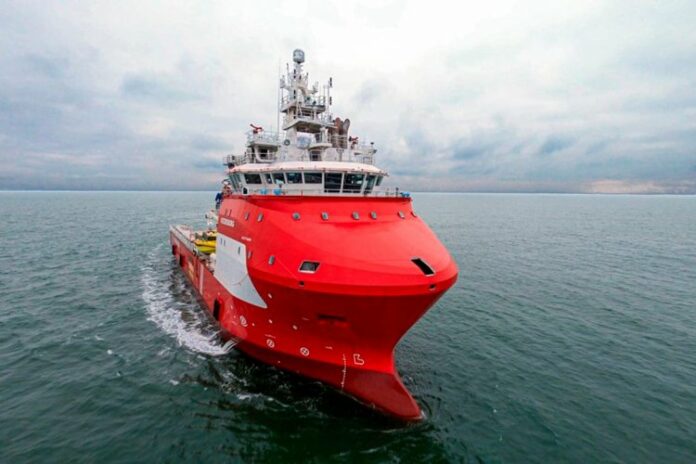
Wagenborg takes its third walk-to-work vessel into service as Keizersborg

0

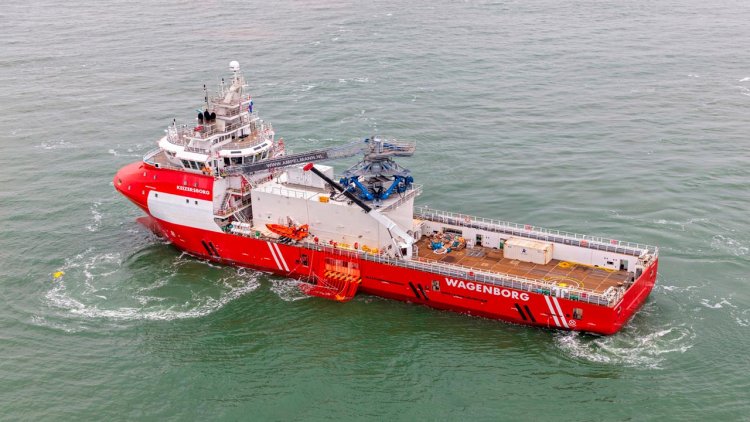
After the positive experiences with the W2W vessel Kasteelborg, Wagenborg has once again opted to convert a standard Platform Supply Vessel into this specialist offshore vessel. The DP2 vessel was designed by Wärtsilä and built by Wuhu Shipyard in China.

Keizersborg was converted in 16 weeks by the Royal Niestern Sander shipyard and provided with an extra accommodation module and motion compensated gangway.

Oil and gas companies face major challenges to carry out their work as safely and cost-efficiently as possible and to increase the efficiency of maintenance. Offshore platforms are smaller and normally unmanned without a helicopter deck, resulting in a need for W2W ships. With W2W ships, offshore activities can be supported safer, more efficiently, more effectively and more productively, as the W2W ships Kroonborg and Kasteelborg have proven. Keizersborg is used in a similar way and is ERRV certified.

As an Emergency Response and Rescue Vessel (EERV), Keizersborg can be deployed in emergency situations at platforms for rescue work, standby activities, emergency towing or patrol tasks. The ship is equipped with extra facilities on board, such as an infirmary, reception rooms, a decontamination room, a recovery room and extra sanitary facilities. Keizersborg is also equipped with a daughter craft and a fast rescue boat, so that rescue activities can also be carried out in bad weather.

C-Job Naval Architects presents customizable TSHD series

0

TSHDs fall into two general categories: standard designs and fully customized designs.

The fact that these two categories of designs are poles apart in how they meet owner’s requirements was the motivation for C-Job to develop its own series of TSHD designs. 

Basjan Faber, C-Job CEO, explains:

“We noticed a mismatch. On one hand, off-the-shelf TSHD designs do not match specific project profiles. On the other hand, fully tailored dredgers can be seen as limiting themselves to the type of project they can perform. Plus, any small adaptions to standard designs usually require a hefty fee.”

This is the crux of C-Job’s TSHD series – to fill the gap between standard and one-off custom tailored vessels. Basjan adds:

“We want the C-Job TSHD Fleet to offer the benefits of both a standard design combined with a fully tailored design and the opportunities that presents.”

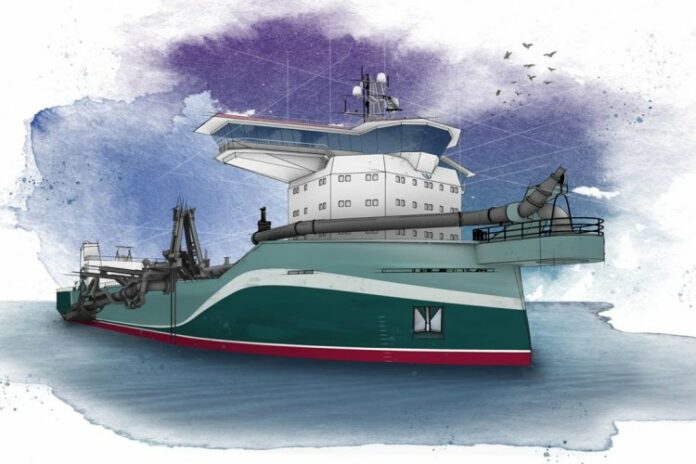
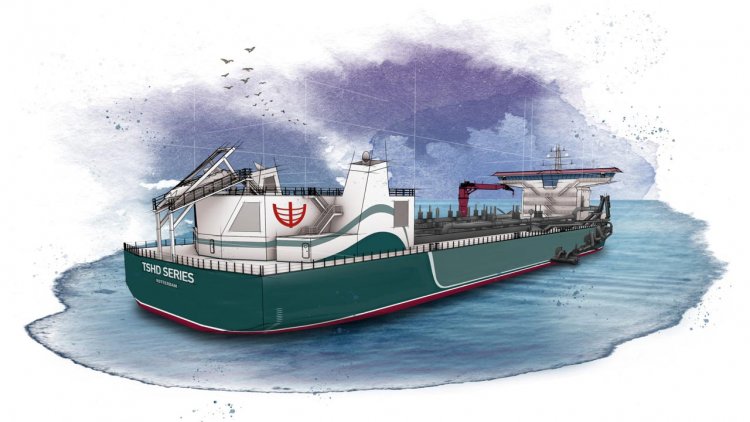
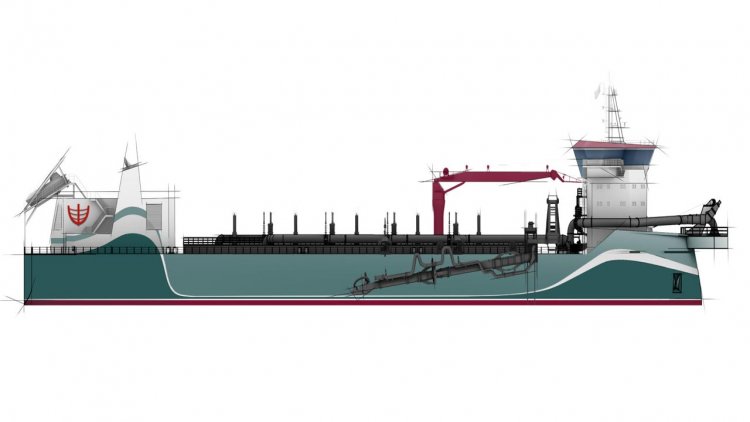
The C-Job TSHD Fleet features maintenance, multifunctional, and capital dredgers each with varying hopper capacities. Each design is modular, and can be used as it was first built, or modified to better suit specific operations. The modular components involve the adaptation of main parameters and functionalities such as dredging depth, type of dredge pump, pump power, and discharge method. Furthermore, any hopper capacity is possible because the series allows for easy up- or downscaling of cubic meters. C-Job R&D knowledge and tools support the customizable TSHD series at every turn. For example, the automation process ensures any proposed changes can be quickly checked. The system will show how changes will alter the design and whether it is indeed feasible almost immediately. 

C-Job presented the first concept design of its TSHD series at the beginning of March 2021. This is for a 14,000 m3 multifunctional dredger, optimized for shallow water performance. Its key features are here below:

Twin gondola aft ship design:

  • 2 x 1200 mm trailing suction pipes, up to 35m dredging depth
  • 2 x inboard dredge pump capable of parallel (trailing) or series (discharging) operations
  • Option for extended trailing pipe with submerged pump up to 100 m dredging depth
  • Self-unloading systems via bow coupling and discharge pipeline or rainbow system
  • 8 self-emptying bottom doors in one row
  • 4 x closed diffusion boxes for reduced turbulence and maximum control of trim during operation

As you would expect from C-Job, it has paid particular attention to the sustainable credentials of the new TSHD Series. Not only will all the dredgers within the series feature a Green Passport and Clean Design notation, the company’s research into hydrogen-based renewable fuels will provide customers an additional customization element.

Basjan says:

“In order to reduce greenhouse gas emissions in the maritime industry, we must consider hydrogen-based renewable fuels. With technology progressing at an ever-increasing rate, what isn’t possible now – may be possible in five years’ time. Especially as it becomes more readily available and affordable. At C-Job we aim to show these possibilities in our TSHD series and share our vision of the future of dredging with our clients.”

Van Oord adopts innovative technology to further reduce emissions on its fleet

0

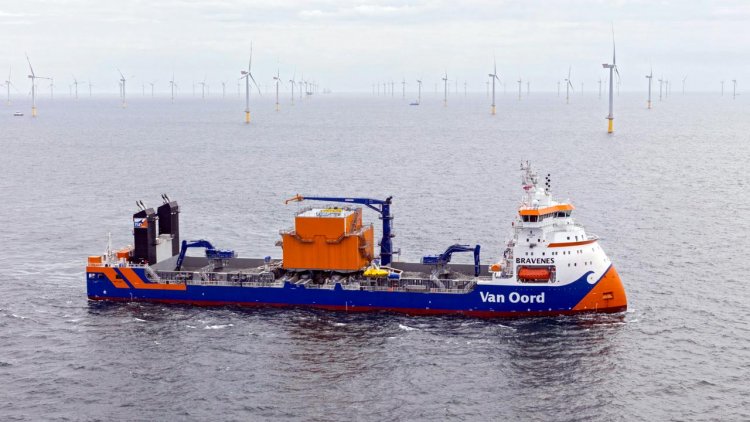
The FUELSAVE FS MARINE+ is a patented solution to reduce both fuel consumption and harmful emissions of marine diesel-powered engines. This solution enables Van Oord to achieve substantial carbon dioxide (CO2), nitrogen oxide (NOx), particulate matter (PM) and black carbon (BC) reduction on existing ships.

Van Oord is committed to becoming carbon-neutral by 2050, in line with the Paris Agreement. This commitment reflects the company’s desire to limit its impact on climate change. The collaboration with FUELSAVE facilitates a sustainable and viable initiative to reduce the carbon footprint of the new and existing fleet. Making it more energy efficient and reducing emissions. FUELSAVE was one of the selected companies of PortXL, of which Van Oord is one of the founding partners. PortXL is a port and maritime accelerator platform that encourages innovation within the global maritime industry.

Job Voormolen, Manager R&D and Innovation, said:

‘Van Oord is always looking for new technologies that contribute to the efficiency increase of our vessels and making them cleaner. We believe that this is a satisfactory and affordable short-term solution to support that goal.’

After more than 5 years of validating the technology in the field, in the laboratory and deploying the system on the world’s largest single row 4-stroke engine, the FS MARINE+ solution has been chosen by Van Oord. This is the first time that the system is being deployed on MaK engines with a classification from Bureau Veritas and Kongsberg Vessel Insight integration for a demanding DP3 operation. This sustainable investment is paving the way for next generation of structural efficiency enhancement and emission reduction for the offshore industry.

Marc Sima, CEO of FUELSAVE GmbH, said:

‘Our product optimises the energy consumption and the environmental impact significantly irrespective of a vessel’s fuel type. Due to it being a unique combination of an efficiency enhancement and emission reduction solution, we are able to deliver over 400% higher overall emission reduction potential than other efficiency enhancement technologies with the same level of primary fuel savings. We are not treating a symptom but tackling the root of the problem by means of advanced combustion conditioning using hydrogen and methanol. The cleaner combustion provides additional potential greenhouse gas emission reduction, such as CO2 (approx. 8-15%), NOx (approx30-80%) and BC (approx 33%).’

ABS launches smart emissions reporting tool

0

ABS has added another smart digital tool to its industry-leading environmental compliance support for shipowners and operators.

ABS Emissions Reporter™ allows vessel operators to input and monitor their IMO Data Collection System (DCS) and EU Monitoring Reporting and Verification (MRV) review process with ease and efficiency.

The easy-to-use, self-service application tracks the status of the verification process and, once the data has been verified by ABS engineering, makes it simple to export the results and submit to the appropriate organization.

The ABS Emissions Reporter is just the latest digitally-enabled support for environmental compliance geared toward shipowners and clients launched by ABS, which also launched the ABS Environmental Monitor™ sustainability solution in February. A key part of the ABS My Digital Fleet™ risk management platform, ABS Environmental Monitor is  one of the maritime industry’s most comprehensive digital sustainability solutions to help shipowners achieve their sustainability goals. By leveraging vessel waste streams and emissions data, users receive transparent reporting to support and inform more sustainable vessel operations. ABS Emissions Reporter seamlessly connects with ABS Environmental Monitor.

Georgios Plevrakis, ABS Director, Global Sustainability, said:

“Shipowners are faced with a significant degree of new environmental regulation, making managing fleet compliance more challenging than ever before. ABS is committed to supporting the industry meet its environmental challenges and this application is the latest evidence of that. It streamlines environmental compliance, making the complex process simple, seamless and straightforward to deliver.” 

Once registered, the application interface makes it easy for ship managers to upload  IMO DCS and EU MRV vessel details, reporting data and supporting documents through the application’s user interface.

ABS Emissions Reporter Features:    

•          A key element of the ABS My Digital Fleet platform

•          Connects with ABS Environmental Monitor™

•          Data quality checks and validation during upload for real-time feedback

•          Instantly connect and communicate with an ABS Engineer

•          Monitor and receive notifications on review status in real time 

•          Downloadable annual reports that are compatible with EU THETIS-MRV module 

•          Real-time analysis of data upon report submission

•          User-friendly interface, configurable account management settings and notifications

BV releases new-generation classification rules for wind propulsion systems

0

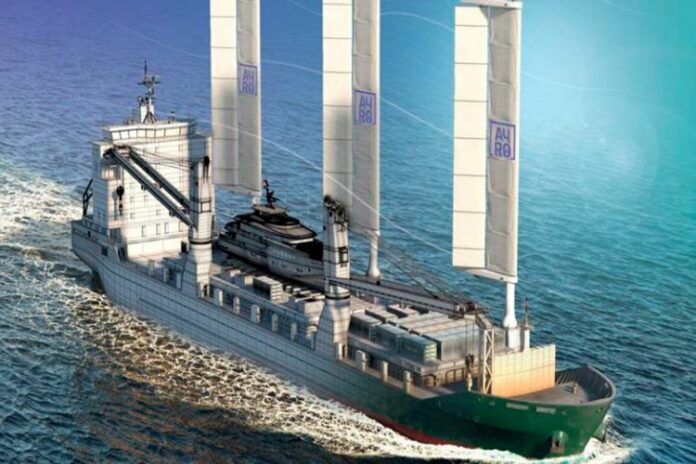
The new Bureau Veritas rule notation for WIND PROPULSION SYSTEMS (WPS) – NR 206, builds on pre-existing BV rules released in 1987. Now two new notations have been issued to provide the classification requirements for modern wind powered ships: WPS 1 for standing rigging and WPS 2 for standing and running rigging.

Both provide load cases and coefficients for all types of wind propulsion technologies including free standing rigs, wing sails, kite sails and wind turbines.

The new rules provide the key classification framework for wind assisted propulsion. Firstly at the design review stage, safety and interactions with other systems on board must be addressed and, secondly, for in-service life, the rules address survey regime and maintenance requirements.  

General requirements that must be addressed include:   

  • Risk analysis / hazard identification (HAZID) studies
  • Definition of load cases and critical situations
  • Definition of automation and release system
  • Definition of wind propulsion system impacts on ship safety
  • Ship strength; influence on hull girder strength, addressing bending moments and shear forces
  • local strength in way of connections between wind propulsion systems and the ship including the mast footings, boom, deck, standing rigging attachments to the ship and maneuvering systems

In addition, the rules require an operational manual including limitations of operation of wind propulsion systems in accordance with its design, such as wind speed limitations.

Yves Pelpel, Senior Vice President Technical at Chantiers de l ‘Atlantique, said:

“With the concept of solid sail, first of its kind of a new generation of very large sails made of rigid panels and its Aeoldrive balestron rigging, Chantiers de l ‘Atlantique is offering the most advanced and innovative solution of sailing propulsion of the large ships market. The integration on-board a passenger ship of such an innovative solution is only possible thanks to the tremendous collaborative work done with Bureau Veritas on its new rules Wind Assisted Propulsion.”

Concordia Damen launches BesteVaer Capital Fund

0

Concordia Damen has launched a Capital Fund, the BesteVaer Capital Fund. This fund will facilitate the purchase of new and/or used inland vessels, thereby stimulating movement within the inland marine transportation sector.

The company has made a Business Plan Tool on its website to offer its customers – on a non-obligatory basis – the possibility of having a customised business calculated for a motor vessel of its stock database.

The resultant plan is specifically designed to serve as the first assessment of the financing of a vessel. Following the data capture on the website, the client receives the customised business plan by email.

Should the financing requirements of the banks not be fully met, the Business Plan Tool will provide information on additional financing options which can be provided by BesteVaer Capital Fund.

CEO Concordia Damen Chris Kornet said:

“With this move we have added value to our solutions, providing our clients with a helpful financing tool. This will facilitate easier purchasing of new and used inland shipping vessels from our stock portfolio and help provide stimulation to the inland shipping industry.”