-12.2 C
New York
Home Blog Page 663

Høglund signs contract with Halliburton AS to deliver of an LNG Fuel Gas Supply System

0

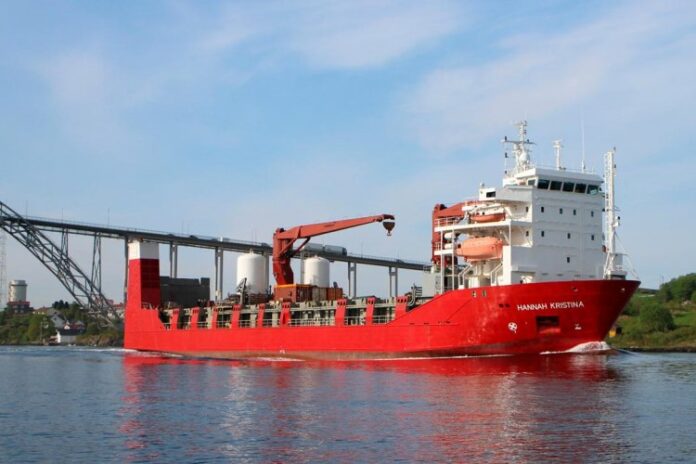
Høglund Gas Solutions AS has signed a contract with oilfield services provider Halliburton AS to provide a turnkey retrofit of the 5932dwt RoRo – combination carrier M/V Hannah Kristina (IMO 9159933). Hannah Kristina can operate dry bulk, wet bulk and general cargo.

She vessel is owned by Base Marine Norway AS and under technical management by Larvik Shipping AS while Halliburton is the end-charterer. The project aims to improve the vessel’s environmental footprint by converting the marine diesel oil-fuelled vessel into dual-fuel by supplying an LNG Fuel Gas Supply System (FGSS) alongside an upgrade with shore power connection.

The project, led by Høglund, will require extensive collaboration between numerous stakeholders, including naval architects, engineering teams, a retrofit shipyard, various suppliers, class society flag state and the vessel owners and operators. Høglund will therefore collaborate with long-time partners HB Hunte Engineering GmbH and Fiskerstrand Verft AS for the naval architecture and shipyard elements of the project, respectively. The entire project will be classed by DNV.

The scope under the contract consists of a 250m³ capacity FGSS with a dedicated Gas Control and Safety System to serve the already installed dual-fuel M/E with natural gas. For the shore-power upgrade that will be used to power the vessel while berthing and to charge the existing Energy Storage System (ESS), Høglund will supply and install a package consisting of shore connection cabinets of 690V / 600kVA compatible with state-of-the-art shore power supply, following IEC80005-3 standards. Both systems will be seamlessly integrated into the existing Automation System (IAS), Power Management System (PMS) and ESS control system of the vessel which were delivered and installed by Høglund in 2018.

In order to implement the appropriate safety measures following the requirements of the IGF-Code and improve the safety credentials of the Hannah Kristina, Høglund will be combining its extensive knowledge in gas, power and automation solutions with HB Hunte’s outstanding expertise in naval engineering to perform further modifications on the vessel. These will include the adjustment of the mooring arrangement in the LNG tank area and an upgrade to the ventilation system, among other conversions. The delivery of the retrofitted vessel is expected to take place in March 2022.

The goal of this project is to upgrade a 20-year-old vessel with modern environmental credentials. With the use of LNG and battery power, the vessel will significantly reduce its CO2 and NOx emissions both while at sea and during harbour stays. Supporting the project is the Norwegian NOx Fund, a partnership between the Norwegian government and the private sector committed to reducing NOx emissions in Norway.

As such, the turnkey solution approach provided by Høglund is ideal, especially given the complex nature of this project. It provides the customer with peace of mind that contract will result in a vessel that is modern, effective, reliable and fits the operational requirements. Høglund will ensure that the complex stakeholder management aspect of the retrofit works will be run effectively and that this will result in a well-executed project.

Commenting on the contract, Philipp Ulrich, Senior Project Manager at Høglund, said:

“The technological and environmental transformation of shipping over the coming years is one of the biggest challenges facing our industry. To achieve this transformation in a commercially viable and minimally disruptive way, meaningful and well-coordinated collaborations are essential. I’m proud that Høglund has been chosen for this project and we are looking forward to leading a consolidated and collaborative effort by working with this diverse set of stakeholders.”

Adding their thoughts on the project, Jean-marc Lopez, Vice President of Halliburton AS, said:

“By utilizing Hannah Kristina, Halliburton has moved huge amounts of goods from road to sea, reducing the emission of CO2 and NOx. With the conversion of Hannah Kristina from diesel to LNG and shore power, we take the reduction of CO2 and NOx a step further, in line with our strategy to continue to reduce the environmental footprint of our activities.”
Contracts awarded for state-of-the-art service operation vessels for Dogger Bank wind farm

0

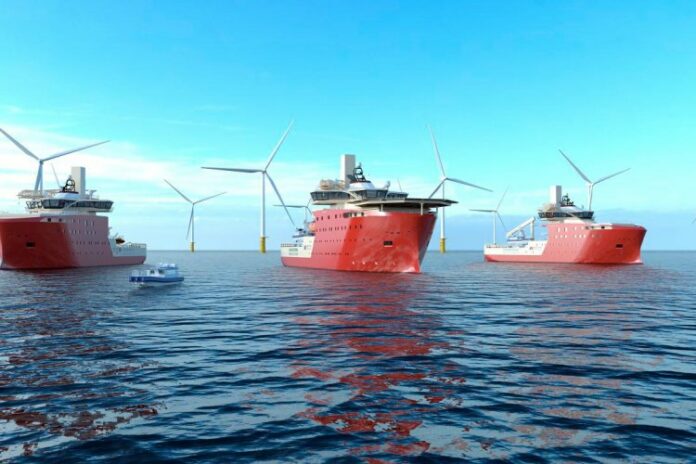
The Dogger Bank A and B phases of the Dogger Bank wind farm have awarded UK-based North Star Renewables contracts for delivering three service operation vessels (SOVs) for the operation of these phases. The total value of the contracts including options is estimated at about GBP 270 million.

The three SOVs will incorporate the latest technology, including a hybrid battery solution and power-to-shore to reduce fuel consumption and emissions. Technicians servicing the turbines will spend two weeks on board the high-tech vessels, more than 130 km off the North East coast of England, ensuring the wind farm phases are safely and efficiently maintained to provide optimum wind turbine availability.

SSE Renewables is the operator during the construction phase of the wind farm and Equinor will be the operator during the operations and maintenance phase. Around 200 people will be needed to operate the wind farm, based either offshore or at a new base to be constructed at the Port of Tyne.

Halfdan Brustad, vice president for Dogger Bank at Equinor, says:

“We are pleased that a UK supplier wins these contracts in a tough international competition. The awards will create a good basis for Aberdeen-headquartered North Star to expand their services to support the UK’s growing offshore wind sector. Dogger Bank is at the forefront of innovation, and we want to attract the best talents to come work on this ground-breaking project. The high-end SOVs will ensure our teams have a comfortable stay offshore, which is important before a day’s work on the turbines. We have incorporated leading technology to ensure we can operate the wind farm safely, sustainably and efficiently.”

Dogger Bank will be the largest offshore wind farm in the world when complete in 2026, and is being built in three equal phases of 1.2 GW; Dogger Bank A, B and C.

North Star will deliver one SOV to be used for scheduled maintenance at Dogger Bank A and B. The vessel is due to be delivered in January 2024 and will also serve Dogger Bank C when this phase of the wind farm is operational.

A further two SOVs will be delivered by North Star to be used for corrective maintenance, at Dogger Bank A and Dogger Bank B. Delivery of these vessels is scheduled for July 2023 and July 2024 respectively.

A further contract for an SOV to be used for corrective maintenance at Dogger Bank C will be tendered at a later stage.

Each vessel will have dynamic positioning (DP2) capability, with walk-to-work gangways for safe transfer of personnel and equipment to and from the turbines. Using these gangways means that technicians will be able to transfer safely in wave heights above 3 meters, increasing the productive time on turbines and optimising wind farm availability.

All three contracts will run for a fixed period of 10 years and include three one-year options.

Onshore construction for Dogger Bank A and B began in January 2020 and remains on track despite challenges presented by Covid-19. Offshore installation will begin from 2022, with the first power from Dogger Bank A expected in the same year.

Steve Wilson, Dogger Bank Wind Farm project director, says:

 “While work continues to ramp up on the construction of the wind farm, these state-of-the-art hybrid vessels will play a critical future role in ensuring the safe and efficient maintenance of the development when it reaches the operational phase. It’s an important milestone for the project and provides some insight into what life will be like working on the world’s largest offshore wind farm whilst living on board these technologically advanced SOVs.”

Dogger Bank A and B are a joint venture between Equinor (40%), SSE Renewables (40%) and Eni (20%). These phases reached Financial Close in November 2020, securing the largest ever project financing in offshore wind.

The third phase, Dogger Bank C, is being developed on a different timescale and is owned by Equinor (50%) and SSE Renewables (50%). Financial Close is expected in late 2021.

Kongsberg unveils new Simrad SY50 fish-finding omni-sonar

0

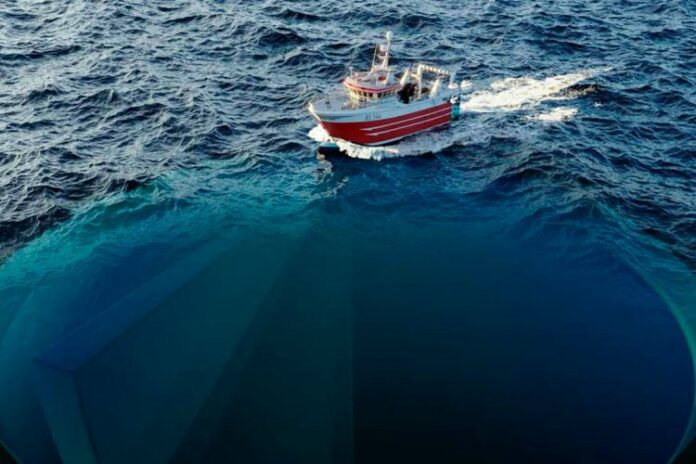
A new compact fish-finding omni-sonar has joined Simrad’s market-leading product portfolio with the launch of the Simrad SY50. Designed with small coastal fishing vessels in mind, the medium-frequency SY50 nevertheless boasts the same advanced functionality which characterises the larger units in the Simrad range; a first for sonars in this price bracket.

Key to the sonar’s suitability for vessels with limited space is an ingenious modification which sites all transceiver electronics within the transducer, negating the need for a transceiver cabinet while also reducing noise and simplifying installation. Only a single ethernet cable runs from the computer in the bridge to the power supply and the hull unit, which is sufficiently small that it can be placed on an installation trunk with an 8in diameter.

The computer itself contains no fan or any other moving parts, so it will perform without hindrance in humid environments. Additionally, both the computer and hull unit can also operate on DC power – a godsend for small fishing vessels without an onboard 3-phase power system.

Uniquely for such a small and competitively-priced sonar, the high-resolution SY50 offers 256 individual receiver and transmitter channels as well as encompassing features normally only found on larger items. These include single-ping transmission, giving a simultaneous horizontal and vertical pulse; FM transmission; and full beam stabilisation by internal sensor with electronic pitch and roll compensation, plus the option of connection to an external MRU (motion reference unit).

With a standard operating frequency of 57kHz, the SY50 nevertheless allows users to choose any frequency between 54 and 60kHz, adjustable in 0.5kHz increments, which gives a potential operating range of up to 2,000m (depending on acoustic conditions). Similarly, the transducer’s omnidirectional sonar beams can be electronically moved in 1° steps from +10° to -60°, enabling users to automatically track fish shoals and survey the entire water volume surrounding the vessel.

This principle of adaptability is also reflected in the system’s physical characteristics, by which the height of the trunk and the length of the transducer shaft can be calibrated to suit the dimensions of the host vessel. The transducer can be lowered to 40cm or 60cm beneath the hull.

Sharing its familiar and well-proven Winson operating software with all other products in the Simrad range, the SY50 provides a clear and simple user interface, available in almost 20 languages. A compact operating panel can be easily and unobtrusively installed on the control deck of a vessel’s bridge, communicating with the computer via a single USB cable. Users have the ability to set up and save their own settings, while the system also allows for sonar data to be stored and recalled.

Mads Diedrik Dahl, Vice President Fishery Sales, Kongsberg Maritime, says:

“It’s very satisfying for us to offer such high-end functionality on such a compact sonar, and at such an affordable price. We wanted to issue a product that would provide new possibilities for budget-conscious crew on smaller leisure or fishing vessels who have traditionally tended to miss out on more sophisticated sonar features, and with the SY50 we think we’ve achieved that goal.”

The Simrad SY50 will be available for installation from June/July 2021.

Burgas High School students to be trained on our High-Tech NAUTIS Simulators

0

Burgas is a picturesque city in Bulgaria on the Southern Black Sea Coast. The city’s hemisphere is surrounded by large bodies of water.

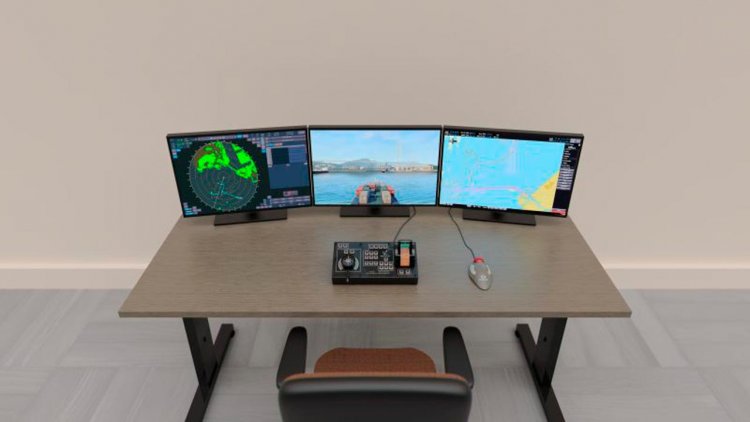
This requires an incredibly strong transportation system across the sea and lake channels to ensure both people and goods can travel safely and efficiently. As such, one of the renowned high schools in Burgas was searching for a high–tech, user-focused maritime simulator to train their students for advanced inland navigational skills. VSTEP had the honour to be chosen for the deal to deliver one Standard Desktop Simulator with a Control Box. This deal also includes RADAR, ECDIS, 10 ports, and vessels.  

The simulator will allow students to gain the competencies they require through realistic and cost-effective training. The configuration will allow groups of trainees to practice their inland navigation skills in highly detailed simulated environments in alignment with the school’s training goals.

Evitalz signs up as new Inmarsat Fleet Connect dedicated bandwidth application provider

0

Evitalz and Inmarsat, the world leader in global, mobile satellite communications, have signed an agreement for Evitalz to join the fast-growing group of certified application providers to offer a dedicated application for Inmarsat’s Fleet Connect service.

Fleet Connect is a dedicated bandwidth service that provides connectivity independent of the ship owners’ primary bandwidth, allowing Application Providers to have an always-on, or on-demand, two-way communication channel to the vessel.

Evitalz will use Fleet Connect to provide its telehealth/telemedicine solution; a combination of FDA approved and CE certified medical devices that use its VitaLink app to record and interpret the patient’s vital signs in real-time. The diagnostic readings are gathered from the devices and compiled with patient symptoms and other data, and wirelessly sent to the app. Evitalz provides shipmasters or care-givers with a ‘plug n play’ medical diagnostic infrastructure to perform vital checks of a patient, wherever, whenever.

“Thanks to Inmarsat, we have witnessed a ‘sea change’ in the way vessels communicate. Today’s crew also demand smart health care onboard and a higher standard of care. High-speed connectivity is making the difference and Fleet Xpress enables vessels anywhere in the world to stay connected 24/7 and therefore onboard telehealth facilities are very reliable and affordable”, said Mr Nanda Kumar, founder & CEO of Evitalz Information Management Pvt Ltd.  

Kumar added:

“It is our aim is to use Inmarsat’s high-speed connectivity services to meet one mandate of the Maritime Labour Convention (MLC), namely, to offer shore-like care at sea and the ability to provide medical consultations and non-emergency medical calls.”

Marco Cristoforo Camporeale, Head of Digital Solutions, Inmarsat Maritime, said:

“We are delighted to be working with an innovative start-up such as Evitalz. Safety is in our DNA, after delivering 30 years of vital GMDSS safety services at sea.  Partnering with Evitalz supports our ongoing dedication to protecting and saving lives at sea.”

Using Fleet Connect, Evitalz will deliver a cost-effective healthcare package for improved health and wellbeing onboard and a safer future for the seafarer.

‘Natural seismometers’ confirmed on sea floor

0

Researchers from New Zealand’s Te Herenga Waka—Victoria University of Wellington, National Institute of Water and Atmospheric Research (NIWA), GNS Science, and University of Auckland, and Kyoto University in Japan, have verified theories that specific details of pre-historic subduction-zone quakes may be shown by the extent of seafloor sediments.

Their paper in Nature Geoscience, shows the magnitude 7.8 Kaikōura quake on 14 November 2016 triggered landslides that evolved into bottom-hugging mud slurries that ran out far beyond the original landslide.

They ultimately deposited material in layers called turbidites in 10 consecutive canyons along a 200-kilometer stretch of the Hikurangi subduction margin, from Marlborough through Cook Strait to the southern Wairarapa coast.

Lead author Dr. Jamie Howarth, a senior lecturer in Victoria University of Wellington’s School of Geography, Environment and Earth Sciences, says the research is groundbreaking and may help with seismic-hazard forecasting. It is supported by New Zealand’s EQC (Earthquake Commission) and a Marsden Fund grant.

Dr. Howarth says:

“Our research demonstrates for the first time that the distributions of turbidites along subduction zones faithfully records the spatial extent of strong ground motions during earthquakes. It confirms turbidites preserved in sediment cores can be reliably used to reconstruct past earthquakes, their fault-rupture directions, and amplification of earthquake ground motions.

“It provides evidence that turbidites may act as ‘natural seismometers’ and paves the way for using turbidites preserved in sediment cores to determine the direction of rupture and spatial variability of ground motions during pre-historic earthquakes. Both are essential elements for reliable seismic hazard forecasting but up to now have been difficult or impossible to infer from the geological record.”

The triggering investigated in the study occurred along the Hikurangi margin from about 15km southeast of the rupture tip in the Conway trough, south of Kaikōura, to about 120km north of the rupture tip, between the Pahaoa and Honeycomb canyons off the southern Wairarapa coast.

Subduction zones generate the world’s largest and most destructive earthquakes. The March 2011 magnitude 9.0 Tohoku earthquake in the Japan Trench and subsequent tsunami killed 15,897 people and caused US$360 billion of damage.

Dr. Howarth says that, as these large earthquakes are rare on human timescales, forecasting their occurrence requires evidence from long geological records. He says:

“Turbidites in marine sediment cores produce arguably the longest and most complete records of subduction-zone earthquakes around the globe, but the use of them in forecasting has been vigorously debated by earthquake scientists, as there are few examples where the relationship between the fault(s) that rupture in an earthquake, the spatial extent of strong shaking, and the deposition of turbidites has been observed.

“The work has global relevance and is also particularly relevant for New Zealand because it shows that turbidites are reliable recorders of past earthquakes on the Hikurangi margin, New Zealand’s largest potentially hazardous source of large quakes.”

NIWA marine geologist and co-author Dr. Alan Orpin says the widespread evidence of localized submarine landsliding and turbidites offers “a rare opportunity” to test some fundamental assumptions from one of the best monitored earthquakes in history:

“We can now explore older turbidites collected from the Hikurangi margin to assess if they too represent previous earthquakes and how widely they were felt by the seascape.”

GNS Science seismologist and co-author Dr. Yoshihiro Kaneko says the study has elegantly explained the movement of turbidity currents using advanced simulations of seafloor shaking:

“Initially, scientists were puzzled that turbidites were triggered as far as 120km from the rupture but none were seen at close range. However, this unexpected pattern correlates nicely with ground-shaking intensity controlled by the earthquake rupturing from south to north and the presence of softer sediments along the Hikurangi margin.”

Rolls-Royce receives EPA Tier 4 certification for mtu marine propulsion systems

0

Rolls-Royce has received EPA Tier 4 certification for its mtu propulsion systems based on its Series 4000 M65L 16-cylinder diesel engines. 

Denise Kurtulus, head of marine business at Rolls-Royce’s Power Systems division, said:

“This means we have climbed to the king’s class of emissions regulations with our engines for yachts and commercial vessels. I am pleased that we can now offer our customers these clean and powerful propulsion packages.” 

The U.S. EPA Tier 4 regulations are considered the most stringent emissions standard for marine applications, requiring the propulsion system to have very low particulate and nitrogen oxide emissions throughout its lifecycle. Rolls-Royce is working on EPA Tier 4 approval for additional cylinder variants of the mtu Series 4000 propulsion system and is gradually bringing them to market. Since 2018, Rolls-Royce has already been offering the engine Series 4000 propulsion systems with the international IMO III certificate, which also enables operation in special emission control areas (North American coast, Caribbean, North Sea and Baltic Sea).

Rolls-Royce has successfully tested the mtu propulsion system, which includes the engines and SCR exhaust aftertreatment, during test bench runs and around 10,000 hours of operation in ferries and tugs operated in the U.S. by the San Francisco Water Emergency Transportation Authority (WETA) and Foss Maritime.

Christof von Bank, who is responsible for marine sales in the U.S. at Rolls-Royce, explains:

“Thanks to the great cooperation with our customers, we were able to collect the necessary data to reach this milestone. All voyages to date with the total of 10 mtu propulsion systems have been satisfactory. Customers can rely on our engines.”

Through further developments in the engines’ turbocharging, combustion process and fuel injection, combined with the new mtu-SCR exhaust aftertreatment system, Rolls-Royce reduced nitrogen oxide emissions by 75 percent compared to IMO II requirements and particulate emissions by 65 percent compared to EPA 3, without the use of a diesel particulate filter. Fuel consumption has been reduced compared to the previous generation of engines (to as low as 190g/kWh) and so have CO2-emissions. For use in heavy-duty workboats, Rolls-Royce increased engine power to up to 160 kilowatts per cylinder.

WETA is already operating three high-speed ferries in San Francisco Bay with the new mtu propulsion systems, testing their emissions performance among other things. The 34-knot aluminum catamaran Pyxis, which entered service in 2019, was the first passenger ferry in the United States to field test the EPA Tier 4-compliant mtu engines. The largest tug shipping company on the U.S. West Coast, Foss Maritime, has already commissioned three of four new tugs with EPA Tier 4-compliant field test mtu propulsion systems. They will escort the largest tankers and container ships calling at U.S. West Coast ports in Los Angeles/Long Beach and San Francisco Bay with their 82-ton bollard pull.

Fugro expands UK marine laboratory capacity to support green industry services

0

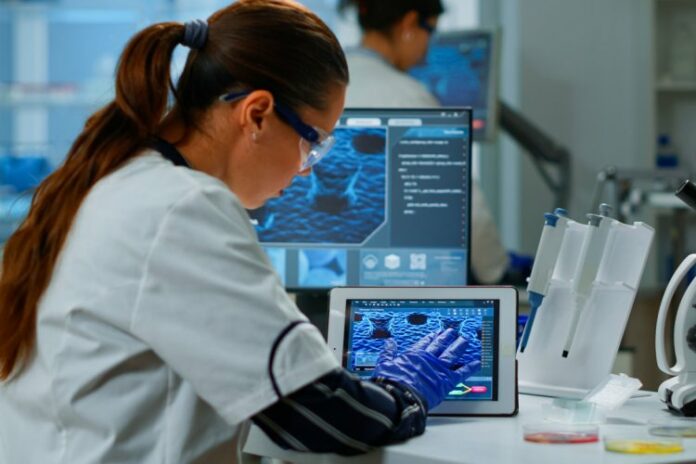
Fugro’s newly outfitted chemistry laboratories will be able to simultaneously analyse a wider range of environmental contaminants in marine sediments, biota and water, from background trace levels to more contaminated sources, while the new marine biology laboratory will allow Fugro to expand their marine taxonomic service.

The laboratories form part of Fugro’s Edinburgh office, where a team of 40 marine chemists, biologists, and environmental scientists and consultants support a range of environmental Geo-data services. This increased capacity will support Fugro’s growing green industry client base in the offshore wind, marine cables and coastal development sectors, offering them an expanded range and increased capacity of laboratory services, including marine fauna identification and a range of organic and inorganic analysis.

John ten Hoope, Fugro’s Director of Marine Site Characterisation for Europe and Africa, said:

“The expansion of our marine environmental laboratories strengthens our position as a centre of excellence providing vital Geo-data results to clients. These new facilities demonstrate Fugro’s commitment to marine environmental services and build on over 25 years’ experience in acquiring, analysing and advising on marine environmental Geo-data.”

Global Marine awarded 16-cable R100 project by BT

0

Global Marine has been awarded the desktop study, survey and cable installation scope as the turnkey contractor for BT’s R100 North contract in Northern and Western Isles off Scotland.

The Scottish Government-funded Reaching 100% Programme (R100) aspires to extend superfast broadband capabilities at speeds of at least 30Mbps to every premises in Scotland.

The festoon system in Northern and Western Scotland comprises 16 different cable routes, and will provide better broadband connections for the following communities: Colonsay, Iona and Lismore in Argyll and Bute; Eigg in the Highlands; Eday, Flotta, Hoy, Rousay, Sanday, Shapinsay and Stronsay in Orkney; Fair Isle, Unst, Whalsay and Yell in Shetland.

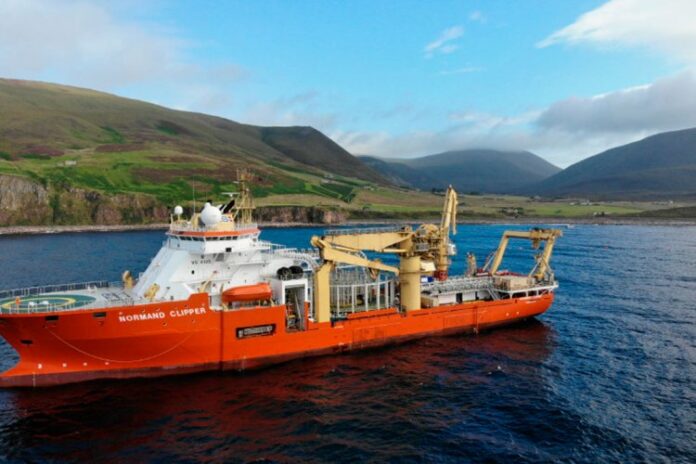
Desk Top Study work and initial project permitting has been completed by sister company OceanIQ, also part of the Global Marine Group. Survey vessels will be mobilised onto the project, including the completion of specific UXO hazard assessments following the guidance of the risk assessment and mitigations strategies, from Spring 2021. From Spring 2022, Global Marine will be utilising cable installation vessel Normand Clipper to lay the cable.

Bruce Neilson-Watts, Managing Director of Global Marine said:

“This is an exciting project for us that will have a hugely positive impact on the residents of the 15 different islands included in the scope of the work. Quicker and more reliable connectivity is extremely valuable, never more so than right now with the world operating much more remotely than it ever has done.”

Mr Neilson-Watts continued: “Our in-house knowledge and track record for the planning and installation of systems such as this means we have the flexibility and agility to structure the work around the current economic climate as effectively as possible.”

Robert Thorburn, partnership director at Openreach, which is delivering the R100 contracts on behalf of BT, said:

“Following the excellent progress of our live Scotland-Northern Ireland cable project with Global Marine, we’re looking forward to working with them once again in the coming months.

“The R100 programme will deliver a tangible improvement to so many individuals and businesses across Scotland’s network of islands and the subsea programme will be the first, vital step in bringing reliable, fast broadband to some of the most remote communities in the UK.”

Repsol completes the first LNG bunkering with emissions offsetting

0

Repsol has carried out a new supply of liquefied natural gas (LNG) to a ship for use as fuel in the port of Cartagena in Spain. The bunkering was carried out at the Enagás facilities, with the support of the Port Authority of Cartagena and the Maritime Captaincy of Cartagena.

The uniqueness of the operation is that this is the first time that Repsol, as a supplier of LNG, has guaranteed the compensation of the total CO2 emissions associated with the consumption of this liquefied natural gas. 

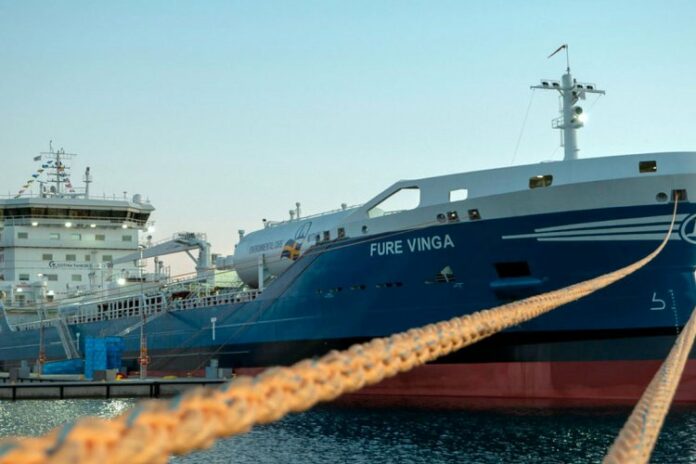
The bunkering has been carried out for the Swedish-flagged vessel Fure Vinga,owned by Furetank Rederi from Donsö, Sweden. This chemical tanker, with a length of 150 meters and a beam of 23 meters, has received 420 m3 of LNG. The tanker arrived from China and is continuing with its route to Rotterdam after her call in Cartagena. 

The operation, which lasted approximately four hours, has been carried out using the Enagás facilities in the port of Cartagena. 

With this new bunkering operation, in addition to consolidating its position as a supplier of LNG for maritime transport, Repsol achieves a new milestone: It is the first supply of this kind by the multi-energy company with emissions compensation through the purchase of CO2 credits (VERs) in the Voluntary Carbon Market. 

Repsol is, thus, adding direct supply of LNG from the terminal in Cartagena to its network in Spain. With this operation that was the first of its kind after a recent change in the Spanish gas system regulation promoting this type of supply, Spanish ports are now able to compete with other European ports in this area. So far, the method most often used by Repsol has been the supply of LNG from LNG trucks with capacity to supply at any Spanish port. Additionally, Repsol is developing two LNG terminals at the ports of Bilbao and Santander.

This is a further step towards the goal of becoming a zero net emissions company by 2050, offering ship owners the possibility of making their commercial routes more efficient and environmentally friendly.

LNG is an increasingly valued alternative for shipowners for use in shipping. This fuel reduces emissions and complies with IMO 2020, the International Maritime Organization (IMO) regulation that came into force on January 1, 2020.

This operation has been possible thanks to the developments and adaptations performed under the CORE LNGas Hive project, co-financed by the European Commission, led by The Spanish Port Authority, Puertos del Estado, and coordinated by Enagás. This initiative promotes the supply of LNG as a transport fuel, especially for the maritime sector, and has led to the adaptation of Spanish regasification terminals for the supply of LNG to ships.