-13 C
New York
Home Blog Page 662

HydroSurv developed two game-changing autonomous surface vessels

0

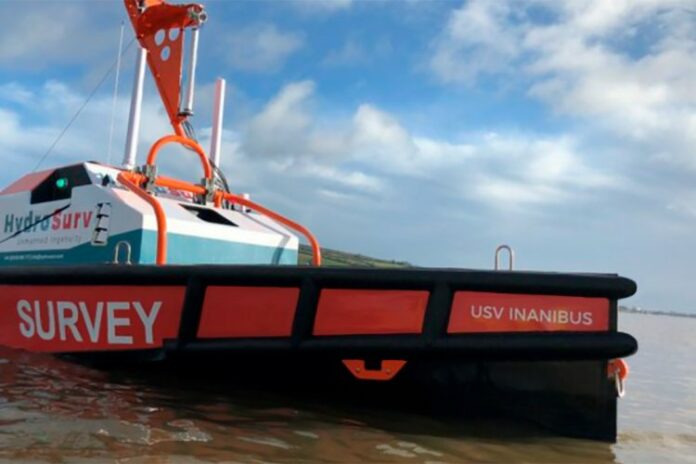
Survey company HydroSurv has developed two game-changing autonomous surface vessels that are predicted to reduce the cost of offshore surveys and inspections at sea by up to 60%.

Exeter-based HydroSurv worked closely with the Offshore Renewable Energy (ORE) Catapult and project partners Reygar and Core Blue as part of an Innovate UK-funded project to develop its USVs. The project supported the company’s journey to market by accelerating their Technology Readiness Level (TRL) from 3, experimental proof of concept, to 7, prototype demonstration in an operational environment.

The REAV-16 and REAV-40 autonomous vessels can use a range of sensors and task-orientated payloads to deliver efficient survey and inspection in the offshore wind sector. ORE Catapult supported HydroSurv in its technology development by gathering user requirements and providing engineering design on the launch and recovery structures. In conjunction with other projects, this has led to a 10-fold increase in HydroSurv employees, since the start of the project in 2018 to around 20 expected by summer 2021.

David Hull, Founder of HydroSurv, said:

“Our mission is to democratise ocean data with a focus across four key sectors which can gain the most from maritime autonomous systems. Supporting offshore survey and inspection with fully-autonomous survey vessels like REAV-40  could become commonplace, and as the offshore wind sector extends its reach further offshore, survey industries will have to adapt to satisfy industries future needs – including decarbonising survey, improving safety and delivering accurate, reliable and repeatable data at a reduced cost”.

Chris Huxley-Reynard, MD of Reygar commented:

“In order to overcome the control-system challenges facing the next generation of unmanned survey vessels, we have drawn on a decade’s experience developing cutting edge low-emission, safe, and cost-effective offshore wind vessel monitoring and control system technologies. The wealth of offshore wind operational data we have gathered has informed this work. We are delighted to work with HydroSurv to shape the future of unmanned offshore surveying.”

Chris Hill, ORE Catapult’s Operational Performance Director, added:

“Robotic and autonomous systems technologies, like HydroSurv’s USVs, will play a crucial role in the UK’s transition to Net Zero and represent a huge opportunity to leverage its world-leading role in offshore wind, using its advanced robotics and autonomous systems sector to develop solutions for a global market. The development of these technologies in the industry also creates more opportunities to remove technicians from dangerous offshore working conditions, with a move to remote operations onshore.”

The UK’s offshore wind industry recognises the need to reduce its carbon footprint, especially if it’s to meet the Government’s Net Zero targets by 2050. Autonomous vessels offer a greener solution to the conventional offshore vessels currently used by the sector, which can be large contributors to carbon emissions.

HydroSurv has embedded this into its Robotics-as-a-Service business model with a carbon elimination and trusted offsetting initiative developed into the digital architectures that serve data to end users, as part of HydroSurv’s pledge to achieve carbon neutrality by 2025.

ORE Catapult has also awarded HydroSurv ‘Powered By’ status – a mark independently recognised by the Catapult, highlighting high-growth potential SMEs that are developing game-changing products or services for the offshore renewable energy market.
Vattenfall signs its first power contract for wind farm Hollandse Kust Zuid

0

Air Liquide will purchase 100GWh of fossil-free electricity per year from the wind farm located off the Dutch coast.

The 15-year contract will start in 2023 when the Hollandse Kust Zuid wind farm is operational. Air Liquide, a world leader in gases, technologies and services for the industry and health sectors,  will use the electricity to power its factories in the Netherlands.

Martijn Hagens, CEO Vattenfall Netherlands, said:

“We are delighted that Air Liquide, which has ambitious sustainability targets, will purchase fossil-free electricity from Vattenfall. Long-term contracts like these provide us with financial security and enable us to keep investing in wind and solar farms, a cornerstone in our ambition to enable fossil free living within one generation. The Netherlands is turning to a fossil-free future and we want to make that a reality for our customers.”

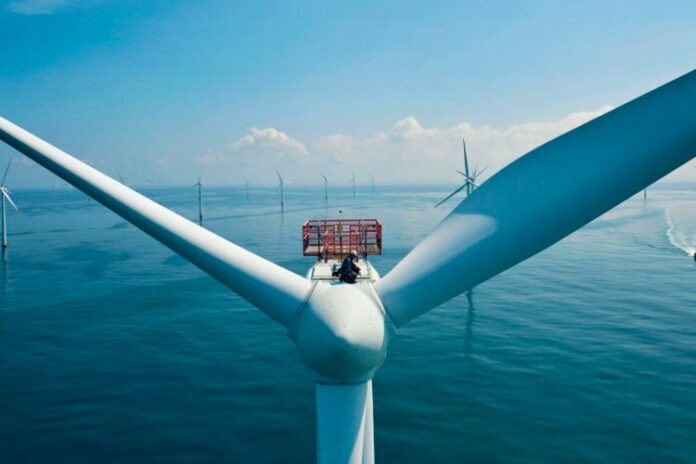
Hollandse Kust Zuid is the first subsidy free offshore wind farm in the world. It will be located between 18 and 36 kilometers off the Dutch coast, between The Hague and Zandvoort. Construction will start in 2021. In 2023, when the wind farm is operational, the 140 wind turbines will produce more than 6 TWh of green electricity annually. The electricity will be available to households, government and businesses and thus contribute to Vattenfall’s ambition to provide all its Dutch customers with 100 per cent Dutch fossil-free electricity by 2030.

Awarding three contracts for Heimdal and Veslefrikk decommissioning

0

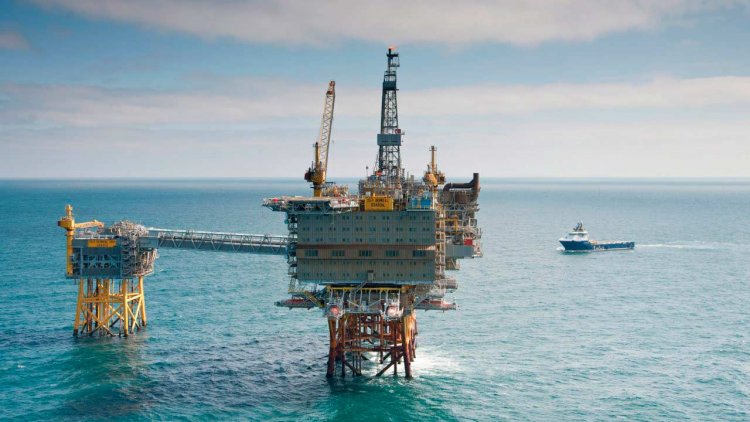
The three contracts have been awarded on behalf of Gassco as operator of the Heimdal riser platform and on behalf of the partners of the Heimdal and Veslefrikk licences.

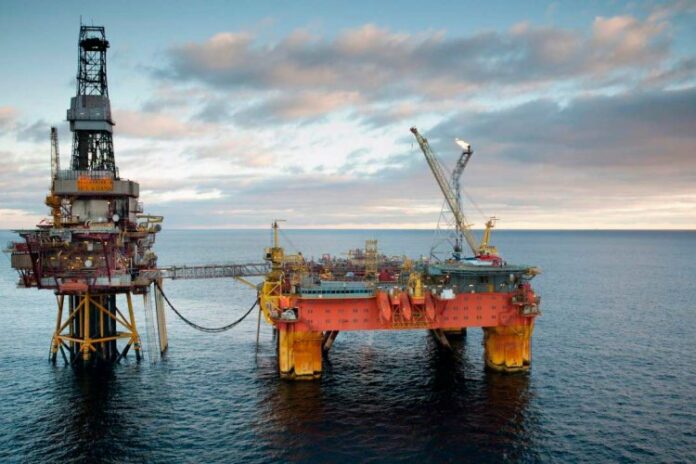
The Veslefrikk partners plan to shut down the field permanently in the spring of 2022. Well plugging started earlier this year. Equinor and Gassco, who are operators of the two platforms on the Heimdal field, have over time studied the best possible use of the installations and the area before deciding a shutdown.

A decommissioning plan has been submitted to the authorities. The time for shutdown and start of removal is to be decided by the Heimdal partners during the summer of 2021.

In addition to the platforms, the contracts will also include removal, dismantling and recycling of the gangway connecting the two Heimdal platforms, as well as a subsea pre-drill template connected to Veslefrikk A.

Heerema has sent a letter of intent to Aker Solutions AS for dismantling and recycling of the platforms at their decommissioning facilities on Stord after they have been brought to shore. All onshore activities will be performed on Stord over a period of 2-3 years. This work is expected to employ around 100 people at peak.

Camilla Salthe, senior vice president of Field Life Extension (FLX) in Equinor, says:

“Decommissioning operations on the Norwegian continental shelf will create important activity for the supplier industry.”

The topsides and jackets of the three platforms have a combined weight of approximately 68,000 tonnes. The removal method has been adapted to each individual platform and Heerema´s heavy lift vessels “Sleipnir” and “Thialf”. Each topside will be lifted on board the heavy lift vessel in one or several parts.

The installations on the Veslefrikk and Heimdal fields will have a very high degree of recycling, up to 98%.

Salthe says:

“The main factors of a successful decommissioning project are no personal injuries, serious incidents or emissions to the environment. To prevent personal injuries during demolition work, Equinor requires, inter alia, the contractor to utilize a high degree of machine-based cutting to remove personnel from hazardous work operations.”

Plans call for final production shutdown on the Veslefrikk field during spring 2022, while gas and condensate processing on the Heimdal field is to be discontinued in 2022 or 2023.

The Heimdal riser platform will be removed in 2024, at the earliest, while the Heimdal main platform and the Veslefrikk A platform will be removed no earlier than in 2025. Field Life Extension (FLX) has corporate responsibility for carrying out decommissioning projects for Equinor on the Norwegian continental shelf.

The procurement process for the Heimdal riser platform is being performed in accordance with the Public Procurement Act and the Utility Regulations. Pursuant to these regulations all bidders in the competition were informed about the contract award decision on 16 March 2021. The contract in question will be awarded upon expiry of a 10-day standstill period. The other two contracts have already been awarded.

ICTSI partners with IGO-Avlino to launch AI driven Yard Management Solution

0

International Container Terminal Services, Inc. (ICTSI), has announced the successful live implementation of an AI-powered operational optimization tool at its flagship terminal, the Manila International Container Terminal (MICT).

The solution, YardSight, is part of a larger AI Solution Suite – AiCON, developed by Avlino, a New Jersey-based AI and digital transformation company, in partnership with IGO Solutions, a UK-based leading solutions provider for container terminals.

Anders Dommestrup, MICT CEO and Executive Director, said:

“The YardSight AI module, in its current form, provides logic for the most efficient stacking positions based on optimal work balancing of our rubber tired gantries (RTGs). This results into increased productivity for internal and external trucks, reduced traffic clashes, and minimized yard rehandles when stacking import containers. We are closely working together to expand the application into dynamic allocation of CHE ranges and focusing efficiencies for the export yard cycle for internal/external trucks in the coming months as well.  We are already seeing very encouraging signs that this new approach can deliver significant efficiencies to equipment utilization and truck turnaround time, which will be passed on to our customers to further support ICTSI’s conscious effort to reduce its greenhouse gas emission.”

“The AiCON Solution Suite has ushered in a real paradigm shift on how we can better manage end-to-end container terminal operations. YardSight’s adaptability to changing operational metrics within its code has actually helped bridge the gap between operational business fundamentals and technology.  It has also enhanced our operation team’s interest in technology and the IT team’s interest in operational realities even further, the result of which benefits the entire business as we journey towards various degrees of automation.”

YardSight performs capacity optimization, throughput management, and yard space maximization. Leveraging real-time and historical operational data from internal and external sources, the AI application adapts to the current state and responds back to users with intelligent work directives based on the transformative conditions.  

Ramana Jampala, founding CEO of Avlino, said:

“The partnership with ICTSI has been instrumental in shaping YardSight. Real-time planning that responds to external dynamic conditions is a real game-changer for terminal operators. Adopters of YardSight will find that they are equipped to tackle the challenges of constriction, congestion, and high re-handle counts. YardSight manages the entire yard operation by optimizing the TOS and enhancing resources through advanced ML/AI technologies delivered through smart solution engineering, developed in partnership with IGO’s automation expertise.  More importantly, the Solution incorporates directly into ICTISI’s existing business process, where AI controls workflows to tighten operational expenses while increasing profit margins.  It is truly a win-win scenario.”

Jayesh Pandya, co-founder of IGO Solutions, said:

“When we started to recommend autonomous operations to our clients three years ago, we realized a significant gap in the AI solutions landscape. Avlino’s AI technology filled that gap perfectly. Very few container terminals have taken a holistic approach to adopting AI solutions, and ICTSI initiated this journey as a pioneer. IGO Solutions and Avlino partnered to deliver solutions with a potential to realize high ROI for ICTSI.” 

H2Gate: towards transhipment of 1 million tons of green hydrogen in the Amsterdam port

0

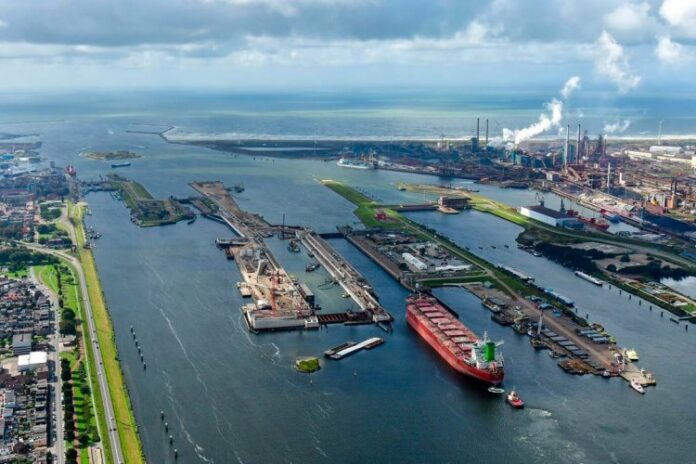
Over the next six months, they, together with three specialised hydrogen companies, will investigate the feasibility of large scale imports, drawing up a blueprintand outlining a roadmap towards 2030 and beyond.

Port of Amsterdam, Evos, Electriq Global, Hydrogenious and Hysilabs have joined forces to investigate the technical and commercial feasibility of importing and storing hydrogen on an industrial scale. This initiative is dubbed H2Gate. The parties are jointly working on a blueprint for an import, storage, distribution and trading hub, consisting of facilities with a total throughput capacity of 1 million tonnes of hydrogen per year.

The five parties expect hydrogen to play a central role in the transition to a sustainable energy system. This transition is necessary if we are to meet the European target of becoming climate-neutral by 2050.

The Amsterdam port area is well positioned to play an important role in this transition. For decades, the port has been a leading international hub for the trade in energy products. There are many initiatives underway in the region to develop a green hydrogen cluster, including production facilities. The H2Gate partners share the vision that alongside local production of hydrogen, imports are needed to meet future demand in Europe.

Moving to overcome the challenges with transporting and storing compressed and cooled hydrogen, the H2Gate project is exploring several hydrogen carrier technologies in parallel, also to determine potential energetic and operational synergies between them. Subsequent studies into design and realization, including pilots, are conceivable.

As such the H2Gate project is an important step towards the realisation of an international supply chain for hydrogen on a commercial scale. Depending on the availability of green hydrogen worldwide and the growth of demand in Europe, such supply chains are expected to scale up towards the end of this decade.

According to Ramon Ernst, Managing Director of Evos Amsterdam, says:

‘This project fits perfectly with our ambition to develop infrastructure solutions for a carbon-free energy future. The expertise of Evos lies in the storage and handling of large quantities of energy products and we would like to expand our portfolio with new clean forms. We are pleased to be able to work with capable and motivated partners towards a shared vision.’

Eduard de Visser, Head of Strategy and Innovation at Port of Amsterdam, shares this view:

‘As the Port of Amsterdam, we want to be at the forefront of the energy transition. Our established position as a formidable, international energy hub means we have the infrastructure, the partners and the knowledge and experience to be a catalyst for new, sustainable energy products. We are proud to work with Evos and other partners on H2Gate. It shows how innovative and enterprising the Amsterdam port is.’

Crowley, ESVAGT to partner to add vessel and service capacity for the U.S. offshore wind industry

0

U.S.-based Crowley and Danish shipping company ESVAGT announced plans today to directly bolster purpose-built, Jones Act vessel availability in support of the emerging offshore wind energy market through a joint venture.

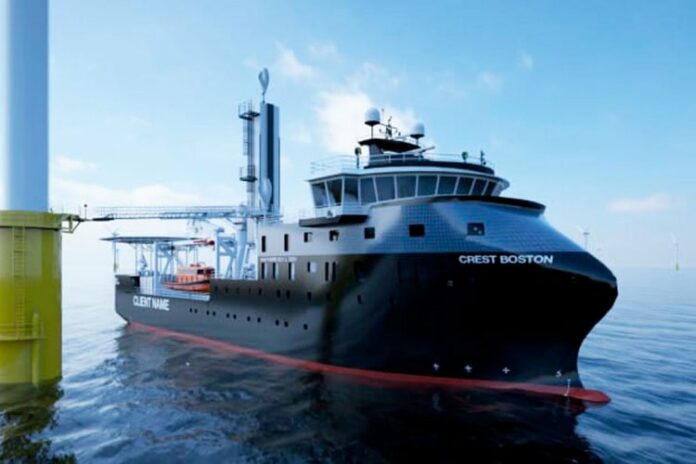
The partnership will bring together two leading maritime solutions providers to serve the emerging industry. Consistent with the requirements of the U.S. Jones Act, Crowley will own and operate the vessels with its highly trained U.S. mariners, while Crowley and ESVAGT will share in the economics of the venture. ESVAGT is the leading Service Operation Vessel (SOV) operator in Europe and will provide technical advice on the design, construction, and operation of these vessels based solidly on their past performance with this specific vessel type.

The venture will work to develop a best-in-class design and deliver its first wind-dedicated, U.S flag SOV. The companies, which share a long history of safe and reliable solutions within their respective markets, are now positioning to advance wind farm development by directly addressing shortages of compliant vessel capacity.

Earlier this year, Crowley formed its New Energy division strategically focused on diverse services supporting the emerging energy sectors in the U.S. and adjacent regions. Within the offshore wind industry, Crowley’s New Energy expansion, including this latest partnership, advances the company as a total lifecycle service provider. Service offerings include transportation of turbines during construction, industry-specific support vessels, shoreside terminaling and supply chain services from farm construction through decommissioning.

Tom Crowley, Chairman and CEO, said:

“This partnership will marry Crowley’s transferable engineering, vessel operations, project management and logistics experience in the U.S. offshore markets to ESVAGT’s global SOV design and operations capabilities. This will enable the continued growth of sustainable, greener energy solutions by directly addressing the offshore wind service capacity challenge. Our organizations share cultures that are based around the core values of safety, integrity, and high performance. We look forward to a long and successful partnership in support of North America’s new energy solutions.”

ESVAGT pioneered the SOV concept in Europe more than a decade ago and is today the leading provider of SOV services to the European Offshore Wind Operation and Maintenance markets. ESVAGT possesses an unparalleled experience in safely transferring people to offshore wind farm installations from a fleet of innovative and specialized vessels operated by highly qualified crew: annually, ESVAGT safely transfers more than 115,000 personnel members from SOV to offshore wind farm installations.

ESVAGT CEO Peter Lytzen said:

“ESVAGT looks forward to further cementing its position as an offshore wind market leader by entering the U.S. offshore wind market with Crowley, a strong partner with an established track record of delivering solutions to its customers. ESVAGT’s experience in Europe will help deliver a seamless operation in the United States, and we also appreciate the opportunity to invest in the construction of these vessels in compliance with the Jones Act.”

Ministry of Energy in Chile and Port of Rotterdam Authority sign MOU on green hydrogen

0

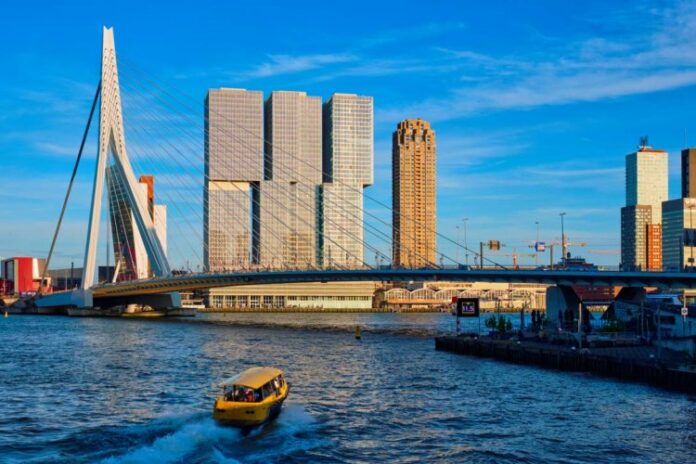
Minister Juan Carlos Jobet, of the Ministry of Energy of Chile, together with Allard Castelein, CEO of Europe’s largest port, signed a Memorandum of Understanding (MOU) on green hydrogen via videoconference. This is the first agreement on hydrogen as a fuel and feedstock signed by the Ministry of Energy with a European port. The agreement is considered to be of national importance in both the Netherlands and Chile. 

Europe is currently working on a broad Green Deal programme to move its energy use and energy sourcing towards zero emission.

The minister highlighted that ‘this Memorandum of Understanding is an important step, since the Port of Rotterdam is an energy gateway port for Europe, with some 13% of the energy used in Europe reaching the continent via Rotterdam.’

The port is transforming to accommodate for the transition from fossil fuels to renewables and for its position as hydrogen hub for Nort West Europe. The port is currently preparing its infrastructure and distribution network to receive hydrogen per ship from all parts of the World and to ensure distribution of hydrogen to neighbouring countries in Europe. Port of Rotterdam looks at Chile, with its good conditions for renewables and its clear hydrogen vision and strategy, also its high levels of technology and its well-developed economy, as a very important country to partner with in the field of hydrogen.

The minister emphasized that the aim of the MOU is part of a plan to ensure the countries work together to pair international supply and demand for hydrogen. The aim is to collaborate in actions and initiatives to advance the use of hydrogen, sharing information, knowledge, good practices and experiences, formal discussions and collaborating on projects of mutual interest and benefit.

Jobet explained:

‘In Chile we have enormous comparative advantages in the production of green hydrogen, and that is what we address in our National Strategy: we want to produce the cheapest green hydrogen in the world by 2030 and be among the top three exporters by 2040.’

Port of Rotterdam, with its large industrial zone, its deep waters and port efficiency, and its excellent distribution network to connect with major European Industrial zones, is an important hydrogen hub for global hydrogen trade and distribution into demand areas.

Allard Castelein, CEO of the largest Port of Europe, says:

‘We are committed to the Paris Climate agreement and have been working on the Energy Transition in our port for a number of years now. It is co-operations like these, with a country like Chile, that enable us to take important steps towards realising our ambitions as hydrogen hub for Nort West Europe. The economic and environmental importance of setting up this trade lane is significant as we believe hydrogen will be important for meeting the climate goals, and it will be beneficial both for the producing and the receiving country’.

Damen delivered two tugs to Thomas Services Maritimes

0

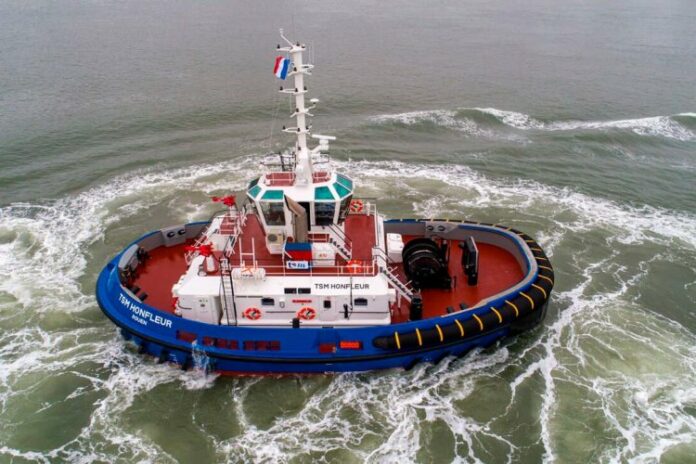
The tugs will assist bulk cargo carriers, facilitating the export of cereals from the Port of Rouen – Europe’s number one grain terminal, tankers and all vessels inbound for Rouen.

Like Damen, TSM is a family company; something which played a part in Damen’s securing of the order, as Mr Loïc Thomas, CEO at the company explained:

“We were looking for new tugs with the latest in vessel technology and we heard about Damen’s quality and reliability. We found that Damen shared our values as a family business, taking a long-term view that extends well beyond the straightforward delivery of new vessels. Damen provided us with a solution that perfectly met our needs, including environmental requirements we take into account for our investments.”

A part of this was adapting the standard, proven design of the RSD Tug 2513, lowering the vessels’ draft to ensure their suitability for sailing in the relatively shallow waters of the River Seine. Despite the modifications the tugs retain their over 80 tonnes bollard pull when towing – as demonstrated during seatrials.

The RSD Tug 2513, part of Damen’s Next Generation series, aims at delivering exceptional levels of safety, sustainability, efficiency and reliability.

As part of this, the tugs are prepared for IMO Tier III regulations, as Damen sales manager Joost van der Weiden explains:

“At Damen we are on a mission to become the world’s most sustainable shipbuilder. The RSD Tug 2513 plays an important part in this. For example, the tugs are thoroughly prepared for IMO Tier III.

“Compliance can be achieved with the quick, simple, plug and play installation of the Damen Marine NOX Reduction System. This selective catalytic reduction technology delivers reduced NOX emissions of 70% compared to IMO Tier II. In this manner, TSM’s new vessels are suited not only to their operations today, but also for the future.”

9 more pilot vessels destined for British ports enhanced by AST’s technology

0

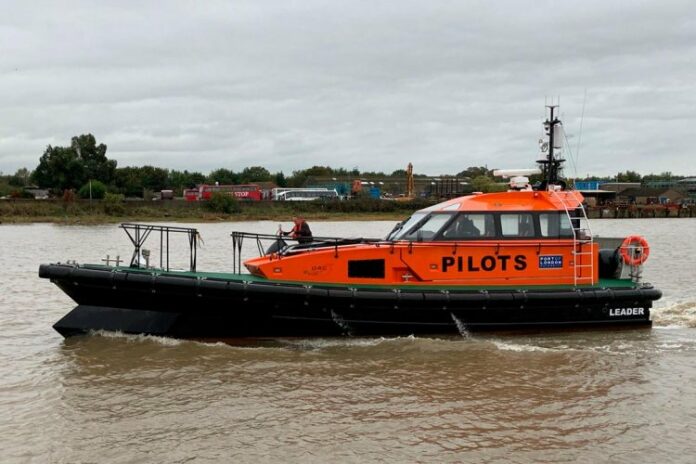
The Norfolk boat-builder, in business for more than 40 years, has been building the ORC range of modern, fuel-efficient pilot boats since 2012, and in service at ports throughout the UK and Ireland.

In a new deal worth a reported £9 million, Goodchild Marine Services will supply 9 ORC fast pilot vessels inclusive of engine telemetry, into British ports from a design by French naval architects Pantocarene.

With iRAMS installed, engineering and operational teams can read engine data remotely, 24 hours-a-day. Near real-time performance metrics will allow boat operators, shoreside to view engine parameters, receive email alerts, and compare fleet vessels against each other enabling more efficient vessel maintenance and management.

Access to the engine data empowers customers to carry out preventative maintenance and spot issues early. With iRAMS installed, customers can view a vessel’s journey in real-time. Operational teams can set up geo-fences and be notified when a vessel enters or exits the port.  Recent and historic reports can be downloaded, easily and all this information is available via an online iRAMS portal.

The easy-to-use portal allows users to view and share engine data in a host of different ways:

  • Monitor engine data points including temperature, pressure, boost, CO² levels, fuel consumption, and more.
  • Configure engine performance parameters that trigger email alerts when thresholds are exceeded.
  • View engine data in tables and charts and download as .CSV and .PDF.
  • Schedule the automated creation and sharing of data reports by email.
     

Stephen Pierce, General Manager at Goodchild Marine Services said: 

“We are very pleased to be building 9 more vessels incorporating AST’s iRAMS. Our customers want the benefits of new technology and iRAMS is a ground-breaking vessel engine and asset management system.  Integration with AST PMS means increased automation that drives down costs and reduces the environmental impact of running our vessels.

AST Marine Sciences, MD, David Davies added:

“Port authorities invest millions into pilot vessels and pilot service operations. iRAMS enhances these services and reduces operational risk by harnessing accurate engine vessel data. With this data in hand, businesses can make intelligent decisions about how vessels are operated and maintained and ultimately, save time and money.”

HAL and Princess Cruises extend pause of cruise vacations from Seattle

0

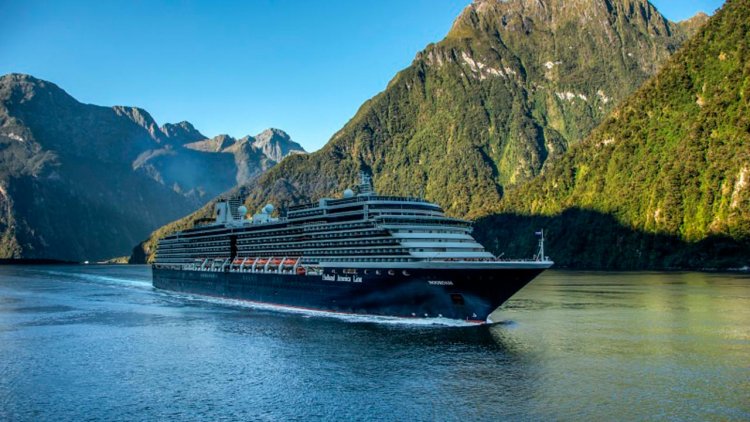
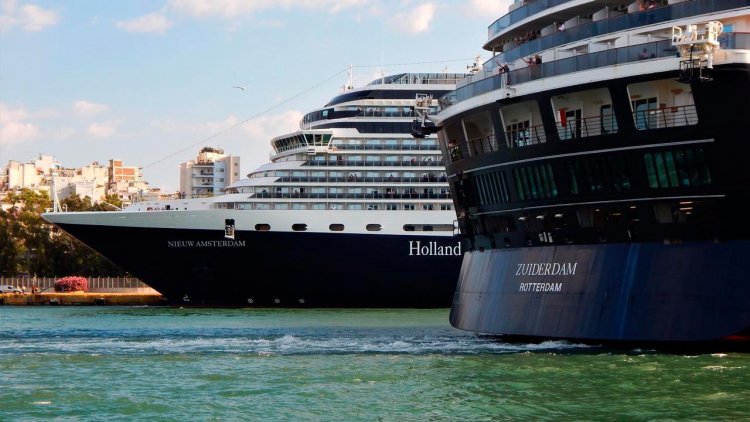
Holland America Line has announced it is extending its pause of cruise operations to now include all June 2021 roundtrip sailings to Alaska from Seattle, Washington. This includes six cruises on Eurodam and Oosterdam with a call at Victoria, British Columbia, Canada.

At this time, Alaska cruises sailing roundtrip from Seattle departing in July and onward have not been canceled. Following the earlier Canadian Transport Ministry Interim Order that closed Canadian ports to passenger vessels, discussions continue with Canadian and United States government authorities to try to preserve remaining Seattle Alaska sailings. Holland America Line previously announced the cancellation of all 2021 Alaska cruises to or from Vancouver, British Columbia, Canada.

Gus Antorcha, president of Holland America Line, said:

“We continue to stay actively engaged in dialogue with authorities in Canada and the United States to understand what cruise opportunities may still exist in Alaska, knowing how important this market is not only to our brand, but to the communities and individuals who depend on our business. We share with our guests the disappointment of canceling these voyages, and we remain hopeful that we can operate some of the Alaska cruise season.”

Guests currently booked on the canceled roundtrip Seattle-Alaska June departures will automatically be moved to an equivalent cruise in 2022 at the 2021 fare – with all cash and Future Cruise Credit funds moved to the new booking.

Once a new booking confirmation is received, if guests decide not to accept the 2022 cruise booking, they will have the option to decline the booking and receive an FCC of 110% of any cash paid. Guests will also be able to request a full refund of all monies paid to Holland America Line.

The minimum FCC is $25 and will be valid for sailings departing through Dec. 31, 2022, and will be moved to the guest loyalty account. Non–cruise fare purchases (shore excursions, airfare, gifts, dining and spa) will be transferred to a new booking or automatically refunded via the method of payment used to purchase the goods or services.

Other booking and cancellation conditions and policies may apply if the cruise was not booked through Holland America Line. 

Photo:Holland America Line

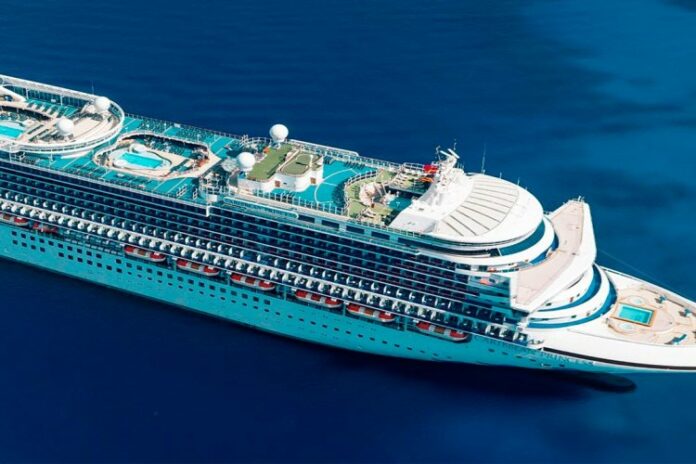
While Princess Cruises continues to work with various United States and Canadian government officials to try to preserve a portion of the Alaska 2021 cruise season, the company is extending its pause of cruise vacations for sailings from Seattle through June 27, 2021.  

The pause in operation affects seven-day Alaska Inside Passage cruises on Emerald Princess and Majestic Princess.

For guests booked on a cancelled voyage, Princess will offer to move guests to the equivalent cruise in 2022. The rebooking process will have the added benefit of protecting the guests’ 2021 fare on their 2022 voyage. Alternatively, guests can choose a future cruise credit (FCC) equivalent to 100% of the cruise fare paid plus an additional non-refundable bonus FCC equal to 10% of the cruise fare paid (minimum $25 USD) or a full refund to the original form of payment.  

Requests must be received through this online form by April 15, 2021 or guests will automatically receive the FCC option. FCCs can be used on any cruises booked by and sailing by December 31, 2022.  

Princess will transfer the commission earned by travel agents from the cancelled 2021 cruise to the new booking in 2022 for bookings that were paid in full. This convenience is in recognition of the critical role they play in the cruise line’s business and success. 

Photo:Holland America Line