-8.2 C
New York
Home Blog Page 658

Significant oil discovery close to the Fram field in the North Sea

0

Preliminary estimates place the size of the discovery between 12 and 19 million standard cubic metres of recoverable oil equivalent, corresponding to 75-120 million barrels of recoverable oil equivalent.

Nick Ashton, Equinor’s senior vice president for exploration in Norway, says:

“The discovery revitalises one of the most mature areas on the NCS. With discoveries in four of four prospects in the Fram area during the past 18 months, we have proven volumes that in total will create considerable value for society.”

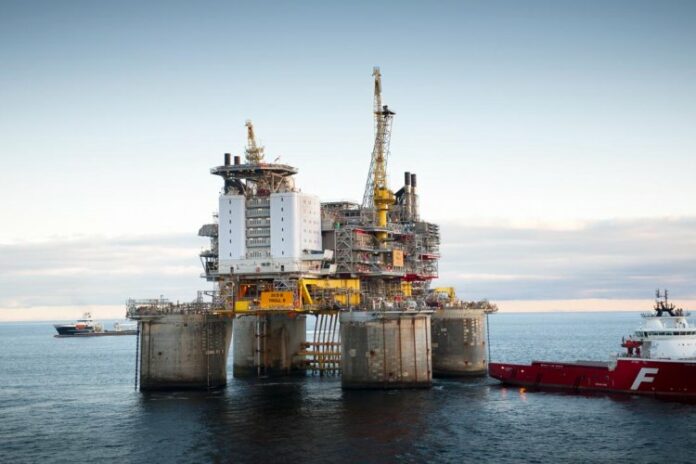
Exploration wells 31/2-22 S and 31/2-22 A in the Blasto prospect of production licences 090, 090 I and 090 E were drilled about 3 kilometres southwest of the Fram field, 11 kilometres northwest of the Troll field and 120 kilometres northwest of Bergen.

Based on the quality of the resources and the proximity to existing infrastructure the discoveries can be developed and produced in line with Equinor’s climate goals. The company’s ambition is to reduce greenhouse gas emissions from operated fields and onshore plants in Norway by 40% by 2030, compared to 2018.

Ashton says:

“Equinor is already an industry leader in low-carbon production. The discoveries in the Fram area will help us reach our goal of a further 40% reduction by 2030 while maintaining the current production level.” 

Exploration well 31/2-22 S struck a total oil column of around 30 metres in the upper part of the Sognefjord formation and an oil column of around 50 metres in the lower part of the Sognefjord formation. The oil-water contacts were proven at 1860 and 1960 metres respectively.

Exploration well 31/2-22 A struck high-quality sandstone in the Sognefjord formation, but the reservoir is filled with water and the well is classified as dry.

Regarding the discovery to be commercially viable, the licensees will consider tying it to other discoveries and existing infrastructure in the area.

The wells were not formation tested, but extensive data acquisition and sampling have been carried out.

These are the first and second exploration wells in production licence 090 I. The licence was awarded in the 2017 awards in predefined areas (APA 2017) licencing round.

Well 31/2-22 S was drilled to a vertical depth of 2282 metres below sea level and a measured depth of 2379 metres below sea level. Well 31/2-22 A was drilled to a vertical depth of 2035 metres below sea level and a measured depth of 2207 metres below sea level.

Water depth in the area is 349 metres. The wells have been permanently plugged and abandoned.

The wells were drilled by the West Hercules drilling rig, which is proceeding to drill exploration 34/6-5 S in production licence 554 in the northern North Sea sector.
Neptune Energy awards Borr Drilling contract for Dutch, UK campaigns

0

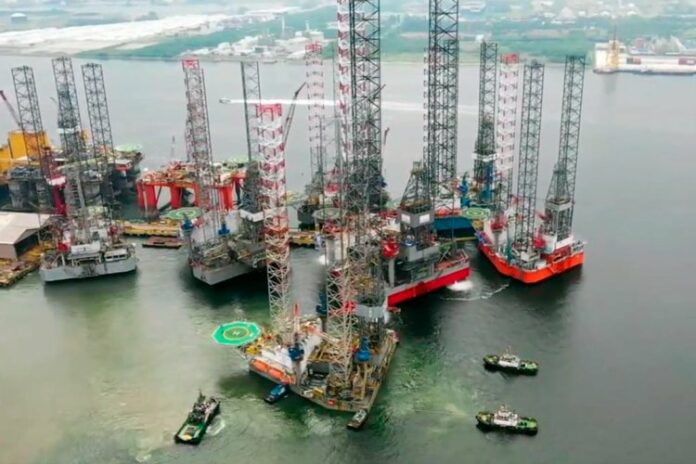
Neptune Energy today announced the award of a $21.4m contract to Borr Drilling, consolidating development, exploration and P&A activities in the Dutch and UK sectors of the North Sea, and reducing costs and operational emissions.

The activities will be carried out by Borr Drilling’s new Prospector 1 jack-up rig which is equipped with technologies that reduce carbon and nitrogen emissions from its operations by up to 95% .

The approach complements Neptune Energy’s commitment to working with supply chain partners to maximise efficiency and reduce operational emissions across its growing portfolio of assets and development projects.

Neptune Energy’s Global Head of Drilling & Wells, Brett McIntyre, said:

“Previous drilling contracts have traditionally been awarded at a country level, but by consolidating these workscopes we have adopted a more collaborative and efficient approach with Borr Drilling.

“We have an exciting programme of activities planned to support the growth of our global business, and this is an excellent example of how E&P companies and supply chain can work together, adopting the latest technologies and commercial models to improve efficiency and reducing emissions across a variety of offshore activities.”

The Prospector 1 uses a Selective Catalytic Reduction (SCR) System which reduces emissions of nitrogen (NOx) and carbon (COx).

Harvey Snowling, Chief Operating Officer, Borr Drilling, said:

“We are delighted to be awarded this work scope and look forward to working with Neptune once again for this upcoming campaign. This contract award demonstrates our focused collaboration to deliver consistently safe, efficient, high quality drilling services to our customer. 

“We are always looking for ways to improve the efficiency of our operations and to reduce our impact on the environment and the installation of a SCR system on Prospector 1 represents a major step on our sustainability journey.”

The contract includes an option for an additional three wells after the initial seven-month drilling campaign is completed.

Last week Neptune announced its annual results for 2020, highlighting new projects coming online this year in Norway and Indonesia, as well as longer term prospects in Norway and the UK that will increase production to around 200 kboepd in 2023.

New on-demand content service for deepsea vessels launched

0

While crew welfare in the form of modern IPTV entertainment is now part of the expected in some maritime segments, this is not the case in a typical tanker, bulk and container vessels. The slow adoption may have been caused by IPTV installations being considered too complicated and costly for the purpose.

Now, BazePort is launching a new service that has been bespoke built to the requirements of deep-seea vessels demand. It is established under the name BazePort Seea. 

In the development of BazePort Seea, both the possibility for information and entertainment has been in focus.

Vessel owners and operators want a more modern and quicker way to communicate than the printed email on message boards.

BazePort Seea allows for cloud publishing of text, pictures and videos. This way crew is updated on safety, training and general information.

Video-on-demand entertainment on BazePort Seea is like the Netflix experience. But offline and not dependent on using the vessel bandwidth. All major Hollywood studios are represented, as well as some independent ones. BazePort Seea includes thousands of hours of movies, documentaries and series. Also, Baze works with renowned news providers like BBC, CNN, Euronews and TV Patrol. BazePort seea also allows for RSS news and Podcast.

Seamen working at sea for months at the time are experiencing challenging times. COVID-19 is adding to the burden. For shipowners and managers, it is a challenge to create the best possible working and leisure time environment onboard their vessels.

An entertainment system with an at-home user experience is a boost for the crew. The included set-top box allows the crew to socialise while watching a movie or the news together on the onboard TV set.

With its great success in on-demand content delivery, BazePort is launching a bespoke service for the deep-sea fleet. More than 8500 subscribers take the service already. These are users in Offshore, OSV and the Ferry segment operating worldwide, trusting BazePort for their on-demand content delivery of entertainment, information and news services. BazePort IPTV is the platform used to enable on-demand content.

Egypt’s Suez Canal blocked by large container ship

0

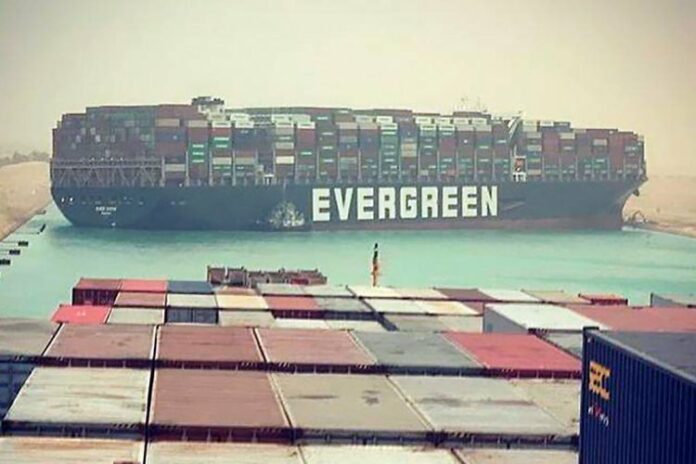
A giant container ship ran aground in the Suez Canal after a gust of wind blew it off course, the vessel’s operator said on Wednesday (Mar 24), bringing marine traffic to a halt along one of the world’s busiest trade routes.

The MV Ever Given is a 400m-long and 59m-wide Panama-flagged container ship, with its owner listed in Japan.

Taiwan’s Evergreen Marine Corp, which is leasing the vessel under a time charter, said the shipowner informed it that the ship “was suspected of being hit by a sudden strong wind, causing the hull to deviate from waterway and accidentally hit the bottom and run aground”.

The Ever Given’s bow was touching the canal’s eastern wall, while its stern looked lodged against its western wall, according to satellite data from MarineTraffic.com.

Bloomberg reported the incident had caused a build-up of more than 100 ships seeking to transit the canal.

More than 150 years old, the Suez Canal is one of the world’s most important trade routes, providing passage for 10 per cent of all international maritime trade.

Canal authorities could not be immediately reached early on Wednesday. The ship appeared to be stuck about 6km north of the southerly mouth of the canal near the city of Suez.

Cargo ships and oil tankers appeared to be lining up at the southern end of the Suez Canal, waiting to be able to pass through the waterway to the Mediterranean Sea, according to MarineTraffic data.

Egyptian authorities are yet to comment on the incident.

Source: Agencies/dv/channelnewsasia

IMO and Singapore to offer pilot SWiFT Project to medium-sized port

0

IAPH supports this next step in capacity building following global port FAL survey and joint report with World Bank on accelerating digitalization in the maritime transport chain

The International Maritime Organization (IMO) has issued a call for expressions of interest from countries with a medium-sized port to take part in a pilot project to establish an efficient digitalized system for electronic exchange of information in ports for ship clearance. The pilot will be supported by IMO member state Singapore via in-kind contributions by the IMO via its Integrated Technical Cooperation Programme (ITCP).

Under the pilot project, the selected country will be advised on the necessary legal, policy and institutional requirements for the Maritime Single Window (MSW )system. The port will then be provided with functional MSW software, hardware and/or IT services, configured to the country’s needs. Training will also be provided.

IAPH Managing Director Dr. Patrick Verhoeven commented:

“This excellent news means a kickstart to the third element of our joint industry call to action last June, namely to strive for the introduction of Port Community Systems and secure data exchange platforms in the main ports of all Member States represented in the International Maritime Organization.”

The first element of the same call to action – assessing the state of implementation of the IMO FAL requirement in ship-shore data exchange – was completed following an in-depth IAPH survey of over a hundred world ports. The survey revealed that a third of the respondents had electronic data exchange systems operation, with a third in design or development and another third yet to commence the digital journey. In collaboration with the World Bank, IAPH has developed a guidance for ports looking to accelerate digitalization in a joint paper that was published in January.

IAPH’s Technical Data Collaboration Committee (DCC) Chair Pascal Ollivier commented:

“the second element of our industry call to action is an equally important factor. That is to ensure harmonisation of data standards through use of the supply chain standards of the International Standardization Organization, the standards of the International Hydrographic Organization as well as the IMO Compendium on Facilitation and Electronic Business.”

In this respect, the public and private sector has responded positively by accepting the recent invitation by IAPH and a number of other leading maritime NGOs to do just that. It puts forward the proposal to co-create a single- and neutral- supporting technical standard under ISO Technical Committee 8 for administrative and operational data, which has so far been accepted by numerous key industry players.

Singapore has successfully implemented its national Maritime Single Window digitalPORT@SG™. As per the recent IMO announcement, Singapore will bring in its experience to cater to the technical requirements for medium-size ports and for ports that would like to incorporate port to port communication protocols in such a system.

Höegh Autoliners completes its first carbon neutral voyage

0

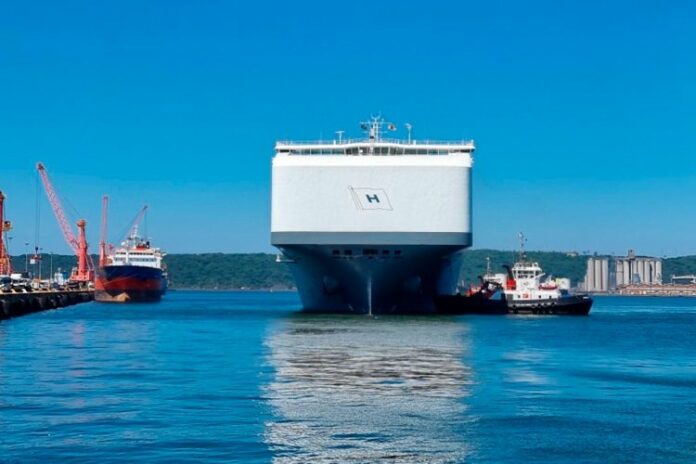
On 19 March, Höegh Autoliners accelerated its decarbonisation efforts successfully completing its first carbon neutral voyage from Europe to South Africa. During this voyage the New Horizon vessel Höegh Trigger ran on advanced biofuels meeting the highest sustainability standards. 

Höegh Autoliners is working closely with customers and partners in reducing its carbon footprint and supporting customers in decarbonising their logistics supply chain. Using advanced biofuels to run existing fleets has a strong potential to significantly reduce emissions today, while new ship technologies evolve.

Andreas Enger, CEO at Höegh Autoliners, said:

“We are committed to leading the way towards a zero emissions future. The success of this trial voyage demonstrates that with the use of alternative fuels like biofuel, we can contribute to significant steps towards decarbonisation in the maritime transportation industry. Our company and customers have high ambitions to combat climate change, and we are committed to delivering on that.”

GoodFuels’ biofuel was chosen for the test run as it’s virtually free of sulphur oxides and reduces the vessel’s carbon emissions by up to 90%. The remaining emissions generated were offset through certificates from Gold Standard, to make the voyage truly carbon neutral

Isabel Welten, Chief Commercial Officer at GoodFuels, says:

“We are proud to supply our truly sustainable biofuels. Working with shipping operators like Höegh Autoliners, we contribute to making ocean transport more sustainable and together play an essential role in reducing CO2 emissions in the maritime industry.”

Höegh Autoliners operates some of the greenest and largest PCTC vessels in the world: The New Horizon series can transport up to 8500 car equivalent units and were designed to minimise its impact on the environment. The vessels are equipped with the latest fuel-saving technologies, reducing CO2 emissions per car equivalent unit by 50% compared with standard car carriers.

DORIAN LPG (DK) ApS signs contract for installing Kongsberg Digital’s Vessel Insight

0

Kongsberg Digital has announced that Dorian LPG (DK) ApS, a subsidiary of Dorian LPG Ltd.(“Dorian”), which is a leading owner and operator of modern VLGCs, has contracted to install Vessel Insight to its entire fleet of LPG carriers. By installing Vessel Insight, Dorian is consolidating collection of all critical data from its vessels in one common infrastructure. The agreement is expected to commence operation in the upcoming months.

With the Vessel Insight installation, Dorian plans to collect all critical data points from its entire VLGC (Very Large Gas Carriers) fleet. The purpose is to gain insight into signals coming from the fleet’s assets and enable realization of data-driven operations. The Vessel Insight data infrastructure solution is based on open principles and allows the owners and operators to partner with the software providers of their choosing.

Dorian’s initial plan is to monitor and predict consumption and emissions data to plan for IMO 2023 regulations which will require vessels to combine a technical and operational approach to reduce their carbon emissions. Dorian also seeks to benchmark the performance between vessel types in their fleet.

Andreas Jagtøyen, Executive Vice President Digital Ocean, Kongsberg Digital, says:

“Since going public in 2013, Dorian LPG Ltd. has been a forerunner in implementing the latest technology in the maritime industry, and we are very happy to function in that capacity by delivering Vessel Insights services to their fleet. This contract emphasizes the untapped potential and value of collecting data to analyze, predict and improve processes for vessels and fleets, especially given the current environment of the maritime industry where gaining a competitive edge and decarbonizing while meeting new regulations is key to survival and success. Vessel Insight will ensure that Dorian is properly equipped to meet their goals.”

The exponential growth in data amplifies the opportunity for vessel owners to be more insight led in decision making. However, many strive to realize tangible and measurable value from data. Having access to data and the expertise in deriving meaningful insights from it is key, especially now that the maritime industry is witnessing a shift towards more energy-efficient vessels led by constantly stricter IMO regulations.

John C. Lycouris, CEO, Dorian LPG (USA) LLC, says:

“We are pleased to be partnering with Kongsberg Digital on this important initiative. In surveying the market, we felt that Kongsberg Digital had developed a great product that meets our needs and should begin to deliver results promptly.”

The contract between Vessel Insight and Dorian LPG DK ApS was signed 4th of March 2021, and Vessel Insight is expected to be installed on all 22 vessels in the upcoming months.

KVH partners with Tile Marine for KVH Watch Maritime IoT solution

0

KVH Industries, Inc., has announced that Tile Marine, a leading marine services company in India and the Middle East, is now a KVH Watch® Solution Partner and will offer KVH Watch connectivity to augment its extensive maritime solutions. 

Tile Marine’s services cover a wide range of electrical, electronic, and mechanical work for shipowners and shipyards including installation, maintenance, and repair of communications equipment, integrated bridge systems, and other critical maritime equipment.

Pravin Raghavan, managing director of Tile Marine, says:

“With KVH Watch connectivity, we will be able to extend our services and add remote monitoring, condition-based monitoring, and assistance for a repair even if there is an incident in the middle of the ocean. Many vessels are looking for this level of service but what has been missing in our opinion was the reliable backbone of connectivity to transfer data from the ship to shore. Our ability to offer these services will be a great comfort to our customers.”

Sven Brooks, senior director of IoT business development for KVH, says:

“When you combine dedicated KVH Watch IoT connectivity with Tile Marine’s extensive experience in supporting everything from bridge systems to belowdecks equipment, shipowners and managers will be able to enjoy the most comprehensive remote service experience to date, including remote troubleshooting sessions at deep sea. Tile Marine’s entire ecosystem will benefit from this ability to do it all remotely.”

The need for dedicated connectivity to transfer real-time data from ship to shore is well known by marine services technicians and IoT analytics experts who find themselves challenged with limited bandwidth if a vessel is equipped with only one communications system. With dedicated IoT connectivity, it becomes possible to monitor performance data, quickly identify specific equipment issues, and support high-speed video troubleshooting while the vessel is at sea, saving time and money when the vessel is in port. IoT connectivity can also be a benefit in other maritime situations, including sea trials and regulatory activities. 

For example, during sea trials, representatives from the major equipment manufacturers are on board for several days; the ability to do a remote troubleshooting session during the sea trial saves time and money, particularly when it eliminates the need to return to port. Regulatory activities such as a government’s need to certify whether vessels are fishing in approved zones can be greatly aided by real-time data. A dedicated IoT connectivity solution is also critically important for reducing cyber risks by keeping the flow of a vessel’s operational technology (OT) data separate from its information technology (IT) data.

KVH Watch is an IoT Connectivity as a Service solution that provides Flow, secure 24/7/365 machine-to-cloud satellite connectivity for remote monitoring of onboard equipment plus the ability to perform on-demand Remote Expert Interventions using video, voice, or text via KVH’s global HTS network. KVH Watch is designed for maritime equipment manufacturers, multicard service providers, and shipyards seeking affordable monthly subscription-based connectivity that L-band and cellular services cannot deliver at deep sea.

Taipower appoints DNV as owner’s engineer for Changhua II offshore wind farm

0

DNV has signed a USD 17.7 million (NOK 150 million) contract to be the Owner’s Engineer for Taipower Offshore Wind Project Phase II (Changhua Phase II) in Taiwan. It is the largest offshore wind farm being developed solely by Taiwan Power Company (‘Taipower’).

The work scope lasting into the second half of 2025 will see DNV’s international and local experts support project engineering reviews and marine coordination during wind farm construction. The scope over the project life cycle right through to commissioning includes design review, fabrication assurance, and construction assurance. Detailed design of the 31-turbine project is due this year, with the wind farm scheduled to be online by autumn 2025.

DNV will work in close partnership with Taiwan-based engineering consultancy GIBSIN Engineers Ltd. (GIBSIN), sharing best practice and knowledge.

Brice Le Gallo, Regional Director for APAC, Energy Systems at DNV, said:

“This win is a great example of why we decided to merge the expertise of DNV’s energy and oil and gas organizations. It makes us uniquely positioned to support both offshore project engineering activities and marine coordination work, thereby ensuring smooth project implementation. Our broad expertise helped secure what is the largest-ever offshore engineering project for the power and renewables side of DNV.”

DNV is assisting several local Taiwan firms, including GIBSIN, to be ready to benefit from renewables expansion. This support includes providing know-how on state-of-the-art construction, gained from DNV’s work with energy systems customers globally.

Taiwan is set to become Asia Pacific’s second largest offshore wind market behind Mainland China. Taiwan aims to generate 20% of its electricity from renewables by 2025. By then, 5.7 GW of installed capacity is scheduled to be available from offshore wind farms including, among others, Changhua Phase II and TPC’s earlier 109.2 MW Changhua Phase I. The government wants another 10 GW of offshore wind installed between 2026 and 2036.

BC Ferries announces the name of new Salish-Class vessel

0

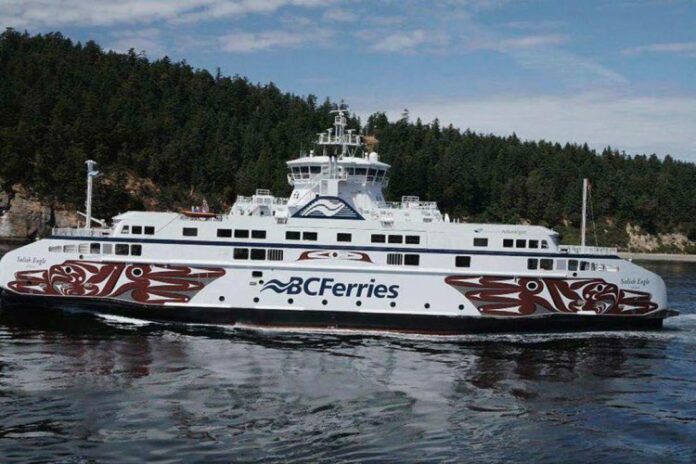
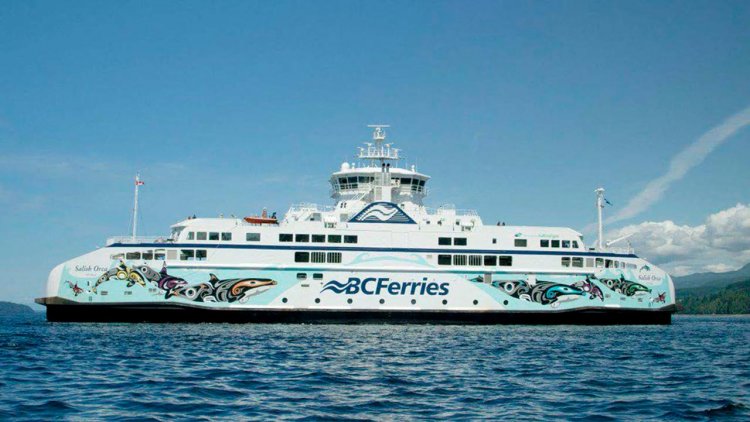
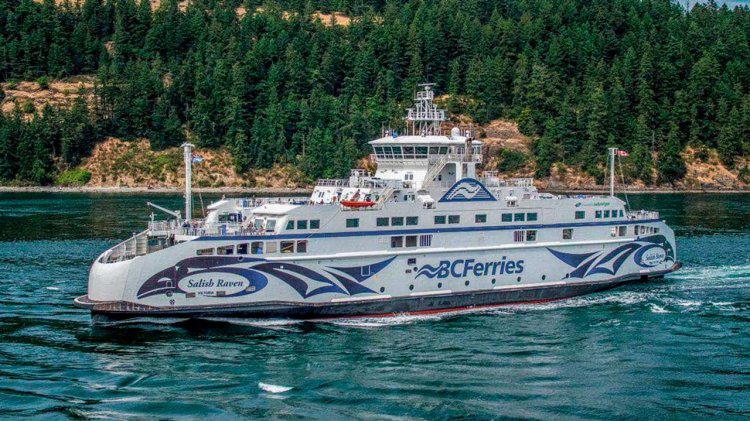
In recognition of the Coast Salish as the traditional stewards and original mariners of the Salish Sea, BC Ferries has named its new Salish-Class ferry Salish Heron. BC Ferries will honour the Salish Heron name with Coast Salish artwork on the exterior and interior of the vessel, and is partnering with the First Peoples’ Cultural Council once again to facilitate the commission of an original design from a B.C. Coast Salish artist.

Salish Heron is the fourth Salish-Class vessel to join BC Ferries’ fleet and will sail in the Southern Gulf Islands starting in 2022. Salish Orca, Salish Eagle, and Salish Raven entered service in 2017, sailing between Comox and Powell River and in the Southern Gulf Islands. BC Ferries held a public naming contest for the Salish-Class ferries in 2015. Salish Heron was among the shortlisted names because it reflects both the West Coast travel experience and the culture of British Columbia.

A Call to Coast Salish artists is now open to invite expressions of interest and portfolios. The First Peoples’ Cultural Council will facilitate the process with an adjudication committee comprised of Indigenous artists and BC Ferries’ representatives. From the first round of submissions, the committee will select several artists to be shortlisted and commissioned to propose specific design concepts. From these proposals, one artist’s designs will be selected for final refinement, adhering to BC Ferries’ specifications for fabrication and application. Similar to the three previous Salish Class vessels, the primary design will be applied to the exterior of the vessel and elements of the design will also be used inside the vessel.

Brian Anderson, BC Ferries’ Vice President, Strategy & Community Engagement, said:

“It is an honour to partner with the First Peoples’ Cultural Council and draw on their expertise in commissioning artwork through their network of talented Coast Salish artists. We look forward to reviewing the submissions and selecting designs that will celebrate the unique culture of Coast Salish peoples for years to come.”

Sarah Pocklington, FPCC Arts Program Manager, said:

“This project raises the profile of Coast Salish artists in B.C. and shares the beauty of their work with an international audience. Providing space for Indigenous artists is a positive step towards reconciliation and a visual acknowledgment of the thriving cultures of the First Peoples of these waters.”

Murray Rankin, Minister of Indigenous Relations and Reconciliation, said:

“The artistic designs displayed on the vessels honour rich and diverse Indigenous cultures and art forms in British Columbia. This project is important to our efforts towards reconciliation, and it has pride of place among staff, artists, and travellers alike. I encourage all Coast Salish artists to make a submission.”

Working in partnership with the First Peoples’ Cultural Council to facilitate artwork commissioning, Darlene Gait from Esquimalt Nation was selected to design the artwork for the Salish Orca, John Marston from the Stz’uminus First Nation designed the artwork for the Salish Eagle, and the Salish Raven is adorned with an artistic design by Thomas Cannell from Musqueam.