-11.1 C
New York
Home Blog Page 650

Petronas’ upstream operations in Myanmar declares Force Majeure on its Yetagun field

0

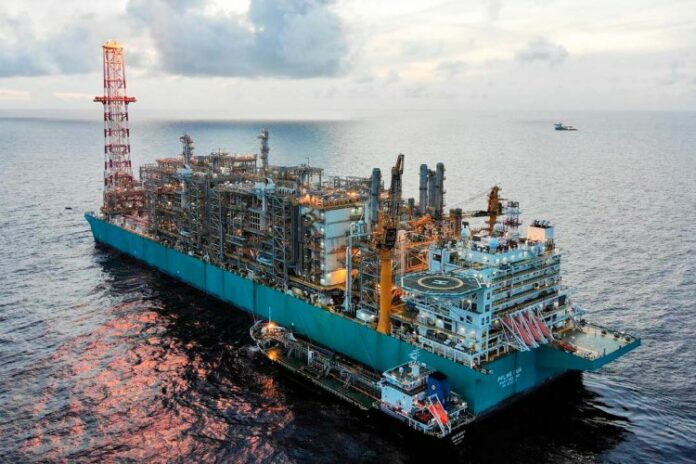
PC Myanmar (Hong Kong) Limited (PCML), a subsidiary of PETRONAS, has declared Force Majeure (FM) on its Yetagun field on 1 April 2021 due to depletion of gas production at the field, located in the Andaman Sea, offshore Myanmar, in Blocks M12, M13 and M14. 
 
The decision was made following challenges in the wells deliverability that resulted in the production rate dropping below the technical threshold of the offshore gas processing plant. PCML has temporarily ceased production at the Yetagun field until further notice.
 
PCML Country Head, Liau Min Hoe said:

“Prior to the cessation of production, Yetagun field was producing well below the technical turndown rate of its facilities. There  has been a drastic decline in production level due to subsurface challenges in the field  since  January 2021 and it has further deteriorated recently.

“Continuing to produce at a low rate would  impose significant risks to the integrity of our assets and the safety of our people. As a responsible operator, we had to temporarily cease production and declare force majeure. We have put in place an intervention plan to mitigate the matter, and  have informed the host authority, our partners and gas buyer of our decision.”

PCML has been the operator of the Yetagun Gas Project since 2003, where it holds 40.9% participating interest together with its affiliate, while Myanma Oil and Gas Enterprise holds 20.5%, Nippon Oil Exploration (Myanmar), Limited holds 19.3% and PTTEP International Limited holds the remaining 19.3%.
 
PCML remains committed to its project in Yetagun and is taking all necessary measures to resume production as soon as possible.

APM Terminals MedPort Tangier commences second phase of development

0

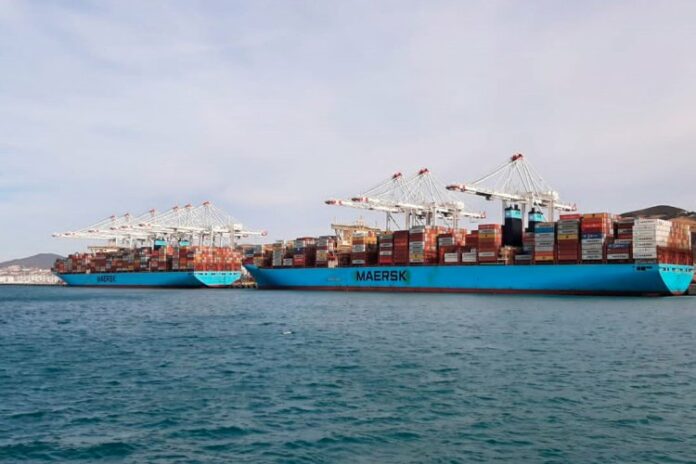
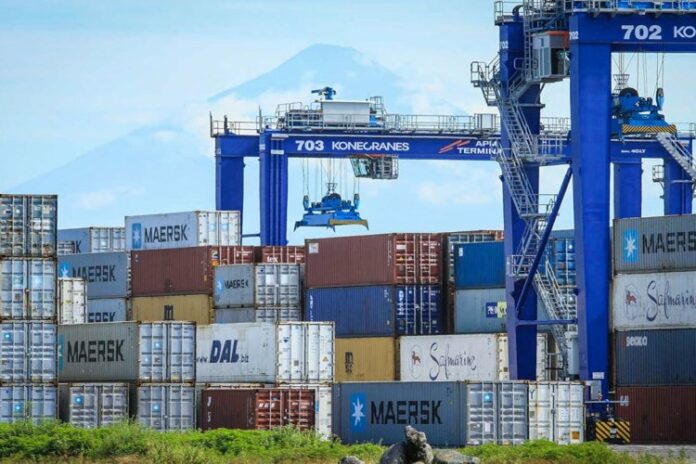
It now celebrates its next major development milestone by kicking off phase-2 of the development, which will add an extra 1 million TEU capacity to its footprint.

Following the terminals inauguration by HRH Prince Moulay Hassan in June 2019, APM Terminals MedPort Tangier ramped up operations, achieving more than 2.2 M TEUs throughput in 2020 with productivity levels reaching above 30 crane moves per hour. 

During phase 1, the terminal operated with a 1200 meter-long quay. To support the continued development of the terminal, APM Terminals MedPort Tangier’s second phase of development will add an additional 400 meters, increasing the total quay length to 1600 meters. This will add an additional throughput capacity of 1 million containers to reach the previously announced overall capacity of 5 million TEUs. 

This new investment is an important milestone in both Morocco and Maersk’s long-term partnership and confirms its commitment to establishing a major transshipment hub in the Mediterranean.

APM Terminals MedPort Tangier is the second transshipment terminal established by APM Terminals in the Tanger Med port complex, next to APM Terminals Tangier, which started operations in 2007. APM Terminals Medport Tangier is one of the most technologically advanced terminals in Africa and the continents first automated container terminal. 

Meyer Werft delivers Odyssey of the Seas

0

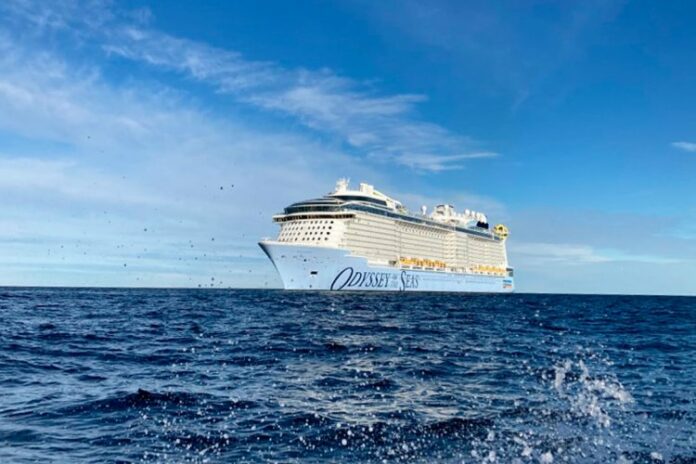
The Quantum Ultra class cruise ship marks the completion of a series of five ships whose construction Meyer Werft started in January 2013 with the launch of the Quantum of the Seas.

Stephan Schmees, Member of the Executive Board Project Management Ships, says:

“Royal Caribbean Group commissioned us in 2011 to build the first two units of the Quantum class, which have been very popular with passengers since day one. We have continuously improved and developed these ships, so that we have now built a total of five ships and delivered them since 2014.”

This makes the Quantum class one of the largest ship series Meyer Werft has built to date. The construction of the five sister ships comprises a total of 840,000 GT with, among other things, 11,000 kilometres of cable lines, 2,000 kilometres of piping from Meyer Werft’s pipe centre and 10,500 passenger cabins from EMS PreCab.

Jan Meyer, Managing Director of Meyer Werft, says:

“We have now successfully delivered the third cruise ship from Papenburg to our customers during the pandemic. This is an important sign of the strength of our shipyard and for the industry as a whole. However, given our stretched order book with the reduced workload, we still have major challenges ahead. If we can achieve a good future package for the years up to 2025, we have every opportunity to secure the company and many jobs in Papenburg with the existing orders.”

With the Quantum class, the engineers have once again brought a host of innovations to sea. Like its sister ships Quantum of the Seas, Anthem of the Seas, Ovation of the Seas and Spectrum of the Seas, Meyer Werft’s latest newbuilding features the glass, 90-metre-high observation gondola North Star, the surf simulator FlowRider as well as the skydiving simulator RipCord by iFly and the Sky Pad, a virtual reality, bungee trampoline experience located on the aft of the ship.

Odyssey of the Seas is measured at 169,000 GT, 347.1 metres long, 41.4 metres wide and accommodates 4,210 passengers.

As a further development of the Quantum class, the Odyssey of the Seas, like her four sister ships, has state-of-the-art exhaust gas purification systems such as so-called hybrid scrubbers and SCR catalytic converters. Very energy-efficient technical systems, optimised hydrodynamics, intelligent heat recovery and numerous other facilities lead to considerable energy savings. A diesel-electric pod drive, extensive alarm and security systems, interactive communication systems as well as state-of-the-art stage technology guarantee safety and entertainment according to the highest technical standards.

After delivery to the shipping company, the Odyssey of the Seas will leave Bremerhaven. On 2 June, the ship departs from Haifa (Israel) for cruises in the Mediterranean Sea.

First ever submarine interconnection between the island of Crete and mainland Greece

0

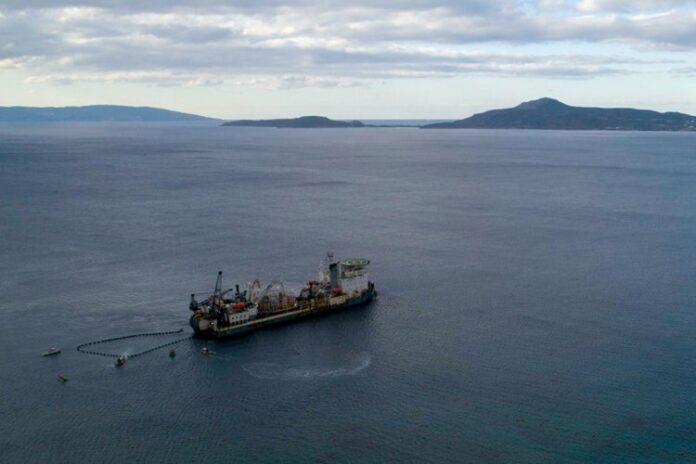
Prysmian Group and Independent Power Transmission Operator (IPTO) announce the successful completion of the submarine interconnection between the island of Crete and the Peloponnese peninsula, a record-breaking project in terms of length, depth and innovative HVAC cable technology.

Prysmian Group designed, supplied, and installed an HVAC (High Voltage Alternating Current) cable system composed of 135 km of 150 kV three-core cables with XLPE insulation and double-wire armouring. This is a record-breaking project, because Prysmian Group installed its innovative cable-system technology, based on a synthetic armour 30% lighter than steel, at a maximum water depth of approximately 1,000 metres for the first time.

The project has a total value of €125 million and was awarded to Prysmian Group in 2018 by IPTO, which operates the transmission system for Greece’s power grid. The first interconnection of Crete to the mainland of Greece is expected to go online over the next few months, ensuring reliable, affordable and sustainable power transmission.

Hakan Ozmen, EVP Projects BU, Prysmian Group, stated:

“This project confirms Prysmian’s undisputed leadership in the submarine cable system industry as a truly reliable and dedicated partner in the execution of complex turn-key projects. Our project execution capabilities have also been recognised by the recent ‘2020 Infrastructure Project award’, which acknowledged the Crete-Peloponnese interconnection as ’the project of records’. We are honoured of IPTO’s long-standing trust in our expertise, and we are proud to be IPTO’s key partner in such a strategic project, linking for the first time ever the island of Crete to the Greek mainland power grids.”

Manos Manousakis, BoD Chairman & CEO, IPTO, stated:

“The interconnection of Crete to the mainland has been a long-term aspiration for the Greek people and it now comes true in record time. Prysmian is a trusted partner of IPTO, engaged in flagship projects in Greece such as the interconnection of Cyclades Islands and the Crete-Attica powerlink. The technology of high strength synthetic fibres – used for first time in this project- secures low weight and good mechanical performance, ideal for the high-depth Greek seas. The innovative technology used in Crete-Peloponnese project paths the way for reliable and resilient subsea interconnections in the challenging Aegean sea.”

UK supply chain urged to seize economic opportunity from wind turbine blade recycling

0

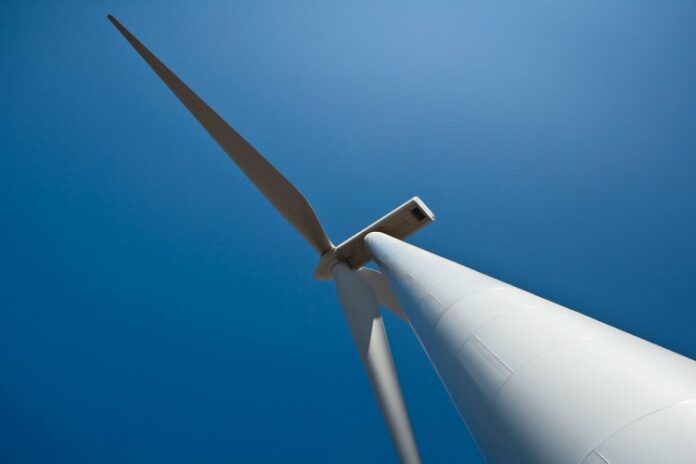
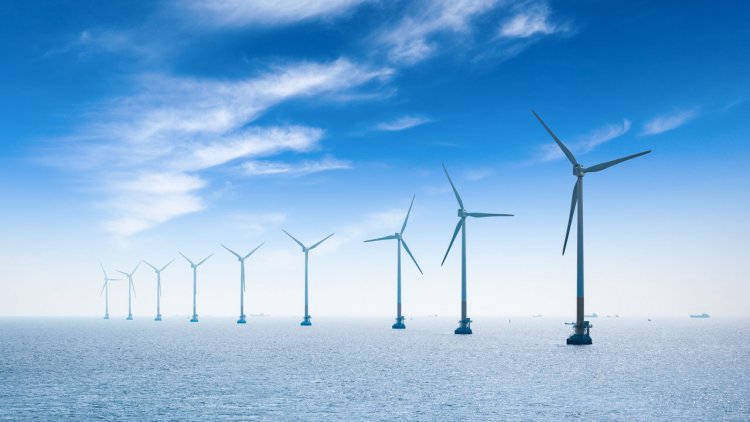
The Offshore Renewable Energy (ORE) Catapult is calling for increased investment and a radical shift in research and development into wind turbine blade recycling, citing the huge economic opportunities for the UK supply chain from a circular economy approach in offshore wind that could extend the sector’s UK job creation targets by 30 per cent, creating an extra 20,000 jobs.

The ‘Sustainable Decommissioning – Wind Turbine Blade Recycling’ report was produced under the Energy Transition Alliance (ETA), a partnership between ORE Catapult and OGTC, with input from experts at the National Composites Centre (NCC) and the University of Leeds. It was commissioned to investigate alternatives to landfill and incineration for end-of-life wind turbine blades.

Technically, wind turbines are almost 85-90% recyclable, but their blades, made from composites of resins and fibres, have proven challenging to break down, process and recycle, and remain the major hurdle to achieving fully recyclability. The report identified 14 technologies that show promise for recovering blade materials but that further work was needed before we see them deployed at scale, particularly around issues of environmental impacts, energy use and cost efficiency of techniques such as pyrolysis (heat treatment of composites).

This provides a golden opportunity for UK companies to provide solutions for our recycling needs. It is estimated that the global offshore wind industry will need to decommission 85GW of capacity (including 325,000 blades) by mid-century. While these estimates assume today’s 25-year lifecycle, they give an illustration of the scale of the future global market for circular economy pioneers in the sector.

Other key findings of the report include:

  • Recycling of all major components has the potential to generate an additional 5,000 UK offshore wind sector jobs. However, a more advanced circular economy model that brings in services such as remanufacturing and refurbishment of turbines and components would further extend this opportunity to 20,000 extra jobs, an increase of a third on the UK Government’s current 2030 targets.
  • To date, blade recycling efforts has been hampered by a failure to match recovered materials (resins and carbon/glass fibres) to supply chain needs and end-products. There is a need to focus efforts on creating a future supply chain for recyclates.
  • Cross-sector investment is crucial. The wind sector alone accounts for just nine per cent of the global composites market, with the remainder used by industries such as aerospace, automotive, oil and gas, defence and the leisure industries.

Chris Hill, Director of Operational Performance at ORE Catapult, said:

“As the report makes clear, we are on the cusp of a break-through composites recycling solution. The technologies exist, but to be viable, they require intensified investment and some new approaches to studying and addressing the remaining innovation challenges. Engagement with the UK supply chain is the first step for us: recycling is only of benefit when the recovered materials have saleable end-products that prevent deployment of virgin materials.”

“Wind industry manufacturers and operators are beginning to set ambitious targets for achieving zero waste turbines within the next twenty years. There is also an active hotbed of research into lifetime extension of turbines, pushing towards 40-year lifetimes, as well as exploring alternative materials to composites. Recycling these first-generation blades is the first step in achieving zero waste, and as the report highlights, it can also be a stepping-stone to a spin-off circular economy.”

Dr Anne Velenturf, a Research Impact Fellow at the University of Leeds who is leading research on a circular economy for offshore wind with the ORE Catapult, added:

“A high-value circular economy, in which wind turbines are designed for durability and for repair, reuse and remanufacturing ahead of recycling the materials, has a high potential to minimise carbon emissions and to open new business opportunities for companies in the UK, creating thousands of jobs in our communities.”

The next phase of the Energy Transition Alliance’s Blade Recycling Project will assess and appraise glass fibre recycling processes in order to identify the “best” potential solutions for further study and demonstration.  ORE Catapult has targeted an at-scale demonstration of blade recycling in the UK within the next five years through both the ETA Blade Recycling Project and a new joint industry project Circular Economy in the Wind Sector (CEWS).

Successfully delivery of new consoles on board naval frigate Bartolomeu Dias

0

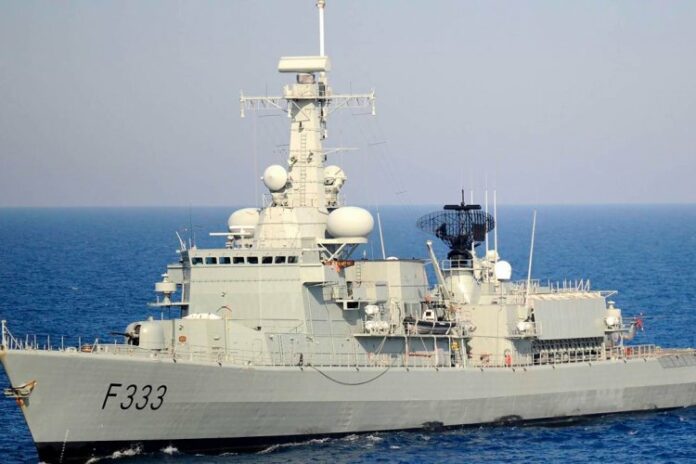
The delivery of new consoles for her sister ship, Francisco de Almeida (F334), is scheduled to be completed this summer.

The M-frigates Bartolomeu Dias and Francisco de Almeida, formerly known as Van Nes and Van Galen respectively, are currently being modernised in Den Helder by the Defensie Materieel Organisatie (DMO) and the Directie Maritieme Instandhouding (DMI) of the Commando Zee Strijd Krachten (CZSK). Systems integrator Alewijnse was contracted in 2019 for the design, construction, assembly and commissioning of the multi-function consoles (MFCs), the auxiliary control units of the command centres (CoCe) and completely new Radio Room Consoles (RRC).

Alewijnse project manager Perry Eikelenboom explains:

“The new MFCs replace the General Operating Stations (GOS) in the command centres (CoCe), the operational heart of the ships. There, all sensor data is presented, analysed and, among other things, the decision can be taken to switch to weapons deployment. The new MFCs are more versatile and user-friendly than the old GOS, which greatly increases the effectiveness of the operators. With a view to redundancy, the basic design of the MFCs is kept as uniform as possible, so that an operator can easily change to another console in the event of a malfunction.”

Alewijnse carried out a full range of assessments before officially delivering the consoles to the Bartolomeu Dias. These included intensive simulations to measure shock and heat resistance and various test runs during the site acceptance tests. The refit works took place at the RNLN shipyard in Den Helder after which Alewijnse undertook the installation, commissioning and acceptance tests.

Alewijnse project manager Perry Eikelenboom says:

“Our consoles are built at Alewijnse’s own production locations in the Netherlands. This offers our customers many advantages, including competitive prices, short logistical lines and flexibility. Our switchboards and consoles are built with superior components and enclosures from western European suppliers, thus ensuring high quality end products. In this way Alewijnse makes a valuable contribution to all the projects in which it is involved.

“We are pleased to have completed the order for the first M frigate to the customer’s satisfaction. The successful delivery confirms our long-standing cooperation with DMO, DMI and the Royal Netherlands Navy (RNLN) on highly complex projects for defense and security. We aim to achieve the same performance for the second ship.”

Alewijnse and the RNLN have worked together successfully for many years on various naval vessels, including the support vessel Zr. Ms. Pelikaan (A804), Joint Support Ship (JSS) HNLMS Karel Doorman, the four Holland-Class Oceangoing Patrol Vessels and the amphibious transport ships HNLMS Johan de Witt and HNLMS Rotterdam. Since 2016, Alewijnse has maintained its own service hub in Den Helder dedicated to delivering quick and efficient electrical services to naval vessels docked at the RNLN dockyard. 

In 2019 Bartolomeu Dias (F333) and Francisco de Almeida (F334) celebrated their twenty-fifth birthdays and become due for the renovations necessary to enable them to continue in active service into the thirties of the 21est century. The Portuguese Navy agreed to these major maintenance works taking place at Den Helder as, with both vessels having been built in the Netherlands, all the necessary expertise and facilities for such a complex project are readily available in the Den Helder yard.

APMTQ installs two non-intrusive inspection equipments to ensure port security

0

As part of the actions of the Customs Integral Modernization Program promoted by the Superintendence of Tax Administration (SAT) customs, APM Terminals Quetzal (APMTQ) inaugurated two non-intrusive inspection equipment (X-Ray Scanners), with an investment of more than US$7 million. 

The X-Ray scanning equipment will cover both import and export container flows, so processes are not interrupted, and inspections and operations runs smoothly. These tools increase the control, traceability, and transparency of cargo handling at the Temporary Customs Warehouse (DAT).

In this regard, Gabriel Corrales, General Director of APMTQ, said:

“The presence of APMTQ in Puerto Quetzal has meant an increase of 25% in the port connectivity index, which translates into improved competitiveness and increased exports. We will continue working on the proper management of containerized cargo with agile, safe and modern port facilities that allow Guatemala to remain active in foreign trade”.

Coordination with SAT has made it possible to define all the DAT compliance requirements, as well as to manage the participation of other authorities involved in the Terminal so that they are also an active part of the non-intrusive inspections.

Marco Livio Diaz, Superintendent of Tax Administration, said:

“The implementation of technology in our ports is an important step to continue building trust with state institutions, entrepreneurs, actors in the logistics chain and the international community. For Puerto Quetzal and SAT, the implementation of X-Ray Scanners today in this port Terminal, means an important advance in the fight against customs fraud and smuggling, but also translates into more development and competitiveness for the country.”

It is worth mentioning that this equipment is essential in the fight against custom fraud and drug trafficking, since it inspects 100% of the cargo entering the port Terminal by sea and land. In addition, it allows a more assertive inspection in real time and provides a database of images for further consultation by the authorities.

All the information transmitted by the non-intrusive inspection equipment will be reviewed exclusively by the authorities involved in the Port: SAT, the General Sub-Directorate of Analysis and Anti-Narcotic Information, The Division of Ports and Border Airports, the Regional International Agricultural Health Agency and the Ministry of Agriculture, Livestock and Nutrition.

Since 2017, the year APMTQ began operations, there has been a 62% increase in weekly vessel space availability at Puerto Quetzal, adding new routes and shipping lines that use larger vessels that take advantage of the Terminal’s infrastructure.

Likewise, APMTQ operation has increased the number of direct services (without transshipment) arriving at Empresa Portuaria Quetzal, including Asian ports, by 47%,  which means improvements in efficiency and costs for exporters and importers. Due to the joint work with the authorities, there has been a considerable increase to the customs collection in the Pacific, growing up to 36% since 2017.

Sanmar signs US$33.46 million six vessel contracts with Pakistan port authority

0

Sanmar Shipyards has signed six vessel contracts together totalling US$33.46 million with the Port Qasim Authority (PQA) in Pakistan for four high-performance state-of-the-art tugboats and two pilot boats. 

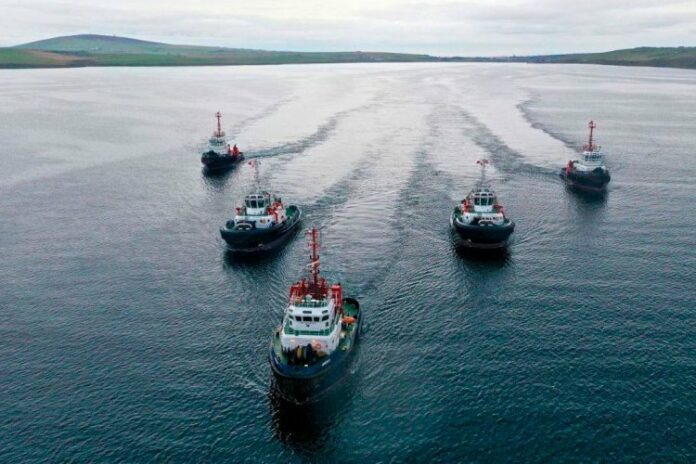
The contracts were awarded following a hard-fought international tendering process during which Sanmar championed its new technologically-advanced Kocacay range of powerful and efficient escort and harbour tugs, based on the exclusive-to-Sanmar RAstar 3200SX design from Canada-based naval architects Robert Allan Ltd.

The Sanmar Kocacay class tugs, designed in close co-operation with the Turkish tug builder and operator, and boast a unique sponsoned hull form, proven to provide significantly enhanced escort towing performance. Escort forces are enhanced by the effects of the sponsons as well as by the prominent foil-shaped escort skeg.

Three of the 32m x 13m x 5.6m high-powered LNG compatible tugs will have an impressive 75 tonnes of bollard pull (BP) ahead and astern, while the fourth will have an even greater BP of 85 tonnes.

The first two tugs in the series, called Thor of Scapa and Odin of Scapa by their new owners, were delivered to the Orkney Islands Council in the UK last year. They are being used for ship-handling, towing, escort and emergency response duties and have been purposely designed with a shallower draught than most other tugs of similar size to ensure greater operational flexibility even with the depth limitations in some of the piers within Scapa Flow.

The contracts with PQA for the ultra-modern tugs and two 20m pilot boats capable of 20 knots, were signed at a ceremony at the Ministry of Maritime office in Islamabad on 29 March 2021. It was witnessed by the Federal Minister for Maritime Affairs Syed Ali Haider Zaidi and Turkish Ambassador Ihsan Mustafa Yardakul. Commercial Projects Manager Ozge Abanuz and Procurement Manager Hakan Tunc represented Sanmar.

Afterwards PQA organised a celebration dinner, which was also attended by the Federal Minister for Maritime Affairs Syed Ali Haider Zaidi and his wife, along with Turkish Ambassador Ihsan Mustafa Yurdakul and Sanmar representatives.

The Minister invited Sanmar to build a shipyard in Pakistan, share its expertise and technology, and benefit from the local skilled and relatively low-cost workforce.

Ali Gurun, Vice President of Sanmar, said:

“Sanmar has been delivering tugs to Pakistan since year 2000. We have tugs in KPT and PQA ports. However, this tender was one of the most challenging one due to tough competition. Our designers Robert Allan Ltd and supplier Kongsberg Marine have worked closely with Sanmar engineers to deliver best performance solution for PQA. We have worked hard and we deserved it.”

Sofia OWF:  Siemens Gamesa selected to deliver 100 flagship 14 MW turbines

0

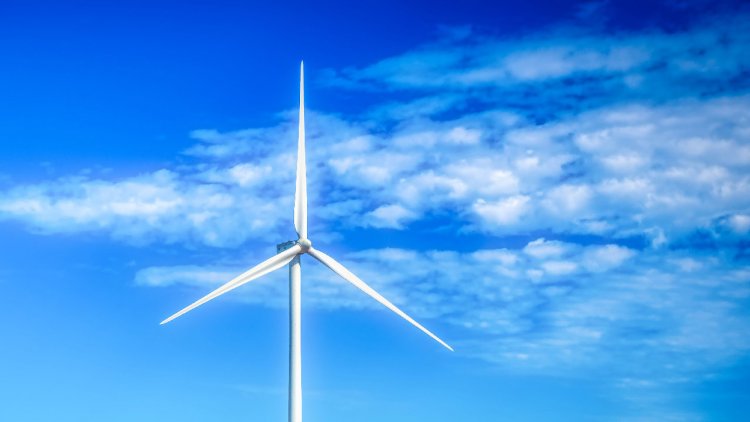
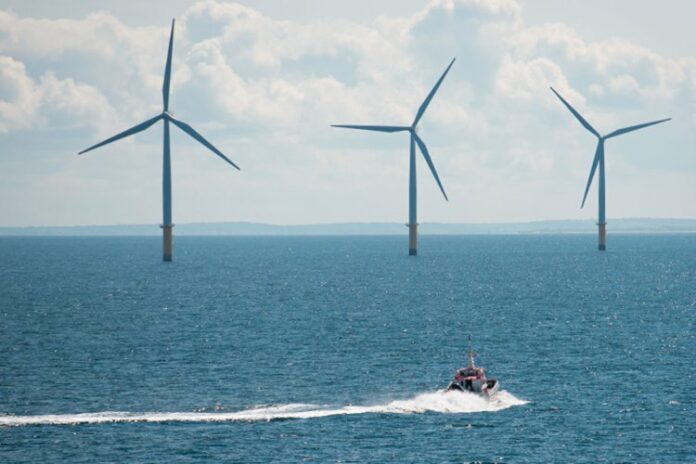
Siemens Gamesa Renewable Energy (SGRE) has been awarded the firm order from RWE for the 1.4 GW Sofia offshore wind power project. Sofia represents a giant leap for the company; located 195 km off the UK’s north eastern coast on Dogger Bank in the North Sea, the project will be the first to install the company’s flagship 14 MW Direct Drive offshore wind turbine. 

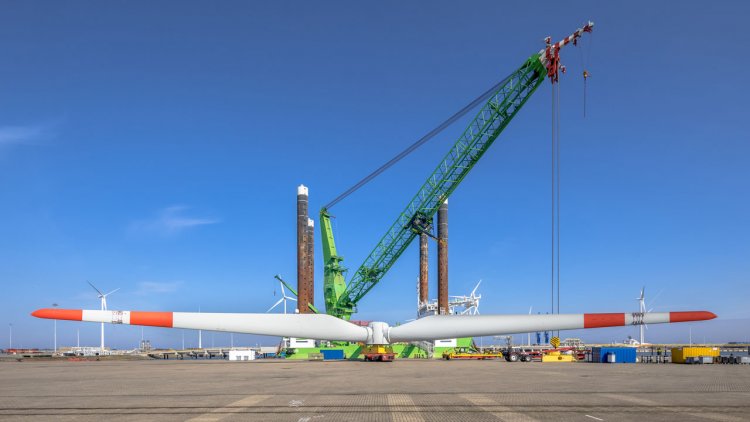
At 593 square kilometres, the Sofia project will also cover an area greater than that of the Isle of Man and will utilise the evolutionary technology of the SG 14-222 DD offshore wind turbine commercially for the first time anywhere in the world. The development brings other milestones; the 100 turbines will be installed furthest from shore of any project yet undertaken by the company and will feature the world’s largest single-cast turbine blade at 108 m long. 

The B108 blades being used at Sofia are more than six times longer than the first offshore wind turbine blades ever installed, namely the 16-meter long blades used at Vindeby in Denmark in 1991. The 35-meter water depth, the distance from the UK’s coastline and the sheer scale of the turbine and its components make the stable, proven technology of Siemens Gamesa’s Direct Drive technology – where no gearbox is involved –an obvious choice for the Sofia wind power project. The strong, reliable winds far from shore will enable the completed wind power project to power the equivalent of 1.2 million UK households. Offshore construction works for the Sofia project will start in 2023 with turbine installation set to commence in 2025.

Marc Becker, CEO of the Siemens Gamesa Offshore Business Unit says:

“The UK is the world’s largest offshore wind market, so it is appropriate that it should be the first to install the world’s largest turbine in production, the SG 14-222 DD. We are proud to be partnering with RWE on another highly significant project, and to bring our industry-leading machine to this huge development. A wind power project of this scale is possible due to the cutting-edge use of technology in the turbines, in their manufacturing, and in installation. Rapid innovation of proven technology has made this leap in generating capacity possible – and with it a leap forward toward the goals of decarbonising energy and achieving Net Zero.”

Sven Utermöhlen, Chief Operating Officer Wind Offshore Global for RWE Renewables, said:

“As a leading player in offshore wind, we are delighted to be the first company to sign a firm order with SGRE for these state-of-the-art offshore wind turbines, and that Sofia will be the first project to install them. The fact that our largest offshore wind project will utilise the most innovative and technologically advanced turbines, demonstrates RWE’s continued ambition to be a trailblazer at the forefront of the offshore wind sector. We have previously partnered with SGRE on a number of our offshore wind projects, and we look forward to constructing a flagship project that will make a significant contribution both to expanding our renewables portfolio and to the UK’s ambition of growing offshore wind capacity to 40 gigawatts by 2030.”

The giant leap forward in generating capacity is a critical tool in building a greener power infrastructure and a step forward to achieving Net Zero. Although the Sofia development will cover an area equivalent to the Isle of Man, the generating capacity would power households the equivalent of 14 times the Isle of Man, or four times a city the size of Hull – the centre of the UK’s offshore wind power industry.

Siemens Gamesa’s long association with the UK sees Sofia as the latest step in offshore wind developments that began in 2011. Since then, the company has installed around 1,700 offshore wind turbines totaling more than 8 GW of capacity. Included in these achievements are three successive ‘world’s largest’ wind power projects and the creation of a hub for UK offshore wind expertise with the company’s manufacturing, port, and training facility in Hull. The firm order for Sofia is accompanied by a contract to undertake the service and maintenance of the 100 turbines.

NYK Group orders LNG powered cruise ship at Meyer Werft

0

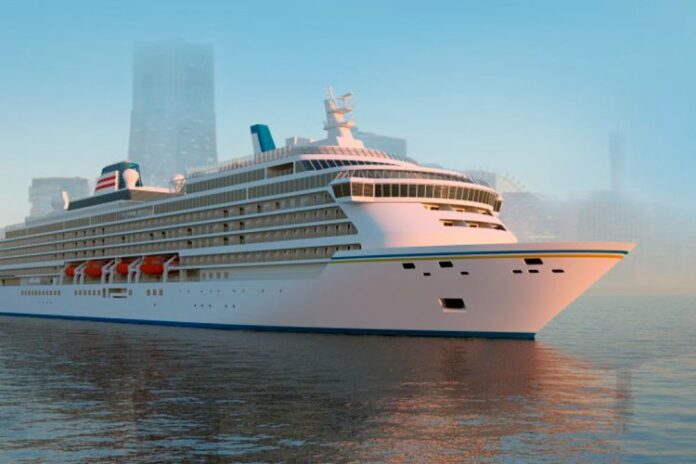
The Japanese cruise shipping company NYK Cruises and MEYER WERFT have signed a contract for the construction of a new cruise ship.

Noteworthy: MEYER WERFT is the first shipyard in the world to have succeeded in doing so, as no shipping company has placed a newbuilding order for a cruise ship since the beginning of the pandemic. The NYK Group is now placing its first order in Papenburg.

This is an important signal for MEYER WERFT’s Papenburg site with the world’s largest covered building dock, even if the newbuilding is relatively small at 229 metres in length (51,950 GT).

Jan Meyer, Managing Director of MEYER WERFT, says:

“It is another very important step towards securing the Papenburg site. New orders are absolutely necessary for our current programme for the future with enormously important savings and very many different measures. We have been able to win our new customer from Japan as a new customer in this extremely difficult global market situation and worldwide competition with the best ship concept, innovations, quality and a very challenging price for us. This is the first order in the shipyard’s 226-year history where all contract documents and plans were prepared and negotiated via video conferencing. The effort has paid off.”

Imke Knoop, Head of Sales & Design:

“The pandemic allows shipping companies all over the world to freely choose shipyard locations. The challenge is to survive with our combination of design, quality, innovation and, of course, under ever-increasing price pressure in the face of worldwide, sometimes heavily subsidised, competition. The order has come just in time; so far only one new building has been in our halls for 2025.”

Thomas Weigend, Managing Director of MEYER WERFT explains:

“Of course we are delighted about the newbuilding order, but at the same time we have to push ahead with our future programme, continue to convert and optimise the shipyard so that we can also deliver the ship with economic success. Thanks to this order, we now also have a second ship in the works in 2025, namely a small and a large ship. But it remains the case that we still have a lot of work missing for the year 2025. Our production in Papenburg is designed for an annual construction volume of 420,000 GT, but the two ships in 2025 have a total volume of only 182,000 GT.”

Jan Meyer adds:

“The current newbuilding order is not a turnaround from our difficult situation. In Papenburg we are designed for the series production of very large cruise ships. Now we are building the prototype of a small ship without the option of sister ships. Therefore, it is to be classified as another step among many necessary measures. At the same time, it is also a positive signal: it is a completely new customer for MEYER WERFT, we have asserted ourselves on a global market against global competition.”

The newbuilding for NYK Cruises is scheduled for delivery in 2025. MEYER WERFT will also install LNG propulsion here. This modern and currently most environmentally friendly technology for cruise ships was successfully used for the first time by MEYER WERFT in 2018 as a global innovation for complete ship propulsion. MEYER WERFT is also implementing numerous customised solutions for the current new order. These include hydrodynamics optimised in accordance with the planned routes as well as on-board facilities adapted to the needs of Japanese passengers and, as a result of the pandemic, also offering innovations to the air-conditioning systems and contactless controls.

The NYK Group, with more than 37,000 employees, is one of the largest global logistics enterprises in the world with 400 ships and is primarily active in the container, bulk and energy transportation, RoRo and logistics markets. NYK Cruises, group company of NYK, operates one luxury cruise ship Asuka II, which was delivered by Mitsubishi Heavy Industries (Japan) in 1990 and serves a luxury segment as Japan’s largest cruise ship.

Only in February MEYER WERFT transferred the cruise ship Odyssey of the Seas via the Ems to the North Sea. Despite the pandemic, eight ships have been delivered from the MEYER Group shipyards in Papenburg, Rostock and Turku (Finland) in the past twelve months.