-11.1 C
New York
Home Blog Page 649

Malaysia and Brunei formalise unitisation agreement for two offshore fields

0

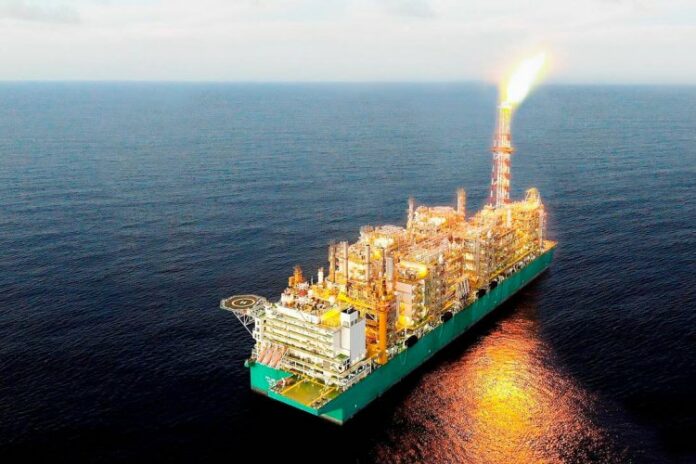
Malaysia, through its national oil company PETRONAS, today formalised a Unitisation Agreement (UA) with the Government of  Brunei Darussalam for the Gumusut-Kakap and Geronggong-Jagus East fields which straddle along the Malaysian-Brunei maritime boundary.

The formalised UA firmly attests the continuing collaboration between Malaysia and Brunei and establishes the platform for the joint development of the fields by PETRONAS and the National Unitisation Secretariat (NUS) of Brunei to further enhance the value derived from these assets for both countries.

The formalisation took place at Istana Nurul Iman in Bandar Seri Begawan during the 23rd Malaysia-Brunei Annual Leaders’ Consultation, witnessed by His Majesty Sultan Haji Hassanal Bolkiah Mu’izzaddin Waddaulah ibni Al-Marhum Sultan Haji Omar ‘Ali Saifuddien Sa’adul Khairi Waddien, Sultan and Yang Di-Pertuan of  Brunei Darussalam and Yang Amat Berhormat Tan Sri Muhyiddin Yassin, Prime Minister of Malaysia.

Also present were PETRONAS President and Group Chief Executive Officer Tengku Muhammad Taufik Tengku Kamadjaja Aziz, PETRONAS Executive Vice President and Chief Executive Officer of Upstream Adif Zulkifli and PETRONAS Senior Vice President of Malaysia Petroleum Management Mohamed Firouz Asnan. Brunei Darussalam was represented by its Acting Minister of Energy, Yang Mulia Dato Seri Paduka Awang Haji Matsatejo bin Sokiaw.

Tengku Muhammad Taufik said:

“Today’s signing is indeed a testament to the synergy between PETRONAS and the Ministry of Energy, Brunei Darussalam, and embodies yet another step towards strengthening our long-standing relationship for greater shared success. Having now formalised this landmark agreement, PETRONAS believes that both parties can look forward to continuing the strong momentum towards developing our nations’ energy sectors for the long-term growth and prosperity of both Brunei and Malaysia.”

Brands back call for moratorium on deep seabed mining

0

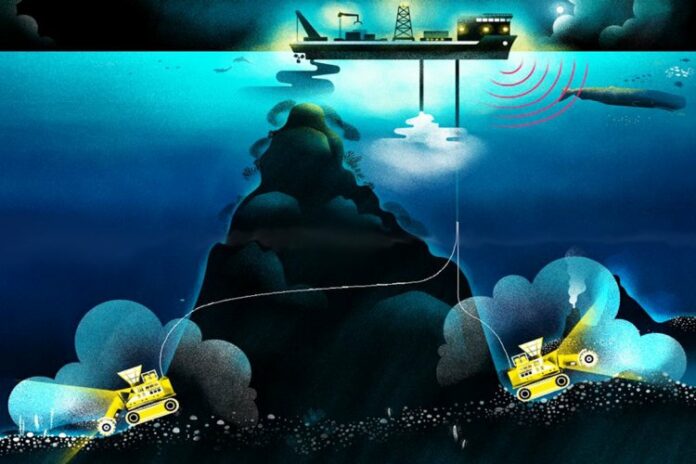
Four leading global companies have announced their support for a global moratorium on deep seabed mining. Initiated by BMW Group and WWF, and signed by Samsung SDI, Google and Volvo Group, the companies join the increasing chorus of concern about the significant risks to economies and to ocean health that would arise from opening up the deep seabed to extraction of minerals.

Calls for a global moratorium on deep seabed mining are coming from diverse actors, including scientists, communities, the fishing industry, political leaders, NGOs including WWF, and now also from companies. By committing to this public statement, the signatories pledge not to source any minerals from the deep sea, and to refrain from using mineral resources from the deep sea in their supply chains and not to finance deep-sea mining activities. 

Despite uncertainties and risks to the future health of our ocean and to those who depend upon it for food and jobs, there is increasing pressure from a few companies to begin mining the deep seabed. With much of the deep sea ecosystem yet to be explored and understood, such activity would be recklessly short-sighted.

John Tanzer, Global Ocean Leader, WWF International, said:

“WWF is calling for a moratorium on deep seabed mining. We welcome this important step, and call on other companies who care about the ocean to join these leaders by signing on to the statement. It is a clear message to those who are swayed by the false promise that deep seabed mining is a ‘green’ and attractive investment proposition. It is not so.”

Mining in water thousands of meters deep is expected to have destructive effects on vulnerable deep-sea ecosystems and lead to loss of biodiversity and species extinction. WWF’s recent report, “In Too Deep,” shows the projected large-scale destruction of the seabed could affect global fisheries and threaten carbon and nutrient cycles in the ocean. Given the slow pace of deep-sea processes, destroyed habitats are unlikely to recover within human timescales. What has been created over millions of years would be wiped out in a day.

Jessica Battle, leader of WWF’s No Deep Seabed Mining Initiative, said:

“The pro-deep seabed mining lobby is creating their own narrative by choosing to portray only some of what we know and don’t know. They are selling a story that companies need deep seabed minerals in order to produce electric cars, batteries and other items that reduce carbon emissions. But savvy companies that are committed to sustainability are seeing through that false narrative. Deep seabed mining is an avoidable environmental disaster. We can decarbonize through innovation, redesigning, reducing, reusing and recycling.”

The report highlighted that marine ecosystems are connected, and many species are migratory. Therefore, deep seabed mining cannot occur in isolation, and disturbances can easily cross jurisdictional boundaries. Negative effects on global fisheries would threaten the main protein source of around one billion people and the livelihoods of around 200 million people, many in poor coastal communities.

WWF and others calling for the moratorium are asking that deep seabed mining activities be put on hold until the environmental, social and economic risks are comprehensively understood; all alternatives to adding more minerals into the resource economy are exhausted; and it is clearly demonstrated that deep seabed mining can be managed in a way that ensures the effective protection of the marine environment and prevents loss of biodiversity.

WWF urges companies and investors to focus their attention on smart, resource-efficient and circular economy solutions, as well as ensuring responsible mining practices on land, that reduce environmental and social impacts. 

TechnipFMC and Bombora form partnership to develop a floating wave and wind power project

0

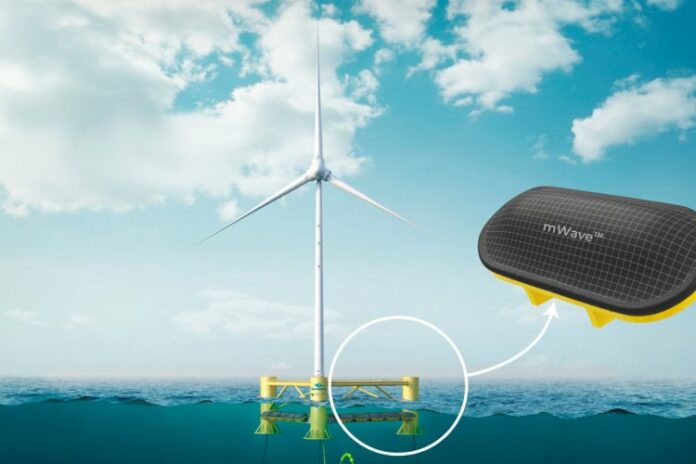
The relationship brings together TechnipFMC’s unique technologies and experience delivering complex integrated Engineering, Procurement, Construction and Installation (iEPCI™) projects offshore with Bombora’s patented multi-megawatt mWave™ technology that converts wave energy into electricity.

The partnership will initially focus on TechnipFMC and Bombora’s InSPIRE project. With engineering work initiated in November 2020, the partnership is developing a hybrid system utilizing Bombora’s mWave™ technology. The hybrid system demonstrator will deliver 6 megawatts of combined floating wind and wave power, followed by Series 1 and Series 2 commercial platforms which are expected to deliver 12 and 18 megawatts, respectively.

Jonathan Landes, President Subsea at TechnipFMC, commented:

“Our core competencies and integration capabilities make us an ideal system architect and partner in developing renewable energy solutions alongside Bombora’s experience and unique, patented mWave™ technology. We are delighted to work on a project that advances our commitment to the environment while contributing toward a more sustainable future.”

Sam Leighton, Bombora’s Managing Director, said:

“Bombora is collaborating with TechnipFMC to accelerate development of our floating integrated mWaveTM platform solutions for commercial wind farms. With TechnipFMC’s extensive track record of delivering large-scale projects to the energy sector and Bombora’s innovative mWaveTM technology, we are confident InSPIRE will play a key role in the offshore energy sector.”

InfoSHIP Quality for FINBETA’s chemical tankers

0

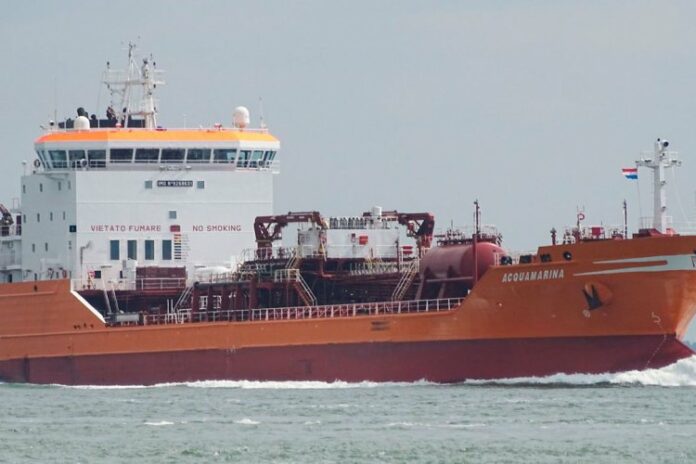
InfoSHIP Quality is a module of the InfoSHIP suite, designed to manage and prevent, among others, risks relating to the safety of the ship and crew, such as incidents and accidents/injuries. 

The system allows to always be perfectly in line with the international safety standards in force set by the IMO (e.g.: ISM Code and ISPS compliance) and guarantees the implementation and consolidation of high-level QHSE management policies within the company. 

The application provided by IB also has positive implications in the management of Audits or PSC inspections, among others, since it facilitates their planning, execution, reporting and archiving. In this way, information such as statistics on the incidence of recorded risk events or relating to the outcomes of inspections of all kinds are immediately shared and usable, without exception, among all the interested parties, in the office and onboard the ships.

Achievement of greater awareness of fleet safety levels and historicization of information for an increased ability to analyze on-board operational dynamics, quantitative and qualitative levels of response and compliance with reference standards. These are the guiding principles underlying the choice of implementing a software such as InfoSHIP Quality.

This is a project aimed at consolidating key elements, such as quality and transparency, which is implemented by a company characterized by a strong environmental sensitivity. Also, it is a project particularly felt by Finbeta, which is committed to the double front of the renewal of its fleet and the digitalization of the management processes.

Horizon Arctic Expedition to the Titanic

0

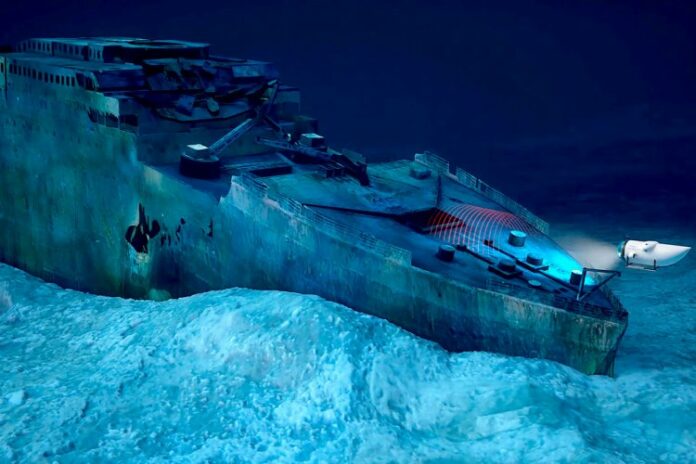
OceanGate Expeditions, the innovative crewed submersible exploration company, has announced it has selected the state-of-the-art multi-purpose offshore support vessel Horizon Arctic to serve as the surface support vessel for the 2021 Titanic Survey Expedition. 

Stockton Rush, President, OceanGate Expeditions, says:

“The expedition vessel is essential to the success of the missions we will embark upon beginning in June 2021. The Titanic Survey Expedition will utilize OceanGate Inc.’s 5-crewmember submersible, Titan, and their proprietary launch and recovery platform that are easily accommodated by a wide variety of surface support vessels. For this expedition, in one of the world’s harshest marine environments, we have selected a superior vessel with outstanding features such as low emissions hybrid propulsion, full redundancies, and the highest standard of accommodations for our crew and Mission Specialists. Our focus has been on identifying a vessel and crew uniquely qualified in deep subsea operations with a commitment to putting safety first. We have found that in the crew of the Horizon Arctic.”

Sean Leet, CEO, Horizon Maritime, says:

“We are excited to be providing the Horizon Arctic for the inaugural Titanic Survey Expedition, conducting this operation from our home port in St. John’s. Our crews have unmatched training and experience in subsea support operations – safety is paramount within all of our operations. While we have supported many complex subsea operations over the years, supporting the team making these dives to the iconic resting place of the Titanic is an exceptional honor. We are looking forward to working with the OceanGate Expeditions team and participating in these on-going missions that will document and preserve a fascinating aspect of our Atlantic Canadian heritage.” 

OceanGate Expeditions’ Titanic Survey Expedition will embark June 2021 with a team of scientists, content experts, and citizen explorers trained as Mission Specialists to study and document the important maritime heritage site. Citizen explorers contribute mission support and training fees. They join the crew as Mission Specialists who are trained to assist with submersible operations aboard Titan and surface support operations. Roles and training include communications, navigation, laser scanning, sonar operation, photography, and dive planning.

The Horizon Arctic is Canadian-owned and operated by Horizon Maritime. The 93.6 meter vessel has the environmentally-friendly CLEAN DESIGN class notation, a hybrid propulsion system, and improved low resistance design for high speed and crew comfort. The vessel also has an ROV with integrated control room and launch and recovery system.

Study: Hidden diversity of coral more important for conservation than previously thought

0

In recent years, advancements in DNA sequencing have exposed a large amount of hidden diversity in reef-building corals: species that appear identical to one another but are genetically distinct. 

Typically ignored as they are invisible to the naked eye, a team of researchers at the California Academy of Sciences and The University of Queensland, along with over a dozen international collaborators, is taking a more holistic approach to understand these hidden species by investigating overlooked ecological differences that have wide-ranging implications for the vulnerability and resilience of reef-building corals. The team hopes that their findings, published in Current Biology, will lead to a more nuanced consideration of coral diversity, that incorporates more aspects than appearance alone, to drive more strategic conservation planning.

Lead author and Academy Curator Pim Bongaerts says:

“We know we are greatly underestimating the true number of coral species because of this hidden diversity. In our study, we provide one of the first clear examples of how coral species that look identical can be very different in terms of their ecology and physiology, from when they reproduce to what depths they prefer. This means that our current framework for classifying reef-building corals based primarily on morphology is limiting our ability to understand and protect them.”

By conducting one of the most extensive genomic studies of a coral species to date, which involved obtaining DNA samples from more than 1,400 individuals, the researchers began their study by discovering that the “serpent coral” (Pachyseris speciosa)—one of the most widespread corals across the Indo-Pacific—is actually four different species that evolved millions of years ago. To their surprise, these species were indistinguishable from each other, even at a microscopic level, sparking the researchers to take it a step further and look for ecological differences that may have been missed when they were thought to be one species.

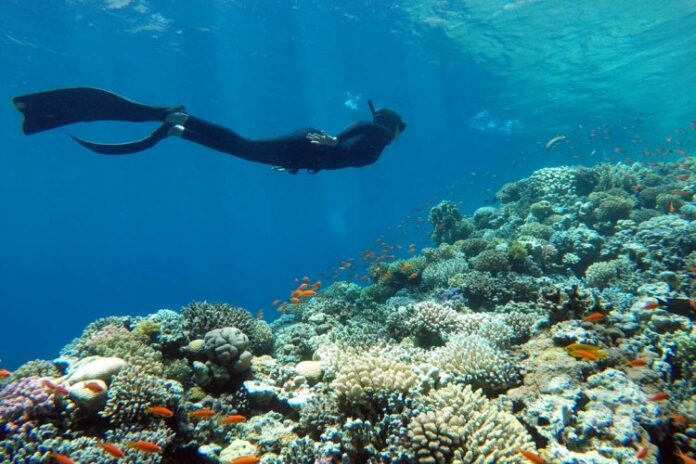
Using remotely-operated vehicles and specialized deep diving gear, the researchers investigated corals from shallow depths down to 80 meters beneath the surface—into the vastly understudied mesophotic zone of coral reefs. They discovered that although individuals from each species could be found over the entire range of depths, they had distinct depths where they were most abundant, with corresponding differences in physiological traits such as protein content that affect their ability to survive and thrive at their preferred depths.

Study co-author at The University of Queensland Professor Ove Hoegh-Guldberg says:

“Knowing what corals thrive where and at which depths is crucial for reef conservation. Most marine protected areas only protect shallow reefs, which means that hidden species at mesophotic depths are being overlooked by current conservation strategies. We need to give this gap in protection some further thought.”

Besides the physiological and depth differences, the research team also developed a rapid DNA test to be able to identify these species in the field and monitor their reproduction. They discovered that there were differences between the species in the timing of broadcast spawning—the mechanism whereby environmental cues trigger an entire population of corals to synchronously release their gametes. This staggered spawning may provide an explanation for the lack of interbreeding between the species (a common occurrence for many corals) despite living side-by-side on the reef.

Academy researcher and study co-author Alejandra Hernández-Agreda says:

“For years we have asked ourselves about the relevance of this hidden diversity, wondering if we are missing something important. By using all of the tools at our disposal to analyze not just the morphology, but all these other aspects of these species as well, we now show how this hidden diversity can mask major differences in these species that could translate to their ability to cope with the rapidly changing conditions of our world’s oceans.”

Ultimately, the researchers hope that their findings reveal the importance of taking a holistic approach to understanding these hidden species that appear identical, but may be harboring key differences that impact global conservation efforts.

Bongaerts says:

“At a moment when reefs around the world are experiencing rapid degradation, it is critical to start capturing this hidden diversity—not only of species, but of how they live and function—to improve our understanding and ability to protect these fragile ecosystems.”

VIDEO: Fish factory ship under construction capsized, sank at shipyard

0

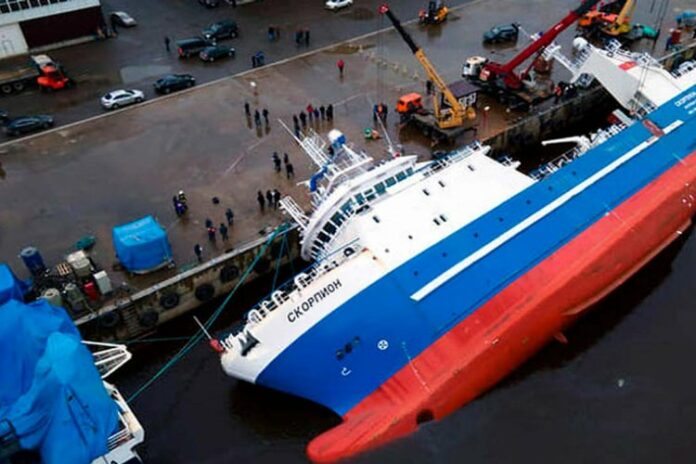
Freezer trawler (fish factory) SKORPION on Mar 30 capsized and sank alongside the pier at Pella Shipyard, S-Petersburg, Neva river, Russia. 

The ship rested on the bottom starboard side, two workers were trapped inside and died, their bodies later recovered. The ship was under construction, the accident occurred during ballast system tests, according to local reports. SKORPION was to be received by the owner sometime in the middle of 2021.
Freezer trawler (fish factory) SKORPION, IMO 9847839, GT 2380, built 2021, flag Russia.

The fishing freezer trawler “SCORPION” (project 1701) was launched in July 2019. This is the first of 2 vessels being built for the FEST group of companies. Trawlers of project 1701 are designed for bottom and pelagic fishing and handling the catch on board.

Main technical parameters:
Overall length: 61.04 m
Breadth overall: 14 m
Estimated draft: 5.9 m
Full displacement: 3130 t
Engine type and power: Wartsila 6L32, power 3480 kW at 750 rpm
Speed: not less than 13.5 knots
Crew: 38 people

Sources: FleetMon, Pella Shipyard

Liebherr Container Cranes to supply two new STS to The Port of Liverpool

0

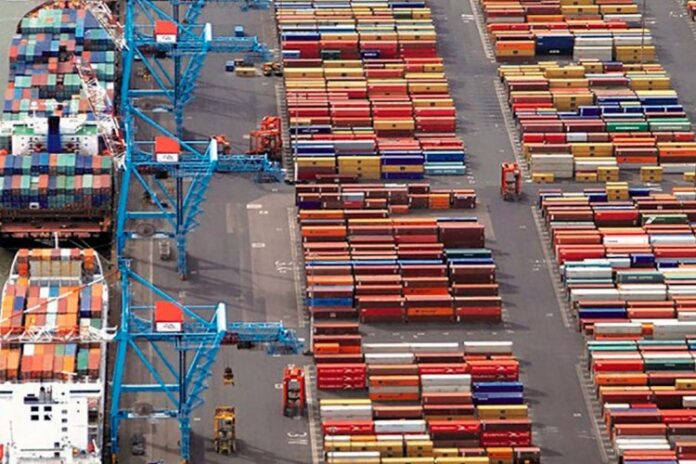
The Port of Liverpool is the UK’s most centrally located container port – and one of the largest, busiest and most diverse docks in the UK. The port currently operates five Liebherr STS with the first STS entering service in 1999.

The new STS cranes have an outreach and lift height of 40 m, a backreach of 18 m, a span of 16.785 m and a Safe Working Load of 40 t under single lift spreader. The Liebherr crane design utilises high tensile steel and a lattice boom and beam, resulting in a lighter crane with reduced wheel loads, a key consideration due to the narrow span and quay structure at The Port of Liverpool. 

The cranes will undergo trial assembly and testing of individual drives before shipping, to allow for a rapid and straightforward commissioning, with the two cranes ready for operation early in 2022. Simultaneous motions of all drives and mechanical anti-sway are among the standard Liebherr features included for a productive and efficient crane.

The two new cranes are replacements for two of the existing STS cranes, which will be relocated to Peel Ports’ Greenock Ocean Terminal at Clydeport. The transfer of the cranes from The Port of Liverpool will allow Clydeport to offer their customers improved services from the relocated cranes due to the increase in safe working load and operational capability.

Carbon-neutral biofuel from lakes: Suggestions for extraction of methane for energy

0

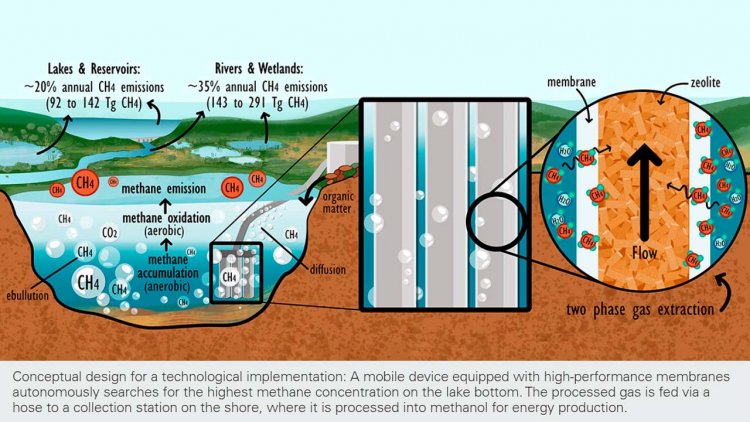
Discussion about the current climate crisis usually focuses on carbon dioxide (CO2). The greenhouse gas methane is less well known, but although it is much rarer in the atmosphere, its global warming potential is 80 to 100 times greater per unit.

More than half the methane caused by human activities comes from oil production and agricultural fertilizers. But the gas is also created by the natural decomposition of biomass by microbes, for example in lakes. In their most recent publication, researchers at the University of Basel in Switzerland outline the potential and theoretical possibilities for using methane from lakes and other freshwater bodies for sustainable energy production.

Methane from lakes and water reservoirs makes up about 20% of global natural methane missions. 

Maciej Bartosiewicz, a postdoc in the Department of Environmental Sciences of the University of Basel, says:

“That would theoretically be enough to meet the world’s energy needs.” 

Lakes continuously absorb CO2from the atmosphere through the growth of phytoplankton. Microbes convert the carbon, fixed by photosynthesis, into methane when they process biomass. That way, carbon bound in the methane remains within the natural cycle during combustion. Fossil fuels could be partially replaced by “natural” renewable methane. Methane gas is already burned in gas-fired power plants for electricity production and used as a fuel in the form of liquid methanol.

The idea described in the article isn’t completely new: since 2016, methane in Lake Kivu between Rwanda and the Democratic Republic of Congo has been extracted from a depth of 260 meters, cleaned and used for energy supply directly via generators. 

Bartosiewicz explains:

“Methane occurs in high concentrations in large quantities on the lake bed there. The methane concentration is about 100 times higher than in ordinary lakes.” 

Low concentrations made extracting methane from conventional lakes seem too technically difficult until a few years ago. But new microporous membranes made of polymeric materials now allow the gas to be separated from the water much more efficiently.

The researchers have made the first concrete proposals in this regard: using a hydrophobic gas-liquid membrane contactor, a methane-containing gas mixture can be separated from water and the methane concentrated. Zeolite minerals are particularly suitable for enrichment, since hydrophobic crystalline substances can adsorb and release gases.

Bartosiewicz says:

“With our idea, we wanted to start a broad discussion about the potential, feasibility and risks of a technology like this. Until now, no studies have addressed the effects of methane removal on lake ecosystem functioning, but no immediate negative effects can be foreseen with our current understanding.” 

However, removing excess carbon could even help curb excessive phytoplankton bloom formation and reduce natural greenhouse gas emissions from lakes. More work is needed before any practical implementation of this initial theoretical idea, says Bartosiewicz. But he’s convinced:

“This concept could one day make an important contribution to reaching our climate goals.”

Verizon signs its first European Private 5G deal with Associated British Ports

0

Verizon Business has announced it is working with Associated British Ports (ABP) to deploy private 5G at the Port of Southampton. Delivered in partnership with Nokia, Verizon’s private 5G platform will provide one of the United Kingdom’s (UK’s) busiest ports with a secure, low-latency private network connection.

ABP operates a network of 21 ports, including the Port of Southampton. Acting as the UK’s number one port responsible for £40 billion in exports from the UK every year, the Port of Southampton provides a critical link in supply chains serving businesses and manufacturers throughout the nation. It is also the UK’s number one port for cars and cruise, handling approximately 900,000 cars and welcoming millions of cruise passengers annually. With this new contract the Port of Southampton will become the first UK mainland port with access to a private 5G network.

Tami Erwin, CEO, Verizon Business, comments:

“Verizon’s private 5G is the foundation for a completely dedicated edge compute infrastructure, enabling ultra-low latency at the premise, higher levels of security and deeper customization for our partners. Businesses such as ABP, are coming under more pressure to evolve their services at tremendous speeds in order to take advantage of new commercial opportunities. Along with Nokia, we have been able to equip ABP to take advantage of the immediate benefits private 5G offers, and most importantly prepare the Port of Southampton to take full advantage of new technology applications and real-time analytics which will digitally transform its services in the future.”

The Verizon private 5G platform will provide ABP with a reliable and secure private wireless data network across selected areas within the East and West Docks of the Port. This will enable data communications to be consolidated onto a single network, reducing previous complexity as well as helping to improve the reliability and security of terminal communications.

The deployment will not only address the immediate problem of loss of onsite data communications as a result of poor wifi connectivity, but the advanced capabilities of private 5G, specifically its reliability, throughput, security and ultra low latency can help enable the use of new technologies such as real-time analytics, the Internet of Things (IoT) and Machine Learning. In turn, this can help with the enablement of new service advancements including asset tracking, autonomous guided vehicles, workflow management, predictive maintenance and safety monitoring in the near future.

Henrik L. Pedersen, ABP Chief Executive Officer, said:

“Building flexible and resilient technology platforms to meet our customers’ needs is a key element of our strategy, and becoming the first mainland port operator in the UK to offer a private 5G network to our customers is a fantastic milestone for ABP.

“We would like to thank our partners for enabling this project, which will equip our Port in Southampton with the state-of-the-art infrastructure needed to be at the forefront of the digital revolution in the maritime industry.”

Verizon Business announced the launch of its international private 5G platform for global enterprises located in Europe and Asia-Pacific in October 2020. This solution, currently delivered in partnership with Nokia, will enable businesses to deploy a private industrial grade dedicated 5G network capability within their premises. The network is on Nokia Digital Automation Cloud, an application platform providing high-bandwidth, low-latency, hyper-fast private wireless connectivity and local edge computing.

Brian Fitzgerald, SVP Verizon Business Group, Nokia, said:

“The 5G opportunity will be fully realized with Industry 4.0 as spectrum opens up and private 5G networks go into operation at industrial sites around the world. We are committed to enabling our strategic partner Verizon Business to expand its 5G global footprint with enterprise customers such as ABP; by providing unprecedented levels of support to drive success for private 5G as well as delivering the highest levels of performance, resilience and security required by its customers”.