-10.1 C
New York
Home Blog Page 644

Energy Island Hub: Fugro and MMT will perform geophysical surveys

0

The seabed beneath the future energy island in the North Sea has to be thoroughly surveyed and mapped before work on building the island and the large offshore wind farms around it can commence. Energinet has just awarded survey assignments to two experienced marine survey companies, which are expected to set sail in the North Sea in May.

The two companies are Fugro and MMT. Their ships are loaded with seismic equipment to meticulously map the seabed under the more than 1,000 km2 area in the North Sea where the artificial energy island and 3 GW of wind farms are to be built.

Poul-Jacob Vilhelmsen, Project Manager for Energinet’s work on the future energy islands in Danish waters, says:

“The geophysical studies have to cover a very large area, and it’s important that they meet the time schedule. We are therefore pleased that two very experienced and professional companies, Fugro and MMT, will be performing the surveying in the North Sea.”

Together with other preliminary studies, the aim of the geophysical mapping of the seabed is to allow construction of the North Sea energy island, the surrounding offshore wind farms and seabed cables in a technically feasible manner that gives maximum consideration to nature and the environment.

The North Sea is relatively shallow – even 80-100 kilometres out at sea, where the artificial island and offshore wind farms are to be built. In the area to be surveyed, the sea is 25-50 metres deep. The relatively shallow sea depth and good wind conditions are what make the North Sea an ideal location for offshore wind farms, and now also an artificial energy island. A third important factor is that the seabed must be suitable for laying foundations for the around 200 offshore wind turbines initially planned, and the artificial island.

Each wind turbine will be an impressive edifice, with an expected height above sea level of up to 260 metres – taller than the pylons of the Great Belt Bridge. An artificial island will also be constructed. So, it easy to see why the surface of the seabed and the underlying layers (in which the foundations will be laid) need to be thoroughly surveyed and mapped.
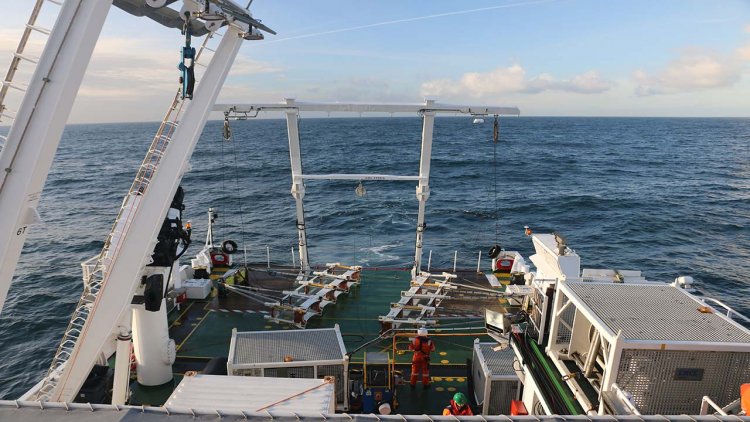
Specialised ships from the two marine survey companies will therefore begin work in May, surveying and mapping the surface of the seabed and the geological layers underneath to a depth of 100 metres below the sea floor.

The geophysical conditions on and below the seabed surface bear the marks of the region’s geological history, as well as past human activities.

Sand banks, reefs created by marine life and boulders are examples of geological elements that the ships from Fugro and MMT have to meticulously map.

But the ships are also expected to encounter shipwrecks in the region from the largest naval battle in history – the Battle of Jutland in 1916 and have to identify unexploded ordnance (mostly bombs and mines from World War II).

The man-made conditions on the seabed to be mapped also include existing submarine cables and pipelines, and more recent impacts such as waste, fishing equipment, grooves in the seabed from ship anchors, etc.

The geophysical surveys and subsequent drilling samples will be used to produce a detailed digital map of the seabed and underlying geological layers throughout the area under the future artificial energy island in the North Sea and surrounding offshore wind farms.

Energy island in the North Sea

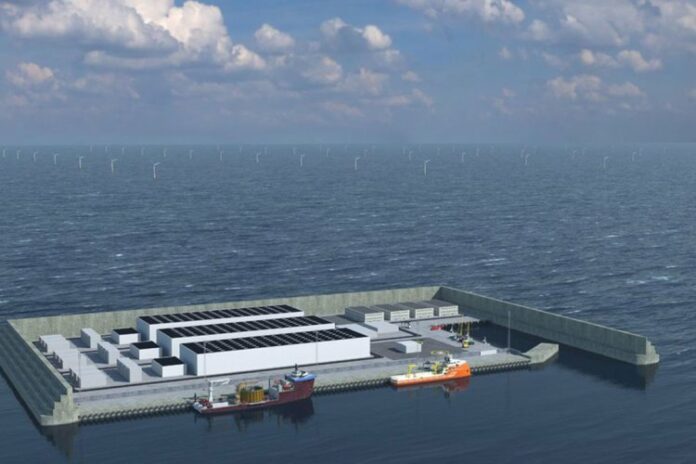
  • An energy island is a hub for large volumes of energy from offshore wind power. From the energy island, the energy is converted and forwarded to several countries.
  • The energy island in the North Sea will initially produce 3 GW of offshore wind power, increasing to 10 GW later on. 1 GW corresponds to the electricity needs of 1 million households.
  • The energy island in the North Sea will be an artificial island consisting of one or more types of caissons 80 km off the Danish coast, and initially covering an area corresponding to 18 football fields. 
  • Around 200 offshore wind turbines will produce 3 GW during the first phase, once the energy island is in operation. The wind turbines will presumably be taller than any seen to date, possibly up to 260 metres tall.
  • The investment cost of the North Sea energy island is estimated to total EUR 28 billion, which includes 10 GW of offshore wind farms, electrical installations on the island and power transport cables to land.
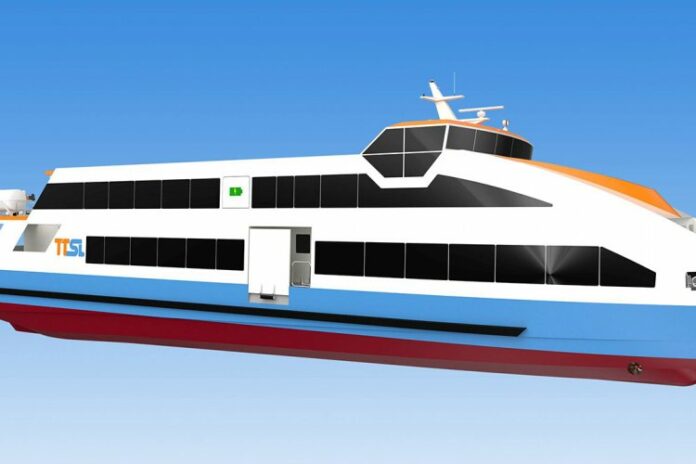
     

ABB sets course for sustainable river transport with ten all-electric Lisbon ferries

0

ABB secures landmark contract with Spanish shipbuilder Astilleros Gondán to supply all-electric power solution for fast 40-meter urban passenger ferries transporting up to 540 passengers each across Lisbon’s Tagus river.

The ten new ferries will be operated by the public ferry company Transtejo, S.A. and will replace the existing fleet serving this route when they enter service between 2022 and 2024. In addition to energy storage, ABB will deliver a fully integrated electric power solution and an integrated marine and propulsion automation system. The fleet renewal project represents a significant commitment by Lisbon metropolitan planners to accelerate the introduction of emissions-free public transport solutions. Financial details of the contract were not disclosed.

Increased electrification of transportation, including inland waterway transport, will play a key role in helping Portugal achieve carbon neutrality by 2050. According to the national 2050 Carbon Neutrality Roadmap, the transport sector aims to achieve 98 percent reduction in greenhouse gas emissions compared to 2005, by strengthening the role of the public transport system and replacing current fossil fuel means of transportation with a mainly electric fleet.

ABB estimates that replacing the ten ferries operating on the Tagus river from diesel power to all-electric integrated power solution is expected to cut about 6,500 tons in CO2 emissions every year. This is equivalent to the annual carbon dioxide emissions generated by around 1,400 passenger cars annually.

Antonio Pacheco, Director of GRP Division, Astilleros Gondán, said:

“Cutting greenhouse gas emissions are top priorities in urban planning. Today, the technologies chosen for fast ferries operating so close to the heart of the city must be clean and green, as well as proven in terms of safety and reliabilityю ABB has been selected both on the grounds of energy efficiency and its extensive experience in delivering all-electric and hybrid propulsion solutions to the ferry market.”

Juha Koskela, Division President, ABB Marine & Ports, said:

“Operators serving inland waters have been among the pioneers of zero-emission propulsion, and we are truly honored that ABB’s technology will support the sustainability goals of one of Europe’s great capitals. This project is another important industry milestone for zero-emission propulsion, showing that proven technology is available today to serve future needs on sustainable fast passenger ferry transport.”

The new ferries, which will be pivotal to Lisbon’s public transport system, will be powered by battery packs with a total capacity of 1,860-kWh each. ABB’s initial contract covers the fully integrated electric power solution and an integrated marine and propulsion automation system for all ten ferries and the battery pack for the debut vessel of the series. ABB’s award-winning Onboard DC Grid™ power distribution system will ensure that the battery output is delivered to the ferry’s subsystems in the most optimal way, as well as enable safe integration and reliable operation of other propulsion system components. The overall power setup will be controlled by ABB’s Power and Energy Management System (PEMS™), which will also increase fault tolerance and provide a high degree of reliability while ensuring the maximum lifetime for the batteries.

The 40-meter ferries will each have capacity to carry up to 540 passengers on three key routes linking Lisbon to Cacilhas, Seixal and Montijo on the south bank of the Tagus river. They will have a service speed of 16 knots and a maximum speed of 17 knots.

With the International Maritime Organization targeting a cut in annual emissions from ships of at least 50 percent by 2050 against 2008 levels, the all-electric ferry project represents a significant contribution to sustainable shipping by the city of Lisbon. Ferry industry association Interferry estimates that the sector transports over 2 billion passengers worldwide every year, with electric propulsion considered a proven technology that can reduce emissions at global scale.

Data from the Maritime Battery Forum indicates that over 130 battery-powered ferries are already in operation, and 90 more are on order. In line with its strong presence in vessel electrification, ABB has announced all-electric ferry projects with P&O Ferries, Washington State Ferries and Busan Port Authority in South Korea within the last nine months.

ABS ISQM notation for one of the world’s largest semi-submersible heavy-lift platforms

0

Key operational software on the ABS-classed OOS Serooskerke, a 138m-long vessel with hotel capacity for 750 people, has undergone failure mode effects and criticality analysis as well as thorough functional testing.

The vessel’s power management, dynamic positioning, ballast and bilge and loading computer systems have all been evaluated in accordance with the ABS Guide for Integrated Software Quality Management.

Patrick Ryan, ABS Senior Vice President, Global Engineering and Technology, said:

“Due to the specialized, heavy-lift operations this vessel will undertake, all the systems evaluated by ABS are critical to the safety of both personnel and the asset. As the load is picked up, the ballast must be shifted quickly to maintain stability, so the software must achieve a high degree of reliability throughout its lifespan. The ABS ISQM process provides a framework to allow the identification and mitigation of software-related issues that could negatively affect the safety of a unit and its crew. It is one of the only viable software quality notations on the market and is an example of how the nature of class is evolving beyond steel and physical systems into the safety of systems that you cannot see and cannot touch.”

Dragan Maslovar, New Builds Director, OOS International BV, said:

“I cannot say that we’ve learned the hard way the importance and full meaning of the ISQM notation only because we were lucky when, due to VCS and DPS software failure and, connected with poor commissioning and FMEA, one vessel suddenly lost control and start running on her own.  Only thanks to good luck and crew readiness and preparedness was an accident avoided. Since then, we have decided that all our new buildings will have the ISQM Notation for all of the important software installed on board.”

Developed in response to industry needs, the ABS ISQM process and notation provides a framework to coordinate and control the way software development, integration and maintenance are managed throughout the life of the equipment.

Cambodia’s maiden Apsara oil field, operated by KrisEnergy, comes on stream

0

The first oil from the Apsara Field, some 160km off the coast of Cambodia in the Gulf of Thailand and operated by KrisEnergy, flowed on December 28th.

The development was made possible with assistance from James Fisher Offshore Terminal Services (JF OTS), who were engaged by Singapore-based KrisEnergy to undertake a turnkey operation providing T&I (Transportation & Installation) services for the installation and hook-up of subsea hoses and power cable between the field’s first mini well-head platform and production barge ‘Ingenium II’.

Subsea hoses and power cable are critical components of the field development, allowing the unmanned platform to receive power, as well as providing a connection between the wells and process facility.  To do that involved connecting 896m of hose and spooled cable.

Doug Conway, Project Manager for JF OTS, explained:

“From the signing of contract to demobilisation took just 60 days and included support from three subsidiaries of James Fisher and Sons plc.” 

JF OTS converted a DP2 AHTS (Anchor Handling Tug Supply) into a Hose & Cable Installation Vessel by installing an ROV, Reel Drive System (RDS), Position Survey Equipment and USBL System.  The design and engineering analyses of the installation were developed in-house with support from James Fisher sister entity, Maritime Engineers, based in Perth, Australia. The full offshore project team was provided to execute the installation and hook-up of the subsea hoses and power cable.  Rigging equipment was supplied from stock held at Fendercare Marine’s Singapore base, and Winches and Hydraulic Power Units (HPUs) were mobilised from Fisher Offshore’s Malaysia operation in Johor Bahru.

Doug concluded:

“The wide-ranging capabilities of the James Fisher Group enable us to ensure an integrated experience, resulting in the successful development and management of offshore projects around the world.

“Delivering this project safely without incident on such short time scales was our main priority. Complying with all the various COVID-related restrictions imposed added complexity and challenges to the execution, however we rose to the occasion and are very pleased to have been able to help our client, KrisEnergy, and the whole nation of Cambodia in achieving such a momentous milestone.”

The Apsara field lies over the Khmer Basin, an unproduced geological basin –  due to its unproven nature, its development will take place in several phases.  The initial Apsara Mini Phase 1A development is expected to reach a peak rate at 7,500 barrels a day once all five development wells are completed and commissioned.

Ukraine risks losing a lucrative krill fishing business in Antarctica

0

Only five countries have the right to catch krill in Antarctica

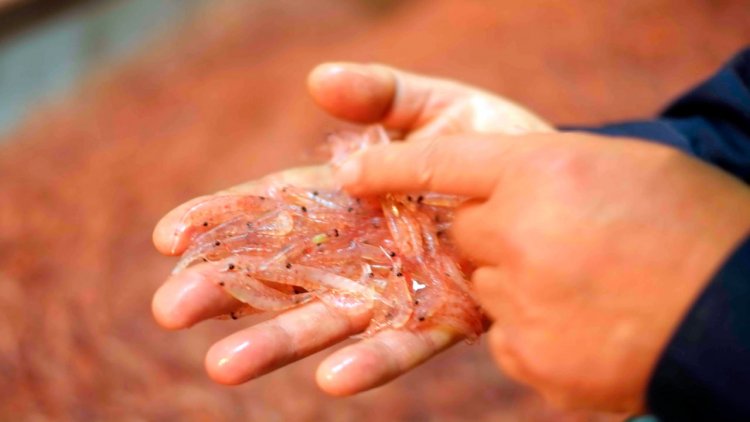
Krill – small ocean shrimps – are becoming an increasingly popular type of seafood on the international market. This species of planktonic crustaceans is actively used in aquaculture, fishing, pharmaceuticals, as well as as a food product. In particular, in 2020, krill oil became wildly popular in South Korea, which was called an extremely healthy product and recommended for postCOVID rehabilitation.

At the same time, only 5 countries are currently catching krill in Antarctica – Norway, China, North Korea, Chile and Ukraine. To some extent, this is because each state must obtain a special permit for such activities from the Commission for the Conservation of Antarctic marine living resources, CCAMLR. Without this permission, it is impossible to catch seafood within the Southern Ocean. Many countries are ready to fight for this right, and those who already have a permit are doing their best to preserve their access to Antarctic biological resources. This makes the situation in Ukraine even more incomprehensible illogical.

For Ukraine, Antarctica is an important source of seafood

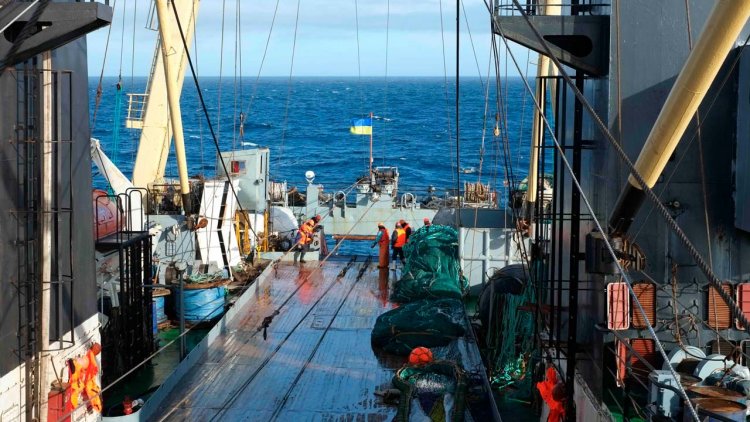
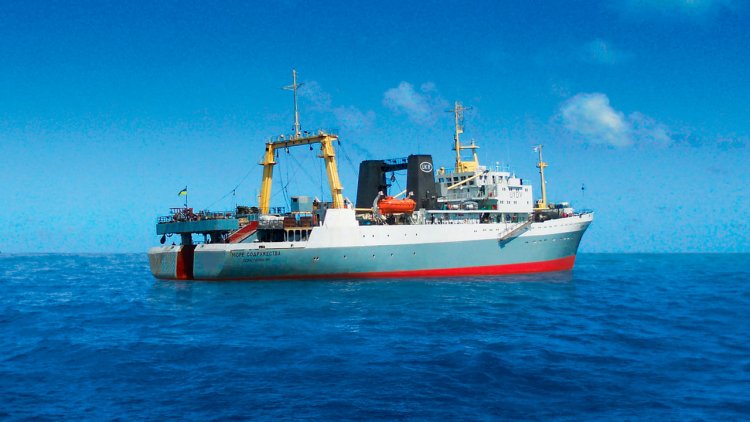
Among the 12 vessels currently fishing for krill in Antarctica, just one is flying the Ukrainian flag. But the Ukrainian trawler “Cooperation Sea” is the only vessel that can produce meat directly on board, i.e. ready-made food.

The catch volumes demonstrated by this vessel are quite large for Ukraine. For example, according to the State Agency of Fisheries of Ukraine, in 2020 the total catch of aquatic bioresources in Ukraine amounted to 56,6 thousand tons.

Of them:

  • 35,300 tons is the catch in all inland waters, in the Black and Azov Seas;
  • 21,300 tons is the catch of krill in Antarctica.

It means, more than a third of all catches was provided by one vessel operating in the Southern Hemisphere.

However, there is a risk that this year the vessel “Cooperation Sea” will change its flag and work in favour of another country. The shipowner is actively considering this option, because, according to him, it is very difficult to develop the fishing business in terms of current Ukrainian legislation.

Irrational logistics kills business

It’s a question of obligatory sanitary and veterinary check of the caught seafood. According to Ukrainian legislation, a representative of the State Service of Ukraine on Food Safety and Consumer Protection (SSUFSCP) must be present during the selection of control samples. It’s not difficult to fulfil this norm in Ukraine, but if the caught products are in another hemisphere of the Earth, the implementation of the procedure becomes problematic.

Andriy Chuklyn, vice president of Interrybflot Corporation, which owns the trawler “Cooperation Sea”, says:

“Our cargo has complex logistics and passes, for example, through the ports of Chile, Uruguay, South Africa, China and other countries. We have been transporting Ukrainian veterinarians to these countries for many years so that they can be present at the control sampling. But when the COVID-19 pandemic began, such trips became impossible, so we had to act differently – not to carry people, but the product itself.

Our cargo of 500 tons of krill meat, which the customer was already waiting for in the European Union, first had to be delivered from Uruguay to Klaipeda, Lithuania. There we reloaded the cargo into other containers and sent it to Ukraine. In Odesa, Ukrainian veterinarians checked the product for quality, after that we reloaded the krill into containers and sent them back to Klaipeda. Such confusing logistics cost us about $ 600,000. Plus we had to pay a fine of 300, 000 euros for late delivery of seafood to the customer.

Our next shipment arrived in China in May 2020, but we were able to send a Ukrainian official to China only in November. The cargo arrived in Odesa in January 2021. As a result, a supposingly productive year brought us losses of $ 1.5 million.”

Which flag is more profitable to work under?

In international practice, such issues are resolved in another way. Usually, the caught fish products are inspected by laboratories that work in ports and have the appropriate licenses for such activities. When taking control samples, the captain of the vessel is present and he has the right to draw up the necessary documents.

Andriy Chuklyn says:

“For two years we have been trying to convince Ukrainian officials that the legislation should be changed and made according to the European model. We ask to allow captains to issue the initial package of documents required for delivery of products to ports and inspection. While we are fighting for this, all other Ukrainian ships have either stopped working in Antarctica or are flying the flags of other countries.

Our ship went on another voyage in December 2020 and is scheduled to be completed in July 2021. If by this time the situation in Ukraine does not change, we will re-register the vessel in another country. Most likely, it will be China, because then we can easily enter the large Chinese market, which is now developing dynamically. There is a great demand for the products we produce.

By the way, China has a national program for Antarctica, and it provides considerable governmental support for vessels fishing in Antarctica. That is what is really essential for Ukraine now.”

The last word is for the Ukrainian Parliament

However, there are some positive developments. As Andriy Chuklyn told SEAWANDERER, cooperation with the SSUFSCP has improved significantly since the management has recently changed. Besides, according to the relevant departments, several draft laws have been developed that can solve the problem.
Serhiy Glushchenko, Deputy Ministry of Economic Development and Trade of Ukraine, explains:

“The Ministry of Economy has developed a draft law that proposes to regulate, inter alia, problematic issues of state control measures on fishing vessels. The draft law provides for the possibility of granting the captain or other officer of a fishing vessel the authority to carry out certain measures of state control.

It is also proposed to allow the SSUFSCP to authorize the captain or other person of the command staff of a fishing or freezer vessel flying the State Flag of Ukraine to sign an international certificate accompanying cargo with fishery products imported or shipped to Ukraine.

After the adoption of the draft law, the presence of a veterinary inspector when removing control samples will no longer be mandatory. The function of a veterinary inspector may be performed by a captain or other officer of a fishing vessel who has undergone appropriate training and has been authorized by the SSUFSCP to take appropriate measures.”

Head of the SSUFSCP Vladyslava Magaletska comments:

“The situation needs to be changed. The presence of recognized accredited laboratories in many ports makes it possible to use analysis services, but procedurally we have a conflict. It is possible to correct this only through changes to the legislation of Ukraine. The SSUFSCP supports the EU’s approaches to the authorization of captains of fishing vessels and works to improve Ukrainian legislation in this direction.

The transition to international practice is desirable, especially in the current context of quarantine restrictions. Our country is confidently adopting the norms of European legislation, so we can hope for operational changes. At the initiative of the Ministry of Economy, the SSUFSCP took part in the development and approved another draft law about food and sanitary facilities. We are looking forward to receiving these documents.”

The Ministry of Economy of Ukraine reported that one of the draft laws has already received positive conclusions in the relevant committees. The next step is to consider the document directly by deputies in parliament. The Ministry expects that the draft law will be considered in the first reading within a month. With the existing support of deputies, there is a chance that it will be adopted in the second reading by the middle of this year.

by Iryna Umanets

Intellian’s new v45C antenna qualified for Intelsat FlexMaritime network

0

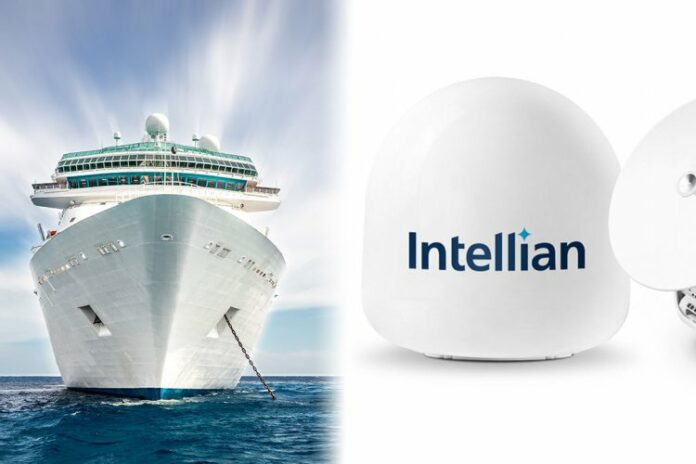
Intellian has confirmed that its newly-launched v45C antenna has been qualified for operation on the Intelsat FlexMaritime network. By combining Intellian’s compact, high-performance antenna with Intelsat’s cutting-edge FlexMaritime High Throughput Satellite (HTS) service, this approval will deliver global connectivity to customers in the smallest package available to date.

Until now, service providers have required antennas of 60cm or larger to deliver high throughput services owing to the higher power demanded by smaller units, but with the advent of HTS technology teamed with innovative antenna design, the use of more compact antennas has become possible. The v45C has been developed to bring VSAT to new markets where there is limited space available for communications equipment, such as workboats, leisure craft, fishing boats, small commercial and government vessels.

Intelsat is among the first to take advantage of this capability with the addition of a 45cm category to its FlexMaritime HTS service. VSAT delivery to small antennas has traditionally been restricted to localized regions in order to conserve power, but through the use of spot beam technology, HTS satellites can overcome this limitation. By providing high-power service to small, tightly-focused areas, frequencies can be reused across the satellite’s coverage area, supporting global service while reducing the cost of delivery. Intelsat takes this principle a step further with FlexMaritime, with multiple satellites able to overlay spots in the same area to boost performance even further.

It is this ability to dynamically allocate services as required, teamed with Intellian’s advanced technology, which allows a small antenna to deliver connectivity and performance at reasonable cost to the customer. Shane Rossbacher, Director of Maritime Products, Intelsat, said:

“We’re pleased to welcome Intellian’s new v45C compact antenna to our Intelsat FlexMaritime service. This is an exciting time for customers who require a VSAT solution that is both space- and cost-efficient, and we’re delighted that Intellian has developed an innovative product that is ideally suited to take full advantage of our new 45cm service category.”

In common with the globally-successful v60E antenna launched last year, the v45C shares technology developed for Intellian’s advanced NX Series antennas. These range in size from 85cm to 150cm, with single-cable, dome-on connection and simple commissioning and diagnostics via the built-in AptusNX antenna management software. Eric Sung, CEO, Intellian Technologies, said:

“We’re delighted to gain this qualification from Intelsat. The combination of our leading antenna design and Intelsat’s innovative FlexMaritime service will deliver cost-effective VSAT service to customers in need of a compact, global high speed connectivity solution. We expect this to open up new markets, and look forward to collaborating with customers to help them gain the best possible results from the combination of HTS connectivity and Intellian products.”    

Study: Human activities sound an alarm for sea life

0

Sound travels fast and far in water, and sea creatures use sound to communicate, navigate, hunt, hide and mate.

Since the industrial revolution, humans have introduced their own underwater cacophony from shipping vessels, seismic surveys searching for oil and gas, sonar mapping of the ocean floor, coastal construction and wind farms. Global warming could further alter the ocean soundscape as the melting Arctic opens up more shipping routes and wind and rainfall patterns change.

Yet noise has been conspicuously absent from global assessments of ocean health.

A team led by Carlos Duarte, distinguished professor at KAUST, trawled more than 10,000 papers and extracted the most rigorous quantitative studies of how noise affects marine animals.

Duarte says:

“The research goes back nearly 50 years, but this is the first time all the scattered evidence has been assembled and systematically assessed.” 

Examining the literature, Duarte’s team sought to describe ocean soundscapes, how these soundscapes have changed in the Anthropocene, the negative impacts they have on marine animals, and possible solutions. 

Duarte says:

“We were stunned by the contrast between the wealth of evidence and the general neglect of the problem in scientific debates and policymaking.”

Of the 538 carefully chosen papers, 90 percent revealed significant impacts of human sounds on marine mammals, while 80 percent identified effects on fish and invertebrates, such as jellyfish. 

Duarte adds:

“But there’s still a gap in our understanding of the impacts on diving birds and sea turtles.”

Shipping is a widespread problem, disrupting travel, foraging, communication behaviors and the ability of young fish to learn to avoid predators. Particularly concerning was the effect of dampened soundscapes on the hearing of larvae trying to navigate to suitable habitats.

Duarte says:

“If they miss the call home, they will likely starve to death or be eaten.”

Noise pollution has driven many marine animals from their natural territory, although escape is not always possible for species with specific ranges, such as the endangered Maui dolphin. In 2020, when global lockdowns were enforced during the COVID-19 pandemic, noise from shipping fell by 20 percent, and dolphins and sharks were spotted swimming through formerly busy, noisy waterways.

Duarte says:

“This is promising evidence of an almost immediate response of marine life to a relaxing of acoustic pressures.”

The researchers highlight ways to alleviate anthropogenic noise, such as reducing shipping speeds, fitting boats with quieter propellers and using floating wind turbines. 

Duarte says:

“Retrofitting only one-tenth of the noisiest boats with better propellers would have widespread benefits.”

However, marine ecosystems and noise pollution cross international boundaries, meaning that solutions require binding global agreements for restoring a sustainable ocean economy.

NAPA joins Finnish Clean Propulsion Technologies consortium

0

NAPA has announced its participation in the Clean Propulsion Technologies project (CPT), a consortium led by the University of Vaasa that aims to develop radically new low-carbon solutions across global transport sectors. NAPA will apply its technical expertise to further enable methods to model and optimize total energy consumption on the two-year project.

Funded by Business Finland, which has pledged €7.9 million to support the consortium, the project aims to cement Finland’s position as a global technology leader through bringing economically viable low carbon technologies from the research phase to real-world application in line with global environmental regulation.

NAPA will apply its unrivaled expertise and data-driven voyage optimization solutions, NAPA Fleet Intelligence and NAPA Performance models, to develop methods to model and optimize total energy consumption on the project. The company will specifically draw on its ‘Optimization of Total Energy Consumption Onboard (OTECO)’ initiative, which takes a holistic approach to energy optimization, to incorporate the novel propulsion energy arrangements developed in the CPT project.

NAPA will develop virtual models in collaboration with the consortium partners to improve the modeling of non-conventional propulsion unit arrangements and the inclusion of important onboard energy consumers. These will include vessel components such as hotel load for cruise vessels and cargo warming and cooling for LNG carriers and other merchant vessels. By enabling the global usage of proper tools for virtual modeling and making them available for all stakeholders, it estimates that shipping efficiency can be improved by approximately 10-20%.

Teemu Manderbacka, Lead R&D Engineer, NAPA Shipping Solutions, said:

“At NAPA, we have a wealth of unique insights into the overall impact of novel clean technologies on shipping’s emission and trade flow in a defined area or route per different ship type. This expertise and knowledge, coupled with NAPA Fleet Intelligence voyage data and NAPA Performance models, will enable us to help support the aims of the CPT project and further decarbonize the shipping industry. The cooperation with the consortium helps us by bringing together companies and universities with mutually complementary technology expertise on cleaner shipping. NAPA contributes to the consortium by providing insights on overall ship technical and operational performance globally.”

The CPT consortium consists of six research organizations (University of Vaasa, Aalto University, Tampere University, Åbo Akademi University, VTT Technical Research Centre of Finland and Lappeenranta-Lahti University of Technology LUT) and nine companies (Wärtsilä Finland, AGCO Power, Meyer Turku, NAPA, Dinex Finland, Proventia, Geyser Batteries, Bosch Rexroth and APUGenius). The total project volume is approximately 15 million euros, out of which €7.9 M is provided as Business Finland support. The rest is funded by the consortium’s members.

Maersk Drilling awarded four-well drillship contract with Shell in Malaysia

0

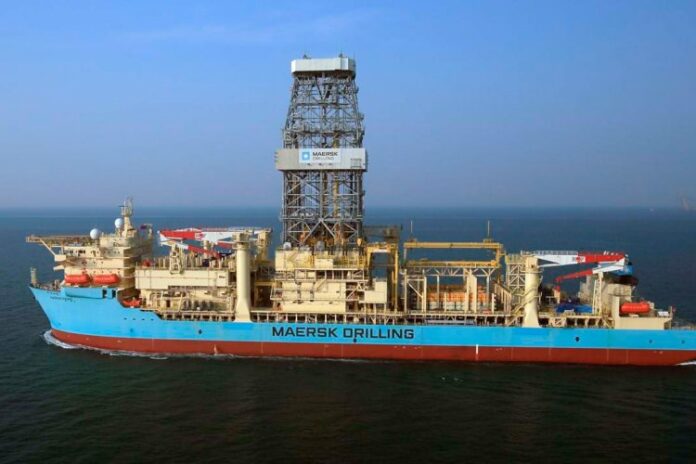
Maersk Drilling has secured a contract with Shell Malaysia for the 7th generation drillship Maersk Viking to drill four development wells at the Gumusut-Kakap project offshore Malaysia. 

The contract is expected to commence in December 2021, with an estimated duration of 150 days. The firm contract value is approximately USD 34m, including a mobilisation fee. The contract includes five additional one-well options for work offshore Malaysia, the Philippines, and Brunei Darussalam.

COO Morten Kelstrup of Maersk Drilling says:

“We’re delighted to confirm that Maersk Viking will return to Shell Malaysia for work on the Gumusut-Kakap project. In this way, we will be able to build further on the great collaboration that the rig’s highly capable crew has established during its current campaign with Brunei Shell Petroleum.”

Maersk Viking is a high-spec ultra-deepwater drillship which was delivered in 2013. It is currently operating offshore Brunei Darussalam.

Equimar implements SERTICA software remotely during COVID-19 pandemic

0

The Mexican tugboat company has completed the implementation successfully with remote support from the offices in Chile and the SERTICA headquarters in Denmark.

Lars Riisberg, CEO at Logimatic Solutions tells:

“No doubt that the COVID-19 is affecting every aspect of our personal and professional lives, but we have managed to shift to remote working in the maritime industry and our cooperation with Equimar is a perfect example of this.”

Carlos Raúl Gutiérrez Campos, Technical Superintendent at Equimar continues:

“Despite the pandemic, we have experienced a successful implementation due to the fact that we have had a very close and continuous dialogue with the SERTICA-Team, which has resulted in mutual trust and confidence.”

The SERTICA-Team and Equimar have never met each other face-to-face, but the implementation has been possible through daily contact on the phone with the local representative and online meetings with the Project Manager in Denmark.

Palle Kaastrup, Project Manager at Logimatic tells:

“Before the pandemic, we also had the option of online meetings and remote implementation, but it seems as if the pandemic has made online meetings more acceptable  – virtual meetings have become the new normal.”

Lars Riisberg, CEO at Logimatic Solutions continues:

“I believe the COVID-19 pandemic will continue to affect the way we work and travel– even after the pandemic. On a positive note, we have saved costs on travel expenses due to the many virtual meetings and working from home has resulted in an increased flexibility. Employees work at all hours, which means that we eliminate the time difference with clients in other time zones.”

Carlos Raúl Gutiérrez Campos, Technical Superintendent at Equimar agrees and adds:

“It seems as if the lines between personal and work life have become blurred with the pandemic.  I can practically talk to the SERTICA-Team during all hours of the day and night – and even when they are on vacation.”

Pablo Grez, Regional Manager in LATAM at Logimatic tells:

“In some ways, working remote on this project has actually reduced the distance between us and it has truly been a team effort across nationalities.” 

Lars Riisberg, CEO at Logimatic Solutions is optimistic about the future and concludes:

“We have of course been affected by the COVID-19 pandemic, but we have been able to adapt. We still succeed in growing and implementing our SERTICA solution to shipping companies all over the world – the process has only changed from onsite to online.”