-10.1 C
New York
Home Blog Page 645

Halliburton and Optime Subsea form global alliance

0

Halliburton Company and Optime Subsea have formed a global strategic alliance to apply Optime’s innovative Remotely Operated Controls System (ROCS) to Halliburton’s completion landing string services.

The companies will also collaborate and offer intervention and workover control system services leveraging Optime’s Subsea Controls and Intervention Light System (SCILS) technology, a remote digital enabled system that compliments Halliburton’s subsea intervention expertise.

The alliance will provide umbilical-less operations and subsea controls for deepwater completions and interventions delivering increased operational efficiencies while minimizing safety risk through a smaller offshore footprint. Halliburton will offer Optime’s innovative technologies as a service across its global portfolio.

Daniel Casale, vice president of Testing and Subsea, said:

“We are excited to work with Optime and leverage their technologies within our existing subsea completions and intervention solutions. Our alliance advances remote capabilities and provides a capital efficient solution, allowing customers to reduce safety risk, operational footprint, setup and run-time.”

Jan-Fredrik Carlsen, CEO of Optime Subsea, said:

“We believe that strong mutual alliances across the vertical supply chain drives continuous improvements needed in our industry. By solidifying this relationship with Halliburton and combining their well-established, reputable service and technology capabilities with Optime’s innovative controls and intervention technology, more customers will have access to these cost-efficient subsea solutions.”

Masks to be worn on commercial ships while trading in US waters

0

This requires all persons, including crew members on board ships proceeding to and trading within the waters under US jurisdiction to wear a face mark while boarding, disembarking and for the duration of the travel.

Crew members and port facility personnel may be exempt from wearing a mask only when actively performing a task that would create a health or safety risk if performed wearing a mask and should immediately wear a mask when the task is complete. This exemption does not apply to passengers.

On 21 January, the US President issued an executive order on promoting COVID-19 safety in Domestic and International Travel, which required wearing of masks on certain domestic modes of transportation. This order requires masks to be worn on all “public maritime vessels, including ferries”.

Following this order, the Centre of disease control and prevention (CDC) issued an order that requires wearing of masks by all persons while boarding, disembarking, and for the duration of travel on commercial ships. It also requires operators of all transport hubs to ensure that all persons wear a mask when entering, or on the premises of the transportation hub.

This requirement applies to both passengers and crew working on ships that are bound for US and that trade in the waters under US jurisdiction. 

CDC also gives a detailed description of how a mask must be worn, under which circumstances masks are exempted and so forth. The guidance can be found here.

The CDC Mask Order exempts the following categories of persons:

  • A child under the age of two years.
  • A person with a disability who cannot wear a mask, or cannot safely wear a mask, because of the disability as defined by the Americans with Disabilities Act (42 U.S.C. 12101 et seq.).
  • A person for whom wearing a mask would create a risk to workplace health, safety, or job duty as determined by the relevant workplace safety guidelines or federal regulations.

Vessel or facility operators, owners, or companies should provide clear guidance as to when wearing a mask would create a risk to workplace, health, safety or job duty for crew members and facility personnel. The company guidance should address specific tasks that cannot be accomplished safely while wearing a mask. A blanket policy cannot be issued to exempt all persons from wearing a mask at all times. Crew members and facility personnel may be exempt from wearing a mask only when actively performing the task and should immediately wear a mask when the task is complete. Since passengers should refrain from instances where wearing a mask may present a risk, this exemption does not extend to passengers.

USCG has issued Maritime safety information bulletin 02-21 and 02-21 CH-1 on this topic.

Source: BIMCO

Kongsberg to provide the Panama Canal Authority with simulators for multi-vessel training scenarios

0

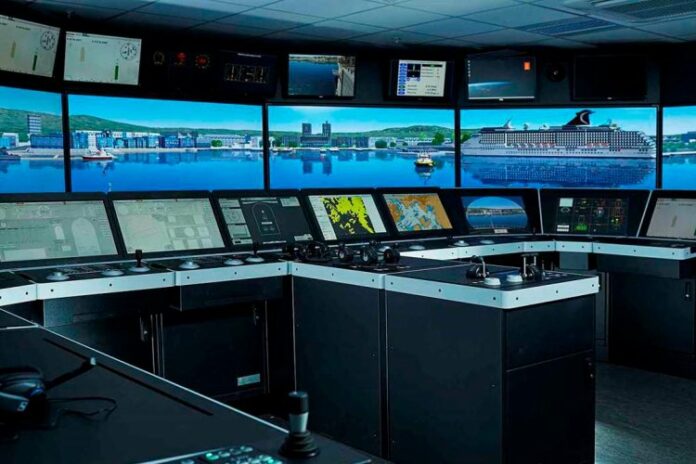
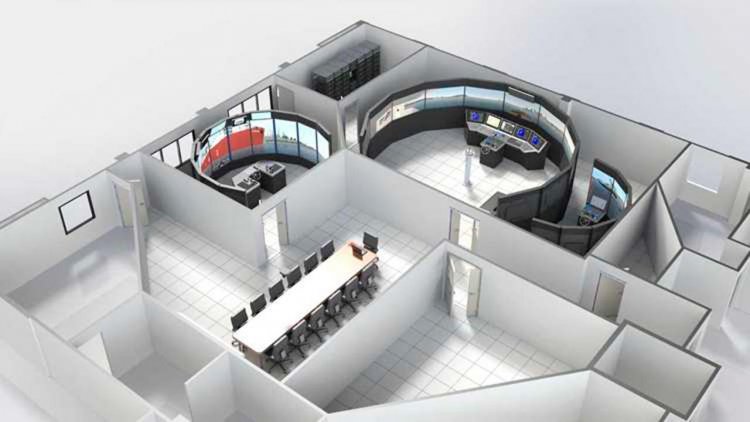
Kongsberg Digital has signed a contract with the Panama Canal Authority (ACP) to upgrade and extend the K-Sim Navigation simulators based in SIDMAR; the Center for Simulation, Research and Maritime Development of the Panama Canal Authority. 

Equipped with the new technology, the Panama City-based center will be able to include multiple vessels in training scenarios and extend the realism of the simulator training provided for pilots and tug masters.

Scheduled for August 2021, this substantial upgrade will involve a broad scope of delivery. The center’s main K-Sim Navigation simulator will be upgraded with new visual image generation and display/projection systems, and an array of new consoles and hardware (HW) panels. In addition, a unique new floor projection system will be installed to replicate the port and starboard views from the bridge wings. This feature will allow trainee officers on the main bridge to monitor the tugs and pilot boats in – for example – demanding port and tug maneuvering scenarios with vessels in close proximity.

Two entirely new K-Sim Navigation bridge simulators are also included with the delivery. One will be configured specifically to duplicate a full-mission tugboat bridge with the capability of simulating various types of tug propulsion systems including Voith, Schottel and Azimuthing Stern Drive (ASD). The 360° vertical displays on the new bridge simulators will enable student tug masters and pilots to train together with the crew members on the main bridge, while a new CCTV system and KONGSBERG’s award-winning instructor stations will make the creation and individual assessment of exercises more accurate than ever.

Andreas Jagtøyen, EVP, Digital Ocean, Kongsberg Digital, adds:

“We’ve enjoyed a fruitful working relationship with the Panama Canal Authority for many years, and it’s very satisfying to know that we can continue providing SIDMAR with our cutting-edge simulation technology, which now will be integrated for multi-vessel training scenarios. The commitment the Authority has shown with this large-scale K-Sim extension and upgrade confirms its faith in our simulation technology and bodes very well for our ongoing mutual development.”

Stena Line announces the latest addition to their Baltic Sea fleet

0

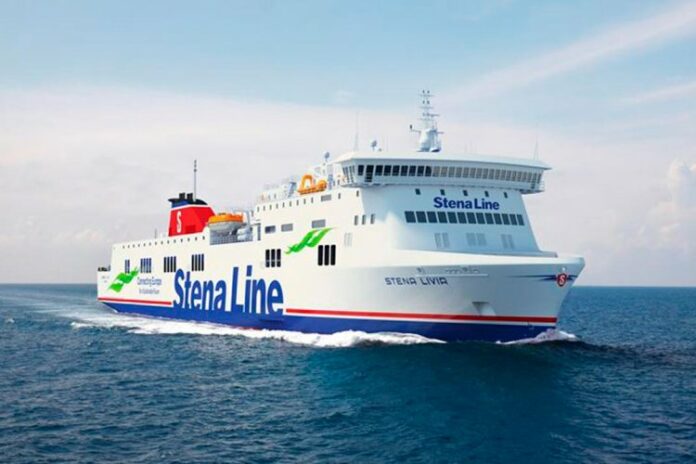
The 186 metre long Visentini RoPax vessel Stena Livia will initially join sister vessel Stena Flavia on the Nynäshamn-Ventspils route from mid-April. 

Later this year the pair will replace the existing tonnage on the ferry route between Travemünde and Liepaja, adding 40 per cent freight capacity and shorten the crossing time substantially.

During 2021 Stena Line is expanding their Baltic Sea operations with modern and large RoPax vessels being added to the two ferry routes from Latvia to Sweden and Germany. The routes, Nynäshamn-Ventspils and Travemünde-Liepaja, was acquired by Stena Line in 2012, and is today an important part of the European logistics network, connecting the Baltics, Russia and CIS countries with Germany and Sweden as well as the rest of Europe.

Johan Edelman, Trade Director Baltic Sea North, says:

“We have seen an increase in demand from our customers across the Baltic Sea region. We are now strengthening our position and customer offer further with new modern vessels, more capacity and an attractive onboard experience on both our routes to and from Latvia during 2021. I am happy to welcome Stena Livia to the Baltic Sea fleet.”

Stena Livia was built in 2008 at the Cantieri Navale Visentini shipyard in Italy and is a modern large RoPax vessel with capacity of 750 passengers, 200 cars and/or 115 trailers. The vessel has earlier sailed under the names of Étretat and Norman Voyager.

Stena Livia will initially join sister vessel Stena Flavia on the Nynäshamn-Ventspils route from mid-April, replacing the chartered vessel Scottish Viking that is being returned to its owner. Later during the year the two large and modern RoPax vessels Stena Scandica and Stena Baltica will start operating on the Nynäshamn-Ventspils route, adding 30 % freight capacity to the route.

Stena Line earlier announced that the ferry company will replace the existing vessels Stena Gothica and Urd on the Travemünde-Liepaja route in 2021. The ferry company can now confirm that it is the two vessels Stena Livia and Stena Flavia that will move to the Travemünde-Liepaja route during the year. The new modern vessel will increase the freight capacity on the route by 40 % and shorten the crossing time from 27 to 20 hours. This will enable a reliable transport service with a fixed timetable with 12 weekly departures, six in each direction. The new vessels will also offer improved onboard facilities and increase the number of cabins, making the route an attractive choice for transport and travel between the Baltic countries and Germany.

Stena Line has not yet announced the exact timing for the tonnage changes on the two Baltic Sea routes or disclosed any further plans for the two vessels Stena Gothica and Urd.

About Stena Livia

Name: Stena Livia (former Étretat, Norman Voyager). The name Livia connects with Stena Lines Scandinavian heritage and the vessels Italian heritage. “Liv” means shelter or protection in Old Norse and “Livia” means envy, from Latin “lividus”.

  • Built: 2008 at Cantieri Navale Visentini, Italy
  • Length: 186 m
  • Width: 25,6 m
  • Draught: 6,8 m
  • Speed: 23,5 knots
  • Freight capacity: 2,250 lane meters (115 trailers)
  • Car capacity: 200
  • Passenger capacity: 750
  • Cabins: 103 (428 berths) + 51 reclining seats

Samsung Heavy Industries develops eco-friendly wind turbine installation vessel

0

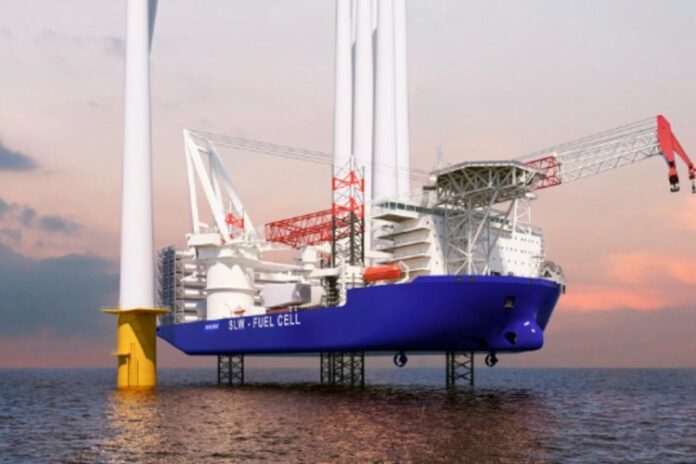
In order to keep pace with the growing offshore wind industry, Samsung Heavy Industries has ventured into the market by developing its own Wind Turbine Installation Vessel (WTIV) model with diverse green technologies adopted.

SHI has announced it became the first shipbuilder to receive Approval in Principle (AiP) for its low carbon emission ECO-WTIV (LNG Fuel + SOFC) model named SLW-FUEL CELL from three major classification societies, American Shipping Bureau (ABS), DNV and Lloyd’s Register at the same time.

ECO-WTIV, compliant with new emissions targets thanks to the adoption of eco-friendly technologies including LNG-fueled engines, solid oxide fuel cells (SOFC), and energy storage system (ESS), can reduce CO2 emissions by approximately 50% compared to existing ships powered by diesel engines and save operating costs significantly with high power efficiency.

The receipt of AiP proves SHI has a verified state of the art ECO-WTIV through extensive experience in LNG productions like Floating LNG (FLNG). This independent WTIV model is expected to help to discover a cost-effective supply chain.

In December 2020, SHI partnered with Hyosung Heavy Industries, a Korean wind turbine gear unit equipment producer, for developing the enhanced and cost-effective jacking system, which is core equipment of WTIV.

Wang K. Lee, Vice President of Offshore Business Division of SHI, said:

“As the offshore wind industry grows, which is one of the pillars of the Green New Deal Policy, there will be more demand for WTIVs. It is very meaningful now that we secured our independent model featuring diverse cutting-edge green technologies.”

SHI has accumulated technologies and experience in WTIV construction, having successfully delivered three units after becoming the first shipbuilder in Korea to receive an order to build a WTIV in 2010.

Damen delivers new aquaculture support vessel to Organic Sea Harvest

0

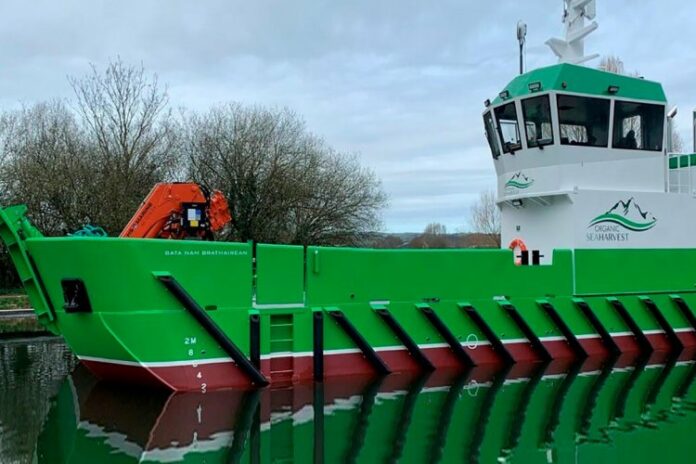
The Landing Utility Vessel (LUV) 1908 is a larger version of the LUV 1608, the first example of which entered service in August 2019. The LUV 1908 has all the advantages of its predecessor, which until now was unique among vessel types serving the aquaculture sector for its bow ramp for go anywhere RoRo capability. It also offers additional deck space, higher freeboard and a larger crane.

The design has been engineered by Damen’s design bureau OSD-IMT to allow it to carry out a wide range of support tasks for the aquaculture industry. These include the transportation of people, equipment, feed and other dry cargo to offshore fish-farming locations with loading and unloading taking place either by RoRo direct to the shore or by using the deck crane. The first LUV 1908 is fitted with an HS Marine AK 72/26 E4 fully foldable and telescopic boom type crane. When on-site, the vessel can also be used to support activities of all kinds including pen maintenance and net cleaning.

Although the LUV 1908 is a compact 19 metres in length and 7.5 metres across it has a total of 100m² of unobstructed deck space rated at 2.5 tonnes per m². In total, the vessel can carry 40 tonnes of cargo and also has day accommodation for up to eight people. This includes a toilet, drying locker, pantry/ mess room and an off-watch seating area and navigation console in the wheelhouse.

Like the LUV 1608, the larger version has been built at Coastal Workboats Scotland, with full Damen support. Damen has also provided financing for the vessel. The owner of the first vessel is Organic Sea Harvest, a new company operating on the Isle of Skye off the west coast of Scotland. The company’s mission is to use pioneering technologies and methods to bring sustainable, organic Scottish salmon to the UK and worldwide markets. Their LUV 1908 will ultimately support a total of four individual fish farms, all off the north east coast of Skye.

Ove Thu, CEO of Organic Sea Harvest, said:

“Both Damen and Coastal Workboats Scotland have been very supportive during the construction of our vessel and are completely aligned with our mission to encourage sustainable aquaculture in the region. During the construction, builders allowed us to fit the vessel with a range of equipment, helping us get her ready for our distinct scope of work. This proved very helpful, as it resulted in the vessel being ready for operation immediately upon delivery.”

Mike Besijn, Damen sales manager, said:

“Organic Sea Harvest wanted a clean ship with minimal power consumption and emissions for maximum sustainability. We are delighted that the LUV 1908 meets all their needs and we are very pleased to have built it in the UK. The aquaculture sector is an important market for Damen and we have developed good relationships with its participants. Our decision to build vessels for stock so that we can respond quickly to their needs, demonstrates the confidence that we have in its long-term prospects.”

Lithuania enlists EMSA’s RPAS services to monitor ship emissions

0

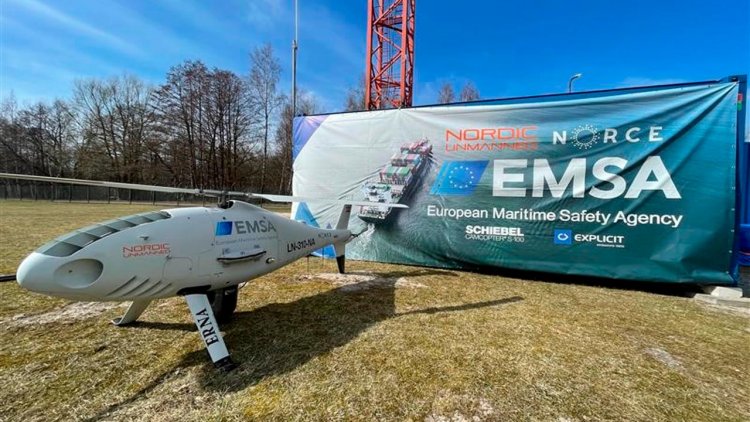
In response to a request from the Environmental Protection Department of Lithuania’s Ministry of the Environment, EMSA is providing the country with Remotely Piloted Aircraft System (RPAS) services to assist in monitoring ship emissions, protect the marine environment and improve maritime safety.

The services which began on 23 March will run for three months and will see EMSA RPAS being used to calculate the sulphur content of the fuel being used by the passing ships. Sensors on board the RPAS will measure the emissions from the exhaust plumes of vessels travelling in the main shipping lanes and when at anchorage around the Lithuanian port of Klaipeda. The sulphur content of marine fuel in this Sulphur Emission Control Area (SECA) should be no greater than 0.1%.

While great interest has been shown in the emissions monitoring capability of EMSA’s RPAS service, the Environmental Protection Department will also be working in collaboration with other Lithuanian authorities – including the Navy, MRCC and fisheries control services – to conduct other types of maritime surveillance missions.

The aircraft being used for this service is the Schiebel CAMCOPTER® S100 and it is under contract to EMSA via a consortium led by Nordic Unmanned AS. The model is a vertical take-off and landing drone and is fitted with gas sensors and cameras covering optical and infrared spectral ranges to better detect vessel plumes and conduct maritime surveillance as required.

All the information is transmitted in real-time to trained users through EMSA’s RPAS Data Centre. Records of the emission measurements are encoded automatically into the THETIS-EU information sharing system. This system is operated by EMSA to assist in the enforcement of the EU sulphur directive as well as to support port inspectors when targeting vessels to be inspected.

ABOUT RPAS

RPAS services, offered free to all EU Member States by EMSA, have been developed to assist in ship emission monitoring and maritime surveillance operations and can operate in all seas surrounding the European Union. RPAS services can provide support to traditional coast guard functions, including search and rescue and pollution prevention and response. The services are offered to Member States individually and as part of EMSA’s regional RPAS strategy, which allows multiple coast guard functions in several EU Member States to be supported by one or more RPAS services. Further expansion of RPAS regionally is planned in 2021 and 2022.

Photo: EMSA

AIDA Cruises extends Canary Islands season into June

0

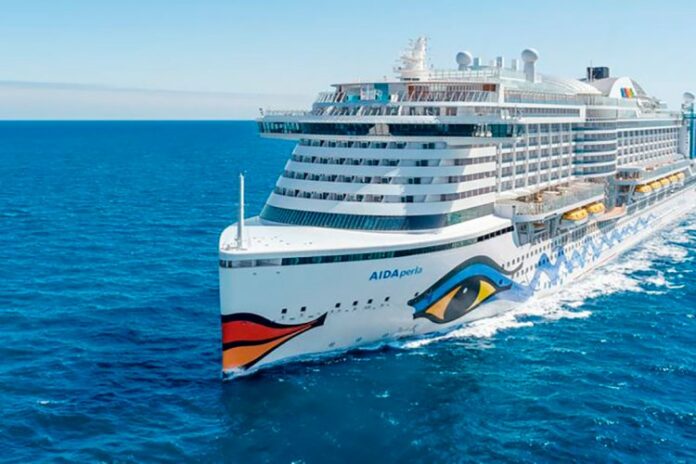
AIDA Cruises is extending AIDAperla’s Canary Islands season into June, offering three new dates for booking beginning April 14, 2021. The new voyages depart from Las Palmas, Gran Canaria on May 15, 22 and 29, 2021. They can also be booked as 14- or 21-day cruises.

Currently, AIDAperla is sailing on seven-day voyages around the Canary Islands. For many months, the Canary Islands have been one of the few vacation destinations in Europe with consistently low incidence levels. Thanks to the Spanish government’s regulations for safe travel, which coincide with AIDA’s enhanced health and safety protocols, many AIDA guests have been able to enjoy relaxing holidays in the Canary Islands.

With a testing strategy for guests and crew members already utilized on several cruises, it is AIDA’s top priority for all guests to enjoy their vacation safely. The enhanced health and safety protocols — tested by SGS Institut Fresenius and confirmed by the classification society DNV — includes a mandatory polymerase chain reaction (PCR) test for detecting viruses and bacteria before traveling, as well as regular health checks, social distance and hygiene rules, medical care including test capacities on board and other measures.

The Mediterranean cruises of AIDAperla in the period May 15 to June 4, 2021 cannot take place, However, we are happy to offer our guests to rebook to one of the Canary Islands voyages with AIDAperla or a later voyage from our diverse offer.

All AIDAperla guests whose voyage cannot take place as originally scheduled will be informed immediately. 

With the “AIDA promise,” the cruise company offers guests more flexibility and security in planning. Generous booking options are part of AIDA’s commitment to its guests, ranging from small down payments to free rebooking. The “AIDA promise” is included in the travel price for new bookings up to May 31, 2021 and applies to departures up to March. 31, 2022.

All cruises are carried out in compliance with AIDA’s enhanced health and safety protocols, as well as applicable laws and regulations for infection protection. 
 

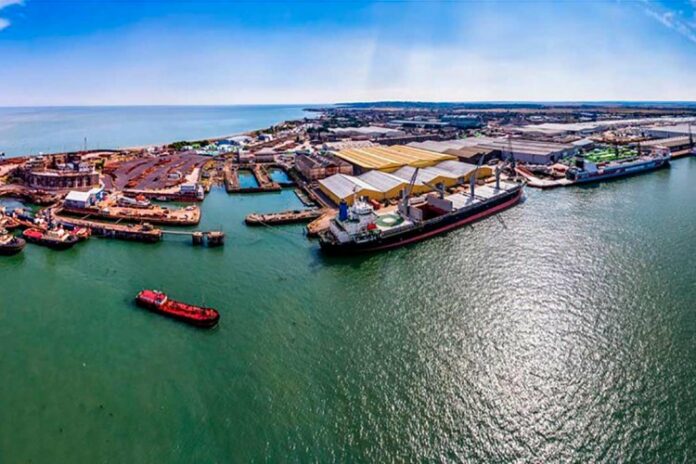
Peel Ports London Medway welcomes new freight-only ferry service

0

The new service, operated by the Gothia, can carry up to 165 unaccompanied freight units (trailers or containers without drivers) and will offer one daily sailing in each direction between the two ports.

The new service will exploit capacity partly enabled by resilience funding in 2019 from the Department of Transport (DfT), and will support growing demand for unaccompanied freight services to support market changes and adapt to the changing demands of cargo owners, hauliers and shipping lines alike.

Port owner, Peel Ports, says the Port of Sheerness offers excellent connectivity to road and rail routes into and around the UK and has invested heavily in enhancing its facilities and services, making it the perfect port to accommodate this new service.

Richard Goffin, Port Director, London Medway said:

“We’re delighted to welcome a new unaccompanied freight service from DFDS. This is the first ferry service since Olau Line ceased operating in 1994. Over the past year, we have Brexit-proofed a number of our ports, including London Medway, increasing resiliency to handle additional cargo to help reduce delays and maximise efficiencies for customers to provide a more attractive proposition and UK entry point over other southern ports.

“Our strategic location provides proximity to market benefits, and we are continuing to drive forward with planned investment in our people, processes and technology, creating further opportunities for our customers through diversification, as well as the creation of up to 100 direct and indirect local jobs.”

The combination of challenges posed by Brexit and Covid-19, has exposed drivers and haulage companies to vulnerabilities in supply chains worldwide. This has resulted in many cargo owners and carriers re-assessing their transport plans and choosing different ports, different shipping methods, and switching transport modes in order to preserve supply chains.

There has also been a shift away from heavy reliance on driver accompanied RoRo traffic transporting goods via Dover and the Channel Tunnel, towards greater use of the unaccompanied model. Given current restrictions surrounding international travel, stricter border controls and COVID-19 threats, one of the most standout benefits is that by using driverless methods, the risk of delays associated to those particular challenges is reduced.

Goffin added:

“Our dedicated RoRo facilities can accommodate unaccompanied freight, providing a huge opportunity for RoRo operators to gain uncongested access to London and the South East easily through London Medway, saving on steaming time. The announcement of this new service is indicative of this shift and the growing demand for unaccompanied freight services.”

Wayne Bullen, Freight Sales Director at DFDS, said:

“We’re really pleased to be adding a new unaccompanied freight service to the extensive route network that DFDS already offers. Sheerness benefits from excellent road links with a close proximity to the M25 orbital ring, which is ideal for goods heading to the London area and the Midlands”.

“Sheerness promises to be a superb ‘partner port’, with an ambitious plan to grow its services over the next decade. We also continue to cement our partnership with the port of Calais and are excited to be expanding our services to the port as it marks the fulfilment of its multi-million-pound expansion project”.

“Launching a new route at this time is a strong indication of our commitment to our customers, our confidence in the popularity of DFDS services and an investment that will help to boost both the UK and French economies. It aligns with our business strategy, helping us to expand our freight network and offer solutions that help our customers, communities and our own business to grow.”


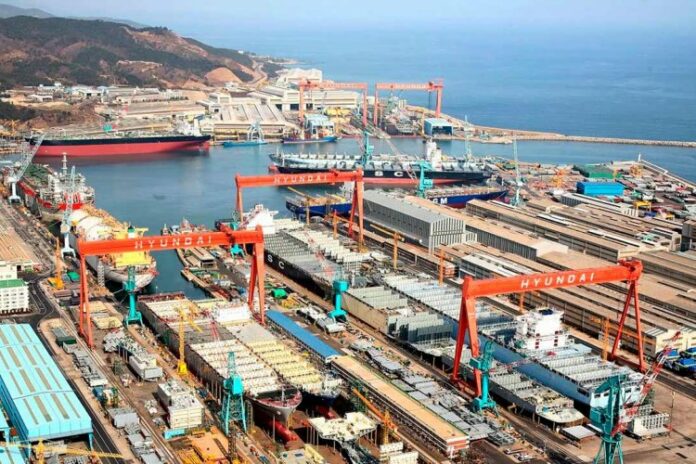
GTT receives an opder from HHI for the tank design of two new VLEC

0

GTT announces that it has received an order from its partner the Korean shipyard Hyundai Heavy Industries (HHI) for the tank design of two VLECs on behalf of an Asian ship-owner.

As part of this order, GTT will design the tanks for the VLECs with a cargo capacity of 98,000 m3. The tanks will be fitted with the GTT Mark III  membrane containment system. The vessels will be delivered in the last quarter of 2022 and the first quarter of 2023.

These latest generation vessels are versatile as they are designed for multi-gas use: ethane, LPG, Ethylene. While still being able to carry LNG. These VLECs also optimise fuel consumption, reduce the boil-off rate and increase the cargo capacity.