-6.3 C
New York
Home Blog Page 643

Heerema wins in wind with Sofia Contract

0

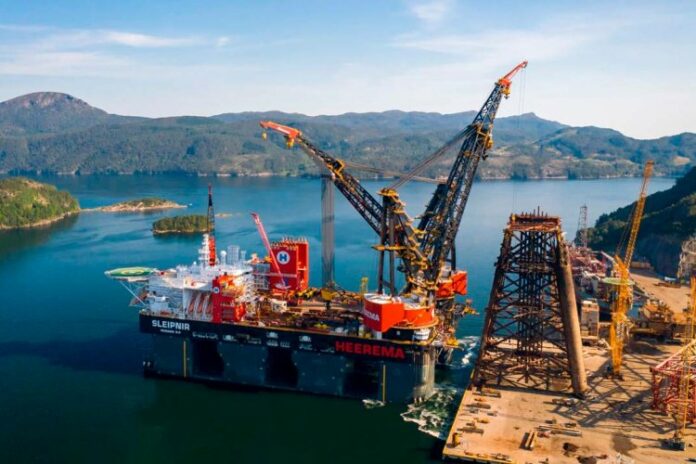
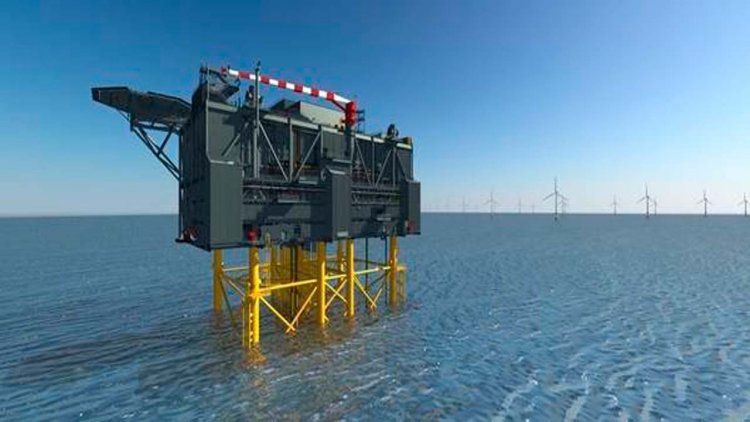
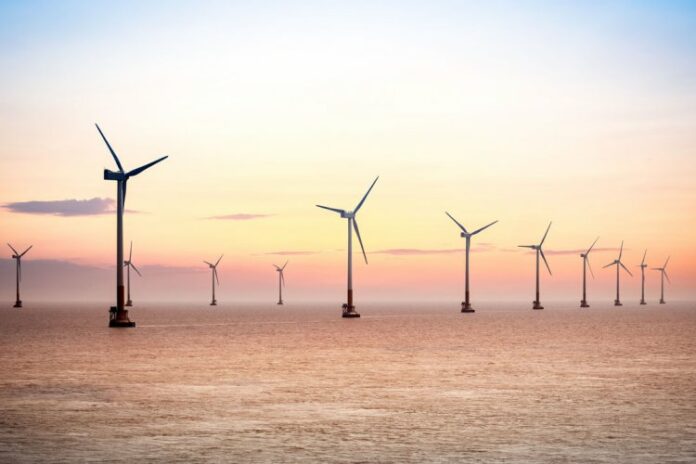
Heerema Marine Contractors has signed a contract with Singapore’s Sembcorp Marine to transport and install the Sofia Offshore Wind Farm HVDC Offshore Converter Platform.

Heerema will install the platform using Sleipnir, the world’s largest and most sustainable semi-submersible crane vessel (SSCV). The vessel has previously executed work for the Hollandse Kust and Hornsea 2 offshore wind farms.

Koen van der Perk, Heerema’s Wind Business Unit Director, said:

‘We are proud to be contributing to the Sofia project and are looking forward to working with Sembcorp Marine and the various other stakeholders to make this project a success. We would like to thank Sembcorp Marine for their trust in Heerema Marine Contractors to deliver a safe and successful project. Heerema is committed to support the global energy transition, and being part of this exciting project is another step in that journey for us.’

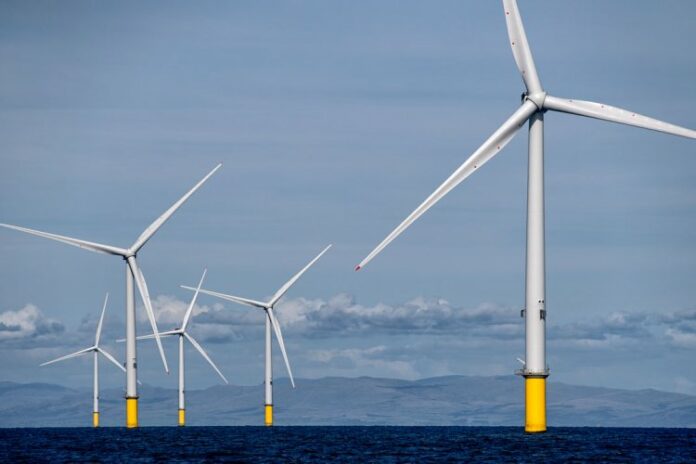
RWE Renewables is developing the 1.4 gigawatts (GW) Sofia Offshore Wind Farm, which is the largest offshore wind project in their current development portfolio. It is located 220 kilometers off the coast of Redcar, Teeside, in the North Sea on the shallow central area known as Dogger Bank. The Sofia Offshore Wind Farm will provide power for the equivalent of about 1.2 million UK homes when completed. Sembcorp Marine, in consortium with GE Renewable Energy’s Grid Solutions, has been awarded an EPCI contract for the HVDC electrical system works for the project, which includes an onshore converter station and an offshore converter platform.


Largest non-containerised cargo operation in the world at APM Terminals Pecém

0

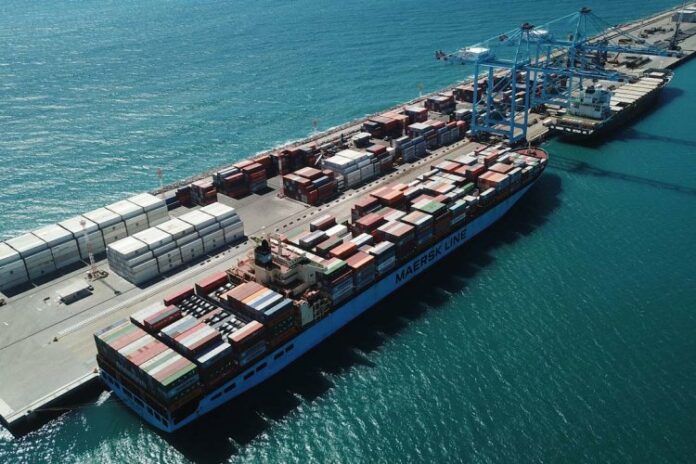
The operation was the result of joint commercial actions between several companies within Maersk, with the carrier Aliança Navegação e Logística responsible for sea freight, APM Terminals Pecém being the port of shipment and Maersk Brazil’s Logistics and Services team providing logistics solutions for the customer.

The cargo was destined for the state of Santa Catarina and operations were performed in areas 9 and 10 at the Multi-Utility Terminal (TMUT) of the Port of Pecém.

For the Managing Director of APM Terminals Pecém, Daniel Rose, in addition to integrated logistics centred on the customer, the operation itself was very important for the Terminal:

“We were very pleased with the performance of our team, who demonstrated agility and acted with tranquillity throughout operations. Our planning, safety and operations teams were fully aligned, which allowed us to carry out this complex operation successfully together with our partners.”

For the operations, a Ship to Shore (STS) crane provided by APM Terminals Pecém was first used to ship flat rack containers to serve as a base for the support and movement frames on which the blades would be docked. Subsequently, two mobile port cranes (MHC type) were used to hoist the blades, which weigh approximately 21 tons each. The shipments took place on the vessels Bartolomeu Dias and Vincente Pinzon from Aliança Navegação e Logística, which operates one of the cabotage lines that pass through the port.

Despite the novelty, the operation was carried out following strict safety protocols. For the Operations Manager, Herllon Rossato Rossdeutscher, preparation was very important:

“For more than a month we had been working on the planning of this operation and being able to carry it out successfully gave the team more confidence, experience and maturity to perform more complex operations in the future”.

APM Terminals Pecém Head of Commercial, André Magalhães, comments:

“For this complex operation, six bays were used for each of the 72-metre wind blade, totalling twelve bays and four flat rack containers. For the transfer to the ship, we used two MHCs, which loaded two blades in an incredible time of 55 minutes. Due to the size of the blades and the type of ship used, we are probably facing a new world record.”

André Magalhães also shares that the operation demonstrates the high capacity of APM Terminals to offer customised solutions and stay focused on customer needs, while playing a key role as logistics enabler for the development of the country.

APM Terminals Pecém offers 6 Cabotage services connecting the south to the northeast of the country and Manaus, being a strategic location for exports and imports, in addition to having a route to the east coast of the United States throughout the year and two more routes to Europe during the period of the fruit harvest.

ADNOC continues strategic expansion with acquisition of two additional VLCCs

0

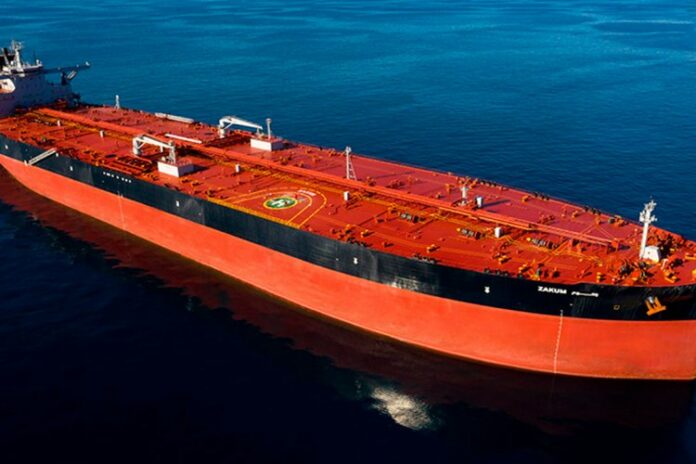
ADNOC Logistics & Services (ADNOC L&S), the shipping and maritime logistics arm of Abu Dhabi National Oil Company (ADNOC), has announced the acquisition of two additional Very Large Crude Carriers (VLCC), bringing the total number of VLCCs added to its fleet in 2021 to eight. 

The VLCC fleet expansion plays a significant role in supporting ICE Murban Futures, which is expected to boost trading of the UAE’s flagship Murban crude oil, enabling it to reach new customers and markets around the globe. The launch of Murban Futures contracts will also allow ADNOC L&S to further improve its vessel capacity utilization in the crude oil sector. 

The growth of ADNOC L&S’s VLCC fleet supports ADNOC Group’s commitment to increase its crude oil production capacity by 25% to 5 million barrels per day (mmbpd) by 2030. 

The new acquisitions include a new-build VLCC, equipped with dual-fuel technology, which is expected to be delivered in Q1 2023, and an existing vessel that is scheduled to join the fleet in Q2 2021. These latest acquisitions mean that ADNOC L&S has now added a total crude oil cargo capacity of 16 million barrels this year. 

Captain Abdulkareem Al Masabi, CEO, ADNOC Logistics and Services said:

“The acquisition of these VLCCs further consolidates our highly competitive offering, which covers the full spectrum of the oil and gas value chain. Following our strategic vessel acquisitions in 2020-2021, and combined with our integrated logistics and marine solutions, we are confident that our customers will gain a significant edge in terms of time and cost savings for their upstream and downstream operations, including ADNOC Group entities.” 

ADNOC L&S, which is the largest integrated maritime logistics and shipping company in the GCC, and owner and operator of the largest shipping fleet in the UAE, has been pursuing a smart fleet expansion program, driven by increased demand from its affiliates, in particular ADNOC Trading and ADNOC Global Trading, and favorable asset prices for crude vessels. In 2020, ADNOC L&S grew its fleet with 16 deep-sea vessel acquisitions. As a result of the additional fleet capacity, ADNOC L&S can further improve cost efficiencies while providing a comprehensive service to its customers. 

The company is developing one of the most sustainable, modern crude fleets in the world. The vessels added are a blended mix of new orders (four new builds on order) and modern existing vessels (four recently acquired). 

The latest acquired vessels have a length of 336 meters with a deadweight of 300,000 metric tonnes. The existing vessel is equipped with a scrubber, which is an exhaust gas cleaning system that removes sulphur oxides from the ship’s engine, improving its environmental performance.

The new build vessel, made by Daewoo (South Korea), is fitted with a propulsion dual-fuel engine, providing a more environment-friendly operation. 

The VLCC adds to ADNOC L&S’ existing fleet of 140 owned vessels and 100 chartered vessels, which includes deep-sea shipping, offshore support and marine services vessels. The ADNOC L&S international trading fleet transports crude oil, refined products, dry bulk, containerized cargo, LPG and LNG on its owned and chartered vessels, supporting ADNOC’s operations locally and facilitating the shipment of commodities to global markets. 

Taiwan wind farms choose Saab Seaeye Cougar XT Compact robotic vehicle

0

Especially suited for the offshore wind energy market, the Saab Seaeye Cougar XT Compact robotic vehicle has been chosen for Taiwan’s huge offshore wind farm development.

Taiwan’s Metal Industries Research and Development Centre (MIRDC) will train ROV pilots to assist in the development and maintenance of the turbines’ underwater structures.

The training will be undertaken by MIRDC at the Maritime Technology Innovation Centre created by the Bureau of Energy and the Ministry of Economic Affairs for the cultivation of national offshore wind energy talents.

Created for challenging environmental conditions inherent in shallow water operations the Seaeye low-profile 300m rated Cougar XT Compact is specially designed to minimise the effect of current, with a reduced frame size, buoyancy and weight — and a thinner 17mm tether cable that reduces the effect of drag.

Its six powerful thrusters hold the Cougar steady in strong cross currents and allow it to operate with precise manoeuvrability around structures whilst handling a wide array of equipment that can include cameras, sonar, tracking systems and manipulators.

MIRDC’s Cougar XT Compact comes with a Kongsberg colour zoom camera, Blueview multibeam sonar, Tritec SeaKing sidescan sonar, Cygnus ultrasonic thickness gauge, CP contact probe and a four-function manipulator. It also comes as a free-swimming option and has its own 16 ft control cabin.

At the Maritime Technology Innovation Centre, the offshore wind energy training courses organised by MIRDC will provide training and certification in Taiwan and for the Asia Pacific region.

Sanmar delivers two line-handling pusher crafts to Scottish operator

0

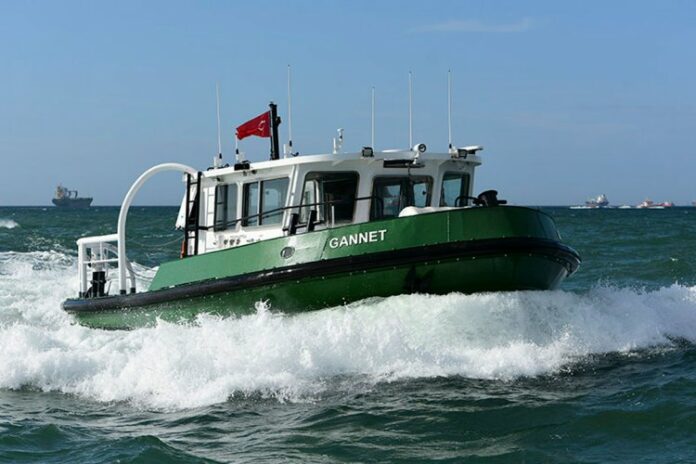
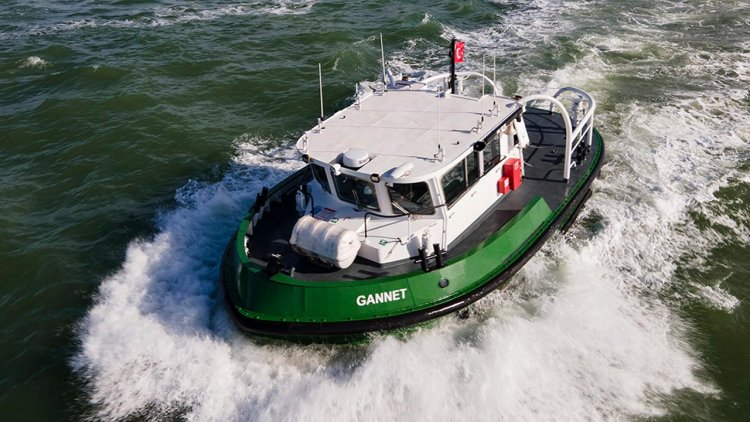
Iyidere series are an additional class of workboat in Sanmar’s portfolio and are based on the RAmbler 1200 design from Canada-based naval architects Robert Allan Ltd. They have been renamed GANNET and CORMORANT by their new owners.

Targe has provided services for Ineos at Hound Point, Scotland’s largest oil export terminal, for almost 30 years and the main task of the new additions to its fleet will be line handling operations assisting the berthing of large crude oil tankers up to VLCC. They will also support pollution response and safety patrols’ and will transport crews and light stores to and from the terminal.

GANNET and CORMORANT are both powered by two main engines each producing 224kW, providing a speed ahead of 9.5 knots and a bollard pull of 7 tonnes. The sister vessels have a LOA of 11.95m, moulded beam of 5.5m and navigational draft of 1.6m. They have a fuel capacity of 3.5m3 and are able to carry 12 passengers.

The relationship between Targe and Sanmar is very strong following the operator’s acquisition of three Sanmar Bogacay Class RAmparts 2400SX tugs in recent years.

Ruchan Civgin, Commercial Director of Sanmar, said:

“Building strong and mutually rewarding relationships with clients is at the heart of what we do at Sanmar. We work in close partnership with clients at every stage of a vessel’s development. Our ability to adapt to meet individual operational needs, using expertise built up over 40 years coupled with modern technologically-advanced designs and state-of-the-art facilities, means we can offer a service to both existing and potential customers that is second to none. These vessels were a new design project with all that entails, and I am delighted that when Targe came to us with the detailed outline of what they wanted, we were able to provide them with exactly what they needed.”

After ordering the new Iyidere class line-handling pusher crafts, Targe’s Managing Director Tom Woolley said:

“Working up the design and specification of a new class of multipurpose workboat out of the Robert Allan stable, was challenging during the pandemic when face to face meetings were impossible. It was also regrettable that our team were unable to visit the yard during the build.  However, given the solid relationship between all three parties, we are confident that the result will be up to Sanmar’s usual very high standard. Regardless of that, Sanmar’s after sales service is second to none.”

Dive Technologies completes successful sea trials with Kraken’s sonar

0

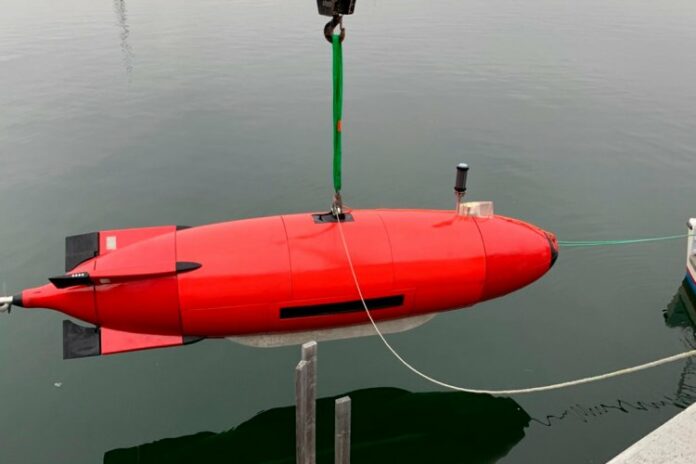
Kraken Robotics Inc. has announced that Quincy, Massachusetts based Dive Technologies Inc. (“Dive”) recently completed successful sea trials of Kraken’s Miniature Synthetic Aperture Sonar (MINSAS 120) integrated onto Dive’s Large Displacement Autonomous Underwater Vehicle (DIVE-LD). The Dive-LD is also powered by Kraken’s pressure tolerant batteries.

Kraken’s MINSAS is a commercially available off the shelf configurable Interferometric Synthetic Aperture Sonar (SAS) which replaces high end side scan sonar systems at an affordable price, while delivering significantly higher resolution, range, and area coverage rates (ACR). The increased range and resolution and associated higher ACR of SAS over traditional systems offers a powerful capability when combined with the long range and endurance of the DIVE-LD.

Sea trials were conducted from March 29 to April 8, held in Shallow Water and Very Shallow Water environments, in and around Buzzards Bay, MA and Narragansett Bay, RI. Due to COVID travel restrictions, Kraken personnel provided support remotely throughout the integration and sea trials with the DIVE-LD. Immediately following successful sea trials, Dive was also able to conduct a number of customer demonstrations for commercial and defense customers.

Kraken Senior Vice President of Engineering, David Shea, said:

“We are excited to see Dive equipping their AUVs with Kraken’s ultra-high resolution imaging and mapping capabilities, a milestone which also represents the 20th unique vehicle platform that has been successfully integrated with Kraken’s Synthetic Aperture Sonar. Despite COVID limiting our onsite support, the speed and ease of integration of the MINSAS onto the DIVE-LD is a testament to the quality and experience of both the Kraken and Dive engineering teams. Within a short number of days, the Dive team had their vehicle in-water and collecting high quality sonar data, processed in real-time onboard the AUV. The high stability of the DIVE-LD has proven to be an excellent platform for the MINSAS 120 payload, and the open architecture and free flooded design allowed for simple and flexible payload mounting options.”

Bill Lebo, Dive Co-Founder, said:

“Our team is incredibly excited to continue working with Kraken Robotics. Following our previous successful sea trials with Kraken’s batteries, our team was keen to continue the positive momentum in our vehicle development with integration of Kraken’s latest generation MINSAS 120 sonar system. Over 7 days we completed 30 missions and collected 1.3 TB of sonar data, processed in real-time onboard the AUV. The incredible imagery produced allowed our team to quickly locate and identify a variety of objects in the testing area, including abandoned lobster traps previously hidden amongst a boulder field, a number of shipwrecks and customer-specific targets of interest. The imagery collected of the wreck of the USS Yankee was particularly impressive (see attached image). The use of Kraken’s removable data storage module, the DataPod, also enabled us to demonstrate time-critical data exfiltration at the conclusion of the test missions.”

Kraken and Dive Technologies entered into an agreement in August 2020 whereby Kraken agreed to supply subsea batteries for the DIVE-LD. Under the terms of the agreement, Kraken also acquired a license to build two DIVE-LDs for use in Kraken’s growing Robotics-as-a-Service (RaaS) business. Production of Kraken’s first DIVE-LD is currently underway with the first unit being manufactured in the United States. Kraken expects that it will be delivered to Kraken’s Unmanned Maritime Vehicle Facility in Dartmouth, Nova Scotia for sea trials this summer.

Damen delivers Stan Tug 1004 to Vletterlieden

0

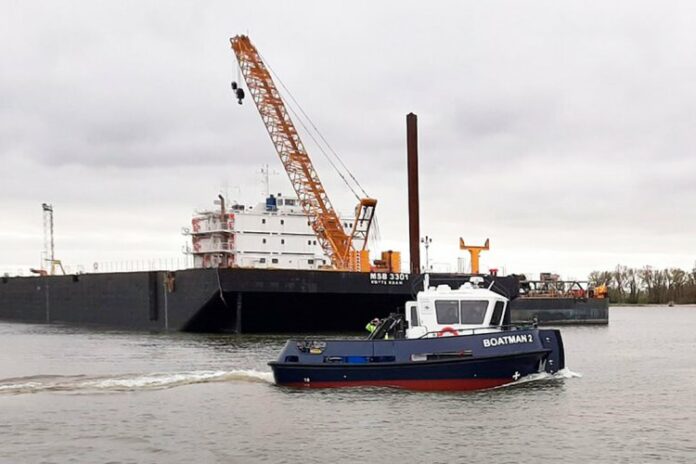
Damen Shipyards Group has recently delivered a Stan Tug 1004 to Corps van Vletterlieden for operation in the Port of IJmuiden in the north of the Netherlands. The tug, Boatman2, will perform a wide range of tasks including mooring, supply, crew transfer and diving support.

The vessel had previously operated for a client of Damen’s in Norway, her previous owner trading her in with the purchase of a new Damen vessel.

Ordinarily, Damen would assist its clients in carrying out an inspection of a second hand vessel. However, due to the coronavirus regulations, this proved impossible on this occasion. The previous owner provided pictures, which confirmed that the vessel had been well cared for and was in excellent condition.

Besides this, Corps van Vletterlieden had seen this exact vessel when she was newly built at one of Damen’s annual Workboat Festivals – where prospective clients come to view and sail aboard Damen vessels and meet with Damen employees and suppliers. This satisfied the company that the vessel was robust enough for their requirements.

When the vessel arrived in the Netherlands, Damen Shipyards Hardinxveld carried out a number of adaptations to the vessel in order to prepare her for her new owner. The involved installation of a knuckle-boom crane on deck – as well as a hydraulic power pack for it – as well as two coupling winches and a generator set, all aimed at giving the vessel the versatility required to perform her multi-functional work scope.

Vincent de Maat, sales manager at Damen said:

“This vessel showcases the synergy to be found within the Damen Shipyards Group. With the vessel previously being located in Norway, coordinating this purchase called on the cooperation of two of our sales department; the customisation was performed at our Hardinxveld yard and the sale itself administered by Damen Trading. A real demonstration that the component parts of the group really perform together as One Damen.”

The Stan Tug 1004 is the first Damen vessel to be operated by Corps van Vletterlieden.

Wärtsilä will test next-level predictive maintenance solution on NYK’s LNG pair

0

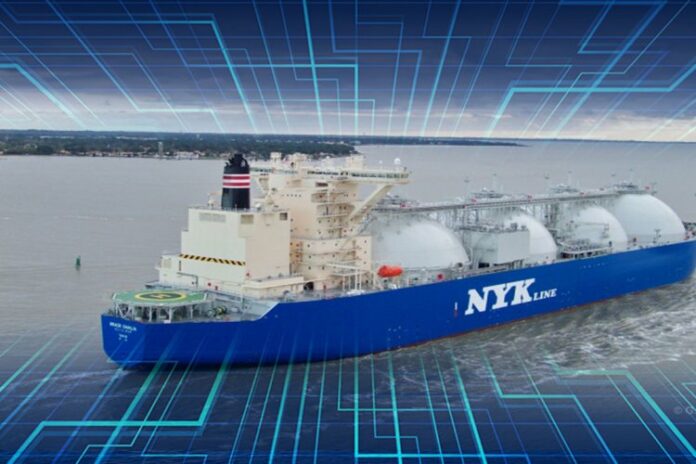
The technology group Wärtsilä has signed an Optimised Maintenance agreement with the Japanese shipping giant Nippon Yusen Kaisha (NYK) and Monohakobi Technology Institute (MTI) to evaluate Wärtsilä’s Expert Insight predictive maintenance service as part of a pilot programme. The agreement was signed in January 2021 and, the programme could lead to NYK adopting the solution throughout its entire fleet.

The evaluation will be carried out on two LNG Carrier vessels, the ‘Marvel Falcon’ and the ‘LNG Sakura’. Both vessels operate with Wärtsilä dual-fuel engines. The programme will evaluate the analytics and support service provided by Expert Insight, in combination with the Wärtsilä Optimised Maintenance Lifecycle solution.

Expert Insight is an innovative service that leverages artificial intelligence (AI) and advanced diagnostics to monitor equipment and systems in real-time, spot anomalies, foresee potential problems, and enable rapid reaction accordingly. Should anomalous behaviour be detected, it is flagged to specialists at Wärtsilä Expertise Centres, allowing them to support the customer proactively with an appropriate resolution to the issue. The combination of AI, advanced diagnostics, and the company’s extensive equipment expertise greatly enhances the reliability, efficiency, and safety of the installed equipment.

Shogo Yamada, Manager, Marine Group, NYK LINE, says:

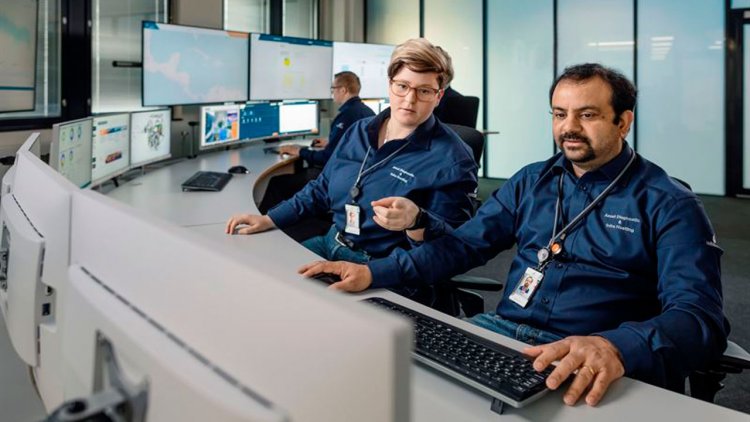
“NYK has already commenced operating an Expert-in-the Loop service at our Remote Diagnostics Centre in Manila. This anomaly detection system oversees the entire engine plant, and we are confident that the complementing expertise from both our companies will result in the best possible support for our vessels. By leveraging big data and artificial intelligence, the maritime industry can greatly increase its efficiency, safety, and competitiveness, and we are keen to take advantage of this wherever possible. We are excited at the possibilities provided by Wärtsilä’s Expert Insight and look forward to the results from this programme.”

Tateo Miyagawa, Managing Director, Wärtsilä Japan, says:

“When we introduced Expert Insight as part of the Optimised Maintenance programme, it was pointed out that it takes predictive maintenance to the next level. This is rapidly proving to be the case, and we are happy to cooperate with NYK/MTI in demonstrating the commercial value and benefits the system offers to them by delivering greater vessel uptime, less unscheduled maintenance, and lower operating costs while optimising their ships’ performance.”

NYK, one of the biggest ship owners in the world, is a long-term customer of Wärtsilä and has many vessels with Wärtsilä solutions installed.

Photo: Wärtsilä Corporation

PSEG and Ørsted complete PSEG’s acquisition of 25% interest in Ocean Wind

0

Ørsted and PSEG today announced they have completed PSEG’s acquisition of a 25% equity interest in Ocean Wind. Announced on Dec. 4, 2019, PSEG’s investment in Ocean Wind received approval from the New Jersey Board of Public Utilities on March 31.

Ocean Wind, is an 1,100 MW offshore wind farm located 15 miles off the coast of southern New Jersey. The recent issuance of a Notice of Intent for Ocean Wind from the federal Bureau of Ocean Energy Management is further progress along the timeline of New Jersey’s groundbreaking investment in offshore wind power.

PSEG Chairman, President and CEO Ralph Izzo, said:

“From creating jobs and strengthening the economy to investing in infrastructure and bringing gigawatts of renewable energy to our coast, offshore wind is critical to New Jersey’s future. PSEG is pleased to close on its investment in Ocean Wind and looks forward to working with Ørsted to bring clean energy and new industry to the state.”

Martin Neubert, Chief Commercial Officer and Deputy Group CEO of Ørsted, said:

“We’re excited to officially welcome PSEG as a partner on Ocean Wind. Our two organizations are well-suited to deliver clean reliable energy to New Jersey and help the State continue its path on becoming a leader in the American offshore wind industry.”

In 2019, New Jersey set an ambitious goal of 7,500 megawatts of offshore wind capacity by 2035, a key component of Gov. Phil Murphy’s long-term strategy for achieving a 100% carbon-free energy supply by 2050. In March, the Biden administration announced a set of actions that included establishing a national target of deploying 30,000 megawatts of offshore wind by 2030. 

Izzo continued:

“Ocean Wind is a leader in helping New Jersey and the nation achieve their clean energy goals. With our robust climate goals and strategies, PSEG is proud of our role in supporting New Jersey’s clean energy economy as we work to address the challenges of climate change.”

Combined with the New Jersey Wind Port and Port of Paulsboro, the state’s key facilities planned to support the development, manufacturing, supply chain and assembly of offshore wind components, Ocean Wind will help New Jersey achieve critical steps in generating clean energy for millions of the state’s residential and business customers, as well as strengthening the domestic supply chain, creating thousands of good-paying jobs and supporting the deployment of offshore wind at scale.

CMA CGM launches the first low-carbon shipping offer by choosing biomethane

0

Ahead of the UN Global Compact and as part of the first high-level preparatory talks for the COP26 summit, Rodolphe Saadé, Chairman and CEO of the CMA CGM Group, a world leader in shipping and logistics, has put forward solutions that are immediately available and that contribute to achieving the Group’s objective of being carbon-neutral by 2050. 

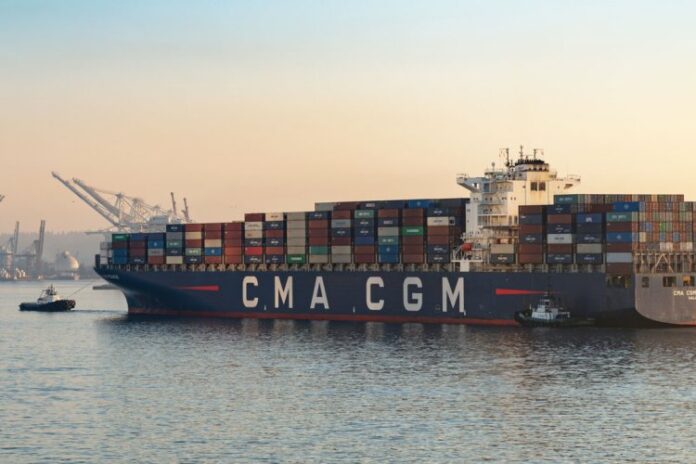
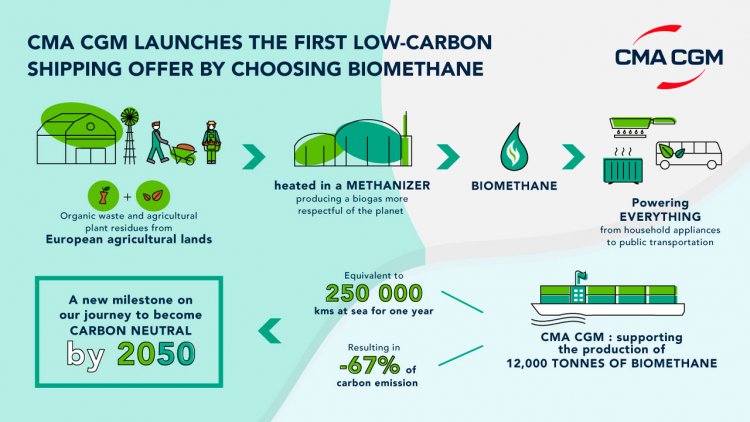
The CMA CGM Group has reached another milestone in its efforts to be carbon-neutral by 2050, by supporting the production of 12,000 tonnes of biomethane (equivalent to a year’s fuel consumption of two 1,400-TEU ships). Biomethane is a renewable green gas produced in part by the methanation of European-sourced organic and plant waste. This energy source represents a fine example of how the circular economy can work while benefiting the agricultural sector. CMA CGM intends to push ahead with the development of this energy source by investing in biomethane production facilities and studying the viability of liquefaction processes so that biomethane can be rolled out as a shipping fuel. 

By supporting biomethane production, CMA CGM is accelerating its commitment to leading the energy transition in the shipping sector. The Group cut its overall CO2 emissions by 4% in 2020, following a 6% reduction in 2019. Since 2008, the Group has lowered its CO2 emissions per container-kilometer by 49%. 

12,000 tonnes of guarantee-of-origin (GO) biomethane is enough to fuel the equivalent of two 1,400-TEU LNG-powered ships operating on the Northern European Balt3 line between St Petersburg and Rotterdam for a whole year.  

Guarantee-of-Origin Biomethane, coupled with CMA CGM’s dual-fuel gas-power technology, can reduce well-to-wake (entire value chain) greenhouse gas emissions (including CO2) by at least 67%. On a tank-to-wake basis (at ship level), the reduction in greenhouse gas emissions reaches 88% (including CO2). 

As of May 2021, the Group’s customers will be able to select biomethane via the Act with CMA CGM+ range of services, paving the way for a substantial reduction in the environmental impact of the shipping of their goods. 

ACT with CMA CGM+ provides a full range of services designed to enable its customers to analyze, reduce and offset their environmental footprint. CMA CGM will continue to embrace the latest technological advances to meet the needs of its customers. 

The CMA CGM Group harnesses the most effective technologies available to accelerate the energy transition in the shipping and logistics industry. As it stands, LNG is the optimum solution already available for reducing the carbon footprint of shipping and preserving air quality. It can reduce sulfur dioxide emissions by 99%, particulate matter emissions by 91% and nitrogen oxide emissions by 92%, going well beyond existing standards. By 2022, 32 of the Group’s vessels will be LNG-powered.  

The CMA CGM Group is heavily investing in research and development alongside its industrial partners to identify the energy sources of the future with the aim of achieving a positive impact on our customers’ carbon footprint and helping to protect the environment.  

On this occasion, Rodolphe Saadé, Chairman and CEO of the CMA CGM Group, declared:

“We have crossed a new step with the launch of the first low-carbon shipping offer based on biomethane. We know that there is still a long way to go to meet the commitments of the Paris Agreement. Achieving these goals do not rely on a single solution but on a set of initiatives and new technologies complimentary to each other.”