-4.5 C
New York
Home Blog Page 642

Tarmac & Forth Ports to create UK’s largest construction materials terminal

0

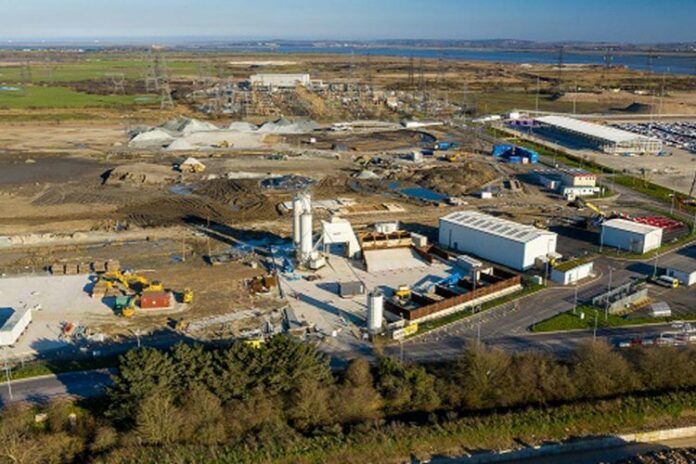
Tarmac, the UK’s leading sustainable construction solutions business, has committed to a 25-year partnership with the Port of Tilbury, London’s fastest-growing port, to build the UK’s largest construction materials aggregates terminal.

The long-term agreement follows a £250 million pound investment made by Forth Ports at Tilbury2, the UK’s newest port. The facility is a purpose-built aggregate processing and manufacturing facility, strategically located to serve London and the South East, with multimodal connectivity.

The terminal will use the very latest technology and be capable of discharging the world’s largest deep-sea vessels. The riverside location combined with a dedicated railhead means efficient delivery of construction materials into Central London without the use of heavy road haulage, supporting Tarmac’s commitment to reducing emissions and creating a safer environment for other road users.

Peter Buckley, senior vice president, Tarmac, said:

“Construction materials have a critical role to play in helping deliver the major infrastructure and construction projects which are supporting the UK’s economic recovery and long-term development.

“Our agreement with Forth Ports underlines a continued focus by Tarmac to develop industry leading facilities which will support these schemes, with the Build Back Better agenda and a clear commitment to driving sustainability and enhanced efficiencies.”

Mark Wood, regional managing director, materials south at Tarmac, said:

“We’re delighted to have established a long-term partnership with Forth Ports. The development of the new construction terminal demonstrates our commitment to ensuring the long-lasting security of high-quality aggregate supplies into London and the South East.

“Using the Thames and local rail network as a means of transporting vital materials to support the region’s infrastructure ambitions, not only removes vehicles from already congested roads around the capital but supports our customers with the delivery of a more sustainable built environment.”

Charles Hammond, Chief Executive of Forth Ports, owners of the Port of Tilbury, said:

“This is an exciting time for Tilbury2 as we sign a significant, long term agreement with Tarmac to create the UK’s largest construction materials terminal. This facility will be a game changer in the coronavirus economic recovery campaign to Build Back Better and is a good example of high productivity investment adding value to raw materials.  I am pleased that the signing of this agreement comes at the same time as we have been awarded Freeport status, which will bring further investment and jobs to the area.”

Peter Ward, Commercial Director at the Port of Tilbury, said:

“We warmly welcome Tarmac to Tilbury2. This new terminal will be truly multimodal, and this strategic location will ensure that the construction industry in London and the South East of England can have fast access to the materials they require.”
Hvide Sande to be the service port for three Vattenfall wind farms

0

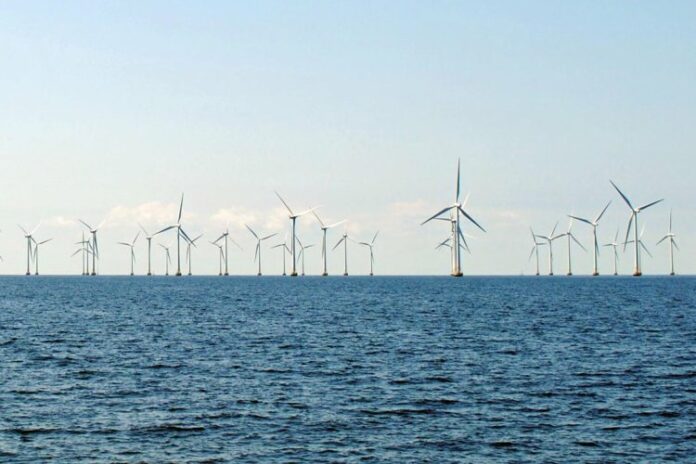
Hvide Sande will to be the service hub for Vattenfall’s Danish offshore wind operations in the northern part of the North Sea and benefit from the creation of about 50 jobs.

The choice of Hvide Sande as the service port for Vesterhav Syd and Nord wind farms means that three offshore wind farms will be serviced from the Port of Hvide Sande. In 2019, Hvide Sande was selected as Vattenfall’s service port for the Horns Rev 3 offshore wind farm.

As a result, once Vesterhav Syd and Nord come on-line, the Port of Hvide Sande will service a total of 90 offshore wind turbines and a fossil-free electricity production matching the consumption of approx. 800,000 Danish homes.

Kristian Sorgenfri Jensen, Project Director for Operation and Maintenance, Offshore Wind at Vattenfall, says:

”The location of the port is by far the most important factor, and here Hvide Sande really is in the right place to be able to service Vesterhav Syd and Nord. We have also been looking for a lasting and flexible collaboration partner that can be an active partner for many years ahead, and this is what we have found in the Port of Hvide Sande.”

This choice represents a milestone in the development of Vesterhav Syd and Nord offshore wind farms. Vattenfall will design and develop new facilities at the port for operating offices and warehousing, and it is expected that the new hub will make a positive contribution to the town in many ways.

Kristian Sorgenfri Jensen says:

“We are expecting to create a total of about 50 jobs in the new facilities in Hvide Sande –  roughly half of these as a result of Vesterhav Syd and Nord. We have seen a considerable willingness to cooperate and a lot of commitment locally, and this is a good example of how investing in a fossil-free future can do a lot to make a very real difference to a local community.”

On 14 December 2020, the Danish Energy Agency approved the construction plans for Vesterhav Syd and Nord.

Facts about the Hvide Sande Offshore Service Hub

  • Hvide Sande service hub will service a total of 90 offshore turbines spread over three offshore wind farms – Vesterhav Syd and Nord, and Horns Rev 3.
  • The service hub will employ about 50 workers locally, once Vesterhav Syd and Nord come on-line.
  • The total production of 757 MW from the three wind farms will be enough to supply about  800,000 homes with electricity
  • Horns Rev 3 has been in operation since 2019, and Vesterhav Syd and Nord are expected to come on-line by the end of 2023.

Wärtsilä caps record-breaking year with scrubber order at JMU shipyard

0

The technology group Wärtsilä managed a record-breaking amount of scrubber deliveries in 2020, despite the COVID-19 pandemic. It highlights the continued interest in exhaust gas abatement systems as long-term solutions for the global fleet.

A significant order was booked in November 2020 with a Japanese shipyard, Japan Marine United (JMU), to install a 25MW scrubber on a new Japanese-owned Very Large Crude Carrier (VLCC) set to be delivered in 2022.

The order on this newbuild VLCC reinforces the long-term position of exhaust gas treatment technologies. The system will run in an open loop configuration. The 2022 delivery date for the vessel proves that scrubbers are seen as a full lifecycle asset. Wärtsilä’s scrubbers take a modular approach and can be upgraded over time, with the potential to mitigate Nitrogen oxide (NOx) and Particulate Matter (PM).

The order comes as the latest milestone in Wärtsilä’s longstanding relationship with JMU. In all, Wärtsilä has installed 35 scrubbers on vessels being built at the yard.

Scott Oh, Director, Wärtsilä Exhaust Treatment Asia, said:

“We were delighted to end the record-breaking last year with this order for a scrubber on a newbuild VLCC being built by our friends and partners at JMU. To achieve continued sustained orders globally, despite the challenges caused by the COVID-19 pandemic, is testament to the commitment of our teams and partners.”

“This installation is a clear indication of how important scrubbers are becoming for newbuild vessels, as they aim to keep up with shipping’s tightening environmental regulatory landscape. We are confident that the industry understands both the power of exhaust gas cleaning technologies as compliance solutions for today, but also to meet a range of challenges beyond sulphur.”

“The order came as a result of Wärtsilä’s long term commitment to the Asia-Pacific region, with dedicated regional resources for both sales, support and lifecycle operations.” 

AST first to partner with the Liberian Registry for Iridium® GMDSS

0

Applied Satellite Technology (AST), a leading provider of maritime satellite communications solutions, is pleased to announce its partnership with The Liberian Registry as the first authorised service provider of the Iridium Global Maritime Distress and Safety System (GMDSS) for Liberian flagged vessels.

The Liberian Registry has experienced significant growth throughout its history and is recognised as the world’s fastest growing major open registry, with 12% of the world’s ocean-going fleet and over 4,500 vessels, making it the second largest Flag.

Iridium GMDSS is the world’s first truly global maritime emergency and distress service. As a Safety Of Life At Sea (SOLAS) convention recognized system, Iridium GMDSS helps keep mariners safe in emergency situations whilst at sea. As the system utilises satellite technology it is therefore always able to send and receive information. It helps prevent accidents via receipt of Maritime Safety Information (MSI) and can quickly alert rescue authorities and nearby vessels in the event of an emergency. 

Whilst mandatory for SOLAS vessels, Iridium’s GMDSS solution is equally valuable and increasingly prevalent on “voluntary fit” (non-SOLAS) vessels such as smaller fishing vessels, recreational boats and leisure yachts.

Gregory Darling, AST’s Founder and Chairman, said:

“We are delighted to become an authorised service provider for Iridium GMDSS service with the Liberian Registry. The Liberian Registry is well-respected for its safety, innovative services, and high-quality standards. We are incredibly proud to add an organisation of its stature to our ever-growing portfolio of maritime partners.” He added, “This partnership further highlights AST’s capabilities to supply and support large vessel requirements on a global basis and emphasises AST’s complete commitment to delivering maritime safety solutions”.  

Alfonso Castillero, Chief Operating Officer of the Liberian International Ship and Corporate Registry (LISCR) said:

“I am very happy to announce this authorization of AST for Iridium GMDSS.  According to the national and international regulations, the ultimate regulator on the vessel is the flag State; as such, the flag State needs to remain up to date with the latest in technological advancements of the equipment and services used aboard its fleet. I feel this assists us greatly in achieving that objective.”

First biofuel trial of an ocean-going vessel in Singapore

0

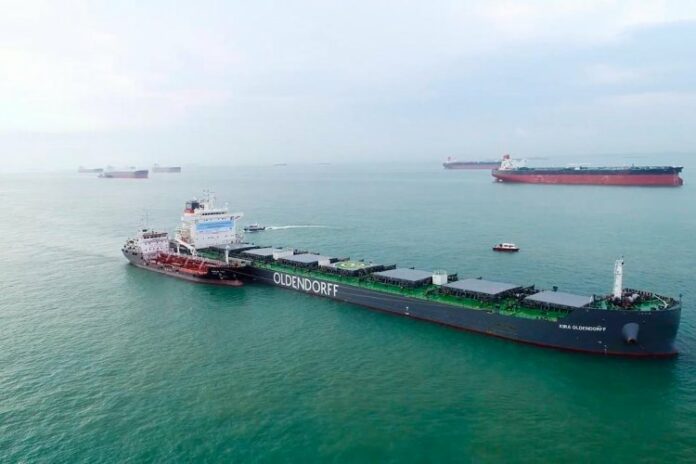
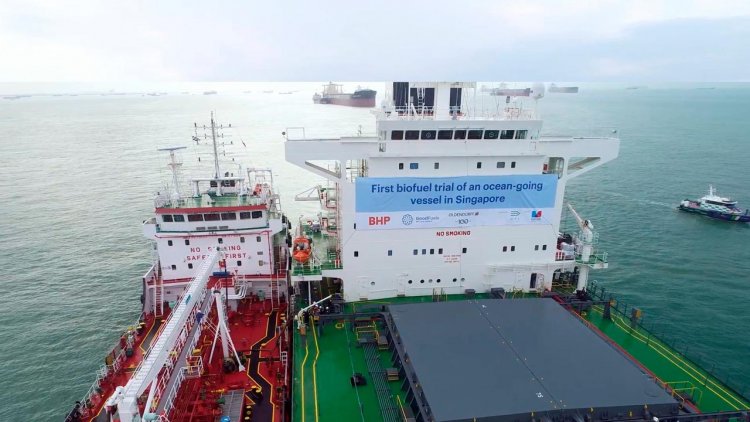
Oldendorff Carriers, together with global resources company BHP, advanced biofuels pioneer GoodFuels (GF) and with the support of the Maritime and Port Authority of Singapore (MPA), has successfully conducted the first marine biofuel trial involving an ocean-going vessel bunkered in Singapore.

The vessel selected for the biofuel trial was one of the company’s eco-Kamsarmaxes, Kira Oldendorff. The 2020-built 81,290 tdw dry bulk carrier was bunkered with “drop-in” advanced biofuel to be blended with conventional fossil fuels. Minor modifications were carried out to burn the biofuel blend efficiently, and monitoring instruments were installed to capture the trial data as accurately as possible.

In line with our decarbonisation strategy, the company is committed to work with partners, authorities and stakeholders to find the best ways to reduce GHG emissions in our shipping operations. The key objectives of the biofuel bunkering trial include safety, understanding the behaviour of the fuel (such as emissions), assessing engine and vessel operational performance, as well as exploring the merits and challenges of biofuels as a marine fuel.

Oldendorff Carriers Singapore’s Managing Director, Alexander Vajsova-Jones stressed the importance of collaborating with the right partners:

“Oldendorff Carriers and BHP’s views on a greener future are mutually aligned and being historically close partners, it made this trial a natural fit. GF are leaders in biofuels and early movers in this segment and felt they were an excellent choice, while MPA are strong supporters of green initiatives and are always instrumental in supporting industry participants in the ‘shipping capital of the world’.”

Alexander Vajsova-Jones added:

“We are thrilled to have been selected to participate in this biofuel trial with our close partners, and pleased that the bunkering happened in Singapore. It’s a small but necessary step in our common goal to reduce our carbon footprint.”

Speedcast selected to expand connectivity solution to future-proof Stena Drilling fleet

0

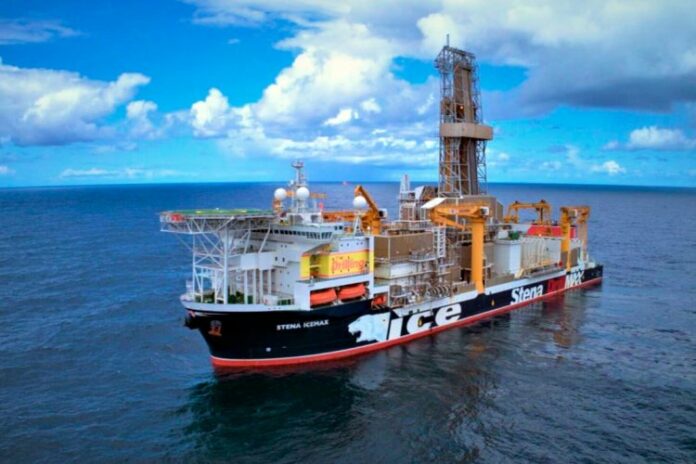
Speedcast has announced it has secured a five-year contract with Stena Drilling to expand its existing communications service with a newly designed solution to maximize operational effectiveness and support digital transformation efforts for Stena’s global fleet. Aberdeen-based Stena Drilling Ltd. is a leading independent drilling contractor with operations across the globe.

Speedcast has provided corporate networking and crew welfare connectivity long-term across the driller’s fleet of four drill ships and two semi-submersible rigs and will now be adding enhanced communications design and technologies for the fleet. The service contract follows Stena’s implementation of a digital transformation program to invest in innovation and technology to future-proof their global assets.

As part of the solution, Speedcast will provide advanced, very small aperture terminal (VSAT) modem technology; multi-orbit and tri-band antenna systems; SD-WAN, out-of-band management (OBM) and telemetry applications; and an enhanced design to maximize LTE coverage. All services will be backed by Speedcast’s 24×7 Customer Support Center (CSC).

Richard Elson, Executive Vice President – Energy at Speedcast, said:

“Speedcast has partnered with Stena Drilling for many years now in delivering the connectivity capabilities required for operational success. We are honored to continue serving as Stena’s sole communications provider, supporting their digital transformation by accelerating technologies onboard that will future-proof their global drilling assets.”

Ian Fraser, IT Manager at Stena Drilling, said:

“Our team is keenly focused on investing in innovation and technology for our globally dispersed fleet. To accomplish our goals, it is paramount that we partner with a technology advocate that will work in collaboration with our team to continue enhancing the connectivity solutions we believe will maximize our operational effectiveness. Speedcast has been our long-term choice for this critical endeavor and we look forward to our continued success.”

Ecochlor launches revolutionary new ballast water management system

0

VP of Business Development, Andrew Marshall, said:

“By eliminating the filter, we have taken simplicity and reliability in ballasting operations to the maximum level. Whilst, at the same time, we have maintained the original Ecochlor® BWMS’ high performance and service that customers expect from us. Comprehensive R&D and rigorous compliance testing of EcoOne™, along with a strong company philosophy focused on ‘engineering for reliability’, assures customers that every one of our products holds up to our strict ease of use and durability standards. Our powerful ClO2 treatment technology has been tested extensively to ensure that it works effectively as a single pass treatment under all operating conditions with no neutralization or retreatment prior to discharge. Plus, there are no problematic TRO sensors, electrodes or complex power supplies in either the new EcoOne™ systems or the Ecochlor® BWMS.”

Having three systems to choose from helps the shipowner have more control in selecting the mode of BWMS operation that is best suited for their vessel. Ecochlor now offers:

  • Ecochlor® BWMS (Filtration & ClO2)
  • New EcoOne™ BWMS (ClO2 alone)
  • New EcoOne™ Hybrid BWMS (Dual mode filtration & ClO2 or ClO2 alone)

The EcoOne™ BWMS recently completed extensive land-based testing, demonstrating compliance with the most recent, stringent USCG and IMO BWMS Code standards. Real-world shipboard testing is ongoing aboard an Aframax and a VLCC and is expected to be completed in May 2021.

As the leader of Ecochlor, Steve Candito, CEO, has implemented a number of new advances in the Company over the past few years beyond EcoOne™ including improving the efficiency of the manufacturing processes and the expansion of Ecochlor as a “Green Marine” platform in collaboration with other innovative maritime environmental business providers. 

Mr. Candito commented:

“EcoOne™ and EcoOne™ Hybrid represent what a first class BWMS manufacturer can do when it listens to its customers, then shows a little initiative and a lot of innovation.

“We developed the new systems in direct response to concerns expressed by shipowners about how existing ballast water treatment processes are inflexible and may not be suitable for all vessels under all circumstances. Our newest BWMSs offer more options to the shipowner, allowing them to make informed decisions for the BWMS requirements for each of their vessels, – all without sacrificing the reliability and ’best in class’ service and support that Ecochlor is known for throughout the industry.

“With an eye to the future, Ecochlor will continue to evolve and develop our core BWMS products as well as increase company growth through other environmentally and regulatory compliance focused products and services. We look forward to bringing many more of these exciting new products and services to you soon.”

Study of US tuna fisheries explores nexus of climate change, sustainable seafood

0

A new study published in Elementa by researchers at the University of California, Santa Cruz and NOAA examines traditional aspects of seafood sustainability alongside greenhouse gas emissions to better understand the ‘carbon footprint’ of U.S. tuna fisheries.

Fisheries in the United States are among the best managed in the world, thanks to ongoing efforts to fish selectively, end overfishing, and rebuild fish stocks. But climate change could bring dramatic changes in the marine environment that threaten seafood productivity and sustainability. That’s one reason why researchers set out to broaden the conversation about sustainability in seafood by comparing the carbon emissions of different tuna fishing practices.

The paper also puts those emissions in context relative to other sources of protein, like tofu, chicken, pork, or beef. In particular, the study examined how the carbon footprint of tuna was affected by how far from shore fishing fleets operated, or what type of fishing gear they used.

Brandi McKuin, the study’s lead author and a postdoctoral researcher in environmental studies at UC Santa Cruz, said:

“This can be an opportunity to look at fisheries from different angles, all of which may be important.”

Generally speaking, less selective tuna fishing gear—like purse seine nets that scoop up many tuna all at once—are more likely to accidentally catch other species during the fishing process. That’s called bycatch, and it’s a conservation concern that often factors into seafood sustainability assessments.

But selective gear targeted more specifically for tuna, like trolling lines that reel fish in one at a time, typically have a higher carbon footprint, according to the study’s estimates. That’s because fishing vessels using these methods had to travel greater distances or spend more time on the water to catch their allotment of fish, which meant they used more fuel.

In one example, skipjack tuna had up to 12 times more estimated climate forcing when produced with trolling gear rather than purse seine gear. Skipjack from purse seine fleets had an estimated carbon footprint almost low enough to compete with plant-based protein sources, like tofu, but this style of fishing can have relatively high bycatch. On the other hand, skipjack produced from trolling has almost no bycatch, but the study estimates its carbon footprint falls on the higher end of the protein spectrum, between pork and beef.

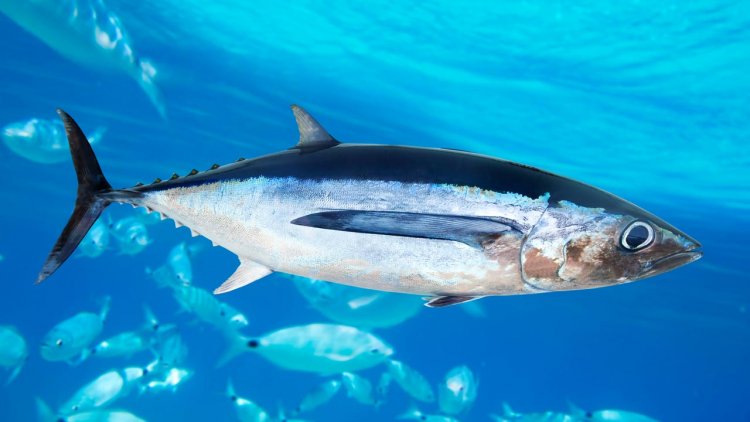
There were other fishing methods that seemed to strike a balance. Albacore tuna caught on trolling and pole-and-line fishing gear by the North Pacific surface methods fleet had both negligible bycatch and relatively low estimated climate impacts.

Comparing bycatch, carbon footprints, and other environmental criteria can get complicated for seafood consumers, but overall, tuna had a relatively low estimated carbon footprint: less than or similar to that of chicken and lower than beef or pork, for most of the fishing methods studied.

Stephen Stohs, a coauthor of the study who is a research economist at NOAA Fisheries’ Southwest Fisheries Science Center, said:

“Given recent headlines about how much carbon is unleashed by commercial fishing activities, it’s important to have a rigorous, peer-reviewed data analysis which demonstrates the carbon footprint of tuna fishing activities is favorably low compared to many land-based food protein production alternatives.”

The study says consumers could choose to eat seafood with negligible bycatch impacts but a higher climate impact less often, just as some people choose to eat beef less often due to its climate impact. But the fishing industry may also be able to innovate in ways that would continue improving seafood sustainability on multiple fronts.

Seafood producers with lower carbon footprints can look for ways to further reduce their bycatch, while those with higher carbon footprints can work to improve their efficiency, whether in catching fish or using fuel. The study provides several policy recommendations to help fisheries reduce their carbon footprints.

One idea discussed in the study is shifting fuel subsidies for fishing away from fossil fuels and toward investments in electrification technology and infrastructure, like hybrid electric and battery electric boat propulsion, as these options become more feasible. While this technology can’t yet support longer offshore trips, it already shows potential for coastal fleets. And support for electrification efforts could prioritize fleets using highly selective fishing gear.

Another idea for lowering the carbon footprint of seafood is finding ways to offset emissions. But this strategy would first require a better understanding of emissions across the U.S. fishing sector. There are gaps in data about fuel use intensity for fishing vessels, which was a challenge even for the current study. But increased insight on emissions across the fishing sector could help with designing solutions.

Some within the fishing industry are already taking up this challenge. For example, the pollock industry in Alaska is setting an example by conducting a life cycle assessment to take a full inventory of their carbon footprint. Efforts like these have the potential to yield new sustainability benefits, and Brandi McKuin hopes more seafood producers will follow suit.

Azimuthal Hybrid Drive system SYDRIVE-E for the world’s first LNG hybrid tug

0

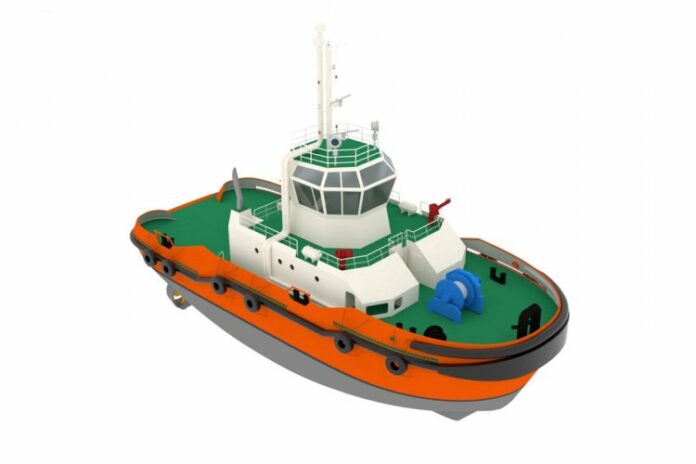
Singapore-based Sembcorp Marine relies on SCHOTTEL’s azimuthal hybrid drive system SYDRIVE-E for the world’s first liquefied natural gas (LNG) hybrid tug. With this first in a series of 12 vessels, Sembcorp Marine will build the world’s first hybrid LNG-fueled tug fleet that will replace its existing diesel-powered tugs.

The vessel is designed by LMG Marin, a wholly owned Sembcorp Marine subsidiary, and a leading naval architecture design house in Bergen, Norway, which provides energy efficient solutions.

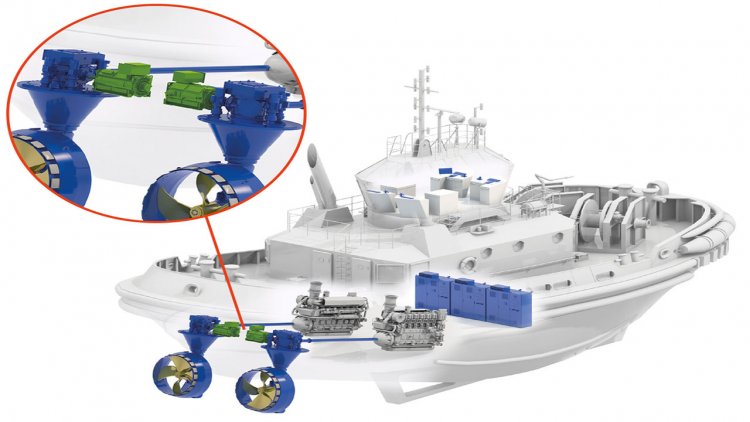
The tug’s future operation profile in the harbours of Singapore will demand highly variable power ranges. Depending on the desired operating mode and the required propulsion power, the hybrid drive system activates the appropriate power source or both together. The LNG-fueled main engines and the electrical motors are both coupled to the SYDRIVE system and always operate efficiently within their optimal load ranges, thereby reducing fuel consumption and emissions and supporting Sembcorp Marine’s efforts in environmental protection.

In terms of thruster integration, each upper gearbox offers two power input positions with an offset angle of +/- 90° for two power sources. An option with a +/- 135° offset angle is also available allowing even more design flexibility.

Sembcorp Marine’s hybridized SCHOTTEL RudderPropellers type SRP 430 will have a power intake capacity of about 2,000 kW each which will be fed by zero emissions electrical motors and/or low-emissions LNG main engines. The 360-degree steerable SRPs combine maximum manoeuvrability and a high bollard pull as harbour operations require.  

The SCHOTTEL SYDRIVE-E azimuth thrusters are engineered and manufactured in Germany. Commissioning and After Sales Service will be provided by SCHOTTEL Far East, Singapore. Sembcorp Marine’s hybridized fleet will be operated by its subsidiary Jurong Marine Services for services in Singapore’s harbours with operations scheduled to start in late 2021.

Inmarsat and OneOcean partner to deliver pioneering digital solutions for navigation

0

Inmarsat and OneOcean have announced a partnership that focuses on the digitalisation of navigation and compliance in the maritime industry.

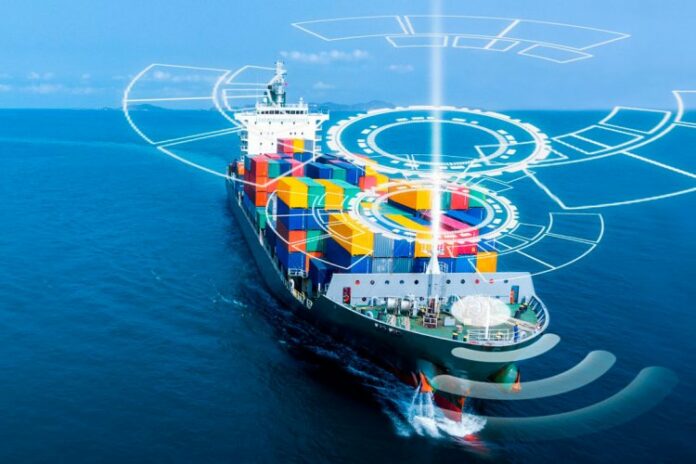
The multi-phase agreement which will see OneOcean become an Inmarsat Certified Application Provider (CAP) is centred on leveraging Inmarsat’s technology platform and OneOcean’s digital solutions to transform the way voyage planning software is deployed, updated and integrated between ship and shore.

Remote deployment of OneOcean technology is the first of many benefits of the partnership, enabling reduced set-up time, minimum disruption and, most importantly, reduced cyber risk. Physical deployment of all software has unavoidably been affected due to lockdown restrictions and growing onboard cyber security concerns. This agreement will address these issues, by enabling global deployment of software through on-demand, cyber secure, digital operations.

The software will be deployed over Inmarsat’s high-speed Fleet Connect dedicated bandwidth service, which is completely separate from crew and business traffic and helps free-up constrained bandwidth for other essential tasks onboard and ensure safety critical navigational tools remain up to date.

Finally, it will allow OneOcean customers to extract the maximum value from their voyage planning and compliance software, which has been designed to simplify and standardise working practices between ship and shore. Data capture and sharing with teams ashore will be greatly optimised and allow for improved decision making and real time interventions across an individual voyage or fleet operations.

This is all made possible by Fleet Connect, which provides an uninterrupted satellite link between tens of thousands of vessels and seafarers across the world’s oceans. By combining this pioneering technology with OneOcean’s vision for progressive, maritime solutions, the partnership heralds a new era of maritime digitalisation.

Ronald Spithout, President, Inmarsat Maritime, said:

“We are delighted to welcome OneOcean to our CAP ecosystem joining over 40 other application providers. By using Fleet Connect, vessels can update mission-critical software easily and cost-effectively without installing new hardware, at a time when Covid-19 continues to make ship visits especially challenging. This is the first part of an agreement through which two leading companies have identified collaboration as the most competitive and practical route towards fully digitalised voyage planning and navigation.“

Martin Taylor, CEO of OneOcean, also commented on the exclusive agreement:

“We are very proud to be working with Inmarsat on our mission to fully digitalise the maritime industry. We are constantly developing new software and looking at ways to improve the ship to shore integrated experience. This partnership supports our mission to break down barriers and create the connected ship. As a first step, I am looking forward to leveraging the benefits that Fleet Connect brings to our customers and software”.