-4.5 C
New York
Home Blog Page 641

Independent study confirms LNG reduces shipping GHG emissions by up to 23%

0

An independent study has reconfirmed that greenhouse gas (GHG) reductions of up to 23% are achievable now from using LNG as a marine fuel, depending on the marine technology employed.

This is compared with the emissions of current oil-based marine fuels measured from Well-to-Wake (WtW). The 2nd Lifecycle GHG Emission Study on the use of LNG as a Marine Fuel from Sphera (formerly thinkstep) revisits its 2018/2019 research, using the latest available engine and supply chain data to bring the study fully up to date.

The study, commissioned by industry coalitions SEA-LNG and SGMF, was conducted according to ISO standards. It was also reviewed again by a panel of leading independent academic experts from key institutions in France, Germany, Japan and the USA. The analysis concluded that, in addition to the considerable air quality benefits it delivers, LNG can “beyond question” contribute significantly to the International Maritime Organisation’s (IMO) GHG reduction targets.

Commenting on the research, SEA-LNG Chairman Peter Keller said:

“The updated Sphera study ensures that the industry has access to comprehensive research that is fully up to date.  It is clear that LNG plays an important role in decarbonisation today with benefits available now.  As we look ahead, it is essential that detailed emissions analysis from Well to Wake such as those performed for LNG are available for all alternative fuels contemplated, enabling shipowners to make the right decisions for their fleet.”

This comprehensive report uses the latest primary data to assess all major types of marine engines and global sources of supply with quality data provided by original equipment manufacturers including Caterpillar MaK, Caterpillar Solar Turbines, GE, MAN Energy Solutions, Rolls Royce (MTU), Wärtsilä, and Winterthur Gas & Diesel, as well as from ExxonMobil, Shell, and Total on the supply side.  Methane emissions from the supply chains as well as methane released during the onboard combustion process (methane slip) have been included in the analysis.
Keller added:

“Often based on outdated data, methane slip has become an overused argument for those wishing to justify inaction. The Sphera study underlines the advances being made to counteract this concern. Its analysis provides independent confirmation that, by 2030, methane slip will have been virtually eliminated as technological improvements continue. The facts consistently confirm that there is no deep-sea alternative fuel in the short to medium term other than LNG. LNG remains the clear starting point for a carbon-neutral future for shipping, especially as the pathway forward includes bio and synthetic products. Waiting is not an option. The industry must act now to capture the benefits that are clearly there for the taking by using LNG.”

Importantly, the study also reaffirms that the use of LNG as a marine fuel has significant air quality benefits, with local emissions, such as sulphur oxides (SOx), nitrogen oxides (NOx) and particulate matter (PM), all close to zero.

Samir Bailouni, chairman, Society for Gas as a Marine Fuel (SGMF), added:

“It is important the industry has the best information to make often complex choices between fuels. This study provides authoritative, high-quality data on Well-to-Wake emissions for LNG.

“Today, the clear choice for an immediate and significant reduction in emissions is LNG, which is widely available and fully compliant with existing regulations. This is reflected in the rapidly increasing adoption of LNG in the deep-sea container, bulk and tanker sectors, a trend we expect to accelerate even as the more challenging horizon fuels are brought safely and sustainably into the mix.”
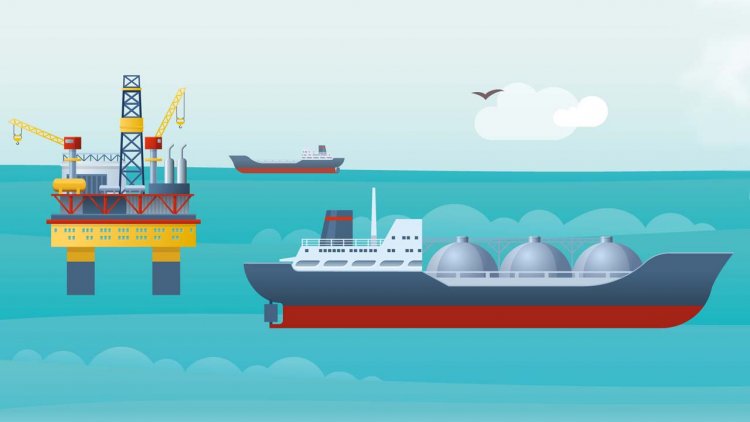
Recognition for LNG and its pathway to a decarbonised future for shipping is accelerating. The transition to bio and eventually synthetic LNG is straightforward, as the existing infrastructure and engine technology remain the same. The standards, guidelines and operational protocols are already in place. It also provides an asset base that can be used by other alternative fuels, when and if they become commercially viable.

 Dr Oliver Schuller, Director Sustainability Consulting, Sphera stated:

“The aim of the study was to provide an update to the research conducted in 2018 / 2019. Using the latest available engine and supply chain data, including planned developments for the reduction of methane emissions along the entire supply chain, Sphera has analysed the implications for well-to-wake GHG emissions. Being conducted to international ISO standards and peer-reviewed by four genuine experts, we are confident that this represents the definitive view of lifecycle analysis for LNG as a marine fuel available today.”
FR: The Bourbon Group hit by a cyber attack

0

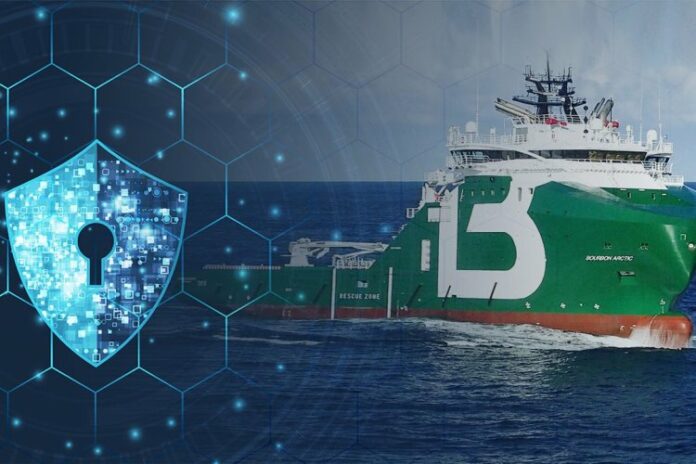
Bourbon Group is a French firm involved in maritime and offshore shipping services in 44 countries. Le Figaro and AFP report  (translation):

“The maritime services group for the Bourbon oil industry has been hit by a cyber attack that locks up its computer system.

Christelle Loisel, vice president of communication said, stating that it was the subject of a cyberattack on the night of April 8 and April 9, as a security measure the applications have been closed, no customer operation was stopped.”

Bourbon Vice President for Communication Christelle Loisel added that Bourbon employees’ access to email and other online applications has been temporarily suspended as a security precaution. However, the company assured that its regular operations and other lines of communication, such as ship-to-shore communications, were unaffected.

Although Bourbon Group would not comment whether it was a ransomware attack, the company clarified that no incident of data theft had occurred.

Efforts are ongoing to restore the system of the offshore services provider to allow employees access to emails and other essential applications.

Source: Le Figaro, Baird MAritime

Trafigura to co-sponsor development of MAN Energy Solutions ammonia engine

0

Trafigura Group Pte Ltd, one of the world’s leading independent commodity trading companies, is continuing its investment in renewable energy technologies by co-sponsoring the development of MAN Energy Solutions ammonia-fuelled engine for maritime vessels.

The fuel-flexible, two-stroke ammonia engine is expected to be commercially available for large-scale ocean-going ships by 2024, followed by a retrofit package to make existing maritime vessels capable of running on ammonia by 2025.

According to the International Maritime Organization (IMO), maritime shipping emits around 1,056 million tons of carbon dioxide per year and is responsible for around 2.9 percent of all greenhouse gas emissions. Without mitigation, emissions are projected to grow by as much as 130 percent in 2050, compared to 2008 levels.

Jose Maria Larocca, Executive Director and Co-Head of Oil Trading for Trafigura, said:

“Shipping faces a significant challenge in reducing its emissions, while at the same time the threat of climate change requires urgent action to decarbonise. Developing engines and the supporting infrastructure to provide the industry with the ability to adopt carbon-neutral and carbon-free fuels is key to establishing a greener shipping industry in the near future. By co-sponsoring the MAN Energy Solutions two-stroke ammonia-fuelled engine we are committing ourselves to cross-industry collaboration to bring forward the urgently needed technologies for the maritime energy transition.”

Dr Uwe Lauber, CEO of MAN Energy Solutions, said:

“The final goal for two-stroke engines is to run them entirely on carbon-neutral and carbon-free fuels and we welcome Trafigura’s support for this key decarbonisation technology. The interest from shipping companies – and indeed from all links in the entire marine supply chain – in new fuel-technologies currently has great momentum, however the move to green engines also depends on economic realities. No shipping company can risk having its fleet stranded during this transition, which is why we offer flexible solutions that will allow shipping to adapt to the availability of carbon neutral fuels in the market.”

Bjarne Foldager, Senior Vice President and Head of Two-Stroke Business at MAN Energy Solutions, said:

“Several, independent reports have recently called for new types of partnership within the maritime sector that not only link traditional players. This closely aligns with our own strategy of cooperating with external partners to develop sustainable technologies. MAN Energy Solutions has a convincing track-record in developing engines running on alternative fuels, having developed the world’s first oceangoing ships driven respectively by LNG, methanol, ethane and LPG. In this context, ammonia is a very interesting candidate as a zero-carbon fuel and MAN Energy Solutions is fully committed to the development of technology that exploits alternative, clean fuels.”

Rasmus Bach Nielsen, Global Head of Fuel Decarbonisation for Trafigura, said:

“Building on independent in-depth research and with the knowledge that we currently have, we believe that hydrogen-based fuels will ultimately be the shipping fuels of the future. To get there we urgently need a significant IMO-led global carbon levy on marine fuels to encourage and incentivise the use of low and zero-carbon fuels by making these cost neutral compared to the higher emitting fuels that we know of today. Trafigura will also continue to sponsor and invest in other, promising decarbonisation fuels and technologies that can help us towards reducing our own – and the industry’s – fuel emissions over time.”

Jumbo Shipping and SAL Heavy Lift launch Jumbo-SAL-Alliance

0

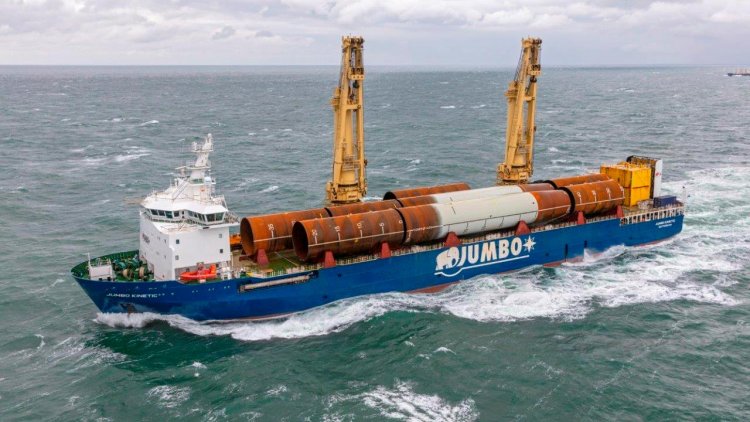
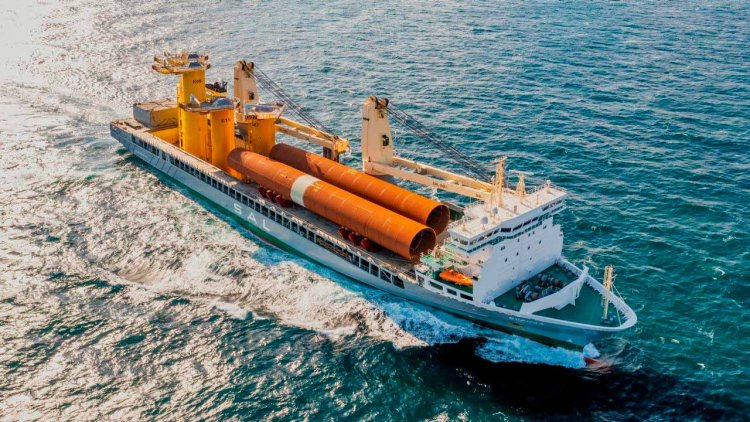
Jumbo Shipping, the Dutch maritime heavy lift transport and engineering contractor, and SAL Heavy Lift, the German-based breakbulk and project cargo specialist, commence operations with their joint venture as the Jumbo-SAL-Alliance. Combining their fleets and all commercial activities, SAL and Jumbo are gearing up to create a new powerhouse in the heavy lift sector. 

Both companies believe that this move propels them to a greater level of geographical outreach and commercial capacity. To serve clients worldwide, the joint venture acts as the single commercial entry point for its joint sales network of offices and agents in 20+ countries. Significantly, it handles the complete marketing of 30 highly versatile project cargo vessels with lifting capacities up to 3,000 t SWL, marking it as the largest fleet in the 800+ t sector. This ensures availability, flexibility and the right transport concept at the right time for customers seeking reliable and high quality shipping solutions.

Michael Kahn, Managing Director of Jumbo, says:

“This joint venture is a big step for both of us. In the past few years, it became increasingly clear that the benefits of collaboration heavily outweigh the traditional way of doing business. Our client base and interests have changed and to remain an effective global player in our field of activity, you always need to adapt and innovate. Not only on a technical level, but also commercially. We believe that the flexibility and competences that our clients are looking for are best served by SAL’s and Jumbo’s combined assets and knowledge.”

The Jumbo-SAL-Alliance stands for the highest QHSE standards, technical excellence and commercial flexibility by offering project and semi-liner services to customers worldwide, with the goal of creating a complete maritime transport solution for both breakbulk and specialised transportation scopes around the globe.

Jens Baumgarten, Director Chartering at SAL Heavy Lift, adds:

“This collaboration allows us to bring an unrivalled shipping product to market. It provides a solid answer to the needs of big contractors and EPCs as well as manufacturers and forwarders. On one side, we can handle regular or spot-market breakbulk cargoes. On the other, we have the experience and the assets to handle very large and long-term scopes, including arranging third-party tonnage or whatever is needed to make good on our ‘one-stop-shop’ promise. Simply said, we want our customers to be happy during and after each and every project. This way, they will trust us to deliver a new heavy lift solution for them the next time.”

Jumbo and SAL are highly complementary, both in terms of fleets as well as human resources, both ashore and on board, while sharing many of the same values in terms of quality, safety and solutions focus. This equality makes the joint shipping product easy to combine and market as customers can expect a quality product irrespective of the vessel executing the shipment. The companies’ traditional focus on safe operations and being a reliable partner is integral to our joint way of working.

Martin Harren, Managing Director of SAL and the Harren & Partner Group, adds:

“I truly believe we are creating something extraordinary here. This strategic collaboration combines engineered transport solutions with a significant fleet of heavy lift vessels. The Jumbo-SAL-Alliance stands for the best in heavy lift shipping and in complex global transportation. We have a unique team of highly experienced people which can really create value for our customers. From engineering to full-scope project management, by combining our resources we can now provide services that literally exceed any other heavy lift service currently in the market. It’s a winner.” 

The joint venture was cleared by the German competition authority earlier this month. The two companies share 90+ years of combined experience, are both family-owned and managed and are among the world’s most prominent and technically advanced heavy lift carriers. Note that both SAL and Jumbo continue as independent operators and vessel owners and both remain active brands in the market.

Felix Peinemann, VP Sales Shipping at Jumbo, states:

“The Jumbo-SAL-Alliance merges the global chartering and marketing activities of both companies, creating one large, joint sales organisation. Both brands retain their market presence in addition to the new set-up. On a personal note, we have spent much time with our new colleagues in the past months, organising this joint venture, which went very well. I believe that our joint efforts have led to a solid alliance. If the level of cooperation and building relationships in the preparation phase is any measure of success, then the Jumbo-SAL-Alliance will be very successful!”

Babcock LGE sign frame agreement for gas handling systems

0

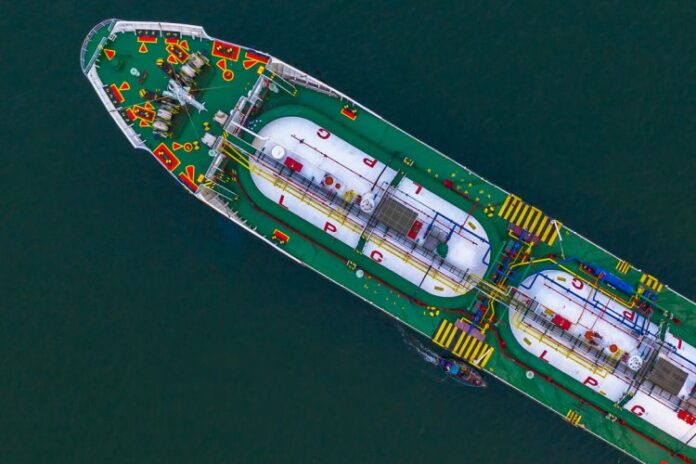
Babcock International’s LGE business has signed frame agreements with Hyundai Heavy Industries, Hyundai Samho Heavy Industries and Hyundai Mipo Dockyard confirming Babcock LGE as preferred supplier for the design and supply of Liquefied Petroleum Gas (LPG) cargo handling systems for Very Large Gas Carriers and Mid-size Gas Carriers.

In addition, Babcock LGE recently signed contracts for the design and supply of Cargo Handling Systems and some Fuel Gas Supply Systems for twelve 40,000m³ LPG ships from Hyundai Mipo Dockyard and three 91,000m³ LPG ships from Hyundai Samho for a variety of
ship-owners.

The frame agreements underline the long-term relationship between Hyundai, the world’s largest shipbuilder, and Babcock LGE, the global leader in liquefied gas technology for the LPG carrier market.

The business has established itself as the leading supplier of LPG cargo handling systems with its VentGasCooler (VGC™) technology, which provides increased plant capacity and performance coupled with the ability to carry cargoes with high incondensable or volatile content.

More recently, the launch of Babcock LGE’s marine fuel gas technology, ecoFGSS™, has further cemented its market position with 21 orders to date, including the world’s first new build LPG fuel gas system which will go into service this month. This is a significant milestone in Babcock’s journey of developing and deploying innovative technology to support ship-owners as they meet increasingly stringent regulations on carbon and emissions reductions.

Neale Campbell, Managing Director, Babcock LGE, said:

“The successful conclusion of the negotiations with Hyundai, in the face of tough competition, demonstrates the competitiveness of Babcock LGE and when combined with our world leading technology and Hyundai shipbuilding prowess means we jointly present a strong value proposition to the world’s gas ship-owners.”

Mr Joon Ho Kim, senior representative of Hyundai London office, said:

“We are delighted to continue our mutual collaboration with Babcock LGE and together we demonstrate strong technical shipbuilding capability to best serve the LPG newbuilding market.”

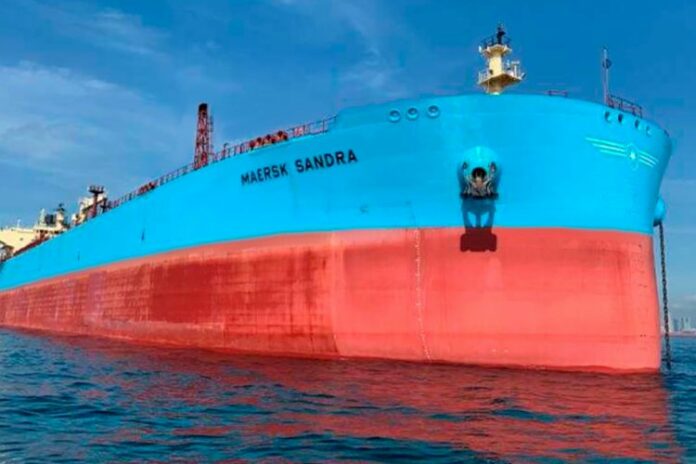
Maersk Tankers seals deal to sell six Maersk Product Tankers-owned LR2 vessels

0

The transaction happens in line with Maersk Product Tankers’ asset strategy of continually adjusting the fleet size and composition to generate financial returns for investors and keeping exposure in line with market developments. 

Claus Gronborg, Chief Investment Officer at Maersk Tankers, says:

“We are pleased to realise this opportunity for Maersk Product Tankers and be able to respond to the buyer’s demand for new and high-quality tonnage. The transaction has been made possible due to our team’s vast market insight, expertise and relationships, which we will continue to utilise to pursue further asset opportunities for investors.”

One of the vessels is built in 2020 while the remaining five are or will be built in 2021. All vessels are built at Dalian shipyard in China. 

Silverstream Technologies and Shell successfully complete trials of the Silverstream® System

0

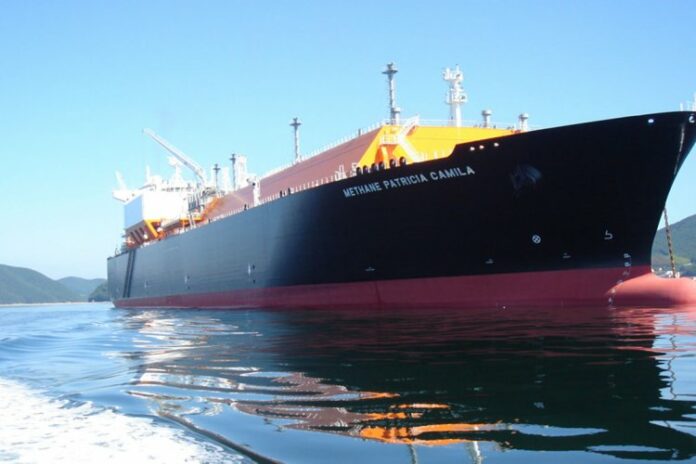
Clean technology company Silverstream Technologies has announced that its pioneering air lubrication system, the Silverstream® System, has delivered significant fuel and emissions savings during testing on the Shell-chartered 170,000 cbm LNG carrier Methane Patricia Camila.

Following operational testing of the retrofitted technology, Silverstream and Shell’s engineers demonstrated 6.6% net savings generated by the Silverstream® System. The technology was tested at various vessel speeds during the Methane Patricia Camila’s normal operations, to calculate fuel and emissions savings.

The Silverstream® System enables fuel and emissions efficiencies through its unique design. The innovative technology produces a thin layer of microbubbles along the full flat bottom of the vessel, reducing frictional resistance between the water and the hull.

The System was successfully retrofitted on the 2010-built LNGC during its October 2020 planned dry docking at the Sembcorp Marine Admiralty Shipyard in Singapore.

The project was installed within the planned dry docking period, and was delivered on budget. From design through to installation the System was reviewed and approved by ABS in accordance with their guidance note for Air Lubrication Technology.

Commenting on the announcement, Noah Silberschmidt, Founder & CEO, Silverstream Technologies, said:

“It is great to announce that retrofitting the Silverstream® System onboard the Methane Patricia Camila has already had a significant positive impact on fuel consumption and emissions, with 6.6% savings verified during initial testing. We’d like to thank our colleagues and partners at Shell for their confidence in our technology, and also for their vision and commitment to pioneer proven clean technologies within shipping.

“Shipping requires solutions to solve the decarbonisation challenge today. With fuel bills only set to rise in the future, owners need to invest in fuel-agnostic technologies that are proven to save costs and emissions, without impacting the flexibility or profitability of the vessel. We are proud of the role that our technology can play to solve this challenge.”

Viking takes delivery of newest ocean ship

0

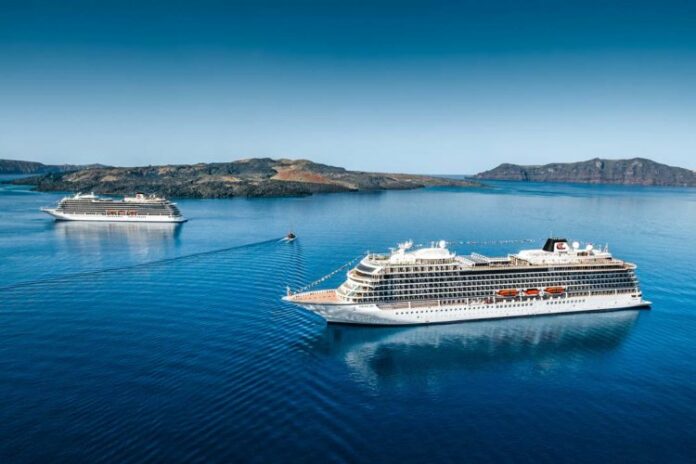
Viking® has announced it took delivery of Viking Venus®, the company’s newest ocean ship. The delivery ceremony took place on April,15, when the ship was presented at Fincantieri’s shipyard in Ancona, Italy. 

Viking Venus will now make her way to the United Kingdom, where she will be officially named on May 17, 2021 by her ceremonial godmother, Anne Diamond, the esteemed British journalist and broadcaster. The ship will then sail spring and summer departures of the England’s Scenic Shores itinerary.

Torstein Hagen, Chairman of Viking, said:

“We are especially proud to welcome our newest ship to the fleet this year. Many of us have stayed close to home for months, so this is an important milestone as we begin to get back out into the world again. We look forward to celebrating the naming of Viking Venus by her esteemed godmother, Anne Diamond—and to welcoming our UK guests back on board next month.”  

All of Viking’s new Welcome Back voyages are available exclusively for vaccinated guests, in accordance with local entry rules in many of the destinations that will welcome Viking ships—and as a complement to the Viking Health & Safety Program, which was designed to protect guests and crew even while the COVID-19 vaccine rollout is still moving forward.

Viking Venus is the newest ship in Viking’s award-winning ocean fleet of identical sister ships. Classified by Cruise Critic as “small ships,” Viking’s ocean vessels have a gross tonnage of 47,800 tons, with 465 staterooms that can host 930 guests; the ships feature all veranda staterooms, Scandinavian design, airy public spaces and abundant al fresco dining options.

NnG, Saipem and InfraStrata announce major contract for Harland & Wolff

0

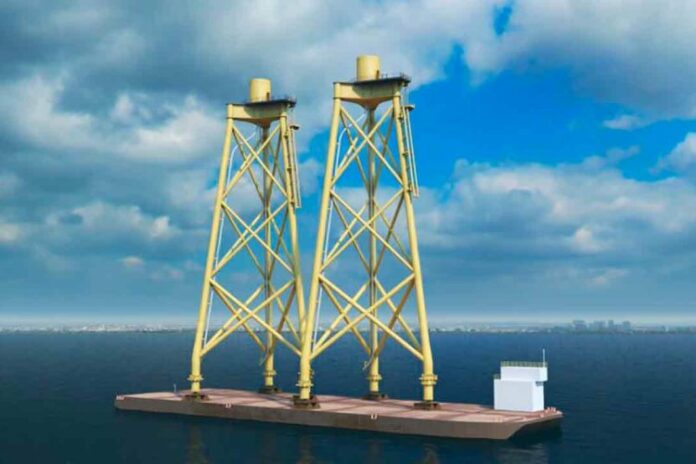
Neart na Gaoithe (NnG) Offshore Wind Limited, its tier one service provider, Saipem, and InfraStrata, owner of Harland & Wolff, jointly announce that a contract has been signed for Harland & Wolff to carry out the fabrication and load-out of eight of the project’s wind turbine generator (WTG) foundation jackets.

With work starting from 1st July, 2021, Harland & Wolff will use its newly acquired Methil facilities in Fife for the fabrication work, creating around 290 direct and indirect Scottish jobs. Additional support may be provided as required by the company’s other facilities in Arnish, Appledore and Belfast with Saipem’s consent and should the need arise. 

The foundations, used to support and anchor NnG’s WTGs to the seabed, are being supplied and installed by Saipem, a global solution provider in the energy and infrastructure sectors. Saipem will also supply and install an additional two jackets for the offshore substations. 

NnG is committed to utilising the Scottish supply chain and this work on the project is a further boost to the offshore wind industry in Scotland, providing new green jobs and manufacturing opportunities. 

Offshore construction for NnG started in August last year with the installation of casings for the piles and preparing the seabed in advance of the arrival of the steel foundation jackets. 

Matthias Haag, NnG Project Director, said:

“This is an important day, for the offshore wind sector in Scotland and for our project. When we announced our main contractors in 2019, we made clear our commitment to the Scottish supply chain and the role it has to play in the construction of NnG. That’s why this contract signing is such good news. We are pleased the contract has been awarded to Harland & Wolff with the bulk of the work taking place in Scotland. With the Port of Dundee supporting the project as NnG’s marine hub, the Port of Leith as the marshalling point for the pile casings and planning permission recently granted for an Operations and Maintenance Base at Eyemouth Harbour, Harland & Wolff joining our project is yet further evidence of our commitment to Scotland”.

Photo: Saipem 

Mauro Piasere, Head of Offshore New Energies in Saipem’s E&C Offshore Division, commented:

“The Neart na Gaoithe Offshore Wind Farm is a key project for Saipem in an area of rising growth and potential such as the North Sea. The execution by InfraStrata stands to demonstrate the possibility for the North Sea fabrication industry to play a competitive role in the renewables market. Our vision is to create value in those countries where we operate and this collaboration with InfraStrata confirms this and allows us to contribute to the country’s system involving the local supply chain”.

John Wood, CEO of InfraStrata, commented:

“We are delighted to have entered into this contract with Saipem. This contract paves the way for the execution and delivery of future fabrication contracts, a significant number of which are currently in advanced negotiations. The geographical proximity of our Methil facility to the North Sea makes it an ideal site for fabrication and load-out to wind farm projects such as this. More importantly, it validates our strategic vision of expanding the Group’s fabrication footprint into regions that are strategically located within close proximity to major wind farm projects. This will enable us to spread workstreams across our facilities to drive down costs, deliver against tight schedules and, crucially, align ourselves to the government’s goal of providing wind generated power to all homes in the UK by 2030. I am confident that this is only the beginning of a stream of projects in our pipeline that we expect come to fruition. We are hugely excited about the massive potential that this first contract has unlocked, and we look forward to working with Saipem to successfully deliver under it”. 

NnG will supply enough low carbon electricity for around 375,000 homes and has a capacity of circa 450 megawatts (MW) of low carbon energy and will offset over 400,000 tonnes of CO2 emissions each year.
 

Enhanced deep-water berth for Hutchison Ports Port of Felixstowe

0

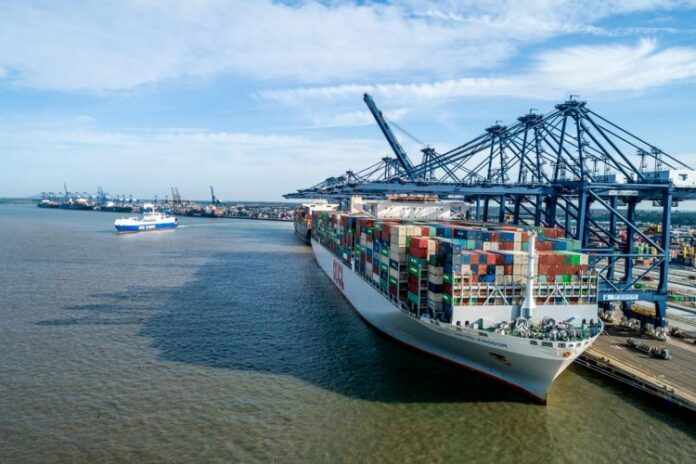
Berth 7 – one of the Port of Felixstowe’s nine container berths – has been dredged from 15.0m to 16.5 metres below Chart Datum and the berth box widened from 55m to 70m.

Chris Lewis, Chief Executive Officer, Hutchison Ports Port of Felixstowe, said:

“The Port of Felixstowe is ever progressive and continuously invests in its infrastructure, equipment and people, with the view to enhancing its customer offering. As the number of ultra-large container ships continues to grow we will continue to improve and upgrade our facilities to meet the needs of our customers.

“Berths 8&9 are designed for a maximum depth of 18 metres and  the next phase of development will see further increases to the depths at Berths 6, 8 and 9. The deeper berths are being complemented by dredging planned by Harwich Haven Authority to increase the depth of the approach channel to up to 16 metres, further reinforcing Felixstowe’s position as the country’s No.1 deep-sea container port. “

The berth upgrade, together with a program to extend the outreach of 10  ZPMC quay cranes to 23 boxes wide on Berths 6 & 7, are in direct response to the increasing size and depth of the world’s largest container vessels, keeping Felixstowe at the forefront of the UK logistics and supply chain.

The 19,630 TEU Manila Maersk, operated on the 2M AE6/NEU3 service to Asia, was the first vessel to use the deeper berth. With a departure draft of 15.6 metres, the vessel was the deepest ever to be berthed on Trinity Terminal.

Boskalis Westminster Limited was the appointed dredging contractor for the project and used a combination of backhoe dredger, the ‘Nordic Giant’ with a bucket size of 13 cubic metres, and trailing suction hopper dredgers to undertake the works.