-8 C
New York
Home Blog Page 637

Plug and Play launches maritime innovation platform in Antwerp

0

Partners City of Antwerp, CMB, DXC Technology, Euronav, and Port of Antwerp, has announced the launch of their first maritime program in Antwerp, Belgium. 

Led by a local team of four people, Plug and Play Maritime aims to strengthen an innovative startup ecosystem centered around the seafaring sector, that brings new technologies and entrepreneurs to the region and enables technological and business development. Plug and Play Maritime will be situated at the pre-campus of Maritime Campus Antwerp. The launch event, which will mark the start of the first program batch, is planned for June 2021.

Claude Marinower, Vice-Mayor for Economy, Industry and Innovation, City of Antwerp, shares:

“With Plug and Play, the City of Antwerp and Port of Antwerp strengthen their position as innovation leaders in the international maritime business. The city wants to be part of the European top of scale-up cities by 2025. We take a lot of initiatives in our growth clusters: digital and circular economy. The City and the Port work closely together in the digital innovation hub The Beacon. With Plug and Play this collaboration gets a new dimension. We are confident that thanks to this new initiative, Plug and Play Maritime, we will be able to accelerate our joined ambitions.”

Antwerp, home to the second largest port in Europe, is a hub for the maritime industry with a longstanding tradition. With its headquarters in Silicon Valley, Plug and Play’s expansion into this sector will provide an opportunity for the five Founding Partners to increase their innovation activities with access to a network of over 30,000 global startups. Initial technology areas for scouting will include clean fuels and energy, big data and Internet of Things, future logistics, efficient shipping, autonomous vessels, sensors, and more. By providing innovation-as-a-service, this platform will also play a strategic role for the partners in pioneering a sustainable maritime industry of the future throughout Belgium and around the world.

Further offerings for startups, partners, and the growing ecosystem include business development, dealflows, workshops, weekly mentorship sessions, networking between partners, investment opportunities, and a series of monthly events including, Selection Days, Innovation Days and EXPO Days. Plug and Play Maritime will run local operations from the pre-campus of Maritime Campus Antwerp, a co-working space for startups to utilize and scale their business.
Alexander Saverys, CEO of CMB, comments:

“For the moment we have world class ports like the Port of Antwerp and a world class maritime industry in our country. To maintain our position we need to look and think ahead. Joining forces with partners creates scale in know-how and competencies resulting in R&D and innovation. This will help us to stay on top of new evolutions in the industry. Plug and Play, together with our Maritime Campus Antwerp, will help us to support our ambitions.”

Bart Huybrechts, Managing Director, Maritime Campus Antwerp, says:

“The fundamental idea of the Maritime Campus Antwerp is to create scale and combine forces among those maritime players and stakeholders that want to tackle the huge innovation challenges for the maritime industry in the decades to come. The Plug and Play Maritime platform will contribute to the Maritime Campus Antwerp ecosystem by bringing the best startups and early scale-ups from all over the world to Antwerp to accelerate the introduction of maritime tech for our corporate partners.”

The basis of Plug and Play Maritime will be the 12-week open innovation program, run twice a year. Each program welcomes 20+ selected international startups that are addressing the specific technological needs of the Founding Partners. The startups and business units of the partners will work together on pilots and proof of concepts, leading towards production-ready implementations. The goal is to have at least one joint project completed for each startup, to be showcased at EXPO Day, the final event at the end of each program.
Annick De Ridder, Vice Mayor of the Port of Antwerp, explains:

“Innovation can play a key role in making the future and prosperity of the port of Antwerp sustainable. The ecosystem represented by the Antwerp port platform is an ideal testbed for technology on a large scale. With Plug and Play Maritime we can live up to this ambition and play a pioneering role as a port of the future.”

Hugo De Stoop, CEO of Euronav, states:

“The Plug and Play platform will enable us to leverage our R&D capabilities and set up structural collaborations with start-ups and the wider ecosystem to drive mutual growth and benefits. We must invest in new technologies to further digitalise our Industry but also to make shipping cleaner and more efficient. This is at the heart of our sustainability program to ensure our future relevance and competitiveness.”

The consortium of Founding Partners consists of a distinctive blend of expertise and functions within the maritime sector, which will provide high value for startups looking to bring their technologies directly to key stakeholders in the industry.

Frederic Hertogs, Managing Director, DXC Technology, Belgium, says:

“Collaborating with the Plug and Play network of startups will enable us to explore bleeding-edge innovations and how to integrate with our offerings across the Enterprise Technology Stack so we can deliver opportunities for our customers at lower cost and greater speed.” 

Jacques Vandermeiren, CEO, Port of Antwerp, explains:

“As one of the leading ports in the world, Antwerp aspires to be the ‘port of the future’. We use innovation as a lever to turn today’s major challenges such as energy transition, digitalisation, and mobility into solutions. Through collaboration and implementing technologies such as big data, IoT, smart shipping, and future logistics, we are making our port smarter and more efficient. I believe that Plug and Play Maritime is an important milestone in bringing our port to the next international level and positioning it as a leading innovation platform.”
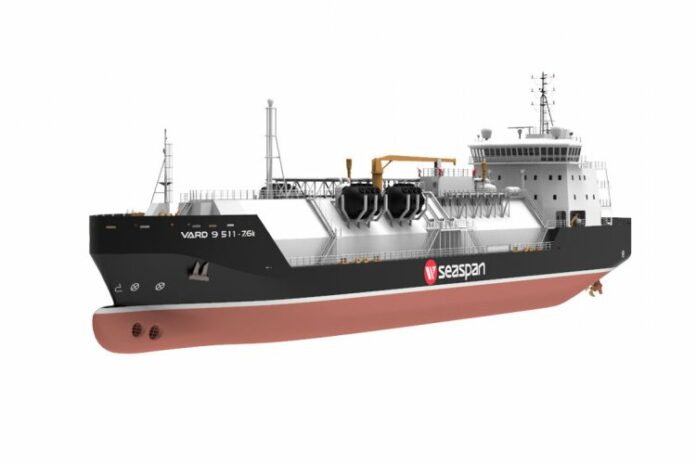
SeaspanLNG secures approval in principle for 7600cbm LNG bunker vessel

0

SeaspanLNG has secured an Approval in Principle (AIP) with Bureau Veritas, for the design of a 7600cbm LNG bunker vessel.

The LNG bunker vessel is state-of-the-art and has been designed for ship-to-ship LNG transfer as well as coastal/short sea shipping operations by Seaspan Ferries’ partner Vard Marine Inc.  Seaspan Ferries’ leading-edge class of dual fuel hybrid electric ferries were developed by Vard in 2014 and included a new method of bunkering the vessels. This close and successful working relationship led to the creation of a new line of Vard 9 series LNG bunker vessels, focused on safe, efficient and economical refueling of multiple ship types as well as an ability to transfer to and from a wide range of terminals.

Major emphasis has been placed on the ability to incorporate emerging technologies, increase electric storage system (ESS) capacity, and further operational emissions and greenhouse gas (GHG) reductions while maintaining operability and flexibility. It is fitted with two azimuthing thrusters and two bow thrusters for exceptional maneuvering and station-keeping capabilities. The principle characteristics of the vessel include:

  • Length Overall (LOA) 112.8m
  • Breadth 18.6m
  • Design draft 5m
  • Design speed of 13 knots

The AIP validates the advanced and future proof LNG bunker vessel design and confirms that the proposed concepts comply with the intent of the most applicable rules, guides, required industry codes and standards. SeaspanLNG will now advance efforts for vessel construction and engage with major stakeholders in current and emerging markets, including port authorities and flag states.

Harly Penner, Director of Fleet Engineering and Vessel Development, says:

“Seaspan is proud to collaborate and partner with Vard and Bureau Veritas for the Approval in Principle of this advanced and highly maneuverable 7600cbm LNG bunker vessel which is designed specifically for our business areas.”

Gord Miller, Vice President, says:

“Seaspan is committed to bringing clean LNG bunkers to the West Coast of North America through our LNG bunkering business, in order to assist ship owners in meeting their IMO2030 targets.”

Wade Carson, CEO, Vard Marine Inc., says:

“Vard Marine is pleased to once again be partnering with Seaspan on environmental innovation in ship design with the Vard 9 511 LNG Bunker Vessel. Environmental stewardship is one of Vard’s core values, pursued in facilities management, internal process, and product development. With this AIP, the Vard 9 511 is the ideal solution to solve the gap in LNG bunkering infrastructure in the Asia Pacific Gateway. We look forward to working again with the Seaspan Ferries team.”

Tim Protheroe, Regional Chief Executive for North America, Bureau Veritas, says:

“This comprehensive AIP now enables a detailed design to be developed addressing classification, statutory and operational requirements. The development of LNG bunkering vessels is still relatively new, and Bureau Veritas has built considerable experience through multiple projects with different containment and gas handling systems – from the smallest to the very largest LNG bunkering vessels. Bureau Veritas is delighted to support the vision and leadership of Seaspan and Vard towards decarbonization of the marine industry on the West Coast of North America.”

Neptune Energy commences final well campaign on Duva

0

Operator Neptune Energy and its partners have announced drilling has begun on four production wells on the Duva field in the Norwegian sector of the North Sea.

The wells are being drilled by the Deepsea Yantai, a semi-submersible rig operated by Odfjell Drilling. All four wells were pre-drilled and cased off at a depth of 2,500 metres, prior to starting the final drilling campaign.

Duva is a fast-track project being developed as a subsea installation with three oil producers and one gas producer, tied back to the Neptune-operated Gjøa semi-submersible platform.

Neptune Energy’s Director of Projects & Engineering in Norway, Erik Oppedal, said:

“This is the final phase of the Duva development project, and we are currently working to accelerate the start-up date. An efficient drilling campaign forms an integral part of achieving this. Duva will both increase production and extend the operational life of our operated Gjøa platform.”

The Deepsea Yantai is now set to drill the reservoir sections, install the lower completions and execute well clean-up activities. The drilling work is estimated to take around 110 days.

Duva is scheduled to come online in the third quarter of 2021 and will add approximately 25,000 barrels (gross) of oil equivalent per day (boepd) to the Gjøa facility.

The subsea works associated with Duva were successfully completed in 2020, with the four subsea trees installed in March 2021, successfully overcoming significant challenges presented by the COVID-19 pandemic.

The Duva oil and gas field was Neptune’s first discovery in the Norwegian North Sea, a strategically important area supporting the company’s growth. It is located 14 km northeast of the Gjøa field, at a water depth of 360 metres.

Licence partners on Duva, PL 636: Neptune Energy (Operator and 30%), Idemitsu Petroleum Norge (30%), PGNiG Upstream Norway (30%), Sval Energi (10%).

Scientists study how Antarctic seals and penguins react to drones versus ground surveys

0

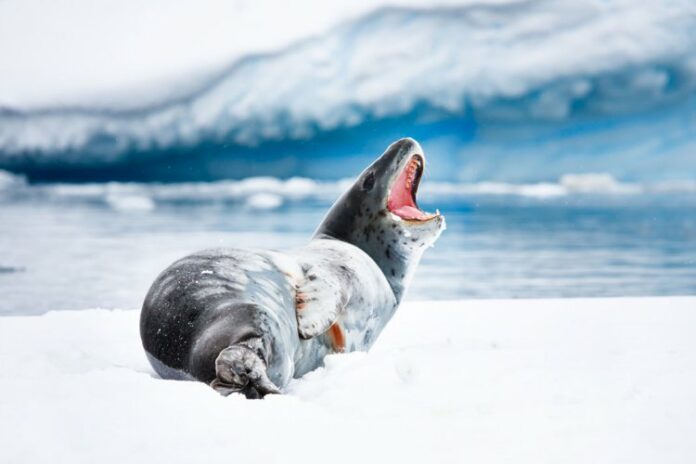
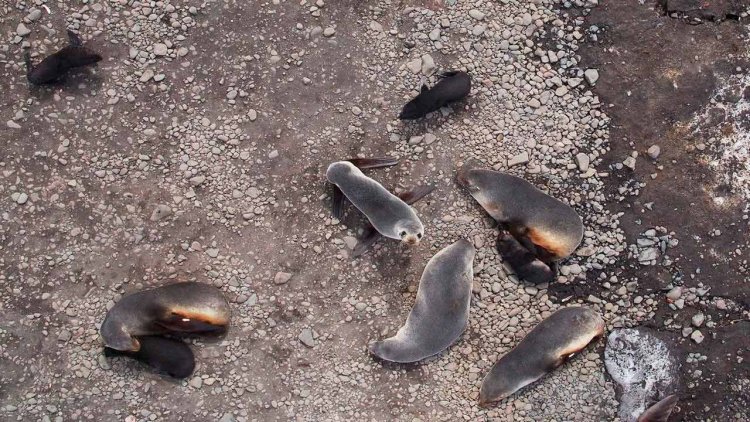
NOAA Fisheries scientists have published one of the largest studies of how wildlife respond to Unoccupied Aerial Systems (UAS), also known as drones. They analyzed the behavioral responses of three species of Antarctic predators—leopard seals, Antarctic fur seals, and chinstrap penguins—to drone surveys.

Despite large differences in the size and ecology of these species, all three reacted similarly; reactions to drones at survey altitudes could not be detected. However, all species did react to humans conducting traditional ground based surveys.

Between January 2017 and March 2018, wildlife experts from the Southwest Fisheries Science Center braved sub-zero temperatures in one of the most isolated areas on the planet, where wildlife vastly outnumbers humans. The researchers’ findings were recently published in an article in the journal Frontiers in Marine Science. The research was conducted as part of NOAA’s U.S. Antarctic Marine Living Resources Program, which uses an ecosystem-based approach to support conservation and management in the Southern Ocean.

Douglas Krause, lead author of the study, said:

“It’s not hard to imagine that flying one of these buzzing machines too close to wildlife may negatively affect the birds, seals, and other animals. The goal of our study was to assess what the effect of drones on animals might be, and to help set standards for future studies so that we can get the best information possible.”

Among other findings, results showed that approaching seals from down wind, and surveying penguin populations early in the breeding season, was less likely to disturb them. But, importantly, animal reactions to the drone were compared to traditional data-collection methods, in addition to assessing how research can minimize impacts on wildlife. He said:

“We don’t just ask is this drone creating an effect. We ask, how do animals respond to drones in comparison to what would happen if drones were not used?”

The research assesses disturbance from UAS operations. It compares behavioral responses to UAS flights to those from ground surveys conducted by humans that approach animals on foot. The study informs users and policymakers about preferred flight methods. It also looks at the different behavioral and physiological responses to UAS based on:

  • Flight altitudes
  • Stages of breeding chronology
  • Other site factors

Researchers used a common type and size of drone to assess the behavioral responses of three different Antarctic species to drone flights. They gathered behavioral observations during ground surveys, and periods when no drones or humans were present as a baseline for comparison.

Animal response to disturbance can be difficult to generalize because the response may depend on the age of the animal, its condition, or its social status within a group. A single overflight, therefore, probably won’t capture the range of reactions you might expect in a wild population. It can only provide a partial indication of how drones impact wild animals.

Study co-author Jefferson Hinke said:

“In our study, we were curious if the animal responses to drone overflights change during their annual reproductive cycle and so we repeated our experimental flights several times over an entire breeding season. This approach helped to identify periods when animals are more vulnerable to drone impacts.”

Behavioral responses generally increased as the drones flew lower, and for penguins those increases intensified as the breeding season progressed.

George Watters, Division Director of the Antarctic Ecosystem Research Division, said:

“Concerns that drones have negative impacts on wildlife are legitimate and understandable. Undoubtedly, drones have impacts, but so do old-school methods of data collection like handling animals or walking into their breeding areas. In many cases, drones can collect critical data with substantially fewer impacts than old-school methods. That is the question we should be answering when we are considering how to manage our use of drones.”

Collecting observations about population sizes and health are keys to conserving and managing marine life. Previous studies demonstrated that drone-based tools can collect these metrics as accurately as traditional, ground-based methods. But, concerns about drone impacts on wildlife lingered.

Watters said:

“This study is important because the new technology provides a safe and efficient way to survey wild populations. In fact, in this case, new is better for both people and animals.”

Aker Solutions completes first phase of the Hywind Tampen construction

0

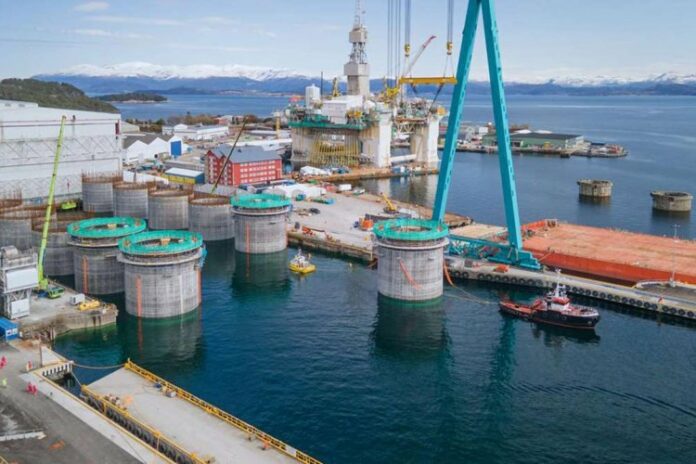
The 11 substructures are currently being towed to Vindafjord where the rest of the slip-forming and mechanical outfitting will be completed.

Kenneth Simonsen, interim executive vice president and head of the renewables business in Aker Solutions, said:

“Hywind Tampen is an important project for the transformation of the energy industry. We are happy to maintain progress in the midst of a pandemic and are now ready for the next phase of the project.”

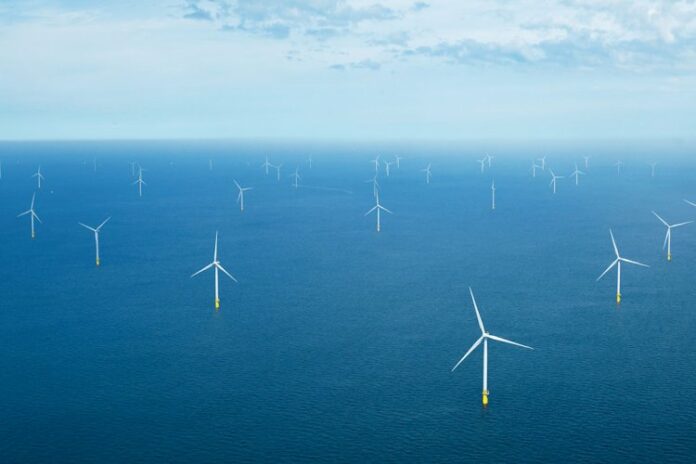
Equinor’s Hywind Tampen is the world’s largest floating offshore windfarm and an important project for competency development and industrialization of offshore wind in Norway. The project is of great importance to secure access to electrical power offshore and reduce CO2 emissions from the Norwegian continental shelf. It is also a contribution to the positioning of the Norwegian industry for a growing international market. 

Simonsen said:

“Aker Solutions’ goal is to contribute to low-carbon production on the Norwegian continental shelf and to be a part of the energy transition in the society. Our ambition is to grow our renewable projects and low-carbon solutions to count for one third of the revenues by 2025, and two thirds by 2030. To achieve this, projects such as Hywind Tampen are of great importance.”

Aker Solutions’ contract with Equinor on Hywind Tampen includes construction of 11 floating concrete foundations for windmill turbines. The scope covers engineering, procurement and construction of the foundations, as well as marine operations. 

The first 20 meters of the foundations was built in the dry dock at Aker Solutions’ yard in Stord. Once the foundations are moored at Dommersnes in Vindafjord, the concrete slip-forming will continue to a height of 107 meters. The scope at Dommersnes includes mechanical outfitting of the foundations before they are transported to Gulen for installation of the wind turbines. The last phase of the project is tow-out and installation offshore, which will be carried out in a 50/50 partnership with DOF Subsea. 

The Hywind Tampen foundations are the first concrete structures for an offshore project on the Norwegian continental shelf since Troll A in 1995. The concrete technology developed for the petroleum industry is now utilized in a renewable energy project. Hence, Hywind Tampen represents a direct transfer of technology from oil and gas to renewables. 

The project has an estimated contract value of NOK 1.5 billion and will provide work for about 250 employees in Aker Solutions. Including ripple effects to subcontractors and the public sector, the project will involve around 800 work-years in total. The project has already resulted in several sub-contracts to Norwegian suppliers, particularly in the Rogaland and Vestland regions.

MSC Cruises signs agreement with Cruise Saudi to bring its ships to Saudi Arabian waters

0

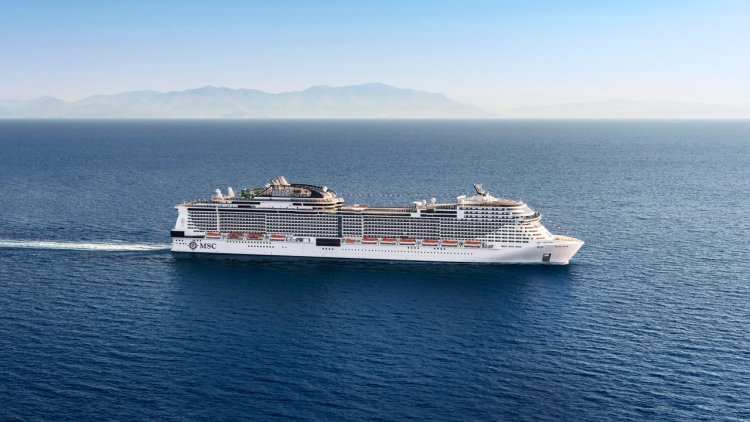
Cruise Saudi, a 100% Public Investment Fund-owned business that seeks to develop Saudi Arabia’s cruise industry, and MSC Cruises announced today the launch of Red Sea cruises in the coming winter 2021/22 season.

Fawaz Farooqui, Managing Director of Cruise Saudi, and Pierfrancesco Vago, Executive Chairman of MSC Cruises, signed a landmark framework agreement in the Saudi capital city Riyadh to mark the beginning of the new partnership.

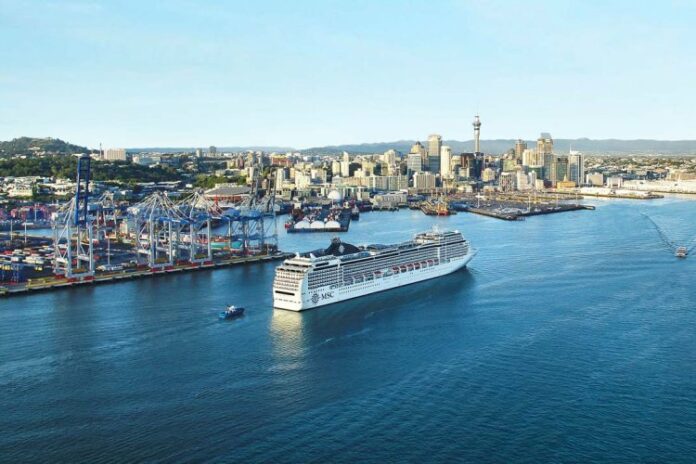
Under the terms of the agreement, MSC Magnifica will homeport in Jeddah, the commercial hub and one of the largest cities of Saudi Arabia, as well as the second-largest port in the Middle East with a historical centre that has been designated as a UNESCO World Heritage site.

Operating seven-day Red Sea cruises from November 2021 to March 2022, the vessel will visit a selection of ports and destinations in the region and three Saudi ports including weekly calls to the port of AlWajh, the gateway to the UNESCO World Heritage site of AlUla.

As the Kingdom prepares to host the inaugural Formula 1 Saudi Arabian Grand Prix 2021 on 5 December in Jeddah, MSC Magnifica guests will have the chance to follow this exciting global sports event during their trip aboard MSC Magnifica.

In addition to MSC Magnifica’s Red Sea sailings, MSC Cruises’ flagship MSC Virtuosa will see her winter 2021 programme in the Arabian Gulf enriched with calls in the port of Dammam, visiting AlAhsa oasis, another UNESCO World Heritage site.

MSC Virtuosa will call at this new exciting destination every week from December 2021 to March 2022.

Speaking on the signing of the agreement, Farooqui said:

“We are delighted to work with MSC Cruises and are keen to forge a long-term partnership. We look forward to exploring opportunities to increase the number and size of vessels operating on Saudi routes in the future. Saudi Arabia has a lot to offer visitors, and the new collaboration will open doors for intrepid travellers from across the globe to be amongst the first to experience the rich Saudi heritage and warm, hospitality. Meanwhile, through welcoming international tourists to these emerging destinations, it will create new sources of income for local communities.”

For his part, Vago said:

“Having witnessed at first-hand the richness of the local heritage, I am impressed with Saudi Arabia’s ability to preserve its traditions and culture and make them available for the world to see. I am delighted that MSC Cruises will be in a position to contribute to the Kingdom’s opening to international visitors through becoming a premier cruise destination and I look forward to helping tourists from all over the world as well as from the Kingdom discover the incredible wonders that this country has to offer, including the untouched beauty of its coast line and historical sites.”

The two companies expect a total of up to 170,000 guests to explore Saudi Arabia’s historical, cultural and natural treasures on board the two MSC Cruises ships during the upcoming winter 2021/22 season. Saudi residents will also get the opportunity to spend their holidays in their home country and discover its wonders from the comfort that only a cruise ship can provide.

International guests will be able to reach Jeddah via direct flight connections from the most important European and international cities serviced by Saudia, the Kingdom’s flag carrier. Thanks to a dedicated partnership, for the benefit of cruise guests, flights will have their schedules modified to fit the two ships’ departure and arrival times to ensure smoother connections throughout.

Ørsted and ATP team up for bid on North Sea energy island

0

Ørsted and ATP have joined forces to submit a bid in the upcoming tender for the Danish North Sea energy island. The new partnership brings together the capabilities of the world’s leading offshore wind developer and Denmark’s largest institutional investor.

By submitting a bid together for the energy island in the North Sea, Ørsted and ATP want to make a significant contribution to Denmark’s ambitious green transition, its build-out of energy infrastructure, and shape the future build-out of large-scale offshore wind. The partnership builds on the two companies’ strong industrial and financial capabilities with the purpose of developing the significant renewable energy resources in the Danish North Sea. These resources can be developed over the coming decades and drive Europe’s green transition.

The North Sea energy island will be a cornerstone in harnessing the Danish offshore wind resources, which can make a substantial contribution towards Denmark’s and Europe’s green transitions and create thousands of jobs in Denmark.

As one of the world’s largest renewable energy companies, Ørsted has constructed more than 25 offshore wind farms and 17 offshore transmission systems across the world, and as the world’s leading developer of offshore wind, Ørsted has the industry’s strongest capabilities in establishing large-scale energy projects at sea. Furthermore, Ørsted has developed a leading portfolio of Power-to-X projects around the North Sea, which are all planned to be connected to large-scale offshore wind. Ørsted and ATP will examine the optimal integration of Power-to-X with the energy island and the future energy infrastructure in the North Sea.

ATP has more than 5.3 million members with funds totalling DKK 960 billion. Combined with ATP’s long-standing experience as a financial partner and a mission to secure the pension funds for generations of Danes, the partnership can deliver an innovative, state-of-the-art technological solution with a strong societal focus to benefit all Danes.

Mads Nipper, CEO of Ørsted, says:

“The North Sea energy island will be absolutely key to the continued build-out of offshore wind in the Danish North Sea. For the past 30 years, Ørsted has been the frontrunner in offshore wind development, making the technology a cornerstone of an economically sustainable, green transformation in Denmark and globally. By partnering with ATP to submit a bid for the Danish North Sea energy island, we’re combining Ørsted’s world-leading offshore wind expertise with ATP’s unique track record as one of Europe’s largest institutional investors. We look forward to working with ATP and doing our part to realise this groundbreaking infrastructure project with the best technological solutions at the lowest cost and risk to the benefit of the Danish society.”

Bo Foged, CEO of ATP, says:

“The North Sea energy island is a very interesting investment case for ATP, because it can contribute to good and stable pensions and develop Danish industrial positions of strength while also being a decisive lever for the green transition in Denmark. The investment is, of course, not without risk, for which our members must be compensated, but Ørsted and ATP make up a strong partnership with the right complementary capabilities to deliver on this task. And then I’m also pleased that we, in this partnership, can secure that the returns from the project will benefit all Danes through ATP.”

In this process with the energy island, the partnership will build on Ørsted’s long track record in developing large, innovative, and technologically pioneering offshore wind projects in close collaboration with highly specialised contractors in the offshore wind industry. Ørsted adheres to the industry’s highest standards for financial and environmental sustainability, and as the world’s leading offshore wind developer, the company has gained solid experience in working closely with governments and subcontractors on some of the world’s largest renewable energy projects. Ørsted also has close interaction with TSOs across markets to ensure that their transmission solutions have the best compatibility with Ørsted’s renewable energy projects, and, most recently, with the HVDC technology which is set to be used for the Hornsea 3 development project in the British North Sea.

Evac MBR wastewater treatment process receives CCS Type Approval

0

Evac’s advanced wastewater treatment process Evac MBR (membrane bioreactor) has received Certificate of Type Approval from the China Classification Society (CCS).

The Evac MBR is an advanced wastewater treatment plant that can treat all wastewater streams to meet and exceed industry and environmental standards globally. Over 1,000 units have already been installed for customers around the world, demonstrating Evac’s extensive experience in developing and delivering this technology.

Jussi Lehtinen, Head of Global Business Support for Marine and Offshore Business at Evac Group, says:

 “MBR is the primary choice of wastewater treatment technology for passenger vessels, and with CCS Type Approval we can verify that our solution is in accordance with CCS class requirements. As the shipbuilding industry in China continues to evolve and grow, with a particular focus on passenger vessels, we want to support our customers in this important market with sustainable, high-quality solutions.”

The Evac MBR is a compact biological sewage treatment plant that offers advanced black and gray wastewater treatment. Solution allows vessels to operate even in environmentally sensitive areas, treating and discharging all wastewater generated by passengers and crew without threat to health or the environment. It is based on proven, very low-maintenance membrane bioreactor technology that is capable of filtering out particles as small as bacteria and viruses.

In addition to CCS Type Approval, Evac MBR treatment plants are certified to meet the requirements of IMO MEPC 227(64) with a nutrient-removal option for special areas, as well as holding both River Rhine certification and U.S. Coast Guard (USCG) Type Approval. 

Over the last decade Evac has built up a great deal of local experience in China and has contributed to the success of several shipbuilding projects, putting the business in a strong position to meet the needs of customers in the Chinese shipping cluster. This experience, combined with a global service network, makes Evac the ideal partner to support Chinese shipyards with sustainable wastewater treatment solutions for modern passenger vessels. 

Lithuanian LNG terminal’s capacity allocation study will be prepared by AFRY

0

KN (AB Klaipėdos Nafta), the operator of Lithuanian liquefied natural gas (LNG) terminal, and the Swedish company AFRY have signed an agreement on the long-term capacity allocation and pricing model study of the Lithuanian LNG terminal.

The study shall provide the answer on the best long-term capacity allocation mechanism as well as on tariffication model applicable for Klaipėda LNG terminal activities. The results of the study should be presented in the second half of this year.

AFRY is an international engineering, design and consulting company with a history of more than 120 years, and around 16,000 experts in the fields of infrastructure, industry and energy, operating worldwide and contributing to the development of sustainable solutions.

KN has previously announced that with the help of external experts it is planned to perform market analysis and evaluate the long-term and short-term capacity allocation and pricing mechanisms of European LNG terminals and identify which model would be the most suitable for Klaipeda LNG terminal. The aim is to ensure maximum actual long-term capacity utilization and efficient operation of the LNG terminal based on a cost-reflective tariff model.

Mindaugas Navikas, KN’s Chief Sales Officer, emphasizes:

“The utilisation of Klaipeda LNG terminal correlates with the development of natural gas transmission systems in the region and increases the interest of market participants. Therefore, we aim to ensure equal conditions to use LNG terminal services for all current and potential clients. The Baltic connector, natural gas transmission connection between Estonia and Finland, which started operating last year, and the GIPL connection between Lithuania and Poland, which will start operating next year, encourage us to evaluate how to make the most efficient use of LNG terminal capacity and review current pricing model. We also seek to assess the scope for methodological changes that could contribute to further reduction of the security supplement for gas consumers. In parallel with the study, KN will present this project to stakeholders, current and potential LNG terminal users. We strive for close cooperation with the market participants, transparent methodology and later on – the process of changing tariffs.”

Matt Brown, Vice President of AFRY Management Consulting, says:

“AFRY is delighted to have been awarded this contract to help develop the long-term capacity allocation mechanism for the Klaipeda LNG terminal. Working alongside KN and other stakeholders, we will be able to utilise our expertise on natural gas markets, global and European LNG trends and the regional market design to formulate the most efficient capacity allocation and tariff design. This will be an important development in the evolution of the Lithuanian and the wider regional market.”

Based on the study results, the rules of the LNG terminal will be amended accordingly, they will be coordinated with the National Energy Regulatory Council (VERT) and market participants during a public consultation. Changes to the LNG terminal rules will be presented to LNG terminal users and other stakeholders. This year, the LNG terminal capacity allocation procedure for the new 2022 gas year, scheduled for April, will follow the current methodology and pricing.

Offshore wind feeder vessel design reveal by Ampelmann and C-Job Naval Architects

0

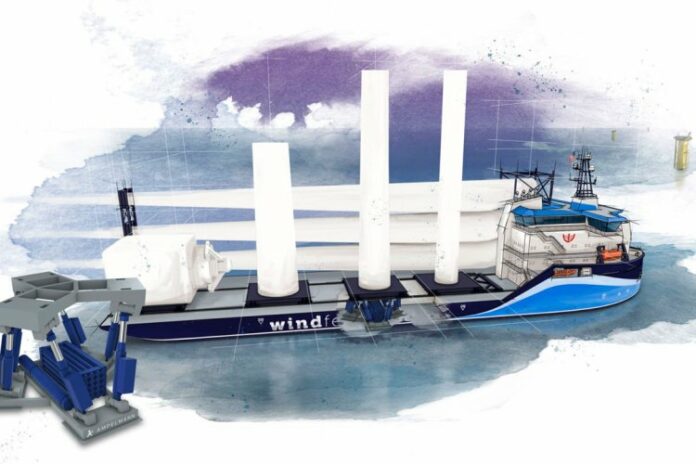
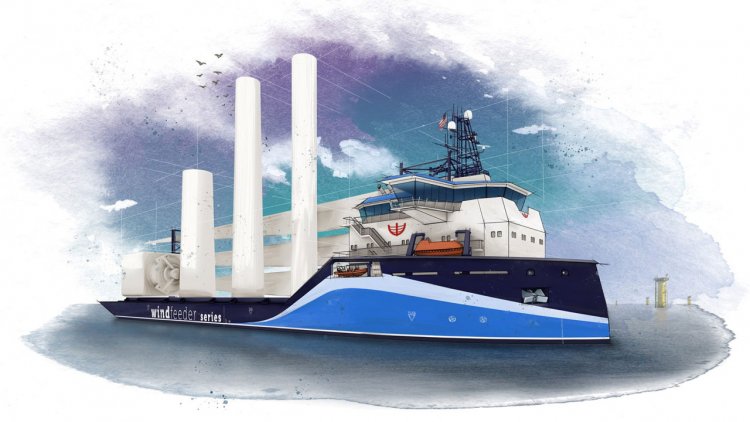
The concept design combines the knowledge of Ampelmann, the Dutch offshore access provider, and independent ship design company C-Job Naval Architects. Together they have created a viable solution in response to the need to support the construction and logistics of offshore wind farms in the United States under the Jones Act.

Todd Allen, VP Business Development at C-Job Naval Architects, says:

“The United States is ambitious in its plans to grow the installed offshore wind power. The only viable way to realize this goal while complying with the Jones Act is utilizing offshore wind feeder vessels. Together with our strategic partner Ampelmann, the experts in motion compensation, we have created an innovative ship design ready to support construction of US wind farms today and into the future.”

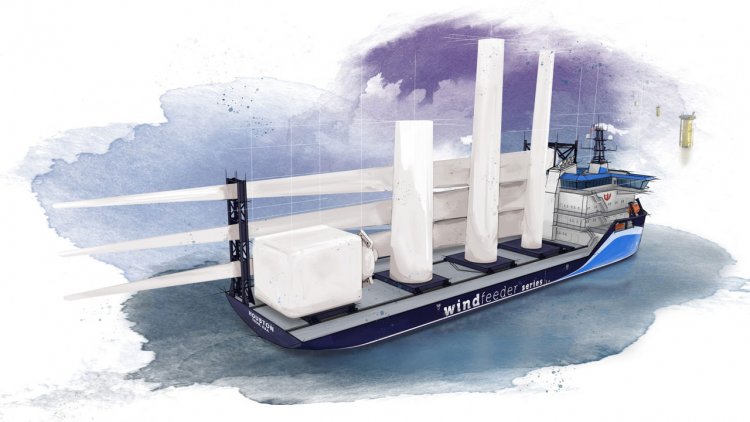
The state-of-the-art offshore wind feeder vessel has an L-shaped superstructure. This enables the transport of all wind turbine components, including the blades, while keeping the ship itself relatively compact minimizing construction and operational costs. To maximize workability and allow for safe lifting of the components, the feeder vessel features a specially designed motion compensation system by Ampelmann.

The system uses Ampelmann’s core technology to stabilize the components of the wind turbine generator (WTG) in six degrees of freedom and is designed for safe lifting operations in sea states up to 2.5m significant wave height. The compensator is positioned close to the vessel’s center where it can compensate all vessel motions and allows for continued operations – even in adverse weather conditions – throughout the year.

Gus DeOliveira, Ampelmann’s Business Development Area Manager for the Americas, says:

“We see a lot of potential for the offshore wind market in the US and believe that we can add some unique value based on our decades long experience in the offshore wind market. Our partnership with C-Job is crucial if we are to design and deliver just the right solution for this growing market.”

The wind turbine components are arranged on the ship with a quick connect grip- and glide system. Cargo pallets are placed on deck quickly thanks to the quick connect system. Once the feeder vessel is at its destination, the system slides the components into place to connect to the motion compensator. The Ampelmann system then compensates all vessel motions, so the crane operator can lift turbine components in a similar fashion to an onshore lift.

The motion compensated wind feeder vessel is designed to provide maximum efficiency and workability during the construction of an offshore wind park. The conventional way of working is that the installation vessel would transport the components and then do the installation of the turbines. However, this is an inefficient use of the WTIV and in the case of foreign vessels not allowed by the Jones Act.

With this feeder concept – which is envisioned to be a series – the turbine components are brought to the installation site by the feeder vessel. With two or more vessels per project, this allows the WTIV to focus on the installation of the turbines and ensures operations can continue at all times.