-8.4 C
New York
Home Blog Page 633

Teekay enhances emissions monitoring with ABB’s software for fleet

0

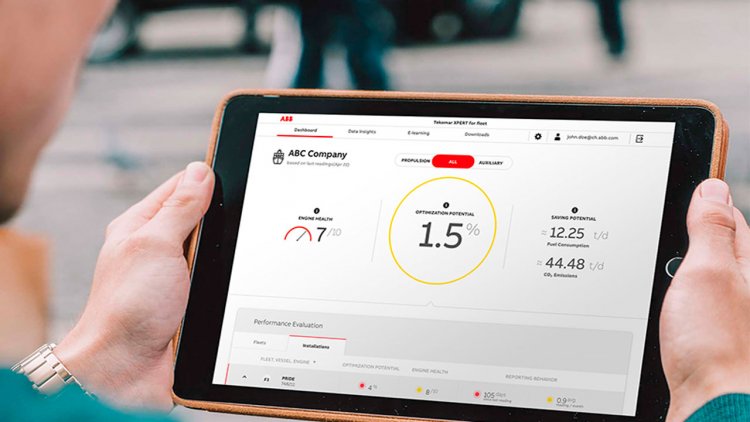
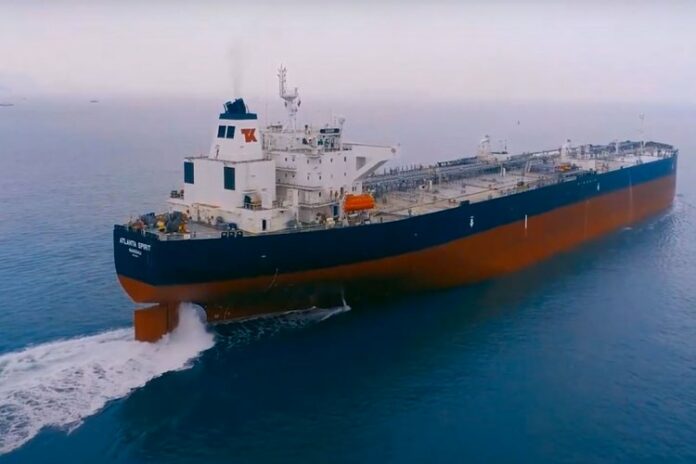
Teekay will roll out Tekomar XPERT for fleet, including the software’s new CO2 emissions indicator, across 54 Suezmax and Aframax tankers. The company, which has used Tekomar XPERT to monitor its vessels engines since 2015, will now be able to access deeper insights into fleetwide engine health and performance as well as at-a-glance CO2 emissions data.

While Tekomar XPERT monitors the engines on an individual vessel to deliver diagnostics and advisory, Tekomar XPERT for fleet includes a management tool which enables benchmarking across the fleet, highlighting further opportunities for optimizing engine operations. The company will be able to access data, including fleetwide engine health and annual CO2 emission savings potential, through the Tekomar Fleet Portal. Information will also be integrated into Teekay’s Vessel Balanced Scorecard, a proprietary tool that collects data generated by operations systems into a daily digital dashboard for each vessel.

Photo: ABB

Manoharan Jeganathan, Vessel Manager, Teekay, said:

“By proactive diagnostics and maintaining optimum engine performance across the fleet Tekomar XPERT not only enhances reliability and voyage performances but also assists meeting our emission targets. We thank ABB for developing such a pragmatic and user-friendly solution.”

Mauro De Micheli, Head of Sales, Marketing and Partnerships, ABB Turbocharging, said:

“Advancing Tekomar XPERT from vessel to Tekomar XPERT for fleet will take Teekay’s opportunities for engine optimization to the next level. We are delighted to extend this partnership with one of the world’s biggest and most forward-thinking ship owners and operators.”

Tekomar XPERT deploys unique engine performance evaluation combined with turbocharger expertise, gathered through ABB’s wide base of turbochargers in service across thousands of different engine installations. The software empowers ship operators with key engine indicators provided via intuitive dashboards, allowing them to monitor, optimize and benchmark engine performance while giving early warning of potential engine problems. It is built on ABB’s Ability™ platform, with the highest standards of cyber security.

SoCalGas to provide funding to test hydrogen fuel cell technology for marine vessels

0

Southern California Gas Co. (SoCalGas) has announced the company will provide $200,000 in funding for Zero Emission Industries’ (ZEI), formerly Golden Gate Zero Emission Marine, hydrogen fuel cell technology project that aims to develop a zero emissions solution for small commercial marine vessels by modifying a commercial boat with a hydrogen fuel cell in place of a combustion engine.

Once brought to market, the fuel cell technology could vastly reduce greenhouse gas (GHG) emissions and air pollution from thousands of small commercial boats throughout California including patrol, fishing, fire, rescue, ferry, taxi, recreational and other vessels.

Neil Navin, vice president of clean energy innovations at SoCalGas, said:

“SoCalGas is committed to helping California reach its climate goals, and we look at how we can support reducing GHG emissions in every sector. We recently announced our pledge to reach net zero greenhouse gas emissions in our operations and delivery of energy by 2045, and our work with the CEC and ZEI to develop fuel cell technology for commercial boats could aid this commitment. This innovative technology has the potential to decrease pollution in California in a meaningful way.”  

Dr. Joseph Pratt, CEO of ZEI, said:

“This project exemplifies our approach at Zero Emission Industries, which is to solve difficult challenges with hydrogen in ways that make it accessible for everyone. With California being home to over 1 million vessels, 98% of which are under 40 feet long, developing a small fast zero emission vessel solution will have a profound impact on the market, the economy, and air quality. The support from SoCalGas on low- and zero-emission efforts like this project play a large role in the ongoing effort to eliminate California’s and ultimately, the world’s emissions.”

Mario Cordero, Executive Director, Port of Long Beach, said:

“As California works to reduce greenhouse gas emissions from various sectors within our state, I am thrilled to see SoCalGas, in partnership with the CEC and Zero Emission Industries, leading and supporting the development of innovative technologies to help meet the state’s goals. The Port of Long Beach is proud to be one of two locations in which this technology will be utilized.”  

The project will test a commercial marine vessel modified to incorporate a hydrogen fuel cell powertrain. While boats are typically propelled with a combustion engine, the hydrogen fuel cell powertrain will use the latest automotive-style fuel cell technology and will be designed to optimize overall performance, with boat speeds ranging from a few knots to over 50 knots. The boat will be fueled with hydrogen through mobile, portable systems developed by ZEI for marine vessel fueling. These portable fueling systems will be built as part of the project, using hydrogen sourced from California’s retail hydrogen stations. The project will demonstrate the vessel for six months, split between the San Francisco Bay and Long Beach.

This project will be led by Zero Emission Industries with the following ports and commercial boating companies assisting in testing the technologies; Port of San Francisco, Red and White Fleet, Port of Long Beach and Harbor Breeze Cruises. The California Energy Commission (CEC) will provide $2 million for this project.

On March 23, SoCalGas announced its commitment to achieve net zero greenhouse gas (GHG) emissions in its operations and delivery of energy by 2045, reducing not only the company’s own direct emissions, but also those generated by its customers to support a carbon neutral economy.

SoCalGas is demonstrating this commitment by also advancing numerous low- and zero-carbon energy technologies. Late last year, the company announced it will build a home to demonstrate, in a microgrid setting, the use of hydrogen produced from solar energy. Called the “H2 Hydrogen Home,” the project will use solar panels to create electricity that can be used to produce green hydrogen via electrolysis. The hydrogen will be blended with natural gas for the home’s appliances as well as converted back to electricity using a residential fuel cell.

In addition, SoCalGas will field test a new technology that separates and compresses hydrogen from a blend of hydrogen and natural gas, allowing hydrogen to be delivered wherever a natural gas distribution system exists. 

New partnership around innovations dedicated to environmental protection underwater

0

Alcatel Submarine Networks (ASN), iXblue and SeaOwl announce they are joining forces to develop partnerships around innovative technologies dedicated to environmental protection underwater.

These 3 companies are today the core of AMSSI (Agora for Maritime & Submarine Sustainable Innovations); new French and European members will shortly join them to accelerate the emergence of new innovative projects.

This partnership aims to be a French innovation cluster where members share a desire to combine their know-how and technologies with the objective of bringing to life concrete and innovative industrial projects in the maritime and underwater fields, as well as in the fight against climate change. AMSSI will promote R&D, innovation and French know-how.

AMSSI has a proactive approach towards the concretisation and implementation of the various technologies developed through its members’ R&D programmes, leading to the industrial deployment of its projects.

By combining the expertise of its members, AMSSI will continue to develop an ecosystem capable of meeting major technological challenges and building an effective and relevant community for maritime technologies and services.

Among the developments involving the most advanced technologies of its partners, member companies are already working on an innovative project: the development of a remotely operated hydrographic surface vessel, i.e. a drone capable of carrying out long-distance survey missions.

Other projects related to climate change and marine digitalisation are also being studied.

LATRAPS becomes a partner in a dry bulk cargo terminal in the port of Riga

0

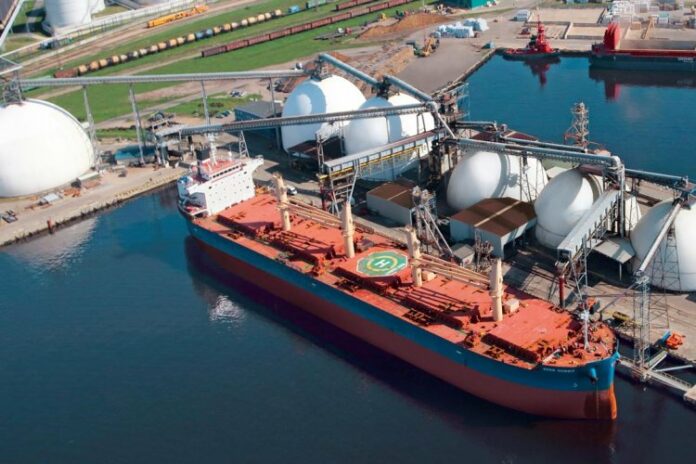
A year-long deal has been concluded this week, and the Agricultural Services Cooperative Company LATRAPS has acquired a 50% + 1 share in the dry bulk cargo terminal “Alpha osta”.

Ansis Zeltins, the Freeport of Riga CEO, said:

“LATRAPS entry into the Freeport of Riga means that the port is developing. Investments of local farmers in the capital of “Alpha osta” provide a solid basis for further development, facilitated by the change of cargo structure in the Freeport of Riga. Due to those changes the port company, which had been initially developed as a mineral fertilizer transshipment terminal, was repurposed to grain handling. Now it is evident that “Alpha osta” has successfully coped with this transformation challenge.“ 

So far, all necessary measures have been implemented at the terminal to maintain high quality in grain handling. Current infrastructure of the “Alpha osta” includes specialized grain storage bunkers, an automated transportation and ship loading system, facilities to accommodate Panamax vessels, and a powerful rail infrastructure.

Edgars Ruza, Chairman of the LATRAPS Board, commented:

“LATRAPS strategy has always been aimed at developing its processing sites on railway access roads. There are many benefits to this. We can deliver 3 thousand tons to the port by railroad train, which is significantly more than by road. In addition, there is less cargo traffic load on roads and cities. Therefore, the fact that the “Alpha osta” has a well-developed railway infrastructure was one of the main advantages that we took into account when assessing the possibility to expand our operation in the port of Riga.”

“Throughput capacity of the “Alpha osta” exceeds 20 thousand tons per day and the total grain storage capacity exceeds 100 thousand tons, which is initially sufficient and appropriate for grain handling, but in the future the company is planning additional investments to increase this capacity.

“Due to the fact that the global demand for grain is currently high, we plan to invest in our storage capacity in the coming years. In terms of current projects, some warehouses are currently equipped with scales to ensure more precise loading control. In order to prevent dust, we are investing in the installation of aspiration systems, which will effectively clean the air from dust generated during the grain handling process.”

A globally widespread, but rarely used in Latvia method of attracting financing – a closed bond issue – has been used for the terminal acquisition. LATRAPS members were offered to buy bonds in the amount of five million euros. Farmers’ investments and trust in the company ensured the success of the transaction. 

Successful launch for eco-sustainable Finnlines’ hybrid ro-ro vessel

0

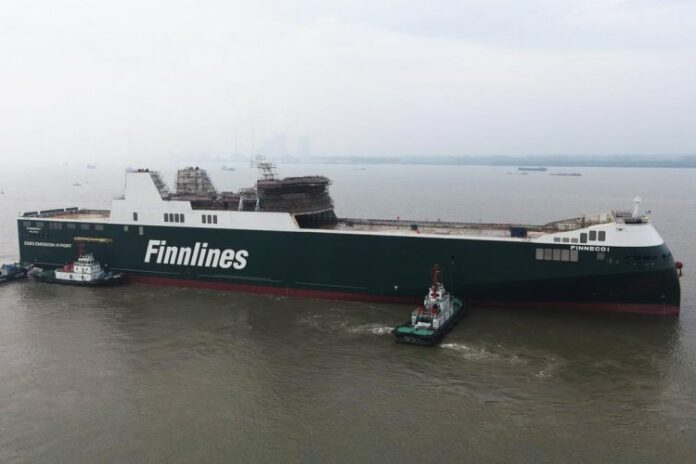
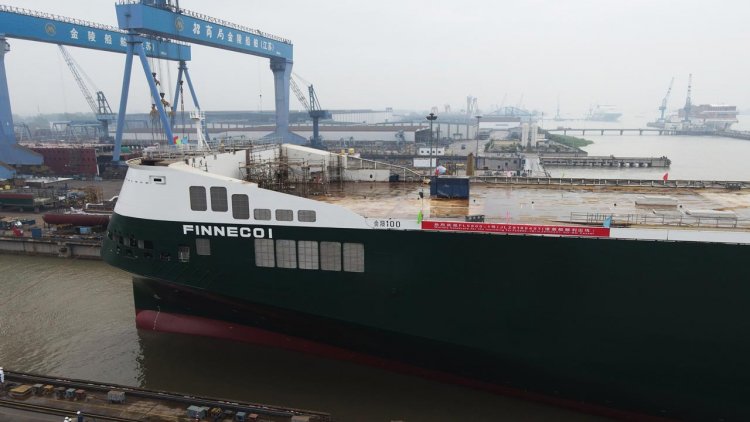
The vessel will start sailing under the Finnish flag at the turn of the year. This is highly significant in terms of Finnish sea personnel and Finland’s security of supply.An important milestone in Finnlines’ EUR 0.5 billion green Newbuilding Programme has been reached and the first vessel in the three ro-ro vessels series was launched at the Nanjing Jinling Shipyard on 26 April 2021.

These three hybrid ro-ro vessels will start operating under the Finnish flag, which is highly significant in terms of Finnish sea personnel and Finland’s security of supply. In total, 20 Finnlines’ vessels will sail under the Finnish flag after the new ships have started in operation. These vessels play a vital role in ensuring the smooth supply of goods to Finland and provide regular sea connections from Finland to Sweden and Finland to Continental Europe and Great Britain.

Finneco I will be heading on the Finnlines’ Biscay–North Sea–Baltic Sea service at the turn of the year. Respectively the second and third vessel in the series, Finneco II and Finneco III, will be delivered in 2022.

The new vessels will be 238 metres long with a cargo capacity of 5,800 lane metres. Additionally, car decks have a capacity of 5,800 m2 and about 520 TEU on the weather deck. Consequently, each of the new vessels can carry about 300 trailers, 150 cars and 500 sea containers per sailing. In comparison to the Company’s currently largest ro-ros, Breeze series vessel, the cargo capacity will increase by 38%.

Finnlines new ultra-green vessels will provide several energy-saving solutions for a greener future. Lithium-ion battery systems will allow zero-emission port visits as well as modern two-stroke engines, emission abatement systems, solar panels and an innovative air lubrication system will cut emissions further.

The new ro-ro vessels are a part of Finnlines’ ongoing EUR 500-million Newbuilding Programme, which includes two eco-efficient ro-pax vessels in addition to the three hybrid ro-ro vessels. The newbuilding programme is a collaborative project and apart from the shipyards it will engage several suppliers from Finland and the Nordics.

Emanuele Grimaldi, CEO of Finnlines, says:

“The significant investment programme is in line with our strategy. We are constantly renewing and developing our fleet and the upcoming hybrid ro-ros as well as eco-efficient Superstar ro-paxes are a next step in the evolution of Finnlines’ fleet. These new vessels will increase our cargo and passenger capacity significantly. Together with our connections we can meet the needs of our customers better. Our eco-sustainable new vessels will serve our customers, and communities where we operate, long into the future. More than ever, our economies rely on dependable transport links and we are committed to ensure vital sea freight operations in a sustainable way.”

Finneco I facts:

  • To be delivered by the end of 2021
  • Length: 238m
  • Breadth: 34m
  • DWT metric tons: 17,400
  • Cargo capacity: 5,800 lane metres & 5,800m2 of car decks & about 520 TEU on weather deck
  • Flexible for all type of ro-ro cargo
  • Highest Finnish / Swedish ice class 1A Super

Rolls-Royce reaches agreement to design propellers for U.S. Navy’s frigates

0

Rolls-Royce has reached agreement with Fincantieri Marinette Marine to design and manufacture up to 40 fixed-pitch propellers for the U.S. Navy’s Constellation-class (FFG-62) guided missile frigate program.

Fincantieri was awarded the shipbuilding contract from the U.S. Department of Defense (DoD) in April 2020, to design and build the first FFG-62 class frigate. The program of record is for a total of 20 ships, with the first to be delivered to the U.S. Navy in 2026.

Neil Pickard, SVP – Land & Sea, Business Development and Future Programs said:

“We’re excited to join Fincantieri on the U.S. Navy’s newest frigate program. We’ve been strong international partners for many years and now we’ll work together in the U.S. for the first time to deliver world-class American-made products for our military.”

The first set of propellers (two per ship) is scheduled to be delivered to Fincantieri in 2023.

The propellers will be manufactured in Rolls-Royce’s recently upgraded Pascagoula, Mississippi foundry and will be some of the first work to utilize the newly installed state-of-the-art equipment and renovated facility; funded through investments from the DoD, Rolls-Royce, Jackson County (MS) and the state of Mississippi.

Neil said:

“This will be one of the first dividends realized on the recent investments in Pascagoula thus ensuring critical Naval manufacturing capabilities are retained in the U.S. And, we’ll continue to deliver on those investments, supporting the needs of the future Naval fleet with our full range of in-country capabilities including design, manufacture, test and maintenance.”

Each propeller for the FFG-62 class frigate weighs more than an average passenger bus. The Rolls-Royce Pascagoula Foundry is one of only two facilities in the country qualified to cast propellers of this size for the U.S. Navy. In fact, ninety-five percent of the commissioned U.S. Navy surface fleet is equipped with Rolls-Royce propellers.

Naval components manufactured by Rolls-Royce at Pascagoula include controllable-pitch propeller systems, fixed-pitch propellers, and water jets.

Panama Canal launched its process of decarbonizing its operations

0

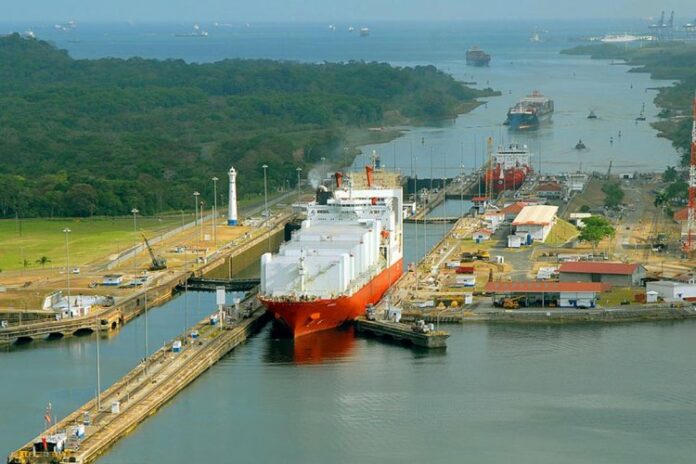
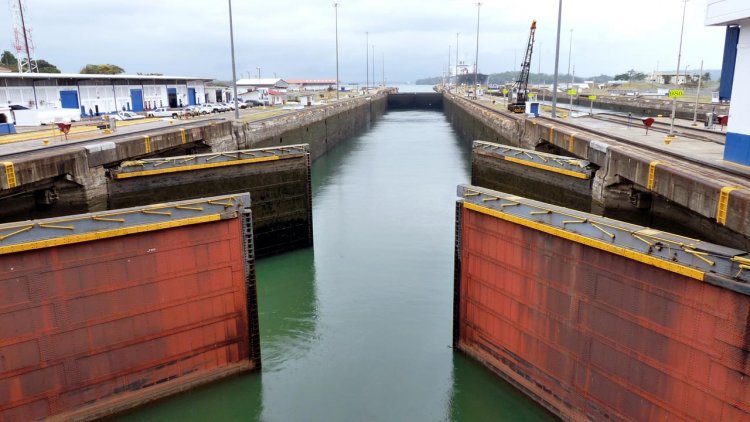
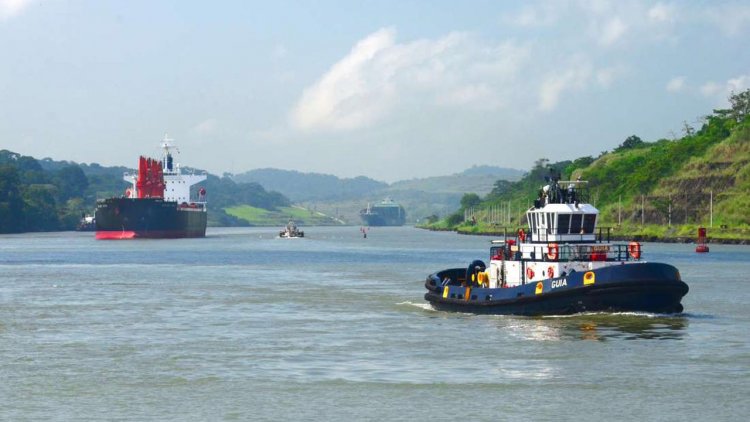
The Panama Canal launched its process of decarbonizing its operations, with aims of becoming carbon neutral by 2030.

Panama Canal Administrator Ricaurte Vásquez Morales said:

“We at the Panama Canal are committed to sustainability, and therefore are laying the foundation, creating the tools, and identifying the changes needed to achieve efficiencies that will allow us as an organization to reach carbon neutrality. This is a fundamental strategy for the waterway’s long-term operation and sustainability. This process will build on our long-standing efforts to minimize our environmental impact, including encouraging customers to use clean fuels and reduce their carbon footprint.”

While the Panama Canal contributed to a reduction of more than 13 million tons of CO2 equivalent emissions in 2020 by offering a shorter route for ships in comparison to the most likely alternative routes, the waterway recognizes the importance of making its own operation carbon neutral by the end of the decade.

To kick off the transition to a greener Canal, the waterway purchased four electric vehicles as part of a pilot program that will collect data to inform the migration of the Canal’s entire fleet away from fossil fuel dependence. Part of its strategic decarbonization plan also includes tugboats and launches that use alternative fuels, the substitution of electricity production processes in favor of photovoltaic plants, the use of hydraulic energy, and ensuring that all facilities and infrastructure projects are environmentally responsible and sustainable.  

The Panama Canal first began tracking its carbon footprint in 2013 to align its operations with the global objectives of reducing emissions to mitigate and adapt to climate change. Its plans to become carbon neutral were bolstered in 2017 with the launch of its Emissions Calculator, a tool that not only allows shipping lines to measure their greenhouse gas (GHG) emissions per route, but also strengthens the Canal’s analysis of the emissions produced by its own day-to-day operations.

To reduce its own impact, the Panama Canal has also taken steps to find ways to maximize its operational, and thus environmental efficiencies, whether by implementing water conservation measures or optimizing transits. Panama’s Maritime Single Window (VUMPA) has improved the efficiency and carbon footprint of transshipment procedures by streamlining logistics paperwork for international customers passing through the country, saving up to 3,260 hours and over 300,000 paper forms each year.

In addition, the Panama Canal also joined on April 22, on Earth Day, the Declaration of the “50 First Carbon-Neutral Organizations”, an initiative led by Panama’s Ministry of Environment to integrate national efforts to accelerate measurable climate actions.

As part of the new national initiative, the Canal will develop an annual greenhouse gas inventory, as well as an action plan with measurable targets to reduce emissions. The Canal’s efforts will be factored into Panama’s National Determined Contribution (NDC), established by the United Nations Framework Convention on Climate Change (UNFCCC), following the Paris Agreement.

The Panama Canal’s efforts have since stretched beyond tracking to include initiatives aimed at helping and incentivizing shipping lines to minimize their environmental footprint. Through its Green Connection Environmental Recognition Program, the Canal recognizes customers who demonstrate excellent environmental stewardship, including the use of low-carbon fuels and environmentally conscious routes. As an enhancement to this program, the Panama Canal is currently analyzing taking into account in its dynamic pricing strategy the vessels’ technology and its carbon footprint, which makes it more efficient during transit.

The Panama Canal also promotes the International Maritime Organization’s (IMO) efforts to minimize the environmental impact of the shipping industry, from the implementation of its IMO 2020 regulation to its nearby transit separation schemes and vessel speed reduction programs. By supporting the latter, for example, the Canal helps shipping lines reduce their risk of colliding with whales migrating near the waterway, while also lowering their GHG and pollutant gas emissions by an average of 75%, depending on the type, size, and fuel of each vessel.

Port of Pécem signs MoU for implementation of Green Hydrogen HUB

0

With the objective of establishing strategic partnerships for the socioeconomic, technological and environmental development of the State, the project “HUB of Hydrogen Green Pecém – Ceará”, launched in February of this year by the Government of Ceará, Complexo do Pecém (CIPP S / A), Federation of State Industries (Fiec) and Federal University of Ceará (UFC), has attracted companies interested in operating in the Green Hydrogen value chain, which ranges from the generation of renewable energy to the production of green hydrogen and derivatives, storage, distribution and consumption, including for export.

One of these companies is White Martins, which signed a Memorandum of Understanding (MoU) with the Pecém Complex this month to formalize its interest in participating in the Green Hydrogen HUB. The partnership aims to establish and develop the potential of local production, focused primarily on export to Europe. With the signing of the MoU, the Pecém Complex will provide support to map new business opportunities for the production and supply of Hydrogen by Verde by White Martins.

Director of Hydrogen and White Martins Liquefied Natural Gas, Guilherme Ricci, says:

“In this partnership, we identified the possibility of innovating in the production and supply of clean energy with investments in the Green Hydrogen value chain, taking advantage of the synergy of the White Martins air gases plant already existing in the Pecém Industrial and Port Complex. This project is in line with Linde’s global strategy for growth in the green hydrogen market. In addition, taking into account the characteristics of the region, which has a state-of-the-art industrial park and renewable energy production capacity, we have a positive expectation of making an undertaking feasible that could be a great differential for our country.”

Duna Uribe – Commercial Director of Complexo do Pecém, says:

“White Martins, a Linde group company, has technology and expertise in several key areas of the H2V production, distribution and application chain, including electrolysers, ammonia production, H2 liquefaction, technology for the use of H2 in mobility and experience with H2 injection in natural gas networks, so it will be an important partner for the H2V hub in Pecém.”

Through this initiative, the Ceará government will intensify the production of Hydrogen, from renewable energy sources, to promote the socioeconomic, technological and environmental development of the State, promoting its use in industry and transportation. In addition, the goal is to make Ceará a global supplier of H2V, thus contributing to the reduction of global levels of carbon dioxide (CO2).

Roseane Medeiros – Executive Secretary of Industry at the Secretariat for Economic Development and Labor (Sedet) of the Government of Ceará, points out:

“It is necessary to highlight that the project does not count on public funds investment, but the State of Ceará will develop public policies for renewable energies for sustainable development, focused on maximizing the benefits for the region and consolidating the future Pecém Verde Hydrogen HUB.”

René van der Plas – Director of the Port of Rotterdam International (PORint), adds:

“This Memorandum of Understanding is further proof that the market recognizes the potential of the State of Ceará for the production of green hydrogen and the wide space and facilities that the Port of Pecém can offer to accommodate a cluster of electrolysers.”

The Pecém Complex has as its shareholders the Government of Ceará (70%) and the Port of Rotterdam (30%), a partnership that brings a competitive advantage to the project, as the Port of Rotterdam is working with several partners to develop a large-scale hydrogen network in its port complex, with the intention of transforming the Port of Rotterdam into an international hub for the production, import, application and transport of hydrogen to Europe. Thus, the project to be developed between White Martins, its partners and the Pecém Complex may have the Port of Rotterdam as the port of entry into Europe.

In addition, the Pecém Complex has a privileged location connected to the main maritime routes connecting Europe and the United States, as well as a competitive logistical cost due to its proximity to the markets, which represents a differential in the total cost of H2V. It also has an available area and the necessary industrial and port infrastructure, in addition to the tax benefits of SPAs, which can represent an important reduction in the opex and capex of the possible investor.

The Pecém Complex also has a robust electrical network, with transmission line infrastructure compatible with the demands of the electrolysis plants; gas distribution network that connects the complex, which can be used to transport H2V between areas of production and industrial consumption; and industries already installed, potential consumers of Green Hydrogen.

The potential domestic market for Green Hydrogen to be developed in the Pecém Complex, includes companies already installed in the steel, fertilizer, cement, mining sectors and also the Companhia de Gás do Ceará (Cegás).

Fincantieri Marinette Marine begins waterfront construction

0

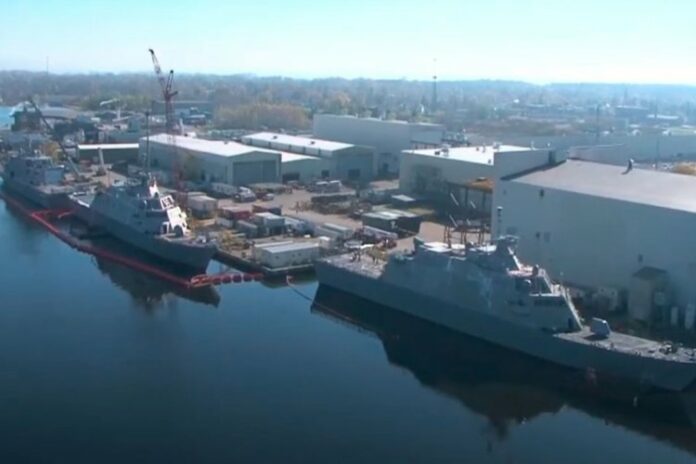
Beginning in May and planned to continue until late October, FMM will have several inches of sediment and bedrock removed from the river bottom and along the banks of their waterfront to allow the launch and navigation of larger Navy ships being built at the Wisconsin shipyard.

This work has been coordinated with federal, state and local officials and special emphasis has been made to limit interruptions to recreational activities in the adjacent waterway. During construction there will be brief periods each weekday in which the portion of the Menominee River along FMM’s waterfront will be temporarily restricted to allow for safe operations. Officials expect that each weekday between 4 and 5 p.m. CT there will be no boating or river traffic for up to 30 minutes. There are no plans to restrict activities in the Menominee on weekends, holidays or during local fishing tournaments.

FMM leadership has worked with the Wisconsin Department of Natural Resources to ensure compliance and to limit disruptions to recreational use of the Menominee River.

Jean Romback-Bartels, NE WI Secretary’s Director for WDNR, said:

“Federal agencies and the Wisconsin DNR have been working with Fincantieri Marinette Marine, their consultants and contractors to ensure the health and safety of the environment through permitting for this expansion. The fisheries resource is important in this river, so we worked with FMM to minimize impacts to spawning walleye, sturgeon, and more. Additionally, we have worked with them to avoid impacts to Strawberry Island and the rookery that’s located there.”

Jan Allman, CEO of FMM, said:

“Many of our employees and local community members enjoy the tremendous outdoor recreational opportunities that come with living in Northeast Wisconsin, so we are determined to limit how our construction potentially impacts our neighbors and those who transit past our waterfront.”

Allman said:

“We were fortunate as a shipyard to secure the contract to design and build the Navy’s guided-missile frigates. Part of our contract is to make necessary improvements to our facilities so that we can deliver the world’s best frigates for decades.”

FMM and its sister shipyard, Fincantieri Bay Shipbuilding, started a massive $200 million capital improvement plan earlier this year, which when completed will include several massive climate-controlled buildings and the largest ship lift in the U.S.

Huisman develops Jones Act compliant solution for wind turbine component supply in US waters

0

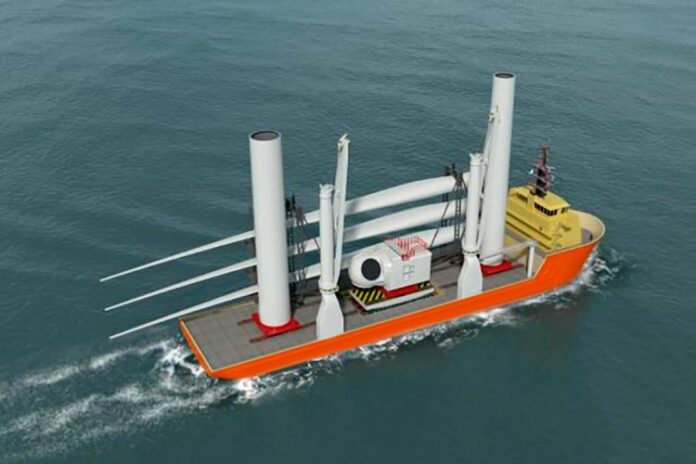
Since using an internationally flagged Wind Turbine Installation Vessel is restricted under the Jones Act, a feeder vessel with a Motion Compensated Platform offers a reliable and efficient solution for transportation of components in US waters.

The Motion Compensated Platform provides a stable deck area because it actively counterbalances the effects of vessel motions. This means that lifting heavy components and moving an empty jack-up vessel can be done in more severe weather conditions, thus significantly increasing the weather window for operations.

The dimensions and capacities of the Motion Compensated Platform are optimised for next-generation wind turbines and are designed to compensate for five degrees of vessel motions. The Motion Compensated Platform can be integrated into the hold of a vessel and aligned with the main deck, making it easy to skid cargo across the platform.

Cees van Veluw, Product Manager at Huisman:

“By using an offshore rated feeder vessel equipped with our Motion Compensated Platform, the jack-up vessel can continue installation work without having to shuttle back and forth to load new components. Maximising the operational time results in a faster and more reliable delivery of an offshore wind farm, compared to more traditional feeder solutions.” 

With this development, Huisman aims to grow its presence in the US Offshore Wind market. In December 2020, Huisman was contracted by Keppel AmFELS from Brownsville, Texas, for the delivery of a 2,200mt Leg Encircling Crane for the world’s first Jones Act compliant Wind Turbine Installation Vessel, Charybdis, ordered by Dominion Energy. In May 2020, the first monopile foundations in US federal waters were installed by Jan de Nul’s vessel Vole au Vent, using Huisman’s cutting edge Motion Compensated Monopile Gripper. To locally support the North American market, Huisman has facilities in the Houston area, Texas.