-2.8 C
New York
Home Blog Page 631

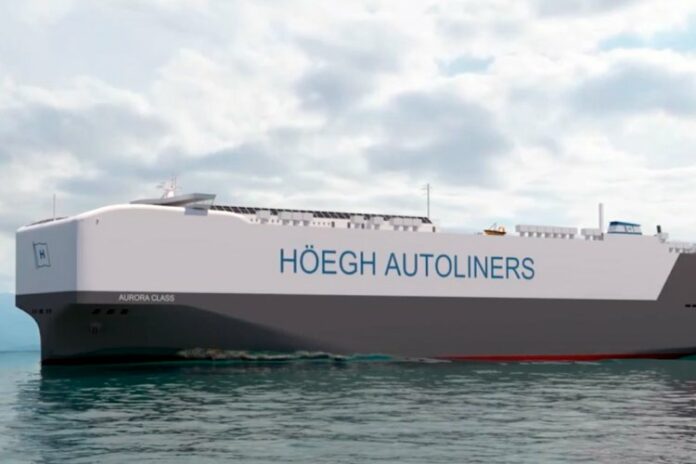
Deltamarin will be a part of Höegh Autoliners´ decarbonisation journey as the designer

0

Höegh Autoliners is accelerating its decarbonisation efforts to meet its goal of a zero emissions future. Aurora Class launch is a crucial step in the company’s sustainability commitment. Designed for 9,100 car equivalent units it will also be the world´s largest car carrier.

Höegh Autoliners´ Chief Executive Officer Andreas Enger says:

“With the future of cargos and zero carbon fuels in mind, the Aurora vessels is designed for a greener future. It is the most environmentally friendly car carrier ever built. The Aurora Class represents a big step on our path to a zero emissions future. 

“We have entered a Memorandum of Understanding with our professional and long-term partner Xiamen Shipbuilding Industry. This will make it possible to have the first vessel delivered by the end of 2023.”

Höegh Autoliners has a solid history on emission cuts and long-term efforts to combating climate change. They have since 2008 achieved an improved carbon intensity of 37 per cent in their fleet. This has put them in the forefront in sustainable shipping in the deep-sea RoRo segment.

The Aurora class is designed to transport the cargo of the future. Its strengthened decks and enhanced internal ramp systems enable Electric Vehicles on all decks and provide more flexibility for heavier project cargo.

The Aurora Class’ multi-fuel engine can run on various biofuel and conventional fuels, including LNG. With minor modifications, it can transition to use future zero carbon fuels, including Green Ammonia.

Janne Uotila, the CEO of Deltamarin, says:

“Deltamarin and Höegh Autoliners have been leading the way for the unique high-end PCTCs and other highly specialised RoRo vessels already for the last 20 years. The Aurora class will be the world’s largest PCTC and able to take future carbon neutral fuels, such as ammonia, which has been considered, for example, in the fuel storage design. Cooperation with Höegh has always been excellent, and it has been our privilege to work alongside with the innovative, responsible, and forward-looking professionals who know their own business thoroughly.”

Being ready for zero carbon fuels and taking advantage of the latest technology on everything from energy optimization to internal ramp systems the Aurora Class will bring decarbonisation and cargo efficiency to a new level. This will reduce Höegh Autoliners carbon footprint and support decarbonising customers’ supply chain.
PSA Marine: Fueling connectivity with ONEHANDSHAKE™

0

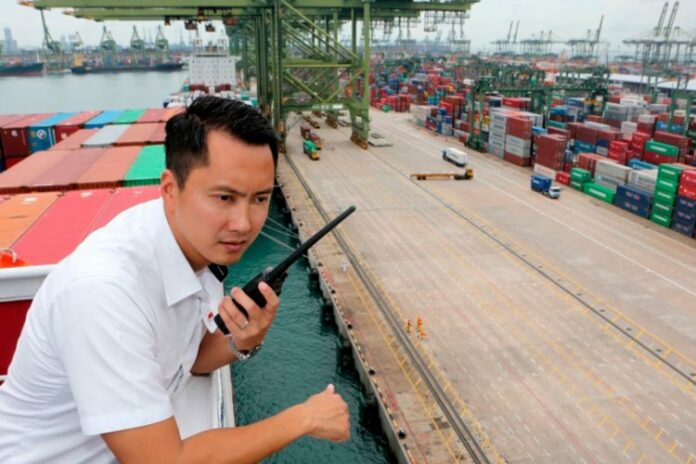
PSA Marine has unveiled the first-of-its-kind Liquid Bulk module (“LqB”) under PSA Marine’s ONEHANDSHAKE™ platform, which will revolutionise the way industry players within the liquid bulk logistics chain interact, and empower them to effortlessly transact with one another.

Annually at the Port of Singapore, an estimated 48,000 liquid bulk tanker movements are observed and key stakeholders rely heavily on labour-intensive monitoring of transactions. The process can now be made much more efficient as LqB will provide users with a customised dashboard to allow real time tracking capabilities for greater visibility, predictability and productivity.

Mr Jimmy Koh, Head of Digital Transformation and Chief Pilot of PSA Marine, said:

“Singapore is one of the world’s largest refineries and oil storage hubs, and we are glad that PSA Marine’s Liquid Bulk module will increase workflow efficiency and improve connectivity for the liquid bulk logistics chain community. We are also delighted to garner support from major industry players in our digitalisation journey, including ExxonMobil and Vopak, as their valuable feedback was incorporated into Liquid Bulk module.”

ExxonMobil Asia Pacific, Singapore Refinery Process Division Manager, Neo Ee-Ee, said:

“ExxonMobil is proud to have collaborated with PSA Marine on successfully piloting the Liquid Bulk module at our marine terminals, and doing our part to help improve maritime logistics efficiency in Singapore. This is also part of our continued drive to use digital solutions to enhance productivity in our manufacturing operations, and grow the digital skills of our workforce.” 

Mr Edwin Ebrahimi, Innovation Engagement Leader of Vopak Terminals Singapore Pte Ltd, the world’s leading independent tank storage company, said:

“By partnering PSA Marine in this pilot trial, Vopak continues to advance in the use of new technologies and innovation. We fully support the development of digital platforms such as ONEHANDSHAKE™ in order to further improve vessel turnaround time at our jetties and in turn, optimise the port calls of our customers. We would like to encourage terminals and agents to be on board to ensure maximum value for the port community.”

With the introduction of LqB, PSA Marine continues to work closely alongside the Maritime and Port Authority of Singapore (“MPA”) in its efforts to strengthen connectivity and inter-linkages within the sea transport sector, under MPA’s Sea Transport Industry Transformation Map.

PSA Marine’s ONEHANDSHAKE™ digital platform is designed to share information on port activities with a network of maritime stakeholders. The company is committed to using digital technology and working alongside stakeholders to offer sustainable and innovative solutions.

Bureau Veritas awards classification to Norway’s first LNG bunkering vessel

0

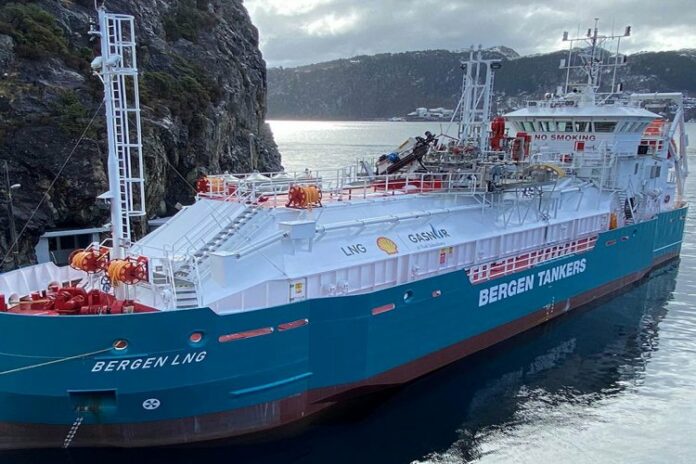
The vessel was born from the conversion of the 2010 built oil tanker Oslo Tank to carry LNG instead of conventional liquid marine fuels. Bergen LNG will be operated by Gasnor (Shell) in the Bergen area and on the Norwegian west coast to supply the LNG fuelled passenger ships operated by Hurtigruten and Kystruten.

Gijsbert De Jong, Marine Chief Executive, Nordics, Bureau Veritas, said:

“Over the past years, we have gained a lot of experience with conversion projects in the Nordic region. Our local plan approval capabilities and experienced surveyor team are a significant asset to our clients. In this respect, the Bergen LNG project stands out in terms of technical complexity and customer service.”

The conversion took place at Westcon Shipyards in Florø. BV has supported the owners and designer from the beginning of the project to ensure that the conversion could be performed in compliance with the requirements of the International Gas Carrier Code (IGC Code), notably with regard to stability and navigational safety. BV has also played an important role in the involvement of the flag state. In order to support an efficient conversion process, the Nordic plan approval team fast-tracked the design review process of time critical parts and ensured quick communication of findings.

Ingemar Tonder Presthus, Technical & Marine Manager, Bergen Tankers, said:

“BV has been an important partner throughout this extensive and demanding project – first in the design phase to identify the regulatory framework, and later with the follow-up at the shipyard. The BV team in Norway has been a strong support for us during the project execution as they could mobilise people at short notice and showed flexibility when plans needed to be changed. Their expertise has been an important factor in the success of the project.”

An expenditure splash of $810 billion is expected for the offshore wind industry this decade

0

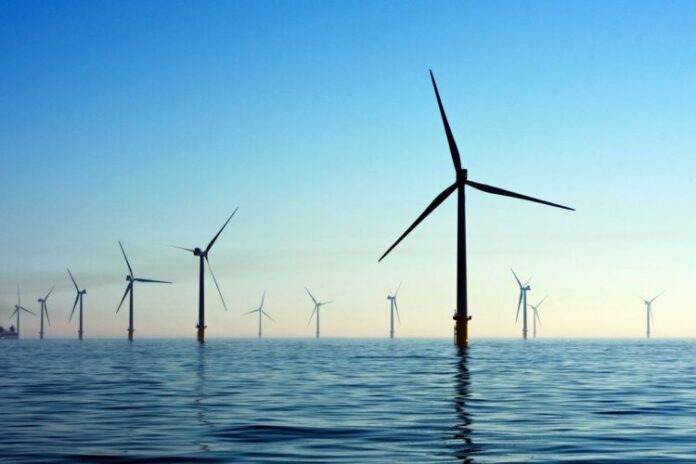
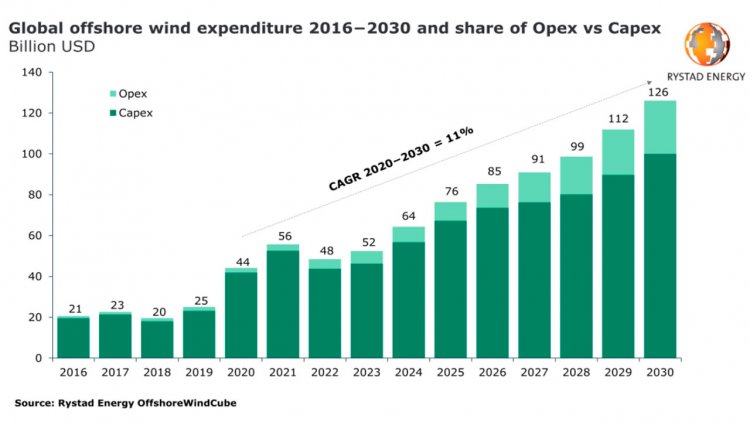
The offshore wind industry’s global installed capacity is set to exceed 250 gigawatts (GW) by 2030, driven by a surge in coming projects, a Rystad Energy report shows. The combined capital and operational expenditure for the decade is set to add up to an eye-popping $810 billion, signaling an increasing shift of investments from oil and gas to renewable energy technologies.

The cumulative installed capacity of global offshore wind projects climbed to 33 GW in 2020 – a significant achievement for an industry that has nearly tripled its size since 2016. Rystad Energy expects  the world’s installed capacity to hit an estimated 109 GW by 2025 and rise further to 251 GW by 2030, growing by 22% a year on average.

This massive boost in capacity will involve a steep increase in global spending. Rystad Energy estimates that total expenditure will amount to $56 billion in 2021 as almost 13 GW of capacity is expected to be commissioned, lifting the cumulative global installed capacity to 46 GW.

Yearly spending will continue to rise to $126 billion in 2030, after a short-lived dip in 2022 and 2023. Capex today accounts for 95% of the total expenditure, with opex representing only 5%. The capex share is expected to decline to about 80% by 2030, as all the new installed capacity will require more operational spending to run and maintain.

In fact, 2030 will be the year of the inflection point when offshore wind capex will be on par with offshore oil and gas greenfield capex (excluding exploration work), at about $100 billion.

Europe, as the most mature market, is still expected to dominate offshore wind spending this decade, totaling about $300 billion. Some of the assets with the largest expenditures are located off the UK, including Orsted’s 4.8 GW Hornsea Two, Three and Four projects, which are lined up for more than $14 billion in capex. The giant Dogger Bank projects, to be developed in three 1.2 GW phases by SSE, could see more than $11 billion in capex, while Scottish Power Renewable’s 3 GW East Anglia Hub will likely involve capex of beyond $8 billion.

China dominated annual spending between 2019 and 2021 due to its substantial annual capacity additions. This decade, the country is forecast to spend about $110 billion. Outside of China, Asia is expected to see significant investments this year, driven by Vietnam and Taiwan. Spending in South Korea and Japan will also increase beginning in 2023 as more projects are lined up.

Meanwhile, the Americas region is falling behind due to the US Jones Act and delayed permitting processes for the US offshore wind industry, which are pushing back the expected start-up years for a number of wind farms. The region is expected to spend just over $70 billion this decade on offshore wind projects – still a significant sum, but well below that of other global regions.

Rystad Energy expects North and South America will only start spending substantial amounts on offshore wind in 2023. The first large-scale project in the US will be the 800-megawatt (MW) Vineyard Wind 1 scheme developed by Avangrid and the Copenhagen Infrastructure consortium off the coast of Massachusetts, with an estimated investment of $2.8 billion.

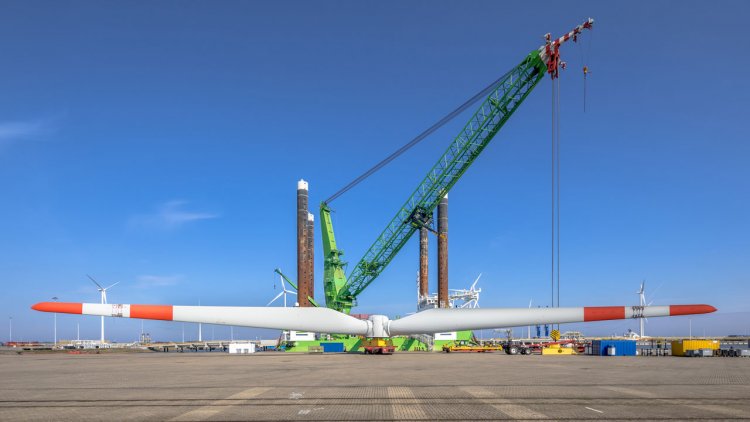
Turbine manufacturing costs represent the largest share of capex for offshore wind developments with almost 40% of total investments. This trend is expected to continue as countries, especially European ones, are increasingly deploying large turbines.

Foundation manufacturing is the second major cost element for building an offshore wind farm, with a share of about 15% of overall capex during towards 2030. The share of foundation spending to capex should remain at the same level since we do not expect a significant influx of floating foundations this decade.

Cable manufacturing, consisting of array and export cables, accounts for about 14% of the total capex. Combined with the cable installation cost, the segment weighs in at about 20% of capex. This cost is not expected to increase as we approach 2030, as larger turbines help reduce cable and installation costs despite projects moving increasingly further from shore.

Petra Manuel, offshore wind analyst at Rystad Energy, says:

“The colossal level of investments anticipated in the offshore wind industry this decade reflects the ambitious targets set by companies and governments alike. As the market matures and economies of scale are achieved, investments could surge further, sparking even more installed capacity.“

SC Ports expanding Inland Port Greer

0

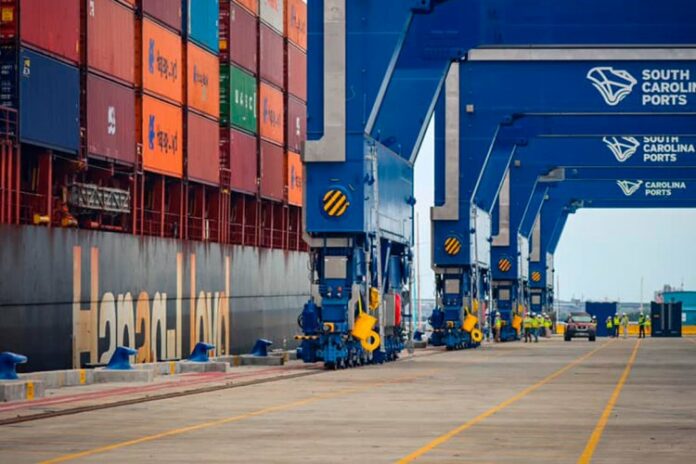
Inland Port Greer extends the Port of Charleston’s reach 212 miles inland via Norfolk Southern rail service, enabling companies throughout the Southeast and Midwest to quickly receive import goods and move export products to overseas markets.

Inland Port Greer operates 24/7 and offers a direct rail connection to the Port of Charleston. Situated along Interstate 85 between Greenville, S.C., and Spartanburg S.C., Inland Port Greer reaches 94 million consumers within 500 miles, or a one-day truck trip.

The expansion of Inland Port Greer is supported, in part, by a $25 million BUILD (Better Utilizing Investments to Leverage Development) grant. In 2018, the U.S. Department of Transportation awarded the BUILD grant to the S.C. Department of Transportation to help fund the Upstate Express Corridor Program, which includes both the expansion of SC Ports’ Inland Port Greer and the lengthening of Norfolk Southern’s Greer Lead Track and Carlisle Siding Track.

SC Ports Board Chairman Bill Stern said:

“We are very appreciative of the support we received from S.C. Governor Henry McMaster, our Congressional delegation, state leaders, the U.S. Department of Transportation and the S.C. Department of Transportation in securing this BUILD grant to expand this critical port-related infrastructure. This will greatly enhance South Carolina’s supply chain for companies in the Upstate and beyond.”

The expansion of Inland Port Greer involves building additional rail processing and storage tracks within the terminal, expanding the container yard to the east and west, enlarging the existing chassis yard, and building new facilities for heavy lift maintenance and terminal operations.

More than half of SC Ports’ $63.4 billion annual economic impact in South Carolina already occurs in the Upstate. Investing to expand Inland Port Greer will drive more port-related growth in the region. The additional capacity means more companies will locate near this critical infrastructure hub, driving jobs and economic growth for the Upstate.

SC Ports CEO Jim Newsome said:

“This funding supports the expansion of Inland Port Greer, which has been a true success story for South Carolina, growing significantly every year since opening. We continue to invest in port infrastructure to handle more cargo for companies. Our strategic investments provide more capacity and efficiency, which attracts more companies to invest in our state.”

The BUILD grant also supports the expansion of Norfolk Southern’s Upstate rail network. These improvements include lengthening the lead track alongside the mainline track outside of Inland Port Greer in Greer, S.C., as well as providing additional capacity to the passing/ siding track in Carlisle, S.C., to accommodate longer trains carrying cargo to and from the Port of Charleston.

These complementary efforts will allow for additional container capacity for customers at Inland Port Greer, and additional rail infrastructure to enhance rail capacity and efficiency.

Kathleen Smith, Norfolk Southern’s vice president of business development and real estate, said:

“The Upstate Express Corridor will greatly enhance South Carolina’s rail infrastructure and supply chain. The BUILD grant supports these vital infrastructure projects, providing more economic growth for the state.”

Since opening in 2013 with BMW Manufacturing Co. as the launch customer, Inland Port Greer has consistently broken records for cargo handled. In March, Inland Port Greer reported its busiest month in history with 16,688 rail moves, up 20.3% from last March. Fiscal-year-to-date, Inland Port Greer has handled 119,460 rail moves, up nearly 5% from the same time a year prior.

Knudt Flor, president and CEO of BMW Manufacturing, said:

“BMW Manufacturing’s success as the largest automotive exporter by value in the United States would not be possible without our strong relationship with SC Ports. We export 70 percent of our South Carolina-made vehicles through the Port of Charleston to 125 countries around the world. BMW was also the first customer for SC Ports’ rail-served Inland Port Greer in 2013. Inland Port Greer has proved incredibly beneficial to our supply chain. We depend on reliability and speed to produce every car to order, and SC Ports continues to deliver for BMW.”

PETRONAS diversifies its global LNG fleet with three newbuild vessels

0

PETRONAS LNG Ltd. (PLL) has signed a Time Charter Party (TCP) for three newbuild 174,000 cubic metres LNG vessels with shipowner, Hyundai LNG Shipping (HLS). The deal with HLS was awarded via an international tender exercise to support PETRONAS’ growing global LNG business portfolio.

As part of the agreement, HLS had signed shipbuilding contracts with Hyundai Heavy Industries (HHI) for the construction of the three vessels. Upon completion, these vessels would be amongst the most energy efficient LNG carriers ever built, with shaft generators powered by LNG. These vessels are also installed with air lubrication systems that reduce hull resistance and are designed with an optimised hull design that reduces aerodynamic drag at sea.

The eco-friendly vessels will be fitted with the Integrated Smart Ship Solution to enhance the performance monitoring process. Collectively, these features will give the identical vessels the lowest carbon emission footprint in their class, further attesting to PETRONAS’ commitment to deliver cleaner energy solutions in a responsible manner.

A virtual commemoration ceremony for the conclusion of TCP between the three companies was recently held, witnessed by PETRONAS Executive Vice President and Chief Executive Officer of Gas and New Energy Adnan Zainal Abidin, HLS President and Chief Executive Officer Kyubong Lee and HHI Senior Executive Vice President and Chief Operating Officer S.Y Park.

The newbuild vessels are expected to be delivered from the second quarter of 2024 on a staggered basis and will primarily be used to lift cargoes from LNG Canada, which will further contribute towards the competitive and uninterrupted supply to PETRONAS’ customers.

With these vessels, PETRONAS has grown its global LNG fleet from 24 to 27 covering small, medium and large sized vessels. The multi-sized fleet has enabled the company to reliably deliver LNG to over 25 countries from its global portfolio of supply located in Malaysia, Australia, Egypt and Canada by 2024. To date, PETRONAS has delivered over 11,500 LNG cargoes across the world.

Icebreaker’s cyclone encounter reveals faster sea ice decline

0

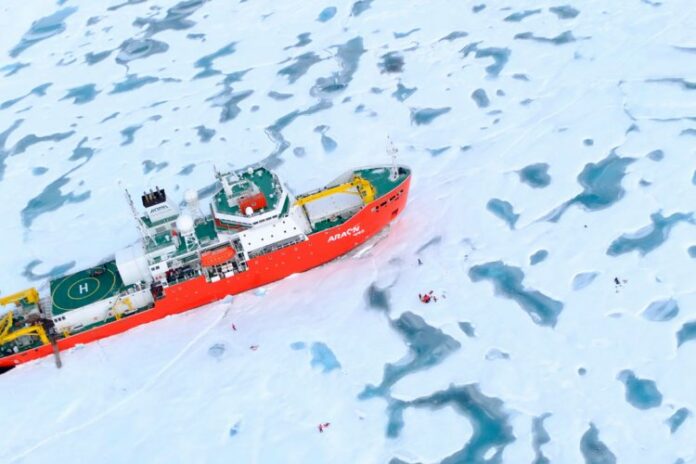
In August 2016 a massive storm on par with a Category 2 hurricane churned in the Arctic Ocean. The cyclone led to the third-lowest sea ice extent ever recorded. But what made the Great Arctic Cyclone of 2016 particularly appealing to scientists was the proximity of the Korean icebreaker Araon.

For the first time ever, scientists were able to see exactly what happens to the ocean and sea ice when a cyclone hits. University of Alaska Fairbanks researchers and their international colleagues recently published a new study showing that sea ice declined 5.7 times faster than normal during the storm. They were also able to prove that the rapid decline was driven by cyclone-triggered processes within the ocean.

Lead author Xiangdong Zhang from the UAF International Arctic Research Center, said:

“Generally, when storms come in, they decrease sea ice, but scientists didn’t understand what really caused it.”

There was general speculation that sea ice declined solely from atmospheric processes melting ice from above. Zhang and his team proved this theory incomplete using “in-situ” observations from directly inside the cyclone. The measurements reflected things like air and ocean temperature, radiation, wind and ocean currents.

It was a stroke of good luck for science, and perhaps a bit nerve-racking for those onboard, that the icebreaker was in position to capture data from the cyclone. Usually ships try to avoid such storms, but Araon had just sailed into the middle of an ice-covered zone and was locked in an ice floe.

Thanks to the ship’s position so close to the storm, Xiangdong and his team were able to explain that cyclone-related sea ice loss is primarily due to two physical ocean processes.

First, strong spinning winds force the surface water to move away from the cyclone. This draws deeper warm water to the surface. Despite this warm water upwelling, a small layer of cool water remains directly beneath the sea ice.

That’s where a second process comes into play. The strong cyclone winds act like a blender, mixing the surface water.

Together, the warm water upwelling and the surface turbulence warm the entire upper ocean water column and melt the sea ice from below.

Although the August storm raged for only 10 days, there were lasting effects.

Zhang explained:

“It’s not just the storm itself. It has lingering effects because of the enhanced ice-albedo feedback.”

The enlarged patches of open water from the storm absorb more heat, which melts more sea ice, causing even more open water. From Aug. 13-22, the amount of sea ice in the entire Arctic Ocean declined by 230,000 square miles, an area more than twice the size of the state of Arizona.

Xiangdong is now working with a new computer model for the Department of Energy to evaluate whether climate change will lead to more Arctic cyclones. Previous research shows that over the past half-century, the number and intensity of cyclones in the Arctic have increased. Some of those storms, like the biggest Arctic cyclone on record in 2012, also led to record low sea ice extent.

Cadeler announces significant fleet expansion due to strong market demand

0

This will double Cadeler’s total fleet, reflecting an accelerated market demand for the best-in-class fleet that Cadeler already operates today. To finance the fleet expansion, Cadeler has successfully completed an oversubscribed private placement, issuing 23,000,000 new shares in the company at a price of 34.50 NOK per share. The total proceeds of the private placement amount to 794 million NOK which will be used to finance the fleet expansion. 

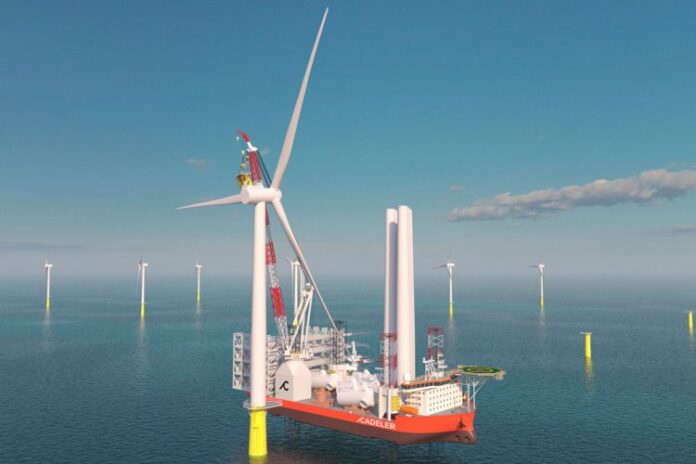
Cadeler has announced the intent to acquire two new build X-class vessels for installation services, operation, and maintenance work on offshore wind farms. In conjunction with Cadeler’s IPO, the company announced the intent to acquire the first new-build X-class vessel. Due to accelerating market demand, Cadeler has decided to ramp up capacity even more with the planned order of a second new X-class vessel. The fleet’s installation capacity will be more than doubled when the new X-class vessels are delivered.

Mikkel Gleerup, CEO at Cadeler A/S, says:

“We maintain a close partnership with our clients to understand their future need for capacity and fleet capabilities. Our aim is to support the green transition by building offshore wind farms. The delivery of two new vessels is great news for the offshore wind market, Cadeler, and the green transition as we see an accelerated need for installation capacity via more sophisticated vessels.”

Cadeler originally announced the intention to contract the first new X-class vessel in September 2020. The new design for the modern ship was created in close partnership with GustoMSC and is a bespoke version of the NG-20000X-G design. The vessel is categorized by Cadeler as unseen in the industry up to now; it will be able to operate at some of the most difficult sites globally and with the largest equipment in the industry.

Promises of such a vessel have spurred significant interest in the industry.

Mikkel Gleerup said:

“Since we announced the intention to expand our fleet with the first new build X-class vessel, we have seen massive interest in the market for this state-of-the-art ship and the capabilities it represents. This, combined with the general level of activity we are seeing in the market, has led us to the conclusion that we needed to order two and not just one of these new vessels.”

The interest that the company has seen from clients has been primarily focused around the increased transit capacity which the X-class vessels offer, lowering the energy intensity of installation, reducing installation time and thereby lowering total cost of installing offshore wind farms.

Cadeler has yet to announce which shipyard will be awarded the contract for the two new build vessels. The company expects the two new X-class vessels to be completed by 2024 and 2025, at which point they will become operational and ready to assist the company’s clients going forward.

With an oversubscribed private placement, Cadeler has strengthened its financial backbone with the total proceeds of 794 million NOK to finance the fleet expansion, reflecting the accelerated growth potential of Cadeler. The 23,000,000 new shares in the company were subscribed at an average price of 34.50 NOK per share.

Mikkel Gleerup says:

“I am very pleased that we have seen such great interest from the investor community in being part of Cadeler’s growth trajectory, powered by the green transition. We are in a growing market where Cadeler already operates a best-in-class fleet. By acquiring two new-build X-class vessels, we solidify and expand our position as industry leaders. The substantial interest in the private placement is a testament to our strategy to lead the industry.”

Total enters a 640 MW offshore wind project under construction in Taiwan

0

The project, currently under construction, represents production capacity of 640 megawatts (MW) and benefits from a 20-year guaranteed-price power purchase agreement (PPA) with the state-owned company Taipower of USD 250/MWh for the first 10 years and USD 125/MWh for the following 10 years . For this acquisition of a 23% interest, Total will pay to wpd a consideration based on its share of past costs. 

Located around 10 kilometers offshore at water depths ranging from 7 to 35 meters, the wind farm will comprise 80 wind turbines with a unit capacity of 8 MW. Construction is scheduled to be completed in 2022. Once on stream, the project will produce 2.4 terawatt hours (TWh) of renewable electricity per year, enough to serve the power needs of 605,000 households. 

Procurement of the main components has been finalized and marine works are under way. The project reached a major milestone with the installation of the first wind turbine on April 23.

Identified by Taiwan’s authorities as a key area in the development of renewable energies, offshore wind power will be a significant contributor to the objective of generating 20% of its electricity from renewables by 2025 while fostering the emergence of a local wind power industry. Taiwan is one of the priority regions selected by Total for its development in offshore wind power in Asia. 

Stéphane Michel, President Gas, Renewables & Power at Total, said:

“This agreement provides Total with an opportunity to gain a foothold in one of Asia’s main offshore wind markets and strengthens the Group’s position in this fast-growing segment, in line with its strategy of profitable development in renewables worldwide. Taiwan has been a pioneer in developing offshore wind power in Asia, and we are proud to contribute to the transformation of its energy mix. We are delighted to enter into this first partnership with wpd, one of the leading independent developers of offshore wind power.”

The project is currently 48%-owned by wpd, 25% by EGCO (Electricity Generating Public Company Limited) and 27% by a consortium of Japanese investors led by Sojitz (Sojitz Corporation, ENEOS Corporation, Chugoku Electric Power, Chudenko Corporation and Shikoku Electric Power). 

The acquisition, which is subject to government approval, will broaden the Group’s portfolio of offshore wind projects under development and construction, that currently represents a cumulative capacity of about 5.5 GW. 

SANMAR delivers high-performance tug for SAAM’s newly launched service in Peru

0

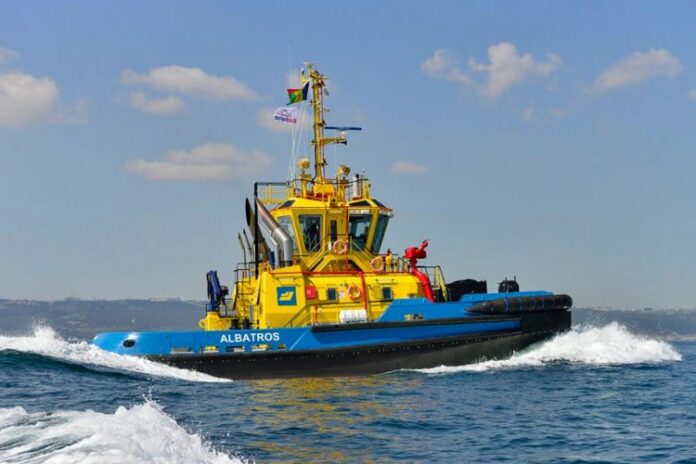
Albatros, known as Bogacay XLII while under construction in Turkey, is another example of the compact, but powerful RAmparts 2400SX class of tugboats designed exclusively for Sanmar by Canadian naval architects Robert Allan Ltd.

It will join the SAAM Towage tug Valkyria which recently started operating a new service from the Port of Callao, 12km from the Peruvian capital of Lima. Both tugs will be employed assisting the berthing and unberthing of ships in the harbour. Sanmar previously delivered the RAmparts 2400SX design tug Valparaiso to SAAM, which is operating in Panama.

Celebrating his company’s launch of operations in Peru, SAAM Towage Technical Director, Pablo Caceres said:

“We are very proud and excited to introduce a high quality built tugboat with the power and size that perfectly suits the requirements for the Port of Callao and, primarily, our Clients operating there. The ALBATROS has a well proven design throughout our operations, and has been improved with some other features that make her highly competitive”.

Measuring 24.4m x 11.25m and powered by two 2100 kW main engines, the technologically-advanced Albatros can achieve an impressive 70 tonnes of bollard pull and has a top speed of approx. 13 knots. A fire-fighting pump driven through clutched flexible coupling in front of port side main engine has a capacity of approx. 2700m3/hour.

Acclaimed for their manoeuvring ability, sea-keeping and stability performance, the Bogacay class tugs from Sanmar are designed for maximum efficiency in the performance of ship-handling duties for sea going ships.

Ruchan Civgin, Commercial Director of Sanmar, said:

“I am delighted that SAAM Towage has once again turned to Sanmar to provide the state-of-the-art high performance and cost-effective tugboat it needs for its expanding business. We wish it well in its new venture in Peru. Our Bogacay class tugs combine the benefits of the manoeuvrability of a compact design with the power and strength associated with a larger tug. We have had a lot of interest in them from operators around the world.”