1.3 C
New York
Home Blog Page 629

The ’Esvagt Dana’ supports Siemens Gamesa in the Baltic

0

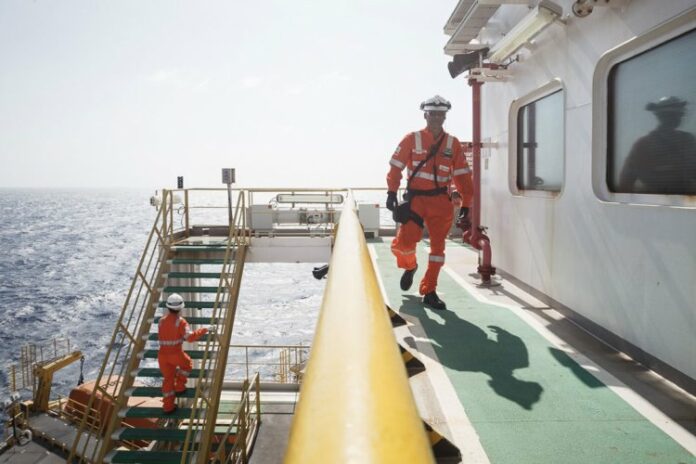
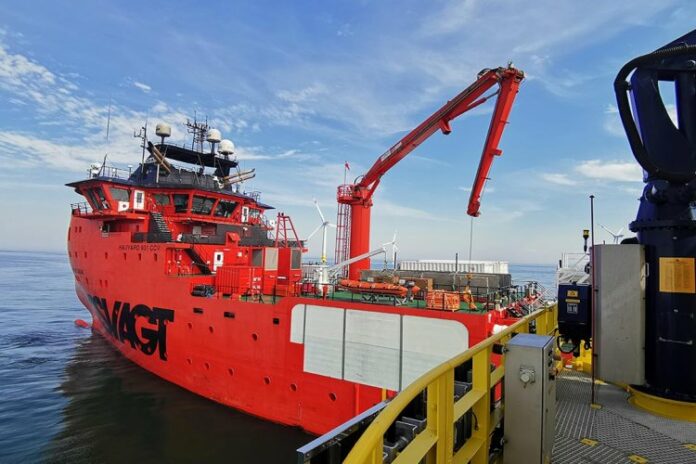
For the next three to six months, the ’Esvagt Dana’ will connect its gangway system to the offshore wind turbines in the Baltic 2 wind farm in the Baltic.

ESVAGT and Siemens Gamesa have entered into a 95-day agreement with an option of a further three months, heralding the return of the ’Esvagt Dana’ to more familiar waters and conditions. The vessel successfully provided support in Baltic 2 from November 2019 to August 2020 when the ’Esvagt Froude’, which had been working in the offshore wind farm since Baltic 2 was built, moved on to new tasks in Triton Knoll in the English sector.

Ib Henrik Hansen, Head of Commercial at ESVAGT, says:

‘The Baltic 2 offshore wind farm suits the ’Esvagt Dana’ really well and Siemens Gamesa specifically asked whether the ’Esvagt Dana’ was available. 

‘The waters of the Baltic and the low turbine height make the gangway system on the ’Esvagt Dana’ ideally suited to the work that needs doing there. The cooperation we experienced in the wind farm last time we worked together there was excellent, and we are looking forward to building on from that good experience,’ he says.

Breakthrough for Equinor in Polish offshore wind

0

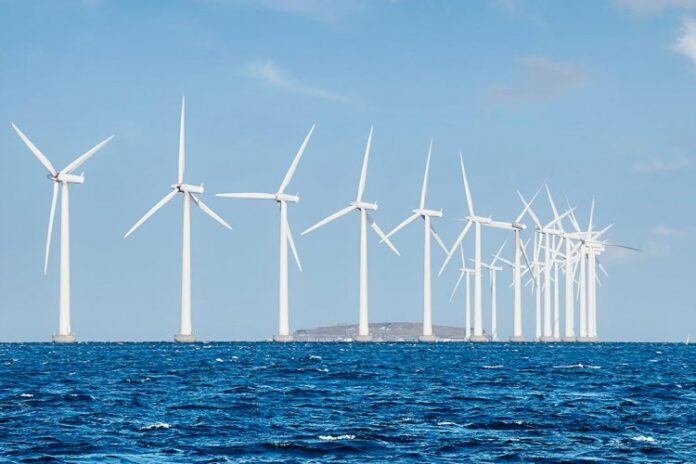
Poland’s Energy Regulatory Office (ERO) announced Equinor and Polenergia’s Bałtyk II and Bałtyk III projects were awarded contracts for difference (CfD) under the first phase of Poland’s offshore wind development scheme. The projects, with a combined potential capacity of 1440 MW, are among the first to secure offshore wind awards in Poland.

Pål Eitrheim, Equinor’s executive vice president for New Energy Solutions, says:

“The CfD awards to the Bałtyk II and Bałtyk III projects represent a breakthrough for Equinor in Poland and supports the country’s ambitions to transform its energy mix. Full-scale development of the two projects will constitute an offshore wind hub in the Baltic Sea. It will create industrial activity and jobs to support the Polish economy, and supply low-cost renewable electricity to Polish homes and businesses. The CfD award confirms our focused strategy of creating value from early access at scale in attractive markets.”

The award from ERO is an important milestone towards the realization of Bałtyk II and Bałtyk III. It confirms the projects’ inclusion in the first phase of Poland’s ambitious offshore wind development plan, contributing significantly to Poland’s energy transition and the development of the local offshore wind supply chain.

The CfDs are awarded at PLN 319.60 (*) per MWh for up to 25 years, subject to some adjustments and final approval from Polish authorities and the European Commission.

Poland has the ambition to develop 5.9 GW of offshore wind by 2030 and up to 11 GW by 2040. With a combined capacity of 1440 MW, Bałtyk II and Bałtyk III could generate enough renewable offshore wind energy to power two million Polish homes. They are among the largest offshore wind projects currently under development in Poland.

Pending all necessary agreements and permits, and subject to the final investment decision from Equinor and Polenergia, construction work could commence as early as 2024.

Ingunn Svegården, Equinor’s vice president for Emerging Regions in New Energy Solutions, says:

“The award of CfDs to the Bałtyk II and III projects is an important milestone towards Equinor’s ambitions in Poland and the Baltic region. Alongside our partner Polenergia, we look forward to further developing these projects to create value, also in the local community. The Baltic Sea will be a significant resource for offshore wind energy, and we are only in the early stages of realizing its full potential.”

Equinor was among the first international developers to enter the Polish offshore wind market in 2018 through the acquisition of a 50 percent interest in the Bałtyk II and Bałtyk III projects from Polenergia. Equinor subsequently acquired from Polenergia a 50 percent interest in the early-phase Bałtyk I offshore wind project.

Equinor will operate the projects through the development, construction, and operations phases.

Baker Hughes awarded subsea contract for Petrobras’ Marlim and Voador fields

0

Baker Hughes has been awarded a subsea oilfield equipment contract from Petrobras as part of the Marlim and Voador field revitalization plan in the Campos Basin, offshore Brazil. The contract includes several key technologies from Baker Hughes’ Subsea Connect portfolio and will provide Petrobras with a connected suite of solutions to help drive efficiencies, reduce costs and improve execution speed.

Baker Hughes will supply up to five subsea production and injection manifold systems, which benefit from a lightweight and compact design for installation from smaller vessels and include integrated hydraulic connection systems and retrievable choke modules to realize life of field cost savings. The manifold systems will also include Baker Hughes’ field proven vertical mechanical clamp connection system which increases installation efficiencies.

In addition to the manifold systems, Baker Hughes will provide 32 modular, structured, subsea control modules – called Modpods – which are powered by the company’s industry leading, ultra-reliable SemStar5 technology, manufactured in the company’s Nailsea facility in Bristol, UK. The modules have extensive field deployment history with a mean time between failures of more than 150 years, which is 10 times better than the industry average as measured by the Offshore and Onshore Reliability Data (Oreada). 

Neil Saunders, executive vice president of Oilfield Equipment at Baker Hughes, said:

“This order is an important example of how Subsea Connect is bringing structured technology to improve execution certainty. We are able to deliver world-class subsea solutions with a breadth of expertise and skills to bring flexibility, scalability and versatility to complex projects. We are proud to partner with Petrobras on the revitalization of Marlim and Voador and offer our latest subsea technologies for Brazil.”

Adyr Tourinho, vice president of Brazil and Oilfield Equipment for Latin America at Baker Hughes, said:

“This contract is a culmination of our multi-year engagement with Petrobras and builds on our history supplying subsea production systems to deepwater projects in Brazil. Our lightweight, compact technology is engineered to combat the most demanding conditions found in today’s deepwater environments.”

The contract will include a global team of experts delivering the subsea production and injection manifold systems, subsea control modules, subsea connection systems and field installation support. The manifold systems will be fabricated, tested and assembled in Baker Hughes’ Centre of Excellence facility in Jandira, Brazil.

Puget LNG and GAC to supply LNG marine fuel by barge from the Port of Tacoma

0

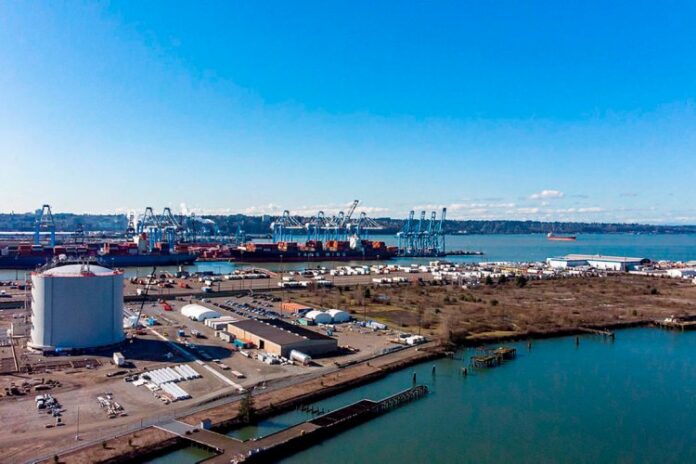
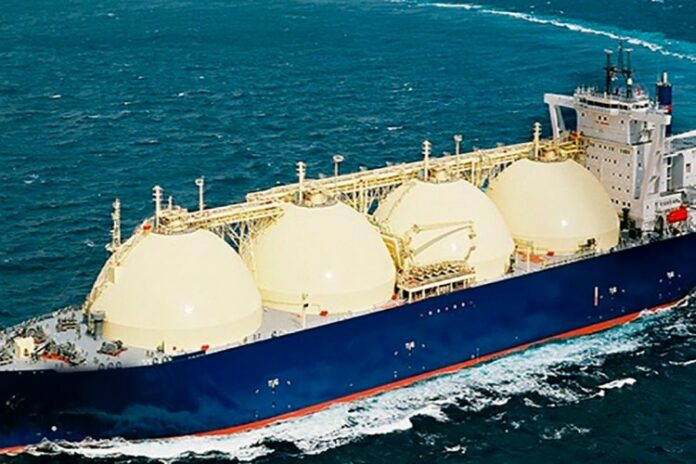
Puget LNG, LLC (‘Puget LNG’) and GAC Bunker Fuels Limited (‘GAC Bunker Fuels’) have signed a Memorandum of Understanding to cooperate in the supply and sale of clean-burning LNG marine fuel from Puget LNG’s terminal to GAC’s customers in the Pacific Northwest.

A DNV GL study commissioned by Puget LNG on the feasibility of a bunker barge to supply LNG as fuel to ships in the Puget Sound area concluded that the availability and cost of natural gas, especially in North America, has made the use of LNG an attractive solution for ship operators to comply with air emissions regulations. A growing orderbook for LNG-fueled vessels has underlined the need to develop LNG supply infrastructure in all major shipping ports and regions, including the Pacific Northwest.

Blake Littauer Puget LNG Director said:

“Partnering with GAC Bunker Fuels is another way Puget LNG is working to create a clean energy future for all as its sister company, Puget Sound Energy, has set an aspirational goal to be a Beyond Net Zero Carbon company by 2045. PSE is targeting to reduce its own carbon emissions to net zero and go beyond by helping other sectors enable carbon reduction across the state.”

GAC Bunker Fuels, a division of the Dubai-based GAC Group, will issue a Request for Proposal (“RFP”) for a Jones Act-compliant LNG bunker barge to be constructed, owned, and operated by a third party. The barge would have the flexibility in size and design to serve multiple shipping customers and is expected to be operational in 2023. Loading from Puget LNG’s terminal in Tacoma, the barge will be able to bunker vessels in port. GAC will extend credit terms to shipping companies that purchase fuel on both contract and spot basis.

Nicholas Browne, GAC Bunker Fuels’ Global Director, says:

“This exciting foray into the Pacific Northwest with Puget LNG is the latest expansion of our footprint in the U.S., adding to GAC’s growing LNG fuel portfolio.”

GAC Bunker Fuels secured a deal to supply LNG as a marine fuel last year, having provided brokerage and ship agency services to the ‘Fure Ven’ which was the first non-U.S. flagged vessel to receive LNG in a U.S. port. The company also entered into a Heads of Agreement with Houston-based Pilot LNG for LNG marine fuel to be delivered ex-ship for its customers in the ports of Houston, Texas City, Galveston and Galveston Offshore Lightering Area.

Nicholas adds:

“We have less than ten years to meet the greenhouse gas reduction targets set by the International Maritime Organization for 2030. Right now, LNG is the alternative fuel with the greatest potential and biggest following. GAC Bunker Fuels can help our customers and suppliers meet these targets by providing them with cleaner, cost-effective marine fuels like LNG. This dovetails with our own sustainability strategy, which we are pursuing with fervor and commitment.”

Study: LNG will play key role in industry’s decarbonization ambitions

0

While nearly 40 percent of shipowners have still not implemented a decarbonization strategy despite impending regulations, there is resounding confidence among industry leaders in LNG’s potential to help reach regulatory goals in the coming decades.

These are key messages from the panel of industry leaders and a survey of more than 400 attendees at a webinar exploring decarbonization research recently published by ABS in the report Setting the Course to Low Carbon Shipping: View of the Value Chain.

The third publication in the ABS Low Carbon Shipping series builds from prior issues which have identified LNG’s importance among the various alternative fuel options, and looks into current ship designs, in many cases, starting a transition to alternative fuels with LNG.

Christopher J. Wiernicki, ABS Chairman, President and CEO, said:

“It’s clear the industry needs LNG as a transitional fuel to get us to 2030, it could also support the transition to zero-carbon and carbon-neutral fuels that are required to get us to 2050 such as Hydrogen. Owners of internationally trading ships are facing increasingly complex investment decisions as they try to navigate the most efficient course to the low-carbon future.”

As part of its award-winning decarbonization programs, ABS has simplified three fuel pathways (light gas, heavy gas and bio/synthetic) to help aid owners’ decision-making.

Wiernicki added:

“LNG remains the clear choice today because of its sheer scalability, growing availability and high technological readiness among low-carbon and low-emission fuels, where Hydrogen and Ammonia appear to be emerging as significant fuel types for tomorrow.”

The survey indicated the industry has solid confidence in LNG’s potential, with almost nine out of ten respondents agreeing that it has a key role to play in reaching IMO 2050. Among six fuel types, LNG landed the clear majority of the votes as having the most potential for meeting IMO 2050 decarbonization goals.

Of the respondents confirming they had not yet put in place a fleetwide decarbonization strategy, 70 percent reported that they had developed a clear understanding of their fleet’s environmental performance in relation to industry peers.

Key takeaways included:

  • The short-term IMO measures, EEXI and CII, create a challenging landscape for many vessels within the global fleet.
  • Life-cycle analysis clearly identifies the need for green fuel production in order to have meaningful GHG emissions reduction from low- and zero-carbon fuels.
  • The required scale up of technology for green fuel production is significant (by an order of magnitude) before low- and carbon-neutral fuels can be widely adopted by the global fleet.
  • The adoption of such fuels and the overall decarbonization of the marine sector will be enhanced by the global economy’s efforts to address the impact of climate change.
  • Understanding global supply chains is critical to plan future fleet composition and renewal strategies.

Wiernicki said:

“Although we are fuel and technology agnostic, ABS focuses on working across the board to help owners not only reach their decarbonization and sustainability targets but hit them successfully, while maintaining a laser focus on safety.”

VIDEO: Malaysian offshore rig sinks following punch-through incident

0

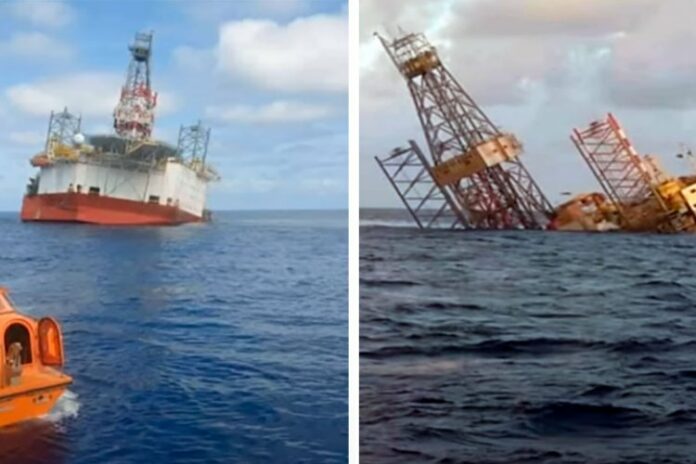
VELESTO ENERGY BERHAD has informed that an incident involving one of the rigs, VELESTO NAGA 7 occurred at the worksite due to soil rapid penetration on 3 May 2021, Monday, whilst operating at Salam-3 well off the coast of Sarawak for ConocoPhillips Sarawak, as the operator of WL4-00 PSC:

“The rig tilted during the incident and subsequently on 4 May 2021, Tuesday, VELESTO NAGA 7 fully submerged at the location. Drilling activities have not commenced and no well has been drilled at the time of incident.

All personnel on board, totalling 101, are safely transferred to rescue vessels immediately after the incident, where 85 of these personnel have already arrived in Miri, Sarawak. The remaining 16 personnel are presently en route to Miri and are expected to arrive late tomorrow morning, 5 May 2021, Wednesday.

All the relevant authorities have been duly informed and we are currently monitoring the incident location for any potential adverse impact.

The Company is investigating the incident and evaluating recovery options. While the rig is covered by insurance, potential recovery efforts are ongoing and monitored.

VELESTO extends gratitude to all parties involved in the evacuation operation after the incident and also the ongoing recovery efforts, including our client and all relevant authorities.”

Video: Mooktie Media

DNV awards AIP for new LNG fuel tank insulation with leak detection system

0

The new concept is designed for prismatic ‘type B’ LNG tanks – which according to IMO rules require a partial secondary barrier – and includes a leakage detection system capable of safely managing and containing fuel leaks.

Svein Konradsen, COO of PASSER Marine AS, said:

“The system we have developed is cost-effective and production-friendly. The pandemic has been challenging for many companies and for the development of this particular design. The required testing has been difficult to finalize due to testing interruptions and limited possibilities to travel, but finally we have been able to submit the necessary documentation which I am very pleased to say was accepted by DNV.”

As LNG fueled vessels are increasingly being deployed for deep-sea shipping, fuel tank sizes need to increase from 300-1000 m3 fuel capacity to up to 10,000-20,000 m3 which leaves less room for cargo.

As such, there is increased industry interest in alternative fuel tanks – known as ‘type B’ – which are prismatic in shape and more volume efficient than traditional cylindrical ‘type C’ tanks. Between 95 and 99% of LNG fueled ships contain type C fuel tanks, but many newbuilds on order contain ‘type B’ specifications.

Monika Johannessen, DNV Maritime Head of Department, Gas Carrier Excellence Centre, said:

“There are several insulation concepts under development that provide an integrated secondary barrier and leakage detection system, but there are few proven systems available on the market. We are pleased that PASSER Marine has chosen DNV to pursue verification for this innovative concept and look forward to receiving the documentation for full approval.”

AIP is widely recognized in the industry as an early phase verification level for new design concepts or for existing designs in new applications. An AIP issued by DNV is an independent assessment of a concept according to an agreed requirement framework within DNV Rules, notations and regulations for which DNV is authorized to carry out third part verification, confirming that a design is feasible and that no major obstacles would prevent the concept from being realized.

ChartWorld and ZeroNorth enter joint solution partner agreement

0

ChartWorld and maritime technology company, ZeroNorth have entered into a Joint Solution Partner Agreement. Under this agreement, ChartWorld will license access to its route network, port database, and navigational safety systems, complementing ZeroNorth’s unique vessel optimization platform.

Oliver Schwarz, ChartWorld’s Director of Business Development, said:

“ChartWorld focusses our process and system development on the shortest, safe and compliant route. This agreement is a good example of how our specialist data set can be combined with the information relating to vessel performance optimization. Because optimized vessel performance must, first and foremost, be safe.

“As the digitization process makes its way through the shipping sector, we are seeing an increasing overlap between safety and performance requirements. Owners and operators want systems that are integrated, simple to use, and deliver quantifiable results. This is why agreements such as this are so effective from an operational point of view.”

A spin-off of Maersk Tankers, ZeroNorth is now an independent standalone tech start-up, with a single, clear mission: digitalise shipping for the climate.

Speaking on the announcement, Søren Christian Meyer, Chief Executive Officer, ZeroNorth, said:

“Our mission is to help ship operators optimize voyages, maximize earnings, and cut CO2, all by turning data – lots of which they already hold – into actions.

“The addition of ChartWorld’s route network, port database, and navigational safety information helps us further expand our Optimise software platform, allowing us to generate even more robust insights. The addition of this data directly benefits our users and, therefore, the wider sustainability and profitability of our sector.”

Antarctic ice shelf risks collapse due to warm mountain winds

0

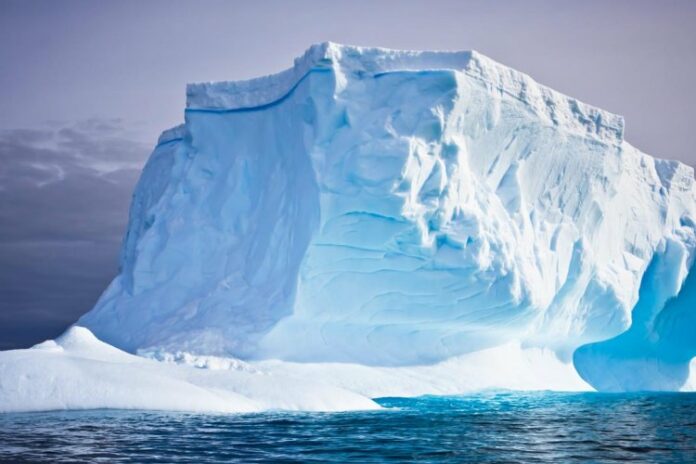
The Larsen C Ice Shelf is located on the Antarctic Peninsula, which currently experiences the highest surface melt rates across Antarctica. Melt rates have been increasing in response to strengthening circumpolar winds that result from ozone depletion and increasing greenhouse gas concentrations.

The study provides the first comprehensive explanation for the melt experienced across the ice shelf.

Strengthening circumpolar winds have brought more warm maritime air to the region and increased the frequency and strength of warm mountain wind events known as foehn over the east coast of the Antarctic Peninsula, where Larsen C is located. The research found foehn winds drive the highest melt rates and govern the variability of melt across the ice shelf.

Dr. Andrew Elvidge, a senior research associate in UEA’s School of Environmental Sciences, led the research. He will present the findings today at the annual meeting of the European Geophysical Union.

Dr. Elvidge said:

“Our study has shown that the dominant control on Larsen C surface melt is the occurrence, strength and warmth of foehn winds, and that the most intense foehn-driven melt occurs in embayments, or inlets.

“From previous studies we know these regions are now prone to melt water ponding, which is the precursor to hydrofracture, when crevasses are driven open by the weight of water generated by surface melt. This is the mechanism believed to have caused the catastrophic collapses of the nearby Larsen A and B ice shelves in 1995 and 2002, respectively.

“Foehn-driven melt on Larsen C is likely to increase in the future, with further strengthening of the circumpolar winds expected due to increasing greenhouse gas concentations.

“The collapse of ice shelves causes the glaciers that previously fed them to speed up and drain directly into the ocean, which leads to sea level rise.”

The research, with co-author Prof Ian Renfrew of UEA’s School of Environmental Sciences and scientists from Utrecht University and the British Antarctic Survey, used measurements of the ice shelf and atmosphere gathered between November 2014 to June 2017, in conjunction with atmospheric model simulations.

According to their findings, the inlets of Larsen C experience the highest melt rates, and although foehn winds are seen just 15 percent of the time, they account for 45 percent of the surface melt.

Dr. Elvidge said:

“This region is one of the fastest-warming on Earth and currently experiences the highest surface melt rates across Antarctica.

“Further work with weather and climate models is needed to improve predictions of the timescales on which Larsen C will become vulnerable to atmosphere-driven collapse.”

Neptune Energy acquires interest in the Pegasus West discovery

0

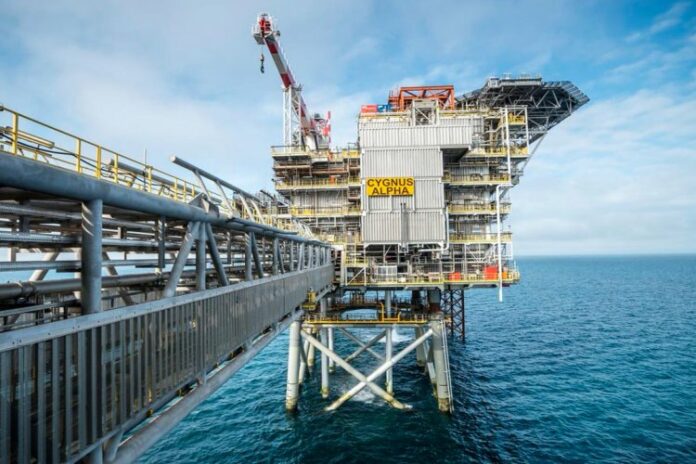
Neptune Energy today announced it has acquired a 38.75% equity interest from Spirit Energy in the Pegasus West discovery and surrounding acreage (P1724, P1727, P4257 and P2128) in the UK Southern North Sea.

Entry by Neptune into the Pegasus West Area aligns interests in both the discovery and the Neptune-operated Cygnus gas facility (Neptune Energy 38.75% and operator, Spirit Energy 61.25%) enabling acceleration of the development of Pegasus West as a subsea tieback to the existing Cygnus field.

Neptune will work closely with Spirit Energy on front end engineering and design (FEED) studies in 2021 with the intention to reach a final investment decision by year end. Once sanctioned, Neptune would become operator of the development through to first gas and into production. 

Neptune Energy’s Managing Director in the UK, Alexandra Thomas, said:

“The alignment of interests with Spirit Energy in the Pegasus West development offers material benefits of faster development, lower costs and lower carbon intensities as well as optimisation of production operations through our existing world-class gas production asset, Cygnus.

“Cygnus is strategically important for domestic gas supply to the UK, and has one of the lowest carbon intensities on the UKCS, at less than 2kg per boe. The development of Pegasus West will ensure further UK low carbon gas supply, while opening up opportunities for development of other potential gas resources in the Greater Cygnus Area.”