1.3 C
New York
Home Blog Page 628

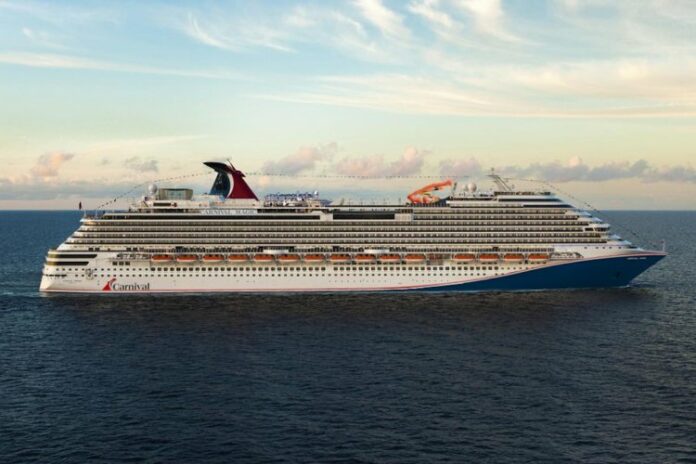
Carnival Cruise Line announces new red, white and blue hull design across fleet

0

Following the popularity of the red, white and blue livery adorning Mardi Gras, another Carnival Cruise Line ship will soon receive the dramatic hull design that will become a trademark feature across the fleet as Carnival, America’s Cruise Line, prepares to celebrate its 50th birthday in 2022.

Paying homage to maritime tradition and patriotic colors, the eye-catching hull design is highlighted by a stately navy blue hull inspired by officers’ uniforms along with vibrant red and white accents running the entire length of the 1,004-foot-long ship.  Additional vessels will receive the new livery as they undergo scheduled dry docks.  Carnival Glory will be the second ship to receive the new hull design during a dry dock scheduled in June.   

 Christine Duffy, president of Carnival Cruise Line, said:

“When we first saw the hull design for Mardi Gras, we knew it was something special and, particularly as we get ready to celebrate our 50th birthday, we’re delighted to incorporate this stunning livery as a signature exterior design element across our fleet. As we look to resume sailing in the U.S., we’re coming back with a signature new look as well!”

In addition to the new livery, Carnival Magic will emerge from its dry dock on May 24 with an expanded casino with an even greater variety of slots and other games, as well as a host of enhancements including freshening up the finishes for the WaterWorks aqua park and pools.

Equinor and Vårgrønn team up for floating wind at Utsira Nord

0

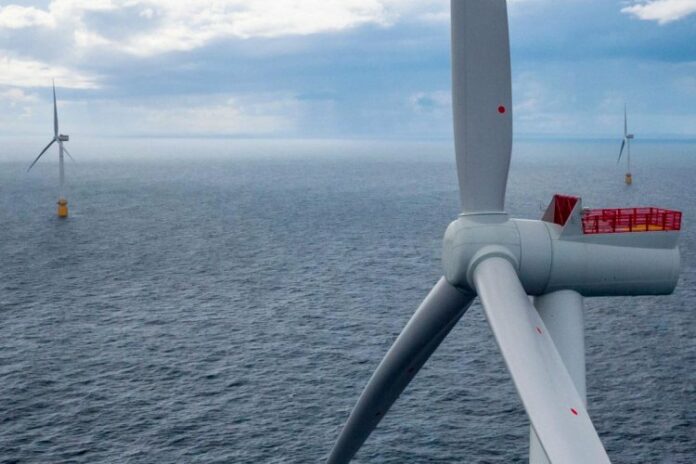
Through a collaboration agreement Equinor and Vårgrønn a Norwegian renewable energy company established by HitecVision and Eni, aim to jointly prepare and submit an application to the Norwegian authorities to develop floating offshore wind at Utsira Nord west off Utsira and Haugalandet in the Norwegian North Sea.

The Norwegian Ministry of Petroleum and Energy has opened two areas for offshore renewables (Utsira Nord and Sørlige Nordsjø II), and the authorities are currently working on the licensing process for Norwegian offshore wind power projects.

The North Sea has some of the world’s best wind resources and is well known to the two offshore wind energy companies.

Pål Eitrheim, Executive vice president for New energy solutions in Equinor, says:

“The North Sea has some of the world’s best wind resources. A floating offshore wind farm at Utsira Nord could be the next project at scale to drive industrialisation of floating offshore wind and create new opportunities for Norwegian industry. Together with Vårgrønn, we are eager to contribute to a new chapter in Norway’s energy legacy and position floating offshore wind as a new industry contributing to the energy transition. As the leading floating offshore wind developer Equinor has the experience and capabilities necessary to develop the next full-scale floating offshore wind farm in Norway after Hywind Tampen.”

Olav Hetland, CEO, Vårgrønn, says:

“We are excited to enter into a partnership with Equinor on floating offshore wind, contributing to the continued development of Norway as a leading energy nation. This project will be an essential part of our ambition to own and operate 1 gigawatt (GW) installed capacity by 2030. Developing a home market for offshore wind power, particularly floating, will be important for developing the Norwegian offshore wind supply industry, and positioning new technologies for a growing global market. Vårgrønn and its owners have the competence and a strong commitment to help further develop a new industry within the renewable energy sector on the Norwegian Continental Shelf.”

Vårgrønn is a joint venture between the global energy company Eni and the Norwegian energy entrepreneur and investor HitecVision. Equinor and Eni are partners in Dogger Bank currently under construction in the North Sea, which, once completed, will be the world’s biggest offshore wind farm.

HitecVision and Eni have a longstanding collaboration through Vår Energi – the largest, independent oil and gas company in Norway, and a partner in the Hywind Tampen project. Since the 1980s, HitecVision has been a leading entrepreneur and investor in the energy industry, having invested in, acquired or built more than 200 companies.

Both HitecVision and Eni have recently positioned renewables at the centre of their strategies to help accelerate the energy transition. Vårgrønn builds on the strengths, experience and capacity of both HitecVision and Eni in achieving its ambitions within the renewable energy sector.

Equinor has managed to bring the cost down for each floating offshore wind project it has developed: Between Hywind demo in 2009 and Hywind Scotland in 2017 the company took down capex per megawatt by 70%.

When Hywind Tampen starts up next year the ambition is to reduce the costs further by more than 40%. For both Equinor’s floating offshore wind projects, Norwegian suppliers have shown their ability to compete in a global market with 30% Norwegian content on Hywind Scotland and 50% on Hywind Tampen.

Viking Glory to sail under Finnish flag

0

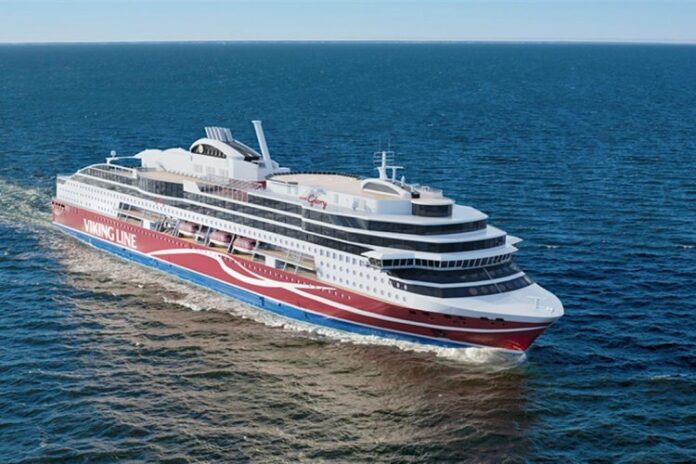
As a result, Viking Line, which is Finland’s largest maritime employer, will expand its fleet with another Finnish-flagged vessel.

Viking Line is Finland’s largest maritime employer, with nearly 2,400 employees. Of the seven vessels in its fleet, five currently sail under the Finnish flag. Recruitment work for the new vessel will begin soon, and recruitment will begin first among staff employed on the company’s other vessels.

Jan Hanses, President and CEO of Viking Line, says:

“In these pandemic times, the collaboration between the Finnish authorities and the Finnish seafarers’ organization has worked well. We see great advantages to having the same flag on both vessels serving the Turku–Stockholm route. Viking Glory will replace the Finnish-flagged Amorella, and since the intention is for the delivery of Viking Glory not to lead to any redundancy measures, it is natural to continue with a Finnish flag. In taking this decision, we rely on there being continuity in Finnish maritime policy, so that our operating conditions are maintained and we are not forced to review our decisions on the vessels’ flags.”

Viking Glory is the result of a strong collaboration between Finnish and other Nordic partners, who with their expertise and knowledge have contributed to developing environmental technology details and an innovative interior. The focus throughout the project has been on energy optimization and environmentally-adapted solutions. The new Viking Glory is bigger than the environmental pioneer Viking Grace, but is nonetheless expected to use about ten per cent less fuel and thus be one of the world’s most energy-efficient vessels.

Facts about Viking Glory:

  • To be delivered in late 2021
  • Expected placement in service in early 2022 on the Turku–Åland–Stockholm route
  • Passenger capacity: 2,800 passengers
  • Cabins: 922  
  • Crew: around 150 + 150 people
  • Length: 222.6 metres, gross tonnage: 63,813 tonnes
  • Cargo capacity: 1,500 metres
  • Ice class: 1A Super
  • Fuel: Liquefied natural gas (LNG)
  • Construction at XSI’s shipyard in China
  • Partners: Wärtsilä, ABB Marine, Kone, Almaco, Koncept, Climeon, Evac, Projektia, Pointman, Deltamarin and others

Siemens Energy partners with Liquid Wind to produce green fuel

0

After several years of collaboration, Siemens Energy has officially joined the Power-to-Fuel developer to produce eFuel and enable a significant reduction in carbon emissions from shipping. Siemens Energy is providing an equity investment to Liquid Wind AB and will contribute technology and expertise to the development of eMethanol facilities. 

Liquid Wind’s facilities will integrate a 70-Megawatt PEM-Electrolyzer by Siemens Energy, which will use renewable electricity to split water into green hydrogen and oxygen. The green hydrogen will be combined with biogenic CO₂ to form carbon neutral liquid fuel. This eFuel will be used by the shipping industry to replace fossil fuels, preventing the emission of 100,000 tons of CO₂ every year. In addition to the PEM-Electrolyzer, Siemens Energy will also supply the entire power distribution, electrification, instrumentation, motors, drives and plant-wide automation. Digital tools will support the operation, optimisation and replication of the standardised facilities.

Engelbert Schrapp, Principle Corporate Account Manager of Siemens Energy, said:

“eMethanol will be one of the drivers in the future of transportation and Siemens Energy want to be an active part of this.

Liquid Wind is one of the most advanced developers in this space. Their ambitions for scale combined with Siemens Energy’s technology like the PEM-Electrolyzers and digital tools, will certainly have the chance to be one of the pillars of a more sustainable transportation industry.” 

Claes Fredriksson, CEO and Founder of Liquid Wind, said:

“After close collaboration for five years we are pleased to officially welcome Siemens Energy to the Liquid Wind project. They bring a broad range of valuable expertise, solutions and contacts. Their systems and collaborative spirit will play a crucial role in enabling the efficient replication of eMethanol facilities to meet growing demand for carbon neutral fuel.”

With a construction time of approximately two years, the eMethanol is expected to be available from early 2024. The company is planning to scale up rapidly and is targeting the development of up to 500 standardised facilities internationally by 2050.

Report: Reefer container freight rates soar but remain outgunned by dry box rates

0

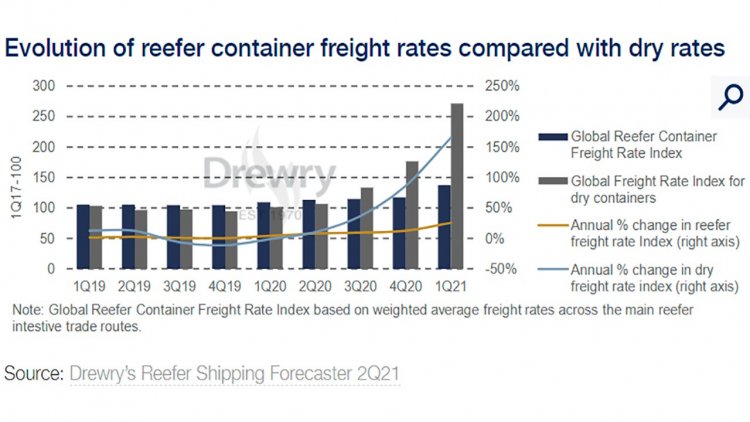
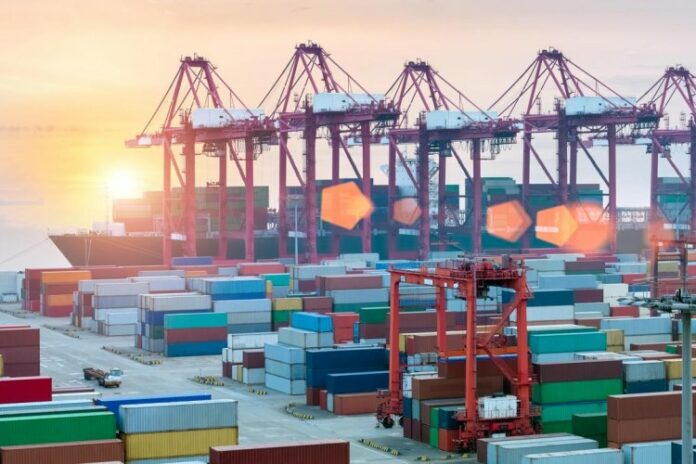
Drewry’s Reefer Container Freight Rate Index, a weighted average of reefer freight rates across the top 15 reefer intensive trade lanes, jumped 26% in the first quarter, on a seasonal uptick in cargo demand and rising bunker surcharges.

This was its highest level since the Index was launched in 1Q17 and rates are expected to rise further through the second quarter. However, these increases are modest compared to the inexorable rise in dry freight rates, as illustrated in the chart below.

Drewry’s head of reefer shipping research Philip Gray said:

“Tight container equipment availability and a shortage of slot capacity have been key drivers in forcing up freight rates, as a recovering reefer trade has struggled to compete for space with higher paying dry cargo traffic. Despite record levels of reefer container production in 1Q21, Drewry expects equipment availability to remain tight over the next few years.”

Meanwhile, container supply chain disruption has greatly increased demand for specialised reefer ships, driving time charter equivalents above the 100 cents/cft/30 days threshold, representing the strongest period of trading in a decade. Indeed, trade for these vessels is so buoyant that Drewry expects the fleet to expand this year, breaking a 20-year declining run, though contraction is anticipated to continue thereafter.

Meanwhile, the recovery in seaborne perishables trade is expected to be muted this year by the Fusarium TR4 disease afflicting banana production. Worldwide shipments rose just 1.8% in 4Q20 and growth has slowed further since. Over the last 12 months the Philippines, the second largest banana exporter, has been notably affected by the diseases, where exports contracted by as much as 18% in 2020. More recently Peru has reported an outbreak of Fusarium, which has led to a state of high alert not only in Peru itself but in neighbouring Ecuador, the world’s biggest banana exporter.

After contracting 0.4% to 130 million tonnes in 2020, Drewry expects the recovery in seaborne reefer traffic to be limited to 2.7% this year, before accelerating thereafter to an average annual growth rate of 4%. Decline in the size of the specialised reefer vessel fleet will see containerised perishables traffic expand at a faster pace over the medium term, to a rate comparable with the dry cargo trade.

Gray concluded:

“Despite modest cargo growth this year, reefer container freight rates are advancing further through the sector’s peak season and are expected to remain high through much of the year, supported by continuing disruption across the container supply chain. The same drivers will continue to buoy specialised vessel charter rates.”

Holland America Line to restart cruising from Greece in August 2021

0

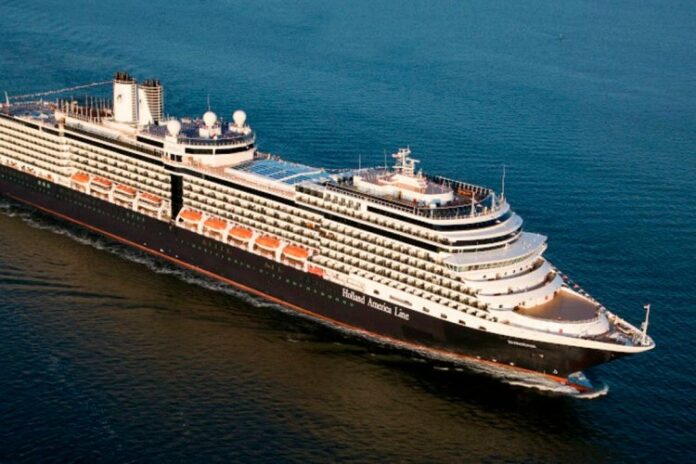
Working in close coordination with the government of Greece, Holland America Line has received approval to restart cruising from Piraeus (Athens) in August with four departures aboard Eurodam. Bookings for these cruises will open May 6.

Gus Antorcha, president of Holland America Line, said:

“Everyone at Holland America Line has been preparing for our return to service, and we are grateful to the government of Greece for allowing us to show that we can safely operate our cruises. The beautiful islands of Greece have been a highlight of our Mediterranean itineraries for decades, and we are honored to be able to restart out of Athens and give our guests a memorable vacation after all this time without cruise travel.”

Holland America Line cruises from Greece are available for guests who have received their final dose of an approved COVID-19 vaccine at least 14 days prior to the beginning of the cruise and have proof of vaccination.

Holland America Line guests will be required to comply with all health and safety protocols in place at the time of departure for travel to and from the ship, as well as all onboard protocols and procedures for visiting ports.

Additional preventive health measures under Holland America Line’s “Travel Well” program will be in place, including health screenings, face mask requirements, physical distancing and capacity controls. 

Holland America Line’s protocols are subject to change as work continues in collaboration with medical experts and government bodies to ensure the practices evolve in line with the latest advice.

Babcock completes engineering package for diamond mining ship MV !Gariep

0

Babcock has completed a programme of critical integration engineering and detailed design work on the De Beers Marine Namibia (DBMN) diamond mining ship MV !Gariep from its state of the art engineering hub at Rosyth. 

The package of work included removing two existing engines, three YANMAR generating sets and one Caterpillar generating set and installing two 3MW Wärtsilä 9L26 medium speed generator sets, new switchboards and two electric propulsion systems. De Beers had chosen its preferred replacement equipment, so the challenge for Babcock’s team of engineers and designers was to ensure that it integrated in the optimal way with the ship structure and systems.

The detailed design was undertaken from Rosyth, while the asset was more than 8,500 miles in its home port. This novel approach was completed successfully with the team receiving positive feedback from the customer. Due to the COVID-19 pandemic and following Government advice, the team completed the last 4 months of the project working remotely from home. 

Sean Donaldson, Managing Director for Babcock at Rosyth, said:

“We are delighted to have once again worked with De Beers Marine, to complete the engineering package of work on MV! Gariep.

“During globally challenging times, our experienced engineering and design team have worked innovatively using technology such as 3D modelling to ensure that we deliver for our customer.”

Scott Davidson, Mechanical Engineer at Babcock Rosyth, who worked on the design said:

“I was excited when I heard we were awarded the De Beers contract and assumed the project would be based in South Africa. I was amazed to discover that the project would be carried out in Rosyth.

“We were provided with a 3D laser scan of the compartments affected by the upgrade on the !Gariep vessel along with system drawings. Using this technology we are able to build up a 3D model of the structures, equipment and systems which would remain once the old equipment had been removed.”

By making use of technology and the 3D model, the team were able to optimise the position of the new equipment and systems. Piping, HVAC and cable routings were all fitted largely clash free which is a huge achievement as over 1.3km of pipework was installed in a very busy brownfields confined space.

While the new equipment enables significantly improved efficiencies and reduces carbon emissions, the arrangements and design also focused on safety. Safe access for operations as well as design for ease of maintenance were important drivers during the design process.  

The team working on this project consisted of Structural Engineers, Naval Architects, Electrical and Mechanical Systems Engineers as well as detailed designers. 

With the new electrically driven propulsion system and necessary changes to support auxiliary, structural and control systems the vessel is now successfully back in service.

Damen launches Crane Barge in Yichang

0

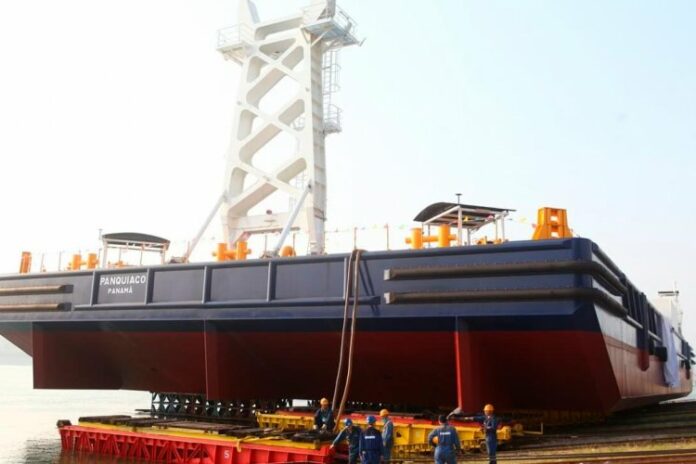
On 13th April, Damen Yichang Shipyard launched a 75 x 32 metre Crane Barge into the water. The event was seasonally timed to ensure the correct water depth needed to perform the successful launch of the barge.

Damen is building the Crane Barge 7532 for a Panamanian client. Now that the barge is in the water, the yard will make the final preparations for her forthcoming journey to Huisman’s Chinese yard in Fujian Province.

Here, Huisman is currently preparing a state-of-the-art crane for the vessel. The crane will first be tested on land before being lifted onto the barge for installation and final testing of the crane together with the Crane Barge systems. With this, the barge will have a lifting capability of 625 tons at 25 metres.

After completion in China the Crane Barge will be transported to Panama on a semi-submersible vessel, where she will be expected to arrive at the end of this year.

The project experienced some challenges when production at the Yichang was affected by the coronavirus pandemic. Damen sales manager Olivier van Papenrecht says everyone worked very hard to keep things on track:

“I’m very proud to see the barge successfully launched. That this has happened now, so close to the original schedule, despite the impact the pandemic had on production, is a real achievement. This represents the commitment shown to the project by the client, by the production team in Yichang and by the project team in the Netherlands.”

VIKING acquires unique HydroPenTM container firefighting system

0

VIKING Life-Saving Equipment has acquired HydroPen, the company behind the unique HydroPenTM container firefighting solution supplied to hundreds of ships.

HydroPen’s rapid uptake has been due to its combination of innovation, efficiency and ease of use. Attached to a ship’s hose and raised on a telescopic arm by a single crew member, water pressure alone powers its ‘drill and spray’ nozzle to penetrate a container door before switching to spray mode to extinguish a fire with water, foam or CO2 – directly at its source.

HydroPen was founded in 2016 by Martin Winkel, CEO and Jesper Rosenfelt Hansen, CTO and system inventor. Their inspiration was to apply innovative, safe and user-friendly technology, to revolutionize firefighting on board container vessels.

Around the same time, the need for new solutions was on the rise across the industry. Nine major container ship fires were reported in 2019, followed by ten incidents in 2020, while the leading transports and logistics insurer, TT Club estimates that a container fire occurs on average once every 60 days. The International Union of Marine Insurance has called for ship design and fire-fighting equipment improvements on Ultra Large Container Ships.

The acquisition also follows a fire in April onboard a 4,200TEU container ship off Malaysia, which called 50 local firefighters into action after the vessel returned to anchorage.

Lasse Boesen, Senior Product Manager, VIKING, says:

“This is a significant acquisition for VIKING and for safety in the container shipping industry. We approached the HydroPen originators shortly after the system won the 2017 Danish Tech Challenge accelerator prize. From its official launch at SMM 2018, VIKING became HydroPen’s exclusive distributor, going on to support orders from some of the industry’s biggest names.”

Boesen adds:

“Once crews familiarize themselves with HydroPen, there is no going back – and since its introduction, the system has already proven itself in live firefighting situations. Recently, HydroPen has also generated interest among land-based fire-fighting operators who have been quick to recognise its value.”

Henrik Uhd Christensen, CEO, VIKING, says:

“We are integrating HydroPen into our portfolio, in another evolution of our full scope strategy for marine safety. The HydroPen system meets a specific and widespread industry challenge and safety concern while aligning with VIKING’s role as an innovation leader and trusted safety partner, as also demonstrated by the system winning the Safety at Sea Award for Best Safety Product, Fire-fighting.”

Both HydroPen’s Martin Winkel and Jesper Rosenfelt Hansen are happy to see VIKING carry the baton forward on bringing the HydroPen system to market.

Mr. Winkel and continues says:

“VIKING and HydroPen have enjoyed an exceptional spell of cooperation from day one. Driving innovation at the service of saving lives is at the core of what we’ve wanted to achieve with HydroPen and we are confident that our innovation will be safe with VIKING. Together we have successfully positioned the HydroPen system as the most innovative container firefighting technology in the industry and we can’t wait to follow the journey ahead, both as active stakeholders in the transition period and beyond.”

AST empowers UK fishing crews to reduce accidental wildlife bycatch with new smartphone app

0

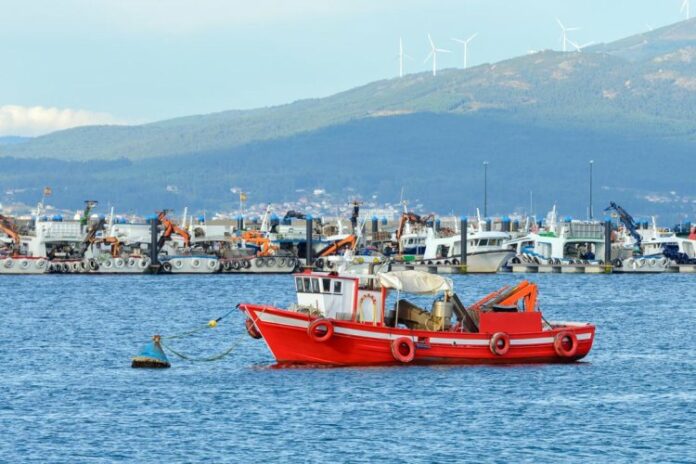
AST Marine Sciences Limited, part of Applied Satellite Technology Ltd has developed a new app for Clean Catch UK, a research programme that brings scientists and the fishing industry together to reduce the impact of fishing on sensitive marine species.

The app enables the fishing industry to report accidental wildlife catch (bycatch) alongside standard catch reporting and will help to record bycatch of important marine species such as dolphins and porpoises, seals, seabirds, sharks, skates and, rays.

Less than 5% of commercial fishing activity is observed and fishing trawlers rarely have the space to carry observers or install monitoring equipment. DEFRA estimates that bycatch of Fulmar bird species alone, could number 4,500-5,700 birds every year.

Currently in use in South-West England to conserve sensitive marine species it is hoped that the app will eventually be used in other parts of the UK to help understand which wildlife species are more likely to be caught accidentally and to reduce instances of bycatch overall.

The app can be used on regular smartphones and store-and-forward technology queues data for delivery later and if network coverage is poor so that important bycatch data is not lost.

David Davies, Managing Director of AST Marine Sciences said:

“Small Inshore fishing Vessels are not typically monitored for accidental bycatch but fisherman do very often carry smartphones. The Clean Catch UK app is an effective tool to help monitor and avoid accidental bycatch and a fantastic example of how AST applies data monitoring expertise in the maritime industry. AST Marine Sciences is proud to work on such an important project and to help the UK government work towards a more sustainable fishing industry.”

Victoria Bendall, Marine Scientist for CEFAS and co-lead for Clean Catch UK said:

“More crews using the app means a more detailed picture about how to reduce bycatch across UK fisheries. We’re keen to work with more vessels and would love to hear from anyone interested in getting involved.”