-1.7 C
New York
Home Blog Page 622

Norsepower installs five tiltable rotor sails on a VLOC chartered by Vale

0

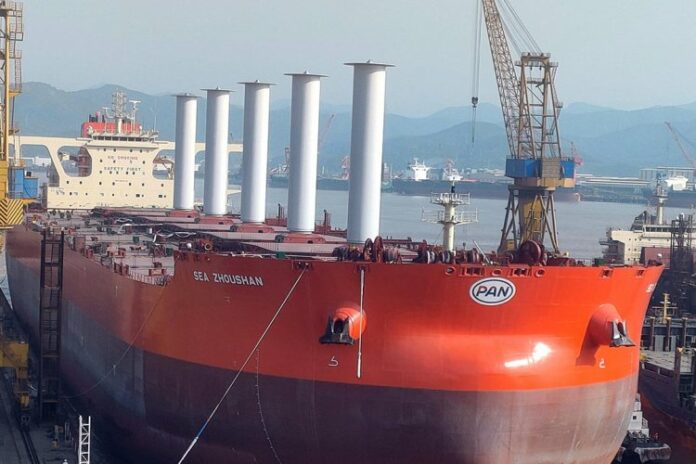
Norsepower Oy Ltd., the leading global provider of auxiliary wind propulsion systems, has announced the installation of five tilting Rotor Sails on board a new-build Very Large Ore Carrier (VLOC) chartered by Vale, the Brazilian mining company. 

The first installation of Norsepower’s innovative Rotor Sails on a bulk carrier demonstrates the adaptability of the technology to reduce fuel consumption, fuel costs and reduce emissions across a variety of vessel types.

The new vessel, a 325,000 dwt VLOC is owned by Pan Ocean Ship Management and will be chartered by Vale after construction is completed in China. To enable efficient cargo operations, the five 24m high and 4m diameter Rotor Sails can be tilted by using hydraulic cylinders.

With growing international and public pressure on the maritime industry to move towards decarbonising their operations, the ability to harness the wind to generate thrust, reduce fuel consumption and emissions, is a natural next step is becoming an increasingly viable option to meet imminent regulatory drivers such as EEXI and CII ratings.

Norsepower has analysed the routes for the vessel chartered by Vale and estimates that its technology would be able to achieve an efficiency gain of up to 8% and a consequent reduction of up to 3,400 tons of CO2 per year.

Commenting on the installation, Tuomas Riski, CEO, Norsepower, said:

“We are delighted to be working with Vale, and supporting them to maximise the propulsive power of wind to reduce carbon and other emissions as well as protecting the sustainability of its value chain more broadly.

“The five tilting Rotor Sails will allow Vale to maintain flexible cargo operations while also saving fuel and emissions. Installing our Rotor Sails on the first VLOC demonstrates that our technology is adaptable across varied operational profiles and vessel types. As vessel operators and charterers strive to decarbonise, the value of wind propulsion for both a retrofit and newbuild vessels is undeniable. The Rotor Sails can reduce a vessel’s Energy Efficiency Design Index (EEDI) and future-proof vessels against impending IMO Greenhouse Gas regulations as well as against inevitable fuel price increases as new fuels enter the market.”

Rodrigo Bermelho, Shipping Technical Manager, Vale, added:

“We are committed to supporting the adoption of clean technology solutions for shipping to ensure that Vale’s sustainability objectives are achieved. Installing five Rotor Sails will maximise our fuel and emissions savings. We are working with Norsepower to ensure this new build is as environmentally friendly as possible and can achieve significant reductions in fuel consumption and CO2 emissions. If the pilot proves effective, it is estimated that at least 40% of the fleet will be able to use the technology, which would result in a reduction of almost 1.5% of Vale’s annual iron ore maritime transport emissions.”

The Norsepower Rotor Sail is the first third-party verified and commercially operational auxiliary wind propulsion technology for the global maritime industry. The solution is fully automated and detects whenever the wind is strong enough to deliver fuel and emission savings, at which point the Rotor Sails start automatically.
World’s largest civilian hospital ship successfully passes final sea trials

0

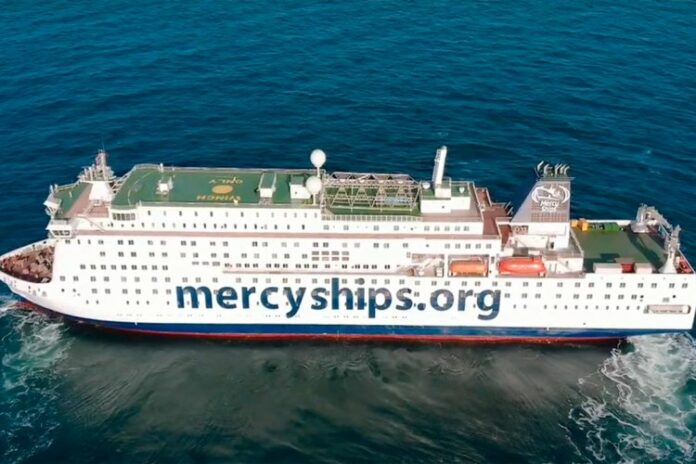
Mercy Ships announced this week that the Global Mercy™ has now completed deep water sea trials, one of the final milestones in the countdown towards the hospital ship’s delivery, equipping, maiden voyage and launch into service to sub-Saharan Africa in 2022.

Deep water trials are designed to test the vessel during extended sailing time to ensure that all systems are fully operational and in line with strict standards and specifications. Tests include engine performance and fuel consumption, navigation and radio equipment, emergency systems, speed tests, maneuverability, engine, and thruster tests as well as safety evaluations.

Jim Paterson, Marine Executive Consultant for Mercy Ships, stated:

“These deep-water trials represent a critical checklist before delivery of our new purpose-built ship to become the platform for service it is designed to be. Trials systematically test operational aspects by putting the vessel through paces for an extended period at sea. I am pleased to say that the Global Mercy successfully passed every test. We are then left with some finishing touches in the interior, particularly the hospital area before we take delivery.”

Robert Corley, Chief Operations Officer, confirmed that after Mercy Ships takes final delivery of the vessel, the ship will make its maiden voyage to Belgium as a guest of the Port of Antwerp. While docked, the Global Mercy will complete several months of final outfitting and crewing. This includes installation of medical equipment and IT systems as well as stocking the vessel with supplies through the Mercy Ships European Distribution Center in the Netherlands. The visit to Europe will culminate in a final send-off from Rotterdam for the ship’s first voyage to Africa. Mercy Ships also plans to hold an Africa commissioning event for the arrival of the Global Mercy in Dakar in early 2022, at the start of the ship’s first field service in Senegal.

The purpose-designed hospital decks represent the unique heart of the ship, consisting of six operating theatres and hospital wards for 200 patients, laboratory, general outpatient, ophthalmology, and dental clinics. The ship has space for up to 950 persons in port including 641 crew, comprised of volunteers from around the globe. The Global Mercy is especially equipped with first-class training facilities to allow Mercy Ships to contribute to the sustainable support of essential surgical and related skills for local healthcare professionals when docked.

Mercy Ships expects to more than double the charity’s current impact with both life-changing surgeries and training of healthcare professions during the anticipated 50-year lifespan of the vessel.

The Global Mercy represents an international collaboration. With an overall length of 174-meters, a beam of 28.6 meters, with a Gross Tonnage of 37,000, the ship is a tailored Passenger Ship-class vessel. As the first of its kind, the ship has undergone construction at Tianjin Xingang Shipyard, with project management by Stena RoRo AB of Gothenburg, Sweden, and construction design by Deltamarin of Turku, Finland. The French ship brokerage company Barry Rogliano Salles (BRS) was instrumental in helping negotiate the contract. The new ship is classed by Lloyd’s Register in the UK who was in attendance to witness these important tests. The Global Mercy is flagged by Malta and will initially serve within Africa.

As the world’s largest purpose-built civilian hospital ship, the Global Mercy has received wide attention from all over the world from the very beginning of its construction in 2015. The Global Mercy has a design draft of 6.15 meters and a service speed of 12 knots.  This new vessel is the first ship built from design to implementation by the charity as all previous ships were adapted from other purposes.  The Global Mercy will join the current Mercy Ship, Africa Mercy in service to sub-Saharan and Central Africa.          

New Angola contract for Seadrill joint venture Quenguela Drillship

0

Seadrill Limited announces a new contract has been secured by Sonadrill Holding Ltd (“Sonadrill”), the 50:50 joint venture with an affiliate of Sonangol E.P. (“Sonangol”).

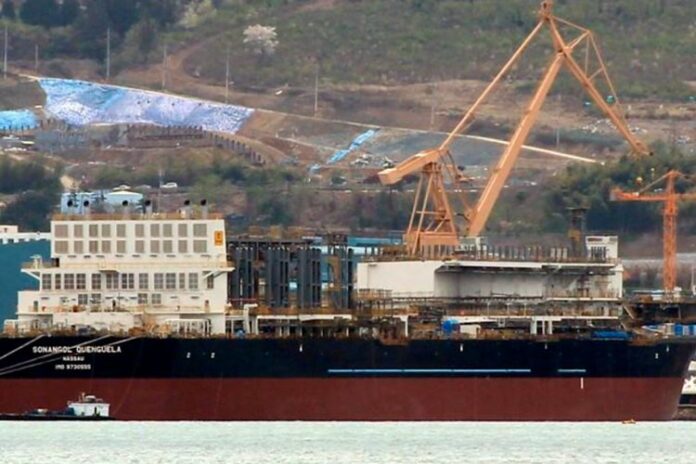
Sonadrill has secured a twelve well contract with one option for nine wells and eleven one well options in Angola for the Sonangol Quenguela drillship. Total contract value for the firm portion of the contract is expected to be approximately $131 million (inclusive of mobilization revenue and additional services) with commencement expected in Q1 2022 and running to Q3 2023. The contract is contingent on National Concessionaire approval.

Sonangol Quenguela is the second of two Sonangol-owned drillships to be bareboat chartered into Sonadrill. The drillship is a 7th generation, DP3, dual activity, e-smart ultra-deepwater drillship delivered in 2019, capable of drilling up to 40,000ft wells.

Sonadrill is a joint venture created between Sonangol, owner of Sonangol Libongos and Sonangol Quenguela drillships, and Seadrill, which has extensive drilling expertise both worldwide and in Angola.

A further two Seadrill-owned units are expected to be bareboat chartered into Sonadrill. Seadrill will manage and operate the four units on behalf of Sonadrill.

Seadrill’s Chief Executive Officer, Stuart Jackson commented:

“Sonadrill is a strategic partnership in an important deepwater basin. The operational excellence and experience of our team has driven this expansion of the joint venture. Securing the contract for the Sonangol Quenguela drillship is a great achievement, and is testament to the confidence that our partners and clients have in the company and its staff.”

MSC Virtuosa arrives in Southampton, ready to restart cruising in UK

0

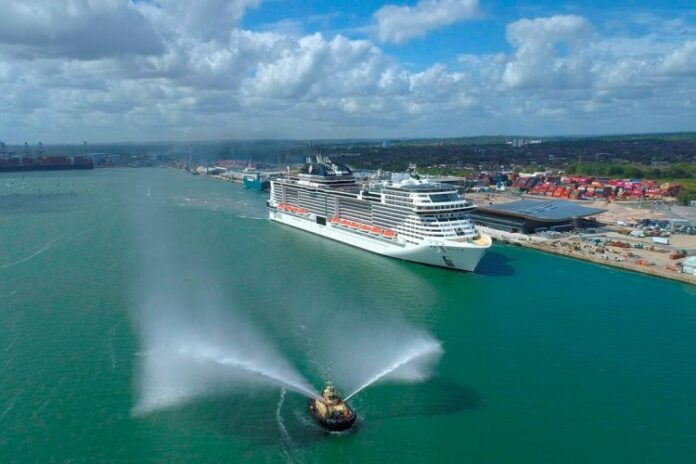
MSC Virtuosa, MSC Cruises’ latest flagship, has arrived in Southampton today, ready to welcome guests as cruising restarts in the UK. The newest and most innovative ship in MSC Cruises’ fleet, MSC Virtuosa will embark on her maiden voyage around the British Isles on 20th May.

The first cruise line to restart in the UK, MSC Cruises brings guests a choice of three- and four- night mini cruises starting from 20th May, then from 5th June, MSC Virtuosa will begin seven-night cruises. The week-long sailings include calls at the picturesque isle of Portland and the cultural city of Belfast in Northern Ireland, as well as offering multiple ports of embarkation including Liverpool and Greenock, close to Glasgow, Scotland, on top of Southampton.

MSC Virtuosa’s homeport for the summer will be ABP Southampton, with whom MSC Cruises recently announced a long-term partnership. The ship will initially set sail from City Cruise Terminal, before moving to embark guests from the newly-named Horizon Cruise terminal once it has opened.

MSC Virtuosa will become the third MSC Cruises ship back at sea when she departs for her maiden voyage on May 20, joining two ships already operating in the Mediterranean: MSC Seaside welcomed guests back on board last week, and MSC Grandiosa has been sailing in the Mediterranean since August 2020. All ships operate under the same industry-leading health and safety protocol, including universal testing upon embarkation, which has been developed with a Blue Ribbon Panel of experts.

VoltH2 and Virya Energy cooperate for development of green hydrogen plant in North Sea Port

0

VoltH2 has signed a cooperation agreement in preparation of a long-term concession contract with North Sea Port for a 30,000 m2 industrial plot in the port area in Terneuzen. The company has begun planning and developing the construction of a green hydrogen plant with distribution capabilities.

VoltH2 had previously signed a cooperation agreement with North Sea Port to build a hydrogen plant in Vlissingen in August 2020.

VoltH2 Terneuzen plans to construct a 25 MW electrolysis unit. The plant will produce up to 3,600 tons of green hydrogen annually. In doing so, the plant will contribute to the sustainability of the entire North Sea Port area. Moreover, the design of the green hydrogen plant is scalable, meaning that production can be doubled and possibly tripled at a later date.

The site is accessible by road, rail and waterway for the supply and distribution of green hydrogen to the wider area. The investment budget for the initial phase is 35 to 40 million euros.

The location is in the Axelse Vlakte industrial park in Terneuzen, part of North Sea Port. Besides the fact that the plant is located in a zone where a lot of hydrogen is used, there are also opportunities for selling the heat. The site is also close to an existing Bio LNG producer and there are two bio-steam and bio-ethanol projects under development in the immediate vicinity. As such, the area is positioned to become one of the Netherlands’ leading clusters of sustainable fuels and raw materials producers, facilitating potential synergies between these various new forms of production and the use of green hydrogen. Green hydrogen is suitable for use as fuel and feedstock in production processes, alongside grey and blue hydrogen.

Daan Schalck, CEO North Sea Port:

“North Sea Port is strongly committed to the energy transition. VoltH2’s new hydrogen plant in Terneuzen contributes to this effort and offers many opportunities for companies located in the Axelse Vlakte industrial park. In doing so, it further enhances North Sea Port’s position as a hydrogen hub in Western Europe.”

Singapore organisations team up to develop POV for a Green Modular Data Centre System

0

Singapore LNG Corporation Pte Ltd (SLNG), the National Supercomputing Centre (NSCC) Singapore, the National University of Singapore (NUS) and Surbana Jurong (SJ) have signed a Memorandum of Understanding (MOU), to collaboratively explore the development of a Proof-of-Value (POV) for a Green Modular Data Centre System, which would be the first-of-its-kind in Singapore, if proven feasible. 

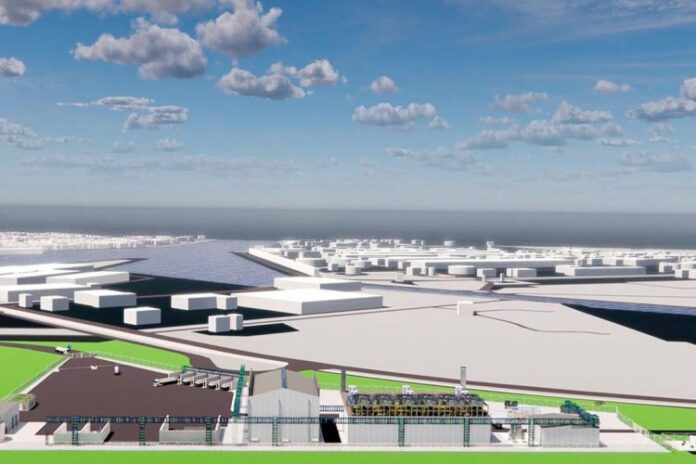
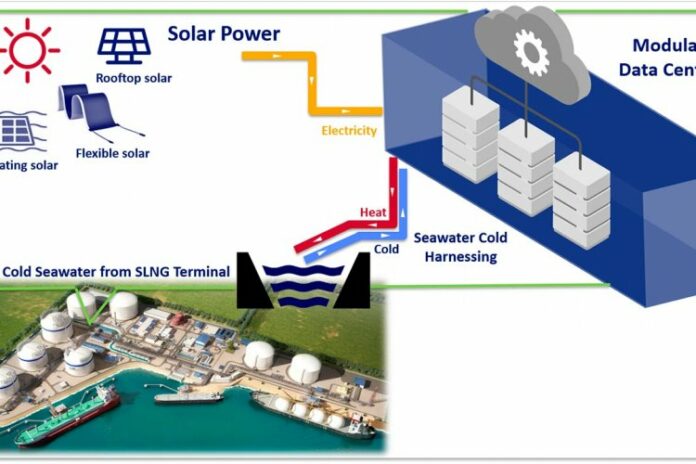
The concept is to install approximately one Petaflop of NSCC’s supercomputer at the Singapore Liquefied Natural Gas (LNG) Terminal on Jurong Island, and use the Terminal’s stable and continuous chilled seawater supply to reduce the heat generated. The chilled seawater is discharged as part of the Terminal’s LNG regasification process that ensures a steady send-out of natural gas for the country’s power generation needs. 

The project will also explore powering the prototype system with renewable solar energy or green power backup using hydrogen fuel cell, instead of a diesel power generation set. If the concept proves successful, the system has the potential to save 0.2 MW of power, roughly equivalent to a carbon footprint reduction of 700 tonnes per year, or carbon sequestered by around 11,575 tree seedlings planted and grown over 10 years.

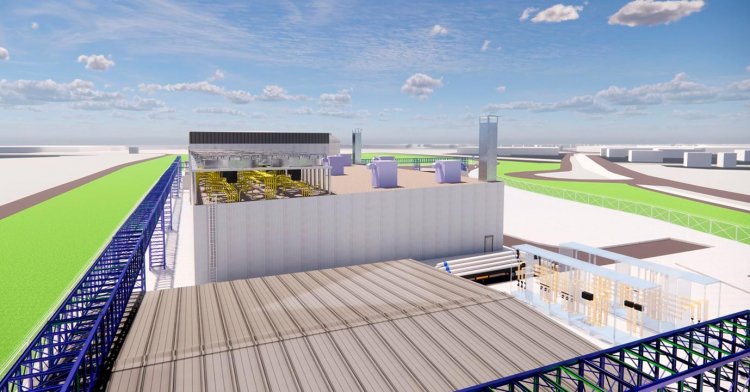
The proposed design will make use of pre-fabricated, standard-sized containers to house the supercomputer, which will allow for a faster set up and installation, as compared to traditional data centre buildings. It will form part of the national research infrastructure that supports local research institutes, institutes of higher learning, and companies by providing the high-performance computing resources needed in various research fields. Examples of these research fields include weather and climate monitoring, genomics, engineering, offshore and marine, urban planning and biomedical science, among many others.

Associate Professor Tan Tin Wee, Chief Executive of NSCC, said:

“SLNG produces a huge amount of cold energy which is partially discharged as chilled seawater.  We have the opportunity to tap on this excess cooling source instead of using more electricity to help cool our supercomputer and data centres. If successful, this prototype will demonstrate the value of industrial symbiosis, where one industry’s waste can be converted into another industry’s resource. By combining this with renewable energy such as solar power from photovoltaic farms, the novel concept could be a potential model for future green sustainable supercomputer data centres in Singapore.”

Additionally, NUS will contribute its expertise in liquid cooling technology for the POV, and Surbana Jurong will leverage its engineering design expertise in new and renewable energies, low carbon technologies, cold energy harnessing and smart grid for the project.

Yeo Choon Chong, CEO, ASEAN, Surbana Jurong said:

“This collaboration is a significant step towards finding a viable solution to meet the growing needs of Singapore’s digital economic development, even as the country pursues green energy goals outlined in the Singapore Green Plan 2030.”

Associate Professor Lee Poh Seng from the Department of Mechanical Engineering at NUS said:

“The increasing power demands from exponential digital growth has presented enormous challenges for the 21st century data centres. In this project, NUS will be deploying our patented high performance-cum-efficiency oblique-fin liquid and two-phase cooling technology, which are integrated to provide a complete cooling solution. This novel technology can reduce power consumption by about 40 to 50 per cent, and is specifically designed for high performance computing servers that populate the data centres. We are delighted to partner NSCC, SLNG and SJ in our joint mission to reduce power consumption and emissions. By leveraging our complementary knowledge and expertise, we can help drive sustainable data centre growth.”

Mitsubishi Shipbuilding launches large ferry built for Meimon Taiyo Ferry

0

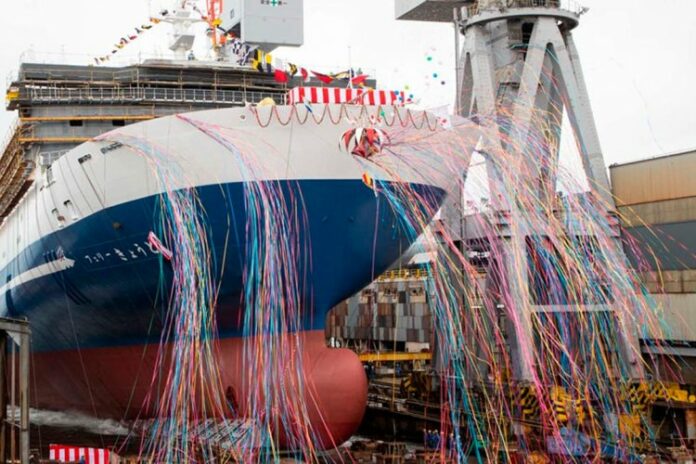
Mitsubishi Shipbuilding Co., Ltd., a part of Mitsubishi Heavy Industries (MHI) Group based in Yokohama, held a christening and launch ceremony today (May 13th) for the first of two large ferries being built for Japan Railway Construction, Transport and Technology Agency (JRTT) and Meimon Taiyo Ferry Co., Ltd. 

The ceremony took place at the Enoura Plant at MHI’s Shimonoseki Shipyard & Machinery Works in Yamaguchi Prefecture. The handover is scheduled for December 2021 following completion of interior work and sea trial. The new vessel will replace the FERRY KYOTO II, in operation since 2002, and enter service from December 2021 on a regular route between Osaka and Shinmoji in Kitakyushu.

The new vessel, built by Mitsubishi Shipbuilding and operated by Meimon Taiyo Ferry, is jointly owned by Meimon Taiyo Ferry and JRTT, an Incorporated Administrative Agency to support the provision and maintenance of transport facilities and other infrastructure based on Japan’s transport policy. Named FERRY KYOTO, the new ship is 195m long, 27.8m wide, and 20.3m deep, with gross tonnage of approximately 15,400. The largest ship ever operated by Meimon Taiyo Ferry, the vessel has passenger capacity for 675 persons, and vehicle capacity for approximately 162 12-meter trucks and 140 passenger cars. The interior design concept is “atmosphere of an ancient city,” evoking a feeling of Japan. 

The broad public space taking advantage of the vessel’s large size, along with a spacious restaurant, bath, and lounge with sweeping views, allow for cruising in comfort. The space can also be efficiency utilized to provide improved service, such as converting vehicle storage space into a passenger deckand eliminating Japanese style passenger cabins to create cabins with beds.

The propulsion plant utilizes a hybrid-type azimuth propulsion assist method, which combined with an air lubrication system achieves considerable energy efficiency (approximately 35% reduction in fuel consumption for carrying a large truck compared to existing vessels), and improved ship steering capabilities. In addition, along with lower CO2 emissions realized from energy efficiency, the adoption of a hybrid-type scrubber curbs atmospheric emissions of sulfur oxide (SOx), providing for environment-friendly operation.

SMST enters into first W2W contract with DOF Subsea

0

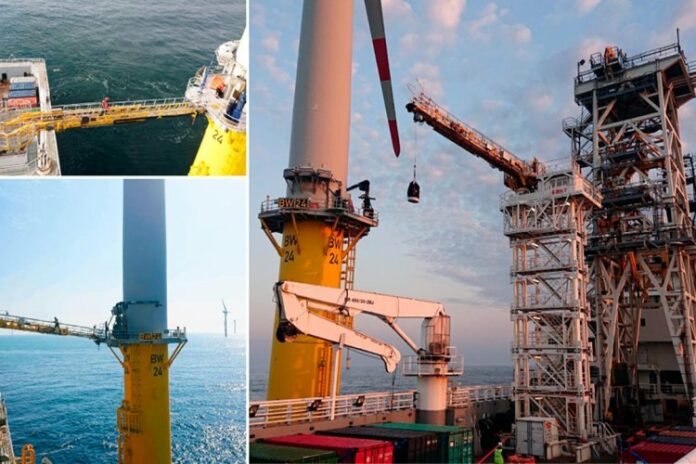
The contract marks SMST’s first delivery of walk-to-work equipment to the Norwegian offshore company. Since a few weeks, DOF is already operating the gangway on board their multipurpose vessel Skandi Constructor, ensuring safe and efficient walk-to-work of their crew and cargo in the Global Tech 1 offshore wind farm.

Beginning of April, the commissioning team of SMST travelled to FAYARD, the shipyard near Odense (Denmark), for the mobilization of the gangway, the SMST Telescopic Access Bridge M-Series (TAB-M). In wintry conditions, the TAB was installed on 6 stacking modules for working on height up to over 24 meters. Subsequently, the vessel’s crew was trained by SMST for operating the gangway in the Global Tech 1 offshore wind farm, for a term of up to 120 days.

Øyvind Våge, Chartering Manager at DOF Management AS, says:

“Flexibility is key for our project and SMST fits in perfectly with it. Their equipment easily adheres to the requirements of the two different projects for Siemens Gamesa. The collaboration between our two companies is also excellent. Together we achieved a very swift mobilization of the gangway. A great effort by all parties involved.”

After the first project in the North Sea for Siemens Gamesa, the Skandi Constructor will continue its work in the Baltic Sea, in the Wikinger offshore wind farm. The SMST commissioning team will remobilize in Bremerhaven for this second project. SMST is glad to be back in this wind farm, where the road to success has started in the rental gangway business back in 2016. 

Menno de Jong, Sales Manager at SMST, says:

“We are very pleased with DOF’s trust as a new partner for our rental gangways, and also with the recurring confidence in our equipment by Siemens Gamesa. We will do our utmost to ensure maximum safety and efficiency regarding their walk-to-work operations.”  

Cavotec will invest €20m in clean technologies for ports

0

The fast-growing market for electrification and automation of ports around the world is estimated to be worth several billion euros in the coming years. Cavotec will invest 20 million euro in technology, engineering and business development over the next five years to strengthen its leading position and to meet the expected demand. 

Mikael Norin, CEO of Cavotec, says:

“We’re now at an inflection point where our core markets are undergoing a drastic change where what has been niche markets for cleantech are becoming mass markets. In Europe alone, more than 2,500 ports will have to drastically reduce emissions by offering Shore Power, a Cavotec specialty, to visiting ships in the next 5 – 10 years. Our automated mooring technology has an equally untapped potential with an estimated 4,700 port berths world-wide suitable for automation to increase efficiency and reduce pollution. We will invest in sales, marketing, engineering and technology to fully leverage on this development and our leading market position.”

A European Union directive encourages ports to adopt shore-to-ship electrification systems (Shore Power) to reduce emissions from vessels when in port. By 2025, this recommendation will become binding for all European ports. In the American Jobs Act President Biden is planning to spend 17 billion USD on the US shipping infrastructure with a special mention of the need to mitigate the impact of pollution from ports.

Cavotec is a market leader in today’s niche markets for cleantech for ports and industrial applications. Cavotec has equipped some 600 of the world’s container ships as well as hundreds of ports around the world with its Shore Power systems. Most recently, Cavotec has developed an automated e-charging and mooring system for the world’s first zero-emission, autonomous battery powered fleet. Also, building on the company’s 40-year experience of electrification of mining equipment, Cavotec is active in CharIN, (Charging Interface Initiative), a network of companies developing global standards for charging battery powered vehicles, focusing on high power, high speed charging for commercial and industrial vehicles.

Norin concludes:

“Every day – in thousands of ports around the world – mega cargo ships moor, and then idle for hours – adding tons of pollution. And the mooring itself is a dangerous job, where employees face tremendous risks on a daily basis. Equally, the majority of the world’s mobile industrial equipment is powered by polluting diesel engines. Our mission is to change this. We will accelerate our focus on developing connection and electrification solutions to enable the decarbonization of ports and industrial applications. Just like some brands are leading the successful electrification of the automotive industry, we will lead the electrification of our markets. We are determined to contribute to a future world that is cleaner, safer and more efficient.”

Damen Yichang Shipyard launches a RoPax Ferry 6716

0

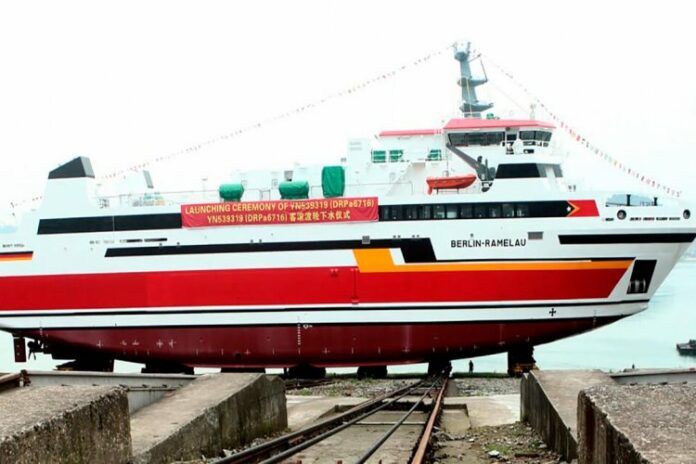
On 10th May Damen Yichang Shipyard launched a RoPax 6716 into the water. The vessel will be operated by the Port Authority of Timor-Leste (APORTIL). It will operate between Timor-Leste’s capital Dili, the Oecusse enclave and the island of Ataúro, carrying up to 308 passengers, vehicles and cargo. The ferry will stimulate increased access to trade, education and employment.

The construction of the vessel took place during some of the most challenging months of the COVID-19 pandemic and it was only by implementing a robust set of safety measure at the yard that Damen was able to keep things on schedule.

Due to the pandemic, the launching event was a virtual celebration. It was well attended by delegates from Damen, APORTIL, class and representatives of the government of Timor-Leste in China. The vessel launch button was pressed by Mr Abrao dos Santos, Ambassador of Timor-Leste to China, Mr. Deng Zhiping, MD of Damen Yichang Shipyard and Mr. Shengtong Wang, Damen sales manager Asia pacific.

Ms. Maria Albert Gonclave, third secretary of Timor-Leste in China released the bottle of champagne with which the vessel was named Berlin-Ramelau. The name, featuring the capital of Germany and the highest mountain in Timor-Leste, is a reference to the co-funding of the vessel by the governments of both countries.

Speaking at the launching ceremony, president of the board at APORTIL Mr. Eng. Flavio Cardoso Neves said:

“Even facing numerous obstacles, this project execution has managed to proceed, with nearly no deviation, towards its final destination, in Dili. The pandemic crisis has limited parties from travelling and made difficult the circulation of materials around the world. But the whole team commitment, adaption and perseverance has led us to this day. Such is the strong personality of the maritime industry and its people. Some may see the ocean as a barrier, but for us it is a path that connects us to each other and allows us to go further and do great things.”

Damen sales manager Asia Pacific Mr. Gysbert Boersma stated:

“It goes without saying that we are grateful to His Excellency the minister and His Excellency the Ambassador Mr. Abrao dos Santos for choosing Damen to supply this high quality vessel and to our neighbours in Germany for financing the project as well as all our contacts within APORTIL for the good working relationships so far. I’d also like to congratulate the shipyard and the project team at Damen HQ – you did a fantastic job.” 

Dr Matthias Sc¬hilf of IMS Nord, consultant to APORTIL said:

“This vessel demonstrates the great potential of collaborative efforts. The construction of the Berlin-Ramelau has been a truly multinational project, calling upon the cooperation of parties in Germany, Timor-Leste, China and the Netherlands. We are very proud to have played our part in this project.”

Now that the Berlin-Ramelau is in the water, the yard will continue with outfitting. In June the vessel will sail to Shanghai for seatrials, leaving for Dili in July.