-1.7 C
New York
Home Blog Page 621

Maersk Drilling awarded one-well UK contract by INEOS

0

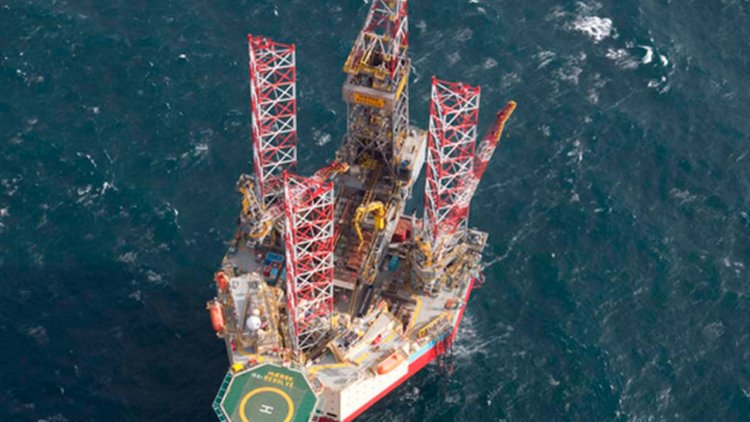
Maersk Drilling has secured a contract from INEOS Oil & Gas UK to employ the harsh-environment jack-up rig Maersk Resolve for drilling and hydraulic stimulation at the Breagh Alpha A11 well in block 42/13 of the UK North Sea. 

The contract is expected to commence in Q3 2021, in direct continuation of the rig’s current work scope, with an estimated duration of 140 days. The contract value is approximately USD 11.3m. The contract includes four additional one-well options.

COO Morten Kelstrup of Maersk Drilling says:

“We’re delighted to be able to firm up Maersk Resolve’s drilling programme for 2021 with this contract, which will see the rig take on its third campaign in a row involving drilling of the challenging Zechstein formations you encounter in this part of the North Sea. We’re confident that Maersk Resolve’s highly capable crew will be able to leverage best practice from the previous campaigns in a safe and efficient operation for INEOS.”

Maersk Resolve is a 350ft, Gusto-engineered MSC CJ50 high-efficiency jack-up rig which was delivered in 2009. It is currently operating for Spirit Energy in the UK sector of the North Sea.
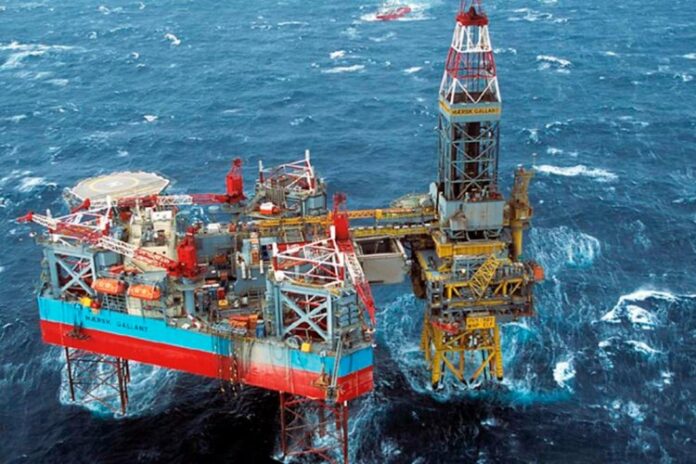
Maersk Drilling has announced that has sold the jack-up rig Maersk Guardian (now named Guardian) to New Fortress Energy, and the parties have further entered into an agreement about the sale of the jack-up rig Mærsk Gallant with anticipated closing in June 2021.  The total sales price for the two rigs is USD 31m in all-cash transactions.

The new owner will use the rigs for non-drilling purposes as part of their planned Fast LNG project.

CEO Jørn Madsen of Maersk Drilling says:

“These transactions will contribute to the necessary rationalisation of the global drilling rig fleet and they are further in line with Maersk Drilling’s strategic priority of maintaining a fleet of modern, high-quality assets. We’re also pleased that the rigs will be re-purposed and deployed by New Fortress Energy for a project which focuses on providing low-carbon affordable energy.”

Guardian is an ultra-harsh environment jack-up rig which has previously been converted into an accommodation unit. It was delivered in 1986 and has been warm-stacked in Esbjerg, Denmark after ending its latest contract offshore Denmark in 2020.

Mærsk Gallant is an ultra-harsh environment jack-up rig that was delivered in 1993. It is currently cold-stacked in Dundee, UK after ending its latest contract offshore the UK in 2017.

After both transactions are closed, Maersk Drilling’s fleet will count 12 jack-up rigs, of which 11 are suited for operations in harsh environments, and eight floaters.

The transactions do not change Maersk Drilling’s financial guidance for 2021.
Taiwan Navigation selects Inmarsat’s fleet connect to enable new smart ship bridge solution app

0

Inmarsat has announced that JRC (Japan Radio Company Co. Ltd.) has joined its fast-expanding group of Certified Application Providers (CAP) offering applications via Inmarsat’s dedicated Fleet Connect bandwidth.

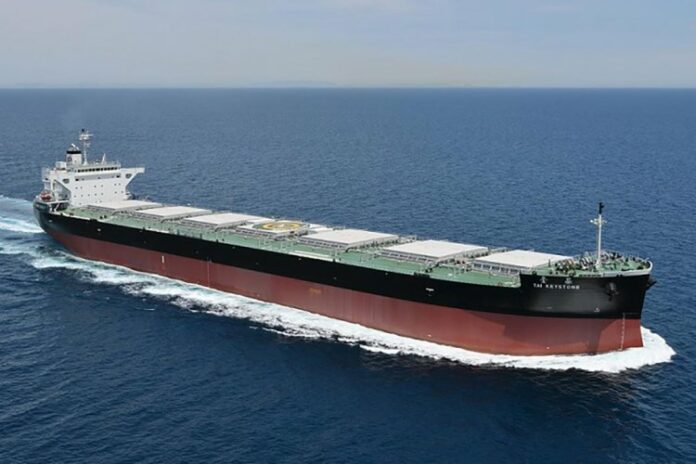
The announcement follows the successful trial of JRC’s Smart Ship Viewer (SSV) bridge solution onboard Taiwan Navigation’s Handymax bulk carrier Tai Splendor. As a result of the successful trial Taiwan Navigation has now contracted to use Fleet Connect and JRC’s Smart Ship Viewer across its eight newbuildings and eight existing vessels.

Spokesperson from Taiwan Navigation said:

“Taiwan Navigation prides itself on the high quality of its operations and has ambitious plans for expansion within the region. We are moving ahead by investing in new ships and in digitalisation and as part of our strategy we are deploying the best available assets to optimise safety and efficiency.”

Hiroshi Miyashita, Manager of SATCOM Business Group at JRC, said:

“The SSV is a networked bridge and communications management solution with capabilities including ship monitoring, Electronic Chart Display and Information System (ECDIS), navigation and routing, Voyage Data Recorder (VDR) downloads, and data sharing using the J-Marine Cloud. Entering into the Inmarsat CAP programme will allow us to use Fleet Connect to provide the dedicated bandwidth that ensures this powerful digital network is available on-demand, to prioritise data traffic and optimise vessel efficiency in a safe and secure way.”

Marco Cristoforo Camporeale, Senior Director, Digital Applications for Inmarsat Maritime said:

“Given the stature of JRC as a provider of advanced marine technology, this new agreement is a major step forward for the CAP programme. The Taiwan Navigation contract is a notable country success for both Inmarsat’s high-speed Fleet Xpress service and for Fleet Connect’s dedicated bandwidth in particular.

“Combined, these agreements add a significant new bridge network option for Fleet Xpress customers worldwide, while also allowing us to demonstrate the reality of Fleet Connect dedicated bandwidth to Taiwan’s widely respected ship owning community.”

“The secure cyber protection provided by Fleet Connect’s segregation from the vessels primary bandwidth was also influential in Taiwan Navigation’s decision. Separation of the JRC SSV network from other traffic, such as crew communications, creates an additional layer of cyber security protection.”

Inmarsat’s Certified Application Provider marketplace now hosts over 40 applications designed for ship owners and operators to reduce fuel emissions, enhance vessel performance, improve navigation, train crew and save lives at sea.

Höegh Autoliners onboard more vessels to KD’s Vessel Insight

0

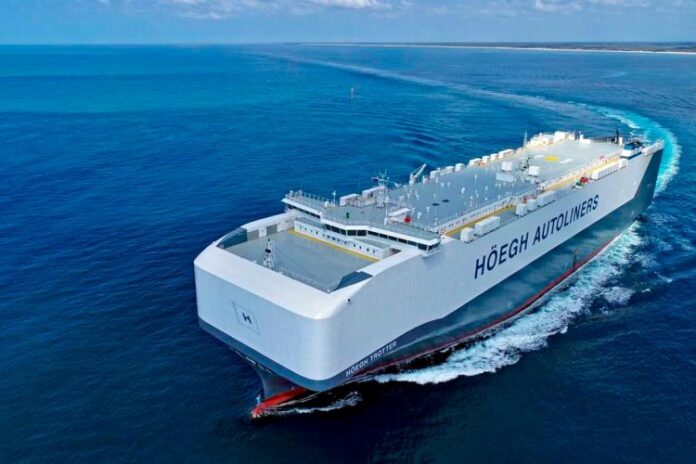
Following the signing of a digitalization partnership between Kongsberg Digital and MAN Energy Solutions in May 2020, the combined infrastructure was initially trialed by Höegh in a two-vessel pilot project which has now successfully completed.

The agreement between MAN Energy Solutions and Kongsberg Digital came about as the companies realized that their separate efforts in the maritime digitalization space were complementary. Kongsberg Digital’s Vessel Insight – a cost efficient data infrastructure solution for the maritime market – is a natural match with MAN PrimeServ Assist digital solution for optimization of engine use and maintenance. After entering a strategic digitalization partnership, they undertook the delivery of a joint digital infrastructure to Höegh Autoliner’s Horizon class sister-vessels Höegh Trotter and Höegh Traveller. The pilot completion is formalized, and the project has been successful.

Andreas Jagtøyen, EVP Digital Ocean, Kongsberg Digital, says:

“The joint digital infrastructure allows the operator to monitor vessel assets and check the running conditions of the engines remotely from shore, in order to give decision-making support to the ship’s crew. Also, the Vessel Performance application from the Kognifai Marketplace gives Höegh tools for reducing fuel consumption and unnecessary running of equipment, as well as benchmarking performance between vessels. We are happy that Höegh has decided to roll Vessel Insight, MAN PrimeServ Assist and Vessel Performance out on several additional vessels.”

These benefits are particularly important to Höegh, who are now installing Vessel Insight, the MAN PrimeServ Assist app and Vessel Performance on four additional vessels. Getting access to complete and contextualized high-quality data from several vessels allows fleet benchmarking and is a significant step towards digitalizing their fleet operations.

Andreas Enger, CEO, Höegh Autoliners, says:

“Our purpose is to provide greener and more sustainable deep-sea transportation and we are working closely with suppliers to achieve this. The collaboration with MAN Energy Solutions and Kongsberg Digital has accelerated the digitalization of our vessel’s operations and is an important step in improving our operational efficiency. Building on the success of the pilot project, we are pleased to continue the partnership with the addition of four vessels in our fleet.”

When developing Vessel Insight, KONGSBERG focused on making it a low-cost, easy-to-implement data infrastructure solution for a broad market. An important aspect of this is that installation can be carried out by vessel crews while at sea. The Vessel Insight hardware is sent to the vessel and the crew connects it. Immediately, all data is sent to the Kognifai cloud and contextualized. Using learnings from the first installation, the installation time was drastically reduced on the second Höegh vessel, taking only a day. Following the successful project, Höegh Autoliners decided to install Vessel Insight on an additional four sister-vessels in their Horizon class fleet.

Stig Holm, Digital Business lead Two-Stroke at MAN Energy Solutions, explains:

“With the connecting of four more vessels, Höegh is a good example of the potential that the Kongsberg-MAN partnership delivers. Digitalization allows our customers to fully leverage MAN’s expertise on engine as well as on maritime customer needs.”

Gregory Puckett, Head of Group Digital at MAN Energy Solutions continues:

“Our open and scalable platform allows us to connect a variety of partners and platforms – providing new opportunities for connectivity as well as insights into engine optimization potentials for our customers.”

MAN Energy Solutions and KONGSBERG will begin delivery of Vessel Insight and MAN PrimeServ Assist to the additional vessels immediately.

USGS scientists explore how hurricanes gain strength

0

Unique observations collected by U.S. Geological Survey scientists during Hurricane María in 2017 revealed previously unknown ocean processes that may aid in more accurate hurricane forecasting and impact predictions.

Such forecasting is critical in preparing communities in the storm’s path to help minimize the loss of life and the long-term repercussions of damage to critical infrastructure such as airports, communications networks, roads and power grids.

The research, published in the journal Science Advances, reveals how the interaction between ocean islands and extreme storms can generate underwater currents that make the storms more powerful. The results are applicable to the thousands of islands in the world’s tropical oceans subject to these types of weather systems.

USGS oceanographer Olivia Cheriton, lead author of the paper, said:

“We were surprised to find that the direction of the approaching hurricane winds relative to the coastline kept the ocean surface layer distinctly warmer compared to the colder waters below. This is important because warmer sea surface temperatures provided more energy for the storm.”

Researchers from the USGS and the University of Puerto Rico-Mayagüez did not set out to make observations during a hurricane. In the summer of 2017, they deployed a large suite of subsurface oceanographic instruments off the southwest coast of Puerto Rico to study the area’s coral reefs. Those plans changed when Hurricane María, the strongest weather system to hit Puerto Rico since 1928, made landfall on Sept. 20, 2017.

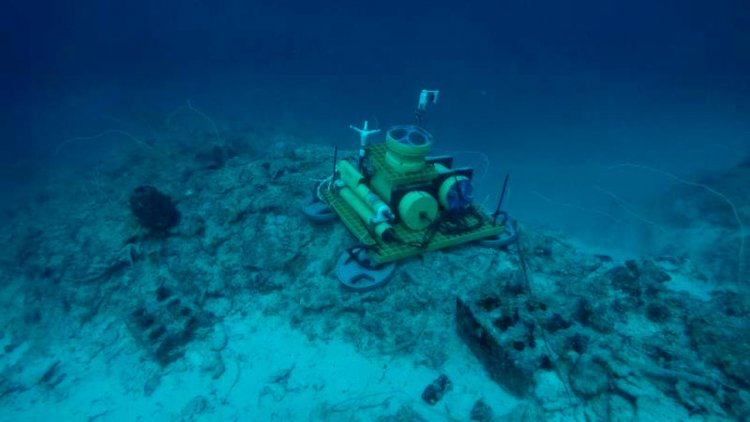
The underwater instrument package that collected the high-resolution ocean observations during Hurricane María. The package included an acoustic current profiler, an acoustic current velocimeter, and temperature, salinity, and turbidity sensors and was deployed at a depth of 54 meters, ~12 kilometers offshore of La Parguera, Puerto Rico. Photo taken July 27, 2017 looking south-southwest. Credit: Evan Tuohy, University of Puerto Rico-Mayagüez

Clark Sherman, UPR-M professor of marine science, said:

“We had originally planned to recover the instruments in October 2017, but that all changed after Hurricane María. It was not until January 2018 that we were able to get back in the water and we weren’t sure what, if anything, would still be there.”

The instruments not only survived the passage of Hurricane María, they collected a rare, high-resolution set of underwater ocean observations not detectable by more common surface observation platforms, such as buoys or satellites. In addition, this type of subsurface information is not currently incorporated into ocean hurricane model simulations. Doing so may improve forecasts.

Understanding how the underlying ocean temperature changes in response to hurricane forces is critical to accurately forecasting the tracks and intensities of extreme storms. Hurricane María caused thousands of deaths, more than $90 billion in damage and the largest electrical blackout in U.S. history.

Curt Storlazzi, USGS research geologist and the project’s chief scientist, said:

“While hurricane research along the U.S. Gulf and East Coasts continues to advance, much less is understood about hurricane interactions with small islands, whose communities are especially vulnerable to hurricane impacts.”

CMA CGM Group to set U.S. East Coast and Canada Big Ship Record

0

The CMA CGM Group has announced that it will break its own record next week for the largest vessel to ever visit the U.S. East Coast and Canada. 

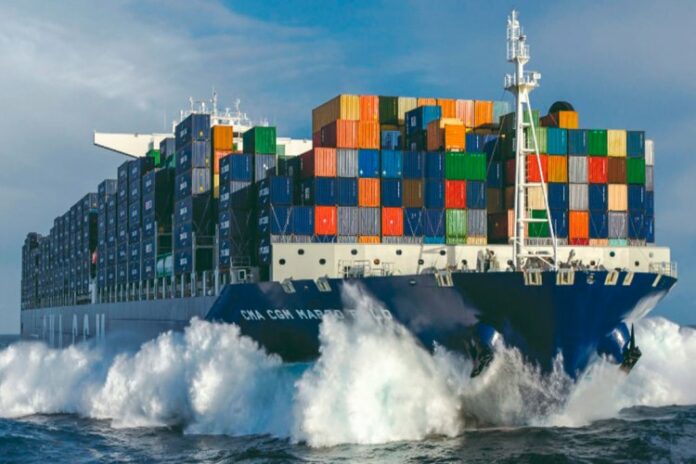
The 16,022-TEU CMA CGM MARCO POLO will first set the Canadian record with a stop in Nova Scotia on Monday, May 17. The ship will then break the U.S. East Coast record when it calls New York on Thursday, May 20.

An impressive vessel scheduled to set seven North American big-ship records in 11 days

The CMA CGM MARCO POLO is a massive ship. With a length equivalent to more than 3.5 football fields, the containers fitting on the vessel would span nearly 61 miles if placed end-to-end. In addition to the Canada country and U.S. East Coast records, the CMA CGM MARCO POLO will set individual big-ship records at every port it visits on the North American east coast. This includes Port of Halifax (May 17), Port of New York and New Jersey (May 20), Port of Virginia (May 23), Port of Savannah (May 26) and Port of Charleston (May 28).

The CMA CGM MARCO POLO is sailing on the company’s Columbus JAX service, travelling from South Asia to the East Coast of America. 

CMA CGM serves 19 U.S. ports with 34 services and 93 weekly port calls. In addition, the Group’s subsidiary, American President Lines (APL), operates a fleet of U.S.-flagged vessels and supports U.S. territories and American military stationed around the world. The CMA CGM Group employs more than 12,000 team members across the U.S. and is also a leading provider of logistics services through its subsidiary CEVA Logistics.

Ed Aldridge, President of CMA CGM America and APL North America, said:

“At CMA CGM, we are dedicated to providing solutions for our customers. The deployment of the CMA CGM MARCO POLO is yet another indicator of our flexibility and commitment to delivering the essentials that keep America moving. It is also important to mention that this milestone would not be possible without the efforts of our port partners on the East Coast. Their intelligent, timely infrastructure improvements to support larger ships make it possible for us to proactively respond to the needs of our customers.”

OWA announces Stage IV research focus areas

0

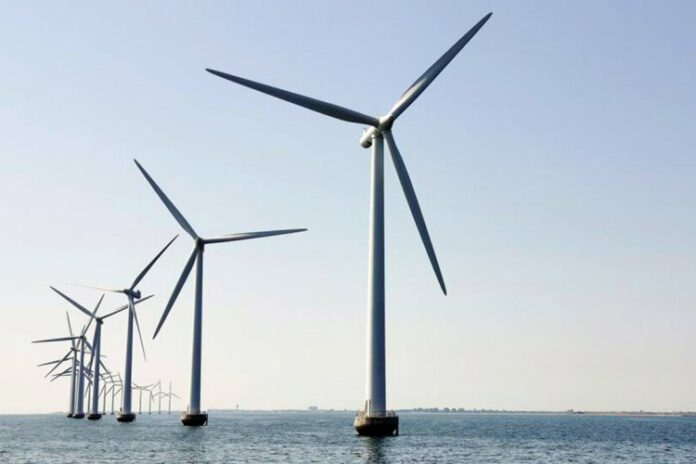
An expanding Offshore Wind Accelerator (OWA) has announced its research focus areas for the next 12 months.

The OWA aims to reduce the cost of offshore wind, overcome market barriers, develop industry best practice and trigger the development of new industry standards. It is the largest of several industry-led, collaborative research, development and demonstration programmes managed by the Carbon Trust and is now in its thirteenth year.

A total of 15 common research and development projects have been identified as part of the second year of the fourth stage of the programme including: 

  • Logistics and operations and maintenance (O&M) – low emission vessels and offshore charging standardisation, and improved O&M and logistics strategies
  • Cables – mechanical limitations of submarine cables, cable protection systems, lifetime extension of installed cables
  • Electrical systems – High Voltage Direct Current (HVDC), condition-based monitoring, fault detection, grid stability studies
  • Foundations – design guidance for pile installation in weak rocks, wave run-up forces on secondary structures, impact of more relaxed flange fabrication
  • Yield and performance – continuation of work in mesoscale wake modelling, floating LiDAR for increasing hub heights 

This comes at a time of expansion for the OWA, with Total having joined this year alongside existing members: EnBW, Equinor, Ørsted, RWE Renewables, ScottishPower Renewables, Shell, SSE Renewables, and Vattenfall.

Olivier Terneaud, Vice President Total Offshore Wind said:

“Total is delighted to join the Carbon Trust’s Offshore Wind Accelerator. The UK has become one of the most important offshore wind markets in the world and that makes it an ideal place to test new technologies that will increase efficiency and drive down costs. Total has great ambition for renewable energy and we are now involved in important offshore wind projects off the coasts of England, Wales and Scotland. As part of our ambition, we also look forward to collaborating with the OWA to drive forward technical excellence in offshore wind and renewable power.” 

The core programme receives all of its funding from the industry partners. For larger joint industry R&D projects (‘discretionary projects’), public funding is often utilised from a range of governments, depending on the location of the project. For example, the VERBATIM project, which analyses pile tip buckling behaviour during foundation installation and develops design procedures to enable materials and cost savings, is receiving German government funding.

Jan Matthiesen, Director Offshore Wind, the Carbon Trust said: 

“The Offshore Wind Accelerator is a world-leading, international programme dedicated to the advancement of offshore wind and we are excited to reveal details of our focus areas for the next year. As the programme continues to go from strength to strength we also welcome Total, as the latest industrial partner to join the OWA. 

Over the first decade of the programme, innovations developed through the OWA contributed to a 15 per cent reduction in levelised cost of energy offshore in Europe. As the industry matures and expands globally, we face new challenges and look forward to building on the OWA’s success to advance offshore wind, an important clean energy solution to help address climate change.”

AIDA Cruises expands its vacation program for summer 2021

0

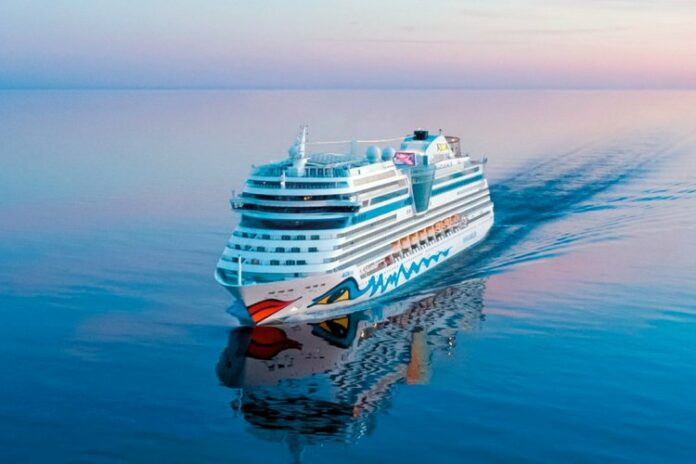
To meet pent-up demand, AIDA Cruises announces the launch of additional new voyages, which will be bookable from May 26, 2021. Details about the voyages and pricing will be announced shortly.

In addition to the already existing attractive cruise options with AIDAperla sailing around the Canary Islands from/to Gran Canaria and with AIDAblu sailing in Greece from/to Corfu, AIDA Cruises will expand its vacation offers from Kiel and Rostock-Warnemünde/Germany.

The 3- and 4 day Ahoy tours with AIDAsol from/to Kiel will be extended until June 26, 2021. After a 5-day trans-voyage, AIDAsol will then depart from Rostock-Warnemünde through July 18, 2021, also on short cruises.

AIDA Cruises also announces that another ship, AIDAprima, will resume cruise operations on July 3, 2021, offering 7-day Ahoy tours from Kiel through October 23, 2021.

All Ahoy tours will initially take place without calling at a port. As soon as the first destinations in the North Sea and Baltic Sea are again available for cruise tourism, these cruises will also be offered with port calls.  

All cruises are carried out in compliance with AIDA’s enhanced health and safety protocols, as well as applicable laws and regulations for infection protection.

Due to the new travel offers and the still existing travel restrictions in some destinations, the originally planned itineraries for AIDAsol between June 12 and July 18, 2021, and AIDAprima between June 6 and October 23, 2021, will be altered. All guests affected by a change in their booking will be informed personally and offered attractive rebooking options.

Good news for all Greece and Canary Islands travellers from Germany: For all voyages with AIDAperla around the Canary Islands as well as the Greece voyages with AIDAblu (starting on May 23, 2021),  the previously required quarantine will no longer apply when re-entering Germany, if guests provide a negative Covid test certificate on arrival.

Orbital and Designworks win distinguished iF Design Award

0

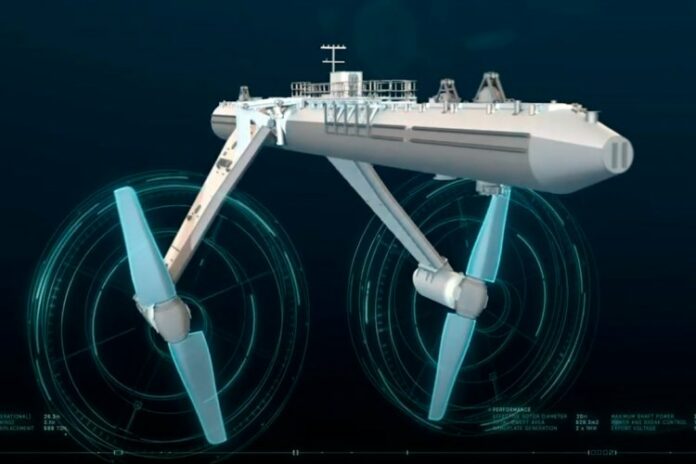
Futuristic designs of Orbital Marine Power’s striking tidal stream turbine technology, which were developed through a strategic design partnership with Designworks, the innovation studio for the BMW Group and global creative consultancy, have been selected for recognition in the prestigious iF Design Awards announced today.

Run by one of the oldest truly independent design institutions in the world, the iF Design Awards are a global symbol of design excellence, aimed at identifying, supporting and promoting good design, in particular well-designed industrial products.

The Awards, which received almost 10,000 submissions from 60 countries in 2020, identified the collaborative work of Orbital and Designworks as a winning design within the Professional Concept category.

Orbital and Designworks announced their design partnership last year when they released concept images of Orbital’s floating energy generation technology, with the utility scale Orbital OA model and a smaller Riverkinetic model included in the line-up. The vision for the OA model sees turbines becoming less like traditional vessels, and more akin to autonomous power generation fleets in the future.

Orbital recently launched its first commercial O2 tidal turbine which is starting grid connected operation in the Orkney Islands off the north coast of Scotland. The O2 is the most powerful tidal stream turbine in the world, resembles a spaceship in appearance, at 74m in length is approximately the size of a Boeing 747, and with a generation capacity of 2MW the single unit can supply around 2,000 UK homes with clean, predictable energy.

World renowned design innovation company BMW Group Designworks has studios in Munich, Los Angeles and Shanghai.  For 25 years its strategic design has stimulated the BMW Group as well as a select group of partner companies, helping to keep them at the forefront of their industries.

Keel laying ceremony for second Finnlines’ hybrid ro-ro vessel

0

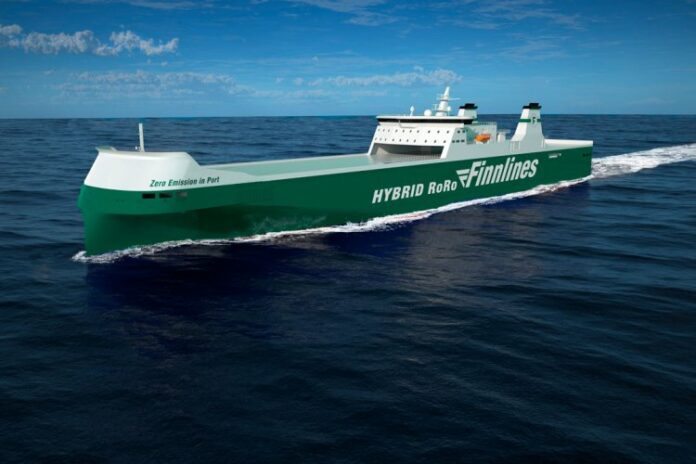
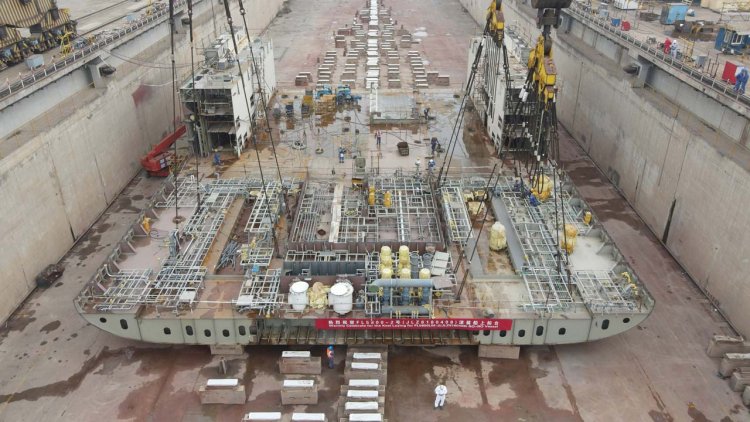
Finnlines Newbuilding Programme has progressed as planned, on schedule and as budgeted. All three new ultra-green ro-ro vessels ordered are in the production phase and the Nanjing Jinling shipyard has laid the keel of Finnlines’ second hybrid ro-ro vessel on 12 May 2021.

The construction of MS Finneco II is proceeding and the keel laying ceremony was held on 12 May 2021 in China. MS Finneco II is part of Finnlines’ EUR 500 million Newbuilding Programme which includes two eco-sustainable ro-pax vessels in addition to the three hybrid ro-ro vessels. These new ultra-green vessels will provide several energy-saving solutions for a greener future. MS Finneco I will begin operating at the turn of the year. The second and third vessels in the series, MS Finneco II and MS Finneco III, will be delivered in 2022.

All three hybrid ro-ro vessels will start operating under the Finnish flag employing Finnish sea personnel. The Company currently has a fleet of 21 vessels and, after the new ships have started in operation, 20 Finnlines’ vessels will sail under the Finnish flag. These vessels play a vital role in ensuring the smooth supply of goods to Finland and provide regular sea connections from Finland to Sweden and Finland to Continental Europe and Great Britain.

Emanuele Grimaldi, CEO of Finnlines, says:

“Finnlines has made major investments in renewing and developing its fleet into more sustainable, using the latest technologies and green innovations available. Our half-billion-Euro Newbuilding Programme is well under way and currently all three new ultra-green ro-ro vessels are in construction. The investments made already in the Finnlines’ fleet, as well as these new vessels, will ensure that we can provide very sustainable service to our customers.”

King Ocean Services and Navis expands partnership to optimize stowage operations

0

Navis has announced King Ocean Services Ltd. has signed a subscription agreement with Navis’ StowMan Vessel Pool to increase their stowage operations’ efficiency which will positively impact their bottom line. 

King Ocean Services is among the market leaders in the regional niche trade lanes in which it serves – most prominent are services from South Florida to Colombia, the Dominican Republic, Aruba, Curacao and the Antillean Islands. As stowage operations are one of the most fundamental practices for ocean carriers because efficient stowage operations have a direct impact on making daily business safer and more profitable, it was a priority for King Ocean Services to find a solution to optimize its stowage operations. They selected Navis’ StowMan Vessel Pool solution to meet their needs and help them reach their business goals with the leading stowage software in the market. 

Franco Da Costa Gomez, CFO at King Ocean Services Ltd., said:

“With the increasing complexity and volume of the global seaborne trade, it is highly vital to operate with innovative and futuristic solutions that will help us increase our value-added operations and remain competitive in the industry. With Vessel Pool, our planners will be able to swap ship profiles easily without being trapped in intensively time consuming administrative processes. As a result, we will not solely save a significant amount of time, but will also increase our stowage operations’ cost effectiveness.”

Vessel Pool empowers planners and stowage operations to be less dependent on third parties which particularly paves the way for replacing the  antiquated methods of working and purchasing ship profiles. This helps planners save time and ocean carriers reduce operational costs. Additionally, planners gain full visibility of any ship profile that is in the Navis database – which holds 65% of the container market share – and the rich Navis StowMan database also allows planners to always work with up-to-date ship profiles. Thus giving ocean carriers best practices on increasing efficiency of their stowage operations with holistic and contemporary solutions. 

Jacques Marchetti, General Manager of EMEA at Navis, said:

“Ensuring efficient stowage operations may be far more complex and challenging than one thinks, due to antiquated methods as well as fast-growing and demanding nature of the global seaborne trade. In order to address the needs of ocean carriers, we have continuously enhanced our StowMan stowage solution. As a result, we are able to leverage more efficient stowage operations with StowMan’s Vessel Pool solution/module which ultimately helps ocean carriers save operational costs.”