-3.8 C
New York
Home Blog Page 619

MHI to undertake assessments for converting ships to run on decarbonized fuels

0

Mitsubishi Heavy Industries, Ltd. (MHI) is to undertake technical, financial and environmental assessments for converting existing ships to vessels that run on zero carbon fuels. 

The evaluations will be performed mainly by two Group companies – Mitsubishi Shipbuilding Co., Ltd. and Mitsubishi Heavy Industries Marine Machinery & Equipment Co., Ltd. – under a project led by The Mærsk Mc-Kinney Møller Center for Zero Carbon Shipping, a research institute created to promote decarbonization of the maritime shipping industry, in which MHI serves as a founding partner. MHI Group, as part of its energy transition growth strategy, is collaborating with the Center’s otherstrategic partners toward achieving a global zero carbon fleet. By clarifying a roadmap for converting existing vessels that run on fossil fuels to carbon-neutral ships and identifying the challenges faced, the project aims to reduce ship-related investment risks.

Under this project, technical assessments of safety aspects will be conducted relating to future solutions, including modification of existing container carriers, tankers and other existing ships to vessels that operate on ammonia, methanol and other decarbonized fuels. In addition, financial assessments will be undertaken pertaining to fuel conversion costs, technology investments, fuel costs and related maritime shipping costs, etc.; and an environmental assessment will be conducted based on estimated cost benefits from reducing greenhouse gas (GHG) emissions over a ship’s lifetime. 

Besides MHI, other strategic partners in the project include: A.P. Møller – Mærsk A/S, one of the world’s leading international shipping companies; the American Bureau of Shipping (ABS); MAN Energy Solutions, a longstanding producer of large-scale diesel engines; Nippon Yusen Kabushiki Kaisha (NYK Line); Seaspan Corporation, the world’s leading independent owner and operator of container ships; and Total S.A., a group of companies dealing in oil, gas and other energy resources. The new project, which follows an earlier project to develop guidelines for safe usage of ammonia as a shipping fuel, will pave various pathways toward decarbonizing the maritime shipping industry.

Currently, the marine shipping industry accounts for roughly 3% of the world’s carbon emissions, and as other industries take steps to decarbonize, this percentage will likely increase over the next several decades. Going forward, MHI Group will apply its accumulated technologies and expertise in ships and ship engines and, working with its project partners to resolve the identified challenges, will focus on achieving decarbonization of marine logistics, to help mitigate environmental impact on a global scale.

The Mc-Kinney Møller Center for Zero Carbon Shipping is a research institute established in June 2020 at the suggestion of A.P. Møller – Mærsk Group. Based in Copenhagen, Denmark, the Center was founded by MHI and six other global businesses or organizations, primarily to promote development of new fuels and technologies for decarbonizing the marine shipping industry.
Wintershall Dea makes gas and oil discovery in the Norwegian Sea

0

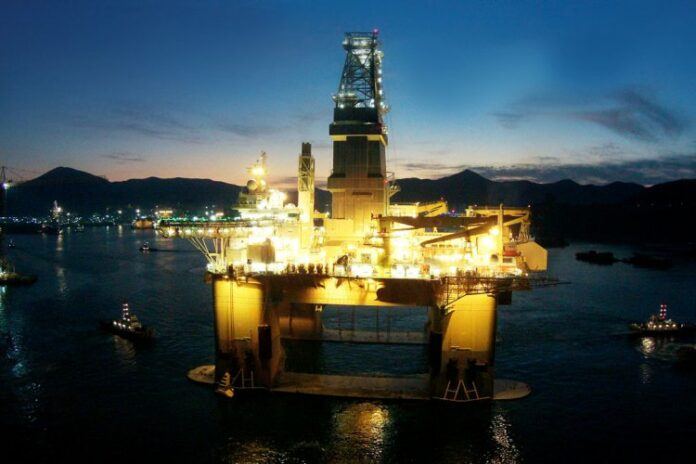
Wintershall Dea has made a significant gas, condensate and oil discovery at the Dvalin North prospect in the Haltenbanken area of the Norwegian Sea.

The Dvalin North discovery, estimated to hold between 33-70 million barrels of oil equivalent (boe), is just 12 kilometres north of the company’s operated Dvalin field, and 65 kilometres north of the operated Maria field. The well also encountered hydrocarbons in two shallower secondary targets, with a combined resource estimate of 38-87 million boe.

Hugo Dijkgraaf, Wintershall Dea Chief Technology Officer and responsible Executive Board member for global exploration, said:

“The discovery is in an area with existing operated as well as non-operated infrastructure. This important find supports our strategy of primarily investing in infrastructure-led exploration activity which will yield synergies with existing fields. Norway is one of our core areas for growth. We will continue to explore and develop fields to support our growth strategy on the Norwegian Continental Shelf.”

The well, drilled by the Deepsea Aberdeen rig, encountered gas, condensate and oil columns of 33 metres and 114 metres respectively in the Cretaceous Lysing and Lange Formations. In the primary target in the Garn Formation, the well found a gas column of 85 metres. The licence partners will now evaluate development options for the discovery, which could include a tie back to the Wintershall Dea operated Dvalin field.

Dvalin North is the first well of a two well exploration and appraisal program for Wintershall Dea in the Haltenbanken area. The Deepsea Aberdeen rig now moves on to appraise the nearby Bergknapp discovery, which was made in 2020.

Alv Solheim, Managing Director of Wintershall Dea Norge, said:

“With Maria, Dvalin and now this discovery in Dvalin North, the Haltenbanken area has emerged as a strategic core area for Wintershall Dea in Norway. The next step will be to turn these discoveries into producing fields. This find secures our position in the area and promises to support more activity in the years to come.”

Wintershall Dea is the operator of the Dvalin North discovery in PL 211 with a 55% share. Licence partners are Petoro and Sval Energi.

BC Ferries’ third Island Class ferry departs shipyard bound for British Columbia

0

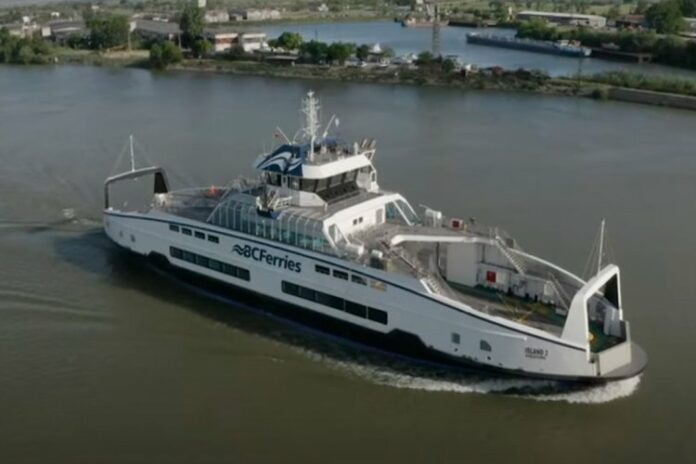
BC Ferries’ third Island Class ferry is now on its way to British Columbia, departing Damen Shipyards Galati in Romania in the early morning of May 19, local time.

The yet-to-be named ferry will make the transatlantic voyage under its own power in approximately 60 days, depending on weather. The approximately 10,700 nautical mile journey will include two stops for refuelling, first in Tenerife, Canary Islands then in Balboa, Panama after transiting the Panama Canal. The vessel will sail up the west coast of North America, arriving at Point Hope Maritime in Victoria, B.C.

This ship is the third in a series of six new Island Class ferries joining the BC Ferries fleet, and the first of four to sail from Romania to British Columbia under its own power. Sailing the vessels under their own power allows the ships to begin the journey once construction is complete and creates a staggered arrival time, which is more manageable for BC Ferries’ operations.

Under contract with BC Ferries, Damen Shipyards is responsible for the safe delivery of the vessels to Victoria and is employing an international professional shipmove company to assist. The first two Island Class ferries transited from Romania to British Columbia on a semi-submersible vessel in 2019, entering service on the Powell River – Texada Island route and the Port McNeill – Alert Bay – Sointula Island route in mid-2020.

The Island Class is a hybrid diesel-electric ferry with a number of key features that support BC Ferries’ Clean Futures Plan and the company’s goal to be efficient and environmentally responsible throughout its system. “Once electric charging technology can be installed at BC Ferries’ terminals, these new ships will be configured to operate as all battery-electric ferries, using clean renewable hydroelectric energy,” said Captain Jamie Marshall, BC Ferries’ Vice President, Shipbuilding & Innovation. Island Class ferries have the capacity to carry at least 47 vehicles and up to 400 passengers and crew, and allow for fleet redeployments and retirements of existing diesel-fuelled vessels.

MOL to re-enter ammonia transport business

0

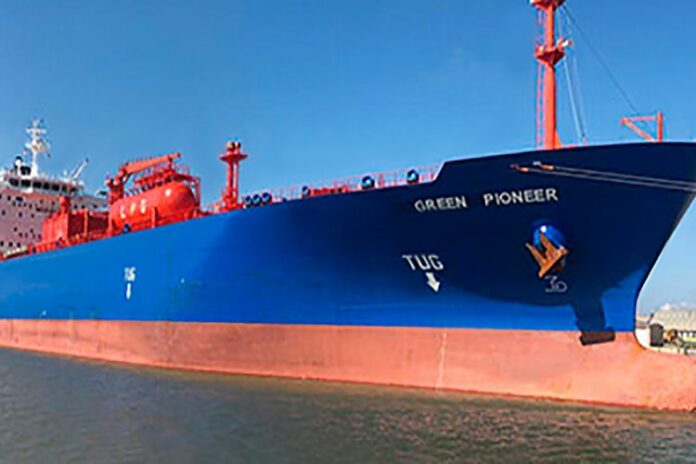
Mitsui O.S.K. Lines, Ltd. has decided to re-enter the ammonia transport business with the Green Pioneer, a 35,000 cbm-type ammonia /LPG carrier, and signed a time charter contract with Trammo, a leading international merchandising and ammonia trading company.

Ammonia is widely used all over the world as a raw material for fertilizer and demand is expected to increase in step with rising food production as the world’s population grows. In recent years, ammonia has also drawn attention as a next-generation clean fuel, which generates zero CO2 emissions when it burns, and as a “hydrogen carrier” that enhances the efficiency of hydrogen transport.

MOL has the world’s largest LNG fleet, which is also positioned for growth as a low-carbon fuel, and has been deeply involved in LNG value chains through its powership and FSRU businesses. The MOL Group will steadily accumulate a track record in safe, reliable transport of ammonia and hydrogen, which are expected to be in high demand as fuel in the future, and contribute to the realization of a decarbonized society through proactive participation in a broad range of value chains.

Green Pioneer Specifications

  • LOA: 173.70 m
  • Breadth: 28.00 m
  • Draft: 10.419 m
  • Cargo tank capacity: 34,500 m3
  • Delivered in: August 2010
  • Shipyard: Hyeondae Mipo Joseon
  • Ship management company: MOL Tankship Management Pte. Ltd.

Ørsted, JWD, and Eurus form offshore wind partnership in Akita

0

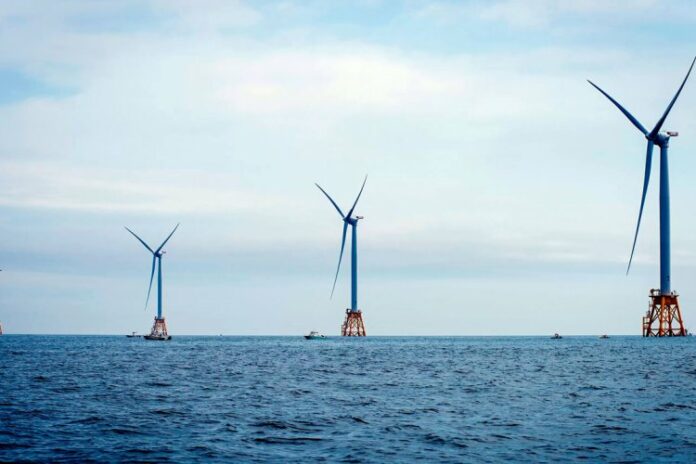
Ørsted, Japan Wind Development Co. (JWD) and Eurus Energy have formed a partnership with the aim of jointly developing offshore wind projects in the Akita Prefecture.

The three companies have been developing two designated offshore wind sites under Japan’s Offshore Renewable Energy Act of 2018, both of which are located off the coast of Akita: The Noshiro/Mitane/Oga Offshore Wind Farm and the Yurihonjo Offshore Wind Farm. Both projects are currently progressing with the necessary permitting. The consortium is fully prepared to participate in Japan’s upcoming offshore wind auction round which closes on 27 May 2021.

The partnership combines market-leading strengths in global offshore wind with a strong local renewable development footprint. JWD brings deep knowledge of the Japanese power market and supply chain as well as a strong track record in onshore wind in Japan; Ørsted has unparalleled experience in developing, constructing and operating offshore wind farms world-wide; and Eurus Energy has for decades been the leading onshore wind company in Japan with a strong development and operational track record in the Akita Prefecture.

Matthias Bausenwein, President of Region Asia-Pacific at Ørsted, says:

“As a strategic market for Ørsted, Japan has great potential and optimal conditions to develop offshore wind. We are excited to further expand our footprint in the country and assist in developing renewable energy through our partnership with JWD and Eurus in the Akita Prefecture. Ørsted has a unique opportunity and obligation to be a catalyst for the green transformation in Japan and can be a key player in realizing the cost-down journey for offshore wind in Japan.”

Masayuki Tsukawaki, JWD’s President and CEO, says:

“We are excited to partner with Ørsted and Eurus Energy in both of the designated areas of the Akita Prefecture where we have been pursuing the opportunities of offshore wind farm development for many years. By leveraging each company’s long-standing experience and knowledge, working together with local stakeholders, we believe we can build the first large-scale offshore wind farms in Akita successfully and further contribute to the growth of the offshore wind power industry as well as to the development of a sustainable society in Japan.”

Hideyuki Inazumi, Eurus’ President and CEO, says:

“To realize our carbon neutral objectives, Eurus is looking forward to utilizing our long-term experience and know-how of the wind power business in response to the widening expectation of offshore wind development through public and private sector collaboration. In working with Ørsted and JWD, Eurus is also looking forward to contributing to the realization of a sustainable society and long-term growth through local employment as well as co-existence and co-prosperity with local stakeholders.”

The Noshiro and Yurihonjo offshore wind sites have been matured by JWD since 2017, conducting site investigations including wind measurements, seabed surveys, and environmental impact assessments. The wind turbines for both wind farms will be installed on bottom-fixed foundations.

Japan has outlined a 30-45 GW offshore wind ambition by 2040 and plans to execute offshore wind auctions every year. Japan’s west coast is expected to host up to 5 GW offshore wind by 2030, and 9 GW by 2040. The grid capacity is 415 MW for Noshiro City, Mitane Town, and Oga City, and 730 MW for Yurihonjo City, as stated in the auction guidelines.

Viking’s newest ocean ship officially named by iconic British broadcast journalist

0

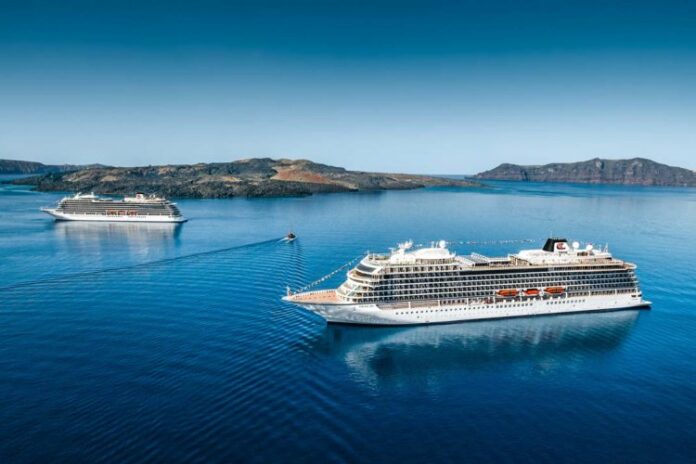
Viking® has named its newest ocean ship, Viking Venus®, with a celebration at sea in the English Channel as the ship set sail for her inaugural voyage. 

As part of the intimate event, the ship’s ceremonial godmother, revered British journalist and broadcaster Anne Diamond, offered a blessing of good fortune and safe sailing for the ship—a naval tradition that dates back thousands of years.

This Saturday, May 22, guests will embark Viking Venus in Portsmouth for the first of five roundtrip sailings of the England’s Scenic Shores itinerary in May and June. Part of Viking’s Welcome Back collection, the eight-day voyages also call in Liverpool, the Isles of Scilly, Falmouth and Portland. Anne Diamond will also join guests for the first three sailings of England’s Scenic Shores and will serve as a guest lecturer with her presentation about the untold story of British radar inventors, including her father, during World War II. Anne’s presentation will also be featured on Viking.TV in the future. Following her time in England, Viking Venus will then sail to Malta, where she will homeport for new Welcome Back voyages in the Mediterranean this summer and fall.

Delivered in April 2021 at Fincantieri’s shipyard in Ancona, Italy, Viking Venus is the newest vessel to join Viking’s ocean fleet of identical sister ships, which also includesViking Star®, Viking Sea®, Viking Sky®, Viking Orion® and Viking Jupiter®. Classified by Cruise Critic as “small ships,” Viking’s ocean vessels have a gross tonnage of 47,800 tons and with 465 all veranda staterooms that accommodate 930 guests, the ships feature clean, minimalist Scandinavian design, airy public spaces filled with natural light and abundant al fresco dining options.

Torstein Hagen, Chairman of Viking, said:

“Today is one of the proudest days in Viking’s nearly 24-year history. When we became the first cruise line to suspend operations in March 2020, we certainly did not know it would be 14 months before guests would be welcomed back on board. Now, we are among the first to set sail again—and with our industry-leading health and safety protocols in place, we believe there is no safer way to travel the world than on a Viking voyage. On behalf of the entire Viking family, we are delighted to celebrate the naming of our newest ship in England. We are also grateful to her godmother, Anne Diamond, for her many journalistic and selfless contributions—as well as for her tireless efforts fostering a community on Viking.TV each week for more than a year.”

Ardmore Shipping chooses Lean Marine’s FuelOpt™ to enhance fleet efficiency

0

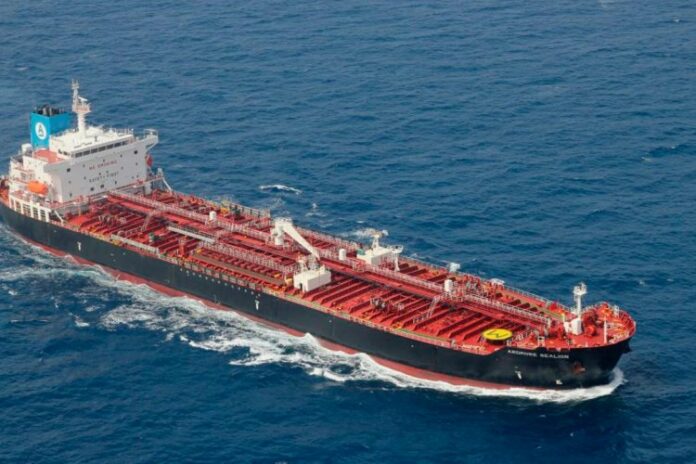
Swedish propulsion optimization experts Lean Marine have signed a contract with tanker operator, Ardmore Shipping Corporation, to install its FuelOpt™ propulsion optimization technology across its fleet. This new agreement follows on the heels of the success of the FuelOpt™ installation onboard the MR tanker Ardmore Sealion in 2020.

Lean Marine and Ardmore will also collaborate closely to enhance the overall performance of the Ardmore fleet and help these vessels achieve more sustainable ship operations. Lean Marine will install its green technology onboard the additional vessels over the course of 2021.

Commenting on the partnership, Mark Cameron, Executive Vice President and COO at Ardmore Shipping said:

“Lean Marine has great experience with enhancing vessel efficiency and has been supporting us in identifying key achievable means for further saving fuel and reducing emissions on the already efficient and modern Ardmore Sealion. Through this close collaboration, we will continue to exploit the potential of the FuelOpt™ system and explore the integration of other vessel systems to maximize the overall operational efficiency of our fleet. Ardmore Shipping’s energy transition is underway and our collaboration with Lean Marine will play an important role in the delivery of Ardmore’s Energy Transition Plan.”

Lean Marine’s FuelOpt™ technology is designed to ease the technical burden of greener ship operations as it automates propulsion control, thereby replacing the need for constant monitoring and manual adjustments. When using FuelOpt™ on the bridge, the crew gets full, automated control of vessel speed, fuel consumption and/or engine power, and are thus able to avoid potential overconsumption of fuel in harsh conditions such as high swells and winds.

Garry Noonan, Head of Energy Transition Technologies at Ardmore Shipping, added:

“We are confident that we can achieve great results by working together with Lean Marine. When working to increase the vessel efficiency of the Ardmore Sealion, we achieved significant results in a very short time, as we were able to take vital actions such as controlling the vessel’s fuel consumption using the FuelOpt™ system. We look forward to greener operations[KM1] [DA2]  across our fleet once the systems are installed in 2021.”

Upon activation, the system dynamically controls vessel propulsion based on the set commands, matching the vessel’s propulsion power to the changing environmental conditions. This stabilizes the shaft power required, removing costly variations in speed and output caused by human operational factors. The use of the system ensures maximum power optimization, minimum fuel consumption and reduced emissions in real-time.

Mikael Laurin, CEO at Lean Marine says:

“Ardmore Shipping’s decision to expand our collaboration shows their commitment to greener operations and their confidence in the results that our FuelOpt™ system delivers. We are looking forward to working with their team not only to achieve substantial fuel savings but also unlock further potential for greener operations through integration with other systems onboard the Ardmore fleet.”

GE finalizes contracts for third phase of Dogger Bank offshore wind farm

0

GE Renewable Energy has finalized the Turbine Supply and Service and Warranty contracts for the third and final phase of the Dogger Bank offshore wind farm, Dogger Bank C.

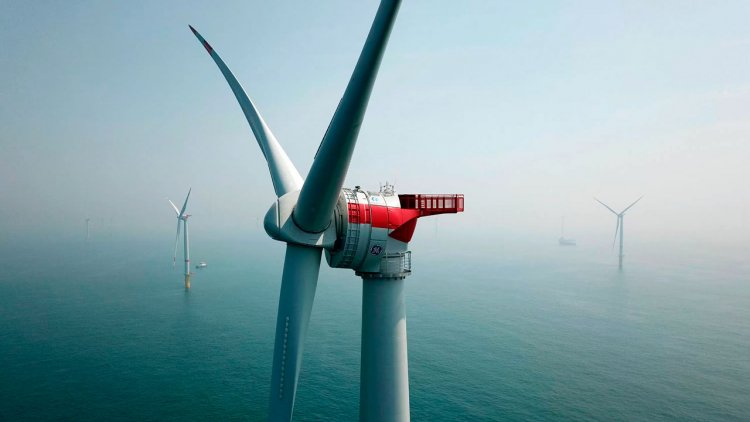
The Turbine Supply Contract confirms that GE Renewable Energy will provide 87 units of the Haliade-X 14 MW offshore wind turbine, marking the first commercial commitment for this nameplate. The Haliade-X 14 MW is an upscaled version of the Haliade-X 13 MW, the most powerful offshore wind turbine in operation today. The contract is subject to financial close for Dogger Bank C which is expected in late 2021.

GE Renewable Energy and Dogger Bank have also finalized the Service and Warranty Contract for a five-year full-service agreement that will begin once the Dogger Bank C phase is commissioned in 2026.

GE Renewable Energy has now finalized all contracts for the 3.6 GW Dogger Bank Offshore Wind Farm, due to become the largest offshore wind farm in the world upon completion.

GE Renewable Energy expects to create up to 300 direct jobs during the installation of the three consecutive phases of Dogger Bank project, this number includes the 120 positions already announced that will be based in Teesside from Able Seaton Port.

Also, in addition to the 120 jobs announced following the Service and Warranty contracts for Dogger Bank A and B, the company would add up to roughly 50 new operations and maintenance jobs to be based from the Port of Tyne for Dogger Bank C. 

This would represent a total of estimated 470 new skilled jobs created to support the Dogger Bank project.

Dogger Bank C is owned by SSE Renewables (50%) and Equinor (50%), while Dogger Bank A and B are owned by SSE Renewables (40%), Equinor (40%) and Eni (20%). As previously announced, Dogger Bank A and B phases will be the first to feature GE’s Haliade-X 13 MW, with a total of 190 to be installed. Today’s confirmation of an additional order of 87 upscaled Haliade-X 14 MW turbines for Dogger Bank C brings the total number of Haliade-X units to be installed at Dogger Bank to a total of 277.

John Lavelle, President & CEO of GE Renewable Energy’s Offshore Wind Business said:

“We are delighted to have passed yet another milestone in our collaboration with Dogger Bank with the finalization of the supply and service contracts for Dogger Bank C. Bringing the Haliade-X 14 MW to the third phase of the project proves that GE has the technology and know-how to address the fast-paced changes in the offshore industry. With all contracts signed, we are now looking forward to the next phases of our collaboration with Dogger Bank. Together, we will make a big contribution to the ever-accelerating energy transition in the UK.”

Steve Wilson, SSE Renewables Project Director for Dogger Bank Wind Farm, said:

“This is an exciting milestone and marks our continued progress towards financial close for the third phase of the wind farm, expected later this year. We’re particularly proud that through our confirmation with GE of turbine contracts for the delivery of all three phases of Dogger Bank Wind Farm, the project will be responsible for the creation of hundreds more green UK jobs, both during construction and through to servicing. We now look forward to continuing our close collaboration with GE on this phase of the project and to demonstrating how the impressive Haliade-X technology can be installed safely, efficiently, and on a significant scale for the first time, during delivery of our world-class offshore wind project.”

Dogger Bank Wind Farm is located over 130 km off the north-east coast of England and each phase will be able to produce 6TWh of renewable electricity, totaling 18TWh annually, when complete in 2026, equivalent to powering approximately the equivalent of six million UK homes each year or around 5% of the UK’s electricity demand. Due to its size and scale, the site is being built in three consecutive phases: Dogger Bank A, Dogger Bank B and Dogger Bank C. Each phase is expected to generate around 6 TWh of electricity annually.

GE Renewable Energy also recently announced its plans to open a new blade manufacturing plant in Teesside to support the growing offshore wind potential in the UK and Europe. The new plant will be dedicated to the production of the 107-meter blade, a key component of GE’s Haliade-X offshore wind turbine and is expected to open in 2023. The Dogger Bank Offshore Wind Farm would directly benefit from the blades produced. The new plant could create around 750 direct highly skilled job in the Tees Valley region of North East England and up to 1,500 indirect jobs to support its activities.

GTT will design the cryogenic fuel tanks for twelve new LNG fuelled container vessels

0

GTT has been chosen to design the cryogenic fuel tanks of twelve new liquefied natural gas (LNG) fuelled container vessels for the CMA CGM group, a world leader in maritime transport and logistics, pioneer in the energy transition with a fleet of 44 LNG-fuelled container ships by 2024.

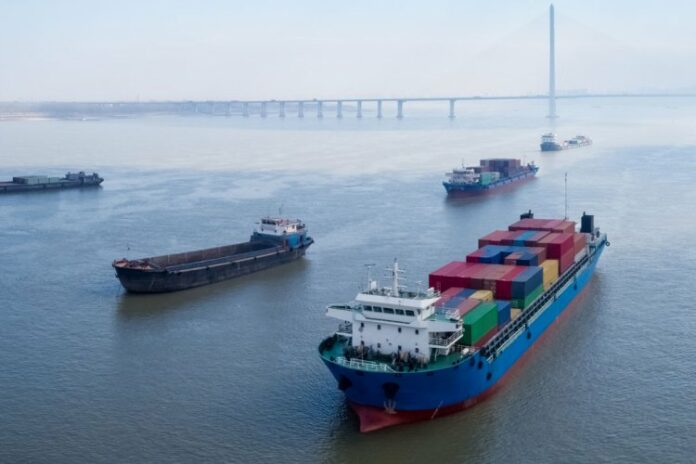
The LNG tanks will be fitted with the Mark III membrane containment technology, developed by GTT, and will be able to load 14,000 m3 of LNG. The twelve vessels will be delivered between the last quarter of 2023 and the third quarter of 2024.

The construction of these container vessels has been entrusted to the Chinese shipyards Hudong-Zhonghua Shipbuilding (Group) Co. Ltd. and Jiangnan Shipyard (Group) Co., who will each build six vessels, able to carry 13,000 and 15,000 containers respectively. The order of the six 15,000 TEU vessels completes the order of five similar container vessels signed in June 2019 with Jiangnan Shipyard (Group) Co.

Philippe Berterottière, Chairman and CEO of GTT, declared:

“After nine container vessels ordered in 2017 and five in 20192. The choice of GTT technology is confirmed by CMA CGM for the liquefied natural gas propulsion of its vessels. Used as a marine fuel, LNG significantly reduces ship emissions, reducing CO2 emissions by 20% compared to traditional marine fuel, and eliminating sulphur oxides and fine particles, as well as almost all nitrogen oxides.

Participating in the decarbonisation of maritime transport alongside the CMA CGM Group and our partners Hudong-Zhonghua Shipbuilding (Group) Co. Ltd. and Jiangnan Shipyard (Group) Co. are a source of great pride for GTT and its teams, and offer further proof of the efficiency and safety of our technological solutions to support the energy transition of ship-owners.”

Jan De Nul successfully executes cable repair work for TenneT in the German Bight

0

The repair job is part of the Service Level Agreement for cable repairs that Jan De Nul Group and TenneT entered into in 2019.

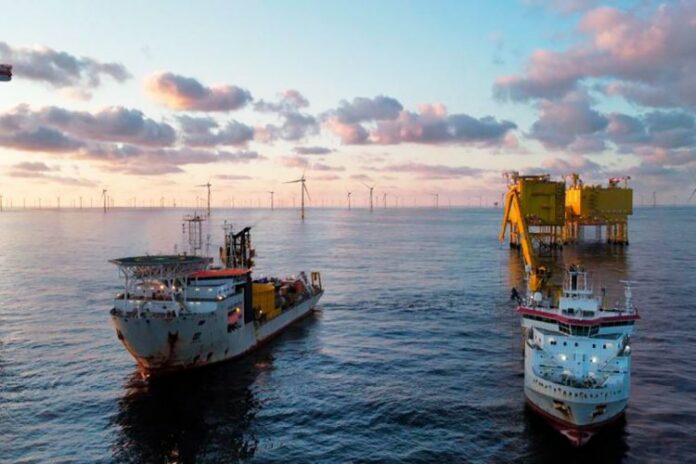
TenneT engaged Jan De Nul Group for the repair of a cable fault located within the 500-meter zone around the DolWin alpha platform, 75 kilometers off the German coast north of the island Borkum. This offshore platform connects three wind farms in the German North Sea to the German extra-high voltage grid, and is therefore vital for these wind farms to get the green energy ashore.

Within less than 50 days, Jan De Nul performed the specific detailed engineering, the vessel mobilisation, the replacement of the damaged cable section, as well as the burial of the new cable and joint.

Benjamin Foubert, Operations Manager Offshore Cables at Jan De Nul Group:

“We are very proud of this very well organized and swift repair. The extensive pre-engineering efforts we performed in view of this repair framework agreement clearly paid off. Achieving the full repair in such a short notice resulted in a minimal disruption of the offshore grid connection. Thanks to the close and pro-active cooperation between all parties involved we were able to complete this campaign successfully, which included our two vessels working simultaneously in close proximity of the offshore platform.”

For this repair job, Jan De Nul mobilised its Cable-Laying Vessel Isaac Newton and Multi-Purpose Vessel Adhémar de Saint-Venant. First, the Adhémar de Saint-Venant deburied the damaged cable section, including its cable protection system which was buried under large armour rock. 

The Isaac Newton loaded the spare cable and repair joint in Emden, recovered the damaged cable section offshore and subsequently installed the new cable and joint with success. Jan De Nul’s jet-trenching vehicle PT1, installed on-board the Isaac Newton, completed the repair campaign by burying the new cable section 1.5 meters below the seabed.