-4.7 C
New York
Home Blog Page 617

SeaCURE will study a new method of capturing carbon from seawater

0

The process – similar to capturing the CO2 bubbles in a fizzy drink – makes use of natural processes and renewable energy to remove carbon from seawater, allowing that seawater to in turn take more CO2 out of the atmosphere.

SeaCURE – led by the University of Exeter, in collaboration with Plymouth Marine Laboratory, Brunel University London and industrial partner tpgroup – has won a £250,000 grant for an initial study.

The funding comes from the Net Zero Innovation Portfolio, run by the UK government’s Department for Business, Energy & Industrial Strategy.

Dr Paul Halloran, of Exeter’s Global Systems Institute, said:

“The challenge with capturing carbon from the atmosphere is that CO2 makes up only around half of one percent of the air around us, so you need to push vast quantities of air through capture facilities to extract a meaningful amount of carbon. Our approach sidesteps this challenge by allowing the ocean’s vast surface area to do the job for us, tipping the natural process of CO2 exchange between the atmosphere and ocean in our favour.”

SeaCURE technology will temporarily make seawater more acidic, which helps get the CO2 to ‘bubble out’, then delivers a concentrated CO2 stream for utilisation and storage.

The CO2-depleted water is released back to the ocean, where it takes up more CO2 from the air.

The SeaCURE team will initially design a pilot plant to remove at least 100 tonnes of CO2 a year.

Dr Halloran said:

“This is about combining and scaling up proven technology and solving problems. By optimising each stage of this process, we hope to develop a model that will make this commercially viable on a large scale.”

The only input required by SeaCURE, apart from seawater, is electricity – and the team will use wind to power their process.

Dr Tom Bell, of Plymouth Marine Laboratory (PML), said:

“Combining our understanding of the ocean with a scalable engineering approach fueled by renewable energy, SeaCURE has incredible potential to support the UK’s net zero carbon ambitions. PML’s research excellence and capability enables us to inform the design of the pilot plant, and we are excited to be able to apply our expertise to address the urgent issue of excess CO2 in the atmosphere.”

Dr Salman Masoudi Soltani, from Brunel University London, said:

“In this project we will exploit our existing understanding of conventional amine-based absorption carbon capture processes to concentrate the low-concentration gas stream from the ‘CO2 removal’ unit. The lower inlet gas temperature (and its variation throughout the year) is expected to impact the capture efficiency and the energy demand of the process – an aspect investigated in this project.”

James Thomas, of tpgroup, said:

“SeaCURE critically brings together a partnership of academic expertise with tpgroup’s pedigree in delivering carbon capture systems for maritime environments. We hope to make a difference by ensuring that we develop both a technical solution to this global challenge, and one that delivers long-term reliability and commercial viability.”
Almatech and e5 Lab team up to decarbonize passenger transport in Japan

0

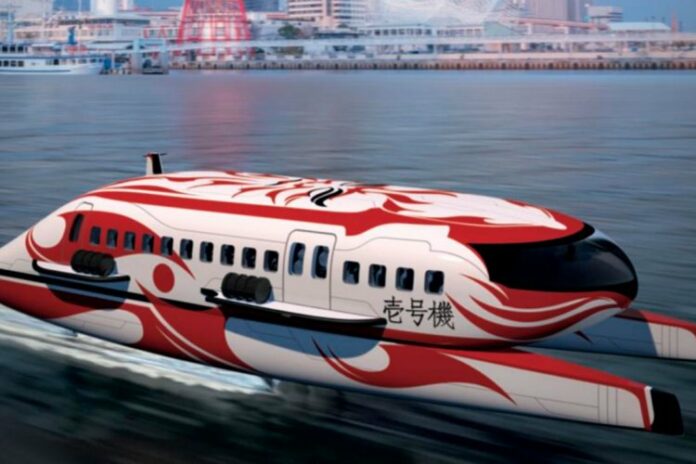
e5 Lab and Almatech SA in the industry-academia Swiss Federal Institute of Technology in Lausanne (EPFL) Innovation Park, agreed on a partnership to promote the Zero Emission Speed ShuTtle (ZESST) and enter the Japanese market. 

ZESST is an innovative hydrogen-fueled, electric-powered, zero-emission passenger shuttle vessel developed by Almatech.  This partnership was signed by videoconference at 16:30 Japan time (9:30 Swiss time) on May 19, 2021, at the Swiss Embassy in Japan and EPFL Innovation Park.

Engineers at Almatech, who have been involved in space technology development and naval architecture for more than 12 years, spent about three years developing ZESST. This hydrogen-fueled shuttle is equipped with high-efficiency hydrogen fuel cells and lithium-ion batteries. Energy consumption per passenger/cruising range is about one-fifth of conventional diesel engine-powered vessels. The hull structure, which uses new-generation composites made with plant-based fibers, realizes a further reduction in the vessel’s environmental impact.

Because ZESST combines speed, comfort, and safety, and uses no fossil fuels at all, it does not exhaust GHGs, SOx, NOx, and PMs, and generates minimal wake and noise. Japan, as a maritime nation, is expected to adopt it as the next-generation Mobility as a Service (MaaS) on the water. The design is adaptable to vessels of various sizes (50~400 passengers) based on a modularized core system.

The ocean shipping industry is one of the sectors aiming to reduce GHG emissions on a global scale, and Japan, as an island country surrounded by sea, also faces urgent and specific needs to reduce GHG output.

Subsea 7 awarded contract offshore Brazil

0

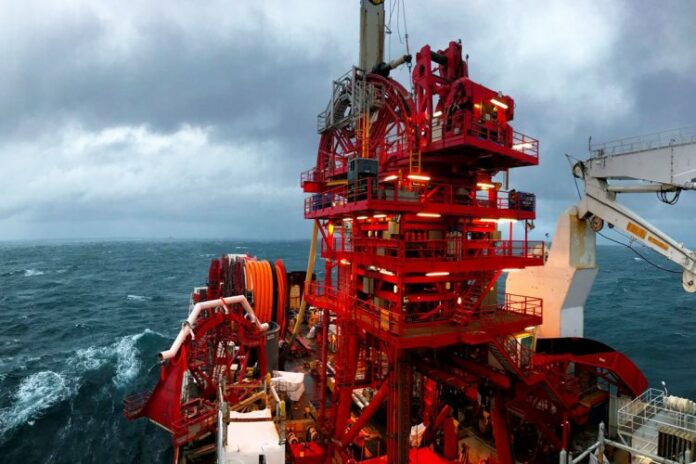
Subsea 7 today announced the award of a very large contract by Petrobras for the development of the Mero-3 field located approximately 200 kilometres off the coast of the state of Rio de Janeiro, Brazil, at 2,200 metres water depth in the pre-salt Santos basin.

The contract scope includes engineering, fabrication, installation and pre-commissioning of 80 kilometres of rigid risers and flowlines for the steel lazy wave production system, 60 kilometres of flexible service lines, 50 kilometres of umbilicals and associated infrastructure, as well as installation of FPSO mooring lines and hook-up.

Project management and engineering will commence immediately at Subsea 7’s offices in Rio de Janeiro and Paris. Fabrication of the pipelines will take place at Subsea 7’s spoolbase at Ubu in the state of Vitória and offshore operations are scheduled to be executed in 2023 and 2024, using Subsea 7’s fleet of reeled rigid pipelay vessels.  

Marcelo Xavier, Vice-President Brazil said:

“This contract builds on our strong, collaborative relationship with Petrobras and track record of executing major EPCI projects globally. Subsea 7 looks forward to working closely with Petrobras to successfully deliver the project.”

DNV launches its new Mobile Inspection App

0

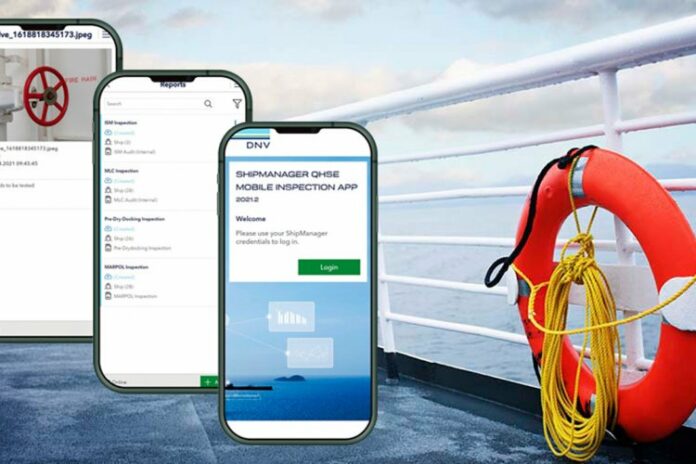
DNV’s new Mobile Inspection App helps ship owners and managers digitalize and streamline the workflow, recording and follow-up of their onboard safety inspections. The app also provides onshore staff with instant access to the results.

Many shipping companies are aware of the possibility of inconsistent or incomplete safety reporting and limited possibilities for gaining useful analytics if inspectors are using non-digitalized reporting methods. ShipManager’s new solution takes maritime safety and quality processes to a new level of usability and availability. The Mobile Inspection App enables reporting online or offline on all devices, whether laptop, desktop, mobile or tablet. 

The solution is designed for all kinds of safety inspections by owners and managers, including planned inspections and ad-hoc vessel inspections. It is easy to capture the results of an inspection directly on site through text, audio, photos and videos. This improves the quality and accuracy of descriptions for findings, making it easier to determine the actions that need to be carried out, and with less risk of missing important information.  

Captain Aleksejs Sidorenko, Managing Director for LSC SIA, says:

“We have been piloting the Mobile Inspection App for some time and really appreciate how easy it is to have an immediate and full overview of the inspection results onboard for our team to analyse.“

Using the Mobile Inspection App with ShipManager Analyzer, ship managers can track their company’s safety performance more easily and identify potential improvements through state-of-the-art dashboards. 

With the configuration options in ShipManager QHSE’s Safety Management Reporting module, you can easily create and configure your company’s own inspection templates, checklists and ratings. These are then made available on mobile devices through the Mobile Inspection App, ensuring standardization across the entire company and fleet. 

Torsten Kappel, Head of Ship Product Line, Digital Solutions at DNV, says:

“At DNV we are committed to supporting our customers in their digitalization journey by building the software they need. The Mobile Inspection App helps streamline workflows and improves data quality, which again will help our customers meet their safety KPIs.”

Norsepower announces Newport Shipping partnership

0

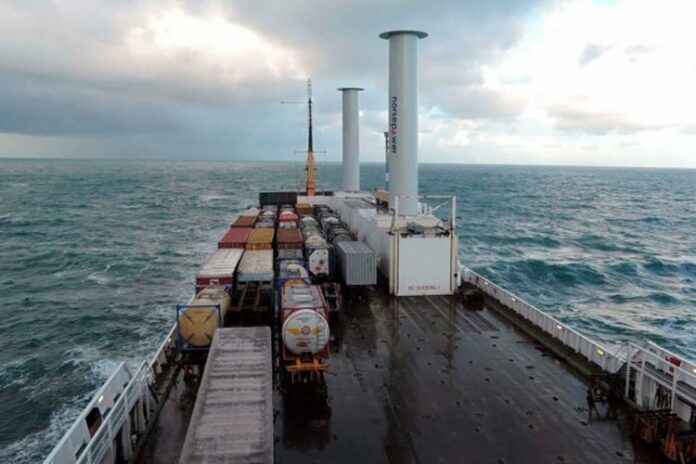
Norsepower has partnered with Newport Shipping to become the exclusive wind propulsion provider within its online portal that aims to ease the complexities of planning retrofit works.

The platform provides access to a full set of bespoke technology solutions that have a low carbon focus from a list of trusted suppliers within Newport Shipping’s network. This enables shipowners and fleet operators to obtain instant quotes for retrofit projects, get real-time visibility of shipyard availability and receive priority access to dry dock slots.

As shipowners analyse their vessels and make smart investment decisions to follow their chosen pathway to meet the International Maritime Organization’s (IMO) 2030 and 2050 GHG reduction targets, it is increasingly important that crucial information is available quickly and easily. This latest offering from Newport Shipping is a further example of how online tools are now being utilised to aggregate disparate data to better inform how the world’s merchant vessel fleet can be future-proofed. This portal is particularly beneficial for those responsible for the management of multiple vessels, empowering them with a level of transparency and control that more traditional methods cannot provide.

Tuomas Riski, CEO of Norsepower, commented:

“Retrofitting vessels with clean technologies such as wind propulsion is becoming an increasingly attractive option to decarbonise operations in light of the incoming EEXI and CII ratings systems, as well as to demonstrate alignment with ESG principles. Making the decision-making process simpler will help to accelerate greater uptake. Newport Shipping’s new portal aims to do just that through enabling owners and operators to identify where vessels can go into dock to be retrofitted as well as accessing potential costs and shipyard availability in real-time. We are proud to be Newport Shipping’s exclusive wind propulsion provider within the initiative so that more operators can access our technology that is proven to achieve both emissions and cost reductions.”

Silverstream secures two Finnlines newbuild ro-pax orders for Silverstream® System

0

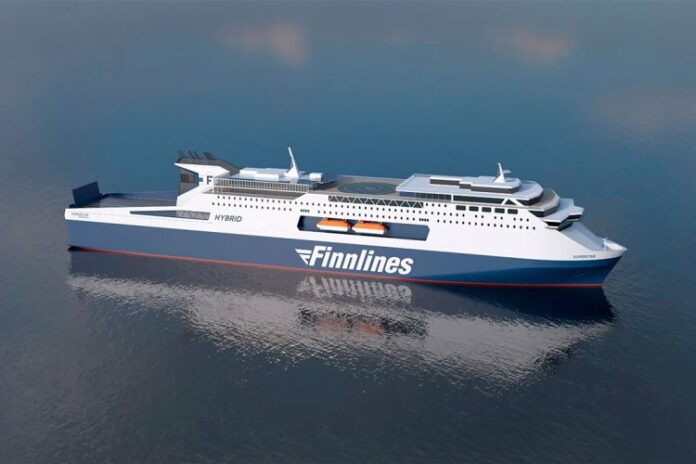
Clean technology company Silverstream Technologies has secured an order from Finnlines to install its air lubrication technology, the Silverstream® System, on two environmentally friendly newbuild ro-pax vessels, the first of which is starting to be built this summer at China Merchants Nanjing Jinling Shipyard (Weihai).

The Silverstream® System will reduce fuel consumption and associated emissions on the two new design flagship Superstar vessels. The two 235m vessels, which have a capacity of 5,100 lane metres and will carry up to 1,100 passengers, will be delivered by 2023 to operate between Finland and Sweden across the Baltic Sea.

Choosing the Silverstream® System will further improve the environmental credentials of the Superstar class ro-pax vessels, creating a new benchmark for what is already possible in terms of vessel design in the segment. The technology will exist alongside a suite of measures on the vessels to reduce environmental impact and improve passenger comfort.

The Silverstream® System uses a series of air release units (ARUs) in the flat bottom of a vessel to generate a rigid carpet of microbubbles that travel the full length of the hull. Silverstream has already begun manufacturing the air release units (ARUs) for the two Superstar vessels and will start working with China Merchants Nanjing Jinling Shipyard to install the technology onboard.

Speaking on the announcement, Noah Silberschmidt, CEO, Silverstream Technologies, said:

“We are proud to unveil the part that Silverstream is going to play to make Finnlines’ Superstar ropax vessels the most advanced passenger-freight ships on the market today. We are excited to get to work on installing our technology onboard these cutting edge vessels.

“Navigating the complexities of international supply chains – particularly as we continue to emerge from the COVID-19 pandemic – requires strong partnerships and collaboration. The team at Silverstream is eager to collaborate once again with our long-term partners at Grimaldi Group and China Merchants Group to not only execute a successful project but push the boundaries for efficient vessel design.”

Emanuele Grimaldi, CEO, Finnlines, said:

“We are constantly renewing and developing our fleet, and the upcoming three hybrid ro-ros, as well as two eco-sustainable Superstar ro-paxes, are a next step in the evolution of Finnlines’ fleet. These new vessels will increase our cargo and passenger capacity significantly and, together with our connections, we can meet the needs of our customers better – in a sustainable and responsible way.”

Shipping industry launches the Gulf of Guinea Declaration on Suppression of Piracy

0

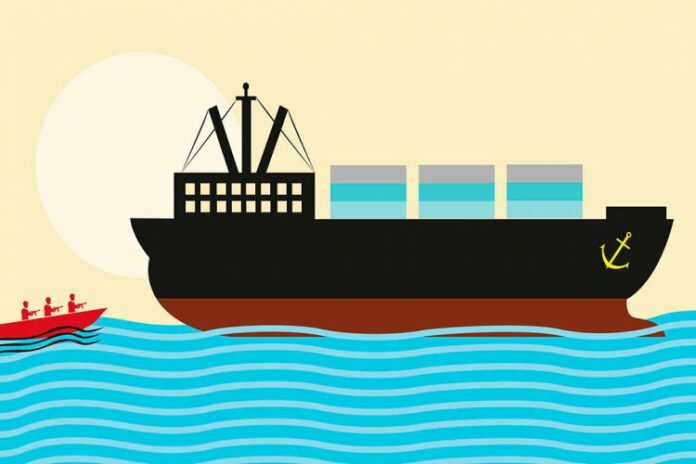
In 2020, 135 crew were kidnapped from their ships globally, with the Gulf of Guinea accounting for over 95% of the crew numbers kidnapped. This has happened in international waters in an area less than 20% of the size of the sea area dominated by Somali pirates a few years ago. The pirates launch their attacks from the Niger Delta, where they also subsequently hold their hostages.

Sadan Kaptanoglu, BIMCO president and shipowner, who has personally had a ship hijacked and crew kidnapped in the Gulf of Guinea, says:

‘We hope that all parties with an interest in a safe Gulf of Guinea will sign this Declaration.’

BIMCO welcomes the positive steps taken by regional states, especially Nigeria. However, in reality, it will take some years before these states can effectively manage the problem. In the interim period the best solution is to have capable military assets from able and willing non-regional states to actively combat piracy in the area in support of the efforts by countries in the region. The signatories firmly believe that piracy and attempts at kidnapping are preventable through active anti-piracy operations and that by the end of 2023 the number of attacks by pirates can be reduced by at least 80%.

During its session from 5 to 14 May 2021, the Maritime Safety Committee of the International Maritime Organization (IMO) discussed Gulf of Guinea piracy. Although development of related IMO resolutions on this topic is constructive and welcome, much more remains to be done, particularly in the short term. The launch of the Gulf of Guinea Declaration on Suppression of Piracy is therefore a timely expression of the maritime industry’s call for further action, through a wide range of collective efforts, to end piracy urgently in the Gulf of Guinea.

BIMCO maintains that the piracy can be suppressed with as little as two frigates with helicopters and one maritime patrol aircraft which actively combat piracy in the area. It is therefore imperative that non-regional countries provide the necessary assets on a rotation basis, and that one or more states in the area support the effort with logistics and prosecution of arrested pirates. The Declaration does not aspire to provide the long-term solution to the piracy problem but to help make seafarers safe today.

Carlo Cameli, Chair of BIMCO’s Maritime Safety & Security Committee, says:

‘The root causes of the piracy problem in the Gulf of Guinea can only be solved by Nigeria. An estimated 30 million people live in the Niger Delta, many under difficult conditions, and it would be naïve to think that anyone other than Nigeria can address the roots of the piracy problem. However, suppressing piracy will help our seafarers, just like it did off Somalia a few years ago. It will also establish security at sea and enable regional blue economies to prosper. Without security there can be no development.’

A group of shipowners convened by BIMCO drafted the Declaration. The aim is to speak plainly about the piracy problem in the Gulf of Guinea and get all the stakeholders involved to address the real problems, with effective solutions, on behalf of our seafarers.

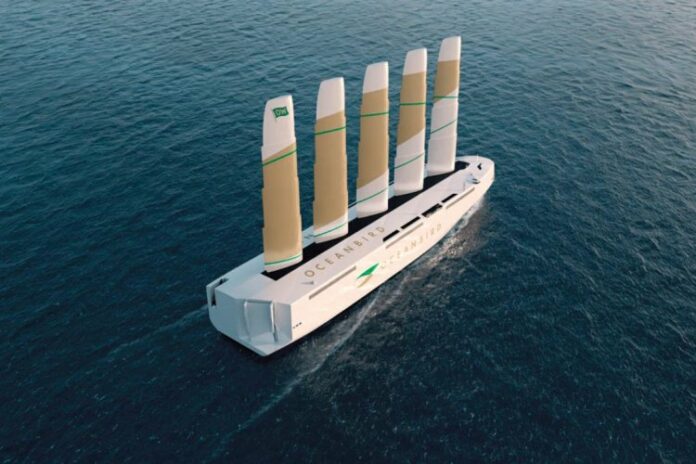
Opinion: Oceanbird can help save the whales

0

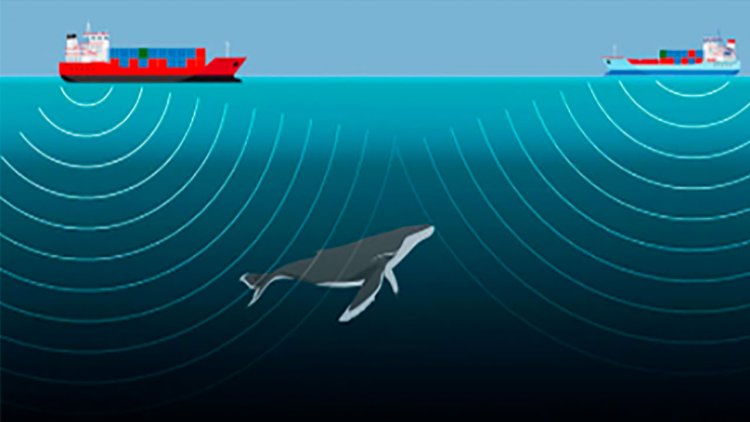
The oceans have become a loud place. Marine mammals depend on hearing for navigation, reproduction and finding food, and are having a hard time adapting to this sound environment.

Dr Iain Kerr, CEO of the non-profit, Marine Mammal Research organization Ocean Alliance, says:

“Oceanbird represents a giant leap forward for future marine mammal health.”

Dr Roger Payne discovered that whales sing songs in the 1970’s, and then founded Ocean Alliance. His recordings were sent with the Voyager spacecraft to interstellar space and are part of over 40 documentaries, including the IMAX movie Whales.

Whale songs are now being drowned by the noise from vessels, which low-frequency sound spread over open sea as an ever-present and constantly rising acoustic fog that masks natural sounds.

Graphics: CREO

He thinks its important to tackle the root of the problem and therefore felt hopeful when he heard about Oceanbird, the concept of wind powered vessels.

Dr Roger Payne says:

“If shipping became propelled once more by sails, both the sounds that are destroying the lives of animals in the ocean, like whales, and the burning of so much fossil fuels, would cease. And we would go back to a point where species that live in the oceans were designed to have a life. What Wallenius is doing is wonderful. I’m not exaggerating my feelings. I don’t think there is anything, any step, which is cutting so much of the roots instead of just thrashing at the branches.”

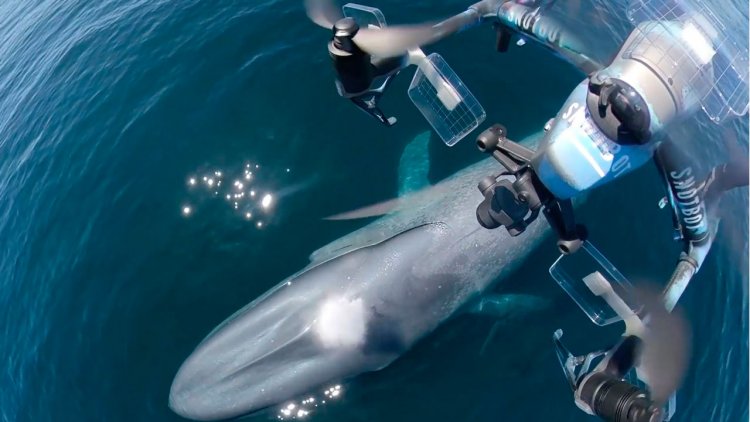
Many marine organisms rely on sounds to find mates, search for prey, avoid predators and navigate. Therefore, underwater sound pollution is receiving more and more attention, and is the subject of a lot of research. Ocean Alliance uses drones to study movements of whales and dolphins. They are worried that noise levels will increase after a quit period during Covid-19.

Dr Iain Kerr, CEO of Ocean Alliance, says:

“Due to noise from shipping it is unlikely that blue whales can hear each other over long distances any more. The oceans are being filled not just with plastic but with noise that is likely far more harmful for these animals survival – we call this phenomenon Acoustic Bleaching.”

Photo: Ocean Alliance

The issue of sound pollution and impact on marine mammals was first raised at IMO in 2004. Ten years later, IMO approved non-mandatory guidelines on reducing underwater noise from commercial shipping. Since then, IMO encourages member states to share their experiences in dealing with the reduction of underwater noise from shipping. It´s likely that more regulations will come.

The guidelines contains actions like:

  • Propellers that reduces cavitation
  • Avoiding sensitive areas
  • Slower steeming
  • Increased energy efficiency through innovative ship design and hull cleaning etc.

However, the biggest difference would be ships that are able to sail completely silent.

Dr Iain Kerr says:

“I read with great interest the plans for Oceanbird. Clearly Oceanbird would be far quieter in the water, since most ship sounds are not the generators or engines but propeller cavitation. I think it’s a really exciting time for ocean commerce, and I think Oceanbird exemplifies the idea, the dream and where we are going.”

Vard Marine and ILS Oy announce a collaborative teaming agreement

0

Vard Marine Inc. and ILS Oy are delighted to announce an agreement to work together to develop design solutions for the global icebreaker market and to address the challenges of ice-capable shipping worldwide. 

One area of cooperation will be the further development and implementation of ILS’ patented Detachable IceBreaking Bow (DIBB) in new markets. The ILS DIBB, with its independent power plant allows icebreaking to become a modular capability that can be added to new and existing ships as and when required, rather than being built into the vessel with all the size, weight, cost and efficiency impacts that this implies. While detachable bows are not a new concept, the DIBB’s unique capabilities overcome many of the drawbacks of earlier approaches. 

While the agreement is new, both companies have long respected each other’s corporate cultures and achievements. Most recently Vard Marine has developed the conversion designs for the Canadian Coast Guard’s Medium Icebreakers (MIBs) from an original ILS hull design. These ships are now some of the Coast Guard’s most powerful and effective assets. 

Vard Marine’s CEO, Wade Carson notes:

“Our agreement with ILS Oy will assist both companies in helping current and new clients in identifying their needs and in providing the designs that address these. The two companies’ shared values include putting our clients first and providing objective and unbiased advice.” 

ILS’ CEO, Kristian Lehtonen says:

“During the last five years, we have done design and consulting work for paying customers in 14 different countries. Cooperation with the highly skilled professionals of Vard Marine will further expand our horizons. We are pleased and honored to work with Vard Marine, as we share with them the same belief in hard work and commitment.” 

HPC to support Puerto Mejillones in optimising terminal operations

0

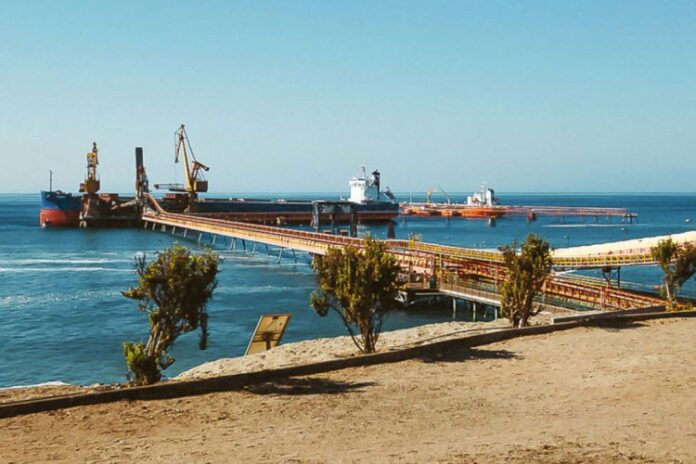
HPC Hamburg Port Consulting was awarded a contract to deliver a comprehensive assessment study looking into the operational process flow, infrastructure, equipment and maintenance as well as IT landscape of Puerto Mejillones, Chile, to assist the client in strengthening operational resilience and optimising its terminal operations. 

Located on the Bay of Mejillones, 65 km north of the city of Antofagasta, Puerto Mejillones is a major terminal for solid and liquid bulk cargoes such as copper concentrate, clinker, lead, tin, sulphur and sulphuric acid. Furthermore, the port provides specialised services for the entire port logistics chain of the Antofagasta region. Since its commissioning in 1996, Puerto Mejillones has become a vital strategic partner for the mining industry of the region. 

Handling mineral concentrates requires specialised infrastructure with high environmental standards to protect human health, the environment, and operations. To maintain these high standards and continuously adapt them to the growing needs of future-proof terminal operations, Puerto Mejillones commissioned HPC to conduct an assessment study. 

José Sáenz P., CEO at Puerto Mejillones, said:

“Following our holistic port planning concept, the further development of our terminals must also be oriented towards the growing needs of the region. With the help of the assessment, we strive for actionable clarity to check our development strategy for its effectiveness – in the short and long term. In this way, we want to sufficiently and safely ensure the continuity of operations over the next 25 years.” 

Pablo Bowen, Associate Partner at HPC and responsible for the Latin America and Caribbean region, said:

“HPC appreciates the trust of the team of Puerto Mejillones and the great teamwork to design the strategic roadmap. It allows the client to adopt high industry standards and continuously adapt them to the growing needs of future-proof Puerto Mejillones.” 

The assessment aimed to identify opportunities for improvement in maintenance management as well as potential to increase the performance and sustainability of the operations. Based on a multidisciplinary and holistic approach, HPC examined operational and maintenance processes, evaluating their alignment and effectiveness with the business strategy, overall equipment effectiveness, the performance and quality of production, KPIs  as well as the civil infrastructure, governance and IT systems. 

To do that, HPC has teamed up with two companies based in Hamburg, Sellhorn Ingenieurgesellschaft for the civil and port infrastructure review and BSPartner as experts for liquid and dry bulk, as well as with the local partner Akroscan for extensive site inspections and measurements. As a result of the first project phase, HPC was able to develop a list of more than 60 recommendations that lead to short-, medium- and long-term improvements in operational safety and higher productivity. 

Bowen added:

“The assessment of the terminal operations was challenging due to travel restrictions imposed by Covid-19. Thanks to the excellent and trustful cooperation with the port’s team as well as our partners, we were able to carry out a full survey remotely and on-site, not only propose recommendations but also accompany quick wins into the first phase of implementation.” 

HPC will further support the port in the next phase, outlining detailed plans for the implementation of long-term improvement measures based on the study results from the inventory.