-8.2 C
New York
Home Blog Page 616

KOTUG launches Inland Shipping division

0

Today KOTUG announces the establishment of an Inland Shipping division to provide electric powered pusher tugs and smart AI-driven dispatch and route planning applications for the inland water transportation industry. 

With these logistics solutions, KOTUG aims to support the worldwide energy transition and the modal shift from road transport to waterways while meeting the growing demand for electric-powered vessels.  

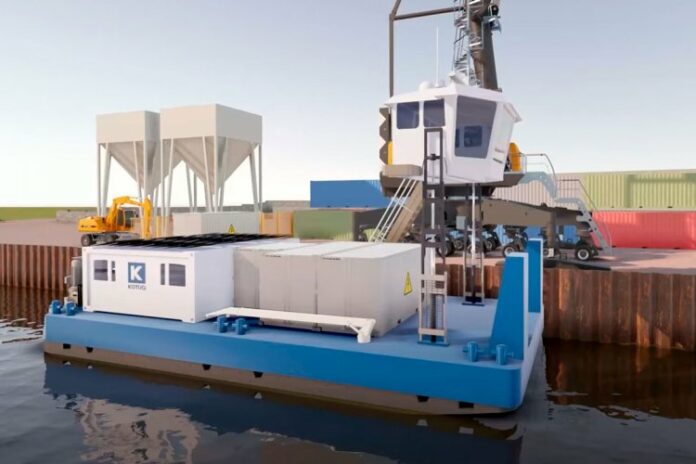
The set-up of the inland shipping activities results from developing a range of modular and scalable electric pusher tugs, the E-Pusher™ Series, powered by swappable energy containers. The E-Pusher™ Series currently has three models ranging from 5,5 to 22 meters in length and a maximum depth of 0,45 to 1,35 meters resulting in a draft that is 30% less than conventional pusher tug designs.

Due to the modular approach and lean assembly method, KOTUG reduced the construction time by more than 25% compared to traditional vessels. Together with her partners, KOTUG developed various energy containers ranging from Stage V diesel, (Bio)gas and Hydrogen to battery solutions.

For smart operations KOTUG will use OptiPort, its advanced dispatching, route and reporting tool. KOTUG OptiPort is an automated dispatching system based on historical and real-time information bridging port and terminal information with ship operations. The tool supports fleet owners in optimizing expected departure- and arrival times, routing and speed control, leading to reduced energy usage and just-in-time departure and arrival.  The system is active since 2017 and is currently in use by vessel operators in Australia, Japan, the United States, Canada, Belgium and the Netherlands.

With KOTUG CityBarge B.V., KOTUG recently started activities in the municipality of Leiden with a 5,5 meter E-Pusher™ providing a zero-emission alternative for heavy truck transport in inner-cities. KOTUG CityBarge BV. is a partnership of KOTUG with Circle Line Logistics B.V., aiming to make cities more liveable by restoring existing inner-city waterways by using them to transport garbage, construction materials and retail products.

Ard-Jan Kooren, CEO of KOTUG International B.V., says:

“The inland shipping market offers a great opportunity for sustainable logistical solutions. As an innovative company we have created ready-to-market products for the inland shipping industry by combining our technical expertise of ship design and digitization of the marine industry. The start with activities for the inland shipping market is a natural development and a step forward in our ambition to be part of the solution of the transition towards a zero-emission maritime industry.”

Regional Inland Shipping Minister, Jeannette Baljeu:

”The Province of South Holland is involved since the start of the project around reinstating waterways as a means of transport, with the development of the CityBarge (the smallest version of the e-Pusher). Clean transport is one of our priorities. By bringing together business and government to solve mutual challenges, solutions like the E-Pusher™ are no longer just paper ideas but market-ready products. I strongly believe in the E-Pusher™ concept;  it improves the liveability in cities and boosts the growth of tech industries in the Province of South Holland and beyond.“

Kongsberg adds MarineInsight™ applications by ioCurrents to the Kognifai Marketplace

0

The deal will make three new software solutions available to Vessel Insight subscribers via the Kognifai Marketplace: Vessel Health, Automated Reports and Fuel & Emission Optimization. The solutions will, respectively, assist in identifying engine failure through Machine Learning and Artificial Intelligence, create Automated Reports for all departments, and reduce fuel consumption based on proactive recommendations from automated data analysis.

Eirik Næsje, Senior Vice President of Vessel Insight, KDI, says:

“We are delighted to announce our partnership with ioCurrents and to offer Vessel Insight subscribers their solutions through the Kognifai Marketplace. The demand for solutions to predict failures, to optimize fuel and emissions, and to streamline reporting is increasing both for retrofits and newbuilds entering the market. The MarineInsight solutions can easily be adopted by our subscribers and can solve many problems already identified by our customers.”

MarineInsight is active in the workboat, OSV, bulk, tanker industries, and in other commercial and passenger maritime sectors around the globe. The company focuses on three core competencies, Vessel Health, Automated Reports and Fuel and Emission optimization.

  • Vessel Health: By applying Machine Learning (ML) and Artificial Intelligence, MarineInsight provides proactive recommendations to identify failures before they occur. Powered by AI, MarineInsight establishes ML models by understanding the normal operating behavior of each unique vessel. These unique ML models then identify when subsystems are trending towards failure. This gives crews more time to identify failures and enables a proactive approach to preventing them, rather than reactively dealing with critical failures whilst in operation.
  • Automated Reports: The InsightHub™ gives access to reports that can be used by all departments including Operations, Engineering and Maintenance, and Compliance and HSSQE. These automated reports reduce manual input by crews, increasing accuracy.
  • Fuel and Emission Optimization: MarineInsight optimizes voyages by considering two variables: Time, and Fuel Rates. MarineInsight generates automated reports that provide proactive recommendations based on the fuel index to reduce fuel burn while not sacrificing schedules.

Cosmo King, co-founder of ioCurrents, says:

“Partnering with Kongsberg Digital has been a goal of ours for quite some time. We are confident that by leveraging AI and machine learning, our data analytics platform, MarineInsight, will benefit Kognifai’s Vessel Insight subscribers. MarineInsight will analyze the huge amounts of data coming from their vessels and will turn it into meaningful charts and dashboards, enabling factual decision making to improve individual vessel and fleet performance.”

The three applications from MarineInsight will be available to Vessel Insight subscribers on the Kognifai Marketplace from May 25th, 2021. Customers can activate the MarineInsight platform by sending authorization to KONGSBERG.


Fugro site characterisation contracts renewed for Atlantic Shores Offshore Wind

0

Fugro has received a contract renewal from Atlantic Shores Offshore Wind (Atlantic Shores) for the provision of real-time wind and metocean measurements off the coast of New Jersey in the US over the next 2 years.

The award is the latest in a set of three contract renewals between Fugro and Atlantic Shores based on a successful 2020 work season. Along with metocean services, Fugro’s geophysical and geotechnical contracts have also previously been renewed, all three to support the safe design, permitting and construction of future wind farm facilities within the 740 km2 lease area.

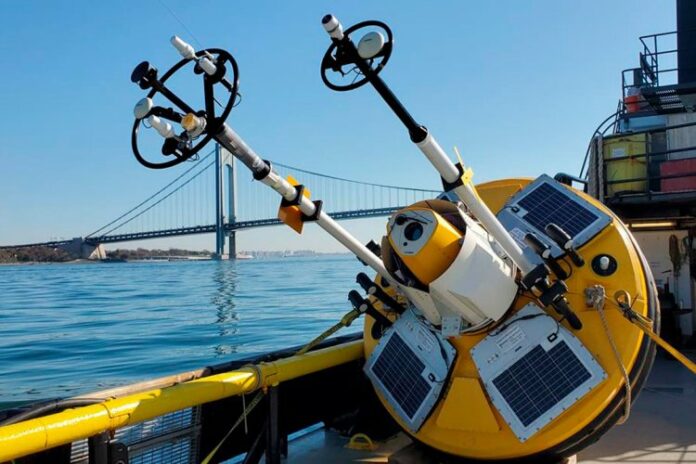
For the metocean contract, Fugro is utilising two SEAWATCH Wind Lidar Buoys. These systems provide cost-effective and reliable collection of wind, wave, current and meteorological data to optimise wind turbine design, installation, and operations and maintenance. 

The geophysical and geotechnical contracts started earlier this spring and are focused on continued characterisation of the lease area, export cable routes and inter-array cable modules. The fieldwork will run until mid-July and is being performed from five vessels, including two third-party vessels local to New Jersey, equipped with advanced data acquisition and analysis capabilities for near-real-time data processing and geoconsulting.

With the potential to deliver more than 3 GW of wind power from late 2027, Atlantic Shores will play an important role in New Jersey’s goal to reach 50 % renewable power by 2030. 

Edward Saade, President of Fugro in the US, said:

“Fugro is committed to ensuring a successful energy transition at the local, regional and global levels, so we are thrilled to continue our work with Atlantic Shores this year, building on past successes and applying innovative technologies that will help move this critical project forward.”

The Ukrainian captain died on board the ship on the way to Panama

0

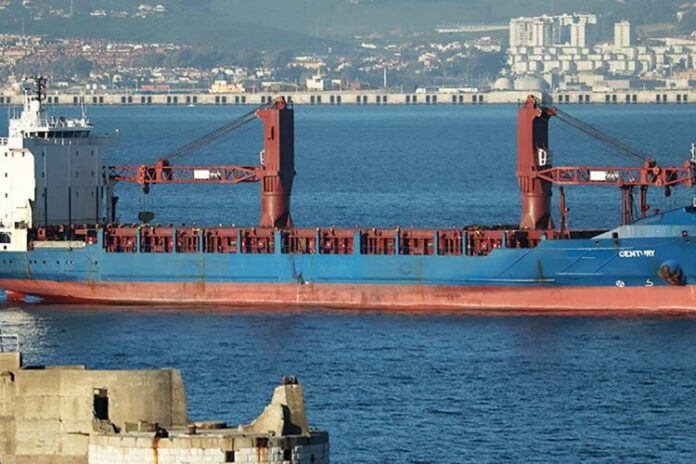
In the cabin of the vessel Century (IMO 9253260, the flag of Antigua and Barbuda), which was flying from China to Panama, crew members found the lifeless body of the captain – a 38-year-old citizen of Ukraine.

The death of the captain was reported by the maritime portal Seafarers Journal. Lawyer Mykola Holbin confirmed to journalists that the captain’s wife, a resident of the Odesa region (Ukraine), had permitted the autopsy.

The message reads:

“The Seafarers Journal was approached by a sailor who asked to remain anonymous and provided details of the tragedy. He said it all happened when the ship was heading to Panama (where the captain was to change). That day (two days before arriving at the port) the captain did not leave his cabin. When colleagues went to him, they saw his lifeless body there.”

According to the sailor, the crew passed information about what happened to the office of the shipowner, and from there came the command – to seal the cabin with the body and wait for the Panamanian authorities.

The sailor of the ship Century, on which citizens of Ukraine and the Philippines work, did not specify whether there were any injuries on the body.

Sources: Seafarers Journal, Censor.net

HudsonCyber Announces the Launch of PortLogixTM

0

HudsonCyber, a division of HudsonAnalytix, Inc., has announced the launch of its PortLogixTM application, an innovative cybersecurity program management system specifically designed for ports, port facilities, and terminal operators. 

PortLogixTM helps port stakeholders assess their cybersecurity capabilities, discover gaps, identify and prioritize solutions, benchmark progress, and demonstrate cybersecurity capability maturity.

As in many industries across the globe, cyber attacks in the maritime industry are on the rise. Since the start of the COVID-19 pandemic, the maritime industry as a whole has seen an unprecedented rise in the quantity and variety of cyber attacks. Prominent port and maritime organizations, including the International Maritime Organization (IMO), have suffered cyber attacks. Accordingly, ports, port facilities, and terminal operators are increasingly recognizing the urgency to address the challenge of cyber threats.

Cynthia Hudson, Chief Executive Officer of HudsonAnalytix, said:

“We are proud to have developed an approach that enables ports, port facilities, and terminal operators to meet the difficult cybersecurity challenges facing them today. Our PortLogixTM platform and methodology will provide them with a roadmap of recommendations to support their journey toward more sustainable cyber risk management and make informed decisions on how best to protect their valuable systems and data that underlie modern global logistics.”

PortLogixTM assists ports, port facilities, and terminal operator leaders addressing their cybersecurity challenges cost-effectively and collaboratively. As a cloud-based application, PortLogixTM engages stakeholders from across the organization to stimulate in-person or virtual cross-functional collaboration, promote hands-on analysis, and enhance communication and information sharing.

Employing a datadriven approach, it facilitates self-assessment, target profile development, progress monitoring, cybersecurity resource allocation and management, and investment planning efforts. Piloted in seven ports in the United States and the Dominican Republic, PortLogix users have employed the program to inform where and how they can most efficiently allocate precious resources, enable them to benchmark their cybersecurity capability progress over time, and help them sustain their long-term cyber risk management efforts. 

Ambitious renewable energy hub plans unveiled for the Port of Leith

0

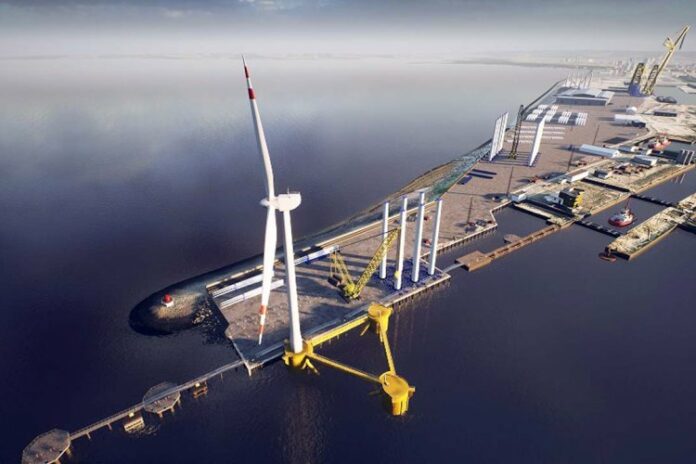
Forth Ports has unveils ambitious proposals for the creation of Scotland’s largest and best located renewable energy hub on a 175 acre site at the Port of Leith – supporting Scotland’s economic recovery and energy transition plans and the achievement of Scotland’s net zero carbon emissions targets.

This £40m private investment will see the creation of a bespoke, riverside marine berth capable of accommodating the world’s largest offshore wind installation vessels. The facility will feature a heavy lift capability of up to 100 tonnes per square metre (t/m2), backed up by 35 acres of adjacent land for logistics and marshalling. This will be supplemented by the upgrading of a 140 acre cargo handling site to accommodate lay down; assembly; supply chain and manufacturing opportunities. The total area is equivalent to around 100 full size football pitches. 

The Port of Leith Renewable Energy Hub has the potential to:

  • Make a major contribution to Scotland achieving its 2045 net zero greenhouse gases target
  • Secure the Firth of Forth as the driver for Scotland’s green energy transition
  • Help spearhead Edinburgh’s and Scotland’s Covid-19 recovery plan
  • Support up to 1,000 high quality, long term direct jobs and about 2,000 indirect jobs

Launching the plans, Charles Hammond OBE, Group Chief Executive of Forth Ports, said:

“This is a pump-priming investment in logistics and marine infrastructure at the Port of Leith as we harness Scotland’s natural resources for future generations and has the potential to play a significant part in our forthcoming Firth of Forth Green Port bid.

“Leith’s proximity to the North Sea, which is set to become home to many more offshore wind developments, coupled with the natural deep waters of the Firth of Forth, makes this an ideal location to support not only those developments already planned, but the pipeline of projects that are sure to follow. That’s why we’re prepared to invest our land, our expertise and our shareholders’ money to further build and strengthen Scotland’s renewables supply chain to deliver new long-term jobs.”

Cabinet Secretary for Net Zero, Energy and Transport, Michael Matheson, said:

“The Scottish Government has set ambitious targets to increase offshore wind capacity to 11 GW of energy installed by 2030 – enough to power more than eight million homes. This commitment, which will support our transition to a net-zero economy by 2045, capitalises on the fact that Scotland’s seas have some of the best offshore wind resources in the world.

“This significant investment from Forth Ports to develop the Port of Leith places them in an ideal position to harness the offshore wind opportunities in the North Sea, creating good green jobs and supporting a just transition to net-zero – not just for the city of Edinburgh but the wider area and beyond.”

City of Edinburgh Council leader, Councillor Adam McVey, said:

“Renewable energy plays a vital role in tackling climate change and in securing a bright economic future for everyone in our Capital. The increase in jobs for people in Leith and across Edinburgh is hugely welcome and underlines our economic resilience as a City.”

Claire Mack, Chief Executive of Scottish Renewables, said:

“The announcement of such significant activity by Forth Ports is hugely welcome and will act as a signal to draw other, wider private and public sector investment to grow the skills, expertise, innovation and supply chain we need to make the most of this exciting next phase of the renewable energy industry’s development. The Scottish Government’s Sectoral Marine Plan contains many sites for floating wind development which, coupled with investments in infrastructure capable of handling the scale of floating turbine technology, mean we have a chance to gain a foothold in a market with enormous economic and export opportunities, particularly in the US and Asia. Scotland can truly lead the world in offshore wind, and today’s news from Leith is the first step in that journey.”

This will be a wholly private sector investment of £40m, backed by Forth Ports’ shareholders, in support of the industrial regeneration of the Port of Leith and reinforcing the role of the Firth of Forth in Scotland’s energy transition. It will further underpin the position of Scotland’s Central Belt as a leading area of engineering and manufacturing skills and capabilities.”

MOL to procure newbuilding Panamax Bulker to transport woody biomass for energy

0

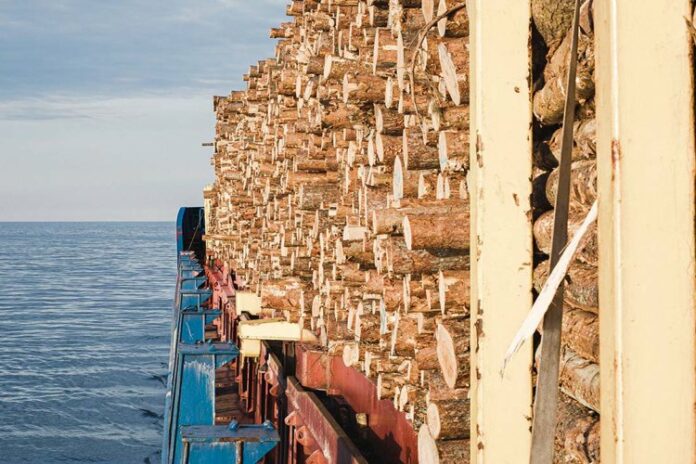
Mitsui O.S.K. Lines, Ltd. has announced that it plans to procure a newbuilding Panamax bulker to transport woody biomass for energy as its main cargo, in light of stronger demand for “carbon neutral” biomass fuels, especially by power companies in Japan.

The new vessel’s specifications are in pre-compliance with the Energy Efficiency Design Index (EEDI) phase 3, the environmental regulations that will be adopted in 2025. The specifications also call for reinforced mooring equipment and a wide-opening hatch design to boost the efficiency of cargo handling and is more suitable for the transportation of woody biomass for energy for Japanese power companies. It is slated for delivery at Oshima Shipbuilding Co., Ltd. in 2023.

The MOL Power Solution & Carbon Project Division is in charge of the business operation for the newbuilding vessel, provision of transport plans, and ship operation. The division was established this April to meet diversified needs of customers, including Japanese power companies, and offer solutions for decarbonization in addition to transporting conventional fuels.

The addition of the new vessel to the fleet will expand the MOL Group’s capabilities to serve companies that need woody biomass for energy, and complement the 10,000 ~ 80,000 tons ocean-going and coastal dry bulk carriers operated by MOL Drybulk Ltd. and MOL Coastal Shipping, Ltd.

Woody biomass for energy is a plant-derived fuel, and regarded as one that can realize a “carbon neutral” state, based on the concept that burning these fuels does not increase the CO2 concentration because carbon previously absorbed by trees is returned to the air.

SAE’s tidal power generation facility in Japan passed the inspections test

0

SAE has announced that its tidal power generation facility in Naru Island, Japan, has passed the Japanese government’s pre-use inspection tests.  

The site, which features the AR500 tidal turbine, is now recognised as an official power generation facility. The tests were undertaken by the Ministry of Economy, Trade and Industry (METI), which is a key stakeholder in consenting renewable energy projects in Japan.

The SAE team in the UK and Japan have been working closely with its client Kyuden Mirai Energy (KME) to demonstrate to METI that the power generation facility adheres the national regulatory standards. Some of the tests involved in the process included:

  • Meeting the turbine’s stated performance characteristics during peak tidal flow conditions
  • Demonstration of the ability to shut down the system safely during the highest annual flow rates
  • Temporary resilience to an auxiliary power loss from shore event and safe shutdown in the instance of an extended outage
  • Full testing of the turbine’s rapid shutdown capability in response to an emergency stop trigger from shore

The turbine tests, which were successfully passed during one of the strongest tides expected this year, follow an exhaustive process of inspection and verification of both the onshore facility and offshore equipment against national electrical standards.

The Scottish built AR500 tidal turbine has been generating electricity since it was installed in January 2021, and has generated more than 90MWh of power, at a high turbine availability. This pilot is the first large scale project of its kind in Japanese waters and has shown how the tidal industry can make a meaningful contribution in Japan’s ambition to diversifying its energy supply towards renewable sources.  Whilst the turbine’s power output is purposefully limited to meet consenting restrictions for this phase of the project, Japan’s deep and fast moving tidal currents lend themselves to arrays of MW class commercial turbines.

Graham Reid, CEO at SIMEC Atlantis Energy (SAE):

“I am extremely proud of the entire team who worked tremendously hard to get the project to where it is today. We are all delighted to have achieved this accreditation from METI as this confirms the capability and reliability of our technology and is a huge step forward in paving the way to the next phase of this exciting project and other future projects in Japan.”

HaiSea Marine Goes Green with new LNG Canada Tugboat Fleet

0

HaiSea Marine Limited Partnership (HaiSea Marine LP), majority owned by the Haisla Nation in partnership with Seaspan ULC, is pleased to announce the start of an innovative and industry leading new battery-powered and low emissions tugboat build program.

Once delivered, the new fleet will be among the greenest tugboat fleets in the world and will provide ship-assist and escort towing services to LNG carriers calling at LNG Canada’s new export facility in Kitimat in the unceded traditional territory of the Haisla Nation.

HaiSea Marine has a major contract with LNG Canada to build and operate escort and harbour tugs required for their export facility in Kitimat. With an ample supply of clean hydroelectric power available in Kitimat, the harbour tugs will be able to recharge from dedicated shore charging facilities at their berths between dockings, effectively resulting in near-zero emissions when running on batteries. GHG emissions from the new tugs are expected to be significantly lower (54% and 24% respectively) than diesel powered alternatives.

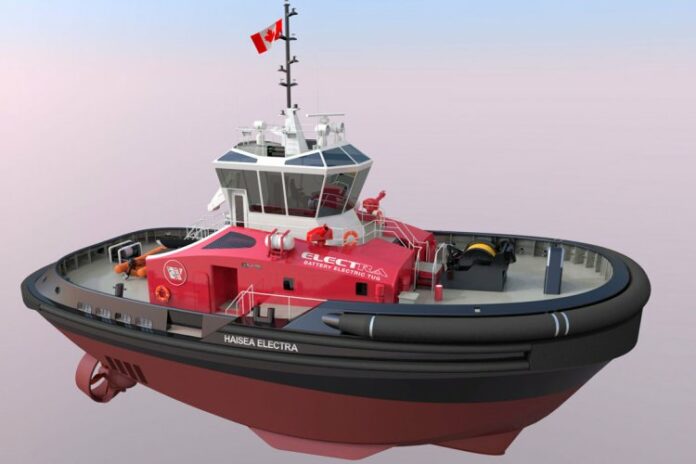
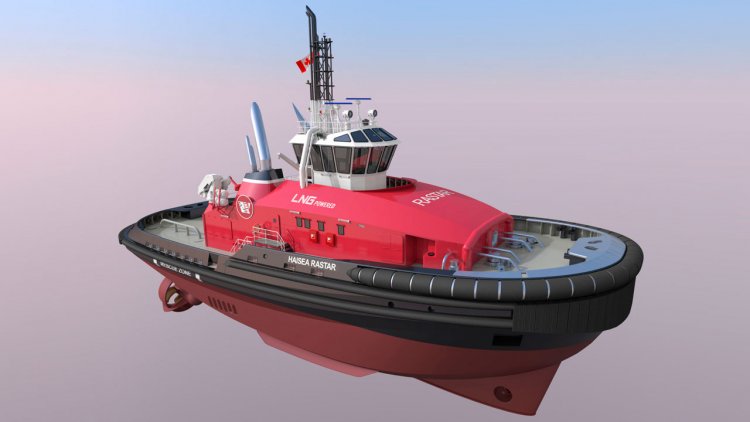
The new fleet of tugs will consist of two RAstar 4000-DF escort dual fuel (LNG and diesel) tugs and three ElectRA 2800 electric harbour tugs. Designed by Vancouver BC-based naval architect company, Robert Allan Ltd. (RAL), the tugs will be constructed at Sanmar following a comprehensive RFP process built around stringent green marine specifications. The new fleet of tugs is scheduled to arrive in British Columbia in 2023.

The RAstar 4000-DF escort tugs will measure 40 metres in length, and with 100 tonnes of bollard pull will be the west coast of Canada’s most powerful escort tugs – and among the world’s most high-performance escort tugs – with the ability to generate indirect forces in escort of approximately 200 tonnes. In addition, the escort tugs will feature an exhaust after-treatment system in full compliance with IMO Tier III emissions standards, the most stringent emissions standards for the international marine industry.

The ElectRA 2800 harbour tugs that will operate in tandem at LNG Canada’s new export facility will be first-of-class battery electric tugs, designed to perform their regular ship-berthing and unberthing missions using battery electric power. The ElectRA 2800 harbour tugs will be 28 metres length, with approximately 70 tonnes bollard pull and approximately 5240 kWh of battery capacity.

Sanmar has a worldwide reputation for innovation and excellence. Renowned for building some of the most technologically advanced and environmentally friendly tugs based on world-leading designs from naval architects such as RAL, Sanmar is a leader in the construction of RAL tugboats, with over 200 tugs built to date, ranging from LNG-fueled, hybrid to autonomous vessels.

Crystal Smith, Haisla Chief Councillor, said:

“On behalf of Haisla Nation Council we are happy to see this moment reached through the work of our joint venture. The HaiSea Marine joint venture will lead to many opportunities for Haisla members, and reaching this stage with Sanmar Shipyards brings us a step closer to realizing these benefits for our members.”

Frank Butzelaar, CEO, Seaspan Marine Transportation said:

“The start of the Robert Allan designed Sanmar build program brings HaiSea one step closer to delivering on the promise made to the Haisla Nation when this partnership was conceived over a decade ago. These dual fuel environmentally friendly vessels represent the future – they are revolutionary in both their technology and their ability to create opportunity for the Haisla people. This remains HaiSea’s promise.”

Ali Gurun, Vice President of Sanmar, said:

“We are delighted that HaiSea Marine has chosen Sanmar to build the two dual fuel escort tugs and three battery powered harbour tugs that will serve one of the largest energy projects in Canadian history, the LNG Canada liquification and export facility in Kitimat. These five tugs will form the world’s most technologically advanced fleet to date. Sanmar is proud to be leading the drive toward a more sustainable and environmentally-friendly tugboat industry with this industry leading and important project.”  

GE researchers unveil 12 MW Floating Wind Turbine concept

0

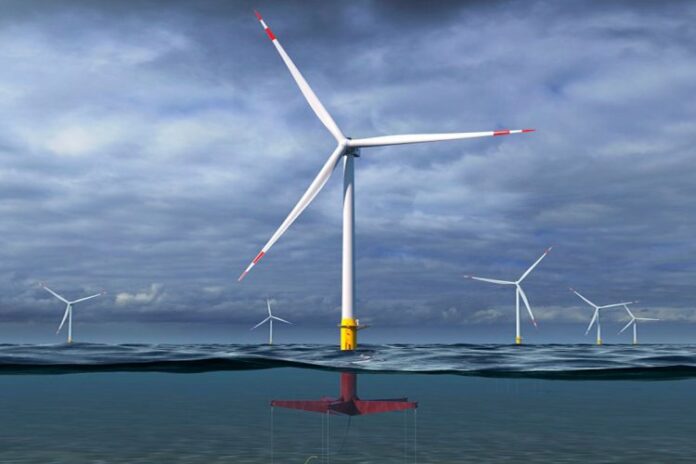
GE researchers unveiled details of an ongoing two-year, $4 MM project through the ARPA-E’s ATLANTIS (Aerodynamic Turbines Lighter and Afloat with Nautical Technologies and Integrated Servo-control) program to design and develop advanced controls to support a 12 MW Floating Offshore Wind Turbine. GE is partnering on the project with Glosten, one of the leading design and consulting firms in the marine industry, and the developer of the PelaStar tension-leg platform floating wind turbine foundation.

The Floating Wind Turbine project is one of several cutting-edge energy technologies GE Research is featuring at the annual ARPA-E Innovation Summit, which is being held virtually this year from Monday, May 24-27.  

Rogier Blom, a Senior Principal Engineer in Model-Based Controls and the project’s principal investigator, says the enormity of building a floating platform that can support a structure as massive as an 850+ ft. offshore turbine cannot be understated, stating:

“Designing a floating turbine is like putting a bus on a tall pole, making it float and then stabilizing it while it interacts with wind and waves. Doing this well is both a design and controls challenge.”

“Through our ATLANTIS project with ARPA-E, we will be concurrently designing the controls system with the design of the floating structure itself to advance Floating Offshore Wind Energy toward becoming a future commercially viable solution.”

Accelerating the development of new technologies to promote the future of floating offshore wind energy is the key objective of ARPA-E’s Atlantis program. By coupling a 12 MW GE turbine with Glosten’s tension leg platform technology, the team has taken on the challenge of designing a light-weight Floating Turbine with up to 35% less mass in the tower and the floating platform. This is expected to result in a very significant reduction of the resulting Levelized Cost of Energy – LCOE – of the electricity generated with this turbine. The core principle that makes this possible is co-designing the controls system with the tower and floating platform.

Ben Ackers, Vice President and Principal in Glosten’s Ocean Engineering and Analysis group commented on the collaboration between GE and Glosten:

“We excel when we engage across all of the active disciplines and components as we optimize our floating structures for a full system solution. Collaborating closely with GE gives us another layer of detailed engineering design input beyond the standard drivers of site conditions, construction cost, schedule, and the resulting LCOE. This is the cooperation needed to bring floating wind to technical and commercial success.”

Between GE Research and Glosten, the joint research team brings decades of expertise in all areas of technology involved in carrying out the mission of our project, including turbine controls, structures, aero engineering, naval architecture, and hydrodynamics.

Blom noted that enabling floating offshore wind would dramatically expand the power generation potential of offshore wind power.

Blom said:

“With GE’s Haliade X, the world’s most powerful offshore wind turbine built to date, we’re just beginning to tap into the future promise of offshore wind power in Europe, the US, and other parts of the globe. Today, these fixed-bottom wind turbines are limited to depths of 60 meters or less. With floating turbines, we would be able to dramatically expand the reaches of offshore wind power to areas with water depths of 60 meters or greater.”

According to the National Renewable Energy Lab (NREL), the introduction of floating turbines would dramatically expand the potential of US offshore wind resources to more than 7,000 TeraWatt hours (TWhs) per year, nearly double the total annual US energy consumption of 4,000 TWh.