-2.4 C
New York
Home Blog Page 613

Horisont Energi concludes first phase of Europe’s first large-scale clean ammonia project

0

Bjørgulf Haukelidsæter Eidesen, CEO of Horisont Energi, said:

“The work carried out with our partner Haldor Topsøe A/S is pioneering and sets the global standard for blue hydrogen and ammonia plants, with an extremely low carbon footprint combined with industry-leading energy efficiency and compelling revenue potential. This is a clean ammonia plant at a scale that truly matters.”

Through this first phase all the key aspects of the project have been addressed with the conclusion of feasibility. First off, a process design with a record low carbon footprint and an industry leading energy performance has been developed, secondly, feasible sites for the plant have been identified and studied together with Multiconsult, and the preferred site will soon be concluded and announced, a tie-in solution into Melkøya LNG has been identified and a formal study agreement has been entered into with the Snøhvit Unit, a feasible pipeline routing and design from Melkøya to the plant site has been developed, and finally an excellent quality carbon storage for the plant’s CO2 has been identified, namely Polaris. Together these elements form a solid basis for the continued development of the Barents Blue project in the next phase – the concept phase.

Horisont Energi will now award contracts for concept studies to various suppliers. This process will result in a concept decision, intended to be completed around the end of the year. Following this decision, detailed studies (front end engineering design – FEED) will lead to a final investment decision towards the end of 2022.

Due to the groundbreaking nature of the project, Norwegian state agency Enova has granted NOK 10 million for the concept study phase. In addition, Enova has shortlisted Horisont Energi as one of five candidate hydrogen projects in Norway for possible participation in the Important Projects of Common European Interest (IPCEI) on hydrogen.

Adding to the existing use of ammonia as input for fertilizer production and other industries, there is intense interest in the future use of ammonia as a fuel, either directly or by converting it into hydrogen. Horisont Energi is actively working with several potential customers for the clean ammonia in the European market.

Bjørgulf Haukelidsæter Eidesen, CEO of Horisont Energi, said:

“The Barents Blue project will be one of the largest ammonia plants in the world, providing climate-friendly and profitable market access for the natural gas reserves in the Barents Sea by tapping into the huge global ammonia market. The scale and potential of the project has led to substantial interest from a number of stakeholders, including the local community, NGOs and major companies in the energy business.”

The plant will deliver ultra-low carbon footprint, with between 99.3% and 99.9% overall CO2 capture. It will also have industry-leading energy efficiency. Based on circular economy principles, Horisont Energi will select recyclable and reusable materials, and consumables and chemicals of which the by-products can be reused in other industries.

Bjørgulf Haukelidsæter Eidesen, CEO of Horisont Energi, said:

“Our clear ambition is to make blue ammonia, which is produced from natural gas with carbon capture, just as environmentally friendly as plants based exclusively on renewable electricity and electrolysis, so-called green ammonia. In the future, it is also our intention to develop green ammonia facilities, but regardless of the technology, we aim to set the industry standard for large-scale clean ammonia production.”
Auckland’s port secures low-sulphur fuel supply

0

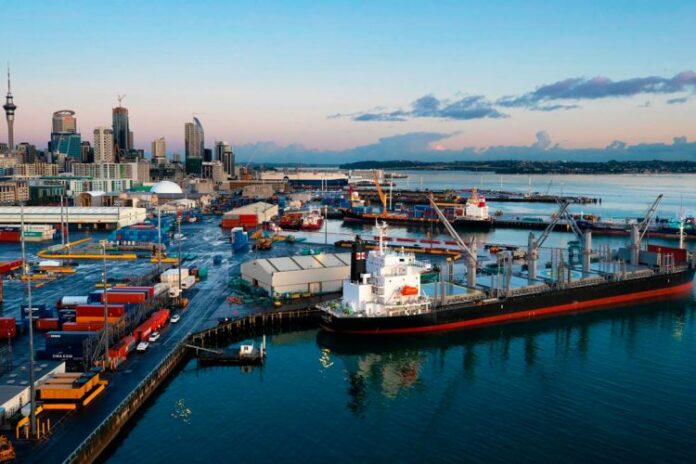
Ports of Auckland subsidiary Seafuels and bp have reached an agreement to use the bunker barge ‘Awanuia’ to deliver MARPOL-compliant Very Low Sulphur Fuel Oil (VLSFO) and Marine Gas Oil (MGO) to the marine market in the Auckland port.

This agreement will help ensure New Zealand is able to meet its international obligations under Annex VI of the MARPOL convention for the Prevention of Pollution from Ships, by providing international and domestic vessels calling New Zealand with MARPOL compliant fuels. New Zealand joined MARPOL in 1998 and is due to sign up to Annex VI from late 2021.

The partnership allows bp to re-enter the New Zealand VLSFO market and once again deliver VLSFO to its customers. The bunker barge Awanuia will deliver fuel to bp’s shipping customers in Auckland, in a safe, reliable, and efficient barge bunkering service, minimising port stays.

MARPOL Annex VI aims to prevent and minimise ship pollution in the marine environment and is the primary international regulation for addressing the impacts of climate change on shipping — 94 other countries representing 97% of world tonnage are party to it. There are 6 annexes categorised by pollution type. Annex VI seeks to limit air pollution from ships around ports and harbours and came into force on 1 January 2020.​

Tufton inks deal with Anemoi for installation of Rotor Sails on 82k DWT bulk carrier

0

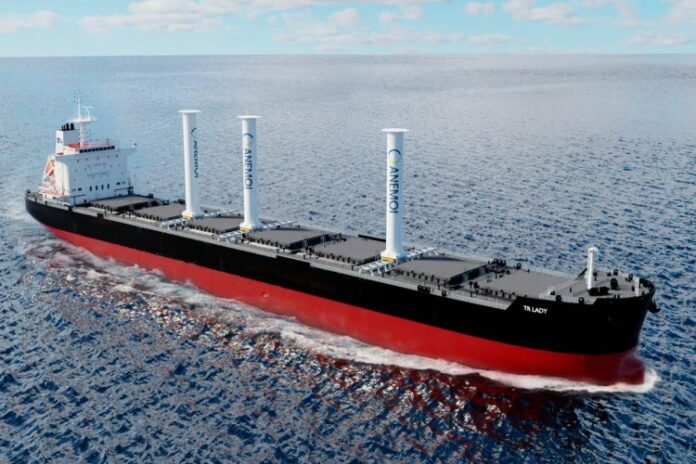
TR Lady Shipping Ltd, a portfolio company of Tufton Investment Management Ltd (“Tufton”), has inked a commercial agreement with Anemoi Marine Technologies Ltd – a global leader in wind assisted propulsion for commercial vessels – to supply and fit the bulk carrier TR Lady with three large Rotor Sails and Anemoi’s patented Rail Deployment System. The Rail Deployment System allows the Rotor Sails to be moved across the deck to minimise impact on port operations.

TR Lady is a CS Marine design 82,000DWT Kamsarmax bulker, built in 2017 by Yangzijiang Shipbuilding Group, and managed by Tufton.

Rotor Sails, also known as ‘Flettner Rotors’, are vertical cylinders which, when driven to rotate, harness the renewable power of the wind to provide additional forward thrust. These highly efficient mechanical sails capitalise on the aerodynamic phenomenon known as the Magnus Effect and will deliver significant fuel and emission savings to TR Lady.

TR Lady will be retrofitted with the Rotor Sails during scheduled dry docking of the vessel. Anemoi will provide full project management, supply and delivery of the system equipment. Work will be undertaken at a Chinese yard and is scheduled to be completed in mid-2022. Class approvals will be awarded by Lloyd’s Register.

Kim Diederichsen, CEO of Anemoi Marine Technologies said:

“This landmark commercial agreement demonstrates Tufton’s confidence in our technology and proves their industry leadership and commitment to a decarbonised shipping industry. I am delighted to be working with a company that shares our environmental values and I look forward to a successful installation.

Recently, we have seen significant interest and demand for our wind propulsion systems as our industry continues to place environmental stewardship at the top of its agenda. Tufton are definitely leading the way and we are pleased to be able to support them on that journey.”

Andrew Hampson, CEO of Tufton said:

“Tufton is committed to achieving IMO’s ambition of at least a 50% reduction in greenhouse gas emissions by 2050 (compared to 2008 levels). The commercial agreement with Anemoi is representative of Tufton’s capability to carefully select from a variety of environmentally friendly technologies in order to achieve commercial as well as environmental targets. I am pleased to work with Anemoi and look forward to a successful installation with the resulting reduction in emissions.”

Hapag-Lloyd further expands its container fleet

0

The sharp increase in demand has led to a shortage of containers across the world.

Severe imbalances – such as with exports from Asia, but also owing to congestion in ports and delays in hinterland transports – are causing containers to be tied up in transit for considerably longer periods of time. More boxes are currently needed overall to manage the same transport volume.

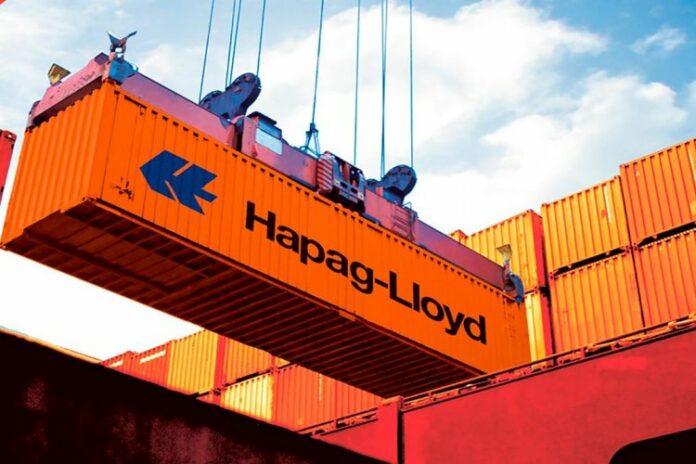
For this reason, Hapag-Lloyd has once again invested in its container fleet and ordered an additional 60,000 TEU of standard containers from China. The first boxes will supplement those currently being produced and are scheduled to be delivered to Hapag-Lloyd as early as July and integrated into the existing fleet. The majority will be subsequently delivered in the third quarter.

Rolf Habben Jansen, CEO of Hapag-Lloyd, said:

“Demand continues to be very high, and the supply of container equipment is currently one of our industry’s biggest challenges and demands our full attention. To counteract the container shortage – but, most importantly, to offer our customers a better service – we have repeatedly invested in our container fleet since the beginning of the pandemic.”

In April of this year, Hapag-Lloyd had already announced orders for a total of around 150,000 TEU of standard and reefer containers to be delivered over the course of 2021. The company had also invested in its container fleet at the beginning of the pandemic.


Maersk Supply Service to install the first hybrid battery on an anchor handling vessel

0

With ambitious targets to reduce its carbon intensity by 50% across its fleet in 2030, Maersk Supply Service has now taken the next step in its decarbonisation journey and ordered a battery pack for one of its M-class vessels.

Mark Handin, COO of Maersk Supply Service, says:

“Maersk Supply Service is taking an active role in decarbonising the offshore support vessel sector. This requires both behavioural changes in the way we operate our vessels, as well as technological upgrades to our fleet. With this new hybrid battery solution upgrade, we take a significant step forward in our path to further reduce the emissions from our diesel-electric vessels. The use of hybrid batteries/energy storage systems has proven to be an effective solution within the platform supply vessel (PSV) sector; however, we believe that we are on the leading edge in terms of bringing this technology into the Anchor-Handling Tug Supply (AHTS) segment. To the best of our knowledge, this will be the world’s first AHTS hybrid battery conversion.” 

Maersk Supply Service has chosen Wärtsilä as the supplier of the hybrid battery as its extended battery life and innovative design allows for reduced vessel emissions, reduced maintenance and increased operational performance.

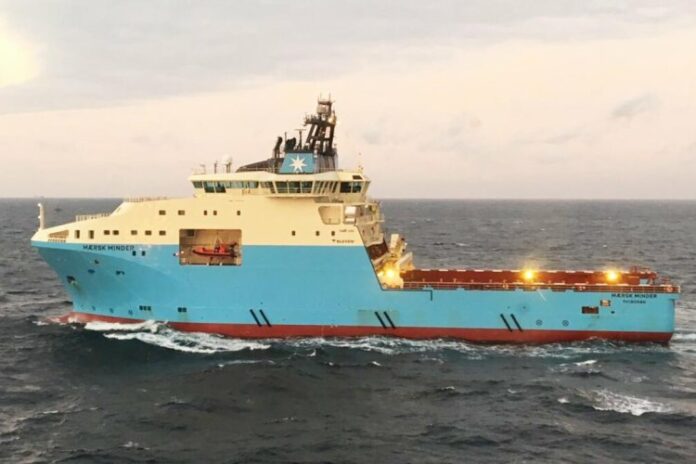
Maersk Minder has been selected for the first vessel battery installation. The vessel will operate in the North Sea from Q3 2021, with plans to install the battery in late 2021 or early 2022, depending on delivery time. The concept is designed to meet our customers demand for lower carbon vessels.

Allan H. Rasmussen, Head of Technical Organisation, and responsible for the decarbonisation initiatives in Maersk Supply Service, says:

“The expectation is that the new battery pack will decrease the fuel consumption and thereby reduce CO2 emissions by 15%. The responsibilities for anchor handling vessels vary considerably from heavy tows of offshore floating units to subsea work in Dynamic Positioning mode. With the specialised tasks and variety of operational capabilities, it is important that we thoroughly test the vessel setup utilising the batteries and validate the CO2 savings during the first few months of operations.”

Kenneth Bang, Account Manager from Wärtsilä, says:

“The Wärtsilä Low Loss Hybrid battery system (LLH) seamlessly integrates with a conventional engine, like Maersk Minder. Our Low Loss Hybrid offers significant efficiency improvement by running the engines on optimal load and absorbing many of the load fluctuations through batteries. We see this renewable LLH solution as a great fit for Anchor Handling Tug Supply Vessels.”

Since 2018, Maersk Supply Service has reduced its carbon intensity by more than 13% across its fleet. In addition, it has allocated resources for the coming years to continue with technical upgrades to reduce its emissions further.

ECONNECT Energy, Naturgy and Gasum complete LNG delivery with the floating IQuay

0

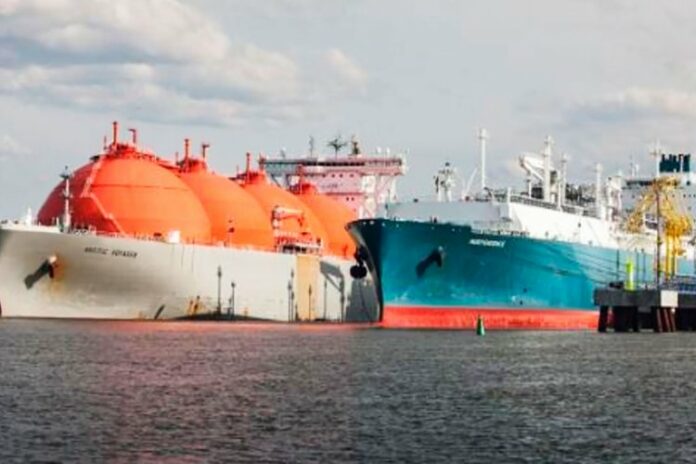
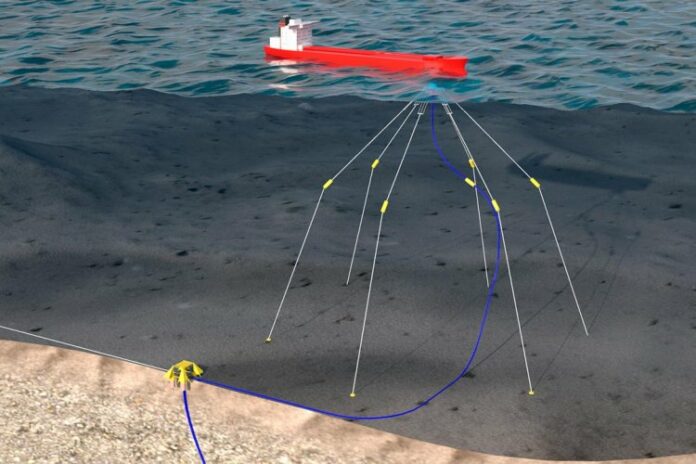
ECONNECT Energy conducted an offshore marine LNG delivery with the IQuay™ patented jettyless transfer system (previously called UTS) in Norway together with Spanish utility company Naturgy Energy Group, and Finnish energy company Gasum.

The cargo of LNG was delivered via floating transfer technology with minimal personnel for the aerial hose hookup to the LNG vessel and with remote monitoring of the asset onshore during the discharge operation. 

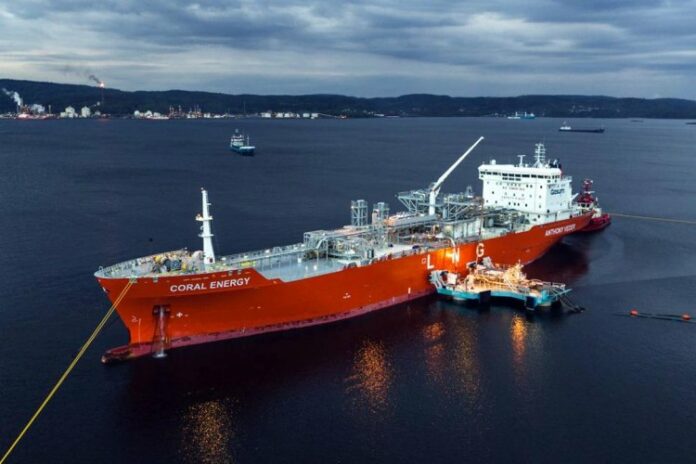
In addition to the LNG import operation from Gasum-chartered LNG carrier, Coral Energy, to Herøya, the operation also measured the flow rate, friction and pressure of LNG in the floating flexible hoses. The LNG delivery was an opportunity to further benchmark the operational performance of the system against traditional solutions.

In conjunction with the IQuay client, first mover Naturgy and operator Gasum, other partners in the LNG operation included SINTEF, Air Liquide, Trelleborg, Anthony Veder, Herøya Industrial Park, the Grenland Port Authority, the Norwegian Coastal Administration (Kystverket) and with support from Innovation Norway. To date, ECONNECT Energy with Naturgy have developed, built and commissioned the only existing jettyless floating LNG transfer system in the world.

ECONNECT Energy Project Manager Jørgen Agerup, said: ‍

“The ship to shore LNG transfer with the floating IQuay was an opportunity to further prove the capabilities of the system. The cargo delivery of LNG and analysis verified the system process performance.”

The operation was performed on schedule and according to careful planning involving commercial partners, local authorities and third-party surveyors amidst the backdrop of the COVID-19 pandemic. In addition, the unique, floating nature of the IQuay system served to accelerate the marine-based permitting process due to the system’s limited interaction with the local marine environment.

Stig Sagevik, Logistics Manager at Gasum, says:

“We appreciate taking part in such an innovative operation with our LNG feeder, Coral Energy. The development of infrastructure increases the availability of cleaner energy when the access to shore is an issue. We think this will be increasingly important in the years to come.”

Jose Miguel Moreno Blanes, Naturgy Head of Technical & Marine Assurance, said:

“We started this innovation journey with ECONNECT to facilitate the access to energy to many customers that need it. Today, it’s been proven that IQuay is their solution. We are very proud to be part of this demonstration. Innovation is in Naturgy’s DNA and innovation solves real problems as IQuay does.”

ECONNECT CEO Morten Christophersen said:

“Only in concert with our customers can we realise the commercialisation and track record of our floating jettyless terminal solutions. Together with Naturgy and Gasum, among others, we have proven the utility of the IQuay. It takes forward thinking organisations coming together to adopt new technology to address challenges in energy distribution.”

The floating jettyless IQuay technology is well-positioned for deployment in remote areas where installing marine jetties may be cost-prohibitive and impactful to the local environment. By removing the need for fixed jetties, floating transfer solutions can accelerate LNG, carbon capture and renewable fuels projects as an important step in the transition towards a cleaner energy future.

The IQuay has successfully connected to a variety of vessel types – LNG carriers, Chemical carriers, offshore supply vessels, tug boats – and operated in 3 different locations. In addition to LNG transfer, the IQuay technology can be applied to a wide range of vessels and terminals for the loading and unloading of ammonia, hydrogen, CO2 or any other fluid.

Samskip adds Waterford call and bigger ship to recently launched Amsterdam-Ireland lane

0

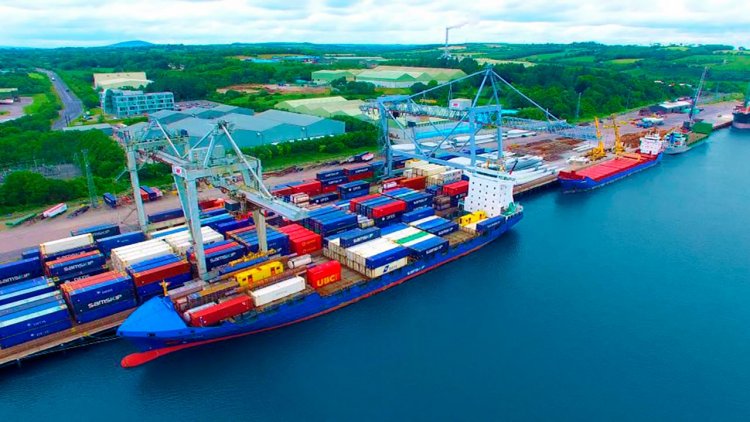
Samskip has responded to growing demand for its recently launched weekly container service between Dublin and Amsterdam by introducing a larger, faster ship and adding a call at Port of Waterford. The expansion comes less than five months after the debut of Amsterdam as a service separate from Samskip’s Rotterdam-Ireland links.  

Thijs Goumans, Head of Ireland Trade, Samskip, said:

“We have experienced strong uptake for the direct route into Amsterdam’s network of rail, road and barge connections to major EU markets. As anticipated, customers linking to Ireland have been eager to avoid the post-Brexit hassles of UK distribution. Waterford can expect the same seamless connections.” 

Monday night departures from TMA Terminal Amsterdam for arrival in Dublin on Wednesday complement Samskip’s existing Rotterdam-Ireland shortsea services, said Goumans. For Irish exporters, the weekend return to Amsterdam has also proved a key attraction.

He said:

“Samskip rail links between TMA and Duisburg connect Irish importers and exporters to markets farther east. Adding Waterford brings new opportunities for Irish exports in the northern Netherlands, Germany, Poland and beyond.”

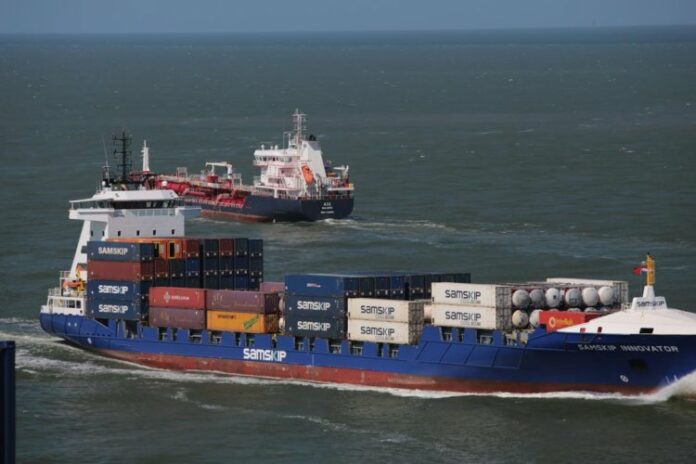
The service upgrade sees the introduction of the 750TEU capacity container ship Edith, whose faster operating speed accommodates a call in Waterford after the Dublin without any schedule disruption. Samskip’s Rotterdam-Ireland services are sustained separately by a pair of 800TEU vessels. 

Alma Prins-Droog, Head of Cargo & Offshore, Port of Amsterdam, said:

“We are delighted by this expansion of Samskip’s Ireland service. Since its inauguration last January, TMA Logistics and Samskip have worked tirelessly to make this service a success. This development highlights the position of the port of Amsterdam as a short sea hub, offering shippers efficient and reliable connections between Ireland and the European hinterland. We will continue to work with our partners to ensure success. The Irish container market shows strong growth, and the addition of the port of Waterford offers many new opportunities.”

Michael van Toledo, General Manager, TMA Logistics added:

“Every week there has been a faster uptake of vessel slots on this route, demonstrating that the Amsterdam-Ireland link is a response to demand that was already there.

“TMA’s congestion-free road access provides a platform for growth in FMCG volumes into Ireland and for Irish pharma and dairy exports via Amsterdam, with Samskip rail services offering connections to the east and cross-docking at TMA is winning over trailer operators to and from markets further south of Amsterdam. over the past three years.”

Port of Waterford Chief Executive Frank Ronan said that the latest service development is built on a strong relationship between carrier and port, after a decade of calls by Samskip’s Ireland-Rotterdam services to Belview Container Terminal.

Ronan said:

“The addition of a shortsea connection to Amsterdam by one of our leading service partners demonstrates the growth opportunities that exist in both directions for direct links between Ireland and other EU markets. As the premier unitised facility in the south-east of Ireland, Waterford has capacity to handle more frequent direct lo-lo services into continental Europe, whether driven by local exports or rail freight containers moving across country.”

Stena Line’s new ferry ‘floats out’ in China

0

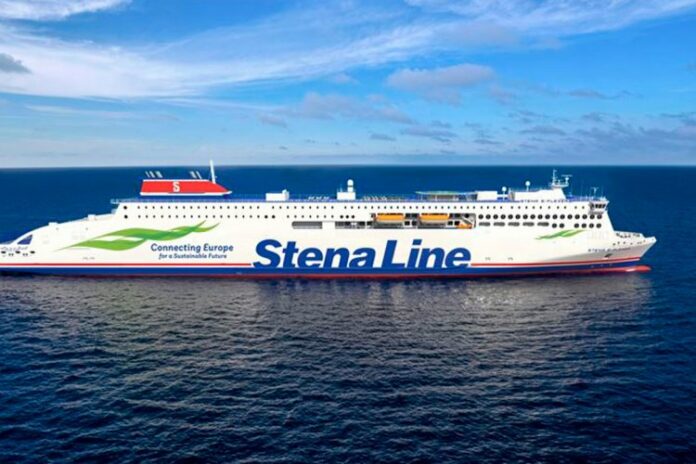
Ferry company Stena Line has achieved another important milestone in its major new fleet investment programme with the ‘launching’ ceremony of the first new extended E-Flexer vessel in Weihai, China. 

The vessel was ordered in 2018 and the delivery is expected in 2022. For now, the name of the new vessel and the route on which it will operate are being kept a closely guarded secret by Stena Line.

The new vessel that took to the water for the first time on 24 May is the fourth out of five new next generation E-Flexer vessels that are are designed and built in collaboration with the sister company Stena RoRo at the CMI Jinling Weihai Shipyard in China. The vessels are among the world’s most modern and efficient RoPax vessels. The three first vessels have already started to operate on the Irish Sea during 2020 and 2021.

Niclas Mårtensson, Managing Director of Stena Line, says:

”The E-Flexer vessels represent an important part of our sustainable growth journey for the future and we look forward to welcoming two more vessels to our fleet next year. The first three vessels are making waves with our appreciative customers across the Irish Sea and both their flexibility and efficiency has already made them great assets for the company during the pandemic and following Brexit.”

Per Westling, Managing Director of Stena RoRo, says:

”Despite the challenges connected to the pandemic we have been able to deliver our newbuildings in time and thereby enabling Stena Line to perform their fleet renewal program as planned.”

The fourth and the fifth vessel will be 240 meters long with a load capacity of 3,600 length meters, compared to the first three which are 214 meters long and have a load capacity of 3,100 length meters. In total, the larger vessels also get 50 % more cabins and beds, 30 % increased passenger capacity and an additional 15% cargo capacity. The name of the new vessel and the locations where it will operate between will be announced later this year.

Among the distinguishing features are:

• Efficient loading and unloading with drive-through lanes on the two levels.

• Up to 30 % more energy efficient than existing vessels in the fleet, thanks to optimum design of the hulls, propellers, bulbs and rudders.

• All five vessels are delivered gas-ready, to allow conversion to methanol or LNG fuel.

• The two longer vessels will be equipped to use shore power during port calls to reduce emissions. The electricity connection also enables a conversion to battery hybrid in the future.

• Stena Lines’ Scandinavian heritage is clearly visible on the interior and the design is spacious and light, with amazing panoramic views.

UK innovators join forces on a new robotic solution for wind sector

0

Two UK innovators have joined forces in a mission to develop a robotic solution for ensuring the integrity of the millions upon millions of bolts that hold wind turbines together, a move that is described as essential to the expansion of offshore wind – and the world’s net-zero future.

The new project announced today by the Offshore Renewable Energy (ORE) Catapult brings together the six-legged BladeBUG inspect-and-repair robot for turbine blades and EchoBolt’s ultrasonic bolt inspection device. 

Leading turbine developer GE Renewable Energy, which plays a supporting role on the new project as technology advisor, estimates that the companies’ technology fusion will unlock cost savings of 75 per cent in bolt maintenance and repair bills. The potential market prize ahead of the solution’s developers is estimated at £150 million per year by 2030.

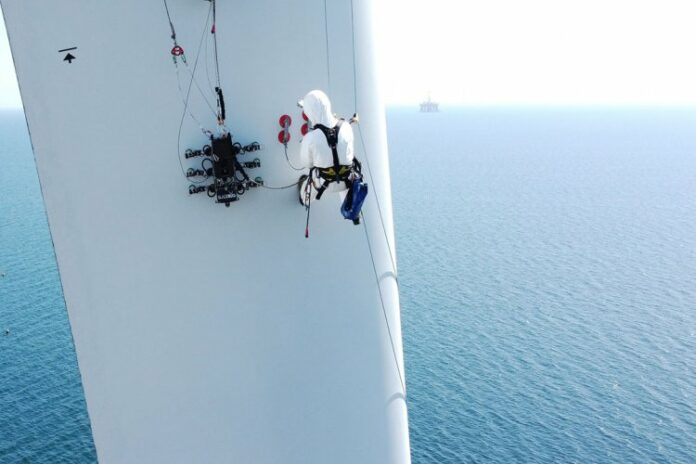
The technologies at the heart of this project were developed under previous projects funded by Innovate UK and in collaboration with ORE Catapult. BladeBUG’s crawling robot inspects and repairs blade surfaces, a task that currently requires technicians to scour every inch of their surfaces. While EchoBolt’s device can detect bolt tension using ultrasonics without the need for labourious loosening and retightening with hydraulic tools.

There are more than 30,000 blades and more than 10 million bolts in the UK wind sector that require this level of maintenance. To meet the UK’s net-zero target of 75GW of offshore wind capacity by 2050, technicians of the future would need to cover almost a quarter of a million blades and 79 million bolts. However, without using robotics and smart technologies, this scale of expansion will simply not be technically or financially feasible, according to ORE Catapult.

Peter MacDonald, Head of Engineering at ORE Catapult, comments:

“As offshore renewables expand and these maintenance tasks become truly mammoth, robotics will be a vital part of the mix, and we see them both working autonomously and alongside offshore technicians. In addition, these solutions pave the way for remote operation from onshore control centres and cross-discipline job creation opportunities.”

BladeBUG has previously proven its abilities to walk and inspect blades at ORE Catapult’s Levenmouth Demonstration Turbine, while the EchoBolt technology has been validated through trials in bolt inspection at the same test turbine and on GE’s Haliade-X, the world’s biggest offshore wind turbine nacelle.

Anthony Gordon, Programme Manager at GE Renewable Energy, says:

“The speed and efficiency of the solution convinced GE Renewable Energy to back the new project. These are two highly disruptive technologies that have emerged from the UK supply chain and hold great promise. Future offshore working must be ever more smart, safe and efficient. That is why we are keen to support these developers in reaching the full potential of their solutions”.

The two innovators are equally optimistic about the business journey ahead.

BladeBUG’s Chris Cieslak:

“Incorporating EchoBolt’s existing and proven tools with our robotic platform to bring a robotic bolt inspection option to the offshore wind maintenance market is a promising and ingenious development. Beyond the collaboration with EchoBolt, we continue to refine our robot’s repair and maintenance capabilities by adding additional tools and functionality, which will drive down operating costs and offer new opportunities for technicians across the offshore wind sector.”

EchoBolt’s Peter Andrews concludes:

“Having proven the capabilities of our bolt inspection system we are now actively supporting turbine operators deploying cost-efficient, condition-based integrity management practices. However, we are determined not to stand still and are passionate about remaining at the forefront of innovation in the sector. This technology partnership with BladeBUG will provide a fantastic demonstration of the pathway to an autonomous future for the wind industry.”

KN, LS, MOL plan LCO2 project in Lithuania

0

As global economies evolve their energy systems to tackle climate change challenges, a broad spectrum of solutions is under active evaluation.

Carbon capture, utilisation and storage (CCUS) is a powerful technological enabler on the path towards sustainable energy future that is acknowledged in European Green Deal and widely seen as critical to achieve net-zero economy by 2050. Several CCUS projects are under way in Europe with clear commitment to create environmental and economic benefits for emission intensive industries that are hard to decarbonise.

AB Klaipedos nafta (KN), Larvik Shipping AS (LS) and Mitsui O.S.K. Lines, Ltd. (MOL) acknowledge the potential for CCUS and have reached an agreement to commence a feasibility study to develop liquefied CO2 (LCO2) loading facilities at KN’s existing infrastructure in Klaipeda, Lithuania. The entire concept shall be to develop a LCO2 logistics and value chain from Lithuania and potentially Baltic region with Klaipeda seaport at the centre.

The verified emissions from installations covered by the European Emissions Trading Scheme (ETS) in Lithuania alone reached approximately 6 million tonnes of CO2 in 2020 and put pressure to find the most suitable carbon management solution for the local market. The National Energy and Climate Action Plan of the Republic of Lithuania for 2021-2030 identified carbon capture as a promising area that requires further investigation to seek the best possible application in Lithuania.  Insights of carbon management gained in the feasibility study may also help accelerate the clean hydrogen production from fossil fuels.

KN recognises the importance and synergy of hydrogen and carbon markets and during 2020 participated in the formation of the Lithuanian Hydrogen Platform – a platform that brings industry and government together in the joint decarbonisation effort.
 
The main task of the feasibility study will be to identify optimised design and configuration to export CO2 to one or more sequestration facilities within Europe. It also includes the possibility to produce blue hydrogen as an important and necessary solution to reach zero emission economy.

Within the scope of the project KN covers the onshore and terminal handling part to, utilise its deep knowledge accumulated through oil product and LNG experience.

LS, who has more than 30 years track record in LCO2 marine transportation, accepted equity from MOL on 19th March, 2021, and both companies now work closely to accelerate LCO2 business together with MOL’s extensive experience in transportation of various types of cargoes on world-wide basis. LS and MOL make contribution to bring efficient and feasible marine logistics solution.

With the above combination the parties intend to cover the major logistics part of entire CCUS value chain.