-2.4 C
New York
Home Blog Page 614

Austal Vietnam delivers 41 metre catamaran ferry to SGTM Mauritius

0

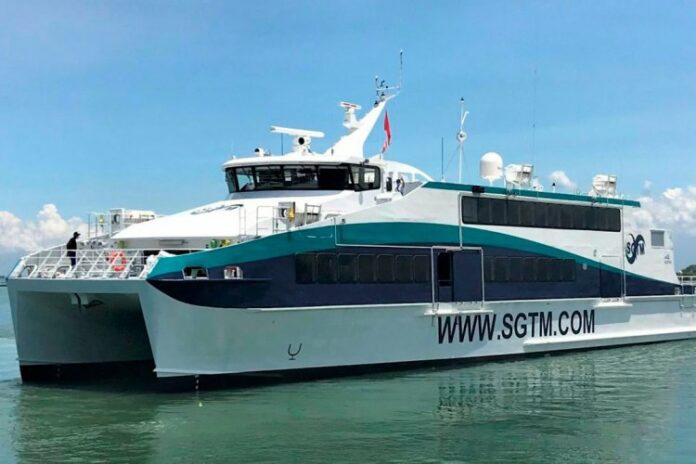
The 41 metre high-speed catamaran ferry will be operated by Société de Gestion et de Transport Maritime (SGTM) in the Comoros Islands, situated off the southeastern coast of Africa.

Austal was awarded the A$15.5 million (US$10.7 million) contract to design and construct the vessel in January 2020 and construction commenced at the company’s Vietnam shipyard in Vung Tau in March 2020.

Austal Chief Executive Officer Paddy Gregg said the delivery was a significant milestone in the company’s newest shipyard.

Mr Gregg said:

“This new ship for SGTM, is the second vessel we have delivered out of the Vietnam shipyard and highlights the tremendous productivity and efficiency of the local team, who have effectively delivered two vessels in two years.”

“It’s also very pleasing to see another customised variant of our popular, high-speed catamaran ferry design being delivered to yet another new customer.

“Austal has now delivered over 80 vessels in this key, 40 to 50 metre catamaran ferry market since the early 1990s and we continue to receive great interest in our proven designs.”

The Austal ‘Passenger Express 41’ catamaran features a length overall (LOA) of 41.2 metres, beam of 10.9 metres and draft of 2.0 metres. Over two decks, the vessel can accommodate 400 passengers and mixed cargo of up to 20 tonnes, loaded via two ramps.

Fitted with Austal’s renowned Motion Control System (including active interceptors and T-foils), four MTU-12V2000 M72 engines, and four KaMeWa 56A3 waterjets, the new catamaran achieved 31.9 knots at 100% Maximum Continuous Rating (MCR) during sea trials and has a range of approximately 370 nautical miles.

Established in 2004, SGTM is The Comoros’ leading ferry company, operating three passenger ships and two freight transport ships between the islands of Mayotte, Anjouan and Great Comoros, carrying more than 100,000 passengers annually. With the delivery of Maria Galanta Express, SGTM is now operating two Austal built vessels, joining Marine View (Austal Hull 58) acquired from Japan in 2013.

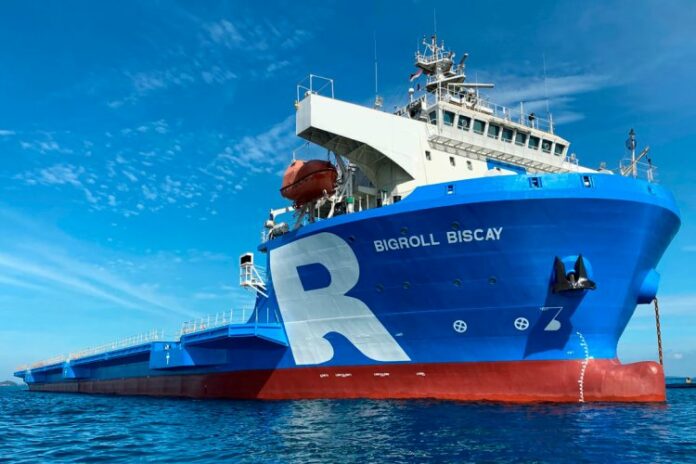
We4Sea signs agreement with Roll Group

0

We4Sea and Inmarsat sign an agreement for We4Sea to join the fast-growing group of over 40 certified providers offering applications via Inmarsat’s digital solutions Fleet Data and Fleet Connect.

Dutch performance monitoring company We4Sea and Inmarsat, the world leader in global, mobile satellite communications, have signed an agreement for We4Sea to join the fast-growing group of over 40 certified providers offering applications via Inmarsat’s digital solutions Fleet Data and Fleet Connect.

The announcement coincides with news of a first We4Sea-Inmarsat collaboration to secure fleet-wide uptake for We4Sea’s web-based vessel performance monitoring service. Heavy-lift shipowner Roll Group successfully trialled the benefits of the cloud-based ship performance management tool without commitment after the dual installation of Fleet Xpress with the Fleet Data IoT platform embedded.

The combination of the free-of-charge Fleet Data and application trialling without risk will provide a “tipping point” for maritime digitalisation, according to Marco Cristoforo Camporeale, Head of Maritime Digital, Inmarsat.

He says:

“This is the first example of a future-proof IoT set-up for ships that allow owners to investigate digitalisation without commitment. They can assess applications off the shelf and, if they work, agree on terms. In this case, the We4Sea trials on RollDock Star and RollDock Storm helped optimised speed and generator efficiency that led to a significant cut in fuel consumption.”

Requiring no hardware onboard, the We4Sea application uses a Digital Twin as the basis for comparison with the most easily accessible ship and operating profile data.

Variations with the Digital Twin and ship data are flagged as potential inefficiencies that need action or correction reporting. Under the Certified Application Provider agreement, We4Sea cloud analytics uses the dedicated Fleet Data bandwidth to secure always-on, or on-demand ship-shore communication via an Application Programming Interface.

Michiel van der Knaap, Fleet Director, Roll Group, said:

“We4Sea and Inmarsat’s solution improves our monitoring possibilities and increases the effectiveness of communication with vessels. In this way we can keep investing and improving our state-of-the-art vessels.”

Dan Veen, Founder and CEO of We4Sea, said:

“A lot of owners understand that their vessels should be connected to the internet, but still think in terms of remote monitoring based on conventional connectivity using expensive bandwidth. Using an IoT-based platform, We4Sea has proved itself to be able to deliver measurable performance improvements, even when connecting to only eight standard shipboard datasets at a fixed monthly fee.”

We are delighted that our solution is now available under the terms of Inmarsat’s Certified Application Programme (CAP). Having established our solution on container ships, bulk carriers, and heavy lift vessels, we are now very much in the scaling-up phase.”

Camporeale concludes:

“Building Fleet Data capability into Fleet Xpress has allowed Roll Group to make up its own mind about third-party applications based on individual merit and without upfront costs. The fact that the customer moved so swiftly from trial to fleet-wide commitment is a testament to the We4Sea application and the embedded Fleet Data as a true digital enabler.”

DEME holds naming ceremony for the world’s most powerful cutter suction dredger ‘Spartacus’

0

Although it was not possible to have DEME’s traditional naming festivities and family day given the coronavirus restrictions, DEME was honoured that Mrs Annik Penders, the wife of the Prime Minister of Belgium Alexander De Croo, accepted to be the godmother of the new vessel.

The ceremony still managed to capture the spirit of the occasion with all the traditional rituals as Mrs Penders gracefully smashed a bottle of champagne against the hull.

Luc Vandenbulcke, CEO DEME Group:

“’Spartacus’ was designed with three main priorities at its core: pushing the boundaries of dredging potential, unprecedented autonomy and minimising the impact on the environment. We are proud to be a technological and sustainable leader in the industry and ‘Spartacus’ embodies this drive and innovative spirit. DEME would like to very much thank Mrs Penders for being the godmother to this exceptional vessel and for joining us in celebrating this milestone.”

‘Spartacus’ will drive new levels of performance in the dredging industry given its unbeatable pumping power and heavy-duty cutter ladder, which means a dredging depth of 45 m can be reached. Projects that would not have been feasible before are now possible.

As well as its impressive power, ‘Spartacus’ is the first cutter suction dredger in the industry that can be powered by LNG. The vessel also has several  additional energy saving features, such as a waste heat recovery system.

‘Spartacus’ incorporates other smart innovations to maximise productivity, including an on board workshop with a vibration-insulated floor, which makes it possible to carry out the maintenance and repair of the cutterheads during operations. This enables the mega cutter suction dredger to achieve unequalled uptime and is a major advantage when working in remote parts of the world.

AKVA group supply latest Mowi Scotland salmon farm installation

0

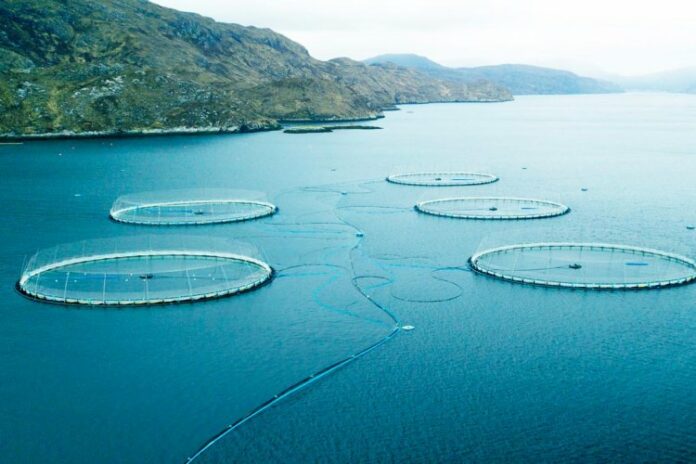
In addition to the 10x 160m  pens AKVA  also supplied the sites with  2 new mooring grids, bird nets and fibreglass poles. AKVA group have also delivered 2 HDPE nets in partnership with net maker Tufropes.

Frank Byrne AKVA group Scotland pens, nets and moorings manager, comments:

‘We see this a great endorsement of AKVA group and our products, our Polarcirkel pens and moorings, along with the support and knowledge we offer locally. We worked very closely with Mowi to deliver on time to what was a very tight schedule.’ 

This new cage infrastructure will be combined with the existing AKVA barge already in service on one of Mowi Scotland’s largest production sites.

Don MacLeod Mowi Scotland Seaforth site manager also said:

“The installation of 160 metre pens – the largest pens now used in Scotland – are important as we look to raise salmon at exposed locations that offer excellent growing conditions but also offer increasing weather challenges from storms. The installation of 160 metre net pens and other associated infrastructure supplied by AKVA group will significantly improve our containment systems and safety.

The transfer of salmon into our Seaforth farm provided us a very short window of opportunity, so we are pleased to have worked alongside the experts at AKVA group to deliver and install the materials in time.”

Equinor completed the acquisition of a site at Port of Łeba

0

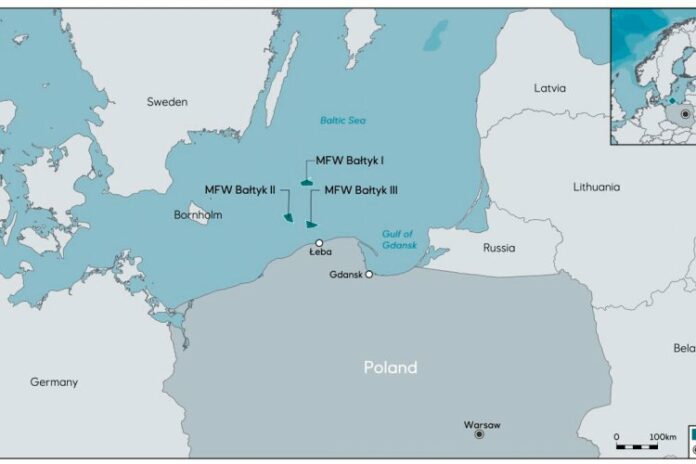
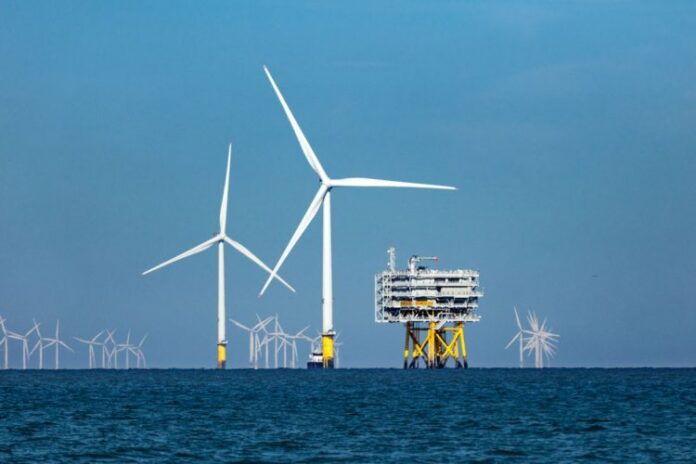
Equinor has completed the acquisition of a site at the port of Łeba to serve as the operations and maintenance (O&M) base for the Polish Baltic Sea offshore wind projects. The announcement makes Equinor the first developer to confirm an offshore wind maintenance port in Poland together with the joint venture partner Polenergia.

Equinor will construct, own and operate the base which will support the Bałtyk offshore wind projects of Equinor and partner Polenergia, and could also support additional activities in the future. Equinor and Polenergia are currently jointly developing the Bałtyk III, Bałtyk II and Bałtyk I offshore wind projects. Bałtyk III and Bałtyk II, with a combined potential capacity of 1440 MW, were awarded contracts for difference (CfD) by Poland’s Energy Regulatory Office on May 4, 2021.

Says Michal Kolodziejczyk, Equinor country manager in Poland:

“The selection of Łeba to host the operations and maintenance base for Bałtyk II and Bałtyk III is another step towards the development of the Baltyk offshore wind projects. We are making a long-term investment in Łeba as a future hub of offshore wind in Poland. We are committed to creating lasting local value through our projects in Poland, and the O&M base means jobs and investment for Łeba and the region. We are excited to contribute to a new chapter in the rich maritime tradition of Łeba and will continue to engage in a dialogue with all stakeholders as Poland’s offshore wind industry takes shape.”

Michał Michalski, president of the management board of Polenergia, adds:

“We see our offshore wind projects as an important part of the transformation – not only energy-wise but also for the economies of Poland and Europe. Our goal for the projects development is not only reducing emissions and support energy diversification but to create additional jobs, bring a chance for many companies’ modernization, innovation and new competitive advantages of Polish industry as well. Therefore, together with our partner we have created a flagship program to support Polish wind energy industry development and now, while building supply chain for our offshore windfarms, we can implement them step by step. The first and a very important step on that path is selection of the port in Łeba to become operations and maintenance base for Bałtyk II and Bałtyk III projects.”

The planned O&M base would serve as the logistics hub for the Bałtyk projects, with an office, storage, and transportation facilities. The proximity of Łeba to the Bałtyk offshore wind farm areas will contribute to optimizing safety and operation costs.

An investment located in Łeba will bring opportunities for the city as well as the wider region in terms of local supply chain and employment. The jobs required to operate an offshore wind farm include maintenance technician roles, that will predominately be based offshore, as well as office-based teams to support the operations from land.

The Bałtyk projects of Equinor and Polenergia are among the largest offshore wind farms under development in Poland. Bałtyk III and Bałtyk II could generate enough renewable offshore wind energy to power two million Polish homes. Construction of the wind farms infrastructure could begin as soon as 2024.

Wärtsilä to develop autonomous, zero emission barge for Port of Rotterdam

0

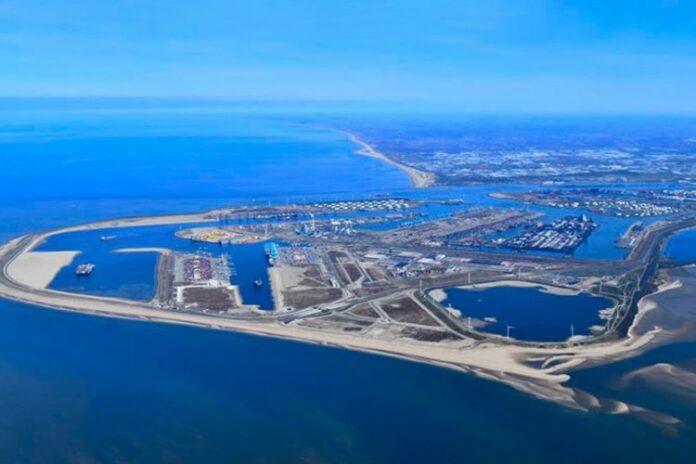
Wärtsilä is part of an international alliance, headed by the Port of Rotterdam Authority, which has this month been awarded nearly € 25 million in EU funding to implement projects aimed at sustainable and smart port logistics. This involves the development of a grand plan that sets out how transport within, to and from ports can be made carbon-free by 2050.

While numerous green fuels and energy carriers are being advanced, the partners have also initiated a series of digitalisation and automation projects in relation to the energy transition aimed at encouraging businesses to improve the sustainability of their logistics.

The research project, nicknamed MAGPIE (sMArt Green Ports as Integrated Efficient multimodal hubs) was borne out of a collaboration between the port authorities of Rotterdam, DeltaPort (Germany), HAROPA (France: La Havre, Rouen, Paris) and Sines (Portugal), in partnership with 10 research institutions and over 30 companies in the Netherlands, Germany, France, Portugal and Denmark.

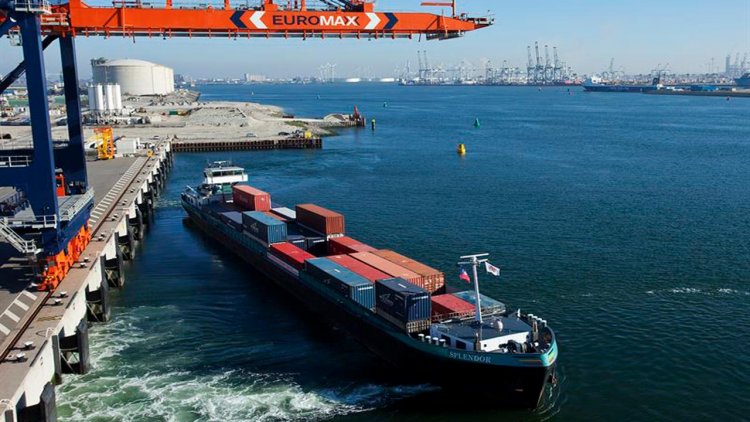
Wärtsilä, who is the largest industrial partner of MAGPIE, is set to receive the biggest portion of the grant for a sub-project to demonstrate a commercially viable autonomous intra-port inter-terminal container shuttle to address an emerging capacity bottleneck for internal container transportation.

The installation will include several of the latest Wärtsilä solutions; including SmartMove Suite, which provides a unique pairing of sensor tech with navigation systems for safe, automated ship movement. Wärtsilä’s autonomous solutions have been tried and tested successfully in the busiest and highly congested waters before, both in complex inland waterways and at international ports like Singapore. So, they can handle high traffic volume safely by design.

Hendrik Busshoff, Business Development Engineer, Wärtsilä Voyage, says:

“We believe that overland transport modes will not be able to absorb the emerging capacity bottleneck for internal container movement. So, we will be delivering an autonomous e-barge concept that can greatly enhance efficiency in the Port of Rotterdam through automated seaborne cargo transshipment. Our ambition is to see these container shuttles introduced into a smart logistics network within the next few years.”

To lift the ambition level for such a barge to not only being smart, but also emission free, electric propulsion will be enabled by means of an electric drive train and a ground-breaking interchangeable battery container solution, which is charged using renewable power.
Teus Van Beek, General Manager, Ecosystem Innovation, Wärtsilä Marine Systems, says:

“At Wärtsilä, we maintain that an autonomy strategy is key to a zero-emission ambition. To complement the e-navigation set up, we are part of a consortium that has developed a concept based on the use of replaceable battery containers, known as ZESPacks (Zero Emission Services). A network of open access charging points will be set up for exchanging battery containers for fully charged replacements, thereby keeping waiting time to a minimum. The first of these battery containers will be installed in the summer.”

Wärtsilä has drawn on its inland waterway experience to create the most effective battery containers – something which brewer, Heineken, has already signed up to as a carbon-neutral way of moving 45,000 containers of beer a year up to the Port of Rotterdam.

Sean Fernback, President, Wärtsilä Voyage, says:

“The world’s largest economies have high hopes of resolving some of their greenhouse gas challenges and their infrastructure bottlenecks with smart shipping. Since 2015 and combined with an effort to reduce ground transportation, the EU has targeted a 25% increase in cargo transportation by short sea shipping before 2030. We feel we can enable this. Utilising new technology, we will change short sea and inland shipping into a safer, cleaner, and more efficient link in the logistic chain, with greater accessibility to those who need it. That’s why we are automating operations.”

Ori Marom, Director of Smart Mobility & 5G, Port of Rotterdam, says:

“We are proud to partner with Wärtsilä Voyage and Zero Emission Services (ZES) in the development of autonomous solutions for intra-port container transshipment. The future of port logistics belongs to intelligent connected and sustainable systems such as the autonomous e-barge system that we now set to develop together. We very much look forward to this highly promising collaboration.”

Maersk Drilling adds well intervention scope for low-emission rig with Equinor

0

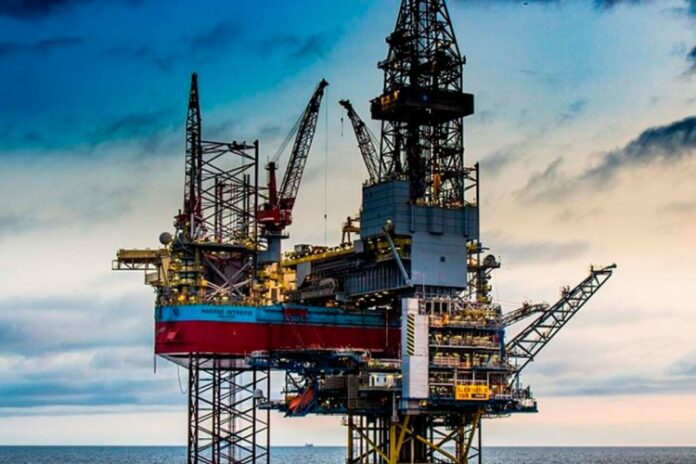
Equinor Energy AS has exercised an option to add well intervention work at the Martin Linge field offshore Norway to the previously agreed work scope for the ultra-harsh environment jack-up rig Maersk Intrepid. 

The well intervention scope has an estimated duration of 29 days. The firm value of the contract extension is approximately USD 9.9m, including integrated services but excluding potential performance bonuses.

The contract extension is entered under the Master Framework Agreement between Equinor and Maersk Drilling, in which the parties have committed to collaborate on technology advancements and further initiatives to limit greenhouse gas emissions. The contract with Equinor Energy AS contains a performance bonus scheme based on rewarding reduced CO2 and NOx emissions.

Maersk Intrepid is an ultra-harsh environment CJ70 jack-up rig, designed for year-round operations in the North Sea and featuring hybrid, low-emission upgrades. It was delivered in 2014 and is currently operating at Martin Linge for Equinor.

Alfa Laval PureBallast 3 Ex deckhouse solutions now have design approval from DNV

0

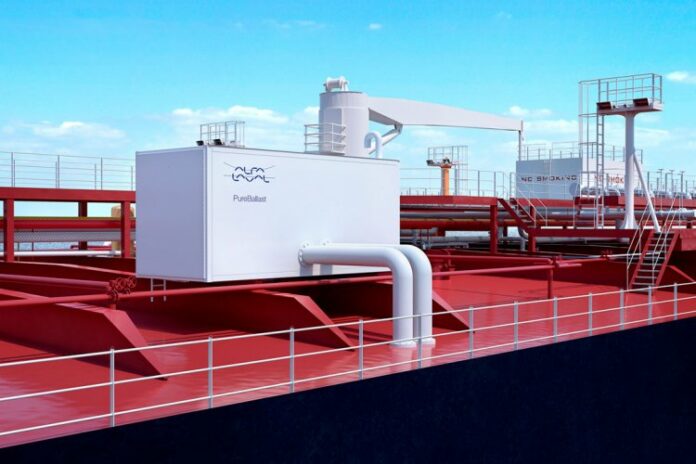
This is a major achievement, representing the first design approval for the installation of ballast water treatment systems on the weather deck. For customers and system integrators, it will mean time and money saved in the final approval process on board.

Placing ballast water treatment systems in a deck-mounted enclosure is necessary on most modern tankers, which lack a pump room or other suitable internal space. While the system type approval applies to the ballast water treatment system itself, both the enclosure and the installation within it must also be approved by a classification society. The DNV Type Approval Design Certificate means PureBallast 3 Ex deckhouse deliveries will have this approval in advance.

Peter Sahlén, Head of Alfa Laval PureBallast, says:

“Alfa Laval quickly recognized the importance of having a standardized and purpose-built solution for installing PureBallast 3 Ex on deck. Likewise, DNV recognized that this would require a unique approach to the approval – given that the solution falls outside traditional class definitions. Working together, we’ve achieved a design approval that encompasses the reinforcements, insulation, ventilation and other elements that protect ballast water treatment system performance and lifetime.”

Endre Lajord, Project Manager, DNV, says:

“When dealing with a new type of installation that may not fit within existing class definitions, it is essential to make sure that the solution conforms to the same rigorous standards. Installing ballast water treatment systems on the weather deck is a new area, and we were very pleased that Alfa Laval chose to work with us on this design approval. As the world’s leading class, we are always ready to help forward-looking companies like Alfa Laval to deliver unique solutions. We do this by giving their customers the necessary trust and confidence through the DNV class approval process.”

In practice, the design approval for PureBallast 3 Ex deckhouse solutions will greatly reduce the time and effort needed from system integrators – and the implications for shipowners. For the final onboard approval, only the mounting of the enclosure on deck and its interconnections with the vessel will need to be evaluated by the classification society.

Sahlén says:

“Having class approval for our design specifications makes the deckhouse essentially a plug-and-play solution for installation on the weather deck.”

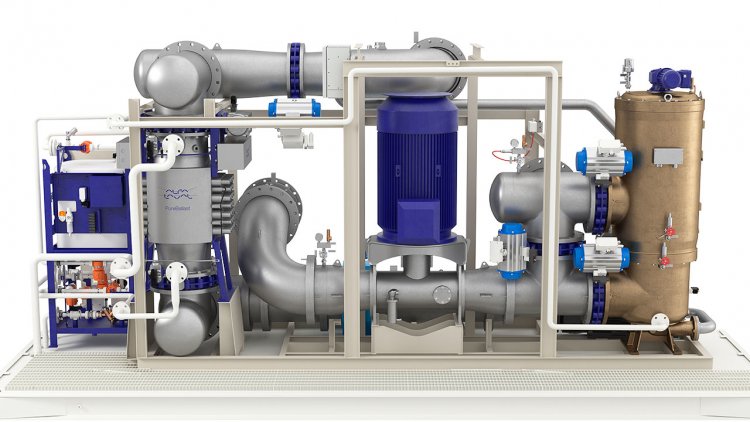
Alfa Laval’s approved design includes the deckhouse enclosure itself, as well as the system’s internal installation on fixed rails and all of the internal piping and electrical connections. Its specifications go far beyond those of standard containers, which lack the protective features and longevity needed to ensure performance over the vessel lifetime.

Sahlén says:

“Our deckhouse design ensures conditions that keep PureBallast 3 Ex within its design limits, from the interior climate to factors like wind and wave loads. It may be a containerized solution, but it’s by no means a standard container.”

Ørsted and POSCO strengthen collaboration on offshore wind in Korea

0

POSCO and its affiliates will apply the group’s joint capabilities to support the development of Ørsted’s 1.6 GW offshore wind projects off the coast of Incheon City. Moreover, Ørsted and POSCO will conduct feasibility studies on potential collaboration on renewable hydrogen.

Korea has set an ambitious target of installing 12 GW offshore wind capacity by 2030. In September 2020, Korean President Moon Jae-in further announced the Green New Deal which targets net zero emissions by 2050. With this MoU, Ørsted takes another significant step, in addition to the company’s flagship Incheon projects, in pioneering renewable energy development in Korea and supporting Korea in the country’s transition to clean energy.

Ørsted has a well-established relationship with POSCO, whose steel business has been one of the strategic global suppliers and a trusted partner supplying over 100,000 tons of steel for Ørsted’s Hornsea 1 and three other offshore wind farms. In December 2020, POSCO Group joined the Korean government’s decarbonisation declaration, announcing its ambition to become a leading renewable hydrogen company and reaching carbon neutrality by 2050.

Jung-son Chon, POSCO Group Senior Executive Vice President, said:

“POSCO has placed its hydrogen business as one of our growth engines for the group and is working to discover renewable hydrogen business opportunities. We hope to see our renewable hydrogen business pick up speed through this business collaboration with Ørsted. Combining the operational know-hows of Ørsted, a global company in the field of offshore wind and renewable hydrogen, with the business capabilities of POSCO Group, which includes construction and energy, both companies will be able to create synergies for a win-win collaboration.”

Mads Nipper, Group President and CEO of Ørsted, says:

“With a vision of creating a world that runs entirely on green energy, Ørsted transformed from a fossil-fuel intensive utility to the world’s most sustainable energy company. We are determined to be a global catalyst for systemic change and to help countries and companies undertake their green transformation through scaling existing green energy solutions such as wind and solar and developing and scaling new green solutions such as hydrogen. It is wonderful that we could announce the MoU with POSCO during the P4G summit in Korea, which gathers global thought leaders and decision-makers to work towards achieving Sustainable Development Goals and creating a more sustainable world.”

Matthias Bausenwein, President of Ørsted Asia-Pacific, says:

“This MoU is a major step for Ørsted to deepen our collaboration with POSCO, which shares our mindset of taking responsibility for reducing CO2 emissions. We look forward to bringing in our experience and insights to support Korea in achieving its energy transition and decarbonisation goals. With the Danish state as our majority owner, Ørsted is committed to working with local partners and suppliers across the value chain to build a vibrant Korean offshore wind industry through our 1.6 GW Incheon projects and potential more buildouts in other regions of the country. In addition to greening the electricity mix, offshore wind can become the feedstock for renewable hydrogen which can help decarbonising sectors that cannot be directly electrified such as transport and heavy industry.”

Ørsted recently started construction of its first renewable hydrogen demonstration project H2RES in Denmark and is involved in nine renewable hydrogen projects in Denmark, Germany, the Netherlands, and the United Kingdom.

Konecranes receives $43.5 million portal jib order from US Navy

0

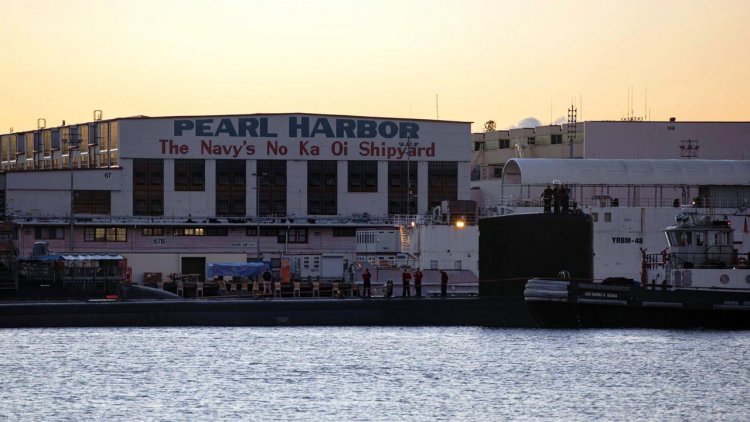
The order, worth $43.5 million, was booked in May 2021 and the jib will be delivered to the Pearl Harbor Naval Shipyard. The US Navy has the option for 5 additional portal jib cranes over the next 5 years, putting the potential total value of the agreement at around $330 million.

The newest jib crane is similar to the one announced in December 2019: a customized design with unique features that allows it to be operated on the multiple rail section sizes, straight or curved, located at the naval base. The crane design, specifically tailored to the historical shipyard layouts of the US Navy, can also be used globally in other naval shipyards with similar configurations.

Steven Waisanen, Vice President in Industrial Equipment at Konecranes, said:

“The additional order is a confirmation of the Navy’s ongoing commitment to upgrade its facilities and its confidence in Konecranes to meet their current and future needs with unique products tailored to meet the Navy’s rigorous requirements.”

Originally established in 1908 as a naval station on the Hawaiian island of Oahu, Pearl Harbor Naval Shipyard today provides longer-term repair, maintenance and modernizations for the US Pacific Fleet using three drydocks and adjacent piers.