1 C
New York
Home Blog Page 611

Dominion Energy-led consortium builds America’s first offshore wind turbine installation vessel

0

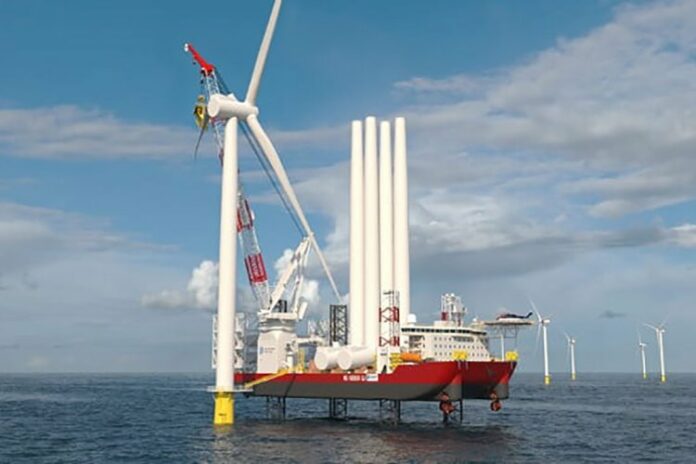
Dominion Energy, Ørsted and Eversource announced today an agreement for Ørsted and Eversource to charter Dominion Energy’s Charybdis, the first Jones Act-qualified offshore wind turbine installation vessel in the United States, for the construction of two offshore wind farms in the Northeast.

Charybdis, which is expected to be sea ready by late 2023, will first be deployed out of New London harbor to support the construction of Revolution Wind and Sunrise Wind, both under joint development by Ørsted and Eversource, to serve nearly 1 million homes in Rhode Island, Connecticut and New York. Once complete, the two projects will generate more than 1.6 gigawatts of clean, renewable energy.

The charter’s terms will allow the vessel, subject to state regulatory approval, to support construction of Dominion Energy’s 2.6 gigawatt Coastal Virginia Offshore Wind (CVOW) project off the coast of Virginia Beach, which is expected, consistent with prior guidance, to be completed in 2026.

Dominion Energy is leading a consortium of renowned naval engineering and fabrication firms to build Charybdis, which will support thousands of American jobs, assist in the development of a new domestic supply chain for the growing North American offshore wind industry and be fully utilized in support of the installation of offshore wind generation off the East Coast.

The approximately $500 million vessel will operate as part of Dominion Energy’s Contracted Assets segment. Dominion Energy’s regulated customers, including in Virginia, will not experience any bill impact associated with use of the vessel in support of the Revolution Wind and Sunrise Wind projects.

The 472-foot vessel is being constructed in Brownsville, Texas, at global marine shipbuilder firm Keppel AmFELS’s shipyard, using domestically-sourced steel. At peak construction, 1,000 U.S. workers will be employed on this project. Once complete, the vessel will be homeported in Hampton Roads, Va., one of the nation’s premier offshore wind installation harbors, and utilize an American crew.

The vessel’s hull and infrastructure will be fabricated with more than 14,000 tons of domestic steel, with nearly 10,000 tons sourced from Alabama, West Virginia and North Carolina suppliers. The vessel is designed to handle current turbine technologies as well as next generation turbine sizes of 12 megawatts or larger. It will also be capable of the installation of foundations for turbines.

For use on Revolution Wind and Sunrise Wind, the vessel will work from State Pier in New London, Conn., another of the nation’s premier offshore wind installation harbors. Utilizing State Pier for wind turbine transportation and installation will employ longshoremen, stevedores, technicians, crane operators, electricians, welders, quality inspectors, and other building and construction trades jobs.

Bob Blue, Dominion Energy’s chair, president and chief executive officer, said:

“Offshore wind is critical to America’s clean-energy future and the Charybdis plays a vital role in reaching the Biden Administration’s ambitious goal of 30 gigawatts of offshore wind production by 2030.”

Joe Nolan, President and Chief Executive Officer of Eversource Energy, said:

“This new, state-of-the-art American-made wind turbine installation vessel is a major milestone for the offshore wind industry at both the local and national level. As offshore wind continues to grow in Connecticut and throughout the U.S., we are seeing the birth of a new, domestic supply chain that will create thousands of jobs across the country for decades to come.”

David Hardy, Chief Executive Officer of Ørsted Offshore North America, said:

“A Jones Act-qualified installation vessel is a game-changer for the development of the U.S. offshore wind industry. This investment will enable us to unlock the economic benefits of offshore wind, not just for the Northeast, but for the Southern states as well.”

New York Governor Andrew M. Cuomo said:

“New York leads the nation with five active offshore wind developments, including the Sunrise Wind project, and the chartering of this historic vessel will play a critical role in not only achieving New York’s ambitious offshore wind energy goals, but our larger efforts to fully combat climate change and drive a robust, clean energy economy that benefits all.”
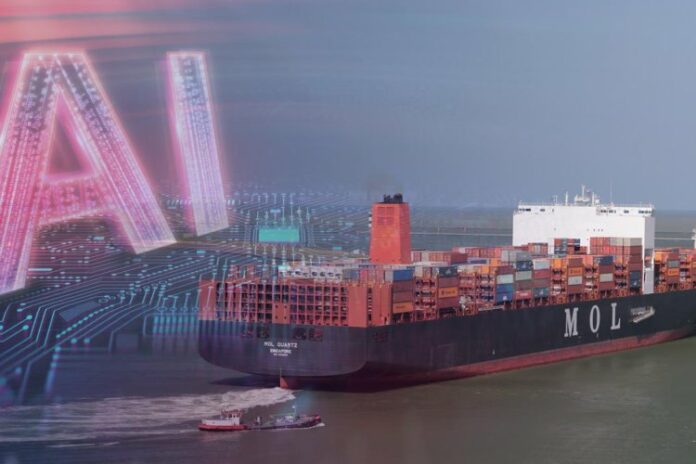
MOL digitalises car carrier allocation planning with AI-based system

0

Mitsui O.S.K. Lines, Ltd. has announced that MOL and its group company MOL Information Systems, Ltd. have started operation of support system for car carrier allocation planning that relies on mathematical optimization that is an underlying technology of artificial intelligence (AI).

MOL operates one of world’s car carrier fleets, with about 100 vessels. Ocean transport routes connecting automobile manufacturing plants and markets around the globe are diverse, and it is critical to keep the entire fleet operating at peak efficiency to meet the needs of customers worldwide. That means the MOL Group needs to simulate transport routes per vessel several months ahead of time, and to achieve optimal, fleetwide solutions from theoretically millions of possible combinations involving all of its vessels.

In cooperation with Professor Shunji Umetani* of Osaka University, MOL developed an algorithm that elicits the optimal allocation plan from an enormous number of combinations using mathematical optimization, and started operation of a system based on the algorithm. Introduction of the system enables speedy decision making and greater flexibility in meeting changes in transport demand. In addition, improvement of fleet-wide efficiency reduces fuel consumption per unit transported, reducing the environmental impact of fleet operation.
 
An underlying technology of artificial intelligence (AI) and a method for decision-making and problem-solving. Mathematical optimization finds an answer that minimizes (or maximizes) objective functions under given constraints and conditions. It is used in a broad range of areas such as investment management, logistics and supply chain management, energy management, and scheduling.

* Shunji Umetani, Endowed Chair Professor in the Graduate School of Information Science and Technology

Acquired Ph. D (Informatics), Department of Applied Mathematics and Physics, Graduate School of Informatics, Kyoto University in 2003, and from 2008 belonged to Graduate School of Information Science and Technology, Osaka University and currently served as Endowed Chair Professor.

His focus is on combinatorial optimization. He is engaged in development of algorithms that efficiently find practical solutions for problems of large-scale and diversified combination based on large-scale data collected from the real world. He is also actively working to develop real applications using mathematical optimization through industry-academia collaboration.

PGS and ION successfully complete Shell Egypt survey

0

PGS and ION Geophysical Corporation have announced the successful completion of a survey offshore Egypt acquired on behalf of Shell with an innovative Extended Long Offset (ELO) design in combination with ION’s Gemini™ source technology.

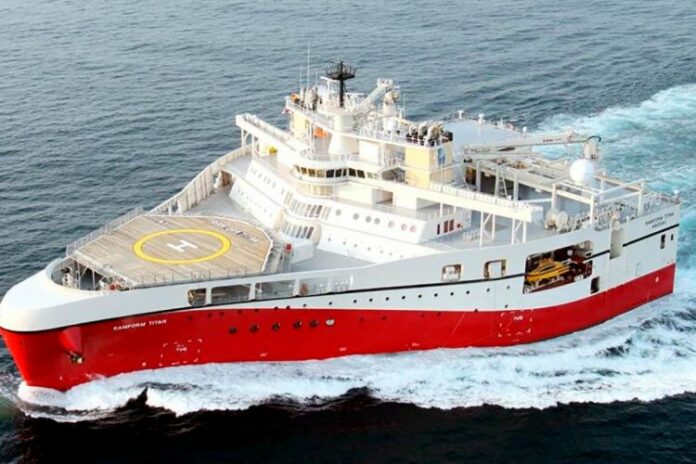
This is the last in a string of PGS programs successfully acquired in the Mediterranean starting in July 2020, and the first proprietary deployment of ION’s extended frequency source. The Ramform Tethys towed a wide multisensor GeoStreamer® configuration, while the Ramform Sovereign towed ION’s extended frequency source, designed to help capture richer low frequencies to improve subsurface characterization while limiting higher frequencies to a more ecologically friendly range. All three companies are aligned in their dedication to sustainable business practices that minimize the environmental impact of operations.  

Gerard van Drempt, Shell Global Category Manager Geophysics, said:

“Shell is pleased to have introduced novel technology to Egypt that enhances exploration insights in a more eco-friendly manner. To improve subsurface understanding of a complex geologic area in the Mediterranean, our exploration team paired innovative acquisition designs with Gemini to capture lower frequencies in this large, long offset survey. PGS survey execution, combined with the ION Gemini source performed well and Shell is pleased to see the expected uplift in low-frequency content.”  

Nathan Oliver, EVP Sales & Services at PGS, commented:

“Many attractive geographies for continued E&P investment are located in complex geological settings, where more accurate imaging of the subsurface is essential for effective resource development. PGS is expert at efficient management of complex offshore projects, and we are very pleased with the successful completion of this extensive 3D exploration program for Shell. The ELO configuration in combination with ION’s extended frequency source enabled efficient recording of offsets up to 16 kilometers. The innovative ELO survey design combines optimal spatial sampling for better subsurface imaging together with long offset multi-sensor GeoStreamer acquisition for accurate velocity model building. ELO is a cost-competitive and efficient configuration compared to other solutions for imaging deep targets.”

Chris Usher, ION’s President and Chief Executive Officer, added:

“In today’s rapidly evolving energy landscape, E&P customers are seeking the most effective technologies to help rebalance their portfolios and maximize return on investment from their assets throughout the energy transition. PGS is a leader in identifying and efficiently integrating innovative new technologies beneficial for the industry. We are really pleased with the results of our collaboration and look forward to working with additional service providers to make Gemini more broadly available as our capacity expands over the next few months.”

Stena Bulk bolsters Eco MR fleet with additional newbuilding charters

0

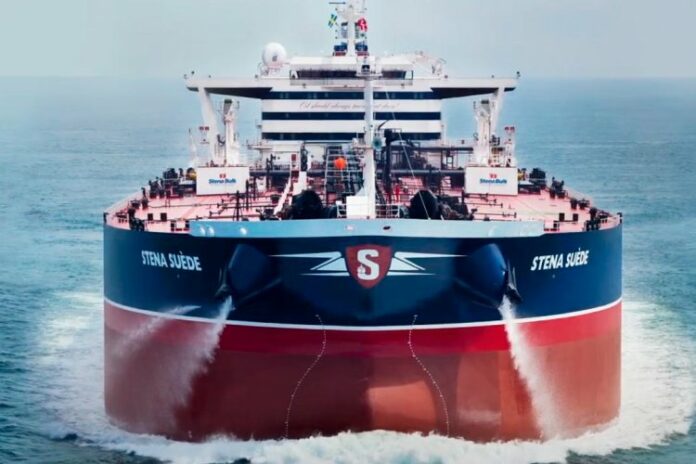
Stena Bulk has announced that it is taking two brand new Eco Medium Range (MR) tankers – to be named Stena Convoy and Stena Conductor – on long term time charter from close Japanese partners.

The two ultra-modern MR tankers are being built at Hyundai Mipo Dockyard and will be delivered in the first half of 2022. The 50,000DWT vessels will come in at 183m in length and are being fitted with scrubbers to ensure compliance with global emissions regulations.

Stena Convoy and Stena Conductor are just two of the five newbuilds that Stena Bulk will receive on charter in the first half of 2022 and will be nearly 20% more fuel-efficient than the first generation of eco vessels. When delivered, the two ships will be the most fuel-efficient MR tankers at sea.

The news follows the recent announcement that in early 2022 Stena Bulk will also take delivery of the state-of-the-art IMOIIMeMAX methanol-fuelled 49,900 DWT vessel Stena Pro Patria, which is the first of the methanol vessels to be built together with Proman.

Combined, the addition of the new Eco MRs and methanol-fuelled ships to Stena Bulk’s portfolio in the coming months demonstrates the organisation’s commitment to intelligently scale up its fleet in line with customer demand, while aiming for minimum environmental impact.

Erik Hånell, President and CEO of Stena Bulk, said:

“The welcome addition of Stena Convoy and Stena Conductor to our fleet on long-term time charter is fully in line with our ongoing commitment to constantly expand and renovate our asset base in alignment with the requirements of our global customer base. By taking these vessels on a long-term basis we demonstrate a continuous commitment to develop our business and utilise today’s technology to unlock efficiencies.

“We always embrace partnerships because they are a cornerstone of our growth strategy. This deal is a fantastic example of this approach, allowing us to reach another milestone in our long-standing relationship with our close Japanese partners.”

Final investment decision for Bacalhau phase 1 in Brazil

0

Equinor (operator) and ExxonMobil, Petrogal Brasil and Pré-sal Petróleo SA (PPSA) have decided to develop phase one of the Bacalhau field in the Brazilian pre-salt Santos area. 

Arne Sigve Nylund, Equinor’s executive vice president for Projects, Drilling and Procurement, says:

“This is an exciting day. Bacalhau is the first greenfield development by an international operator in the pre-salt area and will create great value for Brazil, Equinor and partners. Good cooperation with partners, Brazilian authorities and suppliers has resulted in an investment decision for the Bacalhau field.”

Nylund says:

“Bacalhau is a globally competitive project with a break even below USD 35 in a key energy region. Estimated recoverable reserves for the first phase are more than one billion barrels of oil.”

The development plan was approved by the Brazilian National Agency of Petroleum, Natural Gas and Biofuels (ANP) in March 2021.

Veronica Coelho, Equinor’s country manager in Brazil, says:

“Bacalhau is an important step towards the realization of our strategic ambition to deepen our presence in Brazil.  It is also an important project for the country, as it represents significant investments, ripple effects in the supply chain and local job creation.”

Juan Lessmann, Lead Country Manager for ExxonMobil in Brazil, says:

“The development of the Bacalhau field is a strategic investment in our global portfolio and has the potential to bring high returns for ExxonMobil, our partners and the Brazilian people. This project has progressed due to the strong collaboration between ExxonMobil, Equinor, Petrogal and the government.”

Thore Kristiansen, Galp’s Upstream COO, says:

“Bacalhau is a world class offshore project, with low breakeven and low carbon emissions. This project will significantly contribute to Galp´s continued competitive upstream growth. The investment is a testament to Galp’s commitment to continue to grow in Brazil, and its success will have positive returns for all of Galp’s stakeholders in the country and beyond.”

Eduardo Gerk, PPSA’s President Director, says:

“The Bacalhau field is an accomplishment over high-complexity technical challenges, without losing track of the positive economic and social aspects. The Bacalhau field represents the great benefit that foreign companies can bring to the development of the pre-salt and Brazil. PPSA feels honored with this highly cooperative partnership, which promises to generate excellent results for the country.” 

First oil is planned in 2024. Due to the COVID-19 pandemic and related uncertainties, project plans may be adjusted in response to health and safety restrictions.

The Bacalhau field is situated across two licenses, BM-S-8 and Norte de Carcará. The resource is a high-quality carbonate reservoir, containing light oil with minimal contaminants.

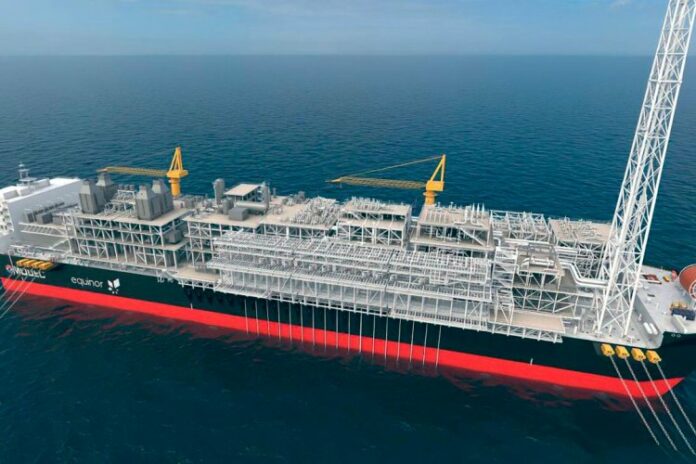
The development will consist of 19 subsea wells tied back to a floating production, storage and offloading unit (FPSO) located at the field. This will be one of the largest FPSOs in Brazil with a production capacity of 220,000 barrels per day and two million barrels in storage capacity. The stabilized oil will be offloaded to shuttle tankers and the gas from Phase 1 will be re-injected in the reservoir.

The FPSO contractor will operate the FPSO for the first year. Thereafter, Equinor plans to operate the facilities until the end of the license period.

Significant efforts have been made to reduce emissions from the production phase, including implementing a Combined Cycle Gas Turbine system to increase the energy efficiency of the power station. This gives an efficient electrical power production and flexible heat supply.

Lifetime average CO2 intensity is expected to be less than 9 kg per barrel produced, significantly lower than the global average of 17 kg per barrel. Work will continue through the lifetime of the field to reduce emissions and increase energy efficiency.

Partners in Bacalhau: Equinor 40% (operator), ExxonMobil 40%, Petrogal Brasil 20% and Pré-sal Petróleo SA (Government Company, PSA Manager).

Plastic in Galapagos seawater, beaches and animals

0

A new study – by the University of Exeter, Galapagos Conservation Trust (GCT) and the Galapagos Science Center – found plastic in all marine habitats at the island of San Cristobal, where Charles Darwin first landed in Galapagos.

At the worst “hotspots” – including a beach used by the rare “Godzilla” marine iguana – more than 400 plastic particles were found per square metre of beach.

Plastic was also found inside more than half of the marine invertebrates (such as barnacles and urchins) studied, and on the seabed.

The findings suggest most plastic pollution in Galapagos – a world-famous biodiversity haven – arrives on ocean currents.

The study also identifies Galapagos marine vertebrates most at risk from swallowing plastic or getting entangled – including scalloped hammerheads, whale sharks, sea lions and sea turtles.

Dr Ceri Lewis, of Exeter’s Global Systems Institute, said:

“The pristine image of Galapagos might give the impression that the islands are somehow protected from plastic pollution, but our study clearly shows that’s not the case. The highest levels of plastic we found were on east-facing beaches, which are exposed to pollution carried across the eastern Pacific on the Humboldt Current. These east-facing beaches include Punta Pitt, a highly polluted site that is home to Godzilla marine iguanas which – like so much Galapagos wildlife – are found nowhere else in the world. There are less than 500 Godzilla marine iguanas in existence, and it’s concerning that they are living alongside this high level of plastic pollution.”

Speaking about microplastic particles found inside marine invertebrates, lead author Dr Jen Jones, of GCT, said:

“These animals are a crucial part of food webs that support the larger species that famously live on and around the Galapagos Islands. The potential health effects of plastic ingestion on marine animals are largely unknown, and more research is needed.”

The study’s findings include:

  • Just 2% of “macroplastic” (items and fragments larger than 5mm) was identified as coming from the islands. The true figure could be higher, but the findings strongly suggest most plastic arrives on ocean currents.
  • These macroplastics were found at 13 of 14 sandy beaches studied, with 4,610 items collected in total. Large microplastics (1-5mm) sieved from the surface 50mm of sand were found at 11 of 15 sites tested.
  • Significant accumulations of plastic were found in key habitats including rocky lava shores and mangroves.
  • Microplastics were found in low concentrations in all seabed and seawater samples, with higher concentrations at the harbour suggesting some local input.
  • All seven marine invertebrate species examined were found to contain microplastics. 52% of the 123 individuals tested contained plastic.

Dr Jones, who led the study as part of her PhD at Exeter, said:

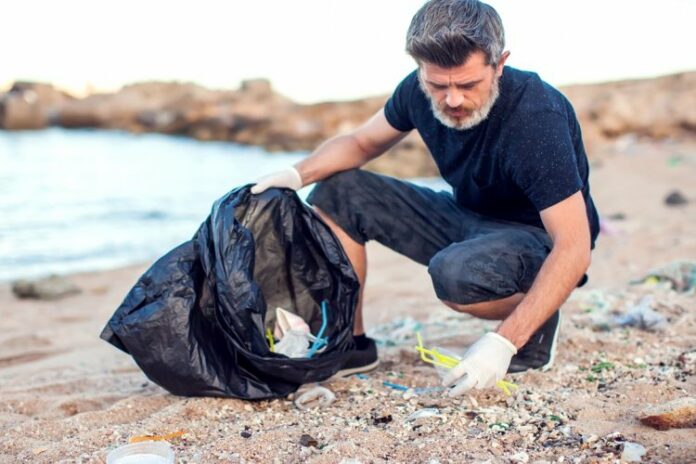
“Our study highlights how far plastic pollution travels, and how it contaminates every part of marine ecosystems. Given the level of pollution we have found in this remote location, it’s clear that plastic pollution needs to stop at source. You can’t fix the problem just by cleaning beaches.”

Dr David Santillo, of the Greenpeace Research Laboratories at the University of Exeter, said:

“This situation is only going to get worse if we don’t dramatically change our use of plastics.”

ABB’s software finds smart way to increase wind vessel uptime by 35 percent

0

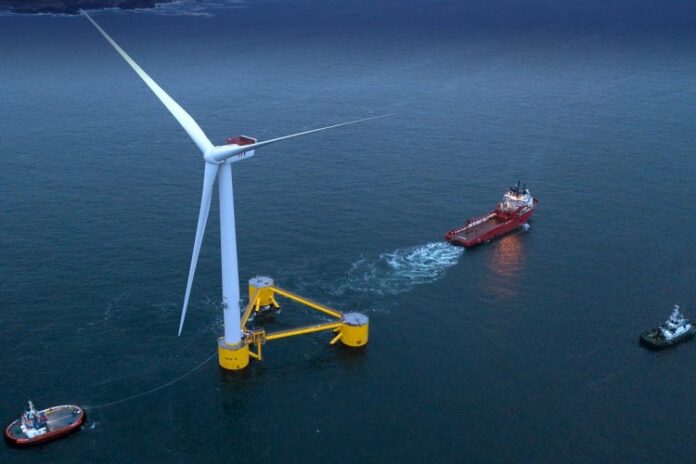
A desk study from ABB focusing on the ATLANTIS offshore test location, off the coast of Viana do Castelo, Portugal, concludes that the gains are available to operators prepared to commit to fast-emerging robotized maintenance technology.

The safe transfer of personnel between a support vessel and an offshore turbine platform is often the limiting factor in maintenance hours, where rough seas mean crews cannot land by walkway or from the air. In cases where maintenance can be carried out using robotics instead of personnel, the same restrictions would not apply.

ABB Marine & Ports is a key technology partner for the EU-funded ATLANTIS research project, which is exploring the use of remote offshore inspection and maintenance techniques for wind farms. The project also seeks to optimize offshore wind farm vessel uptime by expanding the understanding of the relationship between hydrodynamics and safe vessel availability. ABB’s contribution has been to develop a dedicated mission planning tool for offshore windmill parks, based on the ABB Ability™ Marine Advisory System – OCTOPUS.

OCTOPUS enables operations to be planned using safety limits based on acceptable vessel responses, rather than solely on the wave conditions. The new study calculates the extent to which vessels deploying robotics-based maintenance, rather than personnel, can work across a wider operational window.

Antto Shemeikka, Vice President Digital Services, ABB Marine & Ports, said:

“Accurate advice prevents costly last-minute cancellations in challenging but acceptable weather conditions, also providing clarity in situations where vessels can be idle in port when they should be working on site. Planning precision also means that the OCTOPUS system helps reduce unnecessary fuel costs.”

The ABB study analyzed data at the ATLANTIS Offshore test center location, establishing that wave heights are on average below these limits 34 percent of the time. Acceptable wave heights for wind farm vessel maintenance personnel transfer are given as 1.5m. Deploying robotics-based maintenance solutions would allow a tighter acceptable safety margin, and operational wave heights to be raised to 2m. In this case, safe vessel operations could take place 46 percent of the time, raising workable vessel hours 35 percent over the
original weather windows.

Dr. Andry Maykol Pinto, Project Coordinator, ATLANTIS, said:

“For windfarm vessel owners and charterers, the opportunities which smart decision support technology creates for increased uptime are truly exciting. We firmly believe that remote solutions will play a greater role in vessel operations in the future, with smart decision support systems such as our OCTOPUS suite of products increasing efficiency without any compromise on safety.”

The ATLANTIS research project is being staged at two monitoring testbeds in the Atlantic Ocean – one off the coast of Viana do Castelo, Portugal, and the other further out to sea. By better understanding how vessels and robots behave, researchers will identify opportunities to improve inspection and maintenance procedures. With funding from the biggest EU research and innovation program Horizon 2020, the project is targeting a more efficient, cost-effective and sustainable offshore ecosystem. The project results will be made available under EU’s Community Research and Development Information Service (CORDIS).

The Danish Energy Agency approves the Plan for Thor Offshore Wind Farm

0

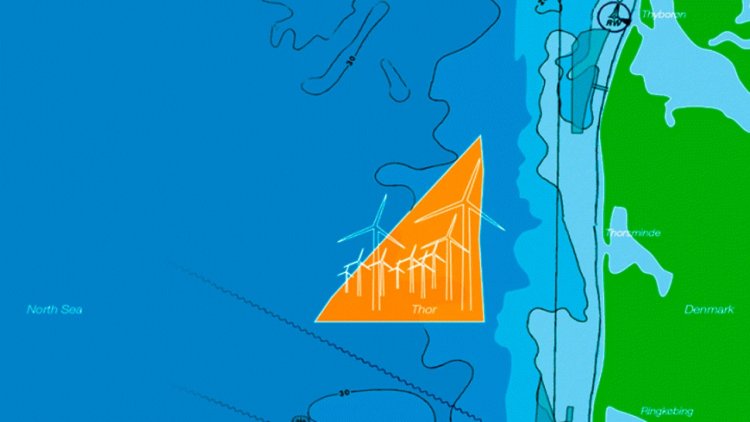
Based on the Strategic Environmental Assessment (SEA) of the Plan for Thor Offshore Wind Farm and the public consultation, the Danish Energy Agency concludes that the Plan for Thor can be realized in the dedicated site west of Thorsminde, and without significant impacts to the environment. At the same time, the Danish Energy Agency has narrowed down the site for the wind farm from 440 km2 to 286 km2 as a result of the site-investigations.

Pursuant to the Environmental Impact Assessment Act, the Danish Energy Agency has prepared astatement summarizing how environmental considerations have been integrated into the Plan for Thor Offshore Wind Farm.

The decision of approving the Plan for Thor Offshore Wind Farm is based on the SEA of the Plan for Thor Offshore Wind Farm and the public consultation. As part of the process, in the Spring of 2020 the public was involved in determining the content and level of detail of the environmental assessment. Results from this consultation are also included in the overall assessment.

The decision can be appealed to the Energy Board of Appeal for a 4-week period up to 28. June 2021.

The statement summarizing how environmental considerations have been integrated constitutes the first step in the environmental approval of Thor Offshore Wind Farm and sets, at the strategic level, the framework for the Environmental Impact Assessment (EIA) of the specific project at sea. The EIA with public consultations must be carried out by the future concession owner, and will, together with the associated license for construction, constitute the final step in the overall environmental approval of Thor.

The result of the SEA process as well as the site-investigation and other considerations have led to the narrowing down of the site for Thor. The process of narrowing down the site has taken into account a number of factors, including visual impact, cumulative visual aspects, birds, stone reefs, raw materials, fishing interest and safety of navigation.

Heerema’s Balder completes removal of the Morpeth TLP

0

Balder mobilized to the Morpeth Field in mid-April to begin executing the TLP removal.

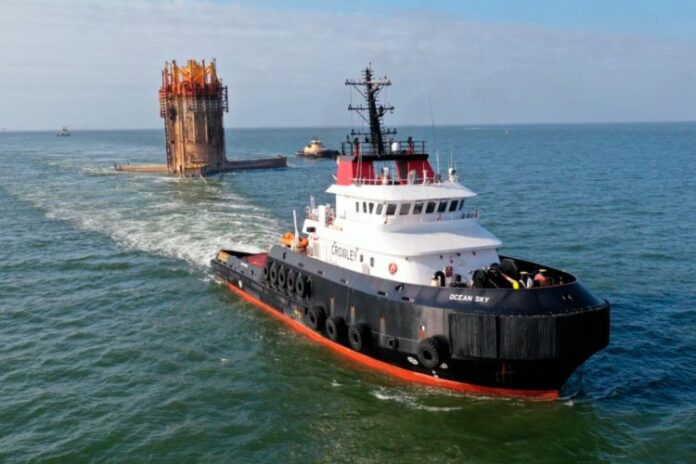
The campaign involved the engineering, preparation, removal, and disposal of the offshore infrastructure. The removal consisted of the 2650 short-ton topside, 2500 short-ton hull, and 1300 short-tons of tendons and piles. 

Following the successful removal of the components, the topside was transported by barge, the tendons and piles on supply vessels, and the hull wet towed for recycling at MARS (Modern American Recycling Services) facilities at various US locations. 

This project was the first TLP removal campaign for Heerema. It adds another successful decommissioning project to Heerema’s portfolio, following a record-breaking 2020 that saw the company remove 85,277 metric tons of decommissioned structures in one year.
 

Opinion: Digital twins to become mainstay for oil and gas operations

0

The prevailing industry downturn from COVID-19 has heightened the need to reduce costs and make operations more sustainable with technology, says GlobalData, a data and analytics company.

Worldwide lockdowns have significantly impacted global energy demand, while also causing project delays due to supply chain disruptions. The downturn has aggravated the need for improving the overall asset visibility to identify areas for cost reduction. Digital twins are key to achieving this objective and ensuring sustainable operations in the long run.

According to GlobalData’s latest report, ‘Digital Twins in Oil & Gas’, the groundwork for this technology may have been in place for some time, but its actual deployment was seen only when profitability was at risk. Incidentally, some of the major digital twins in the oil and gas industry were implemented only after the oil price crash of 2014. BP began wide-scale deployment of its APEX simulation and surveillance system around 2017.

Ravindra Puranik, Oil & Gas Analyst at GlobalData, comments:

“Companies have started to build models that will provide answers to ‘what if’ or ‘what will’ questions. By replicating an asset or a portion of it in the virtual world, companies can run simulation tests on real-world problems and visualize the results in 3D. This is helping project engineers to improve their understanding of the asset, thereby enabling them to optimize its performance as per the market requirements. Thus, digital twins are gradually becoming integral to oil and gas operations.”

Like Internet of Things (IoT) technologies, the lack of standardization has somewhat hampered the adoption of digital twins as well. To overcome this limitation, DNV GL, in collaboration with TechnipFMC, drafted a best practices guide for the creation and certification of digital twins in November 2020. It provides a framework for developers and users alike to understand the digital twins and extract the most out of their capabilities.

Ravindra adds:

“Newer oil and gas projects, such as Equinor’s Johan Sverdrup, or BP’s Clair Ridge are emerging as benchmarks in digital twin adoption. Companies such as Shell, Chevron, and Petrobras are launching initiatives to deploy digital twins across their global portfolio. With crucial support from oilfield technology and service companies, digital twins are likely to become mainstay for oil and gas operations in the coming years.”