0.8 C
New York
Home Blog Page 609

RelyOn Nutec and Crowley to enhance availability of offshore wind safety training

0

RelyOn Nutec and Crowley have signed a memorandum of understanding (MOU), to directly enhance the availability of offshore wind safety training across the U.S.

Creating an industry-leading training initiative in the U.S., the strategic partnering pairs the leading Jones Act maritime solutions provider with the world’s largest provider of specialized safety training and consultancy for the oil and gas, offshore, renewables and industrial sectors.

Together, the consortium will develop and administer geographically scalable wind energy training across the United States through the creation of Global Wind Organization (GWO) satellite facilities. These facilities will offer certified training standards which align the requirements of the GWO organization of wind turbine manufacturers and owners. 

Jenni Lewis, managing director for RelyOn Nutec’s Gulf of Mexico region, said:

“Crowley is well known as a leader in maritime and logistics and is growing its focus in the U.S. offshore wind industry. Having Crowley’s world-leading expertise in offshore operations and supply chain management combined with RelyOn Nutec’s experience in wind training and management systems, expertise and global presence, will ensure that this safety-critical training can be delivered in an emerging region with an accelerated growth strategy.”
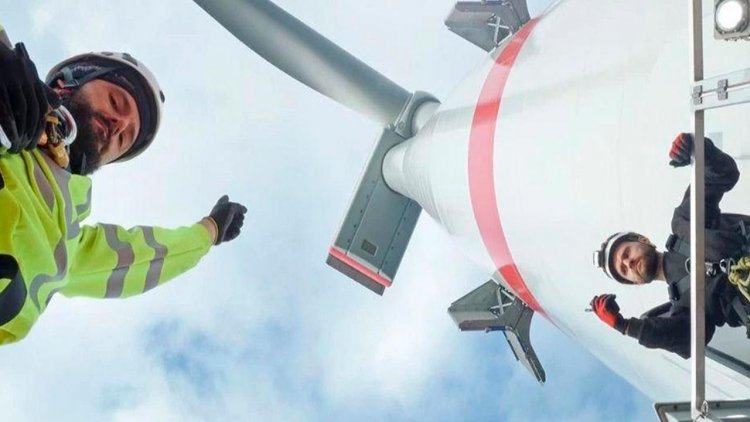
Working in cooperation with government and local higher learning institutions, the training will support the safety of mariners and technicians. The partnership will leverage the opportunity for Crowley to use its hands-on experience in the energy sector to augment RelyOn Nutec’s GWO training and eventual training support of crew transfer vessels (“CTV”), service offshore vessels (“SOV”), and wind installation vessels (“WIV”).

Jeff Andreini, vice president, Crowley New Energy, said:

“This partnership will combine Crowley’s commitment to safety and sustainability within its industry-leading and successful engineering, vessel operations, project management and logistics sectors in U.S. offshore markets with RelyOn Nutec’s time-tested safety training and consultancy within the offshore, renewables and industrial sectors. This will directly enable the strategic and continued growth of a qualified workforce to support reliable staffing for the new energy sector.” 

Damen and Hydromaster develop new ferry thruster for Blue Amigo

0

In 2020, Damen signed a contract with Blue Amigo for the delivery of nine passenger vessels. The ferries will operate services between Rotterdam and the Drecht cities in the Netherlands in a service known as the Waterbus.

Damen identified that six of the vessels – hybrid carbon fibre water buses that will operate fast, inter-city routes – would require a thruster that had not been seen before. What was needed was a fully azimuthing, 360-degree thruster that would make docking easy and propulsion fast.

Damen design and proposal engineer Ferries Jan van Ooijen says:

“It’s actually the kind of thruster you would expect to see on a pleasure craft. On a passenger vessel, though, we needed something more manoeuvrable and robust.”

Damen approached the experts of Hydromaster, a company with decades of experience in the field of steerable propulsion. Renowned for their sturdy, fully-mechanical design, Hydromaster thrusters propel hundreds of ferries, ships, barges and pontoons every day – all over the world.

The two companies joined forces to develop this new thruster, as Hydromaster commercial manager Jan Terlouw explains:

“We had already been working on something that would meet these requirements. A 375kW thruster, able to operate at speeds of up to and beyond 25 knots and durable enough to cover over 4,000 hours each year. But we had never built it. Once Damen signed its contract with Blue Amigo, we got the green light to go ahead.”

Before that, however, Hydromaster went to MARIN. The Maritime Research Institute Netherlands worked together with Hydromaster to develop the hydromechanics necessary to produce the thruster.

MARIN was able to provide the detailed calculations that would facilitate a computational fluid dynamics (CFD) study and the fine-tuning of Hydromaster’s design.

Jesse Slot project manager ships at MARIN:

“It’s always a challenge to strike a balance between efficiency and vibration. Because of the high speed required in this instance, to took us some time to get where we needed to be.”

Using its extensive experience and conducting a thorough assessment of Damen’s hull design, MARIN was able to come up with the solution – a propeller of 840mm diameter with a clearance of 23% diameter from the hull -reducing vibration to a minimum and allowing for increased efficiency.

For control of the thruster, Damen has developed in-house a single joystick controller that is intuitive to use and fulfills the circle of efficiency offered by the thruster.

Jan van Ooijen:

“This is a compact installation that takes the concept of standardised shipbuilding and applies it on another level. The result maximises the performance of the vessel and offers the reliability required for a ferry service. We can see a future for this type of thruster.”

Jan Terlouw agrees:

“We have already started to extend this range of High Speed Azimuth thrusters with a higher power output towards the 900 kW mark. We see a good potential for this type of thruster, not only for fast ferries, but also for example on crew transfer vessels for the offshore wind sector, supporting the production of sustainable energy, and other fast craft.”

Three Costa’s newest ships will operate in the Mediterranean from spring 2022

0

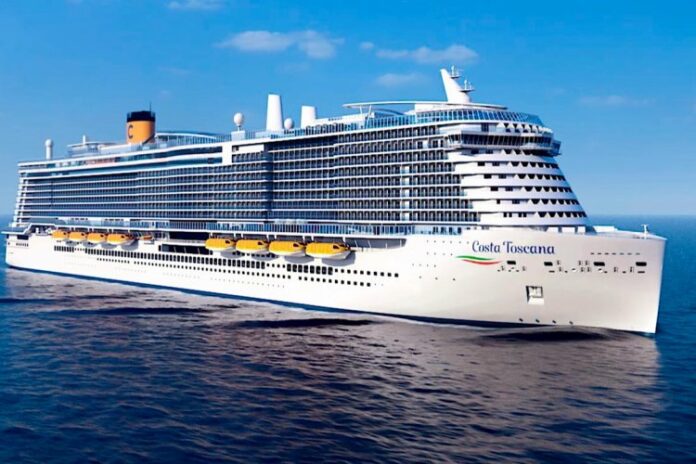
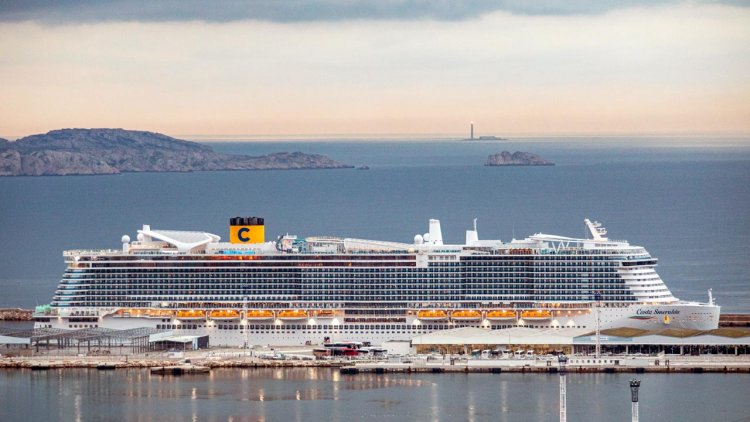
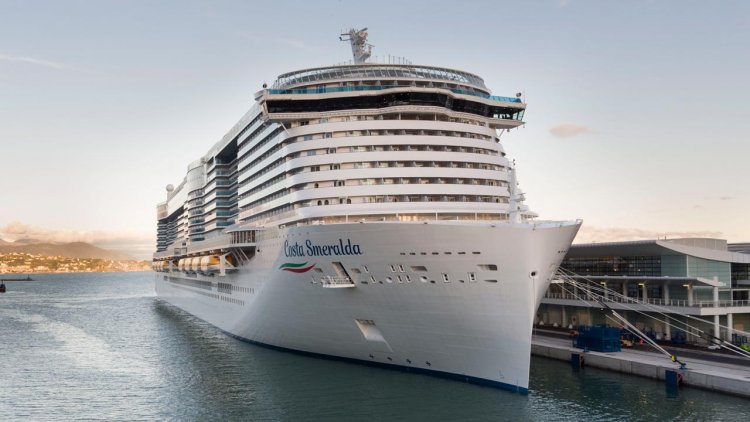
From spring 2022, Costa Firenze, Costa Toscana and Costa Smeralda, the three most innovative ships in the fleet, will offer cruises in the Mediterranean.

Following the restart of its ships in the Mediterranean, Costa Cruises is continuing with its program to resume operations, announcing important updates for the 2022 season, which will also involve the final part of the current season.

The main changes concern the Italian company’s three most innovative ships: Costa Firenze, Costa Toscana and Costa Smeralda.

Costa Firenze, the latest ship to join Costa fleet and dedicated to the Florentine Renaissance, will enter service this July 4 from Savona and will operate in the Mediterranean until the end of November 2021. In winter 2021-22 the ship will sail from Dubai for cruises in the United Arab Emirates, Oman and Qatar, including visits to “Expo 2020 Dubai”. From April 2022 Costa Firenze will return to offer week-long cruises in Italy, France and Spain. 

Costa’s presence in the Mediterranean will be further strengthened by Costa Toscana, a new “green” ship currently under construction that will be powered by liquefied natural gas and will debut in December 2021. Throughout 2022, Costa Toscana will be dedicated to seven-day cruises in the Western Mediterranean, which will enable visits on the same vacation to two fascinating Spanish destinations — Barcelona and Valencia in spring, or Ibiza and Valencia in summer. In winter 2021-2022, the current flagship Costa Smeralda will replace her sister ship Costa Toscana in South America, before returning to the Mediterranean for cruises in Italy, France and Spain.

Mario Zanetti, President of Costa Cruises, said:

“Costa’s offer for the remainder of this year and all of next year is rich and solid. As a result of positive feedback and requests we received after the opening of sales, we have made improvements and additions to our programs, continuing our plan for a gradual, phased-in restart in a still-evolving situation. With this approach, we offer guests a great holiday with state-of-the-art ships, world-class service, dining and spas, and a strong presence in all the regions in which we operate. In the Mediterranean, from May 2022, we will for the first time deploy our three most innovative ships for a truly unique cruise vacation.”

Costa’s programs for winter 2021-22 will be complemented by four additional ships. Costa Diadema will depart on September 26 from Savona, offering long cruises in Turkey and Greece or Spain and Portugal. From December she will be deployed in the Caribbean, with three different itineraries to discover several beautiful Caribbean islands. Costa Fascinosa will be back in service on September 23, again from Savona, for 10-day cruises to Lisbon, while during winter she will offer cruises in South America. Costa Deliziosa will continue with her program of cruises in the Eastern Mediterranean until January 8, 2022, when she will depart for the Around the World cruise. Costa Luminosa, currently operating in the Eastern Mediterranean, will sail two-week cruises to the Canary Islands or Israel.

During the 2022 summer season, in addition to Costa Firenze, Costa Smeralda and Costa Toscana cruising in the Western Mediterranean, three ships – Costa Deliziosa, Costa Luminosa and Costa Pacifica – will be available in the eastern part of the Mediterranean. Four additional ships – Costa Diadema, Costa Fascinosa, Costa Favolosa and Costa Fortuna – will operate in Northern Europe, offering cruises to Baltic cities and Norwegian fjords.

Finnlines: Construction of the first new Superstar ro-pax has begun

0

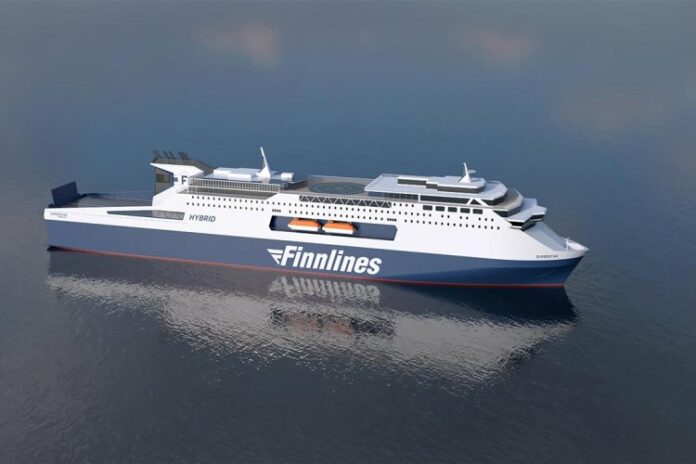
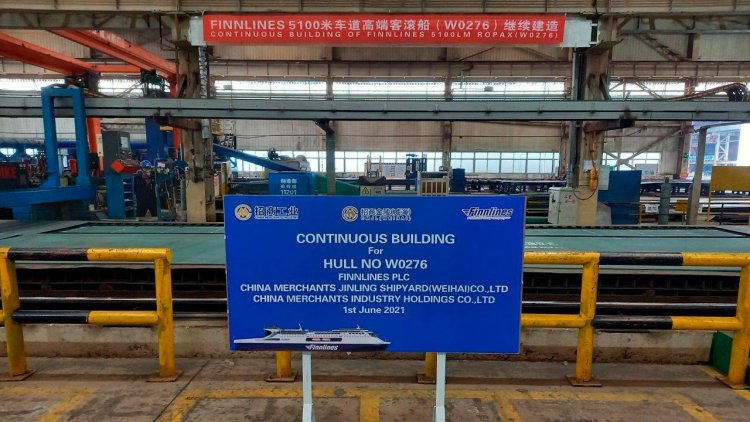
Construction of the first of the two new Superstar ro-pax vessels has begun. The traditional steel cutting ceremony of MS Finnsirius was held at the China Merchants Jinling Shipyard (Weihai) in China on 1 June 2021. 

MS Finnsirius is a part of Finnlines’ EUR 500 million Newbuilding Programme which includes two eco-sustainable ro-pax vessels as well as three hybrid ro-ro vessels. The other new ro-pax vessel will be named MS Finncanopus.

The new Superstar ro-pax vessels are set to start operating in July and December 2023 in the Finland–Sweden traffic. They will be larger than the existing Star class vessels and will be Finnlines’ flagships both in terms of size and technology, scaling up the connection and setting new standards to Finnlines’ customers. With a length of about 235 metres, their loading capacity will be 5,100 lane metres for rolling freight and 1,100 for passengers. In other words, the vessels have the capacity to carry approximately 200 cars and 290 trailers or 250 trucks per voyage.

The Superstar vessels are designed with the focus on fast and efficient cargo handling in order to guarantee Finnlines’ customers a short turnaround time. Automooring at berth will ensure faster mooring and more efficient port operations, which will enable a lower needed average speed at sea and lower fuel consumption. The enhanced functions will also reduce the environmental impact and emissions. Onshore power supply will provide an alternative source of energy, enabling emission-free operations in port. Light management and ventilation will be designed to enhance energy efficiency even in changing conditions.

Digitalisation and green values are playing an important role in vessel design. The aim is to develop “a paperless vessel” and printed materials will all be replaced by digital screens and mobile services. Environmental aspects and sustainability are given high priority and onboard this is reflected in many ways, for example in choice of materials, cleaning equipment, e.g. central vacuum cleaning system, and food assortment. The intention is also to engage local suppliers to provide goods for the retail and catering business on the new vessels.

The Next Generation Superstar vessels will offer an enhanced customer experience to passengers, highlighting the Archipelago. The scenery can be enjoyed through panorama windows and a spacious outdoor deck. All public areas will have their own design and service concepts and the heart of the new vessels will be the Arcade area, including Finnlines’ largest Duty-Free Shop yet, approx. 400 m2. New features will include some new cabin categories, a spa and a gym, a yoga studio and an A la carte restaurant.

Emanuele Grimaldi, CEO of Finnlines, says:

“We want to lead the development of high-quality ro-ro and ro-pax services in the Baltic Sea. The new Superstar vessels as well as our whole Newbuilding Programme ensure that we are able to continue to offer premier services to our customers. We have made major investments in renewing and developing our fleet into more sustainable, using the latest technologies and green innovations available and will continue to do so.”

Operation Ravenel: The search for the wreck has begun in Saint-Pierre-et-Miquelon

0

A research campaign aiming to find the wreck of the Ravenel fishing trawler, which disappeared back in January 1962 off the coast of Saint-Pierre-et-Miquelon (France), has begun on May 23, 2021. 

Thanks to the use of DriX Unmanned Surface Vessel (USV), designed, developed and operated by iXblue, this new research campaign relies on unprecedented technological means to solve this mystery, that remains one of the most important shipwrecks in the history of French fishing.

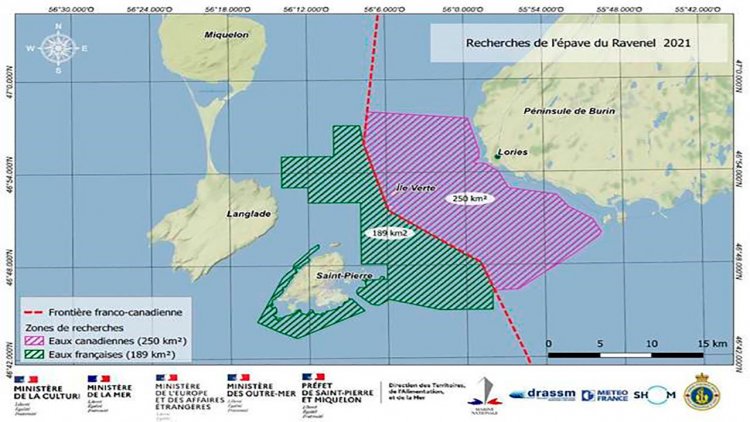
The 15 sailors aboard the Ravenel left for sea in January 1962 and dramatically disappeared after 8 days of sailing. The wreck of the vessel has never been found since then. In April 2021, Annick GIRARDIN, France Minister for the Sea, announced the launch of a major research campaign, which aroused great interest from the local population. A search area of 439 km ² has been defined thanks to information and documentation collected by the two associations of descendants of the missing, “Ravenel” and “Ravenel Research”, as well as by teams of Meteo France (France national meteorological service) and the Department of Underwater Archaeological Research (DRASSM).

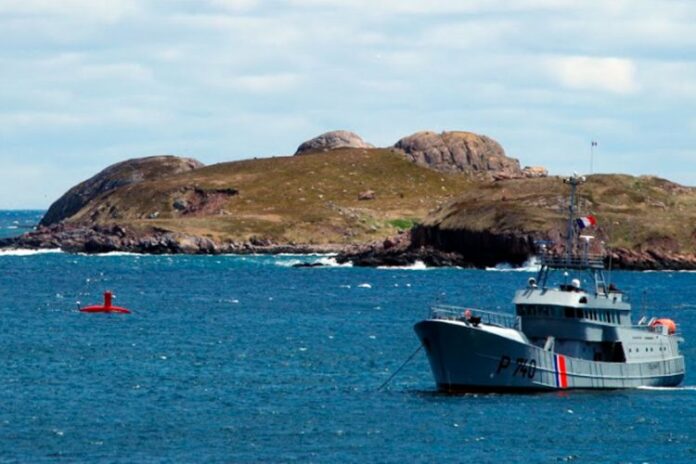
Since May 23, iXblue DriX autonomous surface vessel has been mapping the seabed of this newly defined area, looking for clues about the location of the wreck of the Ravenel or components of its structure. Developed by iXblue, this drone is equipped with powerful means of localization and detection of obstacles, allowing it to perform these missions autonomously. It is in constant contact with the ground and an accompanying vessel. The DriX operates 24 hours a day and is supervised by three iXblue surveyors.

To accompany the DriX, four government vessels take turns on the surface: the French Navy Fulmar patrol boat, the P’tit Saint-Pierre from the “Armement des Phares et Balises”, the Charente, a vessel from the “Service des affaires maritimes et portuaires (SAMP)” of the Préfecture de Saint-Pierre et Miquelon, and the SAO vessel from France Gendarmerie Nationale. The Canadian authorities issued their authorization for the prospecting in their international waters and offered their assistance in this research, that will last a total of one month.

Maersk Drilling adds well intervention scope for low-emission rig with Equinor

0

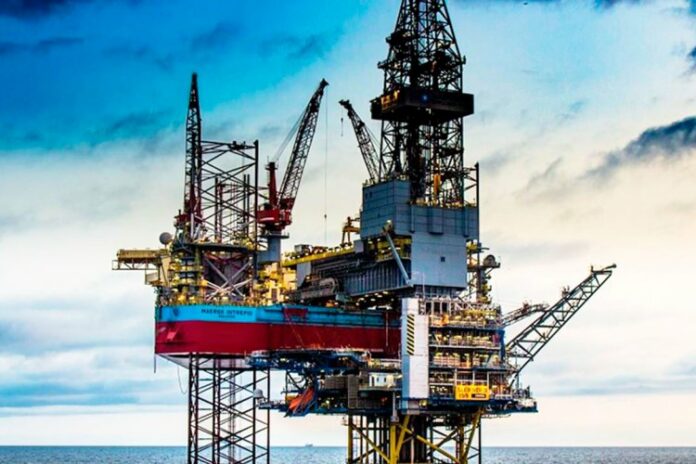
Equinor Energy AS has exercised an option to add well intervention work at the Martin Linge field offshore Norway to the previously agreed work scope for the ultra-harsh environment jack-up rig Maersk Intrepid. 

The firm value of the contract extension is approximately USD 9.9m, including integrated services but excluding potential performance bonuses.

The contract extension is entered under the Master Framework Agreement between Equinor and Maersk Drilling, in which the parties have committed to collaborate on technology advancements and further initiatives to limit greenhouse gas emissions. The contract with Equinor Energy AS contains a performance bonus scheme based on rewarding reduced CO2 and NOx emissions.

Maersk Intrepid is an ultra-harsh environment CJ70 jack-up rig, designed for year-round operations in the North Sea and featuring hybrid, low-emission upgrades. It was delivered in 2014 and is currently operating at Martin Linge for Equinor.

H-Line and DNV open doors to Korean LNG fuel market

0

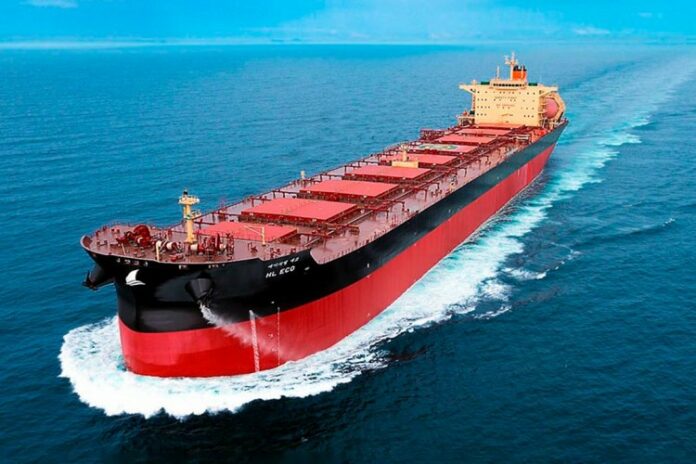
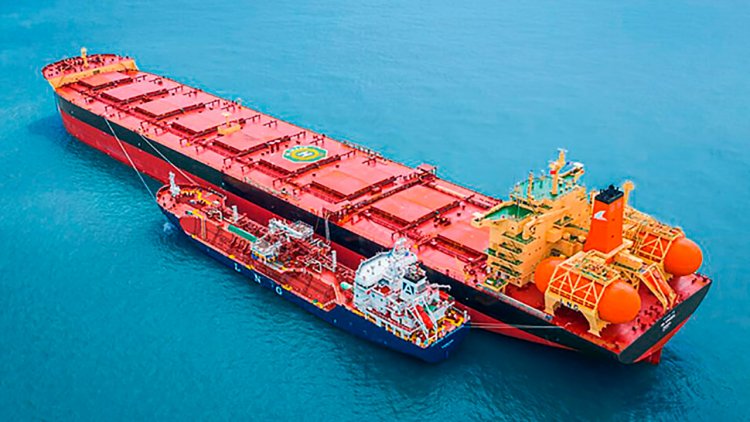
DNV has awarded its gas-fuelled notation to two LNG dual-fuel (DF) bulk carriers built at Hyundai Samho Heavy Industries (HSHI) for Seoul-based H-Line Shipping. 

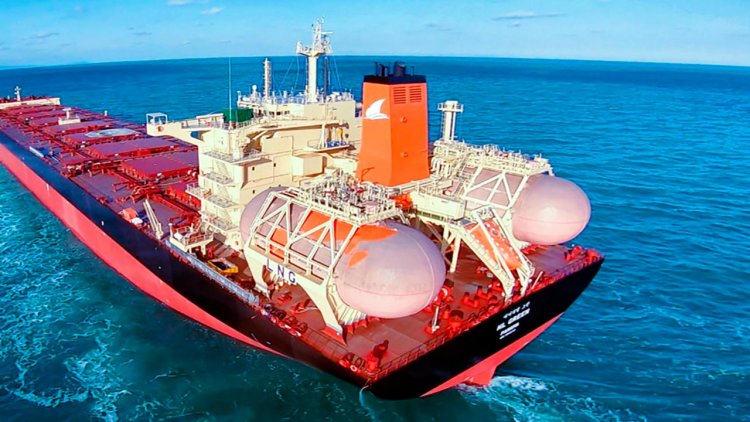
The two vessels, HL Eco and HL Green, are able to run on LNG instead of conventional fuels. When running on LNG, H-Line reports that sulphur oxide emissions are reduced by 99 per cent, nitrogen oxide by 85 per cent and carbon dioxide (a greenhouse gas) by around 20 per cent. The vessels are dual-classed by the Korean Registry of Shipping (KR) and DNV, with the latter providing the notation for the LNG fuel tanks.

The vessels’ LNG fuel tanks each have a storage capacity of 1,600 m3, the largest LNG fuel tanks currently applied for a bulk carrier. Notably, the fuel tanks and hulls are constructed entirely of domestically produced steel.

Kyung Shin Yoon, Senior Engineer at HSHI Design Coordination, explains:

“For stable material supplies and market expansion, HSHI and steel-making company POSCO worked closely together and succeeded in applying domestically produced steel with nine per cent nickel for the LNG tanks, enhancing the quality of the material to meet the International Maritime Organization’s (IMO) tightening standards.” 

The nickel/steel blend had been previously used only for land-based LNG storage facilities in Korea.

The two vessels are the result of a public–private partnership, built with the help of government funding from Korea Ocean Business Corporation as a part of a planned switch from conventional to eco-friendly designs, and supported by the Ministry of Oceans and Fisheries. According to H-Line, the construction of HL Eco and HL Green is expected to serve as a mutually beneficial development model for the domestic shipbuilding and steel industries.

HSHI’s Yoon says:

“Throughout the design approval and construction stages, there were new challenges to be met due to these vessels being the world’s first ocean-going dual-fuel bulkers with LNG tanks of this size. We are thankful for the support from DNV during the classification of the tanks and the practical assistance offered to HSHI to ensure an efficient design and construction process.”

In one notable case, HSHI faced challenges in arranging a separate cofferdam area between the LNG tanks and the engine room compartments. The cofferdam arrangement was expected to lead to various cost and schedule impacts for material input, space loss and productivity.

Yoon reports:

“DNV’s interpretation and optimized alternative allowed us to keep the as-built structural arrangement without a cofferdam, and to minimize the additional specifications. We are especially grateful to DNV for their broad technical support and collaborative attitude.”

Source: DNV

Incat Crowther announces delivery 46m passenger ferry by Singapore’s shipyard

0

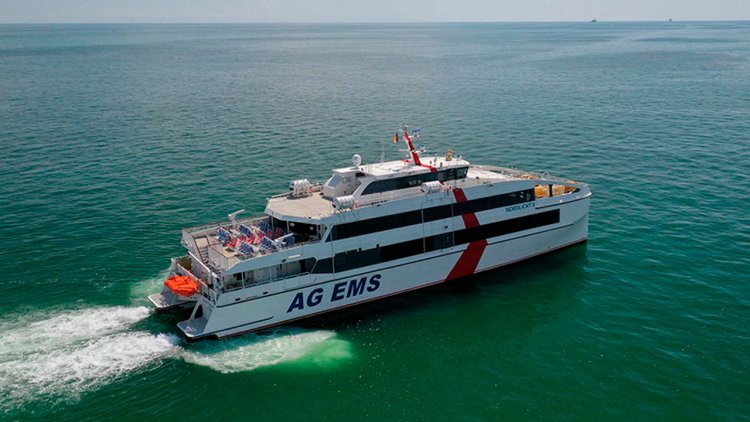
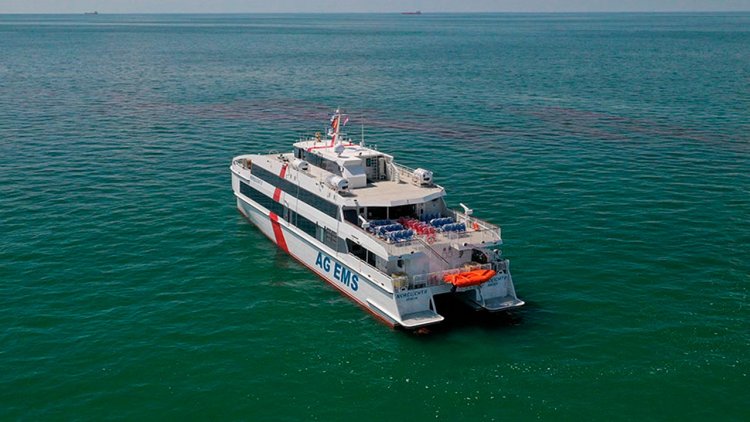
Incat Crowther has announced the delivery of Nordlicht II, a 46m 450-pax catamaran ferry, by Singapore’s Penguin Shipyard International. Penguin delivered Nordlicht II this week to Germany’s AG EMS after successfully completing sea trials in Singapore.

Built by Penguin’s wholly-owned subsidiary in Batam, PT. Kim Seah Shipyard Indonesia, the ferry is based on the Incat Crowther 46 design, the largest vessel from the drawing boards of Incat Crowther’s Europe office.

Nordlicht II is the product of a highly efficient consultative process whereby Incat Crowther initially supported the client AG EMS to develop a vessel specific to their own operating requirements. This process included discussions on the propulsion plant and motion damping system along with extensive discussions on the internal arrangement and outfitting of the vessel.

The aim and successful outcome of this process is to ensure that AG EMS have a vessel that meets their exacting requirements and standards. With an agreed design, Incat Crowther held an international tender for the construction of the vessel, ensuring that AG EMS received directly comparable quotations for the build of the vessel and simplified the selection of the most suitable shipyard.

Penguin was selected through this rigorous tender process.

Nordlicht II is capable of carrying up to 450 passengers, with an additional 52 exterior passengers seats and tables. The main deck consists of 248 economy class passengers with a large kiosk and racks for small luggage items. Aft the main passenger lounge is a large dedicated luggage room and aft of this is a section of crew accommodation.

The upper deck is divided into two cabins, a 111-passenger cabin amidships and a business class cabin for 96 passengers forward, with views over the foredeck, as well as discreet boarding facilities. The two passenger decks are linked by both an open stairwell and an elevator. The third deck houses the wheelhouse, a crew mess and senior crew cabins.

Nordlicht II is powered by twin MAN 175D main engines, each producing 2960 kW, the first use of these new modern engines in a high-speed ferry She has a top speed of in excess of 36 knots and a service speed of 33 knots.

Designed for the prevailing conditions of the route, Nordlicht II features a high bow and possesses excellent seakeeping characteristics with a motion damping system consisting of T-foils and interceptors provided by Naiad.

Incat Crowther’s contribution to Nordlicht II demonstrates the firm’s position as the ideal shipbuilding partner, providing support from initial concept through to commissioning.

Edda Wind secures contract for Commissioning Service Operation Vessel

0

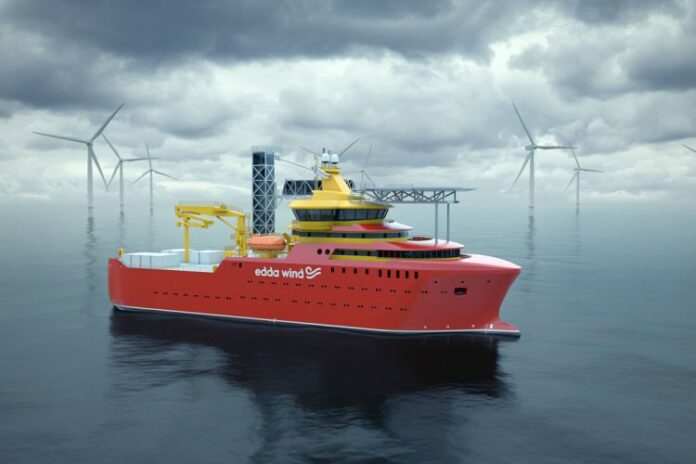
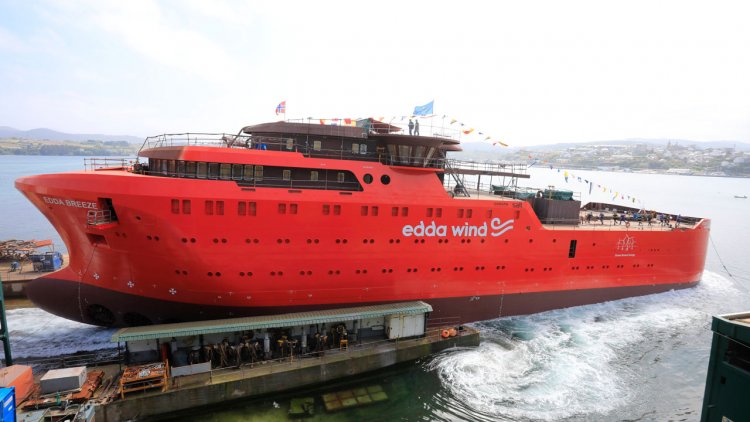
Edda Wind and Dogger Bank Wind Farm have agreed on a new contract for the CSOV Edda TBN C490, currently under construction at Astilleros Gondan in Spain. The vessel will operate in the Dogger Bank Wind Farm located off the northeast coast of England. 

The new contract will commence shortly after delivery of the vessel in Q2 2023, with a firm period of two years and an additional option of one year. The vessel will have 100 % utilization during the two-year period, being the only CSOV engaged all year round in the commissioning phase of Dogger Bank.

The vessel will function as a mother ship for wind turbine technicians as they perform commissioning and installation work on the wind turbines. Dogger Bank, being the world’s largest offshore wind farm, will have a total installed capacity of 3.6GW and will be capable of powering 6 million homes.

Dogger Bank is being built in three equal phases of 1.2 gigawatts (GW) each. The first two phases, Dogger Bank A and B, are a joint venture between Equinor (40%) SSE Renewables (40%) and Eni (20%). The third phase, Dogger Bank C, is being developed on a different timescale and is owned by Equinor (50%) and SSE Renewables (50%).

Edda Wind’s CSOV will enable utilization of the world’s largest turbines, the first time they will be installed anywhere in the world.

CEO in Edda Wind, Kenneth Walland, says:

“We are thrilled to be awarded the new contract, and we feel honored that Dogger Bank Wind Farm has selected Edda Wind to enable their ongoing development of the wind farm. We look forward to delivering safe and efficient operations to new and exciting clients. Our advanced and environmentally friendly vessels will help our clients lower their operational expenditures and reduce the carbon footprint of their wind farm projects.”

Dogger Bank Wind Farm Project Director, Steve Wilson, said:

“Signing this contract with Edda Wind for the “walk-to-work” vessels is another important milestone for the project. The vessels will play an important role in the safe commissioning of the turbines in the construction of the first two phases.”

Cammell Laird stands ready to deliver new national flagship in the UK

0

Cammell Laird, the UK’s premier ship builder, has welcomed the Prime Minister’s announcement that the construction of the new National Flagship will commence in 12 months, with the ship entering service by 2025.

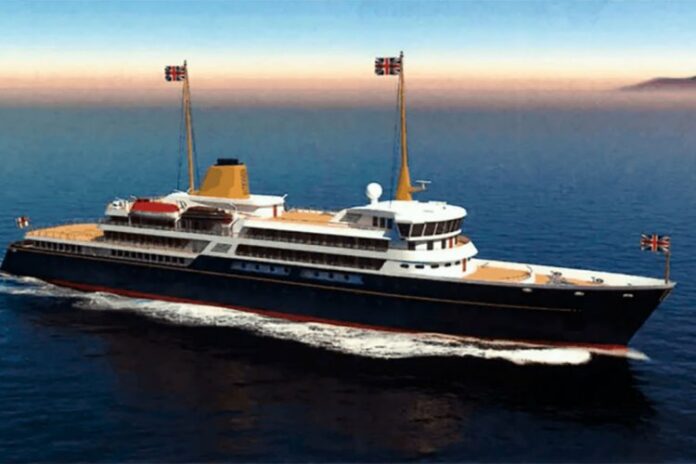
The Prime Minister’s announcement was accompanied by a visual of the new ship, which will be the first of its kind to be built and commissioned by the UK and will showcase British design, engineering and green technology.

On June 1, 2021, David McGinley, CEO, said that Cammell Laird is ready to deliver the new national Flagship, which will be used to promote British interests around the world.

David McGinley said:

“From HMS Ark Royal to the RRS Sir David Attenborough, Cammell Laird knows what it takes to deliver vessels of vital national importance. We have completed some of the most ambitious ship building projects in modern times, through the recent construction of the RSS Sir David Attenborough, the Aircraft Carrier Alliance, and delivering critical units of the next generation nuclear submarines, Astute and Dreadnought on behalf of BAE. It is this experience that makes Cammell Laird the only UK shipyard who can partner with Government to deliver this vessel, a partnership that will significantly de-risk the project, enable it to be delivered at speed and maximise value for money.”

In addition to the construction of the RRS Sir David Attenborough, Cammell Laird has delivered a range of specialised vessels including RoRo and RoPax ferries for Red Funnel, Western Ferries and Strangford Ferries.

David McGinley said he welcomed the Government’s decision to place this contract with a UK shipyard and that the construction of the National Flagship would unlock a huge amount of social value in the North West of England.

David said:

“The construction of the new vessel will unlock the full social benefits of the contract for the people of Wirral / Merseyside and the wider maritime supply chain, as well as supporting the Government’s levelling up agenda by delivering a significant national infrastructure programme in the North West of England. We will continue to develop our successful apprenticeship and training programme that has already recruited over 300 apprentices, including 46 in the past year alone. Furthermore, the contract will enable us to accelerate one of our strategic objectives to create a ‘Shipbuilding Centre of Excellence’ on the banks of the River Mersey at Cammell Laird, which will incentivise innovation and create the skilled workforce the UK will need to compete in the global economic marketplace”.