0 C
New York
Home Blog Page 607

KBC adopts the BHC3 AI suite to develop enterprise AI solutions for oil and gas

0

Baker Hughes and C3 AI have announced that KBC, a wholly-owned subsidiary of Yokogawa Electric Corporation, will deploy artificial intelligence (AI) technology from the BakerHughesC3.ai (BHC3) alliance to enhance KBC’s existing software portfolio for oil and gas process simulation, supply chain optimization, and energy management.

KBC is a leading consultancy and software provider for energy, chemical, and offshore oil and gas operations. The company’s process simulation software is widely adopted across hydrocarbon processing facilities, playing a critical role in helping operators meet production goals and maximize profitability.

KBC, a Yokogawa Company, will leverage BHC3 technology across KBC’s oil and gas portfolio, adding enterprise AI capabilities to their existing digital transformation software. Petro-SIM, KBC’s leading process simulation software and optimization platform for driving excellence in facility performance and organizational productivity, has demonstrated bi-directional interoperability with the BHC3 AI Suite. By augmenting KBC’s simulation software with capabilities from BHC3, KBC will further help oil and gas assets improve process planning accuracy, deliver operational agility, and significantly reduce processing time.

These robust enterprise AI solutions will provide continuous automated updates to physics-based simulations through a flexible, extensible model that scales to any industrial configuration and environment, with benefits extending into the supply chain. KBC anticipates the enterprise AI-enabled solutions will generate significant annual economic value for customers, estimating that improved operations will yield more than $0.65 per barrel.

Yokogawa previously announced its adoption of the C3 AI® Suite to enhance enterprise AI applications across its vertical industries, including power generation, renewables, mining and metals, and chemicals.

Shigeyoshi Uehara, KBC chief executive officer, said:

“Integration of enterprise AI capabilities into our current software will enable us to further and rapidly drive digital transformation for our customers. Working with domain experts for oil and gas specific applications will enable the people, process, and technology changes necessary for more efficient and productive operations.”

Uwem Ukpong, executive vice president of regions, alliances and enterprise sales at Baker Hughes, said:

“KBC is a leader in digital solutions that transform processes for their customers, and the integration of our industry-leading enterprise AI solutions will continue to create greater efficiencies and productivity for those users. BHC3’s scalable AI capabilities for the energy industry will augment KBC’s existing software and enable future application development. These solutions are focused on energy and highly engineered products, demonstrating further momentum for the BakerHughesC3.ai alliance as Baker Hughes continues to invest for growth in industrial digitization.”

Thomas M. Siebel, chairman and CEO of C3 AI, said:

“KBC’s use of the flexible, scalable enterprise AI technology from BHC3 will infuse AI capabilities into an already leading portfolio of simulation software for the oil and gas industry. The transformation of energy requires new approaches, including the constant evolution of existing solutions on the market today. This agreement represents an exciting combination of visionary and market-leading companies working together to digitally-transform the oil and gas industry.”
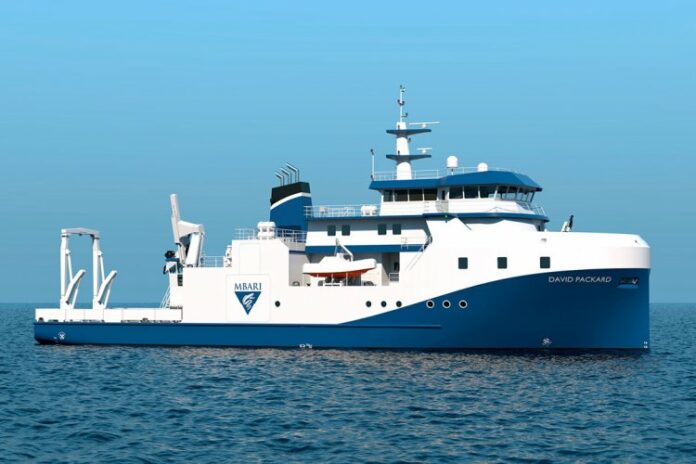
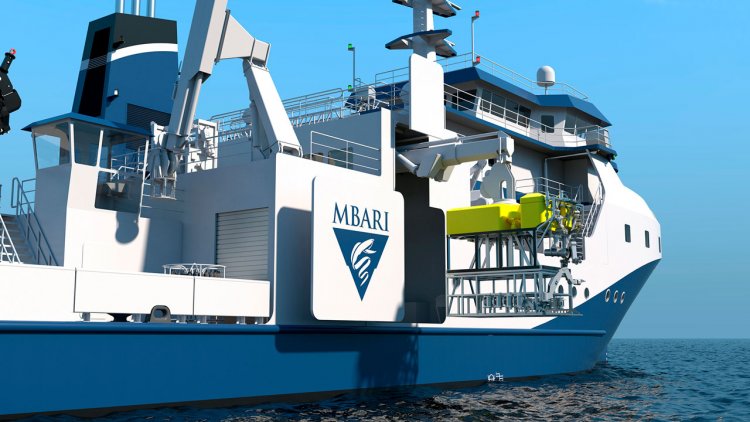
ABB to equip MBARI’s new flagship vessel with leading-edge solutions

0

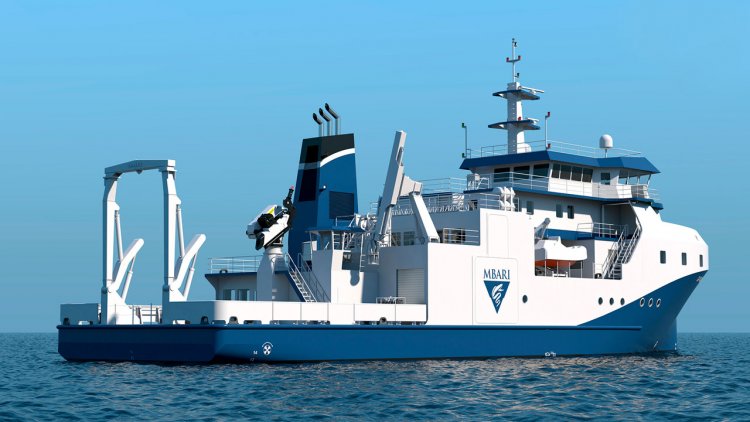
Located in Moss Landing, California, the MBARI (Monterey Bay Aquarium Research Institute) seeks to advance marine science and technology to understand a changing ocean. Earlier this year, MBARI announced construction of a new state-of-the-art research vessel named in honor of its founder, David Packard.

Upon delivery in 2023, the 50-meter-long vessel with 18 scientists and a crew of 12 on board will support MBARI’s work to study the depths of Monterey Bay and beyond. The vessel will enable further exploration of the Monterey Canyon – one of the deepest underwater canyons off the west coast of the United States that extends more than 470 kilometers offshore and plunges some 4,000 meters deep.

Monterey Bay’s submarine canyon provides MBARI a window to the world ocean. For more than 30 years, MBARI’s research has revealed the astounding diversity of life deep beneath the surface, and the institute’s technology innovations have provided valuable insight into the ocean’s geological, ecological, and biogeochemical processes.

MBARI Director of Marine Operations Michael Kelly said:

“The R/V David Packard will expand MBARI’s reach and enhance our research capabilities at a time when MBARI’s work to explore and understand the ocean is more important than ever. We are excited to pilot ABB’s power integration technology to support operations on our new research vessel.”

The ship’s design has been developed by the Seattle-based research vessel specialist Glosten, with construction to take place at Spain’s Freire Shipyard, renowned for its experience in complex shipbuilding projects for research vessels, yachts and offshore vessels.

Rune Braastad, Head of Marine Systems, ABB Marine & Ports, said:

“We are proud to support this groundbreaking vessel with our solutions that will deliver superior performance through the power of integration. As a single source integrator, ABB has access to efficiencies that are not available for separately purchased solutions, and we look forward to supporting Freire Shipyard through the build project and the owner throughout the vessel’s lifetime.”

R/V David Packard will feature a wide scope of ABB’s electric, digital and connected solutions, and will be the world’s first research vessel to feature ABB’s award-winning Onboard DC Grid™ power system platform.Onboard DC Grid™ is particularly well suited for research vessels as its quiet operation on board ensures minimal interference with scientific instruments, as well as enables lower levels of underwater noise radiated below the ship’s hull. The system will also help the vessel achieve increased fault tolerance, and with fewer components than a conventional AC solution, it will allow for a flexible placement of electrical equipment on board. In addition to space savings, the Onboard DC Grid™ setup will save over 2,000 kg, weighing about 30 percent less than a comparable AC system. While optimizing vessel efficiency and responsiveness, Onboard DC Grid™ will enable MBARI to switch to zero-emission energy sources in the future.

The distributed control system ABB Ability™ System 800xA will integrate ABB’s digital, power, propulsion, low voltage distribution and vessel management systems into one single-view platform, enabling both crew and onshore teams to get a comprehensive overview of all the information needed to operate the vessel in the safest and most efficient manner. The overall power setup will be controlled by ABB’s Power and Energy Management System (PEMS™), which will also increase fault tolerance and provide a high degree of reliability.R/V David Packard will be connected to ABB Ability™ Collaborative Operations Center infrastructure, which monitors the performance of ABB technology on board and remotely connects operators with ABB experts – no matter where future missions take the research vessel.

Sterling PlanB and ICE Marine Design join forces to promote ESS adoption

0

Energy storage experts Sterling PlanB and Europe’s largest independent ship design group, ICE, have announced an agreement to combine knowledge and resources in order to increase the adoption of energy storage systems (ESS) and thereby accelerate the maritime industry’s energy transition.

Exchanging market and technology information, Sterling PlanB and ICE will combine efforts through their collaboration to enhance the use of energy storage systems on ships and support the industry’s decarbonisation journey. As leading companies in their respective fields of expertise, they together form a unique combination of complementary understanding and experience that offers ship owners and operators an optimized and integrated solution for adopting ESS.

Sterling PlanB has been at the forefront of maritime battery and ESS technology for many years, particularly in the field of safety thanks to its design expertise, while ICE’s extensive experience in marine design and engineering for clients world-wide is ideally suited to integrate ESS’s as a key element in newbuildings or as retrofits in existing ships.

Sterling PlanB CEO Brent Perry said:

“ESS will be an essential part of shipping’s decarbonisation journey. Regardless of vessel type, all vessels can benefit from ESS installation helping them to save fuel, operate with a more stable load, and increasing safety with improved backup power. However, integrating battery technology into vessel design requires specific expertise, and it’s important that ESS installation is considered as an integral part of a project rather than an afterthought. We’re excited to be working alongside ICE, who are bringing over 50 years of design expertise to the table, and we look forward to collaborating with them to realise new, low carbon vessel designs and retrofit projects.”

Steinar Draegebo, ICE’s Chairman and CEO added:

“Sterling PlanB are proven leaders when it comes to ESS technology. We’re proud to be working with a company that prioritises safety and has the technical knowledge and capability to really push the boundaries of what’s possible with marine batteries. Sterling PlanB’s technology will help us meet our customers’ expectations of fuel efficiency, increased safety and reduced greenhouse gas emissions.”

The Fondation de la mer and BV launch the first international label for ocean protection

0

The label is the first in the world to recognize companies that are committed to understanding and improving their impact on the ocean.

The ocean is a focal point for major issues related to climate and biodiversity. All companies, regardless of their sector of activity, have a role to play. To enable them to understand and assess their interactions with the ocean, thereby providing them with the means to act, the Fondation de la Mer created the Ocean Framework in 2020. This standard translates SDG14 into operational practice.

Building on the rigorous standard, the Ocean Approved ® label recognizes companies that are committed to a process of continuous improvement in their impact on the ocean. Accessible to organizations from all countries, whatever their sector of activity or size, this label complies with the best practice governance standards defined by the CSR platform of France Stratégie.

The French Ministry of the Sea’s Delegation for the Sea and Coastline was invited by the Fondation de la Mer to take part in developing the label. It worked in collaboration with Bureau Veritas, BPI France, BCG, EpE and France Invest, all members of the label’s governance committee.

The labeling process is based on an evaluation of the actions launched by the company, and on analysis of the governance mechanisms in place. Examples of company actions include reducing or recycling plastic materials, improving wastewater treatment, and paying more attention to the protection of coastal areas. An audit is carried out by an independent third party body, which has been approved by the Fondation de la Mer for its expertise and know-how, to guarantee the truth and accuracy of the company’s statements. Bureau Veritas is one of the approved independent third-party bodies.

The entire labeling and auditing process has been tested with three pilot companies: an energy company (Engie), a data center operator (Interxion), and a marine cosmetics company (Thalgo).

Annick Girardin, French Minister of the Sea, said:

“Civil society—and businesses in particular—must demonstrate commitment to achieving the United Nations’ Sustainable Development Goal (SDG) #14, which is dedicated to the conservation and sustainable use of oceans, seas and marine resources. The Ocean Approved ® label helps strengthen and structure efforts of both public and private parties. The label is open to all, once again demonstrating France’s commitment to the protection of the oceans and the sustainable use of their resources.”

Sabine Roux de Bézieux, President of Fondation de la Mer:

“In 2020, the Fondation de la Mer launched the Ocean Framework. This is the result of our strong conviction to integrate a global vision that encompasses all issues and challenges facing oceans today. Furthermore, the framework offers companies a way to introduce sea conservation into their transformation strategies. With the Ocean Approved ® label, companies can reach a new level in terms of mobilizing efforts in defense of our planet’s oceans. Organizations that achieve the label are demonstrating to stakeholders that strong commitment.”

Didier Michaud-Daniel, CEO of Bureau Veritas:

“As one of the world’s leading providers of audit and certification services, we help our clients be more efficient, methodical and trustworthy in their journey toward more sustainable business and a more sustainable world. We are thus proud to contribute to implementing this label, and to support companies and institutions in their voluntary efforts to improve their direct and indirect impact on the oceans. Ocean Approved ® will also enable them to set an example in their respective industries.”

Aker Solutions delivers Johan Sverdrup platform jacket on schedule

0

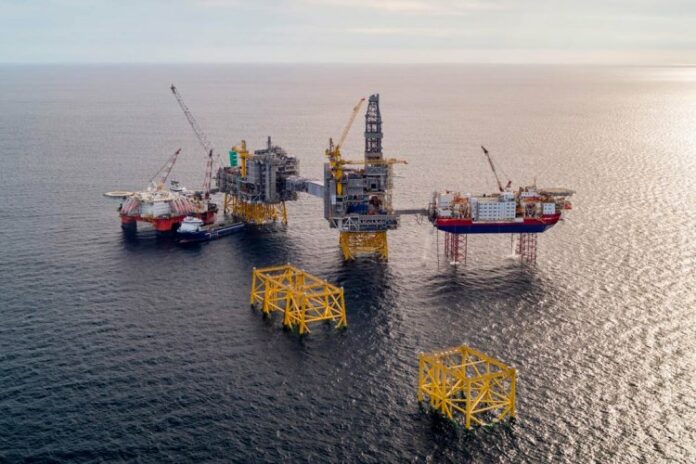
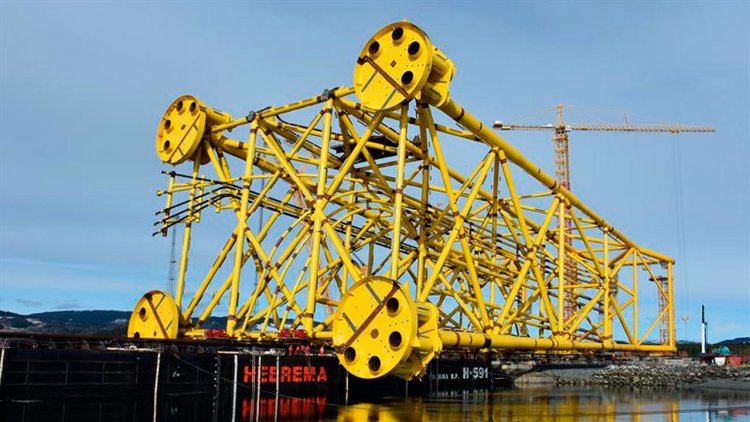
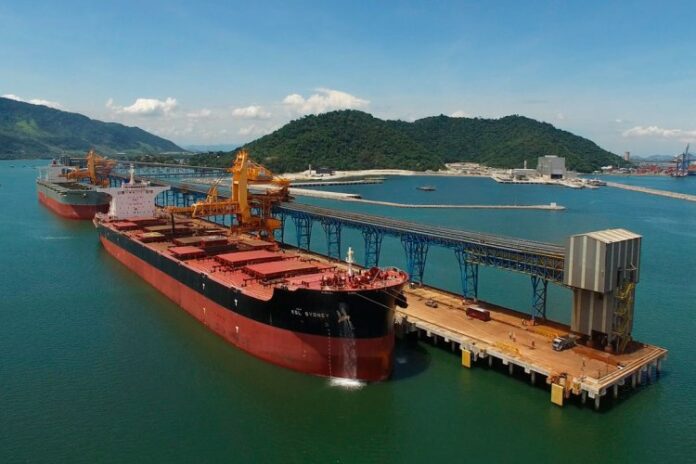
Previously, the company has delivered three platform jackets for phase 1. With this jacket for phase 2 of the project, four out of a total of five jackets have been built and delivered from Aker Solutions’ yard in Verdal, Norway. All platform substructures have been delivered on time, quality and budget.

A key focus during the work has also been to improve execution models and to adapt for new types of jobs. As a result, future platform jackets for oil and gas and for renewable energy production can be delivered at a lower cost and with increased competitiveness.

Through the frame agreement entered into in 2014, and in international competition, Aker Solutions was awarded three out of four jackets for the first phase of the project. The first delivery was the riser platform jacket in the summer of 2017. This was the largest and most complex platform jacket delivered from Aker Solutions to date, and the first visible installation at the new Johan Sverdrup field centre. In March 2018, we delivered the steel substructure for the drilling platform, and in July of that year the process platform substructure was delivered.

Today, exactly on schedule, the process platform substructure for phase 2 sails from Verdal.

Sturla Magnus, executive vice president and head of Aker Solutions’ topside and facilities business, said:

“This is an exciting and important day for us. Through great cooperation with Equinor, we have delivered all four of these platform jackets at the agreed quality, time and budget. I am very pleased that our customers confirm that we are a supplier that offers an attractive combination of technical expertise and cost-effectiveness.”

Photo: Aker Solutions

In total, the deliveries from Aker Solutions in Verdal make up about 90 percent of the total weight of the substructures for the combined phase 1 and 2 of the Johan Sverdrup field. More than 100,000 metric tons of steel are delivered from Aker Solutions’ facility in Verdal, including the piles that attach the jackets to the seabed. In addition, Aker Solutions’ facility at Stord has delivered a topside as well as a large module for the Johan Sverdrup field.

Erik Stiklestad, Aker Solutions’ yard director at Verdal, said:

“We are very pleased today. We have extensive experience in providing the customers with complete and seamless deliveries. In recent years, we have also increased industrialization for how we execute projects. This, combined with long-term relationships in the supplier market, makes it possible for us to offer flexibility to our customers. We are now delivering as planned despite a year of major challenges with COVID-19. Together with our employees and partners, we have found good solutions that enable us to deliver the jacket to our customer Equinor without serious injuries during the execution.”

AqualisBraemar LOC joins hydrogen fuel-cell vessel project

0

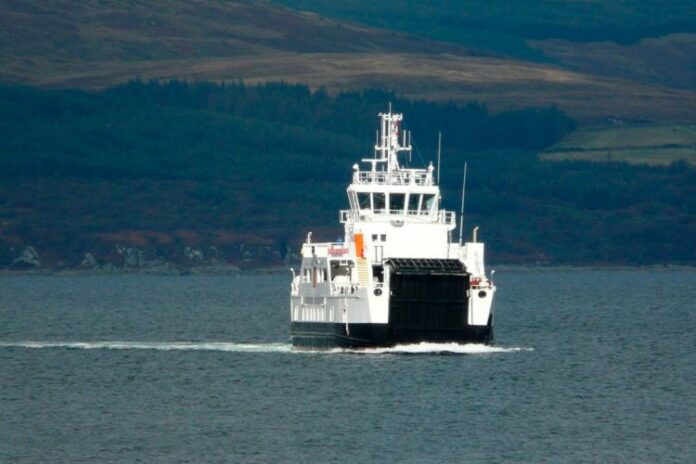
AqualisBraemar LOC has been appointed by Caledonian Maritime Assets Ltd. (CMAL) to partner in designing an emission free hydrogen fuel cell sea-going passenger and car ferry – a first for Europe. This is part of HYSEAS III, a Horizon 2020 funded project.

Graham Dallas, Business Development Manager for AqualisBraemar LOC in Europe, said:

“AqualisBraemar LOC understand the important role the maritime industry has to play in the global fight for climate change. Whilst tackling marine emissions is a global responsibility, we are also proud to be supporting CMAL, in its role as part of a Scottish-led consortia, in building up world-leading competence in alternative clean fuel systems, which harnesses local marine renewable sources.”

HYSEAS III follows HYSEAS I and HYSEAS II, and aims to build on the previous projects’ findings, by demonstrating that fuel cells may be successfully integrated with a proven marine hybrid electric drive system (electric propulsion, control gear, batteries etc.), along with associated hydrogen storage and bunkering arrangements.

The HYSEAS III project will develop, construct, test and validate data in a full-sized drive train on land.

AqualisBraemar LOC’s scope of work is to design a double-ended sea going passenger and car ferry capable of utilizing the hydrogen powered drive train and thereby running completely emission-free. In recent years, AqualisBraemar LOC has developed a range of marine and engineering consulting services to support carbon-reduction initiatives in the maritime sector, including expertise in electrical engineering and alternative fuel integration for vessels.

The ferry will be designed around the requirements of Shapinsay in Orkney where hydrogen fuel is generated through wind power. The ferry which will carry 16 cars or two trucks, and 120 passengers will be capable of sailing to and from any concrete 1:8 slipway where hydrogen is available locally to power the vessel.

AqualisBraemar LOC operations in Aberdeen will work with CMAL, to ensure optimum sustainability in the overall vessel design, whilst delivering a design, which meets the highest level of safety and reliability for a lifeline ferry service.

The group will also draw upon its sister company, Longitude Engineering’s long track-record and reputation in vessel design, upgrade and conversions, to support the HYSEAS III project.

Dean Goves, Small Craft and Vessel Design Director, Longitude, which provides independent engineering and design consulting to the shipping, oil and gas and renewables sectors, said:

“AqualisBraemar LOC and Longitude’s involvement in this project reflect our group’s commitment to being a driver – and not just a passenger – of the global energy transition. We are really excited to be working with CMAL on this ground-breaking project, which will blaze a trail for more sustainable fuel systems in global maritime and shipbuilding.”

John Salton, Fleet Manager and Projects Director at CMAL, said:

“The contract award represents a significant step forward in establishing a new, innovative vessel concept, and marks an important shift towards entirely emissions-free marine transport.  Hydrogen ferries exist, but this concept is built around using hydrogen fuel cells to  power a seagoing ship, the first in the UK and Europe.  If successful, the next step will be to take the knowledge and know-how into building a ferry.”

The HYSEAS III consortium is comprised of CMAL (Scotland), Kongsberg Gruppen (Norway), Ballard (Denmark), Orkney Isles Council (Scotland), St Andrew University (Scotland), McPhy (France), Arcsilea (England) and Interferry (Sweden).

First of 40 Concordia Damen inland waterway tankers launched

0

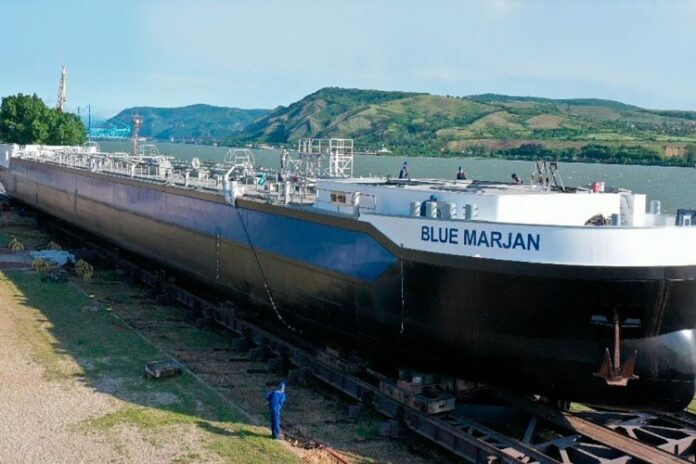
The first of 40 inland waterway barges that are being built by Concordia Damen has been launched at the casco yard in Serbia. Concordia Damen signed the contract for the environmentally friendly vessels late last year.

The vessels, known as the Parsifal Tankers, will be chartered by Shell and operated by the VT Group/Marlow. The vessels will be 110 x 11.45 metres and will feature low emission LNG propulsion and extreme shallow draft capabilities. They will carry mineral oils between Antwerp, Amsterdam, Rotterdam and Rhine network. The VT Group is specialised in the inland shipping of minerals, chemical products, bio fuels and lubricants.

Concordia Damen CEO Chris Kornet said:

“We are pleased to have reached this milestone in this important project. The Parsifal Tankers represent a new generation of eco-conscious vessels that will play a significant role in the maritime energy transition. We are looking forward to continuing to develop this project in the coming months.”

Bureau Veritas launches digital tool to support design verification of floating units

0

Bureau Veritas (BV), a world leader in testing, inspection, and certification, has launched a new digital simulation tool – Opera – which will be a key asset for the certification of floating units, notably floating wind turbines.

As offshore wind farms are built further offshore, floating wind turbines are becoming increasingly more common, a trend which has accelerated due to a growing demand for alternative energy sources that can support a zero-carbon society. Bureau Veritas is in a leading position to enable the commercialization of floating offshore wind, by providing solutions and guidance to develop safe, reliable and cost competitive projects.

Developed over ten years of Research & Development and rigorous engineering, Opera offers an independent and fully integrated modelling solution that includes all components of a floating wind turbine, from mooring systems to blades. It is state-of-the-art for sea-keeping and station-keeping of any floating structure, including floating wind turbines powered by both sea and wind loads. It addresses the complex physics involved with aero-hydro couplings and the multibody interactions inherent in floating projects.

Laurent Leblanc, Senior Vice President Technical & Operations, Bureau Veritas, said:

“The development of Opera has been an amazing journey. We have built and improved our modelling capabilities over the years, in partnership with our clients. Today, we are in a position to perform any calculation to certify, give confidence and help de-risk any floating offshore wind turbine project. Opera will enable greater access to sustainable energy generated from wind, helping the offshore industry support the transition to an era of green, low-carbon operations.”

Trafigura and Yara sign MoU to explore opportunities for joint business in clean ammonia

0

Trafigura Pte Ltd (“Trafigura”) and Yara International ASA (“Yara”) have signed a Memorandum of Understanding to collaborate on the development and promotion of the use of ammonia as a clean fuel in shipping and to explore possible opportunities to work together on certain clean (green and blue) ammonia fuel infrastructure and market opportunities.

Reducing shipping emissions is a vital component of the fight against global climate change, yet greenhouse gas emissions from the global maritime sector are increasing. The Fourth IMO Greenhouse Gas study, published in August 2020 predicts that emissions could increase by as much as 130 percent by 2050 compared with 2008 levels. To reverse this alarming trend the ships in use, the fuels that power them and the related infrastructure all need to change as the industry transitions to low or zero-carbon maritime fuels.

Both Yara and Trafigura have taken a number of steps to progress towards making the transition to a greener economy a reality. For the first time the two companies intend to collaborate on initiatives that will establish themselves in the clean ammonia value chain.

Under the MoU announced today, Trafigura and Yara intend to collaborate in the following areas:

  • The supply of clean ammonia by Yara to Trafigura Group companies
  • Exploration of joint R&D initiatives for clean ammonia application as a marine fuel
  • Development of new clean ammonia assets including marine fuel infrastructure and market opportunities

Magnus Krogh Ankarstrand, President of Yara Clean Ammonia, says:

“This agreement is another good example of cross-industry collaboration to develop and promote zero-emission fuel in the form of clean ammonia for the shipping industry. Building clean ammonia value chains is critical to facilitate the transition to zero emission fuels by enabling the hydrogen economy – not least within trade and distribution where both Yara and Trafigura have leading capabilities. Demand and supply of clean ammonia need to be developed in tandem.”

Jose Maria Larocca, Executive Director and Co-Head of Oil Trading for Trafigura, said:

“There is a growing consensus that hydrogen-based fuels will ultimately be the shipping fuels of the future, but clear and comprehensive regulation is essential.”

Trafigura has co-sponsored the R&D of MAN Energy Solutions’ ammonia-fuelled engine for maritime vessels, has performed in-depth studies of transport fuels with reduced greenhouse gas emissions, and has published a white paper on the need for a global carbon levy for shipping fuels to be introduced by the International Maritime Organization.

GEV commences development of a pilot-scale C-H2 Ship

0

Development program is targeting American Bureau of Shipping (ABS) Approval in Principle (AIP) in Q3 2021 and Full Class Approvals late in 2022.

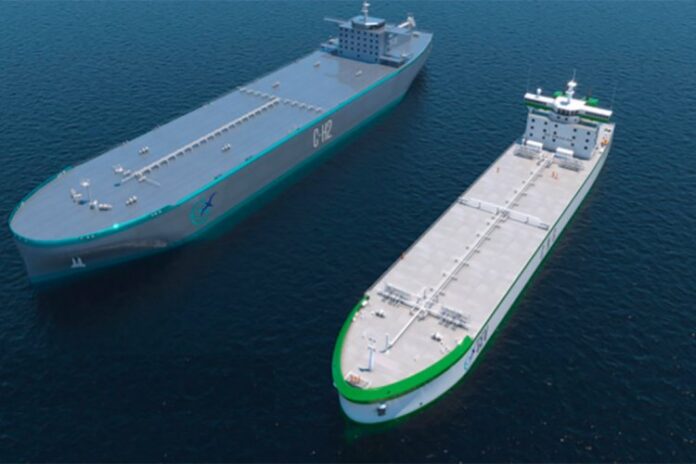
The 430-tonne ship specification will be a scaled version of the 2,000-tonne C-H2 ship (that received AIP in March 2021) and benefits from the engineering and HAZID studies already completed.

The downstream market application for pilot scale volumes of green hydrogen will include customers to inject such volumes of green hydrogen into existing natural gas pipelines (i.e., blending). Regions with aspirations to develop a hydrogen economy are likely to turn to grid injection as a means of cultivating a market and stimulating investment into supply.

Martin Carolan, Managing Director and CEO commented:

“GEV’s design and development strategy for the 2,000-tonne ship proved that large commercial scale C-H2 ships are possible and paved the way for the development of a pilot-scale version. The 430-tonne ship is an ideal size to meet the needs of the current emerging H2 marine transportation industry and will ensure we establish ourselves in the marine transportation of green hydrogen.

Extensive marketing of our C-H2 solution has provided valuable insights into both the scale of supply and demand for green hydrogen in the mid-late 2020’s. A pilot-scale ship will be complementary to partner discussions and GEV’s target to develop a fully integrated green hydrogen supply chain from Northern Australia. This includes GEV’s own renewable energy project to produce green hydrogen based on a specific customer use case, delivered with our own C-H2 ships.

Blending is an attractive source of near-term demand for hydrogen at low blend volumes due to low incremental costs and aligns with C-H2’s modular approach for production scale-up. The scale of a 430t ship can alleviate the additional infrastructure requirements that a liquefaction or ammonia project will require to deliver a pure hydrogen gas to the end user. Regions with aspirations to develop a low-carbon hydrogen economy are likely to turn to grid injection as a means of cultivating a market and stimulating investment into supply.”

GEV has assembled a team with a successful track record of achieving AIP and the expertise to take the C-H2 ship through to Full Class Approvals with ABS by the end of 2022. More details will be provided on the key milestones in the coming quarters.” 

Strategical reasons to move forward with a pilot-scale C-H2 ship, include:

  1. GEV’s analysis of the near-term supply and demand for green hydrogen in the 2025-2030 timeframe, making this a world first for the marine transport of green hydrogen at scale.
  2. The 430-tonne containment system fits within a Handymax sized vessel envelope which reduces the development time and cost, maintains a practical ship draft of 9 metres, whilst also optimising the scale of the ship to match hydrogen production volumes.
  3. A smaller capacity ship aligns with opportunities under review for European and Asia Pacific demand centres for downstream applications such as grid injection (blending) and fuel cells.
  4. Aligns with GEV’s own renewable energy and hydrogen export project of up to 1.5 GW of renewable energy, matched with a scaled production and delivery of green hydrogen from Northern Australia to Asia. 

The key specifications of the 430 tonneC-H2 Ship

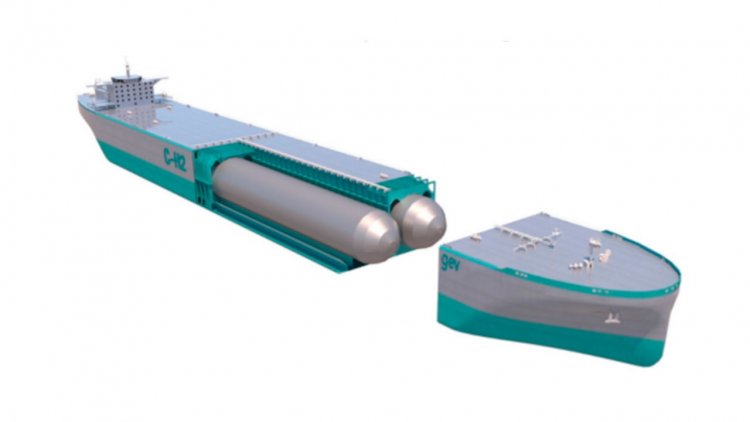
The proprietary design for the containment system is made up of two large circular 12m diameter tanks, contained within the hull of the ship, that will store ambient temperature hydrogen at an operating pressure of 250 bar and will have a combined containment capacity of 430 tonnes of hydrogen.

One of the key considerations in designing a steel tank for storing hydrogen, is that the hydrogen molecule is so small it can enter the steel’s molecular structure and over time can cause the steel to suffer from embrittlement. Embrittlement is managed in our design by providing a liner such as stainless steel that prevents the steel structure from becoming damaged by the hydrogen.

The cargo tanks will be constructed with a liner of stainless steel surrounded by multiple high-strength steel layers. This layered approach has several advantages:

• The individual layers are capable of being economically produced with the appropriate mechanical properties (the wall thickness of a single layer tank of this dimension would be outside the normal range of steel plate production).
• Each layer can be formed easily to shape at the shipyard.
• The inner liner protects against hydrogen embrittlement.
• Should a fatigue crack initiate it cannot grow beyond the layer in which it originated.

These features create a large tank that is economic to produce and has large safety margins.

Propulsion will be electric drive supported by the rapid advancements in hydrogen blended generation and hydrogen fuel cells. GEV intends to fuel the ship with hydrogen from the storage tanks, providing a ‘zero-carbon’ shipping solution. The C-H2 ship will be equipped with dynamic positioning for rapid connect and disconnect of near-shore buoys.