0 C
New York
Home Blog Page 606

Wärtsilä and RINA design novel propulsion arrangement

0

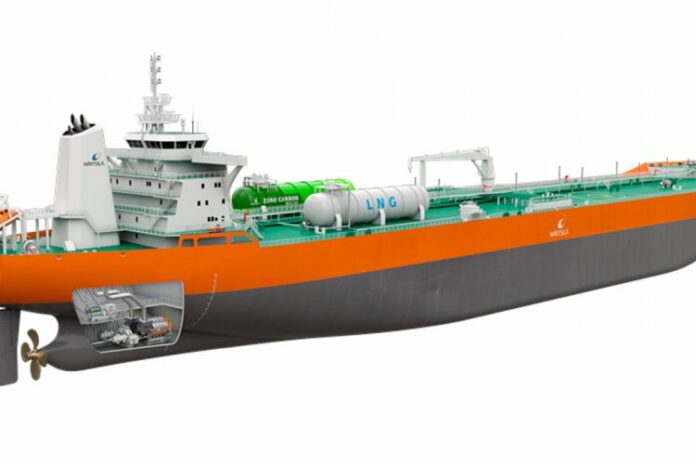
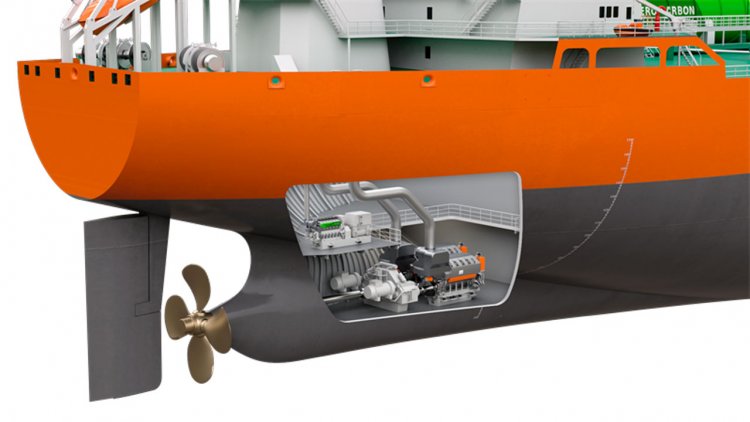
The technology group Wärtsilä and the classification society RINA have announced a novel propulsion arrangement that offers full redundancy, less machinery, lower capital expenditure, reduced operational complexity, and optimised fuel consumption to lower costs and achieve emissions compliance. 

The new concept changes traditional ship design thinking and offers a highly efficient, future-proof alternative.The conventional approach in ship design has been to use 2-stroke engines for propulsion and 4-stroke engines for electric power generation. The Wärtsilä / RINA arrangement, however, requires just two 4-stroke dual-fuel (DF) engines, with options for electric power back-up from batteries or a small DF generator when the ship is idle. The design can achieve a reduction of up to 50 percent from the Energy Efficiency Design Index (EEDI) reference level value, and immediate compliance with the IMO’s 2030 targets.

The arrangement features Wärtsilä 31DF engines operating with LNG fuel. Guinness World Records has recognised the diesel version of the Wärtsilä 31 engine type as being the world’s most efficient 4-stroke diesel engine. The engine has exceptional reliability and performance, along with the flexibility to utilise future zero-carbon fuels, thereby facilitating the pathway to decarbonisation.
Lars Anderson, Director, Product Management & Sales Support, Wärtsilä Marine Power, says:

“At Wärtsilä we are committed to leading shipping into a new era of higher efficiencies, lower operating costs, and greater environmental sustainability. This cooperation project with RINA is fully in line with these ambitions, and we see this propulsion arrangement as being an important and value-adding option for the coming generation of newbuilds.”

Antonios Trakakis, Greece Marine technical Director at RINA, says:

“We are really excited about this new concept as it represents a proven and more efficient solution than was earlier possible. The combination of fewer running components and 100 percent redundancy, with a single engine capable of handling both propulsion and electric power, even in port, promotes both safety and reliability. The highly efficient Wärtsilä 31DF engine enables ship owners to reduce fuel costs, while at the same time being proactively prepared for the fuels of the future.”

At current shipping speeds, the system performance of the new arrangement provides at least the same, or better efficiency than an equivalent 2-stroke design. At slower speeds, it has the potential to reduce fuel consumption and emission levels even further. Overall, the arrangement is as easy and less costly than traditional 2-stroke propulsion systems.  Both Wärtsilä and RINA emphasise sustainability in their strategies and values, with a common desire to optimise the technological and operational aspects of the marine industry.
Port of Long Beach forges pact with Utah Inland Port Authority

0

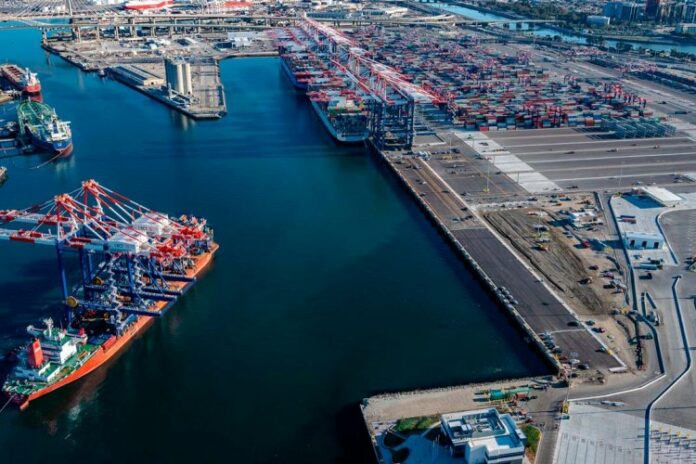
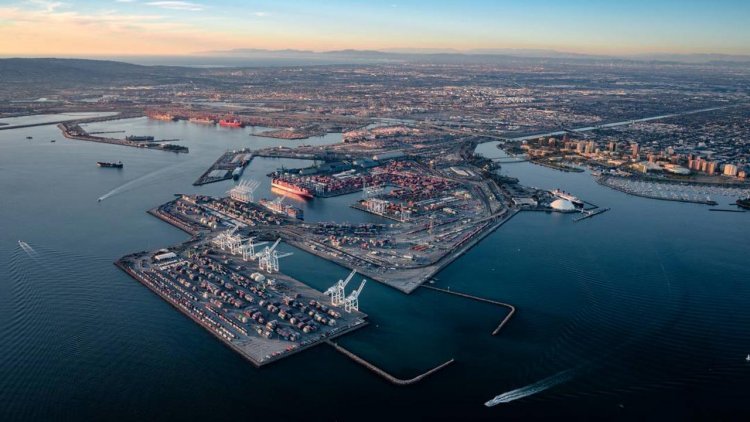
The Port of Long Beach and the Utah Inland Port Authority have agreed to collaborate in the development of cleaner, more cost-effective and innovative strategies aimed at moving goods quickly, safely and efficiently between Long Beach and Utah.

The four-year, nonbinding pact is aimed at improving import and export cargo flows between the nation’s second-busiest seaport and Utah’s logistics network.

Mario Cordero, Executive Director of the Port of Long Beach, said:

“This agreement is vital to the Port’s strategic goals to diversify exports and create new partnerships that will help alleviate the unprecedented cargo surge we’ve experienced since last summer. Our enhanced on-dock rail facilities will be crucial in delivering cargo to Utah while also strengthening the Port’s competitiveness and reducing emissions.”

Long Beach Harbor Commission President Frank Colonna said:

“We are looking forward to collaborating with the Utah Inland Port Authority. This partnership strengthens our commitment to moving cargo reliably, efficiently and sustainably across the United States.”

Jack Hedge, Executive Director of the Utah Inland Port Authority, said:

“This partnership is another critical connection as we work to streamline logistics for Utah and the Intermountain West. Working directly with the Port of Long Beach creates a synergy and stability that opens opportunities for Utah businesses to move goods more efficiently.”

Under the agreement, the Port of Long Beach and Utah will collaborate on business opportunities and share information as they undertake major projects expected to improve the speed and efficiency of cargo shipments between Southern California and Utah. The Port of Long Beach plans to invest $1 billion in rail improvements over the next 10 years to ease the flow of cargo moving through its complex. In turn, the Utah Inland Port Authority will strengthen its ability to transfer imports and exports to more efficient modes of transportation for further supply chain distribution.

Additionally, the Port of Long Beach and the Utah Inland Port Authority will collaborate and share data on efforts to improve air quality and energy efficiency by deploying alternative-fuel vehicles and other clean-air technologies.

The agreement also calls for joint marketing to shared trade industry partners, studying how to resolve existing supply chain issues, and expanding export opportunities for Utah and surrounding states.

Global Ship Lease announces agreement to acquire 12 containerships

0

Global Ship Lease, Inc. has agreed to purchase 12 containerships from Borealis Finance LLC with an average size of approximately 3,000 TEU and a weighted average age of 11 years for an aggregate purchase price of $233.9 million. 

The ships are all on charter with leading liner operators, with remaining charter durations of three to 25 months. With these additions, the Company’s fleet will comprise 62 containerships with a total capacity of 322,770 TEU, making Global Ship Lease the eighth largest non-operating owner of containerships by TEU capacity.

The 12 vessels are scheduled for delivery during the third quarter of 2021. The Company expects to fund the purchase price with cash on hand, the proceeds of new bank debt, and the issuance of $35.0 million of its existing 8.00% Senior Unsecured Notes to the sellers.

Based on the existing charters and assuming renewals at current market rates for the four charters that come open prior to mid-2022, the newly acquired ships are expected to contribute approximately $60.5 million of Adjusted EBITDA in the first 12 months. This represents an increase of approximately 36% on Adjusted EBITDA for the 12 months ended March 31, 2021 and implies a strongly accretive Purchase Price / Annual Adjusted EBITDA multiple of approximately 3.9 times. The ships are anticipated to add approximately $1.09 of earnings per share in the first 12 months, based on today’s outstanding share count, today’s LIBOR, and other assumptions, representing an increase of approximately 70% compared to Adjusted earnings per share for the 12 months ended March 31, 2021.

George Youroukos, Executive Chairman of Global Ship Lease, commented:

“We are pleased to announce the agreement to acquire these 12 ships, which are cash flow positive from the first day, without any additional issuance of common shares. The vessels have an appealing combination of existing medium-term charter cover and upside potential in the relative near term from charter renewals in one of the strongest ever containership charter markets, in which both charter rates and durations are significantly above the levels of recent years. These additions to the GSL fleet will increase our exposure to the workhorse feeder and handy size segments, which are currently commanding record-high charter rates stemming from strong demand and effectively full employment, and discussions are already underway to secure additional forward cover on terms reflecting these superior market conditions.

We have also further strengthened our financial position recently by completing the refinancing of our debt facility previously falling due mid-2022, thereby eliminating all material debt maturities before late 2024. Looking forward, we remain highly optimistic about both the prospects for mid-sized and smaller containerships and GSL’s ability to continue executing an accretive, charter-attached growth strategy that improves our earnings and forward visibility, while minimizing residual value risk and giving additional long-term support to our dividend-paying capabilities.”

Clarksons Platou Securities AS acted as sole advisor to Global Ship Lease, which was represented by Seward & Kissel LLP as legal counsel.

DolWin5 export cable work for AqualisBraemar LOC

0

AqualisBraemar LOC’s scope of work covers all marine transportation and installation operations relating to the cable laying of export cables. It will also include the suitability surveys of all construction and support vessels relating to the warranted operations.

With DolWin5 TenneT implements a high-voltage direct current (HVDC) transmission system in the German part of the North Sea. It will connect the Borkum Riffgrund 3 offshore wind farm to the extra-high voltage grid onshore. The cable route runs about 100km offshore through the North Sea, Nearshore Area and Ems Wadden Sea and a further 30km onshore.

The grid connection will have a transmission capacity of 900 MW. It is a first of its kind in that TenneT will connect the wind turbines directly via 66kV three-phase electric power cables to the offshore platform, eliminating the need for substations, and delivering considerable cost savings.

Christoph Ruck, who is AqualisBraemar LOC’s joint country manager in Germany, says:

“This innovative project will realise a new connectivity concept, which could herald significant cost savings in future offshore wind and grid connectivity projects.”

AqualisBraemar LOC’s office in Hamburg has been appointed under a framework agreement with TenneT. The framework agreement was awarded in autumn 2020, making AqualisBraemar LOC pre-vetted providers of marine warranty services to support the realization of a several offshore grid connection projects.

Emek Ersin Takmaz, joint country manager for AqualisBraemar LOC in Germany, says:

“Being appointed on such a cutting-edge project, is testament to our world-leading reputation as an MWS provider to marine renewable projects. We look forward to further building on this reputation in the German market, bringing together the combined reputation and expertise of AqualisBraemar LOC and OWC across more than 20 offshore wind farms with a total capacity of 8.68 GW in German waters.”

Cummins electrolyzers power first-of-its-kind refuelling station

0

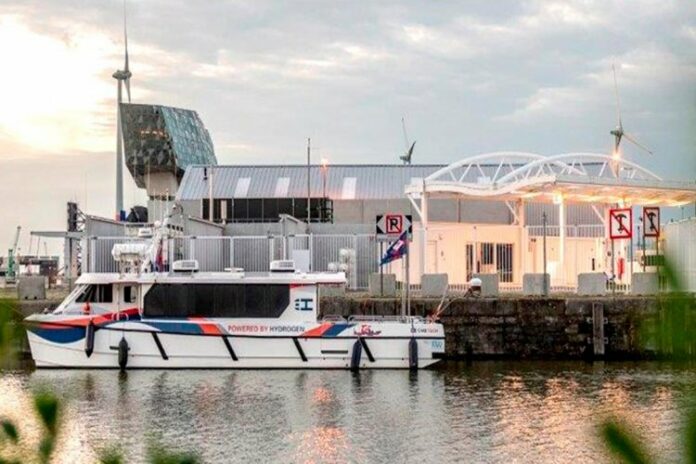
The station, built by CMB.TECH, will utilize the Cummins HyLYZER®-250, a 1.2 MW PEM electrolyzer, to produce hydrogen on site. CMB.TECH is the cleantech division of CMB. The company is an active developer and integrator of hydrogen solutions with a focus on engineering, hydrogen production, industrial and marine applications.

Located at a port house between the city and the port, the fueling station is perfectly positioned to provide industrial applications and ships in the port with hydrogen and be easily accessible to the general public. Cummins Inc. has already delivered electrolyzers for more than 60 hydrogen fueling stations across the globe, providing onsite hydrogen generation through electrolysis. A single 1 MW electrolyzer system can generate over 400 kg of hydrogen daily at fuel-cell-grade purity, enough to fuel 16 freight trucks up to 600 miles (over 950 km) each. These systems have already been scaled successfully to over 20 MW.

When electrolyzers are powered by renewable energy sources such as wind, solar or hydroelectric, the hydrogen is totally green, with zero well-to-wheel carbon emissions.

For years, Cummins has been focused on solutions that use materials and technologies that have less impact on the planet to deliver value and prosperity for our customers and communities. In 2019, the company published PLANET 2050, an ambitious plan which includes science-based targets aligned with the Paris climate accords and a target to be carbon neutral by 2050. 

Accessible hydrogen refueling stations are a vital part of the emissions reduction journey, as they make hydrogen-powered transport a realistic option. Cummins sees governments around the world supporting the adoption of hydrogen technologies in different ways and believe that all policies should encourage infrastructure support.

Infrastructure is needed to ensure Cummins’ systems can support the adoption of hydrogen and fuel cell technology economy wide. Government investment in infrastructure sends a strong signal to the industry that this transition is happening and creates more certainty for investments.

In Antwerp, refueling is fast and simple (dispensing at 700 bar for cars and 350 bar for buses and trucks). In addition to the fueling station, the site will also contain two trailer docks that can be used to transport excess green hydrogen for industrial and refueling activities elsewhere. Already well underway, the refueling station will be open to customers in 2021.
 

bremenports and THW cooperate on flood protection

0

bremenports and the Bremerhaven unit of the Federal Agency for Technical Relief (THW) are planning to cooperate more closely in future to improve flood protection. Their cooperation to date has therefore now been set down in a binding agreement which was signed today by bremenports Managing Director Robert Howe and the heads of the THW unit in Bremerhaven, Torben Tietjen and Andre Schröder, and then presented to the public.

bremenports Managing Director Robert Howe emphasised that this cooperation was a key factor for protecting the dykes in case of critical and unforeseeable incidents.

Torben Tietjen and Andre Schröder pointed out that the relief organisation had officially set up a flood protection unit in Bremerhaven in 2019/2020:

“We can make an effective contribution to flood protection thanks to our specially trained experts, suitable technical vehicles and equipment and a portable container for use as communications headquarters.”

Although bremenports and the THW had already been in contact with one another prior to this cooperation, the new agreement ensures that bremenports will be able to make use of the specialist staff of THW during unforeseeable situations.

Placing the cooperation on an official footing will also lead to other advantages, such as:

• direct contact and knowledge sharing between the responsible parties
• availability of more personnel in case of unforeseeable situations. Especially if sandbag systems are to be used, it is essential to have access to a large number of trained persons
• ensuring that expertise is kept up-to-date by conducting regular exercises and training sessions with the relevant dyke facilities
• additional vehicles & special tools

In addition to the regular dyke maintenance and refurbishment measures, bremenports has also been entrusted by the Federal Land of Bremen with other tasks such as the storm surge warning service in Bremerhaven.

As a rule, this consists of closing all locking structures during storm surges. This refers to a total of around 50 objects (flood barriers, dyke openings, barrages, floodgates) which have to be closed as from a certain water level. To facilitate central coordination of all the different measures, bremenports operates a dyke protection command and control centre as the central point of communication with a large number of technical aids. bremenports also maintains a flood equipment centre where sandbags and other protective materials are stored in readiness for unforeseeable situations (e.g. malfunctions of a dyke opening, accidents etc.)

It is assumed that climate change will lead to more frequent and higher storm surges in future. In preparation for these situations, bremenports is making every effort to ensure that flood protection in Bremerhaven will be fit to meet future requirements.

bremenports Managing Director Robert Howe stated:

“In addition to the dyke protection command and control centre and the flood equipment centre, our cooperation with the THW is a key element in improving flood protection in and around Bremerhaven.”

Turkish ‘sea snot’ crisis prompts cholera fears and threatens aquaculture

0

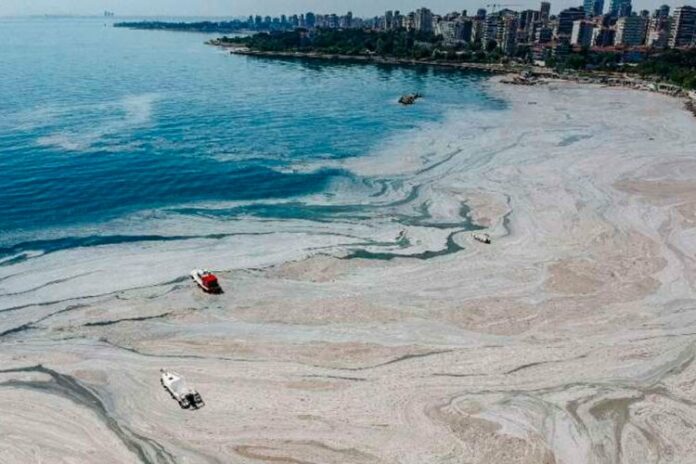
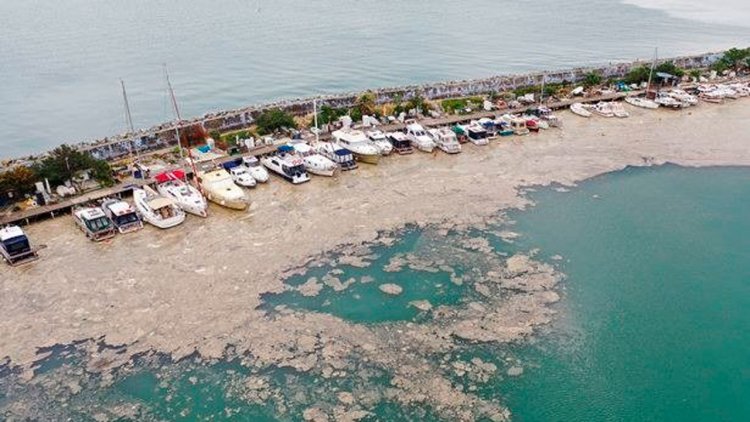
The problem is particularly acute in the Gulf of Izmit, southeast of the city, with fishermen unable to work because they cannot operate motors or nets in the sludge.

The brown, viscous substance is a mixture of fat, carbohydrates and protein emitted by tiny phytoplankton, which multiply rapidly when chemical pollutants and sewage are pumped into the water. It kills sea life by blocking out vital sunlight and, as it sinks, coats the sea floor and accelerates the decomposition of creatures.

The phytoplankton responsible grow out of control when nutrients such as nitrogen and phosphorus are widely available in seawater. Rising sea temperatures add to the problem. Divers have reported large numbers of fish dying, and say that marine life has been forced to seek refuge in small holes or other forms of aquatic shelter.

Experts have also warned that the substance provides fertile ground for dangerous bacteria, including cholera. Istanbul has suffered from frequent cholera epidemics in its history. The most recent, in 1970, left 50 people dead and thousands more infected.

Turkish Environment Minister Murat Kurum said that a 300-strong team had been sent to tackle the “sea snot” problem. However, the rapidly multiplying plankton quickly recovered from attempts to sweep it away.

Photo: Reuters

Potentially lethal marine algae blooms have not increased in number over the last three decades, but pose a serious threat to aquaculture, according to a UN global assessment released Tuesday.

Climate change is not thought to play a role, according to the unprecedented analysis of nearly 10,000 algae blooms from 1985 to 2018. A sharp increase in the poisoning of farmed fish and shellfish worldwide had led to speculation that toxic algae blooms were on the rise.

But such incidents stemmed more from an increase in fish farming itself, which grew 16-fold over the 33-year period. About five percent of the world’s 5,000 species of algae can cause blooms that have negative effects on humans.

These range from poisonings due to eating toxic shellfish to outbreaks of off-putting marine mucilage like the one clogging waters off Istanbul. Also relatively rare but exceedingly costly are deadly incidents in which algal blooms invade fish farms.

According to the National Oceanic and Atmospheric Association, the underlying causes of algae blooms are poorly understood.

Sources: Arab News, RFI

DFDS upgraded and rebuilt Dover Seaways’ propulsion and control system

0

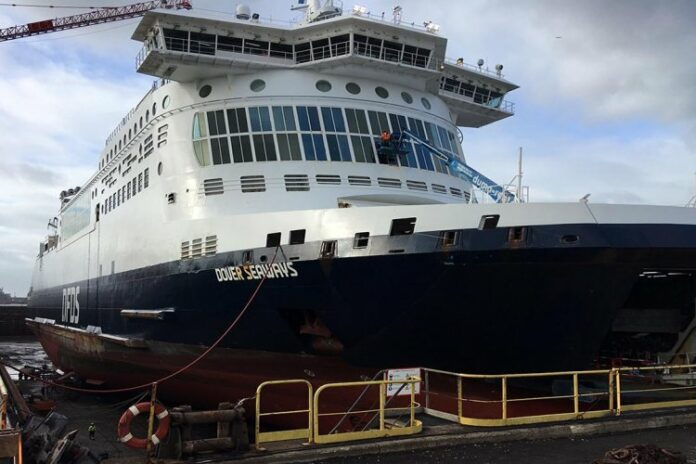
DFDS recently upgraded and rebuilt Dover Seaways’ propulsion and control system. The goal is fuel savings.

Performance Manager in DFDS’ Technical Organization Lina Barsøe Christensen says:

”Our short-term climate action plan consists of projects that fall into three categories. So far, we have planned projects that are anti-fouling initiatives – using coating and surface treatment on a ship to control or prevent the attachment of unwanted organisms. Some projects deal with technical hardware upgrades. And finally, we have the Fuel Performance Programme projects, including hardware updates and software for decision support on board and insights ashore. More projects will be added as we learn more about how effective each project is.” 

Over 18 days in February and March, the system was installed and tested together with the classification society Lloyd’s Register during the vessel’s annual dry docking in Dunkerque, France.

Superintendent Jan Blak says:

“By applying the latest technology within route planning and propulsion control to the existing machinery installations and bridge control equipment, and utilising the full design potential of the machinery, we hope to see fuel and CO2 savings of up to 6 %. Specifically, we are installing an Artificial Intelligence-supported system that will optimise the relation between propeller pitch and engine RPM, taking these two components to the point where the propeller efficiency is at its maximum in relation to the Expected Time of Arrival for which you have programmed your system.” 

Jan’s part of the Technical Organisation’s short-term climate action plan team.  He says:

“To achieve the optimal settings, the system continuously looks at parameters like the ship’s position, speed and course over ground, the water depth below the keel, the engine load and the engine maker’s recommendations, fuel consumption, as well as the wind direction and speed. Based on all of this data, the system will automatically maintain the speed, propeller pitch and RPM, which will take you to your destination port on time at the lowest possible overall fuel consumption.”

“A range of equipment has been replaced or extensively modified, like the RPM control devices, the optic fibre communication systems between bridge and engine room and the high-accuracy fuel oil flow meters. A server system that constantly monitors and controls the process based on the electronic maps (ECDIS system) has been installed. This server system is constantly connected to the Internet via the ship’s VSAT system to receive updated weather forecasts. This connection is also used for live data retrieval so that shore-based DFDS personnel can monitor the system performance in real-time or compile data for in-depth analysis of the overall vessel performance.”

MSC Cruises to resume cruising from U.S. ports this summer

0

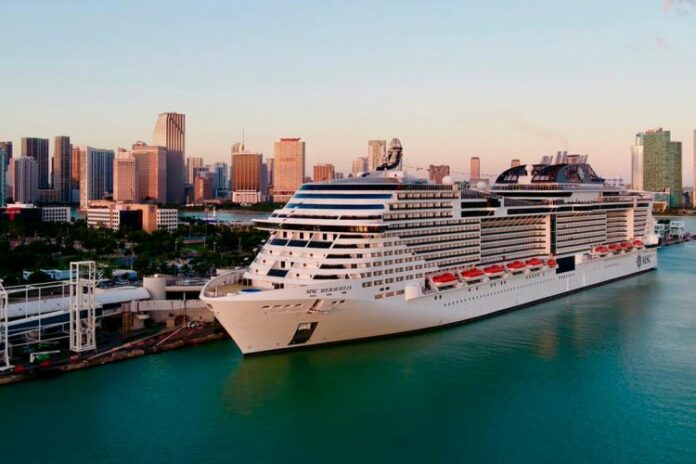
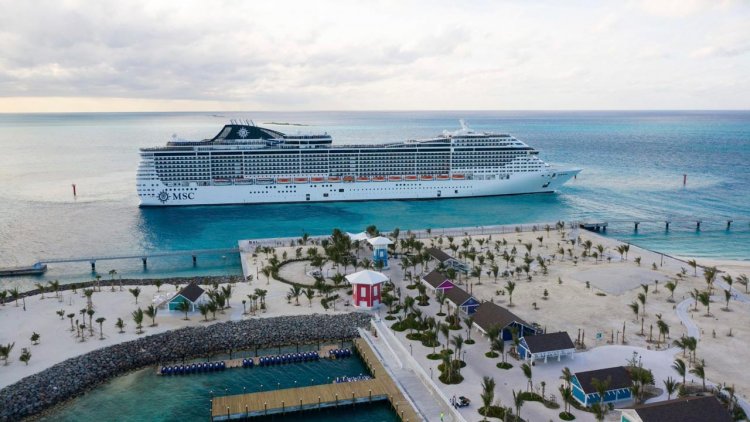
The announcement follows CDC approval of the Company’s Phase 2A Port Agreements for PortMiami and Port Canaveral as well as the provisional approval of its request to conduct a simulation cruise, to be held on MSC Meraviglia from PortMiami on July 17, 2021.

MSC Meraviglia will kick off MSC Cruises’ restart starting August 2, 2021, with 3- and 4-night cruises from Miami to The Bahamas and featuring MSC Cruises’ exclusive new private island destination, Ocean Cay MSC Marine Reserve. Then, starting September 18, 2021, MSC Meraviglia will add 7-night cruises from Miami to The Bahamas and Caribbean, including Ocean Cay MSC Marine Reserve. MSC Divina will resume cruising from Orlando (Port Canaveral) on September 16, 2021, offering 3-, 4- and 7-night cruise options from to The Bahamas and Caribbean, also including stops at Ocean Cay MSC Marine Reserve.

Gianni Onorato, CEO of MSC Cruises, said:

“With our vast experience cruising in Europe since August 2020 along with our industry-leading health and safety protocol, our U.S. guests can book with confidence knowing we are well prepared for a successful restart in that market. To ensure the safest experience for our guests, we previously announced a fleet-wide vaccination program for all crew, and we expect that the majority of our guests booking a cruise this summer will plan to be vaccinated prior to sail. The rapid distribution of vaccines in the U.S. has been a positive step toward helping vacationers get back to traveling, and we encourage our guests to take advantage of this added layer of protection when resuming travel this summer.”

MSC Cruises will reveal additional itinerary details for cruises on board MSC Meraviglia and MSC Divina in the coming week, as well as health and safety measures and guidelines for guests. Cruises will welcome both vaccinated and non-vaccinated guests. Those who are not vaccinated or unable to verify vaccination will be subject to requirements such as additional testing, as well as restrictions, which will be announced at a later date. 

MSC Cruises is also confirming today the cancellation of existing U.S.-based sailings. The decision will affect the schedules of three ships based in Florida: MSC Divina scheduled to sail from Port Canaveral, and MSC Meraviglia and MSC Armonia scheduled to sail from PortMiami, as follows:

Cruises onboard MSC Divina from July 1, 2021 through to and including September 15, 2021
Cruises onboard MSC Meraviglia from July 1, 2021 through to and including September 17, 2021
Cruises onboard MSC Armonia from July 1, 2021 through to and including October 24, 2021

MSC Cruises’ new itineraries from the U.S. on board MSC Meraviglia and MSC Divina will officially open for U.S. bookings on Wednesday, June 16, 2021.

The fishing safety net widens thanks to a new global standard

0

With the support of industry partners, including global supply chain assurance specialist, Lloyd’s Register (LR), RFVS will enable fishing operations to provide assurance of safe working conditions and operational best practice.

The world’s first independent certification scheme looking at the social welfare of fishing vessel workers, RFVS has been launched to address human rights and the welfare of fishing crew including working best practice conditions.

Suitable for fishing fleets and vessels of all sizes around the world, suppliers and retailers involved in the seafood industry are being encouraged to look for the RFVS certification from fleets or primary processors.

LR was the lead provider during the piloting stage. Here, LR drew upon its extensive experience in the seafood industry, where it was the only certification body for the former UK-based Responsible Fishing Scheme.

Martin Gill, Head of Fisheries and Aquaculture at LR, said:

“Commercial fishing is still one of the most dangerous occupations in the world, therefore the launch of RFVS is a welcome and much-needed development. The scheme will play a crucial role to ensure boats, wherever they operate in the world, are safe working environments and meet the legal requirements.

“Fishing vessels which have been issued the RFVS certificate are demonstrating, through independent audits by trained auditors, that their crews are appropriately trained, meet minimum age requirements for work and are fit to carry out their role. And, crucially, that everyone working on the fishing vessel is being paid a fair wage.”