-0.5 C
New York
Home Blog Page 605

HAV Design signs a contract for two new battery-powered ferries

0

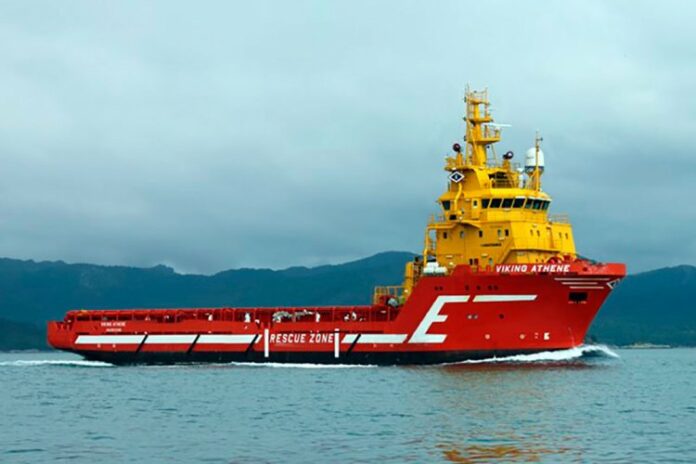
HAV Design is a leading company in the design of low and zero-emission vessels, and these are the thirteenth and fourteenth ferry designs with zero-emission technology. The two HAV 934 ferries will operate on the Stranda-Liabygda and Eidsdal-Linge routes. They will have a capacity of 80 cars and 249 passengers and will be built at the Turkish shipyard Tersan for Fjord1.

Lars Conradi Andersen, Vice President Sales at HAV Design, says that the many battery-powered ferries from HAV Design have contributed to a green transition in Norwegian ferry traffic and made many fjord ferry services more environmentally friendly.

He says:

‘It is particularly pleasing that our designs will now contribute to the ferry revolution in a World Heritage area whose nature requires extra protection. We know that these routes are popular with tourists during the summer season, and now visitors to the World Heritage area can cross the fjord and enjoy the scenery, undisturbed by noise and exhaust fumes.’

Over the course of three years, HAV Design has delivered ship designs for zero-emission vessels that lead to annual savings of around 60,000 tons of CO2 compared to traditional diesel-powered ferries.

In the work on the design, HAV Design runs route simulation and hull optimization at HAV Ocean Lab. Large quantities of data on both the ferry design and the individual route are used to create a virtual model of the area and a digital twin of the ferries. 

HAV Design looks at the total design in a sustainability perspective to reduce all input factors. The battery is an important factor and low energy consumption is also a major focus, which is more important than ever although the ferries use renewable energy.

Floating litter collector to be tailor made for lower Thames

0

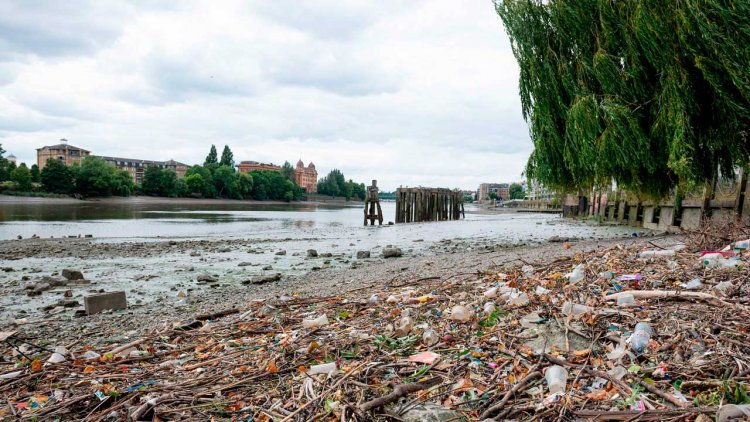
On World Oceans Day, a £150,000 plan for a bespoke, floating litter collector for the lower Thames in Essex has been announced by DP World London Gateway and the Port of London Authority (PLA).

Annually the PLA’s existing network of eight “passive driftwood collectors” (PDCs) on the river in central London stops up to 400 tonnes of waterborne litter from floating out to the North Sea, but too much debris still collects downstream of Greenwich.

Two years’ of monitoring and analysis will guide the design of a new, bespoke PDC to suit conditions lower down the estuary, close to DP World’s new London Gateway smart hub. 

The specific local challenges the new PDC will need to tackle include bigger waves and the need not to disturb wildlife-rich mudflats. The project aims to prevent discarded rubbish – ranging from plastic bottles to traffic cones – from endangering wildlife. If digested by fish, there is a risk of pollutants entering the human food chain.

The creation of the new PDC, tailored to the requirements of the lower river, is one of the first outputs of a strategy created by the Thames Litter Forum, established by the PLA, which brings together a range of partners from along the tidal river’s 95-mile course, from Teddington to the coast, to reduce the tide of litter washed into the river. 

Tanya Ferry, head of environment at the PLA, said: 

“This trial will help establish how our current PDCs could be adapted to be effective in the lower Thames. Innovative solutions are needed to tackle the different conditions in this part of the river. First and foremost, we urge everyone do all they can to stop litter entering the river in the first place. The Thames and its tributaries, are precious havens for wildlife and must be protected from needless litter pollution.”

The creation of a new PDC, tailored to the requirements of the lower river, is part of Thames Vison strategy, established by the PLA, aiming to restore the health of the river to levels not seen since before the Industrial Revolution.

Emma Cowper, sustainability manager, DP World London Gateway, said:

“At DP World, we seek to strike the necessary balance between unlocking the potential of the blue economy, while also protecting its marine environment. Our efforts will be focused on: investing in restoration; coastal clean-ups; and educational programmes. The passive debris collector supports both the second and third focus areas. Every single piece of plastic rescued from the river is a small step in protecting the health of the marine environment around the world. That’s why we are so pleased to be co-funding this important new initiative, tackling the problem on our own doorstep at London Gateway. DP World is committed globally to making ocean enhancement a part of its legacy and to combat climate change.”

Crowley Maritime Corporation becomes first U.S. Ship Operator to join the SRTI

0

Headquartered in Florida and operating more than 160 commercial and public-sector vessels globally, including container ships, tank vessels, tugboats and barges, Crowley becomes the first U.S.-owned and operated shipping company to make its approach to ship recycling public through the SRTI. Crowley services include end-to-end marine management, including design and engineering.

Crowley’s Nico De Golia, Director of Global Sustainability and Corporate Citizenship, said:

“Crowley’s ambition is to be the most sustainable and innovative maritime and logistics solutions provider in the Americas by 2025. Making that vision a reality requires us as ship operators to embrace the sustainability of the total life cycle of a vessel. We are proud to join the SRTI in promoting transparency in ship recycling policies, practice and processes to promote more responsible life-cycle management of vessels.”

Andrew Stephens, Executive Director of the SRTI, said:

“Ship recycling is a material issue for all shipowners – whether they own a vessel at the beginning or end of life, and regardless of geography, size, or type of vessel. Ensuring responsible, transparent recycling is a shared responsibility for the industry, and we are glad to welcome Crowley Maritime Corporation, which brings a unique perspective as a shipowner with a largely U.S.-Jones Act compliant fleet. We look forward to working with Crowley and other signatories to enable ship recycling transparency everywhere.”

Crowley joins industry peers in disclosing data against five topics: ship recycling policies and standards; selling owned vessels for further trading; ship recycling contracts; ship recycling documentation; and policy and standard implementation.

MEST wins tender to repurpose M/S Bakkanes to FSV

0

As part of its value chain investment programme to develop farming operations in Scotland, Bakkafrost has purchased the supply vessel M/S Bakkanes, which will now be repurposed to a farming service vessel (FSV).

The Faroese shipyard MEST won the tender to repurpose the ship, and the project commences as soon as M/S Bakkanes arrives in the Faroe Islands.

Sverri Kjærbæk, Operations Manager at Bakkafrost said:

“We are very excited to begin this project, and we look forward to working with MEST. The project was tendered to 10 shipyards in Norway, Denmark, the Netherlands, Poland, Scotland, and the Faroe Islands. We have previously had great collaborations with MEST, who also repurposed our FSV M/S Róland, and currently, MEST is responsible for installing a new delousing system onboard our FSV M/S Martin. M/S Bakkanes will be equipped with the same delousing system as M/S Martin. Thus, we are confident that MEST will carry out the project satisfactorily”.

The project to repurpose M/S Bakkanes is comprehensive and includes sandblasting, painting, installation of four cranes and a hawser system as well as installation of the new FLS delousing system.

A crew from Bakkafrost will sail the ship from Norway to the Faroe Islands, and then the project of repurposing M/S Bakkanes begins. The ship is expected to be completed by mid-August.

Cummins powering a new ‘flying’ hydrogen vessel

0

A team of 20 ambitious students of various disciplinary backgrounds came together to form the TU Delft Solar Team 2021 and enter uncharted waters with Hydro Motion, a boat that not only sails, but flies on hydrogen. After 15 years of building boats successfully powered by sunlight, the 2021 team decided it was time to swap solar panels for a fuel cell to take the next step towards a more sustainable maritime industry.

The Netherlands-based team has spent the last nine months taking its new flying boat from concept to reality. With a focus on building a well-functioning hydrogen boat, they decided to refit the 2019 flying solar boat and use its three award-winning hulls and seaworthy trimaran. The solar panels were removed, and a hydrogen system was installed.

The boat is powered by the Cummins HyPM-HD30 fuel cell and will convert 99.9% pure hydrogen into electricity to power the boat’s driveline, electronics and other devices. The hydrogen is stored in a gaseous state in the hydrogen system tank, which has a 350-liter capacity and can store more than 8 kg of hydrogen gas, exceeding 265 kWH energy.

The fuel cell generates electricity through a chemical reaction of hydrogen and oxygen. To power the boat, the hydrogen gas from the storage tank will pass through the fuel cell stack and mix with atmospheric oxygen. In each cell of the fuel cell stack, the hydrogen splits off two electrons which cannot pass the proton exchange membrane that separates the hydrogen from the atmospheric oxygen. The hydrogen protons pass through the membrane to join with oxygen to form water vapor, and the two electrons travel around the membrane through a wire as electricity. That electricity will be used to power the boat’s motor. 

Hydrogen is an advantageous alternative power source for the boat because it produces no carbon dioxide, has an energy density greater than lithium ion batteries and is lighter weight than batteries. However, the boat’s large size makes it more challenging to maneuver on Mediterranean waters and while it can sail smoothly on hydrogen, it will need an extra boost to reach the right take-off speed to fly.

That extra boost is a small battery pack optimized for power density. Combined, the battery pack and the HyPM-HD30 power a 70-hp, three phase electric brushless motor, similar to a Toyota Yaris car. The combination of power sources ensures there is enough power to take off. Once the hulls of the boat are out of the water and the boat is only flying on its hydrofoils, the 30-kW fuel cell is again sufficient to power the boat. The take-off takes place at 13.6 mph. At this point, the hulls are lifted out of the water and fly 40 cm above the surface with a speed of more than 20 mph.

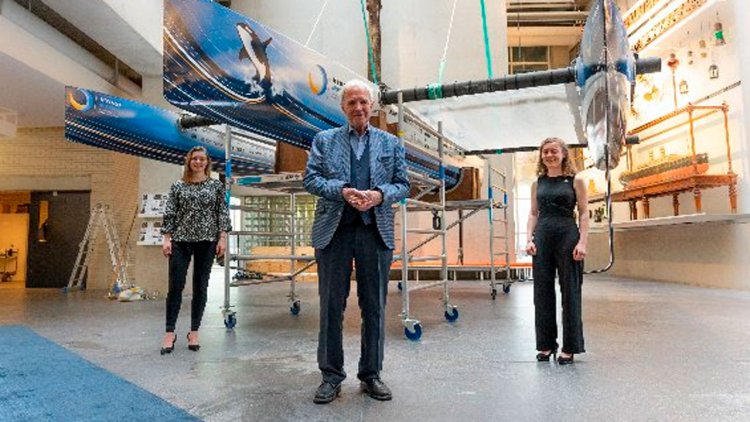
The team revealed its boat to the public via livestream on May 10 at the Maritime Museum Rotterdam. Two weeks later, the team put the boat in open water at the Port of Rotterdam for the first time to conduct its first wet-test. Test 1 results showed the boat is watertight, sails stably on batteries and has a sailing speed of 20 km/h with 2000 rpm on the propeller. The students will continue testing and improving the boat over the next few weeks to increase speed, sail using the hydrogen system, and check for safety, efficiency and endurance. 

Once testing is complete, three team members will captain the boat in the Monaco Solar & Energy Boat Challenge. This international challenge invites students and professionals from across the world to compete in three classes: Energy, Solar and Open Sea Class. The TU Delft Solar Team will sail the open ocean and compete in the Open Sea Class.

Powered by hydrogen, using a Cummins fuel cell and the minds of 20 dedicated students, the first flying hydrogen boat is propelling the world another league further towards a zero-carbon future and a more sustainable maritime industry. As the TU Delft Solar Boat Team continues to work on Hydro Motion to get it competition ready, we look forward to the day they fly over the finish line on green energy.

Ocean Winds starts energy generation at Moray East

0

Future development of offshore wind in Scottish waters, will be enabled by Moray West, under development, and  the upcoming  ScotWind leasing process.

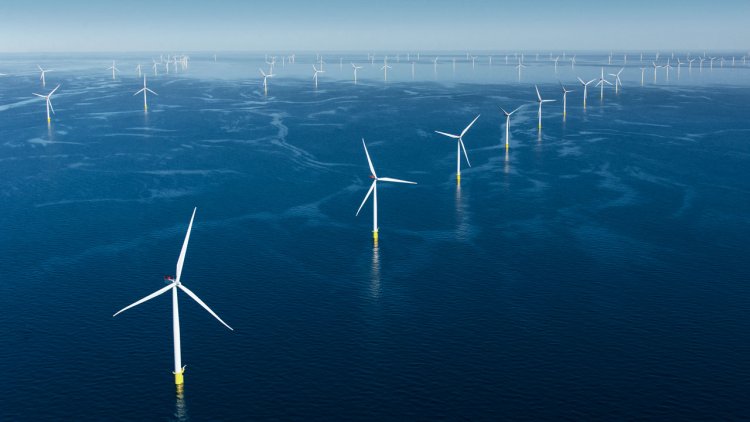
Ocean Winds (OW), the result of the 50-50 joint venture by EDP Renewables (EDPR) and ENGIE for offshore wind energy, has celebrated commencing generation at Moray East (Scotland’s largest windfarm) and successful exporting of power to the grid by announcing its further intentions in the Moray Firth, Scotland’s largest firth.

Ocean Winds (OW) has been developing offshore wind in the Moray Firth since EDPR won the rights to develop offshore wind in this area in the UK’s third round of offshore wind leasing in 2009. It is noteworthy that the sea-bed made available by the Crown Estate at the time was divided in two – Moray East and Moray West – to allow development of Moray East which had fewer constraints to take place first.

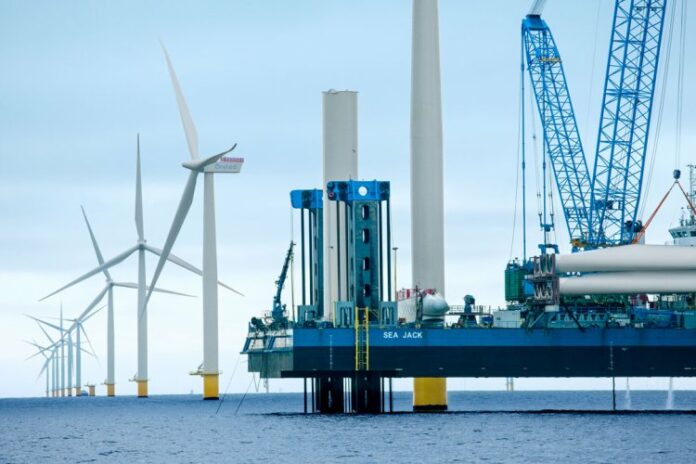
Moreover, Ocean Winds is continuing its investment in Scotland through development activities in the Moray Firth. In fact, Moray East is currently under construction in this area. On completion later this year, it will have a generation capacity of 950 MW and the project planning enabled generation to commence on June 7th, before all turbines have been installed. For its part, Moray West has also been developed by Ocean Winds, having secured planning consent in 2019, and awaits award of a ‘Contract for Difference’, the Government contract which will enable construction of Moray West to commence. 

Future development of offshore wind in Scottish waters, including the Moray Firth, will be enabled by the ScotWind, the leasing round for offshore wind farms in Scottish waters, which closes on 16th July  2021, and will make new areas of Scottish seabed available for offshore wind development for the first time in a decade.

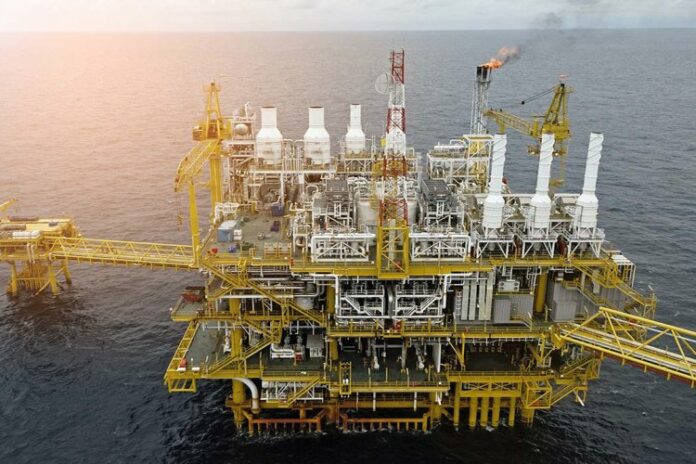
ExxonMobil announces new discovery at Longtail-3 offshore Guyana

0

Drilling at Longtail-3 encountered 230 feet (70 meters) of net pay, including newly identified, high quality hydrocarbon bearing reservoirs below the original Longtail-1 discovery intervals. The well is located approximately two miles (3.5 kilometers) south of the Longtail-1 well. It was drilled in more than 6,100 feet (1860 meters) of water by the Stena DrillMAX.

Mike Cousins, senior vice president of exploration and new ventures at ExxonMobil, said:

“Longtail-3, combined with our recent discovery at Uaru-2, has the potential to increase our resource estimate within the Stabroek block, demonstrating further growth of this world-class resource and our high-potential development opportunities offshore Guyana. We will continue to leverage our core competitive advantages in our ongoing exploration campaign, delivering substantial value to the Guyanese people, our partners and shareholders.”

The Longtail-1 discovery in the Stabroek Block was drilled in 2018, encountering approximately 256 feet (78 meters) of high-quality, oil-bearing sandstone reservoir.

ExxonMobil has deployed two additional drillships in the first quarter of 2021; the Stena DrillMAX and the Noble Sam Croft to enable further exploration and evaluation, while continuing development drilling activities offshore Guyana. As the company advances its 15-well campaign in the Stabroek block, DrillMAX will move to Whiptail-1, while the Noble Sam Croft supports development drilling for Liza Phase 2.

In other drilling activity in the Stabroek Block, the Mako-2 evaluation well confirmed the quality, thickness and areal extent of the reservoir. When integrated with the previously announced discovery at Uaru-2, the data supports a potential fifth floating production storage and offloading vessel in the area east of the Liza complex. The Koebi-1 exploration well in the Stabroek block has shown evidence of non-commercial hydrocarbons.

By the first quarter of this year more than 2,600 Guyanese and 600 local suppliers were supporting ExxonMobil’s activities in country. Guyanese staff have completed more than 40,000 hours of training in Guyana, Trinidad and Tobago, and the United States.

The Stabroek Block is 6.6 million acres (26,800 square kilometers). ExxonMobil affiliate Esso Exploration and Production Guyana Limited is operator and holds 45 percent interest in the Stabroek Block. Hess Guyana Exploration Ltd. holds 30 percent interest and CNOOC Petroleum Guyana Limited, a wholly-owned subsidiary of CNOOC Limited, holds 25 percent interest.

Ørsted joins Norwegian offshore wind consortium

0

The Norwegian part of the North Sea holds great potential for the development of large-scale offshore wind farms that can supply green energy to Norwegian industries and households, and potentially also to other countries in the North Sea through the offshore grid needed to enable the massive build-out of offshore wind across Europe towards 2050. Offshore wind and offshore grid combined will create a profitable solution for Norway, utilising Norwegian flexible hydropower and delivering renewable power at low cost.

The three parties see the cooperation as the perfect fit for realising large-scale offshore wind projects in combination with an offshore grid. The consortium has the aim to deliver both bottom-fixed and floating offshore wind power, while developing the Norwegian supply chain for the expected large-scale build-out of offshore wind in Norway and in Europe.

Ørsted, Hafslund Eco and Fred. Olsen Renewables will be equal partners in the consortium which will be applying for licenses in both areas appointed by the Norwegian government, Utsira Nord and Sørlige Nordsjø II. The upcoming allocation round is expected to consist of up to 4.5GW across the two areas, with the technical potential being much higher.

The Norwegian government has been a front runner in supporting the early-stage development of floating offshore wind, and the partnership will work closely with the strong local supply chain to expand Norway’s strategic position within floating offshore wind, specifically on the Utsira Nord site.

Martin Neubert, Chief Commercial Officer and Deputy Group CEO at Ørsted, says:

“This partnership is an important step for Ørsted, as we expand our footprint in the Nordics. At the same time, we have made the strategic choice to drive the commercialisation of floating offshore wind to unlock the massive potential of the technology around the world where Norway can become a key market in Europe.”

Rasmus Errboe, Head of Region Continental Europe at Ørsted, says:

“We’re very happy to enter the Norwegian market for offshore wind with Fred. Olsen Renewables and Hafslund Eco, whose vast experience in renewable energy, power markets, the offshore wind supply chain and infrastructure makes them perfect partners for us. The consortium has a very strong position to compete for both bottom-fixed and floating offshore wind in the areas expected to be tendered by the Norwegian government.”

Anette Olsen, Managing Director of Bonheur and proprietor of Fred. Olsen & Co. says:

“Adding to the extensive experience within renewable energy, energy grids and offshore wind, possessed by Hafslund Eco and Fred. Olsen related companies, Ørsted brings along the largest track record and competence in the world in developing local supply chains in this industry. This has resulted in significant creation of new local green jobs within offshore wind.  Fred. Olsen related companies have for years worked successfully with Ørsted around the globe to develop strong supply chains for transport, installation, upgrades and maintenance of offshore wind turbines. Through this our companies have experienced Ørsted’s competence and desire to develop local jobs in real life situations. With the addition of Ørsted, the consortium has further strengthened its ability to successfully assist Norway to secure a sustainable and efficient way forward within offshore wind.” 

Finn Bjørn Ruyter, CEO of Hafslund Eco says:

“Offshore grid combined with offshore wind will create a profitable solution for Norway, delivering renewable power at low cost for electrification and green industrial growth. Ørsted has for many years been the leader in bringing down the cost of offshore wind, which is a significant advantage on the journey to realise offshore wind in Norway and contributing to future export of Norwegian solutions.”

Northrop Grumman to develop control systems for US Coast Guard OPC

0

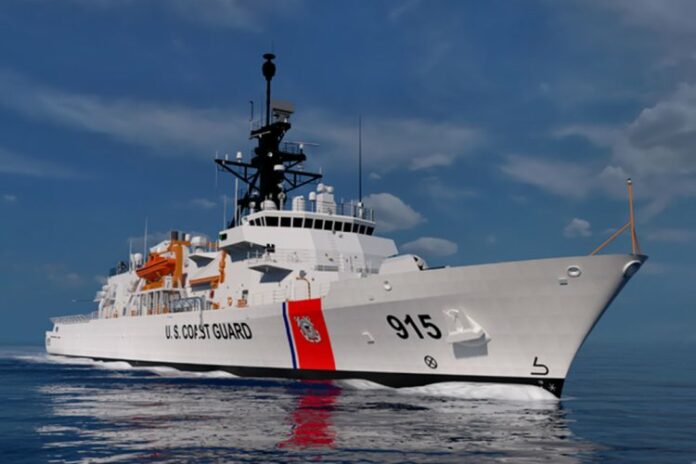
Northrop Grumman Corporation has been awarded a newly expanded role as systems integrator for C5ISR and control systems on the U.S. Coast Guard Offshore Patrol Cutter (OPC), by Eastern Shipbuilding Group (ESG), the prime contractor for the OPC program.

In a newly expanded role as C5ISR systems integrator, Northrop Grumman is responsible for integrating all cyber hardened C5ISR systems, including command and control, communications, navigation and the shipboard computer networking systems.

Todd Leavitt, vice president, maritime systems and integration, Northrop Grumman, said:

“With C5ISR and control system test and integration underway, the ESG-Northrop Grumman team hasn’t missed a beat. The effort and resiliency shown by our teammates at Eastern Shipbuilding Group has been outstanding.”

Northrop Grumman’s responsibilities for the OPC platform include the integrated bridge, navigation, command and control, computing network, data distribution, machinery control, and propulsion control systems, cyber/information assurance, testing and integration work.

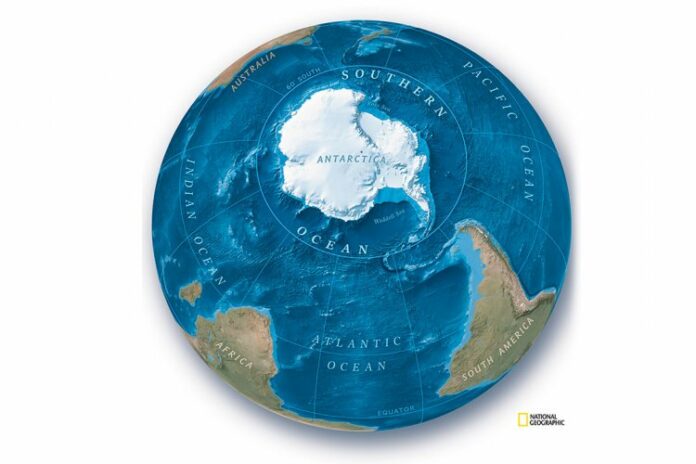
National Geographic recognizes Southern Ocean as Earth’s 5th ocean

0

Those familiar with the Southern Ocean, the body of water encircling Antarctica, know it’s unlike any other.

Seth Sykora-Bodie, a marine scientist at the National Oceanic and Atmospheric Administration (NOAA) and a National Geographic Explorer, says:

“Anyone who has been there will struggle to explain what’s so mesmerizing about it, but they’ll all agree that the glaciers are bluer, the air colder, the mountains more intimidating, and the landscapes more captivating than anywhere else you can go.”

Since National Geographic began making maps in 1915, it has recognized four oceans: the Atlantic, Pacific, Indian, and Arctic Oceans. Starting on June 8, World Oceans Day, it will recognize the Southern Ocean as the world’s fifth ocean. 

National Geographic Society Geographer Alex Tait says:

“The Southern Ocean has long been recognized by scientists, but because there was never agreement internationally, we never officially recognized it.”

Geographers debated whether the waters around Antarctica had enough unique characteristics to deserve their own name, or whether they were simply cold, southern extensions of the Pacific, Atlantic, and Indian Oceans.

The change, Tait adds, aligns with the Society’s initiative to conserve the world’s oceans, focusing public awareness onto a region in particular need of a conservation spotlight.

Tait says:

“We’ve always labeled it, but we labeled it slightly differently [than other oceans]. This change was taking the last step and saying we want to recognize it because of its ecological separation.”

While the other oceans are defined by the continents that fence them in, the Southern Ocean is defined by a current. 
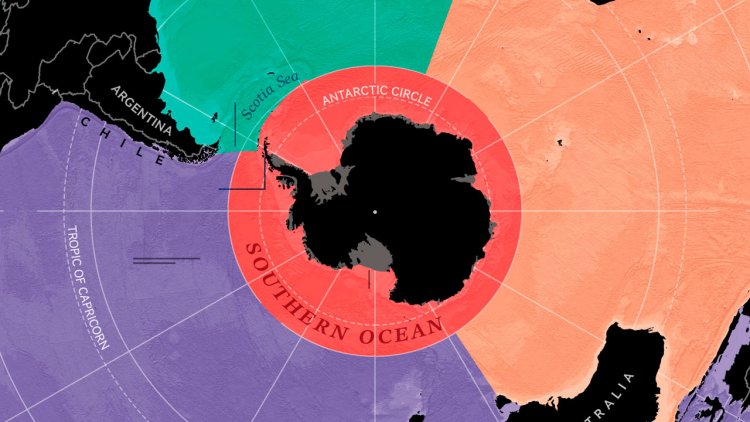
Scientists estimate that the Antarctic Circumpolar Current (ACC)  was established roughly 34 million years ago, when Antarctica separated from South America. That allowed for the unimpeded flow of water around the bottom of the Earth. 

The ACC flows from west to east around Antarctica, in a broad fluctuating band roughly centered around a latitude of 60 degrees south—the line that is now defined as the northern boundary of the Southern Ocean. Inside the ACC, the waters are colder and slightly less salty than ocean waters to the north. 

Extending from the surface to the ocean floor, the ACC transports more water than any other ocean current. It pulls in waters from the Atlantic, Pacific, and Indian Oceans, helping drive a global circulation system known as the conveyor belt, which transports heat around the planet. Cold, dense water that sinks to the ocean floor off Antarctica also helps store carbon in the deep ocean. In both those ways, the Southern Ocean has a crucial impact on Earth’s climate.

Scientists are currently studying how human-driven climate change is altering the Southern Ocean. Ocean water moving through the ACC is warming, scientists have learned, but it’s unclear how much this is impacting Antarctica. Some of the most rapid melting of the continents ice sheets and shelves have been where the ACC is closest to land. 

For now, by fencing in the frigid southern waters, the ACC helps keep Antarctica cold and the Southern Ocean ecologically distinct. Thousands of species live there and nowhere else.

The Southern Ocean has ecological effects elsewhere as well. Humpback whales, for example, feed on krill off Antarctica and migrate far north to winter in very different ecosystems off South and Central America. Some seabirds migrate in and out too.

By drawing attention to the Southern Ocean, the National Geographic Society hopes to promote its conservation.