-0.5 C
New York
Home Blog Page 604

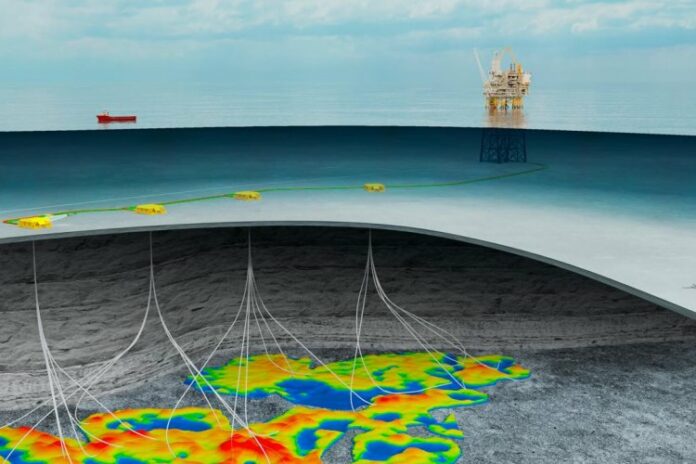
Oil discovery near Visund in the northern North Sea

0

Recoverable resources are estimated at between 1.3 and 3.6 million standard cubic metres of oil equivalent, corresponding to 8-23 million barrels of oil equivalent.

Rune Nedregaard, senior vice president, Exploration and Production South, says:

“This is the first Equinor-operated well in the production licence, and the fifth discovery on the Norwegian continental shelf this year. The discovery is in line with our roadmap of exploring near existing infrastructure in order to increase the commerciality.”

Exploration wells 34/6-5 S and 34/6-5 ST2 on the Garantiana West prospect were drilled some 10 kilometres north-east of the Visund field, and 120 kilometres west of Florø.

The primary exploration target for exploration well 34/6-5 S was to prove hydrocarbons in the Cook formation from the early Jurassic period. The secondary exploration target was to examine the hydrocarbon potential in the Nansen formation from the early Jurassic/late Triassic period.

Well 34/6-5 S encountered a total oil column of  86 metres in the Cook formation. An about 60-metre effective medium-good quality sandstone reservoir was found.

Exploration well 34/6-5 S also encountered sandstones in the Nansen formation, but the reservoir is auriferous, and the exploration target is classified as dry.

A successful formation test has been performed. The test indicates good flow qualities with stable flowing pressure and low pressure drop, in addition to consistent pressure build-up.

The licensees will consider tying in the discovery to the Garantiana field development project.

Due to technical problems in the main trajectory a technical side-step was made through well 34/6-5 ST2. The well was formation tested, and extensive data acquisition and sampling were carried out.

This is the fifth exploration well in production licence 554. The licence was awarded on 19.02.2010 in APA2009. The licensees are Equinor Energy AS, Vår Energi AS and Aker BP ASA.

Well 34/6-5 S was drilled to a vertical depth of 3952 metres below sea level and completed in the Nansen formation from the late Jurassic period. Well 34/6-5 ST2 was drilled to a vertical depth of 3750 metres below sea level, and completed in the upper part of the Amundsen formation. Drilled in 285 metres of water the wells have been permanently plugged and abandoned.

Well 34/6-5 S was drilled by the West Hercules drilling rig, which will now drill the pilot hole in production licences PL272 and 035 (near the discoveries 30/11-8 S (Krafla) and 30/11-9 S (Askja)) in the North Sea.
Report: Hydrogen crucial to decarbonising maritime sector

0

A new report released by Hydrogen Europe discusses how hydrogen can be a crucial factor in decarbonising the maritime sector and the unique opportunity ports have to become hydrogen hubs.

Within this new report, hydrogen is highlighted for being a flexible, carbon free fuel source that is flexible in the way it can be adapted for different powering applications.

Despite this, it is not an easy element to store when being compared to fuel sources that are made from hydrogen, such as ammonia, e-methanol and e-diesel, that all have better volumetric energy densities. Hydrogen Europe found that for large ships ammonia is the cheapest synthetic fuel (based on renewable hydrogen) with the trade-off lying in the fact that as the energy density of the fuels increases the cost also increases.

The report also states that regulatory framework is lacking for clean hydrogen and e-fuels; this is needed to help support the adoption of the clean fuel to mass corporations. As well as this, the costs to develop e-fuels and clean hydrogen is still high meaning that these production costs will have to be reduced before it becomes a mainstream solution.

Because of these factors, shipowners are reluctant to invest in large vessels that use new alternative fuels and maritime ports are also unwilling to invest in alternative fuels storage and bunkering infrastructure. Both of these need to be addressed to speed up the transition to cleaner fuel alternatives.

Despite this, clean hydrogen is seen as the most convenient and cheapest option for short distance ships and inland vessels – these will kickstart the hydrogen transition. Hydrogen Europe made a calculation on the amounts of pure hydrogen that could in theory be required by ships calling on EU-ports and intra-EU shipping in the longer term.

The report also suggest that ports could become crucial hydrogen hubs that could support not only maritime shipping but the wider power transition. At several industrial hubs in Europe (Antwerp, Zeeland, Rotterdam, hydrogen is produced locally, usually from natural gas through steam methane reforming to create grey hydrogen.

The grey hydrogen will need to gradually be replaced with renewable or low-carbon hydrogen presenting an opportunity for having a large hydrogen demand centre in ports, creating a supply chain for shipping. This would be further strengthened by the fact that many port areas have industrial facilities from the hard-to-abate sectors, like the steel industry, which are also increasingly looking at hydrogen as an option for decarbonisation.

Source: H2 View

Keppel O&M awarded US$2.3b contract to build FPSO for Petrobras

0

Keppel Offshore & Marine (Keppel O&M)’s wholly owned subsidiary, Keppel Shipyard, has secured a contract, on the basis of an international tender, from Brazil’s National Oil Company, Petroleo Brasileiro S.A (Petrobras), for the turnkey delivery of P-78, a Floating Production, Storage and Offloading vessel (FPSO).  

Scheduled for completion in late 2024, the FPSO will be customised for deployment in Brazil’s prolific Buzios field, described as the largest deepwater oil field in the world. With a production capacity of 180,000 barrels of oil per day (bopd), 7.2 million cubic metres of (mcbm) gas per day and a storage capacity of 2 million barrels of oil, the P-78 will rank among the largest in the global operating fleet of FPSOs.

The contract is on an engineering, procurement and construction (EPC) basis, with project execution spanning multiple locations globally. Keppel O&M will fabricate the topside modules weighing 43,000 metric tonnes (MT) at its shipyards in Singapore, China and Brazil, as well as undertake the integration and commissioning works of the FPSO. Keppel O&M’s partner, Hyundai Heavy Industries Co., Ltd. (HHI), will provide the 85,000MT hull and the living quarters for 240 persons. Upon completion, the FPSO will transit to the Buzios field, where Keppel O&M will carry out the final phase of offshore commissioning works. 

Mr Chris Ong, CEO of Keppel O&M, said:

“We are pleased to support Petrobras with another major FPSO where we are taking on a much larger scope than ever before. This project taps our well-recognised capabilities as a leading integrator of offshore energy and infrastructure assets, leveraging our strengths in engineering and project management, with a focus on higher value-adding work. 

“It is also aligned with the transformation plans which we had announced, where not all of the work will be done at our yards. We are excited to partner with industry leaders like HHI and DORIS Engenharia in Brazil, harnessing our complementary strengths and enabling Keppel O&M to expand our turn-key offerings across the value chain. At the same time, we are able to utilise our global network of operations and bring a sizeable amount of the work to Brazil, generating thousands of job opportunities for the local eco-system.”   

Keppel O&M has delivered a significant number of projects for Brazil and Petrobras over the years, which includes FPSOs, production platforms, Floating Storage Regasification Units, drilling rigs and accommodation vessels, to support Brazil’s energy infrastructure. 

BrasFELS, Keppel’s yard in Angra dos Reis, Brazil is currently also undertaking integration and fabrication work for two other FPSOs that will operate in the Sepia field and the Buzios field. 

The above contract will be on progressive milestone payments. It is not expected to have a material impact on the net tangible assets or earnings per share of Keppel Corporation Limited for the current financial year.

MOL and ACSL use flying drone to conduct autonomous inspection of vessel holds

0

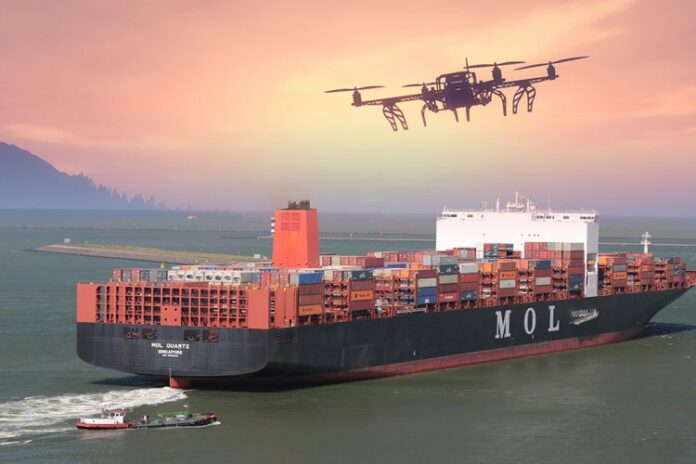
Mitsui O.S.K. Lines, Ltd. and Autonomous Control Systems Laboratory Ltd. have announced the success of a demonstration test using a made-in-Japan flying drone to inspect the hold of an MOL-operated coal carrier in May.

Coal iron vessels have spacious holds to load massive amounts of cargo and some holds height reach 20m from bottom of holds. It is difficult for crews to access upper parts of the holds for inspections, but the use of drones has the potentials to address this issue. Many industrial drones detect their position information by receiving signals from the Global Navigation Satellite System (GNSS). However, the drones cannot access the GNSS radio frequencies for enclosed space such as inside of cargo holds with hatch cover closed and they have to be operated manually onboard by a skilled pilot.

MOL and ACSL completed a successful autonomous flight of an ACSL made drone, ACSL-PF2 equipped with LiDAR SLAM technology, which enable to estimate its own position in holds with hatch cover closed (enclosed conditions)*. Also, MOL and ACSL developed wired connection via optical fibre cables linkage with such drone, which enhance more safe autonomous flight under non-GNSS environments. Furthermore, MOL and ACSL succeeded in shooting higher-definition inspection images even in dark areas by mounting high-resolution camera compared to ones used previously for inspection of holds.

MOL and ACSL will keep developing user-friendly drones for crews to operate such autonomous flight capable type of drones and inspection methods in enclosed and dark spaces such as ballast tanks and various type of holds.

* After completion of cargo loading, hatch covers are closed and the vessel will sails to its unloading port. In this demonstration test, the term “enclosed conditions” means there was no cargo in holds with hatch cover closed.

AqualisBraemar LOC hired on next phases of Vietnam Offshore Wind Project

0

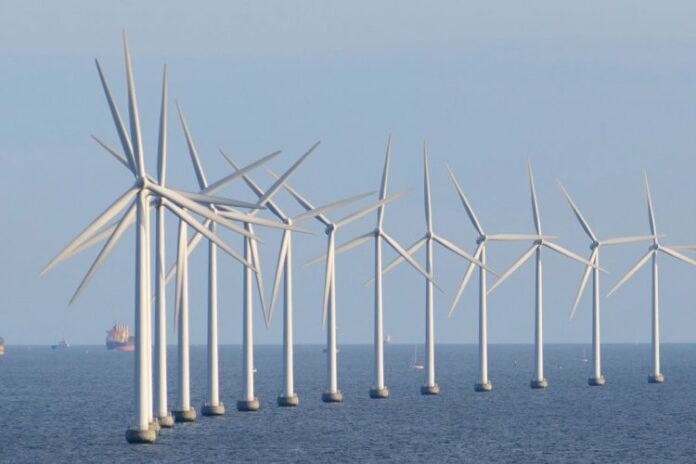
Phases 2 and 3 include the installation of 24 units of Goldwind turbines.

AqualisBraemar LOC’s scope of work includes the technical review and approval of all project documentation pertaining to the marine transportation and installation operations of wind farm components, on site attendance to oversee all critical marine operations, and vessel suitability surveys of all proposed offshore support vessels, including semi-submersible installation vessels. The plan is to complete the work between now and October this year.  

Previously, PowerChina Huadong Engineering Co. Ltd engaged AqualisBraemar LOC to provide marine warranty services on phase 1 of the offshore wind farm construction. The Binh Dai offshore wind power plant has approximately 310MW with 74 offshore WTGs to be installed in 8 phases.

Donny Ng, Business Development Director, AqualisBraemar LOC Singapore, said:

“To win the 2nd and 3rd phases at Binh Dai 1 is testament of the work we are currently providing on phase 1 of the project. We are really pleased to have the opportunity to continue our cooperation with such an ambitious client as PowerChina Huadong Engineering Co. Ltd.”

Since the beginning of 2020, AqualisBraemar LOC has been appointed marine warranty surveyor on seven offshore wind farms under construction in Vietnamese waters, with sister companies OWC and Longitude providing engineering and advisory services on a further three wind farms offshore Vietnam.

Donny Ng said:

“Our growing track-record in Vietnamese offshore wind is a reflection of both the global reputation we have cultivated as a leading marine warranty service provider for the offshore wind sector, as well as of our recognised technical expertise in supporting the accelerated development of offshore wind across South East Asia.”

World’s largest vessel removes Morecambe Bay topsides

0

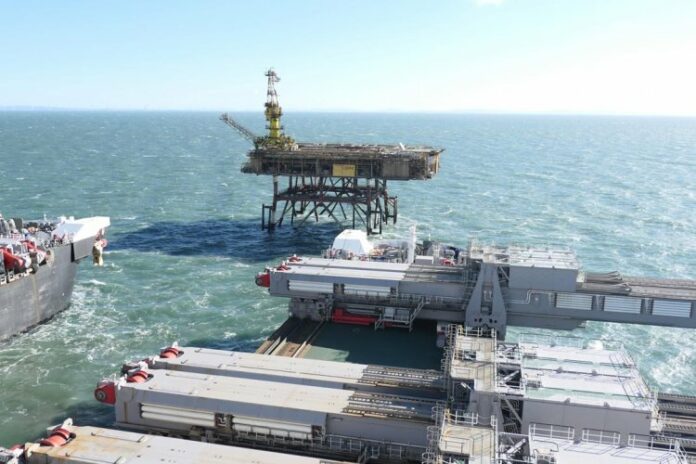
This follows the single-removal of the adjacent DP4 topsides and subsequent transport to the UK in April.

The vessel’s motion-compensated lift technology proved hugely effective in the shallow waters of Morecambe Bay, renowned for strong currents and challenging tidal conditions. For both operations, it was a matter of hours between arrival in the field and safe lift execution.

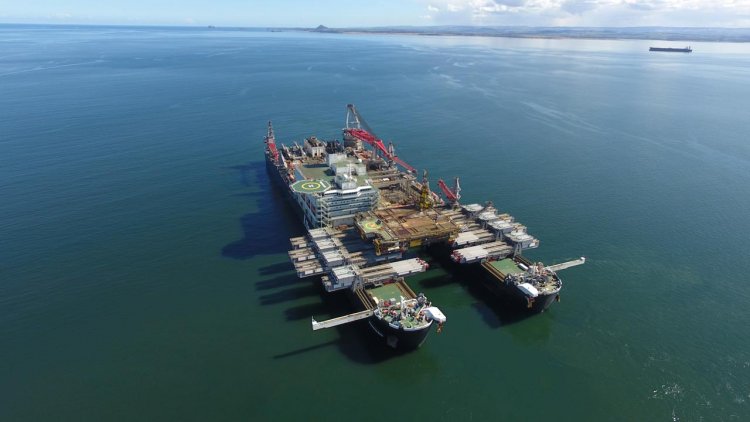
Pioneering Spirit  will deliver the 5450-tonne DP3 installation to a new disposal and recycling facility at the Fife Energy Park, Scotland, where it will be reunited with the 5400-tonne DP4 structure next week.

Allseas’ scope covers engineering, preparation, removal and disposal of two 11,000 tonne normally unmanned installations (NUMIs) and 1000 tonnes of connected subsea infrastructure.

The latter, including wellheads, pipelines and umbilicals, was removed by Allseas’ construction support vessel Oceanic  in a complicated sequence of approximately 180 lifts.

Pioneering Spirit  will return to Morecambe Bay to remove the DP3 and DP4 supporting jackets in 2023.

Though operational since 2016, the DP3 and DP4 removals for Spirit Energy is the vessel’s first heavy lift assignment outside the North Sea.

Still a relative newcomer to the offshore heavy lift market, Pioneering Spirit  has already installed and removed over 200,000 tonnes of platform weight, moving the work onshore where it is safer and quicker.

Equipped with motion compensation technology and capable of lifting entire offshore structures up to 48,000 tonnes in just a few hours, Pioneering Spirit  spends significantly less time in the field compared to conventional heavy lift barges, which results in drastically reduced emissions footprint.

Parties of 23 companies kick off studying ammonia as an alternative marine fuel

0

Industry players set up “Joint Study” framework for studying common issues on ammonia as an alternative marine fuel, to get ready to IMO’s decarbonization targets, including energy, mining, power utility, chemical, terminal, shipping, shipbuilding, manufacture, bunkering, and classification society.

Parties of total 23 companies have entered into a memorandum of understanding on joint study of common issues on ammonia as an alternative marine fuel beyond industry boundaries. 

The 23 founding signatories of this Joint Study framework include ABS, ANGLO AMERICAN, CLASSNK, DNV, EQUINOR, FORTESCUE METALS GROUP, GENCO SHIPPING & TRADING, JERA, K-LINE, MAN ENERGY SOLUTIONS, MITSUI E&S MACHINERY, NIHON SHIPYARD, NS UNITED, PAVILION ENERGY, TOTALENERGIES , TRAFIGURA, UBE INDUSTRIES, UNIPER SE, UYENO TRANSTECH, VALE, VOPAK TERMINAL SINGAPORE, ITOCHU ENEX and ITOCHU. 

In line with the agreed procedure, common issues including Safety assessment of NH3 fuel ship under guideline, Safety assessment of NH3 bunkering, NH3 fuel specification, and NET CO2 emission at NH3 production, are going to be discussed in this Joint Study framework. Moreover, this framework may ask some of NH3 producers, relevant international organizations, port authorities/regulators in potential bunkering countries to share their opinion, view, expertise and experience.

This Joint Study framework keeps door open for companies or organizations which have an interest in participating this Joint Study. 

With international momentum towards the transition to a decarbonized society since the Paris Agreement came into effect in 2016, the International Maritime Organization (IMO) adopted a strategy for the reduction of greenhouse gas (GHG) emissions within the maritime industry in 2018. This strategy sets targets to reduce CO2 emissions per transport work – as an average across international shipping – by at least 40% by 2030 (compared to 2008 levels), to reduce CO2 emissions by 50% by 2050, and to phase them out entirely (zero-emissions) during this century. In order to achieve these goals, the early adoption of ammonia as a suitable zero emission, alternative marine fuel is one of the key elements.

The purpose of this Joint Study is not limited to verify and sort out common issues on ammonia as an alternative marine fuel which is new challenges of all of maritime industry players, but also the key element closely linked to the integrated project with the development of ammonia fueled ship and the development of worldwide supply chain of ammonia by ITOCHU and other partners. 

Wärtsilä completes upgrade of the Croatian National VTMIS

0

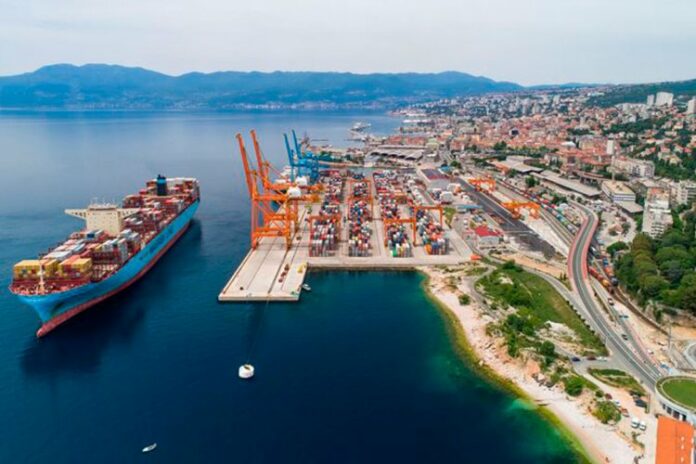
Wärtsilä Voyage has this month completed an extensive upgrade of the Croatian National Vessel Traffic Management & Information System (VTMIS) with new Sea Traffic Management (STM) functionality.

Completion of this project confirms what has become the first STM installation in the Adriatic Sea. The customer, the Croatian Ministry of Sea, Transport and Infrastructure, is now able to test the STM functionality throughout Croatian waters together with vessels which will also become STM-compliant as part of this contract.

Zdravko Seidel, Head of Maritime Traffic Safety Department, Croatian Maritime Administration, stated:

“STM is a new paradigm in maritime safety. In Croatia, it can now be used as a powerful tool for space and time management, traffic organisation, search and rescue, just-in-time port co-ordination, early detection and elimination of safety risks, analysis of maritime traffic data, with a huge future potential in management of hybrid traffic (SOLAS and non-SOLAS).“

STM is a concept developed by the Swedish Maritime Administration Mona Lisa project, endorsed by the European Commission. It aims to define a set of systems and procedures to guide and monitor sea traffic in a manner similar to air traffic management. STM includes route optimisation services; ship-to-ship route exchange, enhanced monitoring, port call synchronisation, winter navigation. 

The goals behind the full deployment of STM by year 2030 are the following:

  • Safety: 50% reduction of accidents;
  • Efficiency: 10% reduction in voyage costs and 30% reduction in waiting time for berthing;
  • Environment: 7% lower fuel consumption and corresponding reduction in greenhouse gas emissions.

How it works: 

The VTMIS STM server located in Rijeka, Croatia’s principal seaport, has fortified functionality thanks to a host of Wärtsilä Ship Traffic Control solutions – including Wärtsilä Navi-Harbour and Navi-Port – to enable real-time ship-to-shore coordination that ensures traffic without congestion, efficiencies without safety concerns, and business volume with reduced environmental impact.

Filippo Menegato, Sales Manager, Wärtsilä Voyage, states:

“We have provided solutions to improve the tracking and integration of targets, displaying of navigational and situational awareness in any areas of interest, a new generation of alarms and alerts in accordance with the set criteria and restrictions – all interfacing with the VTMIS Vessel Database.”

Dmitry Rostopshin, Head of Ship Traffic Control Solutions, Wärtsilä Voyage, said:

“STM is a strong preliminary step toward the Smart Port; a port that uses digital solutions to overcome spatial constraints, pressure on productivity, fiscal limitations, safety and security risks. We’re very pleased with the outcome of this project and I’d like to take this opportunity to thank Maritech Adriatic Ltd for their support as our distributor in this instance.” 


NYK joins international think-tank for carbon capture and storage technologies

0

NYK has become a member of the Global CCS Institute, an international think-tank established to promote the use of carbon capture and storage (CCS) technologies worldwide.

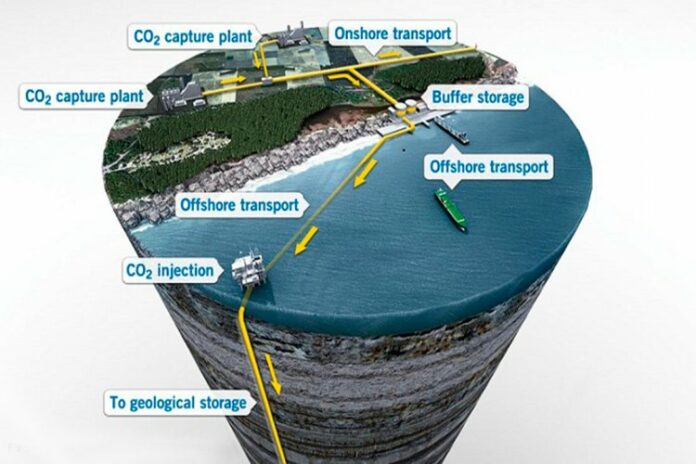
CCS is a technology to capture CO2 at the source — such as power plants, chemical plants, and the like — by separating CO2 from other gases, compressing the CO2 for transportation, and then injecting the CO2 deep into underground or undersea rock formation at a carefully selected and safe site, where the CO2 is permanently stored. CCS technology is being used around the world in different ways and is already cutting greenhouse gas emissions.

By joining the Global CCS Institute, NYK will be able to closely monitor the development and expansion of CCS and will aim to contribute to the realization of a decarbonized society by participating in CCS projects in the areas of offshore transportation of compressed liquefied CO2 and the injection of CO2 from offshore facilities into undersea rocks.

How CCS works

CCS involves three major steps; capturing CO2 at the source, compressing it for transportation and then injecting it deep into a rock formation at a carefully selected and safe site, where it is permanently stored.

  • Capture: The separation of CO2 from other gases produced at large industrial process facilities such as coal and natural-gas-fired power plants, steel mills, cement plants and refineries.
  • Transport: Once separated, the CO2 is compressed and transported via pipelines, trucks, ships or other methods to a suitable site for geological storage.
  • Storage: CO2 is injected into deep underground rock formations, usually at depths of one kilometre or more.

Because CCS can achieve significant CO2 emission reductions, it is considered a key option within the portfolio of approaches required to reduce greenhouse gas emissions.

Sanmar delivers its first Tier lll tugboat to Norwegian operator

0

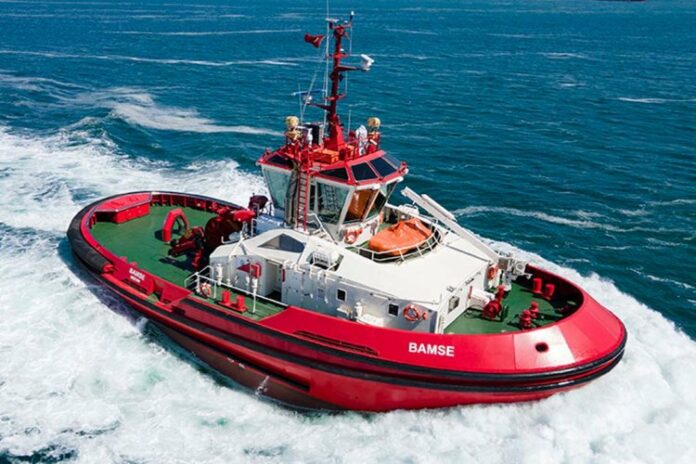
Built at Sanmar’s purpose-built state of the art shipyard at Altinova in Turkey, the powerful, yet low emission tugboat has been named Bamse by its new owners.

Based on the TRAktor 3000-Z design from Canadian naval architects Robert Allan Ltd, the 30.45m LOA Bamse has a moulded beam of 12.8m and navigational draft of 6.35m. It was delivered at the end of May and will carry out escort duties from Brevik, in Norway. It is powered by two 2,200kW high speed engines driving CP propellers in an IMO Tier III emissions compliant installation.

The state-of-the-art and technologically-advanced design was developed by Robert Allan Ltd, Buksér og Berging and Sanmar Shipyards working closely together throughout every stage of the project.

The design features a new hull form and accordingly significant design verification was performed using Computational Fluid Dynamics (CFD). Analyses included verification of ahead speed, astern speed, bollard pull, escort performance, and directional stability in order to help ensure the vessel will perform to the owner’s requirements. The result is a vessel that perfectly matches the owner’s performance, stability and seakeeping expectations.

Bamse is the 6th tug delivered to Buksér og Berging by the busy Turkish builder and operator. In 2014 and 2015 Sanmar delivered five new-build tugs to the Norwegian operator, including Borgoy and Bokn, the world’s first two purely LNG-fuelled tugboats.

It was Sanmar’s ability to offer ultra-modern, technologically-advanced and eco-friendly tugboats based on radical new CFD-tested designs, that led Buksér og Berging to once again choose the Turkish shipyard for its latest fleet upgrade.

Bamse has an impressive bollard pull of 75 tonnes and is capable of generating a steering force in excess of 80 tonnes. It can achieve a speed ahead of 13 knots and has a fuel oil capacity of 126m3.

As the tug will operate skeg/stern first for the vast majority of time, visibility over the stern has been optimized and the stern of the hull is ice strengthened for operations in light ice conditions. Accommodation is designed for a crew of up to seven with Master and Chief Engineer cabins located on the main deck and a single and two double crew cabins below.

Ali Gurun, Vice President of Sanmar, said:

“The TRAktor 3000-Z tugs prove that minimising environmental impact does not have to come at the price of reducing power or performance. Here at Sanmar we are proud to be at the forefront of the drive to develop increasingly environmentally-friendly tugboats through technological advance and innovation.”