-0.7 C
New York
Home Blog Page 603

Green hydrogen pilot project set for Brazilian port

0

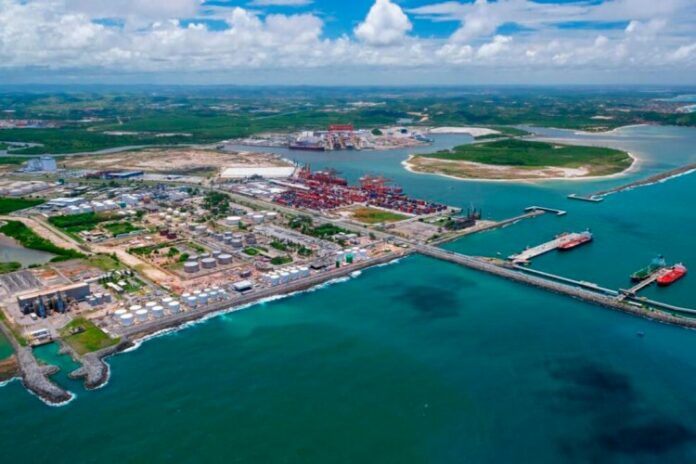
Neoenergia and the Pernambuco State Government have signed a Memorandum of Understanding (MOU) to build cooperation for the development of a pilot project for green hydrogen production at the Suape Port – Complexo Industrial Portuário Governador Eraldo Gueiros.

The initiative expects to find opportunities to enable demand for the product and prepare Suape Port to become a HUB for green hydrogen production in the future.

Green hydrogen is an important driver to accelerate industrial decarbonization​ and contribute to the electrification of processes, since it is obtained from renewable sources, besides generating more competitive and decentralized dynamics by joining the different market segments.

The partnership is extremely relevant for the country, since Suape has a petrochemical pole, with a strategic location for areas destined to terminals, logistics, services, and industries, especially for the European and American markets.

The agreement will have a term of one year, with the possibility of extension, and is in line with the strategy of Iberdrola, the Group’s parent company. Currently, Neoenergia’s installed capacity on renewable energy is over 80%. In 2022, this percentage will reach 90%, upon the completion of projects in progress, representing a profile that is even cleaner than the Brazilian electric matrix.

Northland Power and PKN Orlen to develop offshore wind project in Poland

0

Northland Power Inc. has reported that Poland’s Energy Regulatory Office has awarded a contract for difference (“CfD”) for Northland and PKN ORLEN’s (“ORLEN”) Baltic Power offshore wind project (“Baltic Power”). 

Under the 25-year contract, the project receives payments covering any negative balance of electricity generated offshore and fed into the grid, which means that Baltic Power will be compensated for the potential difference between the market price of electricity and the strike price set in the CfD. The award is part of the Polish Government’s commitment, through the Polish Offshore Wind Act, to support an initial phase of 5.9 gigawatts (GW) of offshore wind.

Mike Crawley, President and Chief Executive Officer of Northland, said:

“We are extremely proud to be developing a significant offshore wind project in Poland, alongside our partner, PKN Orlen to support the country in its decarbonization objectives. The CfD is a key milestone that provides the project with revenue certainty to proceed with development and confirms our inclusion in the initial phase of offshore wind development in Poland. Full scale development of Baltic Power will expand our European offshore wind presence and help us to establish an offshore wind hub in the Baltic Sea.”

Similar to previous announcements, the CfD is awarded at PLN 319.60 per MWh for up to 25 years and is adjusted to annual indexation by Poland’s annual average consumer price index. The CfD is subject to review and final approval from Polish authorities and the European Commission.

On March 24, 2021, Northland completed its acquisition of a 49% interest in Baltic Power from ORLEN, delivering a project with scale and an opportunity to participate in a growing offshore wind market in Central Europe. The project is expected to have a total capacity of up to 1,200 megawatt (MW) of offshore wind generation with construction activities expected to start in 2023 and commercial operations anticipated in 2026.

Poland provides an attractive investment destination with a clear roadmap for offshore wind and other renewable technologies and its 2040 energy policy highlights offshore wind as a key technology to help its transition to a low-emission economy. Poland’s Offshore Wind Act, which was passed earlier this year, specifies its ambitions for offshore wind and its commitment to install 5.9 GW by 2030, and up to 11 GW by 2040, making Poland the biggest market for offshore wind in the Baltic region and an attractive market for offshore wind investment.

Northland develops and operates renewable power projects in North America, South America, Northeast Asia and Europe and is a top 10 global operator and developer of offshore wind.   

Major Gulf Loop Current study using Sonardyne’s PIES completes

0

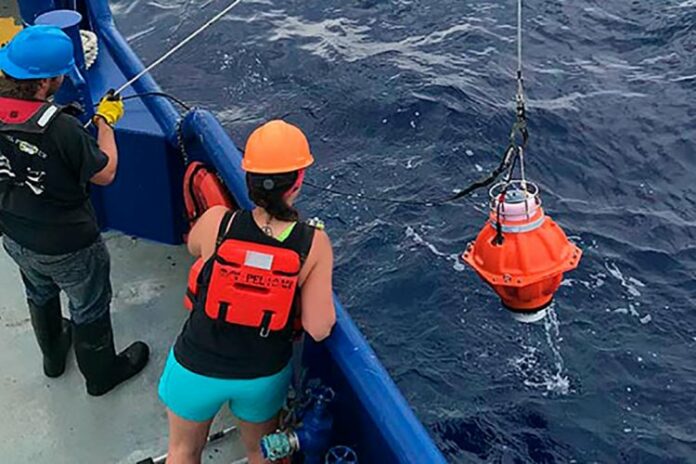
Oceanographic instrumentation developed by Sonardyne to monitor ocean currents has been acquired by the University of Rhode Island following its successful use in a US$2 million project in the US Gulf of Mexico.

The project, led by the University of Rhode Island (URI), saw an array of specialist sensors, including Sonardyne’s Pressure Inverted Echo Sounders (PIES), deployed for two years, to monitor the hugely disruptive Gulf Loop Current.

Sonardyne’s PIES were installed in waters down to 3,500 m depth early in 2019, to help better understand the current. Following successful wireless acoustic data harvesting campaigns from the instruments in 2019 and 2020, their deployment was extended to the end of May, this year.

Funding for the project, from the US National Academy of Sciences (NAS), was also extended, allowing URI to purchase the Sonardyne PIES used on the project outright, as well as a Dunker 6 telemetry transceiver, for wireless data harvesting from the instruments when they are on the seafloor. This will allow URI to use the instruments on its future projects.

The Gulf Loop Current system is a highly energetic ocean circulation feature that influences all ocean processes in the Gulf and is characterised by disruptive Loop Eddy events that have serious impacts on a wide range of human and natural activities, from oil exploration to coastal eco-systems. However, knowledge of its underlying dynamics has been limited, leading to this study, led by Kathleen Donohue, Project Director and Professor of Oceanography at URI.

PIES work by transmitting an acoustic pulse from an instrument on the seabed upwards. The pulse is reflected off the water-air boundary at the sea surface and returns back down to the seabed where it is detected by the PIES. This enables an exact measurement of the two way signal travel time to be calculated. At the same instant, an accurate measurement of depth is made using highly precise internal pressure sensors.

Combining data from an array of PIES instruments and near bottom current meters with historic water profile data can be used to calculate currents throughout the full water column over an extended area – in this case totalling over 50,000 sq km. For this project, Sonardyne enhanced the instruments with an integrated single point current meter, tethered above the units, leading to a modified designation as CPIES. 

Randy Watts, Professor of Oceanography at URI, says:

“The ability to receive the full time series of measurements plus engineering-performance checks via acoustic telemetry in 2019 and 2020 shows that the data are of high quality. The impressively low battery drain meant we could leave the CPIES untouched on the sea floor for the duration of our experiment. With the additional funding, we were also able to extend our observational window to nearly two years. This is important because each Loop Current Eddy formation is unique.”

Professor Donohue says:

“The Loop Current encounters different pre-existing eddies and different bottom topography in different locations with different inflow from the Caribbean and different wind fields. These events inside the ocean are dynamically analogous to ‘weather’ and ‘storms’ in the atmosphere – and every bit as varied. Observing these many events and observing the full water column is highly valuable information to guide the forecast models.”

“Looking to the future, the telemetry capabilities of Sonardyne’s CPIES offer us an established way to collect the data at more frequent time intervals using an uncrewed surface vehicle (USV) and report it ashore to enable real-time forecasting of the entire Gulf of Mexico Loop Current System.” 

Geraint West, Business Development Manager – Oceanographic, at Sonardyne, says:

“URI have long been recognised as a leading proponent of using PIES to undertake large scale studies of ocean currents. Our collaboration with them has consequently taken our PIES technology to a new level, which we’re pleased to see being used in this important study. We look forward to continuing our close relationship with URI, including supporting more autonomous harvesting of their data.”

URI’s LCS study is being funded by the US National Academies of Sciences, Engineering and Medicine’s Gulf Research Programme, which was founded in 2013, as part of the legal settlements with companies involved in the 2010 Deepwater Horizon oil spill. The long-term objective is to improve forecasts of the Loop Current in order to increase the safety of operations in the Gulf.

Fugro-led consortium designs mooring line fatigue tracker

0

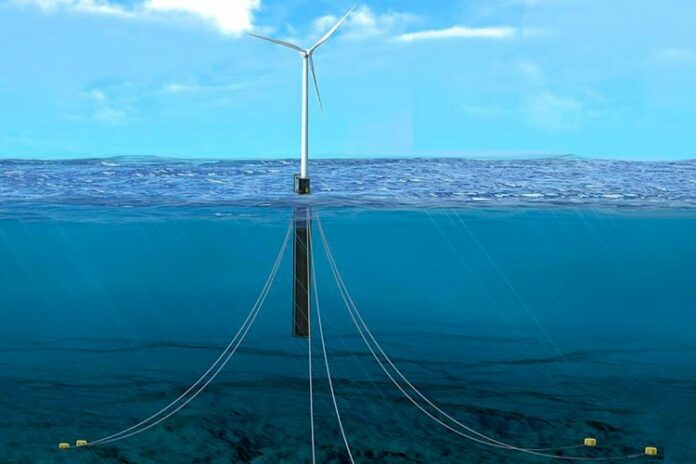
A Fugro-led consortium that includes AS Mosley and the University of Strathclyde has designed a mooring line fatigue tracker that safely and cost-effectively monitors offshore floating wind turbines, thanks to innovation funding from the Scottish Government.

The consortium won the funding to develop the tracker, which fuses the motion and position measurements of floating hulls with a simulation model to monitor fatigue, in March 2020 through the Floating Offshore Wind Technology Acceleration Competition (FLW TAC), which was run by the Carbon Trust’s Floating Wind Joint Industry Project. Having already demonstrated the technology in a relevant environment, Fugro and partners are now identifying opportunities to work with floating wind developers on pre-commercial projects to trial the solution offshore.

As a future part of the UK’s green energy generation portfolio, floating offshore wind farms will need to operate reliably and minimise in-person inspections to reduce HSSE risk exposure and remain cost-effective. Drawing on their existing satellite positioning, structural and metocean monitoring systems, Fugro worked with AS Mosley and the University of Strathclyde to combine a physics-based simulation model with state-of-the-art fatigue analysis to develop a cost-effective and streamlined methodology. Instead of the current conventional 5-year subsea inspection regime, mooring line fatigue will be tracked so that inspection activities – which require vessels and remotely operated vehicles (ROVs) – are only carried out when necessary. Another benefit is that the monitoring is continuous and can be used to detect any problems or failure scenarios, such as anchor drag or trawler snagging, as they happen for quick resolution.

Hannah Evans, Manager at the Carbon Trust, said:

“We are really pleased to see the progress Fugro, AS Mosley and the University of Strathclyde have made in developing their mooring line fatigue tracker over the past 12 months. This project has demonstrated the value of collaboration between industry and academia in Scotland to deliver innovative solutions, and addresses challenges faced by the floating wind industry to monitor mooring lines safely and cost-effectively.”

Stuart Killbourn, Fugro’s Structural Monitoring Project Manager, said:

“Working with AS Mosley and the University of Strathclyde to repurpose methods and expertise from the oil and gas industry for offshore renewable energy has been incredibly exciting. Over the coming decade, efficient and reliable remote monitoring systems will be vital for the deployment of floating wind farms, which in turn are so important for meeting net-zero carbon targets for a safe and liveable world.”

Cobham SATCOM launches new generation antenna platform

0

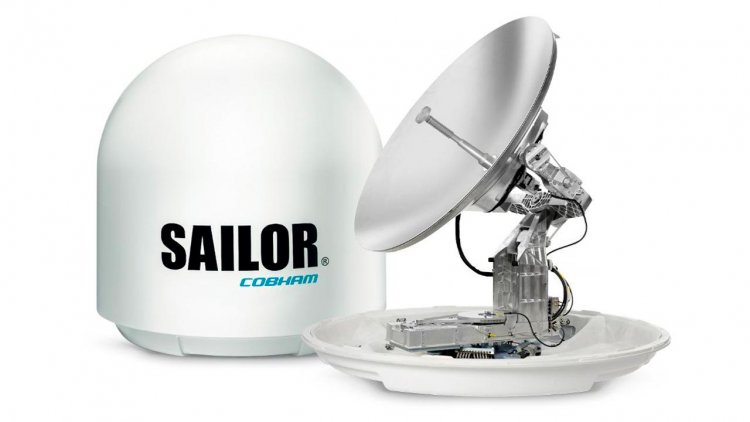
Cobham SATCOM has announced the launch of its new SAILOR XTRTM antenna platform. The SAILOR 1000 XTR Ku is the first of a new generation of software-controlled antenna systems designed for quick deployment, operational reliability, simplicity, and best-in-class radio frequency (RF) performance. 

Developed and designed by Cobham SATCOM, SAILOR XTRTM integrates the best of the SAILOR VSAT technology into a new platform with cutting-edge software and electronic capabilities that prepare it to operate in future satellite constellations in LEO, MEO, GEO and HEO orbits. The one-metre antenna has a new simplified and robust pedestal for better antenna performance and easier and simpler conversion between Ku- and Ka-bands.

SAILOR XTRTM is prepared for the Internet of Things. Built-in IoT data protocols such as Message Queuing Telemetry Transport (MQTT), Simple Network Management Protocol (SNMP) and RESTful API could make SAILOR VSAT and SAILOR XTRTM antenna systems a self-reporting item in a typical satcom/IT solution, providing up-to-date detailed antenna information and enabling preventive maintenance. This helps to ensure uptime, boosts the efficiency of on-board IT systems and contributes to optimised vessel performance. 

A new Ethernet port inside of every above-deck SAILOR XTRTM unit facilitates new connectivity options. Solution Partners could use this to integrate third-party devices such as cellular transceivers and Wi-Fi access points. The additional data from these devices gets securely routed at up to 1 Gbps to an Ethernet port on the SAILOR XTRTM Below Deck Unit. The antenna also comes with a new XTR Antenna System Control Module (ASCM) with a hardware encryption key chip mounted inside. The XTR ASCM is networked to all other modules and motors via a star network topology for speed of data exchange and reliability. Importantly, it only accepts Cobham-signed software, which makes it impossible for others to read out the private key, which is programmed into the key chip, thus protecting the antenna from potential cyber-attacks.

Additionally, the true one-cable solution on SAILOR XTRTM not only manages Rx, Tx and power over a single coax cable but can also transfer high-speed data from a third-party device which could be mounted inside of the antenna to below-deck. To ensure world-class uptime, the antenna platform also maintains Cobham SATCOM’s Rapid Deployment Technology. This ensures a fast, hassle-free rollout for ship owners and operators, as well as improved and extensive self-diagnostics for optimal performance and reliability.

Jens Ewerling, Product Manager, VSAT, at Cobham SATCOM, said:

“Through the development of SAILOR XTRTM, a reliable, agile and high performing VSAT solution, Cobham SATCOM has once again set the standard for the future of maritime satcom. In an era of unprecedented uncertainty and technological complexity, the new advanced science underpinning SAILOR XTRTM will drive greater simplicity for ship owners and operators while enhancing performance. This will ultimately give them more time to focus on business-critical issues, while handing them the data necessary to identify cost-effective solutions to address and analyse a myriad of complex issues; from transparency to environmental compliance and seafarer welfare.”

Cobham SATCOM has already successfully installed the first SAILOR 1000 XTRTM Ku on a vessel operating in rough Scandinavian waters. The installation was completed on the M/V Pearl Seaways with owner DFDS in attendance. This latest product launch follows the successful installation of more than 15,000 SAILOR VSAT antennas in the field over the last decade, with the company’s solutions long established on all vessel types, in all oceans.

NAPA to enhance 3D ship design process with launch of NAPA Viewer

0

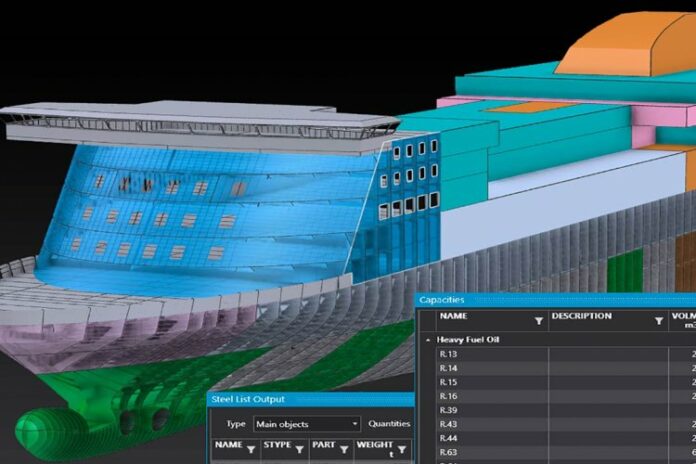
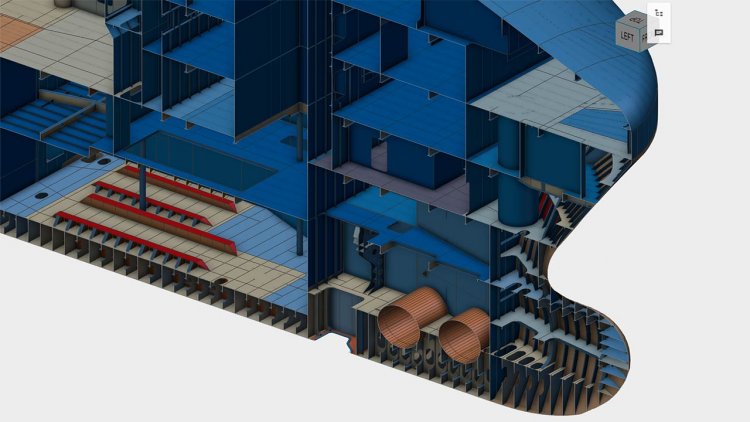
NAPA, the leading maritime software, services and data analysis provider, has today announced the launch of NAPA Viewer – its new collaborative web application.

The platform will provide users throughout the ship design process, such as class societies, ship owners and shipyards, with visibility of the most current 3D ship model via a browser, and the ability to directly comment on the model. NAPA Viewer will also enable users to request and show metadata and view measurements and section generation.

NAPA Viewer offers a cost-effective and straightforward solution for enabling vital communication between key stakeholders involved in the design process. The streaming technology allows the main user to share a 3D NAPA ship model, created with NAPA Naval Architecture and NAPA Steel, directly from their server to multiple other parties via an internet browser. The application accurately showcases the model while restricting access to sensitive information, such as geometry, to ensure shipyards are still able to maintain commercial integrity.

The implementation of NAPA Viewer will not only promote the use of 3DMBA but also contribute to the wider digitalization of the maritime industry by increasing collaboration via 3D models. This will accelerate the design process, enabling designers to iterate faster, adjust more quickly to changes in the design requirements, and potentially even implement real-life performance data from other vessels.

Tapio Hulkkonen, Director, Product Management, Design Solutions at NAPA, said:

“We are extremely proud to announce the launch of NAPA Viewer and introduce our users to a platform that will make it easier to communicate and collaborate in real-time. Through providing multiple stakeholders with access to NAPA Viewer, without having to download additional software, we are bringing an affordable and accessible solution to market that will streamline the ship design process for all involved. With over 90% of newbuilds in the global fleet built by NAPA’s customers, we believe NAPA Viewer will support the evolution and efficiency of ship design in this busy period.”

The main features of NAPA Viewer include an arrangement tree for controlling the visibility of objects, 2D section views, commenting with attachment potential in annotations in 3D view, measuring tools and 3D clipping.

Damen delivers FCS 1605 to support Allseas’ Pioneering Spirit

0

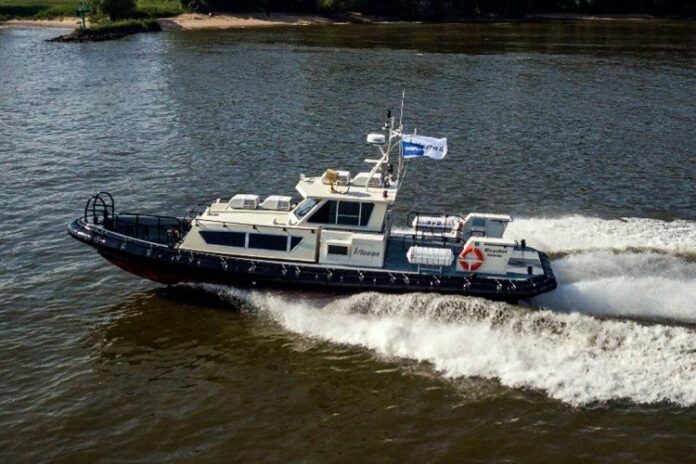
On 14th June, Damen Shipyards Group delivered a Fast Crew Supplier (FCS) 1605 to Allseas to support the Pioneering Spirit – the largest construction vessel in the world. The FCS 1605 will perform fast crew and personnel transfers to and from the vessel.

Damen signed the contract for the vessel, named Ricochet, on 15th March. The delivery was fast as a result of Damen’s practice of building its vessels in series for stock. When Allseas placed its order with Damen, the FCS 1605 was already built. In order to prepare it for delivery, Damen has fitted the vessel with the latest in lightweight fender technology.

Damen has also supplied Allseas with the cradles with which to lift the vessel aboard the Pioneering Spirit, ensuring that she is able to operate wherever the larger vessel is undertaking a project.

Ricochet will replace two older vessels that currently perform her role. She features waterjets that enable her to sail quickly – up to 30 knots – and to manoeuvre well at low speed.

The FCS 1605 will join a Damen Pushy Cat 804, named Nutshell, already aboard the Pioneering Spirit. This vessel performs a number of duties in support of the vessel, including line handling.

Marius Huige Allseas’ head of technical services, said:

“We needed a vessel with sufficient seats that could move at high speeds and yet be fuel efficient. The lightweight aluminium design of the FCS 1605 takes care of this. What’s more, due to Damen having the vessel in stock, we were able to take delivery very quickly.”

Damen sales manager Benelux Joost van der Weiden said:

“We are very pleased to deliver this vessel to Allseas to support the work of the iconic Pioneering Spirit. The FCS 1605 has proven to be a strong and successful design and I have every confidence that it will meet Allseas’ requirements perfectly. On behalf of Damen I wish Allseas all the best with Ricochet.”

Pioneering Spirit was designed in-house by Allseas for the installation and decommissioning of offshore structures. Capable of lifting platform topsides up to 48,000 tons and jackets up to 20,000 tons in a single piece, the twin-hulled vessel is 382 metres long and 124 metres wide.

NYK to build 12 LNG-fueled PCTCs

0

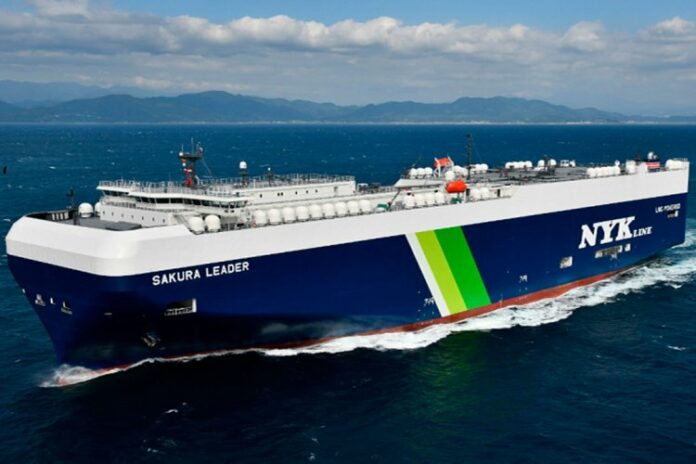
NYK has agreed to a memorandum of understanding (MoU) for the consecutive building of LNG-fueled PCTCs at Shin Kurushima Dockyard Co., Ltd. and Nihon Shipyard Co., Ltd. Twelve new ships are planned to be built, six ships each at the two shipyards. The newly built ships will be delivered successively from fiscal 2025 to fiscal 2028.

This consecutive building of LNG-fueled PCTCs is in accordance with the PCTC fleet replacement plan to achieve NYK’s environment management target, which is to reduce CO2 emissions per ton-kilometer of transport by 50% by 2050. The use of LNG fuel, in addition to hull modification to improve fuel economy, will contribute to a reduction of CO2 emissions by approximately 40% compared to ships using conventional heavy fuel oil.

Through its “Sail GREEN” project,* NYK’s Automotive Transportation Headquarters has been promoting the transition of upcoming newly built PCTCs to vessels that are LNG-fueled, and this began with Sakura Leader, which was delivered in October 2020 and was the first LNG-fueled PCTC to be built in Japan. In fact, the company already has firm plans to launch eight LNG-fueled PCTCs by 2024. Including these additional 12 new vessels, NYK’s total number of LNG-fueled PCTCs will increase to 20 by fiscal 2028 through a total investment of about 200 billion yen.

NYK aims to further advance to zero-emission vessels utilizing marine fuels that have a lower environmental impact, such as hydrogen and ammonia, from around 2030. For the moment, NYK is positioning LNG fuel as a bridge solution until future zero emission ships can be realized.

On February 3, NYK released the NYK Group ESG Story, which aims to further integrate ESG into the company’s management strategy and promotes activities that contribute to the achievement of the SDGs (Sustainable Development Goals) through business activities. To strongly promote ESG management, the NYK Group will actively promote replacement of its PCTC fleet to next-generation eco-friendly ships and encourage new value creation as a sustainable solution provider.

* “Sail GREEN” project
A project being promoted by NYK’s Automotive Transport Headquarters to reduce CO2 emissions at all the transportation stages of vehicles and contribute to the eco-friendly supply chains of customers. The chief component of the project is a switch to LNG-fueled PCTCs, which emit less CO2 compared to conventional heavy-fueled vessels. In addition, reducing CO2 emissions at finished-car logistics terminals that NYK operates throughout the world, as well as during short sea and inland transportation, is also an important target of this project.

Port of Montreal sets course for innovative new green energy solutions

0

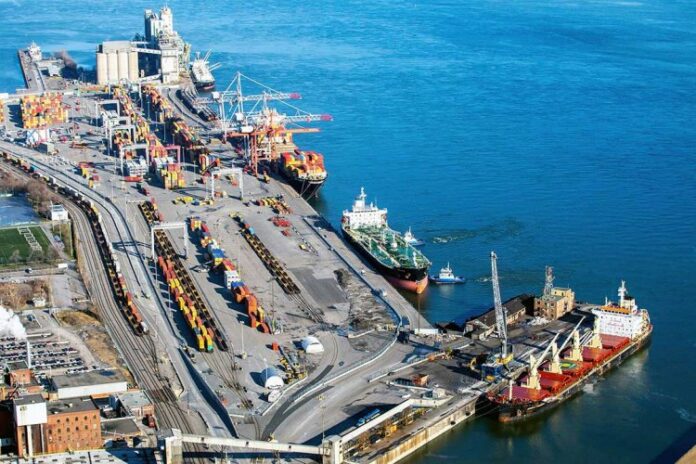
In response to the global movement to decarbonize the transportation industry, and consistent with its leadership in environmental issues, the Montreal Port Authority (MPA) continues to evolve towards clean energy, notably green hydrogen, ethanol and methanol.

On June 10, it signed a cooperation and development agreement with Greenfield Global, which specializes in the production of biofuels. In the wake of dockside shore power implemented in 2017, the development of green hydrogen will make indirect shore supply of electrical power possible for the marine industry.

United in a shared vision to encourage the energy transition and diversify environmentally responsible energy alternatives, the Montreal Port Authority and Greenfield decided to pool their expertise. The signed cooperation and development agreement aims to identify, conceive and implement innovative green energy solutions, among which green hydrogen, ethanol and methanol are at the forefront.

A working committee has been set up to oversee the development and implementation of these new energy solutions for current and future MPA activities as well as those of MPA partners and the marine industry.

Commercial shipping carries more than 80% of the world’s goods and accounts for about 3% of global GHG emissions. The International Maritime Organization (IMO) has set a goal to cut GHG emissions related to commercial shipping in half by 2050.

As one of the most environmentally responsible ports in North America according to Green Marine’s annual ranking, by achieving the highest level (5) across all environmental matters, the Port of Montreal is continuing its transition to clean technologies and low-carbon fuels.

In recent years, the Port of Montreal has taken several actions to significantly reduce its GHG emissions. More specifically, it has rolled out over 20 shore power connection points where wintering and cruise ships can plug in dockside, a fleet of fully hybrid service vehicles, a liquefied natural gas (LNG) refuelling solution and next-generation low-GHG emitting locomotives. These various initiatives and those of its partners, who since 1993 have been bound to comply with environment clauses in their leases, have enabled the MPA to reduce GHG emissions specific to its own activities by 25% since 2007 and to lower the intensity of GHG emissions by 22% between 2010 and 2017 for all activities on Port territory in Montreal and Contrecœur.

Martin Imbleau, President and Chief Executive Officer of the Montreal Port Authority, said:

“Developing low-carbon fuels is the way of the future for the transportation industry. The Port of Montreal wants to position itself among the forerunners and strengthen its position as a leader on the St. Lawrence in terms of sustainable development. Our trade objectives are integral to our sustainable development objectives, and we firmly believe that this alignment will help boost the competitiveness of the St. Lawrence.”

Howard Field, CEO, Greenfield Global, said:

“As the leading producer of low-carbon transportation fuel in Quebec, we are excited to partner with the Port of Montreal to develop and commercialize green hydrogen and green methanol solutions for the maritime industry. Greenfield recognizes the importance of implementing biofuels for commercial shipping in order to reduce greenhouse gas emissions and plans to play an important role in helping the maritime transportation industry reach its sustainability goals.”

Helsinki Shipyard: The production of the third expedition cruise vessel started

0

The production of the third vessel of the luxury expedition cruise ships ordered from Helsinki Shipyard began on June 10th. 

Esko Karvonen, CEO of Helsinki Shipyard, says:

“The order for the third ship in this series of expedition cruise ships was one of the few cruise ship orders placed in the pandemic situation during 2020, and therefore significant for all of us. The order reflects our customers’ solid trust in our expertise and abilities and the good spirit of our cooperation.”

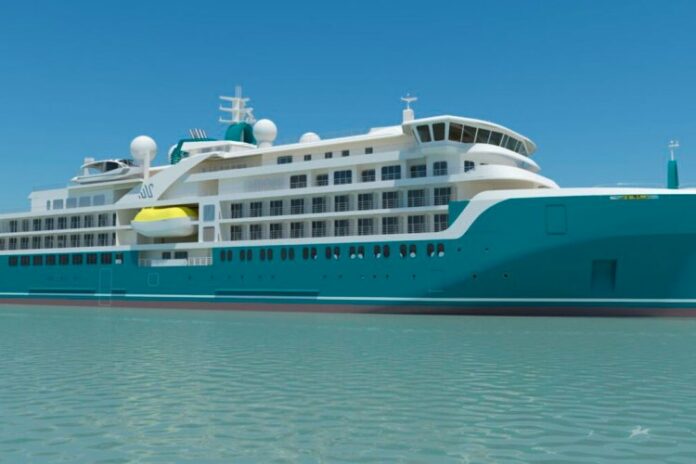
The third vessel to be delivered to Swan Hellenic, like the two ships already in production, represents a new generation of expedition cruise ships and is designed for the global cruise market, with an emphasis on cruises at high latitudes. The vessel will be delivered to its customer at the end of 2022. NB 518 is bigger than its sisters and designed to sail to all continents.

Unlike the previous two ships in the series, the steel blocks of ship the 518 are manufactured at CRIST shipyard in Poland. The blocks are transported to Helsinki by sea. Production work in Helsinki will start during the Autumn, and the ship’s hull assembly will begin with a keel laying in the end of year 2021. 

Ville Korpela, project manager of ship 518 and the yard’s new sales director, commented:

“The start of production is a milestone for us and the customer about the partnership that works well. We will continue on this solid basis, building a high-quality vessel for the customer.” 

The newbuilding 518 has a 4.6 MW diesel-electric hybrid machine with exhaust cleaning, max. 3 MW battery capacity and PC6 ice class hull. The 125-metre and 12,000 gross ton ship is specially designed to explore the most interesting and inaccessible places on Earth.

The ship will be operated by a crew of 140 to provide the highest level of personal service.