-1.1 C
New York
Home Blog Page 599

ONE partnering with RBS to address environmental sustainability in shipping

0

Ocean Network Express (ONE) has announced that the company has entered into a partnership with Rutgers Business School (RBS) in June 2021. 

Being the first of its kind in ONE’s global partner network, this partnership will enable ONE to gain direct outreach to RBS’ academic resources while striving to reduce its carbon footprint. ONE will present business project opportunities to RBS students. These projects will allow Rutgers students to examine trends in maritime decarbonization and environmental sustainability in the shipping context. The Green Strategy Department, the newly launched organization dedicated to ONE’s environmental sustainability, will be hosting and mentoring all the projects conducted by Rutgers students.

ONE will also help to educate Rutgers’ students from around the world in vital topics relating to global supply chains. The RBS International Executive MBA Program meets in Singapore, providing more opportunities to build on the partnership. ONE wiil contribute financial support and professional expertise to enhance students’ knowledge of the latest business trends.

Doug Miller, director of the Rutgers MBA Program, said the opportunity offered by ONE will enhance both the MBA and undergraduate experiences by allowing students to learn by doing in an area of increasing importance to all businesses. 

Miller said:

“We are grateful for their partnership to create learning opportunities for our students that will have significant social impact.”

Yasuki Iwai, Managing Director of ONE’s Product and Network Division, concurred that the ONERBS partnership provides uniquely valuable opportunities to its faculty and students, which will help boost the quality of academic teaching and learning, and in turn, yield them a clear competitive edge:

Yasuki Iwai said:

“As ONE, we are a firm believer that broader collaborations make it more effective to achieve a common goal. Today we are very pleased to have Rutgers become part of our eco-system and look forward to creating more positive impact to our world and society through our joint efforts.”
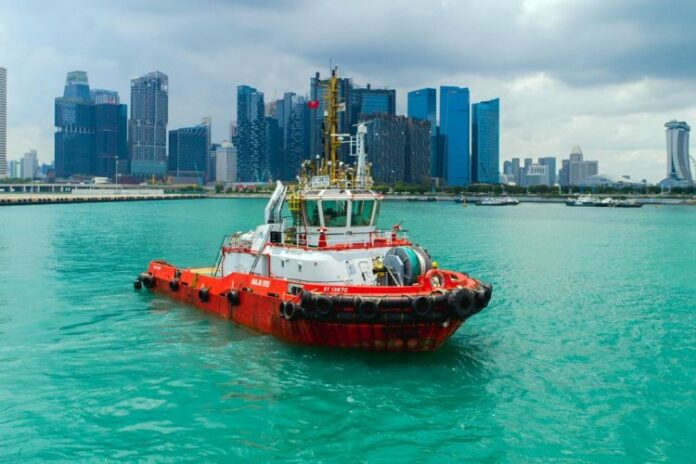
ABB and Keppel reach key autonomy milestone with remote vessel operation trial

0

The Port of Singapore, with more than 130,000 vessels calling annually, presents one of the most complex settings for autonomous harbor operations in the world. The trial marks a major milestone in validating the increased safety and efficiency of tug operations utilizing digital solutions already available today for nearly any kind of vessel.

The trial of remotely operating the harbor tug from a shore command center located at the Maritime and Port Authority of Singapore’s Maritime Innovation Lab was successfully performed in April 2021. ABB has delivered an integrated solution for the remote and autonomous control of the vessel based on the Ability™ Marine Pilot product family. The digital solution ABB Ability™ Marine Pilot Vision provided the sensor fusion from onboard systems to generate a digital situational awareness, while ABB Ability™ Marine Pilot Control system executed the necessary intelligent maneuvering and control commands. 

Juha Koskela, Division President, ABB Marine & Ports, said:

“We are proud to have reached another milestone representing a significant step towards autonomous shipping, in close collaboration with Keppel. The intent of this technology is to relieve the crew of tasks that can be automated, enabling them to perform at their best during critical periods and enhancing the overall safety and productivity of marine operations. This trial also confirms the possibility for application of remote and autonomous technology to other vessel types.”

ABB’s technology and Keppel O&M’s technology solutions were retrofitted on the 32-m harbor tugboat Maju 510. The vessel is owned and operated by Keppel O&M’s joint-venture company Keppel Smit Towage.

Mr. Tan Leong Peng, Managing Director (New Builds), Keppel O&M, said:

“Remote control navigation is an important feature of autonomous vessels as it acts as a safeguard and is especially useful in certain complicated scenarios. As the overall system integrator, Keppel O&M is leveraging its in-depth offshore and marine expertise and collaborating with the Keppel ecosystem of companies, such as M1 with its connectivity solutions, as well as other partners such as ABB who supplied leading-edge technology, to incorporate the best-in-class systems and offer customizable autonomous solutions. This is in line with Keppel’s Vision 2030, which includes harnessing advanced technologies for growth.”

Tug operations, where a tugboat maneuvers other vessels by pushing or towing them, often in crowded harbors, can be extremely demanding, requiring the full attention of the crew. Additionally, tugs often have to complete lengthy and monotonous transit legs to get to their place of operation. Performing the transit autonomously and under remote supervision would enable the onboard crew to rest and be alert when they are needed in the actual work of the tug. Station keeping with remote assistance may also provide opportunities for onboard crew to rest rather than performing routine tasks that can be managed as effectively or better by remote crew.

Mr. Romi Kaushal, Managing Director of Keppel Smit Towage, said:

“Keppel Smit Towage is pleased to support Keppel O&M and ABB in the development of autonomous tugs. As a tug operator, we leverage technology to improve our operations to serve our customers better. With the Maju 510 as a pilot tug, we are able to experience and provide feedback on how autonomous operations can help the tug captain and crew in simplifying their navigation to focus on crucial tasks. This has the potential to significantly enhance operational safety and efficiency.”

ABB has previously delivered technology for the groundbreaking trial of a remotely operated passenger ferry, Suomenlinna II, carried out in Helsinki harbor in November 2018, proving that human oversight of vessels from any location is achievable using currently available technology.The harbor tug project is funded by the Maritime and Port Authority of Singapore as part of the Singapore Maritime R&D Roadmap 2030 which charts out the nation’s key focus areas for the development of the maritime industry, as well as research and technological capabilities. The second phase of the project, scheduled for late 2021, will see the vessel perform autonomous collision avoidance tasks while under remote supervision.

North American Maritime leaders unite to drive GHG emissions out of value chain

0

Leading ship owners, builders, charterers, financiers, classification organizations, port authorities, government and non-government organizations across the United States and Canada have come together to launch the Blue Sky Maritime Coalition (the Coalition).

As a non-profit strategic alliance whose members represent all aspects of the maritime value chain in North America, the Blue Sky Maritime Coalition is developing and taking action on projects to achieve a commercially viable net zero emissions waterborne logistics sector. Membership in the Coalition is open to all stakeholder organizations who are willing to meet the membership obligations by actively participating in achieving the Coalition’s stated objectives and comply with the organization’s collaborative and antitrust provisions.

Founding Members of the Coalition include ABS (American Bureau of Shipping), Bay Houston Towing Co., Caterpillar, Centerline Logistics, Chamber of Shipping of America, Citi, Crowley, Green Marine, Holland & Knight LLP, Kirby Corp., Lloyd’s Register, Marine Money, Marsoft Inc., MIT Sea Grant, Moran Towing, OSG, Port Houston, Purus Marine, Shell, The American Waterways Operators, The Water Institute of the Gulf, Vancouver Fraser Port Authority, Wärtsilä North American, Inc., and Washington Maritime Blue. Additionally, DNV, Matson and Seaspan are Supporting Sponsors, and the Getting to Zero Coalition is a Knowledge Partner of the Coalition.

The maritime value chain is critical to the global economy and decarbonization is the key challenge the industry faces in the coming years. As the entire world takes on the global challenges of climate change, the maritime industry is both a very important, and very difficult sector to abate.

Even within this sector there are different types of challenges and entirely different value chain models, whether waterborne activities move products globally from one continent to another, or through thousands of miles of inland, Great Lakes and coastal waterways. Concentrated on regional waterborne transportation across North America, the Coalition’s focus complements other organizations’ efforts targeting maritime decarbonization goals.

David H. Cummins, Blue Sky Maritime Coalition President, says:

“Blue Sky Maritime Coalition was born from the realization that the United States and Canada maritime operations are uniquely challenged by this goal of reaching net zero carbon emissions from maritime activities. We believe that decarbonization is possible, but only if all stakeholders along this end-to-end value chain are willing to rally together to take advantage of the opportunities in this landscape and address these challenges through cross-sectoral collaboration.”

The Coalition is governed by a Board of Directors with day-to-day activities performed by the Executive Management Team. The Board of Directors includes Karrie Trauth, Shell (Chair of the Board); David Grzebinski, Kirby Corp.; Jennifer States, Washington Maritime Blue; Arlie Sterling, Marsoft Inc.; and Ted Tregurtha, Moran Towing. The Executive Management Team includes David H. Cummins, President; Jovi Tenev, Secretary; Matt Woodruff, Treasurer; and Cathy Mann, Communications.

Wärtsilä chosen to power British Columbia’s most environmentally advanced escort tugs

0

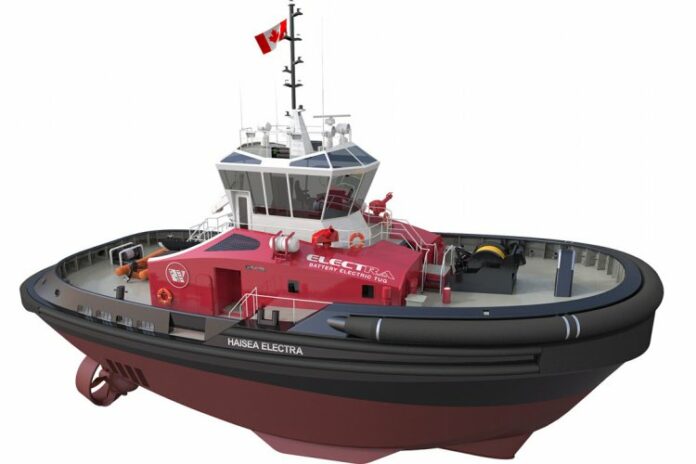
The technology group Wärtsilä will supply the main engines and LNG fuel gas supply systems for two new LNG-fuelled escort tugs being built for Canada’s HaiSea Marine, a joint venture between the Haisla Nation and Seaspan Marine Transportation. 

The ships have been designed by Robert Allan Ltd. Naval Architects and Marine Engineers, and are under construction at Sanmar Shipyards in Turkey. They are expected to be two of the most environmentally advanced escort tugs operating in the coastal waters of British Columbia in Canada. The order with Wärtsilä was placed in April 2021.

The two vessels will each be powered by Wärtsilä 34DF dual-fuel engines operating with LNG fuel. The engines will be fitted with Wärtsilä’s NOx selective catalytic reduction (SCR) system to restrict emissions of nitrogen oxides. Wärtsilä will also supply its LNGPac fuel storage, supply and control system. The Wärtsilä equipment is scheduled for delivery to the shipyard in 2022.

Mark Keneford, General Manager, Sales, Wärtsilä Marine Power, says:

“This project aligns closely with Wärtsilä’s efforts to develop and promote environmentally sustainable technologies, and to support the global decarbonisation of shipping. We are pleased to continue our strong relationship with Seaspan Marine, and are proud to have our solutions included in the Robert Allan RAstar design for this project.” 

Wärtsilä has previously delivered similar equipment for two in-service ferries operated by Seaspan Ferries, another Seaspan affiliated company. The successful performance of these ferries and Wärtsilä’s lifecycle support capabilities in Canada, were cited as being important considerations in the award of this contract.

One Sea White Paper sets agenda for autonomous ship safety regulation

0

A new white paper from the One Sea Ecosystem outlines the significant contribution autonomous ship technology can make to improving maritime safety and highlights the urgent need for a revised regulatory framework.

One Sea has released a new white paper focusing on the relationship between ship safety and autonomous technology.

Available to download free of charge, the paper examines the safety advances achieved by and expected from autonomous ship technology, with the aim of driving the consultative process forward towards a revised set of maritime regulations. It considers today’s safety framework, cybersecurity, views from ship owners and operators, consequences for labour and insurance, and the classification implications for varying levels of autonomy, before offering a proposal for next steps by the industry.

In his foreword, Capt. Eero Lehtovaara, Chairman of One Sea, writes:

“Not only can autonomous ships greatly contribute to increasing productivity, bolstering sustainability and improving working conditions at sea; direct and powerful contributions to enhancing maritime safety have also been identified.

“Technology advances however are dependent on regulatory frameworks. As a group of technology pioneers with some of the world’s most distinguished marine automation technology innovators and enables, One Sea has considerable knowledge and expertise to share as new rules and regulations are developed.”

The need to develop harmonised international safety rules covering autonomous ships is now pressing, the paper goes on to argue. As a priority, One Sea seeks to engage regulators, insurers, representatives of maritime labour, training establishments, flag administrations and classification societies in the dialogue that to shape the future of autonomous shipping to the satisfaction of all.

One Sea Senior Ecosystem Lead, Päivi Haikkola, comments:

“Our aim at One Sea is to assist in the development of safe autonomous systems in global shipping that could lead towards an effective operational maritime ecosystem by 2025. Collaboration between all stakeholders in the field is essential to address the challenges of digitalisation and the development of autonomous systems.

“One Sea stands ready to offer its further support to regulatory efforts at every level, including through contributions to the International Maritime Organization. The One Sea ecosystem plans to set the course for new industrial standards. In doing so, we invite all stakeholders to participate fully due to their likely consequences for maritime safety, and for facilitating new business models, reducing shipping’s carbon footprint and opening new commercial opportunities.”

Austal Australia delivers 11th Guardian-class Patrol Boat

0

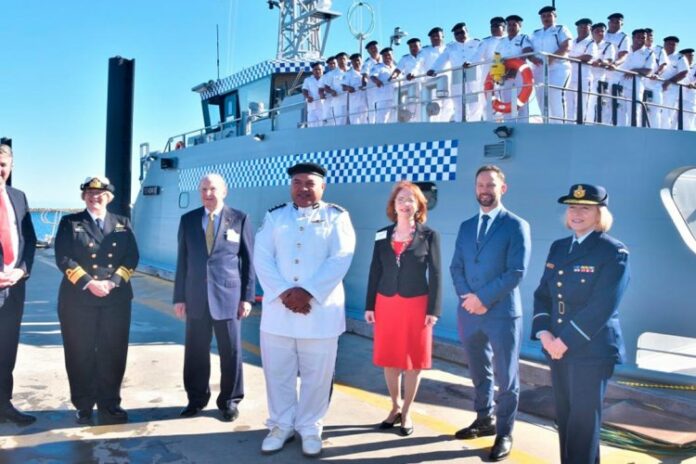
The vessel, the RKS Teanoai II, was gifted by the Australian Government to the Government of the Republic of Kiribati at a certificate signing ceremony held at Austal Australia’s Henderson shipyard. 

The vessel is the first Guardian-class Patrol Boat to be delivered to Kiribati under the Pacific Patrol Boat Replacement Project (SEA3036-1), part of the Australian Government’s Pacific Maritime Security Program; and replaces the original RKS Teanoai, a Pacific-class Patrol Boat delivered in 1994.

Austal Chief Executive Officer Paddy Gregg said the latest delivery of the Pacific Patrol Boat Replacement Project highlighted the resilience, flexibility and efficiency of the teams collaborating from Austal Australia and the Department of Defence.

Mr Gregg said:

“The Teanoai II was originally scheduled for delivery in the middle of 2020, but due to the COVID19 pandemic was postponed until such time as we could get the Kiribati crew safely into Australia.”

“While the delivery of this particular vessel was postponed, it did not affect, delay or hinder the construction or delivery of subsequent Guardian-class Patrol Boats and we remain on track to deliver all 21 vessels by the end of 2023.”

Faster, with improved seakeeping, better amenities and an enhanced mission capability – including an integrated RHIB stern launch and recovery system – the Guardian-class Patrol Boats provide the Kiribati Police Force with a much improved naval asset to carry out border patrols, regional policing, search and rescue, and many other operations domestically and internationally.

The Pacific Patrol Boat Replacement (PPB-R) Project was awarded to Austal in May 2016, with an additional contract option awarded in April 2018, taking the program to 21 vessels, valued at more than A$335 million.

Twelve Pacific Island nations including Papua New Guinea, Fiji, the Federated States of Micronesia, Tonga, Solomon Islands, Cook Islands, Kiribati, Marshall Islands, Palau, Samoa, Tuvalu, Vanuatu and Timor Leste will receive the vessels through to 2023.

The 39.5 metre steel monohull patrol boat – designed, constructed and sustained by Austal Australia – is based on a proven design platform that has included the 38 metre Bay-class, 56 metre Armidale-class and 58 metre Cape-class patrol boats that are in service with the Australian Border Force and Royal Australian Navy.

Vår Energi confirms significant discovery in the North Sea

0

Vår Energi confirms discovery of oil and gas in the King and Prince exploration wells in the Balder area in the Southern North Sea.

The combined King and Prince exploration wells proved successful with the latest preliminary estimates showing volumes between 60-135 million barrels of recoverable oil equivalents.

Vår Energi CEO, Torger Rød, says:

“The discoveries prove that there are still opportunities in the mature areas on the Norwegian Continental Shelf. I’m proud to represent yet another discovery that will generate activity and create value – for the company, the owners, the supplier industry and the society at large. Clearly, our near-field exploration strategy is paying off and is certainly an approach we will continue to pursue.”

With the King and Prince result, Vår Energi celebrates the fifth significant exploration discovery so far this year. VP Exploration Denis Palermo and his team are on a winning streak.

He says:

“This is fantastic news. We know that there is significant remaining exploration potential in the Balder licenses and I’m proud and glad to see that all the hard work put down by the team has paid off.”

In addition to the team effort, Palermo is clear on what are the success factors:

“We have years of experience and huge amounts of data from the Balder area. Thanks to a systematic exploration strategy, our deep understanding of the area, thorough geological processes, and new technology we are able to unlock the true Balder potential.”

The licensees (Vår Energi AS 90% and Mime Petroleum AS 10%) consider the discoveries to be commercial and will assess tie-in to the existing infrastructure in the Balder area.

A King and Prince development project has already started in order to reduce time from discovery to production as much as possible.

VP Field Development and Projects, Bjørn Thore Ribesen, explains:

“The discoveries fit in well with our area plans and continuous development of the Balder Area as an important production hub for Vår Energi. We are in the process of revitalizing the area and these discoveries will increase future value creation.”

The exploration wells are located approximately six kilometers north of the Balder field and three kilometers west of the Ringhorne platform.

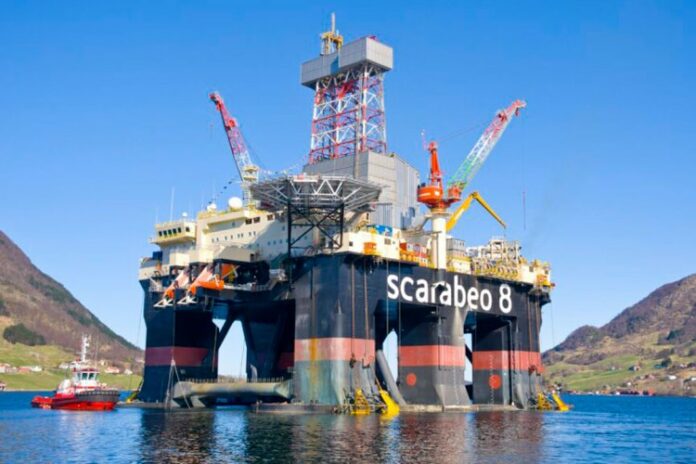
King/Prince was drilled in PL 027 by Scarabeo 8. The Prince well encountered an oil column of about 35 meters in the Triassic Skagerrak formation within good to moderate reservoir sandstones (2 374 meters below sea level).

The King well discovered a gas column of about 30m and a light oil column of about 55 meters with some thick Paleogene injectite sandstone with excellent reservoir properties (2 353 meters below sea level).

An additional King appraisal sidetrack further confirmed a 40m gas column and an oil column of about 55 meters of which about 35 meters of massive oil bearing injectite sandstone with excellent reservoir quality.

Vår Energi AS (operator) holds a 90% stake of the license and Mime Petroleum AS is partner with 10%.

Damen reaches major milestone in fully-electric tug project

0

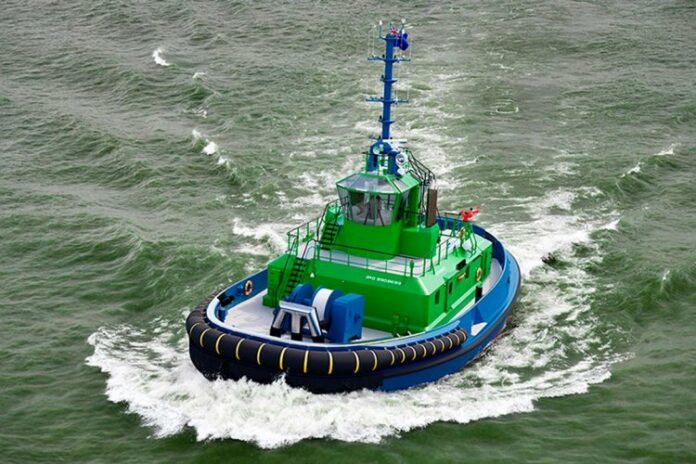
The shipbuilder is constructing the RSD-E Tug 2513, named Sparky, for New Zealand’s Ports of Auckland. Recently, Damen Song Cam Shipyard in Vietnam installed the tug’s batteries.

This involved the installation of some 2,240 batteries, totalling 2,784 kWh. With this, Sparky will carry out two or more berthing/unberthing operations with up to 70 tonnes bollard pull on a single charge. Following, it will take just two hours for the tug to recharge to its full capacity.

For redundancy purposes, the batteries are arranged in strings. If one battery in a string were to fail, the others would simply carry on the work.

Ports of Auckland placed the order with Damen in August, 2019. The ports’ intention is to be fully zero emissions by 2040. To achieve this, they needed a zero emissions tug.

Work continues on Sparky and Damen anticipates delivery to be end of this year.

Damen, with its goal of becoming the world’s most sustainable shipbuilder, was keen to take on the challenge. The shipyards group already has extensive experience in the construction of fully electric vessels. Damen has delivered seven fully-electric Ferries 2306 E3 for the City of Copenhagen in Denmark, and a fully-electric Cutter Suction Dredger 650 for an Australian client.

The shipbuilder is also constructing fully electric ferries for Ontario, Canada; a Road Ferry 6819 E3 & Road Ferry 9819 E3, as well as six hybrid Road Ferries 8117 E3 for BC Ferries, British Columbia, Canada. The hybrid vessels are being prepared for future conversion to full electric. Additionally, Damen is constructing nine waterbuses for Blue Amigo to operate in the Netherlands. Three of the vessels will be fully electric, while the remaining hybrid waterbuses will be prepared for future conversion to full electric. Damen has delivered electric vessels with a total of 20 mW of battery power to date.

The E3 certification is Damen’s in-house developed sustainability accreditation for its vessels. It stands for environmentally friendly, efficient in operation and economically viable.

Damen’s strategy is to further develop its existing ship types into electric versions, drawing on proven solutions and combining them with innovation for increased efficiency and sustainability. In addition to the RSD Tug 2513, Damen is also able to electrify its ASD Tug 2813.

VIDEO: America’s newest aircraft carrier endures full ship shock trials

0

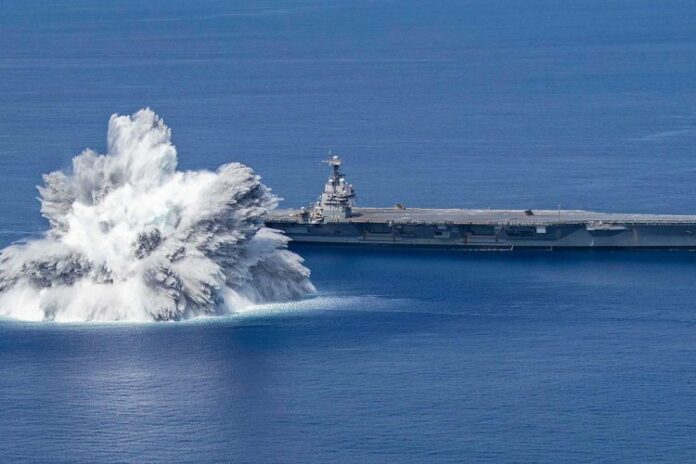
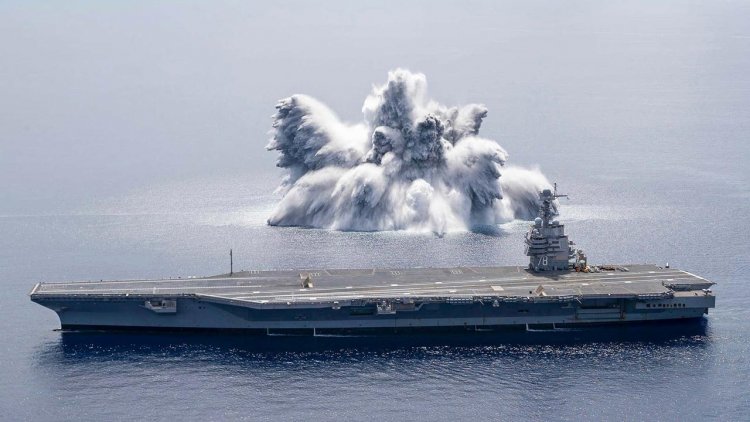
On Friday, June 18, the USS Gerald R. Ford (CVN 78) successfully completed the first scheduled explosive event as part of Full Ship Shock Trials (FSST). 

The first-in-class aircraft carrier was designed using advanced computer modeling methods, testing, and analysis to ensure the ship is hardened to withstand battle conditions, and these shock trials provide data used in validating the shock hardness of the ship.

The U.S. Navy has conducted FSSTs over several decades, most recently for the Littoral Combat Ships USS Jackson (LCS 6) and USS Milwaukee (LCS 5) in 2016; as well as for the San Antonio-class amphibious transport dock USS Mesa Verde (LPD 19) in 2008, the amphibious assault ship USS Wasp (LHD 1) in 1990, and the guided missile cruiser USS Mobile Bay (CG 53) in 1987. The last aircraft carrier to execute FSST was USS Theodore Roosevelt (CVN 71) in 1987.

The Navy is conducting the shock trial testing in accordance with Office of the Chief of Naval Operations Instruction 9072.2, and as mandated by the National Defense Authorization Act of 2016.

Ford’s shock trials are being conducted off the East Coast of the United States, within a narrow schedule that complies with environmental mitigation requirements, respecting known migration patterns of marine life in the test area. The Navy also has employed extensive protocols throughout FSST to ensure the safety of military and civilian personnel participating in the testing evolution.

Ford is the newest and most advanced aircraft carrier in the U.S. Navy. The ship closed out a successful 18-month Post Delivery Test & Trials period in April, during which the crew completed all required testing, accomplished planned improvements and maintenance ahead of schedule, and learned valuable lessons to increase the reliability of Ford-Class systems. At the same time, the ship also served as the sole East Coast platform for conducting carrier qualifications.

Upon completion of FSST later this summer, Ford will enter a Planned Incremental Availability for six months of modernization, maintenance, and repairs prior to its operational employment.

Avikus successfully demonstrates fully autonomous navigation

0

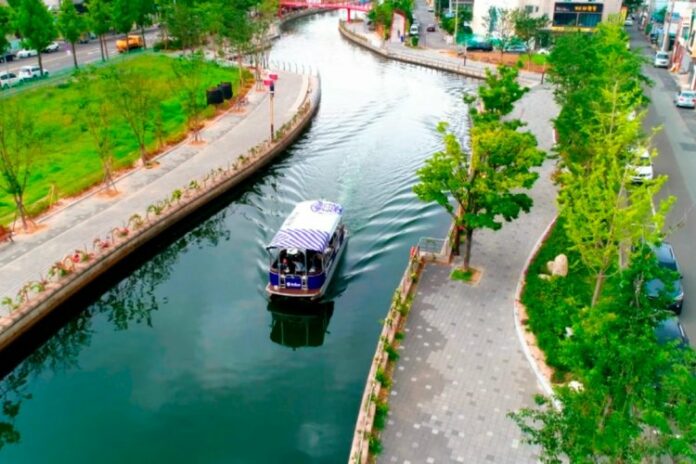
Avikus announced that it successfully completed fully autonomous, unmanned operation of a cruise ship for 12 passengers at a demonstration event held on Wednesday in Pohang-si, Gyeongsangbuk-do.

The 10-kilometer-long Pohang Canal is known for complex and challenging navigating environments, as the average width of its waterway is as narrow as 10 meters and the inner and outer ports are highly crowded.

Also present at the demonstration event were representatives from KAIST (Korea Advanced Institute of Science and Technology), Korea Maritime & Ocean University, and South Korea’s leading telecommunications company KT.

Deploying state-of-the-art autonomous navigation technologies, such as HiNAS (Hyundai Intelligent Navigation Assistant System), which automatically recognizes objects surrounding the vessel and route to alert the risk of collision based on augmented reality (AR), and HiBAS (Hyundai Intelligent Berthing Assistant System), which provides a full view of the ship when berthing or clearing, Avikus demonstrated fully autonomous navigation of the ship throughout all stages from departure and sailing to return and docking.

Notably, advanced navigation assistance systems, including special cameras and LiDAR (Light Detection And Ranging), a remote sensing technology that uses the pulse from a laser to collect measurements as adopted by a large number of autonomous vehicles, have achieved a higher level of autonomous functioning that allows ships, without the help of seafarers, to cope with various unexpected situations, such as adverse weather conditions, strong currents, and appearance of fishing boats.

Building on this successful demonstration, Avikus plans to spur its R&D efforts for autonomous navigation technologies and expand their application to all types of ships, including passenger ships and cargo ships.

To that end, Avikus is planning for the world’s first transoceanic voyage of a large merchant ship relying on autonomous navigation technologies in conjunction with a large local shipping company, possibly as early as in the second half of this year.

Lim Do-hyeong, CEO of Avikus, said:

“We are poised to become the world’s first to commercialize a self-sailing leisure boat next year, based on our fully autonomous navigation technologies successfully demonstrated. Through continued investments in R&D and talent, we will establish a position as a first mover in the autonomous ships market, which is considered the ultimate destination for future maritime mobility technologies.”

According to Acute Market Reports, a global market research service provider, the market for autonomous ships and related equipment is expected to grow at a CAGR (compound annual growth rate) of 12.6%, reaching USD 235.7 billion by 2028.

Avikus, launched as HHI Group’s in-house venture No. 1 in December 2020 to help advance and deepen the Group’s technologies and expertise relating to autonomous ships, is growing into a leader in the areas of high-tech navigation assistance systems and autonomous navigation solutions.