-1.1 C
New York
Home Blog Page 598

METIS and Geislinger integrate vibrations into Neptune Lines vessel performance trial

0

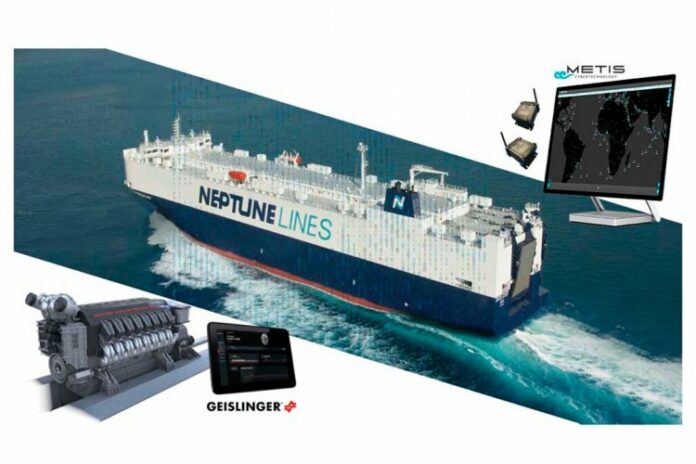
Pure Car & Truck Carrier operator Neptune Lines is hosting shipboard trials of a next-level digital service for Marine Powertrain Condition Analysis, in a collaborative initiative between METIS Cyberspace Technology and Geislinger GmbH.

The trials will interconnect the latest Geislinger GMS Mk6 continuous monitoring and measuring system for rotating components of the entire marine propulsion powertrain with the METIS IoT platform for data analytics. The combination will provide superior, in-depth analytics to correlate condition evaluations of the ship’s propulsion system with navigational and operational conditions already being analyzed by METIS. The new digital service will provide information to the crew and to the technical department regarding the condition of the main engine vibration damper and any abnormalities likely to cause torsional vibrations on the main engine and propulsion shaft.

Rather than creating a common product, METIS and Geislinger are combining knowledge from different domains to connect two cloud-based platforms at the data and service level. The results will offer a realisation of 4th industrial revolution objectives, according to Mike Konstantinidis, CEO, METIS Cybertechnology, with each partner extending performance monitoring functionality.

He said:

“For METIS, this is a significant evolution of shipping’s most advanced end-to-end digitalization platform, which integrates and displays the very best third-party digital services in a one stop shop for vessel performance analytics. Sharing specific data benefits decision making by adding value to analytics and bringing new insights into overall performance.”

Adrian Geislinger added:

“Geislinger’s marine clients are fully aware of our expertise in high-performance drive lines and the benefits of our damping technology are routinely verified by advanced monitoring solutions. We are delighted to work with METIS in bringing this expertise to a project integrating latest developments in torsional vibration and vessel performance analytics.”

METIS secured a fleet-wide contract from Neptune Lines to implement its data acquisition and advanced analytics platform in late 2020, in a first AI deployment for vessel performance management by a PCTC owner. The carrier specified additional functionality, including emissions indicator monitoring, antifouling coatings performance and generator operations in port.

Nikos Paterakis, Chief Operating Officer, Neptune Lines, said:

“We have made a commitment to data analytics to enhance efficiency as part of its service to the logistics industry. This pilot will offer insight into a key parameter in performance whose significance can be underestimated.”

A second vessel trial of the new METIS-Geislinger approach has already been confirmed for a very large crude carrier. On completion of the proof of concept, the two companies also intend to investigate using AI and Machine Learning models to benefit predictive maintenance.

Four years after launch, game-changing METIS data acquisition and analytics has been implemented on more than 270 ships and is measuring 3.2 billion performance data points monthly.
MPCC signs agreement to acquire Songa and operational update

0

MPC Container Ships ASA has entered into a share purchase agreement to acquire Songa Container AS for an aggregate purchase price of USD 210.25 million on a debt and cash free basis.

Upon closing of the Transaction Songa’s fleet will comprise 11 container vessels with an average size of 2,250 TEU and an average age of 11.9 years under the assumption of Songa having completed the sale of its vessels Songa Haydn, City of Hong Kong and FS Ipanema. Nine of the acquired vessels are fitted with scrubbers while three are equipped with the highest ice-class and hence well suited for Baltic trades.

With the Transaction, MPCC aims to reinforce its position as the leading intra-regional container tonnage-provider with a combined fleet of 75 ships and a total capacity of ~158,000 TEU. The Transaction will add significant scale and operating leverage to the MPCC platform in a persistently strong container market, with rates, charter durations and asset values strengthening on a continuous basis.

For further details on the transaction and for an operational update on the Company please refer to the presentation. An investor call will be hosted on Wednesday 23 June at 10:00 CEST. Please see below for call-in details.

The Songa fleet has an estimated EBITDA backlog of USD 22.5 million with an average charter length of about 9 months. On a proforma basis MPCC currently expects revenues for the combined fleet in the range of USD 290-315 million and an EBITDA in the range of USD 170-180 million for FY 2021.

Based on the combined charter portfolio and assuming charter renewals at around current market rates and periods, the MPCC fleet is positioned to potentially generate an EBITDA of above USD 350 million for 2022, with USD 70-75 million of this generated by the Songa fleet. On the basis of the same assumptions for 2023 EBITDA for this year could exceed USD 450 million with USD 80-90 million  generated by the Songa fleet.

It is agreed that approximately USD 115 million of the purchase price (taking into account Songa’s cash and net working capital) will be settled in cash. This amount includes the refinancing of the outstanding debt. The remaining portion will be settled by way of issuing approximately 48-50 million new shares in MPCC (based on an economic effective date of the Transaction of 31 May  2021 when a mutual understanding of the main terms of the Transaction was reached between the parties and a closing price of the MPCC share of NOK 17.34). Such consideration shares in MPCC shall be of the same class as MPCC’s ordinary shares and shall be listed on the Oslo Stock Exchange, and subject to a customary lock-up agreement for a period of 3 months from completion of the Transaction.

In relation to the cash consideration DNB Bank ASA has committed to provide a USD 127.5 million acquisition facility with a 2 year tenor and effective interest rate of 500 bps plus Libor.

The Transaction is subject to customary conditions for completion and is expected to be completed by the end of July 2021.

Ecochlor completes all testing for EcoOne™ filterless BWMS

0

Ecochlor has announced the completion of all land-based and shipboard testing for the filterless, EcoOne™ ballast water management system (BWMS) in preparation for an application for USCG and IMO BWMS Code Type Approvals.

DNV was chosen to act as the Independent Lab (IL) throughout the entire process and has been responsible for the evaluation, inspection, testing oversight and submission of the EcoOne™ BWMS Type Approval applications.

The Land-based biological efficacy testing, was undertaken by the Golden Bear Research Center (GBRC) in California, USA. GBRC performed the tests, analyzed samples, and managed test results in the required format by the IL. Whole effluent toxicity testing was also performed successfully as part of the land-based tests.

The Shipboard testing, undertaken by DHI as sub-laboratory, was completed to test biological efficacy and related shipboard operational performance (OP) of the EcoOne™ BWMS on board a commercial vessel. DHI performed the shipboard tests, analyzed samples, managed test results in the required format by the IL. Due to global pandemic restrictions, shipboard testing was allowed to be performed on two commercial vessels owned by Maran Tankers, a VLCC and an Aframax, during their typical vessel voyage routes within the 6-month testing period.

Steve Candito, Ecochlor CEO said:

“From our first test in September 2020 to its completion in June 2021, the EcoOne™ system has gone through an extensive review using the most robust and stringent requirements in the maritime industry for BWMSs. Each step of the process – starting with an engineering design that is even simpler and requires even less maintenance than our two-step filtered BWMS ─ has leveraged Ecochlor’s high standards for excellence and reliability into our new product line. We are pleased to have completed these tests on our new filterless BWMS with very impressive results as confirmed by DHI and GBRC.”

The filterless EcoOne™ BWMS is a one-step treatment process utilizing ClO2 alone. Vessels operating this system can operate anywhere in marine and brackish waters (i.e., ≥ 1PSU) and with no restrictions on temperature or turbidity.

The EcoOne™ Hybrid BWMS has a dual mode of operation with both filtration & ClO2 or ClO2 alone. This system will allow shipowners to operate their BWMS either with or without a filter. This option will be suited for shipowners who wish to have the flexibility of unrestricted operation in freshwater globally, with the convenience of a no-filter system. Vessels that already have an Ecochlor BWMS with filters installed can upgrade to the Hybrid option with minimal cost.

DNV secures CCS pipeline materials study for Neptune Energy in the Dutch North Sea

0

DNV has been awarded the contract for the carbon capture and storage (CCS) pipeline materials study by Neptune Energy Netherlands to assess the fracture and suitability of offshore pipelines for re-use in CO2 transport.

The pipeline materials analysis is part of a wider feasibility study being conducted by Neptune Energy, in cooperation with its licence partners and carbon dioxide (CO2) emitters, to review plans for a large-scale offshore CCS project at the Neptune-operated L10-area in the Dutch North Sea.

If the project is developed, it will be one of the largest CCS facilities in the Dutch North Sea and could meet more than 50% of the CO2 reduction being targeted by the Dutch industrial sector.

Prajeev Rasiah, Senior Vice President, Regional Director Energy Systems Northern Europe at DNV said:

“We see CCS as one of the ways to accelerate the decarbonization of the energy sector. DNV is a pioneer in the field of CCS, with a track record dating back to the 1990s, and we are excited to be involved in a project of this size with Neptune Energy. With the potential to be one of the largest CCS facilities in the Dutch North Sea, at scale projects such as these will be significant for CCS technology advancement and cost reduction.”

René van der Meer, Head of New Energy at Neptune Energy said:

“Given the existing infrastructure that connects offshore with onshore, there is real potential for the Dutch North Sea to develop new energy faster, more efficient and in a safe way. With support from partners, such as the experienced team of DNV, we are well placed to enable offshore CCS and offshore green hydrogen production using existing infrastructure. Using what is already there, will not only speed up new energy projects, but will cost significantly less and it doesn’t unnecessarily disturbs the surroundings like the seabed.”

The first phase of the DNV study will identify the most advanced approaches to ductile fracture assessments in dense phase CO2 pipeline systems and the applicability of such assessments to both welded and seamless subsea line pipe. This phase will involve technical literature reviews to understand the most appropriate approach to characterise the material failure behaviour.

The most suitable approach, identified in phase one, will be used in phase two of the study to assess the likely suitability of the existing pipelines for  dense phase CO2 transport at up to 120 bar.

The output of the study will inform the ongoing Neptune feasibility study to provide an increased level of confidence in the suitability, or otherwise, of the existing pipelines which would be set to inject between five and eight million tonnes of CO2 annually into the depleted gas fields.

Kongsberg to deliver real-time drilling software Sitecom® to Ocyan

0

Ocyan is one the largest drilling contractors in Brazil with an offshore fleet in service for major operators in the area.

From now on, their rigs will be using Kongsberg Digital’s SiteCom solution to collect and convert data from different data sources making standard data available for Ocyan´ s main data platform Ocyan SMART. Besides the Drilling Control System, rigs are also configured to receive marine data, data from dynamic positioning systems, ocean current meter systems, and will be integrated with third-parties for calculating drilling riser fatigue.

Kristian Hernes, SVP Digital Wells, Kongsberg Digital, says:

“We are very happy Ocyan decided to use SiteCom for making data available in WITSML. As an operator, having access to complete, standard data in one system is a prerequisite to digitalize and automate processes in scale. Ocyan’s requirements for real-time data shows the robustness and versatility of SiteCom as a data collection software for the industry.”

Rodrigo Chamusca Machado, Technology and Innovation Manager, Ocyan, says:

“SiteCom is helping Ocyan to have a reliable and robust system onboard, connected to multiple sources and different protocols, converting data to WITSML standards in order to meet our Client’s requirements.”

Designing non-fossil fuelled, Ulstein X-BOW container vessel for EDGE Navigation

0

EDGE Navigation AS has chosen Ulstein Design & Solutions AS as their partner in developing a container vessel with the patented X-BOW® hull lines for non-fossil propulsion towards achieving zero emissions in maritime transport.

Jakob Tolstrup-Møller, Managing Director – CEO at EDGE Navigation, says:

“An energy efficient design is fundamental to all new containership designs. Energy efficiency will be a key component to making the energy transition happen and with Ulstein we have a partner with a strong track record for innovative designs, including their proven X-BOW® solution. Less power needed per container under a wider range of operating scenarios due to the X-BOW will lower the bar for switching into Green Energy propulsion.”

Lars Ståle Skoge, commercial director at Ulstein Design & Solutions, comments:

“This assignment is an ideal project for Ulstein. One of our core values is sustainable growth, and in this project, we develop further the design of container vessels e.g. by using non-fossil fuel propulsion as well as the energy-efficient X-BOW hull design, to achieve the goal of green maritime transport”.

The global containership fleet numbers today about 5,350 ships with about 24 million TEU carrying capacity – all with fossil fuel propulsion.

Tolstrup-Møller and Skoge firstly engaged in talks about X-BOW container vessels more than ten years ago.

Tolstrup-Møller states:

“Container transportation is an integral part of the global economy affecting the daily life of all directly or indirectly. The energy transition will force a paradigm shift in the maritime industry as shippers / cargo-owners look to eliminate emissions. Consequently, we need to innovate by adapting and combining technology towards achieving zero-emission powering. Given the paramount need to provide for efficient use of energy, the X-BOW is an optimal design solution, and we are working very closely with Ulstein Design & Solutions now to develop an efficient design that allows for innovative green energy power solutions.”

EDGE Navigation is a maritime start-up focused on developing commercial ships with non-fossil propulsion to enable the switch into renewable energy. The company is based in Oslo, Norway.

Makita order marks Japanese debut for ABB’s A255-L turbocharger

0

Japanese engine builder Makita has selected ABB’s latest low-speed turbochargers for an engine being built for a chemical tanker, marking the first time that a Japanese-built engine will feature the compact, powerful A255-L turbochargers.

The turbochargers will be applied on a 6S40ME-B9.5 engine built by Makita which manufactures MAN engines under the license. The A255-L is designed to provide high turbocharging efficiency from a small unit, reducing overall engine size and giving ship designers greater flexibility in engine room design for small bore two-stroke marine engines.

The engine and A255-L turbochargers have completed shop tests and will be delivered to the shipyard today. Makita’s tests confirmed good turbocharger performance across the entire load range, with turbocharger efficiency exceeding 70%.

Makita is a leading builder of small two-stroke engines and places a strong focus on reliability and economic performance. The A255-L is designed based on ABB’s long-established A200-L and provides benefits both in capex and opex by reducing the turbocharger footprint. The turbochargers are designed to be compatible with NOx and SOx abatement technologies, helping shipowners comply with future regulation on air pollution and greenhouse gas emissions. 

A Makita spokesperson said: 

“As an engine manufacturer, downsizing, weight reduction and high turbocharger efficiency are very important. A highly reliable turbocharger is particularly important for chemical tankers as service opportunities are limited. The A255-L fully meets our needs. The high efficiency of the turbocharger will have a positive effect on fuel consumption and contribute to making the engine more competitive in the global market.”

The A255-L is designed mainly for smaller vessels of 10,000-40,000 dwt that use small bore two-stroke engines. Typical vessels include bulk carriers, tankers and car carriers, many of which are built at Japanese shipyards.

Alexandros Karamitsos, Head of Global Sales Low-Speed Turbochargers, ABB, said: 

“Japan is a key shipbuilding market and Japanese engine builders are renowned for their high standards and attention to detail. Coming at a time when cost pressures are increasing, the order from Makita demonstrates both the high performance and the competitiveness of A255-L.

ABB Turbocharging is a global leader in turbocharging technologies and digital optimization solutions for engines ranging from 500 kW to more than 80,000 kW. Its installed base of more than 200,000 turbochargers and a network of more than 100 service stations worldwide.


The Mission to Seafarers launches On Board Mental Health Champions programme

0

International seafarer welfare charity, The Mission to Seafarers has today announced the launch of its new On Board Mental Health Champions webinars and podcast series, as part of its WeCare programme. Created specifically for seafarers, the Mission believes this really does address the unique challenges they face on board.

The Mission recognises that mental health and wellbeing are vitally important issues within the maritime industry, but there is limited practical advice that is immediately available to seafarers.

The Mission’s On Board Mental Health Champions webinar and podcast series intends to provide seafarers with practical tools designed to encourage positive mental health and wellbeing on board. Both resources will provide short, clear and engaging content that is relevant to life on board. It will relate seafarers’ experiences of mental health and wellness, from both an officers’ and crew perspective.

The two 45 minute webinars will be targeted at officers and crew separately and will be broken down into short segments, enabling viewers to watch them at their own pace. There will be supporting downloadable learning materials for seafarers, as and when needed, and a supporting podcast for each webinar, discussing the issues and examples raised in the webinar.

The Revd Canon Andrew Wright, Secretary General, The Mission to Seafarers, commented:

“Being able to provide immediate practical advice to the mental wellbeing crisis we are seeing across the entire shipping industry can make a real difference. Many of the problems at sea stem from the stigma attached to asking for help. We hope this new digital offering that provides practical advice will help reduce these barriers as well as improve onboard relationships and offer constructive support.

“We are very thankful for the support from Shell Shipping & Maritime which has enabled the production of this series. We hope both officers and crew will be able to benefit from this, improving management and communication from senior ranks, as well as helping crew to ask for help or offer support. We look forward to seeing the benefits these solutions can offer to seafarers.”

Seville Port Authority and TMG sign agreement to improve service quality

0

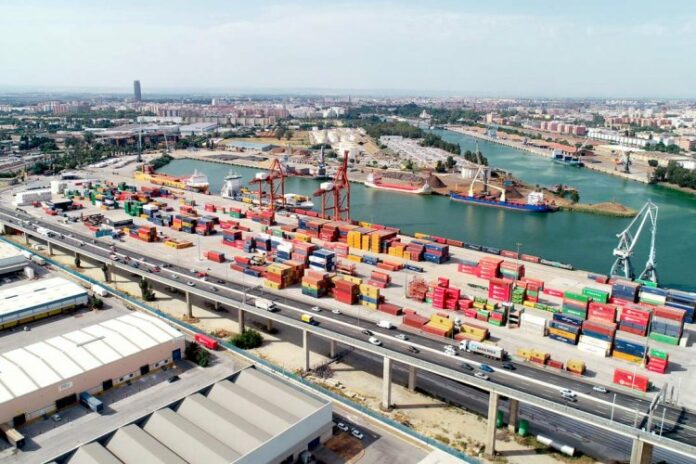
Terminal Marítima del Guadalquivir, owned by Boluda Corporación Marítima and CMA-CGM, has improved its sewerage system and also enhanced energy efficiency with new, more sustainable Reach Stacker cranes

The president of Seville Port Authority (APS), Rafael Carmona, and the director of Terminal Marítima del Guadalquivir (TMG), José Antonio Gascó, have signed a good practices agreement to improve service quality and guarantee environmental excellence in all container-related operations.

The company, which has been managing the container business in the Port of Seville since 2017, will be eligible for a 15% rebate on activity charges, effective once the investments and protocols established in the agreement have been carried out. In this regard, Terminal Marítima del Guadalquivir has put in motion a programme to improve material resources, for facilities maintenance and for environmental monitoring, entailing an investment of around 100,000 euros.

TMG has allocated 88,700 euros to improving the sewerage systems across the entire terminal, which includes installing a new generation hydrocarbon separator; and the energy efficiency of the fleet has been improved with the acquisition of two low-consumption, low-emission reach stacker cranes.

The remaining amount will be designated for staff environmental awareness programs and implementing consumption monitor and control measures. Likewise, TMG has implemented an environmental management system based on the ISO 14001 standard that includes all freight-handling activities related to container terminal operation.

This agreement is governed by Article 245 of the Consolidated Text of State Port and Merchant Marine Law, aimed at all companies who can demonstrate their environmental responsibility and commitment to environmental conservation and protection. Under this article, the Port Authority can award rebates to incentivize improved environmental practices. The first logistics operator to benefit from this measure was Sevitrade, which operates in the lock and liquids terminals of the port.

Final Royal Navy autonomous minehunting boat delivered to Clyde

0

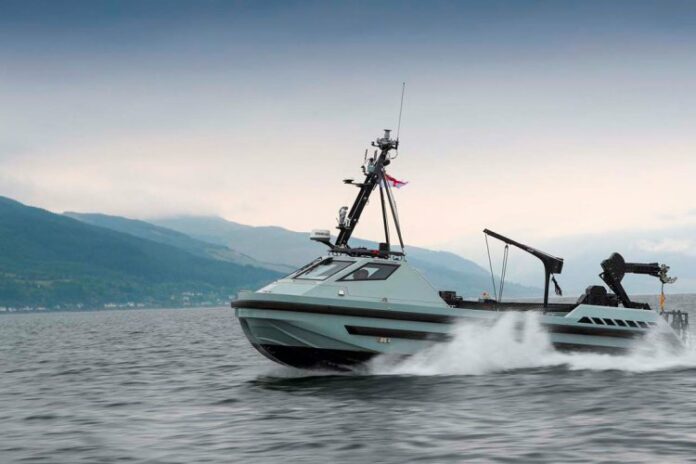
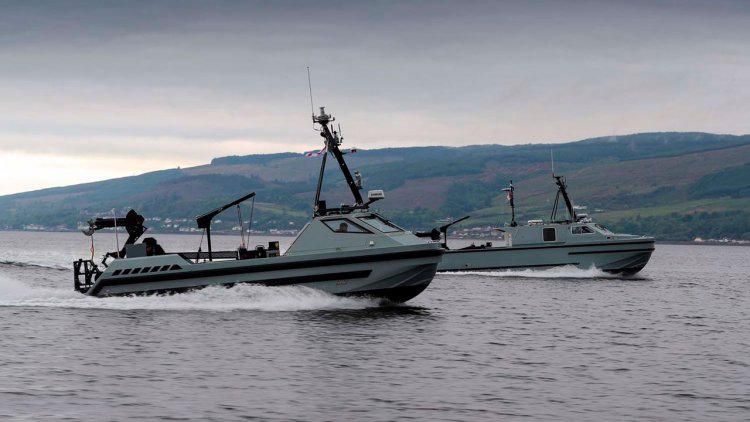
RNMB Hebe, named after the ancient Greek goddess of youth, has now joined sister vessels Harrier and Hazard as part of the Royal Navy’s crewless minehunting programme Project Wilton.

Hebe, four metres longer than her sisters and with more technology on board, is able to work in isolation on operations but also integrated with existing equipment. Together, the three vessels are key components in the future of minehunting operations for the navy.

The boats are capable of working in different configurations – manually, remotely or autonomously – to detect and classify mines and maritime ordnance. The Project Wilton team are currently undertaking comprehensive trials and a capability development programme to ensure they are ready to deliver route survey operations.

Lieutenant Commander Ross Balfour, Officer-in-Charge of Project Wilton, said:

“RNMB Hebe is the final piece in the jigsaw of Project Wilton’s maritime capability. The vessel is a 15-metre Vahana boat, four-metres longer than the other Project Wilton vessels. AEUK have made significant upgrades resulting in Hebe having an organic command, control and communications capability which allows the autonomous control of her sister vessel Harrier. She also has the ability to operate towed sidescan sonar to map the seabed.”

From the relative comfort of Hebe, mine countermeasures experts can coordinate and control the boats or monitor autonomous offboard sensors. They also have the option of controlling the vessels from a land-based remote-control centre.

The entire system is highly flexible and rapidly deployable, capable of being loaded onto trucks and transported to wherever it is required to conduct survey and mine hunting operations.