-1.8 C
New York
Home Blog Page 597

NOAA designates new national marine sanctuary in Wisconsin’s Lake Michigan

0

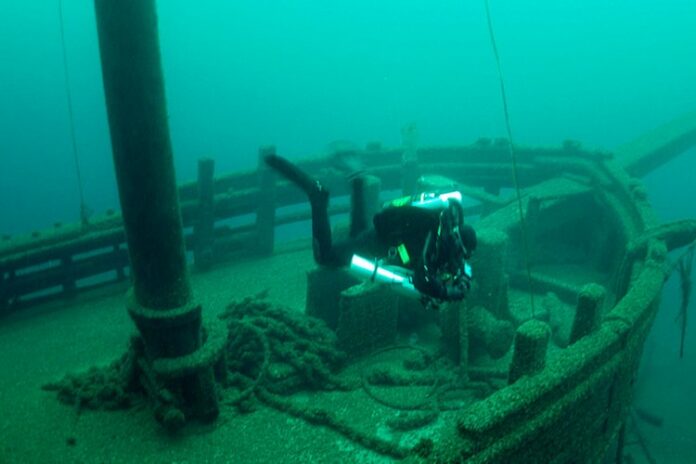
NOAA has announced the designation of a 962-square-mile area of Wisconsin’s Lake Michigan as a national marine sanctuary. Such sanctuaries are protected waters that include important habitats and, in cases like this one, archeological sites.

Secretary of Commerce Gina M. Raimondo, said:

“Preserving this region furthers the Biden-Harris Administration’s vision of locally-led, collaborative conservation. This designation is also an exciting opportunity for the public to celebrate and help protect this piece of our nation’s rich maritime history.”

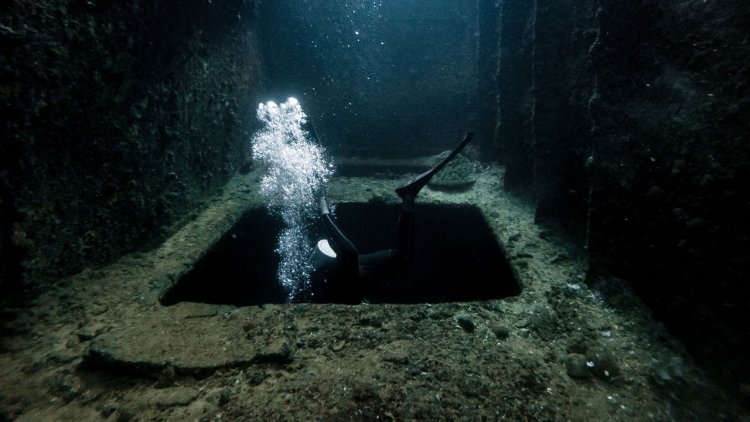
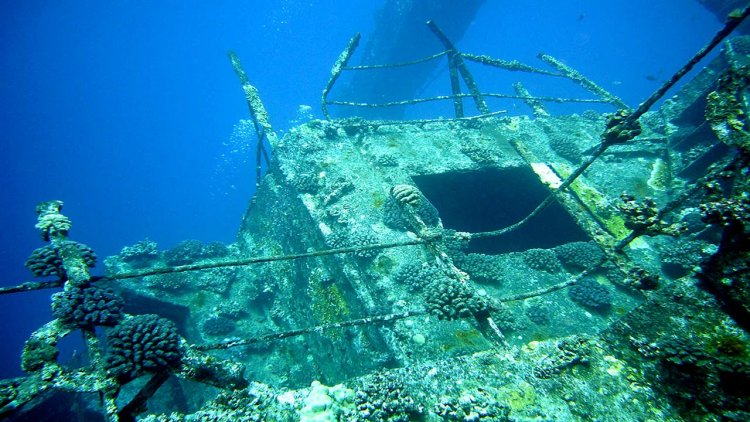
The Wisconsin Shipwreck Coast National Marine Sanctuary will protect 36 historically significant shipwrecks and related maritime heritage resources, 21 of which are listed on the National Register of Historic Places. Well-preserved by Lake Michigan’s cold, fresh water, several of the known shipwrecks are essentially intact and look much like they did when they sank. The area also includes Wisconsin’s two oldest known shipwrecks, and archival research suggests there may be dozens more yet to be discovered.

Spanning the early 1800s through the 20th century, the shipwrecks represent a cross-section of vessel types that played critical roles in transforming the Great Lakes from a maritime frontier into the nation’s busiest waterway. The ships carried grain and raw materials east as other vessels traveled west loaded with coal, manufactured goods, and settlers. 

Nicole LeBoeuf, acting director of NOAA’s National Ocean Service, said:

“The designation of this sanctuary is a milestone for NOAA, Wisconsin, and the nation. This new sanctuary opens the door to world-class research, educational opportunities, and tourism for generations to come.”

NOAA and the state of Wisconsin will co-manage the sanctuary. The sanctuary designation will take effect following 45 days of continuous session of the U.S. Congress after publication of this action in the Federal Register.

Wisconsin Governor Tony Evers said:

“We’re really excited about NOAA’s announcement. The designation builds on 30 years of maritime heritage preservation by the State of Wisconsin and will create exciting new opportunities in education, recreation, and tourism in our coastal communities.”

U.S. Senator Tammy Baldwin of Wisconsin said:

“I worked to support state and local efforts on the nomination of this area of Lake Michigan as a new national marine sanctuary and together we are getting the job done. Our Wisconsin Shipwreck Coast National Marine Sanctuary will protect and preserve historic sites, bring new opportunities for research, and boost our local tourism economy. I am thankful for all the hard work that has gone into this effort in Wisconsin, as I am to have the Biden Administration being a partner that is committed to carrying on the strong Wisconsin tradition of protecting our Great Lakes.”

The area was nominated for national marine sanctuary consideration by a diverse coalition of organizations and individuals at local, state, regional and national levels. This included elected officials, historical societies, businesses, museums, and environmental, recreational, conservation, tourism and educational groups. Principal cities involved in the nomination include Port Washington, Sheboygan, Manitowoc, and Two Rivers.

This is the most recent sanctuary designation since the protection of Mallows Bay, Maryland, about 40 miles south of Washington, D.C. in 2019.

PAR: Ports agree to action points in field of disruption, digitalization and decarbonization

0

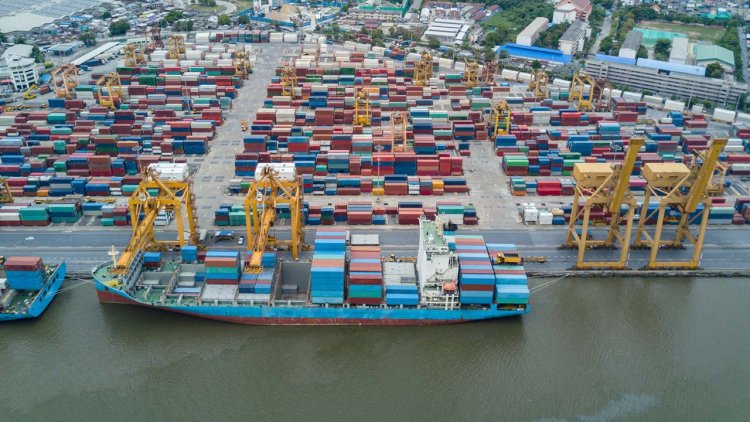
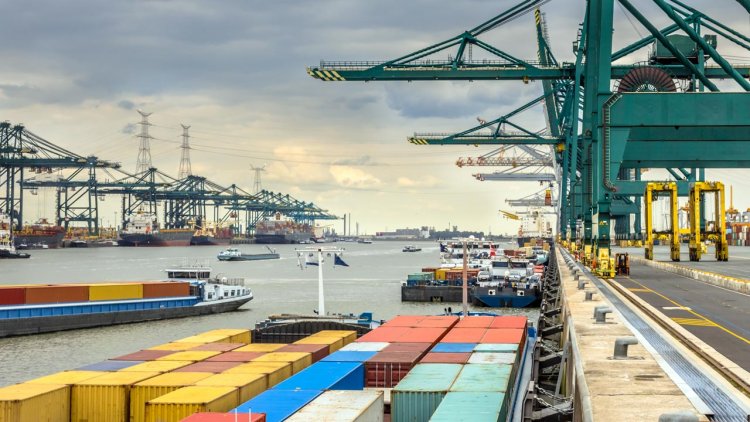
Hosted by the Antwerp Port Authority, this virtual event was held on 22 and 23 June 2021. 

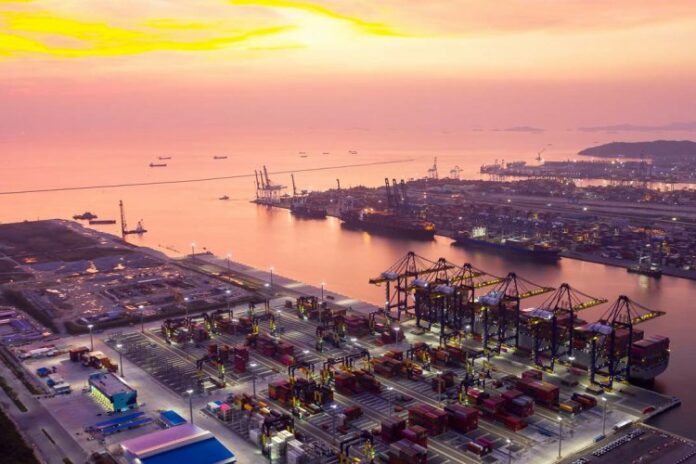
The roundtable, which was initiated in 2015 on initiative of the Maritime Port Authority of Singapore, gathers world ports to engage in open sharing and discussion to address issues of common interests and seek mutually beneficial collaboration opportunities in today’s evolving maritime landscape.  

With this year’s theme being “Enhancing the impact of ports as levers for change”, the CEO’s of the ports of Abu Dhabi, Associated British Ports, Antwerp, Barcelona, Busan, Guangzhou, Hamburg, Klang, Kobe, Los Angeles, Long Beach, Montreal, , Ningbo, Rotterdam, Santos, Seattle, Shanghai, Singapore and Tanger Med discussed how to respond to and prepare for challenges and risks related to ports and shipping. In conclusion of the high-level discussions, the port authorities agreed to a number of concrete actions.

  • Disruption
    The ports have agreed to further develop the PAR Incident Sharing Framework (PAR-ISF) enabling ports to report on a voluntary basis in a systematic and active way on incidents, and to establish a mechanism to enable consultation and dialogue in case of incidents and crisis. 
  • Digitalization
    The ports will further explore the applicability of Port of Rotterdam’s Routescanner as a neutral platform for the visualization of container transport options and to further improve sustainable and cost-efficient global supply chains.
    Ports were also updated on the Port Authorities CIO Cybersecurity Network (PACC-Net) to strengthen cyber resiliency and response through three key focus areas: information-sharing, project collaboration and education.
  • Decarbonization
    Following the discussion on the importance of the decarbonization of shipping and the role of ports to realize this aspiration, the Port Authorities Roundtable will explore support to the Global Maritime Forum’s Getting to Zero Coalition COP 26 call to action which aims to encourage governments, industry and global policy makers to realize zero emission vessels by 2030.
    Port Authorities also considered and discussed other decarbonization initiatives, such as the establishment of MPA’s maritime decarbonization center to collaborate to reduce GHG emissions, implement identified decarbonization pathways and create new business opportunities.

Carnival Cruise Line to grow fleet by two additional ships by 2023

0

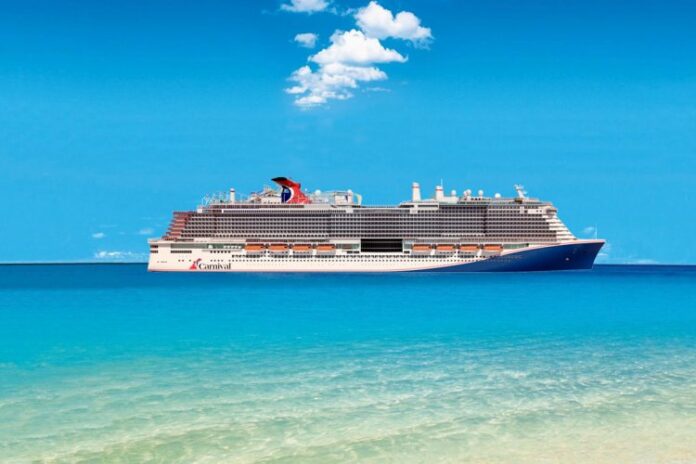
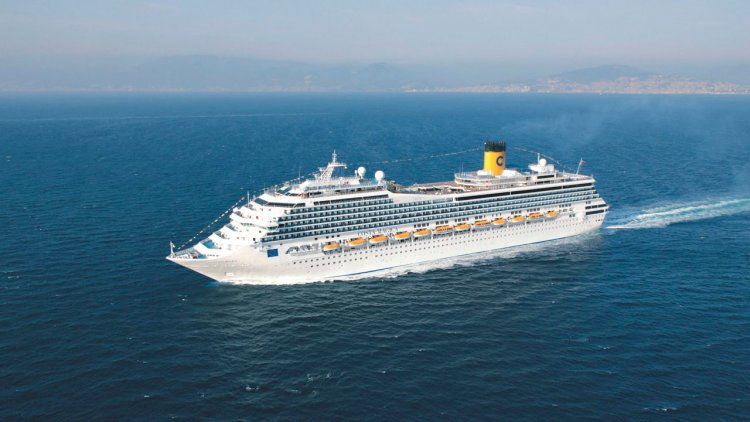
Carnival Cruise Line announced plans today to grow its fleet by two additional ships by 2023, taking the delivery position of an Excel-class ship that had previously been assigned to sister line AIDA Cruises that will arrive in late 2023, as well as taking ownership of Costa Magica from another of its European sister lines, with that ship going through a dry dock, renaming and Carnival-branded conversion and joining the fleet by mid-2022.

These two ships are in addition to the new capacity growth represented by Mardi Gras, Carnival’s first Excel-class, liquefied natural gas (LNG)-powered ship which starts sailing from Port Canaveral on July 31 and her sister ship, Carnival Celebration, which will be delivered and sail from Miami starting in late 2022, as part of Carnival’s 50th birthday festivities.

The addition of these four ships will bring the Carnival fleet to 27 by year-end 2023, and these ships bring many new amenities and features for guests, as well as environmental benefits and enhancements as Carnival continues to exceed and expand targets for emissions efficiencies.

Christine Duffy, president of Carnival Cruise Line, said:

“We are excited about these additions to our fleet which reflect the strong position that Carnival has established in the U.S., the pent-up demand we continue to see for cruise vacations, and the overall plans by Carnival Corporation to optimize capacity and growth in key markets. While our immediate focus is on our restart of guest operations this summer, this is another cause for excitement at Carnival, and we will be announcing more detailed plans about homeports, itineraries and ship names very soon.”

The first Swan Hellenic’s expedition cruise ship was launched at Helsinki Shipyard

0

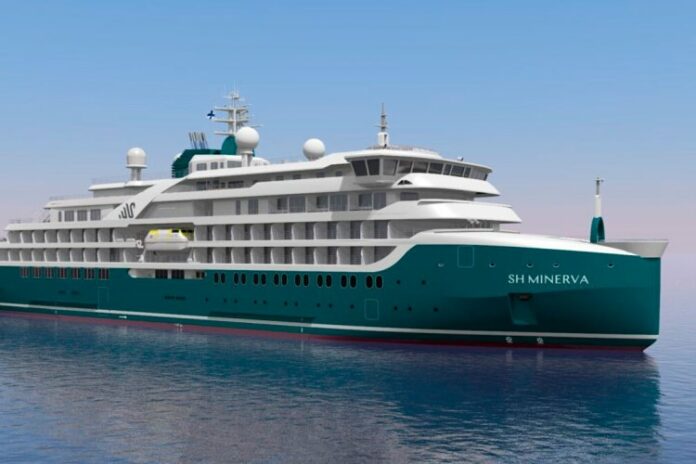
The first ship in the series got water under its keel on Wednesday, 23 June. At the same time, the hull of the second ship, which already has a ship shape, was floated in the dry dock. The production of the third vessel in the series started on June 10.

The ships being built at Helsinki Shipyard are designed to meet the latest emission standards in order to minimize their impact on the environment. Preparations are made for implementing battery technology, which would make it possible to operate also silently. This allows the vessel to move, for example, in sensitive polar nature with minimal disturbances. The vessels are equipped with exhaust gas cleaning, advanced treatment system for wastewater and storage facilities for waste that are required for operating in sensitive polar areas.

The state of art infotainment system provides the cruise passengers with a personal experience and a possibility of sharing their experiences in real time. The ship facilities with open views are designed to provide excellent opportunities to experience the nature surrounding the ship. Onboard you will find also an expedition laboratory and library for studying marine life, and in the observation lounge lectures are held by the experienced expedition leaders and specialists. Expedition day trips on the rubber boats to interesting surrounding areas are central part of the program onboard. Available also kayaking, trekking and other activities. Available also gym, spa & sauna, top quality restaurant and club lounge, as well a pool deck with bar.

Esko Karvonen, CEO, Helsinki Shipyard, says:

“The vessel, which has now been launched, is a forerunner in many respects. The ship’s ice class says its structure is top-notch and is guaranteed by Helsinki Shipyard’s solid experience in building ice class vessels. The ship is designed for top class cruising, with small amounts of passengers, giving a prestigious cruising experience for intelligent customers.” 

The first of the ships under construction at Helsinki Shipyard will be handed over to its client in Fall 2021, the second in Spring 2022 and the third in Fall 2022.

Russian jets and ships target British warship

0

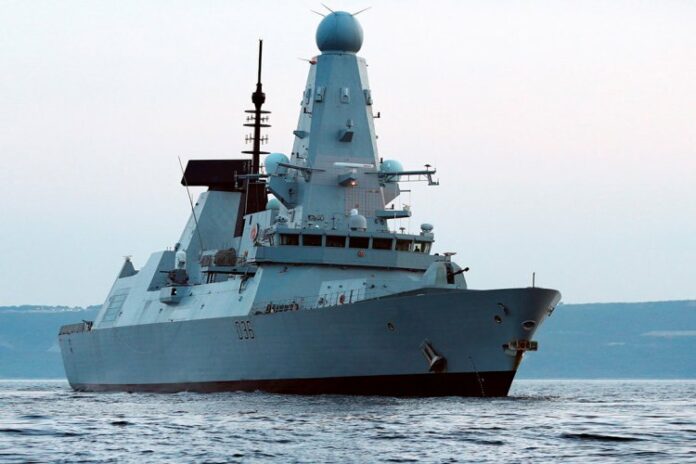
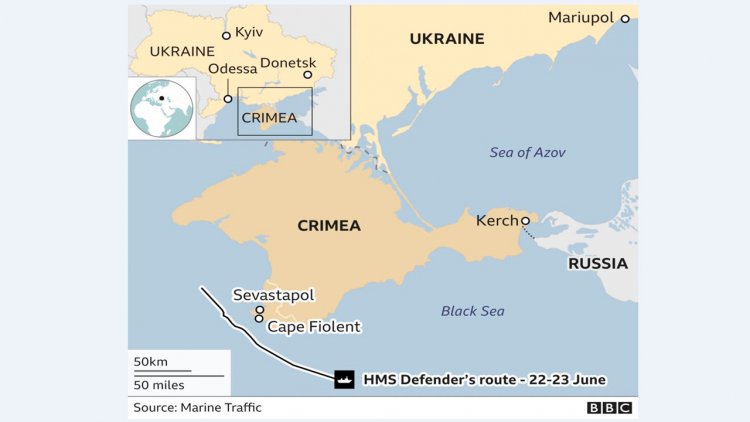
More than 20 Russian aircraft and two coastguard ships have shadowed a British warship sailing near Crimea (Ukraine).

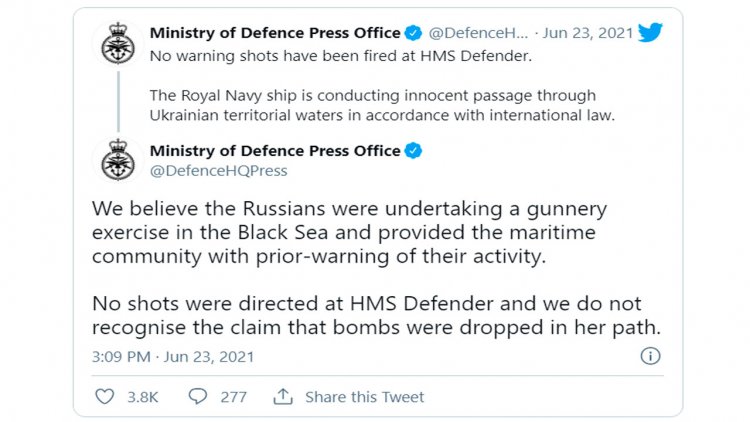
Moscow’s defence ministry said a patrol ship fired warning shots and a jet dropped bombs in the path of HMS Defender as it sailed some 12 miles (19km) off Crimea’s coast.

The UK government rejected Russia’s account of the incident and denied that any warning shots had been fired.

HMS Defender was sailing from Odesa in southern Ukraine to Georgia. To get there, it passed south of the Crimea peninsula, which Russia annexed from Ukraine in 2014 in a move that has not been recognised internationally.

While Moscow claims the peninsula and its waters are Russian territory, the UK says HMS Defender was passing through Ukrainian waters in a commonly used and internationally recognised transit route.

A source told BBC diplomatic correspondent James Landale that the Defender was not there to pick a fight but to make a point – to assert its right to freedom of navigation in international waters.

Russia’s defence ministry said the “dangerous actions” of the navy ship entering its waters were a “gross violation” of the UN Convention’s sea laws, and called for the crew to be investigated.

But a UK government spokesman played down any notion of hostilities, insisting that Russia was doing “gunnery exercises” in the Black Sea.

Source: BBC

Giant hospital vessel: unique construction experience and new job opportunities

0

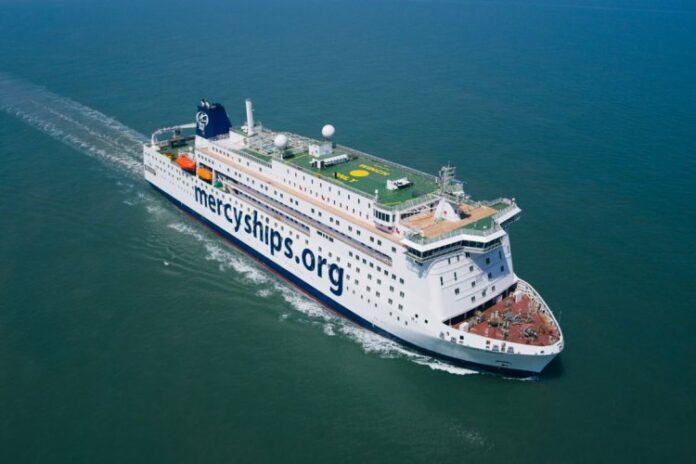
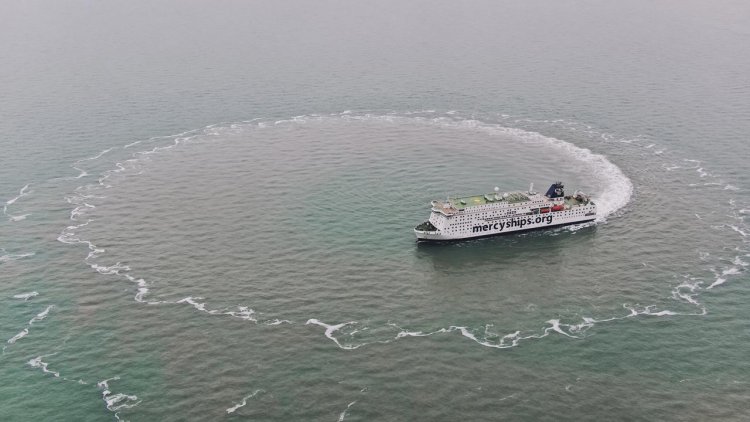
This is the world’s largest civilian hospital vessel and it has been created specifically for charitable purposes. What else makes the new ship different, what is the process like to build a custom hospital ship and is it possible to get a job here?

Extending the fleet with a new purpose-built vessel

The Global Mercy will make its maiden voyage in the near future. First of all the vessel is going to visit the Port of Antwerp (Belgium) and then to go to sub-Saharan and Central Africa, where another hospital vessel the Africa Mercy has been located for a long time. Thus, two Mercy Ships will operate in this region together.

Their main task is to provide adults and children with various medical care, including surgical. All the necessary operations take place right on board, so the equipment and functionality of the vessels must be at a high level.

For 30 years of its existence, “Mercy Ships” has been solving this issue by renovating usual ships to serve with medical and healthcare missions. As older vessels, the earlier three, the Anastasis, Caribbean Mercy and Good Samaritan have been retired, with the Africa Mercy taking over from the Anastasis in 2007. The sixth ship Global Mercy will be the charity’s first purpose-built hospital vessel.
Jim Paterson, Marine Executive Consultant, said:

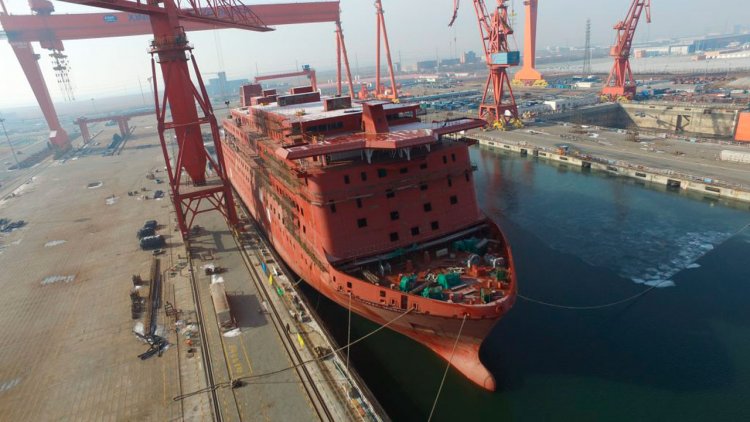
“In 2007, the initial ideas and planning began once the Africa Mercy was in service. During the process of designing and converting the Africa Mercy, we realized there would always be a series of limitations and constraints that come with ship conversions. When it came time to begin the design process for the Global Mercy, we began by conceptualizing an ideal hospital ship based on our observations and field experience. The conclusion? A much larger vessel. After a series of internal conversations and a vote by the Board, the new ship was approved. From there, construction for the Global Mercy was brokered, the contract with the shipyard was signed in December 2013 and the first steel cut took place in September 2015.”

The Global Mercy has a design draft of 6.15 meters and a service speed of 12 knots. The 174-meter, 37,000 ton-ship, will feature the hospital with two decks and all of the amenities of a general hospital on land, including six operating rooms, a CT Scanner, fully equipped laboratory, and more.

The Global Mercy will also be outfitted with state-of-the-art training spaces including two simulation labs with virtual and augmented reality, mannequins and other training tools.

It is designed to have a smaller shore side footprint with more of the activities able to take place on board – for example pre-and post-op checks and rehab appointments. Theoretically this means a faster deployment and pack up when moving from one location to another.

The Global Mercy has already completed deep water sea trials, one of the final milestones in the countdown towards the hospital ship’s delivery, equipping, maiden voyage and launch into service in 2022.

How to get a job at the Global Mercy?

“Mercy Ships” provides surgeries at no charge to patients receiving services onboard ship. Their model has always involved volunteer professionals from around the world. Volunteers pay for their transportation to and from the ship’s location, immunizations, travel insurance, as well as monthly crew fees and all personal expenses.

Crew fees vary depending on the length of commitment as well as the volunteer’s country of residence. On average, the Africa Mercy crews 400 people. On a normal year, more than 1200 volunteers from more than 60 nations serve onboard.

There are over 200 jobs onboard, and only half of them are medical. “Mercy Ships” accepts applications for volunteers from many fields and backgrounds to serve from several weeks to months to years. Those include:

  • Technical & Skilled Positions: 
    Mechanic, Plumber, Electrician, Sheet Metal Worker, Captain, Electronics Technician, Chief, Second, Third Officer, Chief, Second, Third, Fourth Engineer.
  • General:
    Receptionist, Hospitality Staff, IT Support Specialists, Photographer, Videographer, Catering & Food Services, Hairdresser, Teachers – primary & secondary.
  • Medical: 
    Decontamination Technician, Sterile Services Technician, Biomedical Engineer, Paediatric Ward Nurse, Paediatric ICU Ward Nurse, Hospital Informatics Manager, Speech Therapist.
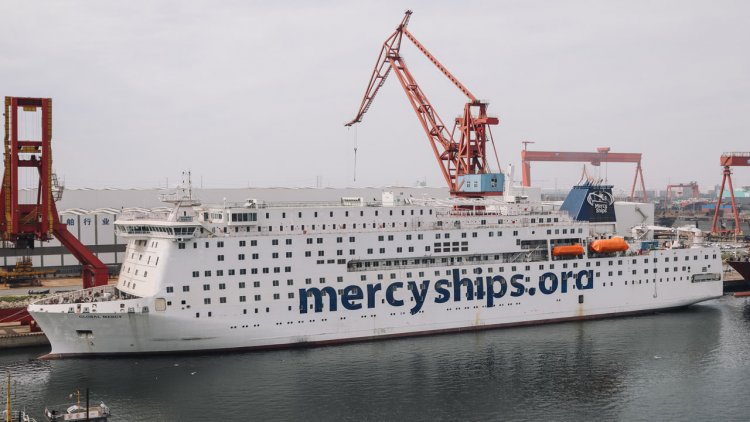
When fully deployed, the Global Mercy™ will have up to 641 crew, with capacity to host more than 950 people while in port.

On occasions when critical staffing is required and volunteer maritime crew are not able to be found for all positions (for a sail for example), “Mercy Ships” sometimes contracts for additional assistance through agencies like Northern Marine on a short-term basis.

All technical crew should have a current certificate of Basic Training (BT) according to STCW standards. For licensed crew members, a valid certificate of competency is required, in addition to the other position-specific requirements as listed on the job descriptions.

For those interested in a maritime career but without the experience, “Mercy Ships” can provide entry-level crew with basic maritime training, including STCW 95 Basic Training (BT)(US Coast Guard Standards), and Watch Rating training for both deckhands and engine hands (Maltese certificate).
The Mercy Ships Maritime Training Program also offers training to 150 crew members and staff each year. This innovative training program ensures that deck crew are fully qualified to International Maritime standards and fully licensed.

For Medical Crew Mercy Ships requires at least 2 years of post-licensed experience before volunteering for most medical positions in the hospital.
For a current list of opportunities, please click here.
Fast facts

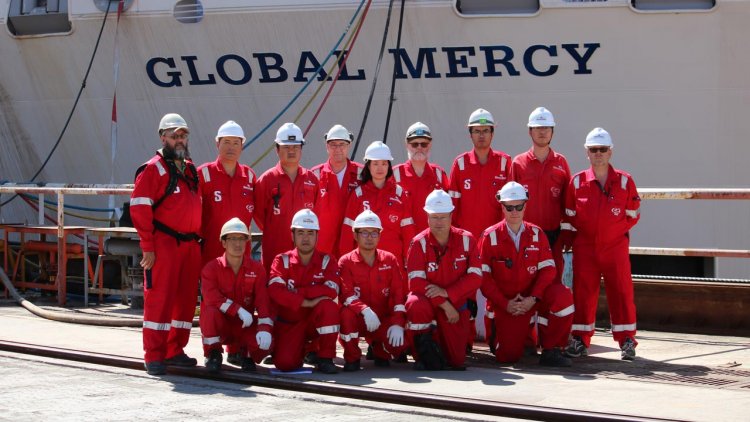
The number of personnel required to serve one ship:

  • Africa Mercy  – 400 crew at any given time.
  • Global Mercy – crew capacity is 641 when it is be fully deployed.

“Mercy Ships” vessels have visited 594 ports, covering 55 developing nations. Its volunteers have provided services and materials in developing countries valued at over $1.6 billion.

“Mercy Ships” has delivered services to more than 2.8 million direct beneficiaries and “Mercy Ships” volunteers have performed more than 105,500 free surgical procedures, such as cleft lip and palate, cataract removal, burn contracture release, and orthopedic and facial reconstruction. They have:

  • Performed 488,000 dental procedures for over 186,500 dental patients.
  • Trained more than 6,600 local professionals (including surgeons), who have in turn trained many others.
  • Trained over 49,000 local professionals in their area of expertise (anesthesiology, nursing, sterilization, biomedical engineering, surgery, trauma, leadership).
  • Taught over 252,000 local people in basic healthcare.
  • Completed over 1,110 infrastructure development and agriculture projects.
Equinor offered production licences in the 25th licensing round

0

The Ministry of Petroleum and Energy has offered Equinor two operated production licences in the 25th licensing round in the Barents Sea.

Jez Averty senior vice president for subsurface in Equinor, says:

“We are pleased with the award. A steady access to acreage contributes positively to the development of the Norwegian Continental Shelf. This award brings opportunities for exploring volumes near planned infrastructure. We prioritise exploring for resources that meet our requirements both for profitability and reduced carbon emissions.”

Equinor has been offered production licences PL 1133 and PL 1134 in the Hoop area in the Barents Sea. The location will enable tie-in of any future discoveries to the Wisting field in the Barent Sea. The partners have scheduled the final investment decision for the Wisting licence by the end of 2022.

Höegh accelerates decarbonisation with new industry leading vessels

0

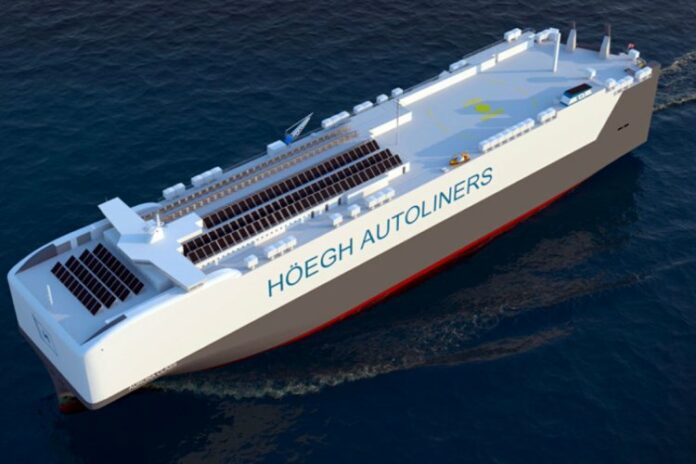
With ambitions of investing in a series of up to 12 Aurora class multi-fuel and ammonia ready vessels designed with a 9,100 car equivalent unit capacity, the Company is considering a potential listing.

Leif O Høegh, the Company’s Chair commented:

“We are investing in future technology and newbuilds to further strengthen our service offering and meet our ambitious environmental targets and those of our customers. The recent launch of the multi-fuel Aurora class design demonstrates how we can strengthen our leading position in decarbonisation and cargo efficiency. These vessels will be the largest and greenest PCTCs to be built and lead the way towards a net zero emissions future for our industry.” 

Höegh Autoliners has a proven decarbonisation record. Since 2008 the Company has achieved a reduced carbon intensity of 37 per cent across its fleet and is significantly ahead of the global IMO 2030-target of 40 per cent reduction. 

Höegh Autoliners’ CEO Andreas Enger said:

“We are accelerating our decarbonisation efforts to meet our net zero emissions target by 2040 and are committed to build a more sustainable maritime industry. The advancement in propulsion technology and digital solutions will significantly strengthen our capabilities to combat climate change.”

The Aurora class has DNV’s new “ammonia ready” notation, which makes it the first in the segment to be ready for operation on carbon neutral ammonia. We anticipate delivery of the first of the new series of multi-fuel and ammonia-ready vessels in the beginning of 2024.

Lise Duetoft, Höegh Autoliners’ Chief Strategy and Analytics Officer, said:

“This will put us in the forefront of sustainable transportation and enhanced cargo capability.”

ABG Sundal Collier and DNB Markets have been engaged to assist in the process of a potential listing supporting the acceleration of the Company’s decarbonisation goals.

Wärtsilä receives further orders for its LNG cargo handling system

0

The technology group Wärtsilä has received two more orders for its complete LNG cargo handling and fuel system. 

The contract has been awarded by Hyundai Mipo Dockyard, the yard building two LNG bunkering vessels for which the Wärtsilä systems will be required. The 18,000 cbm capacity ships have been ordered by Korea based owners Pan Ocean and Korea Line LNG. The order with Wärtsilä was placed in May.

With LNG being increasingly used as an environmentally sustainable fuel for the global fleet, there is a growing need for specialised LNG bunkering vessels. Wärtsilä has extensive experience and deep know-how in designing and delivering advanced cargo handling systems for such vessels.

Harald Øverland, Sales Manager, Wärtsilä Gas Solutions, explained:

“We see an increasing adoption of LNG as fuel, and we are very pleased to have been selected for this project, which allows us to continue our role in developing the LNG infrastructure throughout all regions. Our unrivalled experience and market leading position in the small-scale LNG segment and LNG bunkering designs was a key factor in securing these new orders.”

The complete Wärtsilä solution selected for these orders includes the system engineering and design, the boil-off gas (BOG) management control with an integrated fuel supply system, and the custody transfer system. The equipment is scheduled for delivery to the yard during the first half of 2022.

Babcock to enhance Ukrainian naval capabilities

0

Building on the agreement signed in October 2020, the two nations will now push forward a major programme of Ukrainian naval projects, with Babcock as their designated prime industrial partner.

Reflecting Babcock’s extensive naval experience and capabilities, the Group has been chosen to lead in the delivery of the scope of the broad ranging Ukrainian Naval Capabilities Enhancement Programme (UNCEP).

The programme includes the enhancement of capabilities on existing naval platforms, the delivery of new platforms, including fast attack missile craft, a modern frigate capability, shipborne armaments and the training of naval personnel. It also involves working together to regenerate Ukrainian shipyards by developing, implementing and completing a Shipyard Regeneration Plan.

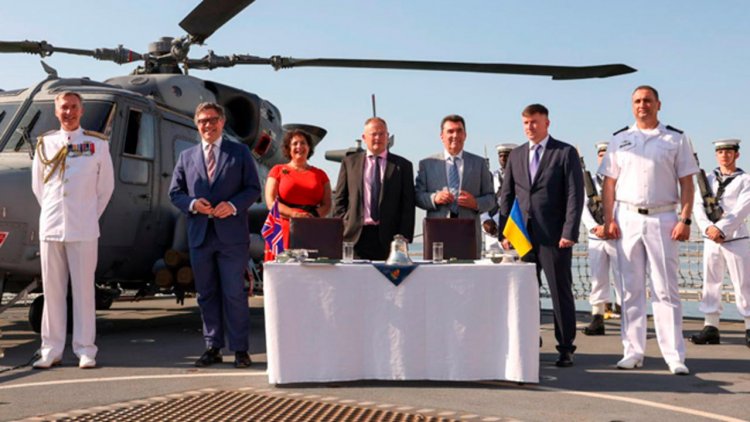
Babcock CEO David Lockwood joined Deputy Minister of Defence of Ukraine Oleksandr Myroniuk, UK Minister for Defence Procurement Jeremy Quin and First Sea Lord Admiral Sir Tony Radakin to sign the MoI on-board the UK Royal Navy’s Type 45 destroyer HMS Defender, which is part of the UK’s Carrier Strike Group.

Babcock will lead British and Ukrainian industrial partners to assist the Ukrainian Ministry of Defence in delivering these projects. Working collaboratively, these teams will be fully integrated within the projects, building ownership and expertise through technical and knowledge transfer and enabling Ukraine to develop a modern naval fleet and support capability.

Babcock CEO David Lockwood said:

“We are very proud to support Ukraine with their Naval Capabilities Enhancement Programme.This marks the beginning of a new international relationship for Babcock, bringing together our new ship capability, our infrastructure and support capability and our new strong relationship with the UK Government. I know that we can bring our collective experience and knowledge together to achieve some really great things.

“Our strengthened relationship with the UK Government has been instrumental in underpinning this significant agreement which is supported by UK Export finance and we continue to work with them on a number of international opportunities.”

UK Minister for Defence Procurement Jeremy Quin said:

“The UK and Ukraine have a close defence relationship, and we continue to strengthen this partnership to help deter shared threats.

 “I am delighted that British and Ukrainian industry will work together on these projects, which will provide world-leading capabilities and provide opportunities for both our nations to boost our shipbuilding enterprises.”

The Ukrainian Ministry of Defence said:

“Ukraine and the UK are good friends and allies. Today’s Memorandum gives a new impetus to our co-operation in naval industry and will facilitate further development of the Ukrainian Navy. We appreciate the British support and value your experience.”

Babcock will be supported by several other companies with a strong UK presence, including MBDA, Thales, and Royal Haskoning DHV. They will also be working closely with Ukrainian industry in developing this programme. Work will now begin on the contracts to implement a number of projects in the programme.