-1.8 C
New York
Home Blog Page 596

VIDEO: Ten cabin cruisers sink in Hong Kong marina hearth

0

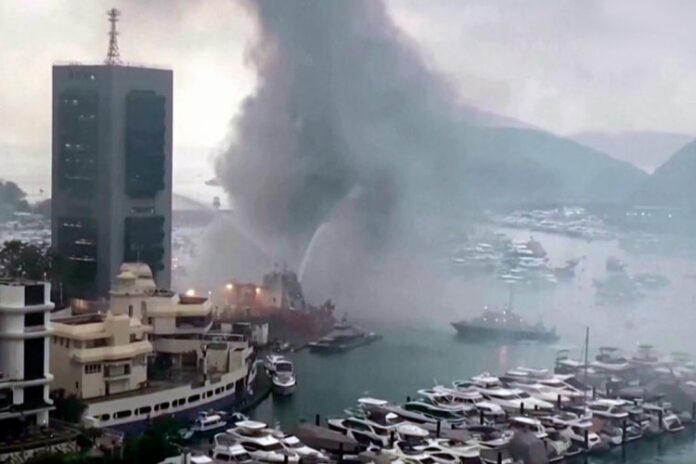
A fire swept through a marina in Hong Kong in the early hours of Sunday, igniting fuel tanks as it passed along a line of closely moored cabin cruisers, and resulting in at least 10 sinking before firefighters extinguished the blaze.

Authorities in the Asian financial hub said at least 16 vessels were set ablaze, including those that sank, but there were no serious casualties.

The fire at the shelter in the city’s Aberdeen district began 2.30 am (1830 GMT Saturday) and took firefighters more than six hours to put out.

Around 35 people were rescued from the vessels, RTHK public broadcaster reported, citing the fire services department.

Source: Reuters

Scientists create new data mapping tool to track whale detections

0

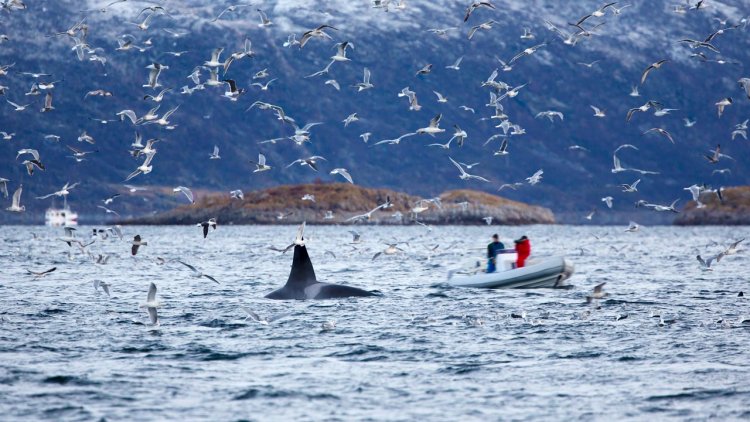
Scientists at the Northeast Fisheries Science Center have created a new data mapping tool to help people understand when and where large whales occur off the East Coast. 

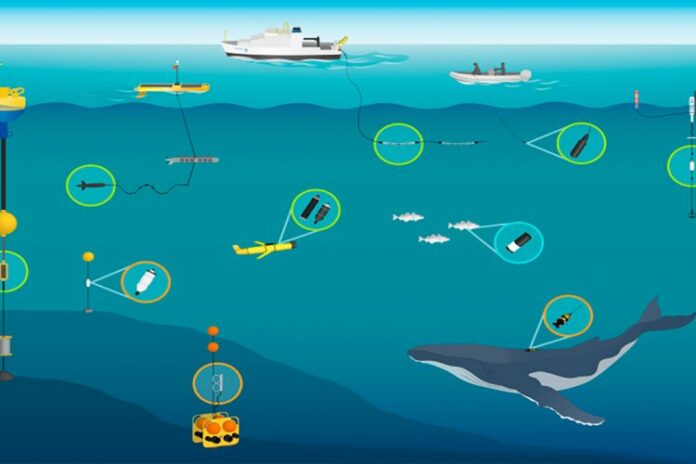
The underlying data include detections made by underwater listening devices — called hydrophones — operated from stationary platforms, such as bottom-mounted moorings and surface buoys. They were also made by mobile platforms like Slocum gliders and towed hydrophone arrays. The map includes sounds made by sei, fin, blue, humpback and North Atlantic right whales from 2004 to the present. 

Sofie Van Parijs, one of the creators and lead of the center’s passive acoustics research group, said:

“Our goal was to provide all the archived data we have, plus data from collaborators, in one place and make it easy for managers, stakeholders and scientists to access it themselves and explore the data in a format that would be helpful. We hope to add in data collected by the wind industry, and invite other researchers and sources of this type of data to share what they have with us to make this dataset as comprehensive as possible.” 

Recent additions to the dataset include all beaked whales, sperm whales, and dwarf and pygmy sperm whales (Kogia species) detected from 2013 to the present. Current recording locations range from the waters of the western North Atlantic, off Greenland, to the Caribbean Sea. 

Data about each detection is incorporated into the mapping tool, including:

  • Location
  • Season
  • Number of deployments of that recording gear
  • Number of recorded days and detections 
  • Type of detection: definite, possible, no detection, or data collected but not yet analyzed.

The large baleen whale detections contain contributions from 33 collaborators to date in the United States and Canada. Soon, the map will expand to include minke whales and dolphin species. 

This data map for passive acoustic detections is the second such tool for tracking whales off the U.S. East Coast and Atlantic Canada. WhaleMap, maintained by Dalhousie University, displays data from a variety of resources and partners. It includes both acoustic detections and visual sightings. It can also overlay management areas and wind energy development areas onto the charts it generates.

HHLA expands the handling capacity at its terminal in Tallinn

0

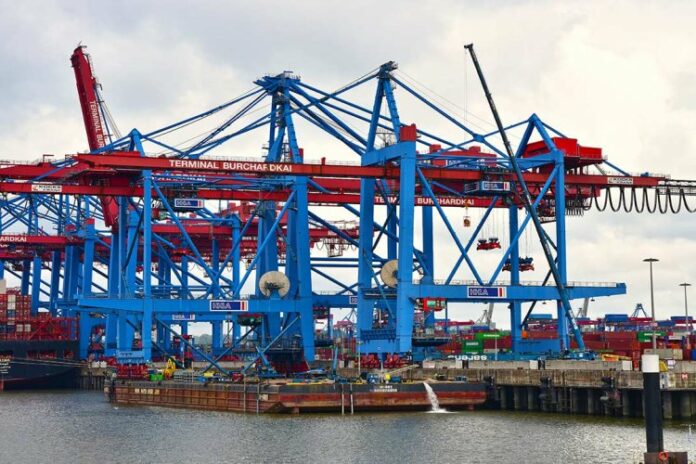
This week, two container gantry cranes were loaded at HHLA Container Terminal Burchardkai in Hamburg to be transported on 28/29 June to the Estonian capital of Tallinn. 

Both container gantry cranes were in operation at Burchardkai for 16 years. When they commenced operating in 2005, they were among the largest container handling cranes at the Port of Hamburg. However, the increase in ship sizes in recent years made larger gantry cranes a necessity. Because of this, HHLA put into service a total of five new container gantry cranes for handling ultra large container vessels with a cargo volume of 23,000 standard containers (TEU) and more at Burchardkai back in 2019 and 2020. They replaced five smaller units, three of which were dismantled in 2020. The two remaining cranes from Kocks will be used at HHLA TK Estonia to handle Baltic Sea traffic. They will make it possible for container vessels with a cargo volume of 14,000 TEU to be handled in Estonia.

Riia Sillave, Managing Director of HHLA TK Estonia:

“The additional cranes from Hamburg are a huge step towards expanding the handling capacity at our terminal. In future, we will no longer have three but five container gantry cranes to handle ships. It is another important milestone in the further development of our terminal into a key Baltic hub within the port network of HHLA.”   

The preparations for the challenging transport of the cranes started in the previous year. As part of this, a 35-metre-wide gate was built into the flood protection wall at the Burchardkai terminal in order to be able to move the cranes – each of which weighs 1,400 tonnes – from the quayside to the transport barge, which measures 122 x 36.5 metres.

The specialised Belgian company Sarens received the order for the transhipment and transport of the container gantry cranes to Estonia. The barge’s position was adjusted in relation to the height of the quayside using high-performance pumps. The loading process itself was carried out with the help of a special transport platform which has 92 axles and 184 wheels, and the cranes were turned 180 degrees before the transhipment. Early next week, estimated on 28/29 June, the towed convoy will leave CTB for Estonia.

The journey will lead around the Skagen Odde peninsula, past Copenhagen and Malmö, and then on to Estonia. It is expected to arrive at the terminal in Muuga, near Tallinn, on July 9. The cranes will be customized after arrival and are expected to commence operations by the end of the year. Even before the transhipment, container gantry crane operators and technicians of HHLA TK Estonia were trained by their Hamburg-based colleagues so that they will be ready to begin operations once the cranes are set up.

In 2018, HHLA acquired the Estonian multi-function terminal near Tallinn and integrated it into its port network. The Port of Muuga is the main cargo hub in Estonia and an important maritime location in the Baltic region. HHLA TK Estonia is market leader in container handling in the Baltic country and additionally operates a multipurpose terminal for break bulk, bulk and RoRo services.

DNV adds new class for cloud-based simulation

0

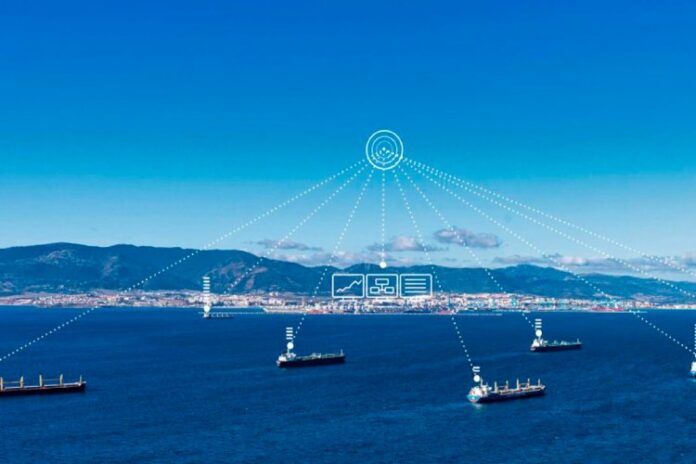
DNV has revised its ST-0033 Maritime Simulator Systems standard with the introduction of a new class D for all function areas covering cloud-based simulation. 

The use of remote methods to deliver training programmes for seafarers has increased during the COVID-19 pandemic as a result of restricted or impossible physical attendance at training and examination centres.

New function areas and new technologies for real operations, as well as statutory requirements, must be covered in all learning programmes. Under the validity conditions of DNV SeaSkill™ Learning Programme Certificates, all real, virtual and cloud-based simulators used as tools in such training and examinations are also required to be DNV certified.

Addressing the need to continue to educate new seafarers and, critically, to enable serving seafarers to renew their existing certificates in accordance with international requirements, a cross-industry project with simulator suppliers and end-users was created to develop a new simulator class D for all function areas covering cloud-based distant learning simulators with virtual reality (VR) requirements.

Until now, physical-realism requirements have described hardware and interfaces, as well as the operating environment, only at a high level in line with the STCW (Standards of Training, Certification and Watchkeeping) Convention.

Although remote simulation is not new technology in itself, the core focus of the revision was on the replacement of hardware with a software-enabled artificial environment presented in such a way that the user suspends belief and accepts it as a real environment (VR) while still maintaining the required behavioural realism.

The most important aspect in remote setups are instructor and assessor facilities. The new class now divides between: (a) interactive, synchronous, continuous online instructor-led simulation; (b) detached, asynchronous student-led simulation; or a combination of (a) and (b) when operated synchronously or asynchronously depending upon the nature of the exercise to meet training objectives.

Andreas Jagtøyen, EVP Digital Ocean, Kongsberg Digital, commented:

“As one of the first to develop remote, cloud-based simulation solutions, meeting the demand for new training methods, Kongsberg Digital is delighted that DNV has developed this new class D certification. It recognizes the value contributed by cloud-based technology in recent months and how it can continue to be an integral part of maritime training in the future.”

Captain Aksel David Nordholm, Simulator Certification Specialist in DNV SeaSkill™, said:

“By formulating class D, DNV is helping to ensure that seafarers can go through their required training in spite of the restrictions of COVID 19. We are now ready to commence required certification of maritime simulators that comply with the new class.”

Knut Ørbeck-Nilssen, CEO of DNV Maritime, said:

“Training is an extremely important safety barrier for shipping, and for DNV to certify training schemes and the latest methods of distance learning is yet another great example of our commitment to safety at sea.”

The DNV ST-0033 Maritime Simulator Systems has been revised frequently since its initial publication in January 2000.

Vestas wins offshore order for Arcadis Ost 1

0

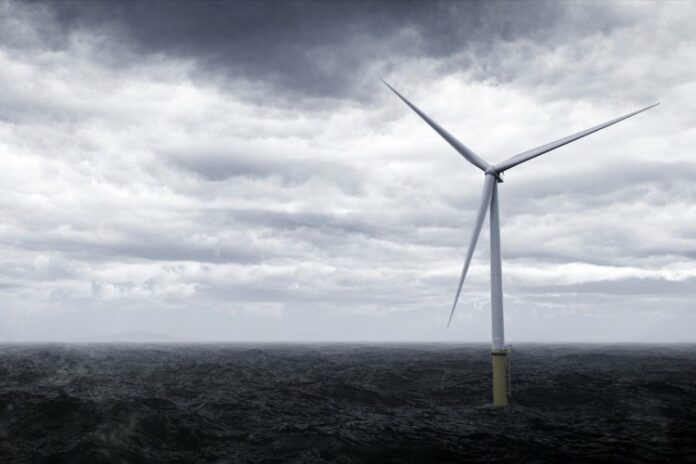
Vestas has secured a firm order for the 257 MW Arcadis Ost 1 offshore wind project from Parkwind, to deliver 27 V174-9.5 MW turbines 19 km north east off the coast of the Island of Rugen, in the German Baltic Sea.

The order confirms the fifth collaboration between Vestas (previously through MHI Vestas Offshore Wind) and Parkwind on offshore wind projects, and the first outside Belgium.

The V174-9.5 MW turbines will be installed using a new floating installation method, an industry-first, instead of the typical method using a jack-up vessel. In collaboration with Parkwind and the vessel operator, Heerema Marine Contractors, a dual crane vessel will be used which enables the floating installation method, involving dynamic lifting and installation of all turbine components. This innovative installation method prevents challenges with seabed and soil conditions by avoiding contact with the seabed altogether and therefore reduces project risk by allowing faster installation time, contributing to reducing the levelised cost of energy for the project.

Once installed, Vestas will also service Arcadis Ost 1 with a 15-year service contract.

Nils de Baar, President of Vestas Northern & Central Europe, said:

“We are pleased to be continuing our collaboration with Parkwind at Arcadis Ost 1, installing V174-9.5 MW turbines at this important project off the German coast. The floating installation method we are utilising will potentially be a gamechanger for installing projects in deeper waters, saving time and further reducing the cost of offshore wind. Projects like Arcadis Ost 1 will continue to deliver on Germany’s offshore wind ambitions, to reach 20 GW of installed wind by 2030”.

Clément Helbig de Balzac, Arcadis Ost 1 Project Director, added:

“With the most advanced Vestas turbine ready for commercial installation, the V174-9.5 MW, and the innovative floating installation method, we are set to build one of the most technologically advanced wind farms to date. We can count on our long experience working together in Belgium to deliver another success, this time in German waters”.

Turbine components will be delivered to the Port of Roenne on the Danish island of Bornholm, starting in the third quarter of 2022. Offshore installation is expected commence by the end of 2022 and Arcadis Ost 1 is planned for full operation in 2023.

Havyard Leirvik has handed over two vessels in two days

0

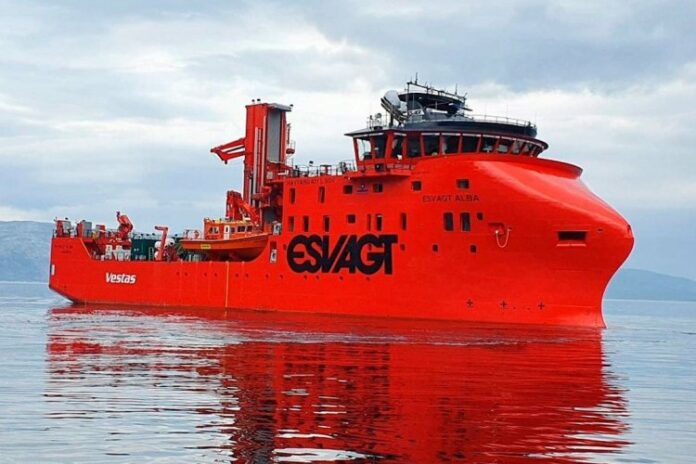
The first vessel was a wellboat and the other is a windfarm service vessel for the Danish shipping company ESVAGT.

Project manager Vegard Skår says that the coronavirus pandemic led to significant challenges in relation to workers and service personnel from subcontractors, in addition to deliveries of equipment, and presented completely new problems in resource and material planning. He says:

‘But we have proven that we are adaptable and managed to solve these challenges. We have cooperated very well, and all parties have been flexible and gone the extra mile. Lots of good work has been delivered by the yard, the suppliers and in the project organisation. This has enabled us to deliver excellent quality on time.’

The vessel will be delivered to ESVAGT, and Vegard Skår also emphasises the good cooperation they have enjoyed with the shipping company:

‘We have worked with ESVAGT on many projects, so we are very familiar with both their systems and their expectations. We are happy to be able to hand over yet another good vessel, which will be a useful tool in their work in the offshore wind park segment.

The windfarm service vessel is the fifth such vessel built at Havyard Leirvik and the second in the HAV 831L SOV design series.

Skår says that the sea trial was intended to take one week, but it was concluded ahead of schedule because the testing went so well.

There’ll be a high level of activity at the yard throughout the summer, and the third windfarm service vessel in this series is ready to be fitted out. The handover of this vessel will take place in autumn.

This means that Havyard Leirvik will have delivered six windfarm service vessels, which gives it a very strong position in this segment.

Piriou signs for the order of a new tug for Caraibes Remorquage

0

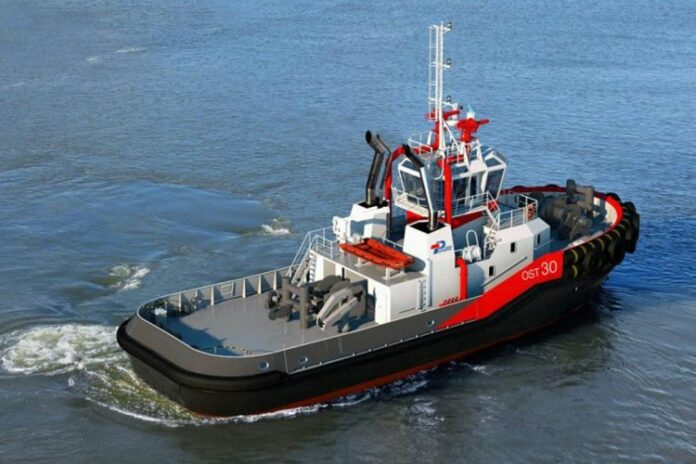
As the operator of Pointe-à-Pitre harbour in Guadeloupe -French Caribbean Island-, CARAIBES REMORQUAGE confirmed the construction of their 30.30 m tug with 60 tonnes bollard pull and two azimuth stern propellers. It will be built in Vietnam and its delivery is scheduled in the 3rd quarter of 2022. This new tug will strengthen the fleet operated in Guadeloupe in joining POINTE TALI, the 55 tonnes bollard pull OST 30 PIRIOU delivered in 2018.

This tug is more powerful and fitted with integrated slipping clutches for optimized operation.

Vincent Faujour, PIRIOU Group General Manager declares:

‘After delivering ‘Pointe Tali’ at the end of 2018, we are happy to continue our relationship with one of the main operators in the Caribbean Islands. With nearly 20 years’ experience building tugs, sea proven designs and a strong ability to customize our vessels to meet customers’ requirements, we keep strengthening our position as a significant actor in this segment’.

Felix RAMAYE, CARAIBES REMORQUAGE manager adds:

‘We have been very satisfied with the tug Pointe Tali we have been operating for two years. This the reason why we very naturally called upon Piriou for this new tug more powerful and better equipped to answer the requirements of shipowners, shipping agents and of the Grand Port Maritime de Guadeloupe. It will expand our fleet and assist, in particular, the ever-larger container ships that call at the ports of Basse-Terre, Marie-Galante and Pointe-à-Pitre. We also provide assistance and rescue services in deep seas.

The vessel will be named POINTE VIGIE 2. It is a tribute to the first tug in our fleet that got the company off the ground and continues to provide service today’.

A versatile harbour and coastal ASD tug

The OST 30 is a versatile tug designed for towing and push-pull harbour assistance as well as for high sea towing operations. Featuring a 30.3 m length, it can also provide assistance to vessels approaching access channels.

It is equipped with 2 azimuth stern drive propellers and integrated slipping clutches. These propellers are driven by 2 high speed marine Diesel engines.
On the bridge, the ergonomics of the unique control room allows the captain to perform all driving and manoeuvring tasks by himself thanks to a very good visibility both at horizontal and vertical over the working area and the environment.

In order to answer CARAIBES REMORQUAGE specific operating conditions, this tug features:

  • A pneumatic starter system in order to limit the number of batteries on board
  • Gasoil and fresh water systems for ship supply
  • A 1/2 Fi-Fi equipment to perform fire-fighting
  • A rear winch and a towing hook for deep sea towing
  • Fenders adapted to push low freeboard barges
  • An indirect refrigeration system involving all the vessel equipment with box coolers adapted to tropical conditions and no seawater circulation.

This tug is designed to carry out every three years careening with special anti-fouling and ICAF
system.

Accommodation is compliant with the latest ILO 2006 standards and special care was taken to sound insulation and air conditioning. 

Jeju Hanlim Offshore Wind project enters new construction phase

0

Pondera recently completed the first (contracting) phase of owner’s engineering services for Jeju Hanlim Offshore Wind in South Korea.

Pondera and Korean engineering company Hanmi Global are working on this project since 2019.

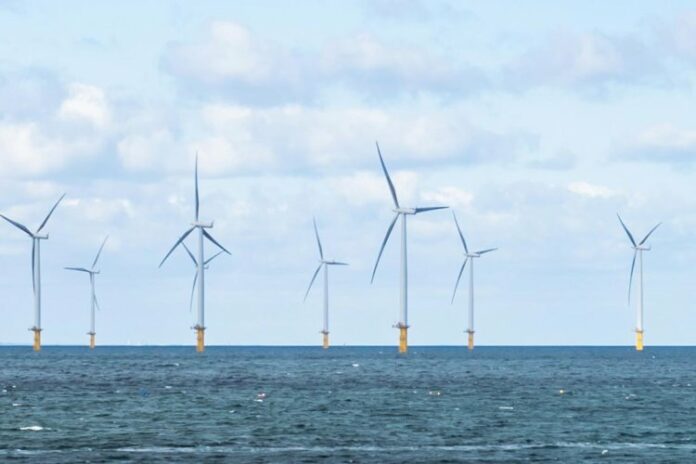
This 100 MW offshore wind project is located in the northwestern part of Jeju Island and is the third offshore wind project in the Korean waters. Jeju Hanlim Offshore Wind recently signed a turbine supply contract with Doosan Heavy Industries & Construction this month, and their WinDS5500 (5.56 MW) turbines will be manufactured, delivered, and maintained by Doosan Heavy.

The project owner and developer, Jeju Hanlim Offshore Wind Power, was jointly established by KEPCO, Korea Midland Power, Hyundai E&C and Korea Electric Power Technology. Hyundai E&C, Korea Electric Power Technology and Korea Energy Technology will execute the EPC.

First phase works
Pondera has provided the following services in the first phase of this project:

  • Review of EPC and O&M contracts
  • Technical supports: cable transition, foundation, project scheduling, impact on fishery, financing
  • Design review: various surveys, layout and WTG locations, environmental measures, design basis and design standards, transition pit, foundation, cable protection, structure coating, etc.

Second phase to commence
Second phase works are expected to start within this year. Pondera is going to provide the following services during this second phase:

  • Technical support in terms of construction management, HSE and engineering
  • Design review: foundation, cable protection, HSE management
  • Construction management: review of foundation manufacturing, logistics and installation, WTG installation
  • EPC completion and commissioning

The project’s construction is planned to start in 2022.

VIDEO: DMC delivers high-lift rudders for ten Arklow vessels

0

Damen Marine Components has made a significant contribution to ten ships for the Irish shipping company Arklow Shipping, the latest of which, the Arklow Artist, will be put into service in the foreseeable future. To be able to generate high lifting forces, the ships are equipped with Van der Velden® MASTER rudders and BARKE® high-lift flap rudders.

The Arklow Artist is currently being outfitted at the Ferus Smit shipyard in Westerbroek, the Netherlands. This vessel is part of Arklow Shipping’s 8,500DWT series. The first five ships in this series, Arklow Abbey, Accord, Ace, Archer and Arrow, are now in service. This also applies to the 16,500DWT series, which consists of four ships: the Arklow Wave, Wind, Willow and Wood.

Initially, both series were going to be equipped with NXA fishtail rudders. Arklow Shipping, with offices in Arklow, Ireland and Rotterdam, the Netherlands, asked its captains and superintendents for feedback, which revealed a strong need for the capability of crabbing; the ability of a ship to move sideways without moving forwards. 

Marnix de Bruijn, sales manager of Damen Marine Components, says:

“An understandable wish. Especially the ships from the 8,500DWT series need a lot of lateral movements, because they commute from port to port and have to manoeuvre a lot.”

Damen Marine Components has adopted this wish. In consultation with the management boards of Arklow Shipping and Ferus Smit, it was decided to replace the NXA rudders from the original design. The 8,500DWT series has therefore been fitted with Van der Velden BARKE® high-lift flap rudders. With the progressive rotating flap, the BARKE® rudder generates high lifting forces at large rudder angles and low drag at small rudder angles. This aids in sideways shifting.

Because there was no time for this with the 16,500DWT series due to the delivery time of the BARKE® rudders, the best alternative was sought for this series. These four ships are equipped with Van der Velden® MASTER rudders. With rudder angles of up to 65°, this fishtail rudder provides high lift. The design can be optimised for many different types of ships.

Arklow Shipping is very pleased with the conversion of the rudders and the behaviour of the ships, which are now used to great satisfaction.

In addition to the rudders, the ten Arklow vessels are also equipped with the Van der Velden® COMMANDER™ Rotary Vane steering system, including hydraulic power unit (HPU) and the Damen Marine Components control system.

The four 16,500DWT series ships are 145.5 metres long and 19.25 metres wide. The six ships from the 8,500DWT series have a length of 116.89 metres and a width of 14.99 metres. Bureau Veritas has classified all ten ships as Ice class 1A, one of the highest ice classes.

GEV and Wärtsilä to cooperate on propulsion solutions for hydrogen vessel

0

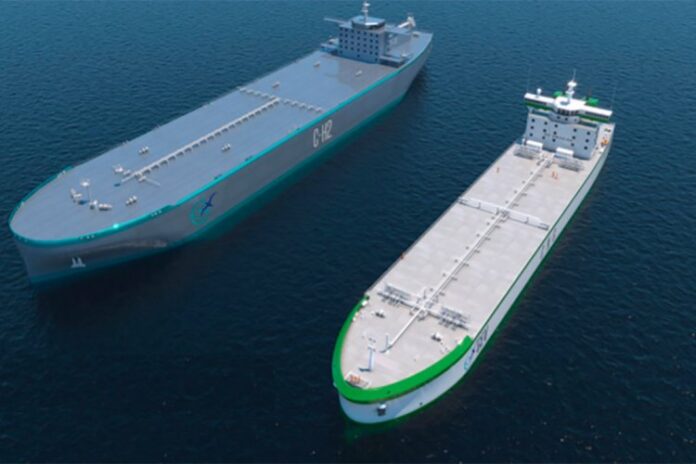
The technology group Wärtsilä has signed a Memorandum of Understanding (MOU) with Global Energy Ventures (GEV) of Australia, a company specialised in delivering compressed shipping solutions for transporting energy to regional markets. The two companies will cooperate on the inclusion of Wärtsilä propulsion systems in GEV’s compressed hydrogen (C-H2) ships. The MOU was signed in Sydney, Australia.

The cooperation aims at advancing GEV’s Approval in Principle (AiP) application for its new 430-ton C-H2 vessel. It is also intended to demonstrate the availability of a highly efficient, low-emissions propulsion system for the vessel.

Martin Carolan, CEO, GEV, says:

“We look forward to working closely with Wärtsilä on this project. We have shown that C-H2 shipping is ideally suited for exporting green hydrogen with a lower delivered cost and having a technology leader such as Wärtsilä with us, we can deliver a shipping solution that is completely sustainable.” 

Petteri Saares, Sales Director, Wärtsilä Marine Power, says:

“This project is an important steppingstone along the journey towards a decarbonised maritime industry, something that Wärtsilä is fully committed to supporting. We are actively developing propulsion alternatives that can utilise future carbon-neutral fuels, raise efficiency levels, and which significantly improve environmental performance. This agreement with GEV is fully in line with our own ambitions.”

Compression delivers a proven, simple, and efficient method for transporting green hydrogen. It is a preferred solution for marine hydrogen transport but is often overlooked due to its lower volumetric energy density. The parties to the agreement believe that the C-H2 project will eliminate the technical barriers and deliver a solution which is superior to other transport alternatives.