0.4 C
New York
Home Blog Page 595

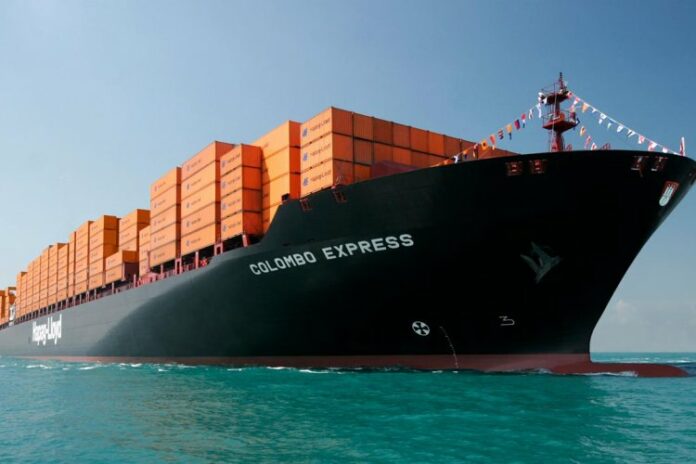
Hapag-LLoyd and ONE complete TradeLens integration

0

Hapag-Lloyd and Singapore-based Ocean Network Express (ONE) Pte. Ltd. have completed integration onto the TradeLens platform, helping ensure a more timely and consistent view of logistics data for their containerized freight around the world. TradeLens is a neutral, third-party platform launched by IBM and A.P. Moller – Maersk to help modernize the world’s supply chain ecosystems and is run on IBM Cloud and IBM Blockchain.

Since the completion of multiple pilot projects as well as the integration, Hapag-Lloyd and ONE, the world’s fifth and sixth largest carriers respectively, are now working to help their clients and business partners across all major geographies benefit from TradeLens’ ability to increase efficiency and improve access to information. They join foundation carriers A.P. Moller – Maersk, as well as CMA CGM and MSC Mediterranean Shipping Company (MSC) who both completed their pilots and integration in October 2020, and five other carriers already inputting shipping data into the TradeLens platform.

Additionally, TradeLens continues to rapidly on-board new organizations from across the shipping industry, recently adding shippers and importers including Van den Ban Tires which use the platform to address back office inefficiencies and improve the visibility of cargo. Recently, KLog.co also became the first freight forwarder in Latin America to join TradeLens to improve efficiency, decrease operational costs and advance KLog.co’s goal of opening up international trade to all companies in the region, no matter the size of the business.

Rolf Habben Jansen, CEO of Hapag-Lloyd, said:

“TradeLens technology holds great potential to help enable the digitization of supply chain processes and documentation handling. Our customers will clearly benefit from increased transparency, accuracy, speed and efficiency in their supply chains – leading to reduced cost.”

The TradeLens ecosystem now includes more than 300 organizations – encompassing ten ocean carriers and data from more than 600 ports and terminals. TradeLens has already processed 42 million container shipments, nearly 2.2 billion events and some 20 million documents. In total, five of the top six global shipping carriers are now integrated onto the platform contributing to the digitization of documentation and automated workflows.
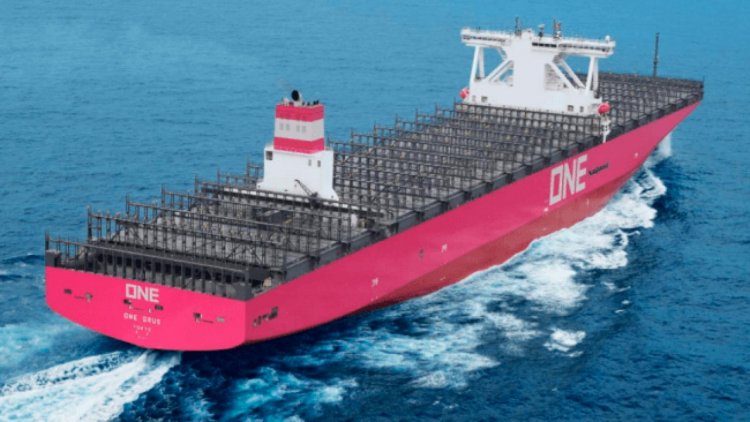
Photo: ONE

Jeremy Nixon, CEO of Ocean Network Express, said:

“We believe TradeLens can bring together all parties in the supply chain to the digital ecosystem where customers can get seamless, transparent and secure sharing of shipping milestones and trade documents. With its open standards and open governance, it can benefit our customers and the entire industry to drive for digitalization and automation.”

TradeLens offers shippers and freight forwarders direct, permissioned access to digitized, multi-carrier visibility and documentation processes through a single platform, reducing the need for paper-based processes and giving participants in global trade a single, up-to-date picture of the flow of their goods.

Through the TradeLens platform, network participants can easily connect their key supply chain partners to the digital platform as well, allowing data and documents to be published and consumed more quickly and only among permissioned parties.

Mike White, CEO GTD Solutions and Head of TradeLens, said:

“A huge barrier to global trade has long been the inability for customers to securely share crucial information regarding the status of goods in an easily accessible and transparent way. By addressing this problem, the TradeLens ecosystem has grown rapidly, and the onboarding of Hapag-Lloyd and ONE along with their customers helps extend the value of TradeLens across the entire TradeLens ecosystem, enabling connectivity to two-thirds of global containerized freight for all customers and other permissioned parties through a single platform. All participants benefit from reduced manual processes, while also streamlining processes from automation and improved forecasting.”
Tallink Grupp to charter vessels Victoria I and Romantika to Morocco until October

0

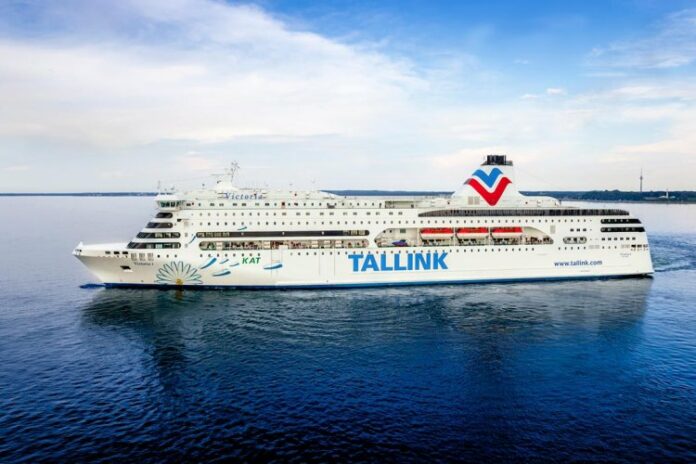
Tallink Grupp and Tanger MED Port Authority, a Moroccan company with the state participation, have signed short-term time-charter agreements for Tallink Grupp’s vessels Victoria I and Romantika. The vessels will operate on international shipping routes between Morocco and France, and between Morocco and Italy in July-September 2021.

Victoria I will depart from Tallinn on 28 June and Romantika on 5 July and both have been chartered for 100 days. They will be sailing to the port of Tanger MED in Morocco, one of the leading ports in Africa and in Mediterranean sea, and both vessels will return to Tallinn in October 2021. During the charter, the vessel will be operated by Tallink Grupp’s technical crew.

Tallink has previous experience of chartering vessels to the Mediterranean from a decade ago when different company vessels were chartered to the region by regional operators on short-term charters over a period of four years. Thus, operating in the region is familiar to Tallink Grupp and the company’s masters and crew.

Commenting on the charter agreement, Tallink Grupp’s CEO Paavo Nõgene said:

“We are pleased we have managed to secure another charter agreement for our vessels this year and they don’t have to wait idly in the port for travel restrictions to ease and travelling to resume. Even if the charter is short-term for 100 days, it is work for the vessel and our crew for 100 days.

“Since we already have previous experience with similar charters from approximately ten years ago, we have good level of knowledge as to what to expect and our crew already have experience with sailing in the region.

“We will continue to work on other opportunities for securing work for our vessels and crew while we wait for the COVID storm to pass. At the same time, of course, we will also continue to steadily re-open routes between our home markets as restrictions ease and travelling is no longer taboo.”

Yang Ming holds virtual naming ceremony for YM Continuity

0

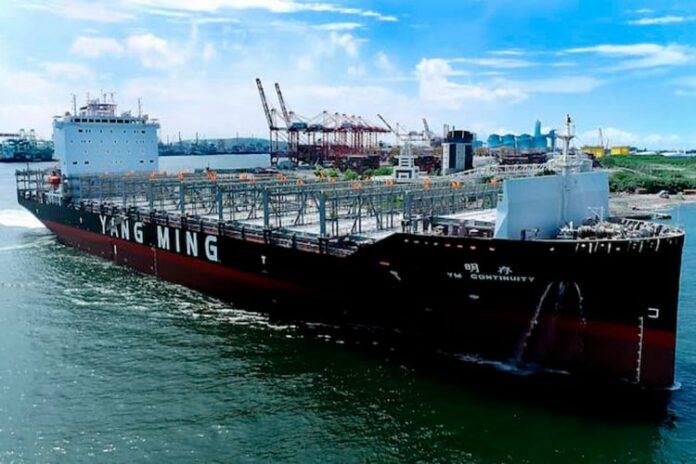
On June 25th, Yang Ming Marine Transport Corp. (Yang Ming) celebrated the naming of its 2,800 TEU class full container vessel, YM Continuity with a virtual naming ceremony. 

Yang Ming Chairman Cheng Cheng-Mount and CSBC Corporation Chairman Cheng Wen-Lon, located respectively at Yang Ming’s headquarters in Keelung and CSBC Corporation’s administration building in Kaohsiung, jointly officiated the ceremony. Mrs. Chen Shu-Huei, wife of the President of National Ocean Taiwan University, Hsu Tai-Wen, had the honor to officially name the ship during the ceremony and wish the ship and its crew the best of luck on their future voyages.

YM Continuity has a nominal capacity of 2,940 TEU and is equipped with 353 plugs for reefer containers. With a length of 209.75 meters, a width of 32.8 meters and a draft of 11.2 meters, YM Continuity is designed to cruise at a speed up to 21 knots. The newbuilding adopts the Sea Sword Bow design to significantly save energy and optimize hydrodynamic performances. The application of its electronic controlled fuel injection engine with low-load tuning Exhaust Gas Bypass (EGB) fuel control system will greatly enhance the new ship’s energy efficiency. 

The installation of scrubbers will help Yang Ming to fulfill its promise to reduce emissions of NOx and SOx. Furthermore, YM Continuity is certified with ABS’ Smart INF and Smart SHM notations and CR Classification Society‘s “Smartship H, Et, I” notations. The recognitions denote that the vessels is equipped with smart information infrastructure of big data acquisition and cloud transmission, which allow ship structure endurance monitoring and future structural health awareness through ABS’s customized analysis program to ensure sailing safety.

In addition to achieving environmental sustainability through shipbuilding technology, nurturing industry professionals is one of Yang Ming’s strategies to fulfill corporate social responsibility goals. The company has extended industry-academia cooperation with National Taiwan Ocean University. Together they have established postgraduate programs which offer opportunities for graduates with a bachelor’s degree to study in marine transportation & maritime science technology. The collaboration will help cultivating marine professionals and exploring diverse career paths for the youth. With Mrs. Chen as the lady sponsor of YM Continuity, Yang Ming specially invited several teachers and students of National Taiwan Ocean University to participate in the virtual event, adding a significant meaning of promoting maritime education to the ceremony.

With the addition of 2,800 TEU newbulidings, Yang Ming’s intra-Asia service network will be significantly enhanced. YM Continuity, the ninth in the series, will be deployed on Yang Ming’s service ‘JTS’ as of July 1st. The port rotation of JTS is Nagoya – Tokyo – Chiba – Yokohama – Keelung – Kaohsiung – Hong Kong – Shekou – Port Kelang – Singapore – Manila South Port – Kaohsiung – Hong Kong – Shekou – Xiamen – Nagoya.

KVH partners with StratumFive for KVH Watch Maritime IoT solution

0

KVH Industries has announced that StratumFive, creator of Podium, an award-winning voyage informatics platform, has joined the KVH Watch® Solution Partner program and will offer the KVH Watch service to enhance data flow from ship to shore. 

KVH Watch’s dedicated connectivity will support StratumFive’s ability to help vessels achieve efficiencies in tracking, routing, safety, security, fuel consumption, and emissions. Voyage informatics is defined as the application of information systems to increase the efficiency, safety, and ecological sustainability of the shipping industry.

Ross Martin, chief operating officer for StratumFive, says:

“For successful digitalization, a vessel’s onboard IoT system needs to be connected to Podium and its advanced contextualization capabilities. The key to optimization is getting data onshore to the experts to deliver efficiencies in tracking, routing, safety, security, fuel consumption, and emissions. Our Podium voyage informatics platform is a universal and agnostic solution for configuring vessel timeline data. KVH Watch high-speed connectivity will enable us to provide actionable insights faster. In addition, KVH Watch’s Remote Expert Intervention gives us the ability to put a person virtually on the bridge for real-time interventions and troubleshooting.”

Sven Brooks, senior director of IoT business development for KVH, says:

“The combination of KVH’s dedicated IoT connectivity and StratumFive’s Podium platform leverages innovative technology to provide the maritime industry with a complete solution for optimizing vessel performance. We are thrilled to welcome StratumFive to our growing ecosystem of KVH Watch Solution Partners.”

Data transfer from ship to shore is essential as maritime operators seek increased operating efficiencies by adopting a range of digital processes and cost-effective voyage monitoring solutions. The actionable insights provided by data analytics platforms can inform decision making on the vessel leading to optimized equipment performance and reduced fuel consumption. Dedicated high-speed satellite connectivity enables real-time remote support and video interventions while the vessel is at sea while also adhering to the IMO’s requirement that vessels separate their information technology (IT) data flow from their operational technology (OT) data flow.

METIS adds electric profiling functionality to vessel performance analytics

0

The new METIS Electrical Power Profile Overview functionality responds to growing market interest in the benefits of installing alternative electrical power sources to auxiliary engines as a cost-effective and sustainable way of covering energy needs during port operations.

With additional auxiliary power being useful for tasks as diverse as manoeuvring, acceleration, anchoring, loading and discharge, the METIS Electrical Power Profile application offers a data-based evaluation for feasibility studies covering alternative electrical power sources. Calculations are based on data acquired automatically by vessel sensors, without any human intervention, with even the detection of the ship’s operational status drawing on an advanced algorithm that is part of the METIS AI platform.    

Serafeim Katsikas, Chief Technical Officer, METIS, says:

“A statistical analysis can be generated based on electrical energy consumption distribution during each operational activity. With this kind of analysis, a user could evaluate – for example – whether its operations within the port or ECA zone would be made more cost effective by installing a power pack.”

The METIS Electrical Power Profile app can measure, report and visualise energy and power consumption across any operational status in the user’s preferred format, offering shipowners greater insights into vessel management excellence. It can also take account of all data gathered subsequent to the installation of the METIS data analytics solution, Katsikas adds.

The new functionality represents a further advance for METIS, whose game-changing data acquisition and analytics has already been implemented on nearly 270 ships and is measuring 3.2 billion performance data points monthly. It builds on the company’s Fuel Oil Consumption Profile Overview, which harvests the vast amount of data available to METIS analytics to quantify all factors affecting a vessel’s fuel consumption based on three months performance and machine learning models.

Short-term LNG truck loading facility launched in Zeebrugge

0

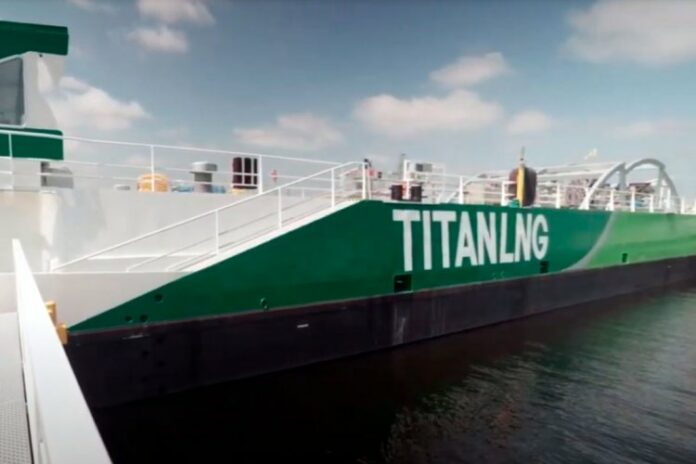
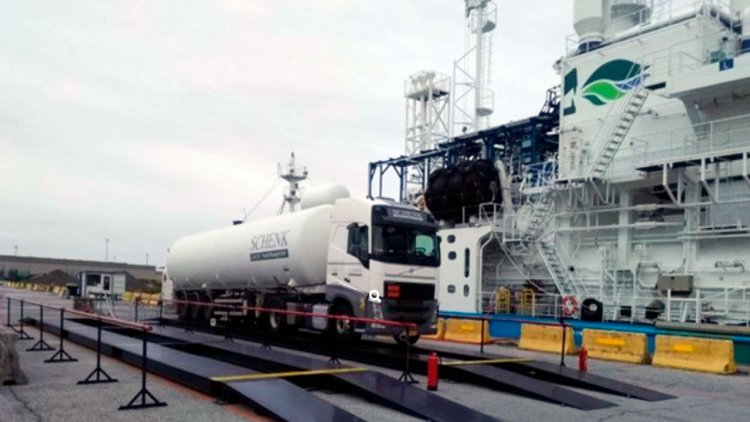
Titan LNG has commissioned a short-term LNG truck loading facility in the Port of Zeebrugge.

Project Bridge has been designed to accommodate LNG truck loadings as an interim solution during a 4-week period in which the Rotterdam GATE terminal will undergo essential maintenance. The Titan LNG chartered Green Zeebrugge is filling up trucks at the quay of the PSA terminal in Zeebrugge to serve bunkering customers in the ARA region, Zeebrugge, and surrounding areas.

Equipped with two loading bays, the solution was commissioned and developed by Titan LNG’s in-house team, in collaboration with small-scale LNG market participants to trial the project’s operations. The complex solution designed reflect Titan LNG’s innovation and long-standing experience in the sector. To ensure the safety and efficacy of the solution, HAZOP & HAZID sessions were performed on short notice.

The Port Authorities of Zeebrugge and the PSA terminal were involved from initial plans in the project to ensure compliance for this temporarily set up, including the step-by-step protocols and designs. The facility was assembled and is being operated by Rijlaarsdam Tech, Titan LNG’s project partners. Operator Rijlaarsdam and Titan LNG passed the vetting and approval process due to the preparation and robustness of the documentation and training of the crew on the quay, providing confidence to the Authorities that safe operations could be carried out for the duration of the 4-week period.

During normal operations, the GATE terminal loads some 600 trailers per month. The Fluxys terminal in Zeebrugge cannot fill this demand for extra slots, meaning it would not have sufficient capacity to ensure the demand for the downstream market. Bridge will process additional LNG coming to Zeebrugge starting from mid-July of this year and is expected to fulfil up to 300 orders during its deployment.

Michael Schaap, Titan LNG’s Commercial Director Marine said:

“This is an immensely proud moment for the team at Titan LNG — and for the LNG market sector. It takes LNG terminals years to install this functionality, and we did it in a matter of months. I would like to thank all our project partners for the hard work and perseverance that went into this success.”

Tom van den Akker, Project Manager at Titan LNG commented:

“Project Bridge required a broad range of competencies and resources from Titan LNG, including safety managers, operations, engineering, and the commercial department. The complexity of the project and the innovation required, in addition to the short deadlines certainly presented some challenges. Our project team successfully hit the milestones that were planned, and we’re extremely proud to bring the solution to the market.”

Current truck loadings are done daily during weekdays, while the Green Zeebrugge will load LNG from the Fluxys terminal in Zeebrugge on Saturdays and Sundays to replenish the FlexFueler bunker barges in the ARA area.

Following the completion of Bridge at Zeebrugge, Titan LNG aims to deploy the same facility to other locations across the EU region.

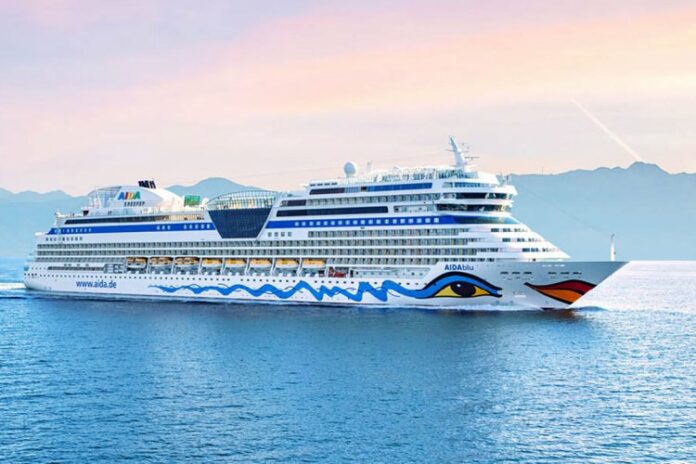
AIDA Cruises opens cruise season in Hamburg on July 31

0

Every Saturday, the Hanseatic city will be the port of departure and destination for seven-day voyages initially sailing to the Dutch metropolises Amsterdam (Ijmuiden) and Rotterdam.

In both ports AIDAmar will stay overnight, giving guests additional time for AIDA-organized shore excursions to the Dutch capital Amsterdam and the fashion and culture metropolis Rotterdam.

As soon as more destinations open for cruise tourism, the company intends to complement these voyages with calls at further ports.

New to the program of AIDA Cruises is a 40-day voyage in the Caribbean with AIDAsol from/to Hamburg between October 16 and November 25, 2021, followed by two 43-day “Great Caribbean Winter Break” voyages, also from/to Hamburg starting on November 25, 2021, and January 7, 2022. These two cruises were originally scheduled with AIDAvita.

All cruises are carried out in compliance with AIDA’s enhanced health and safety protocols, as well as applicable laws and regulations. 

BRS, Deltamarin, BR join forces to provide future emissions and performance toolbox

0

Three global players, the shipbroker Barry Rogliano Salles (BRS); Deltamarin, the ship designers and engineers; and Bureau Veritas have agreed to cooperate to provide effective ship performance and energy transition solutions for the world’s shipowners.

The focus of the initiative is to provide a pathway and tools for owners to measure, verify and improve performance – both for specific compliance with Energy Efficiency Existing Ship Index (EEXI) and Carbon Intensity Indictor (CII) requirements and broader Environmental Social Governance (ESG) and financial targets.

The agreement will ensure the strengths of each partner will enable shipowners to find a pathway through the uncertainties of compliance with new and developing EEXI and CII emissions regulations as well as the demands of their own – and their stakeholders’ – ambitions to meet both emissions and financial performance targets.

The partnership will develop a service to assess the operational and retrofit solutions available to reach decarbonization targets, including EPL, propulsion optimization, and energy saving devices, new fuels, wind propulsion or other options. Deltamarin will focus on calculations and engineering optimization solutions. Bureau Veritas will provide verification, risk and compliance services related to confirming calculations and the safety and risks management of engineering solutions. BRS will be focused on optimizing the financial performance and cost control aspects of projects including carbon credit offers / benefits / opportunities, as well as working with the shipyards that will carry out modification and retrofit work.

Matthieu De Tugny, President Marine & Offshore, Bureau Veritas, said:

“We need to do more than just calculate the EEXI and CII requirements. We need to find, verify and market the benefit of solutions to help shipowners meet their performance targets.”

Janne Uotila, CEO of Deltamarin added:

“The future is not only about complying with the upcoming design and operation indexes. It is about finding a transition pathway towards low and eventually zero carbon shipping. This collaboration enables us to address all of the aspects which need to be considered in solving this complex equation.”

Francois Cadiou, President, BRS concluded:

“This commercial agreement will permit our clients to make better-informed decisions and comply with the regulations set out by the IMO. Ultimately this will help move shipping towards a more sustainable future.”

ABS, RAL, Signet and USCG use purely 3D process to deliver commercial vessel

0

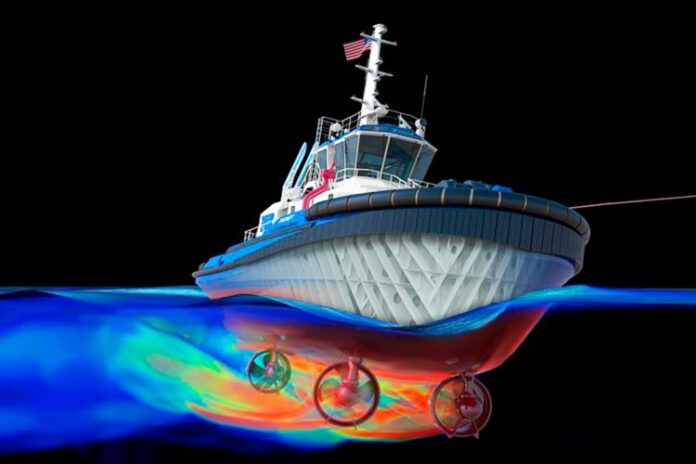
The first commercial U.S. vessel designed, built and verified using an end-to-end 3D design process is now under construction in a pioneering project by ABS, Robert Allan Ltd. (RAL), Signet Maritime Corporation (Signet) and the United States Coast Guard (USCG).

Designed by RAL, the Advanced Rotortug® (ART), which is designed to escort vessels and offshore assets at the Port of Corpus Christi, will receive its Certificate of Inspection from the USCG and will now be built and operated by Signet to ABS Class, making it the first commercial vessel in U.S. history to be produced using only 3D models in design and construction for all structures.

A purely 3D process reduces costs and time investment, while streamlining interaction between all stakeholders throughout the design, verification and construction phases, without compromising safety.

Christopher J. Wiernicki, ABS Chairman, President and CEO, said:

“This landmark achievement sets the bar for future projects both in the U.S. and internationally. Together with our forward-looking partners, we have realized a long-held dream of the industry to leave behind 2D paper plans and move to the next generation of vessel production. ABS is proud to help unlock this capability and to be genuinely leading the industry in this area, once again delivering the advantages of digital classification today. The advantages are significant, and we are confident that once the industry develops the infrastructure to handle 3D models in shipyards, a pure 3D process will become the default approach.”

“As Naval Architects, we find ourselves developing ship structure in 3D more than ever, even at the basic design stage for new vessels. We believe that delivering 3D models instead of traditional 2D drawings benefits all stakeholders – us as the designer, Class societies, clients, shipyards, and equipment suppliers. ‘Direct Design’ of structure in 3D not only streamlines the transition to production design modeling for the shipyard, but also gives us as naval architects earlier estimates of weights and centers, steel quantities as well as the means to check for structural interferences.”

Mike Fitzpatrick, CEO of Robert Allan Ltd., said:

“We are very pleased that ABS has taken the initiative to work with us on a process to review and approve 3D structural models on our project with Signet Maritime Corp.  Not only has it become easier to exchange complex structural design information this way, but the time from the basic design stage to the production design stage is shortened, allowing the shipyard to start cutting steel earlier.”

Timothy S. McCallum, Signet Vice President, Engineering and Dynamics, said:

“The understanding and fidelity of this construction model represents a major milestone in the history of the U.S. maritime industry. 3D design review ensures the designer, engineer, production manager, fitter, welder, and surveyor all work from the same complete model. Each individual has access to both the micro (component) and macro (complete assembly) with which they are working to better understand the bracket, frame, or bulkhead as it relates to the module, section, and ship. Providing that level of awareness to all participants in the process will give ABS, Robert Allan, and Signet a superior finished product and contribute to an overall safer waterway through technological advancement.”

Erdogan takes first step in controversial Istanbul canal project

0

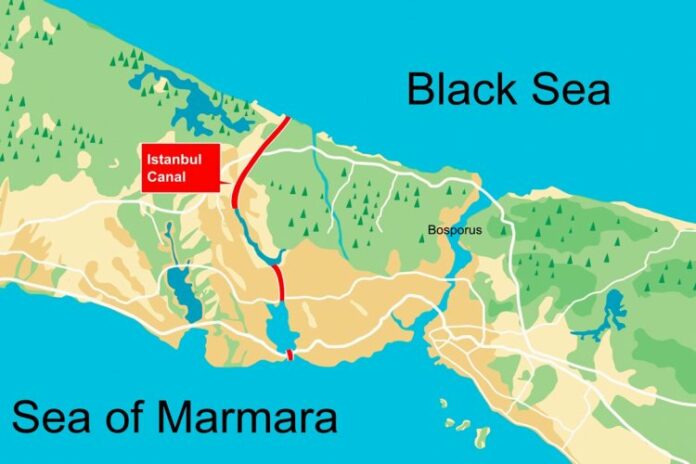
Turkish President Recep Tayyip Erdogan has taken the first step in the construction of a canal on the western edge of Istanbul, amid concerns over the environmental and economic effects of the project.

On Saturday at a ground-breaking ceremony of Sazlidere Bridge over the planned route Erdogan said:

“We see Canal Istanbul as a project to save the future of Istanbul … to ensure the safety of life and property of Istanbul’s Bosphorus and the citizens around it.”

The government has said that the project will ease ship traffic and reduce the risk of accidents in the Bosphorus Strait – one of the world’s busiest shipping lanes – which links the Sea of Marmara and the Black Sea.

Dubbed by Erdogan as his “crazy project” when he first suggested building the canal in 2011, the 45km (28-mile)-long project linking the Sea of Marmara and the Black Sea to the west of the Bosphorus includes the construction of new seaports, bridges, businesses, housing districts and artificial lakes.

Image: NASA, Public Domain

The canal, estimated to cost $15bn, is expected to be completed within six years, Erdogan said.

Opponents say the canal will cause profound ecological damage in Istanbul, exacerbate the dangers posed by earthquakes, and put the already ailing Turkish economy under the burden of even greater debt.

Pinar Giritlioglu, vice president of the Chamber of Urban Planners said:

“Through this new canal, the Black Sea and the Marmara waters will get mixed. This will have ecological consequences and imperil an already tenuous water supply and marine life.” 

Samuel Ramani, a Middle East analyst, said that while a 15-fold increase in traffic in the Bosphorus during the past half century is a serious issue, it has to be weighed against environmental and geopolitical concerns – including reports that much of the project’s funding will come from China.

Source: Al Jazeera