-0.9 C
New York
Home Blog Page 591

Tanker demonstrates zero barnacle growth thanks to antifouling technology

0

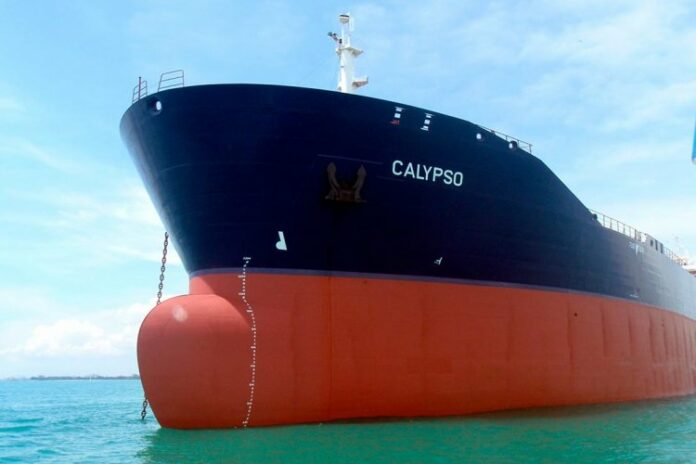
Swedish biotechnology company, I-Tech, has announced that the M/T Calypso has demonstrated zero barnacle growth after a 63-month operation thanks to its proprietary antifouling technology, Selektope®.

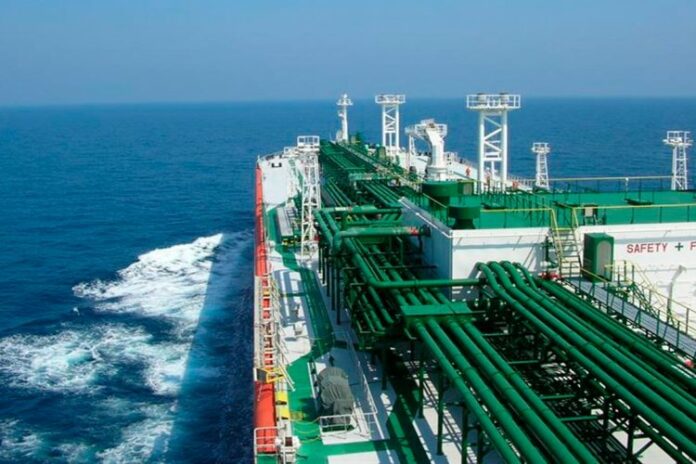
In November 2015, the vertical sides and bottom of the hull of Team Tankers-operated tanker, M/T Calypso, were painted with a 5-year Selektope®-containing, copper-free antifouling product. The period tested the efficacy of the first 60-month paint system containing the active antifouling agent, and saw the vessel operate through heavily impacted fouling areas known as ‘hotspots’ across global routes, formally completing its operations earlier this year.

During this period, M/T Calypso​ displayed an average weighted speed loss of only -0.5%. Analysis of the M/T Calypso’s performance was carried out using Molflow’s AI-ship modelling tool “Slipstream”, training multiple Neural Network models to describe the vessel’s behaviour at certain points in time and comparing their predictions for calm atmospheric and oceanic conditions.

This performance compares favourably to industry averages — separate data collected by coating manufacturer Jotun shows​ an average of 6% annual vessel speed loss, as a result of reduced hull optimisation created by fouling, based on data collected from sensors to enable performance-based monitoring based on standardised principles (ISO 19030).

In addition to sailing in hotspot areas, M/T Calypso spent long periods at anchor where there is increased risk of hard marine fouling by barnacles, whose larvae can only attach to the hull when the vessel is at anchor or moving at slow speeds of up to 6 knots. Regular underwater hull inspections during operation reported almost a complete absence of hard fouling in any of the vertical sides or flat bottom of the hull, and the ship’s hull was not cleaned at any time during the coating’s service life.

M/T Calypso laid at anchor for one month while waiting for dry dock, exposing the hull to a very high fouling risk. When the ship was taken to dry dock and inspected in February 2021, after 63 months of operation, the hull’s paint showed a normal amount of wear but no growth of barnacles.

Commenting on the strong performance of Team Calypso, I-Tech AB CEO, Philip Chaabane:

“Despite the fact that Team Calypso has been active in the harshest conditions for marine fouling for the past 63 months, data on the ship’s sustained performance show that the Selektope®- containing antifouling paint has helped maintain the ship’s efficiency. The owner of this tanker will benefit from the fuel savings that can be associated with the power of Selektope®’s ability to protect the hull from barnacles. Data analysis and inspections of the hull provide strong evidence that proves Selektope®’s high-performance protection against hard marine fouling, regardless of the ship’s activity or movement patterns.”

Biofouling, especially ‘hard’ fouling caused by shell-forming marine life such as barnacles incurs significant performance penalties for vessels due to their increased hydrodynamic drag created by their volcano-shaped shells. Studies show that a vessel with just 10% barnacle coverage requires an increase in shaft power of 36% in order to maintain the same speed through the water compared to a vessel free of hard fouling, resulting in significantly higher fuel costs and emissions. Tackling biofouling is an increasing priority for vessel owners. As climate breakdown raises global sea temperatures, biofouling hotspots are growing, while congestion at ports around the world means vessels are spending longer waiting at anchor; all while regulatory pressure to reduce emissions is growing.

Capt. Pär Brandholm, Senior Performance & Technical Manager at Team Tankers International:

“After operating predominantly in tropical and sub-tropical regions, the fact that that the average weighted speed loss is significantly lower than for other vessels in our fleet, is hugely impressive – and will have a tangible impact on fuel costs and emissions. We encourage all owners and operators to remain proactive in avoiding the performance penalties created by hard fouling and assess their operating profile, performance data and consider whether the antifouling technology mix within their coatings will provide adequate protection.”
Gas leak responsible fire for ‘Eye of fire’ in Mexican waters, says Pemex

0

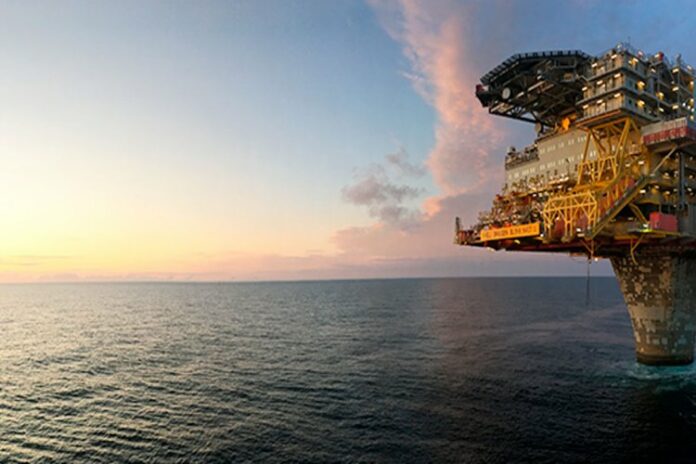
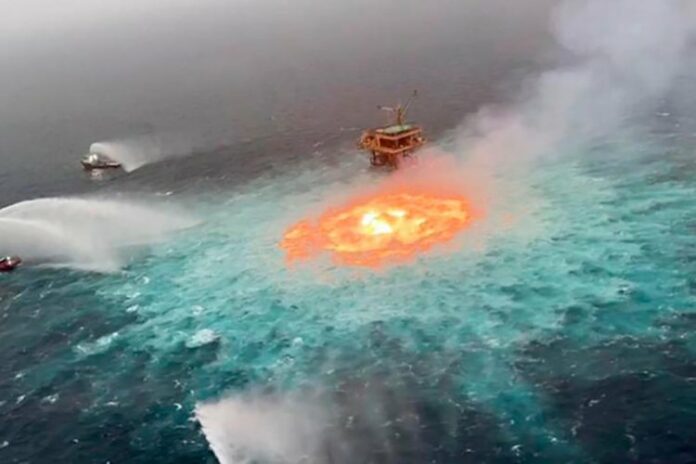
Orange flames resembling molten lava were pictured on social media and dubbed an “eye of fire” on social media because of the blaze’s circular shape, as it raged a short distance from a Pemex oil platform.

In a statement, Pemex said the fire, blamed on a gas leak from an underwater pipeline, happened on July 2, at 5:15 a.m. local time off the coast of Campeche. The fire, which was close to an oil platform, was put out by 10:45 a.m. local time, and no injuries or evacuations of the facility have been reported. Pemex said an investigation has been launched into the incident.

Angel Carrizales, head of Mexico’s oil safety regulator ASEA, wrote on Twitter that the incident “did not generate any spill,” according to Reuters news agency, but did not explain what was burning on the water’s surface.

Pemex, which has a long record of major industrial accidents at its facilities, said it would investigate the cause of the fire and said it shut the valves of the 12-inch-diameter pipeline, Reuters added.

Sources: CNN, Hindustan Times

Lingang Group develops logistics platform in Port of Zeebrugge

0

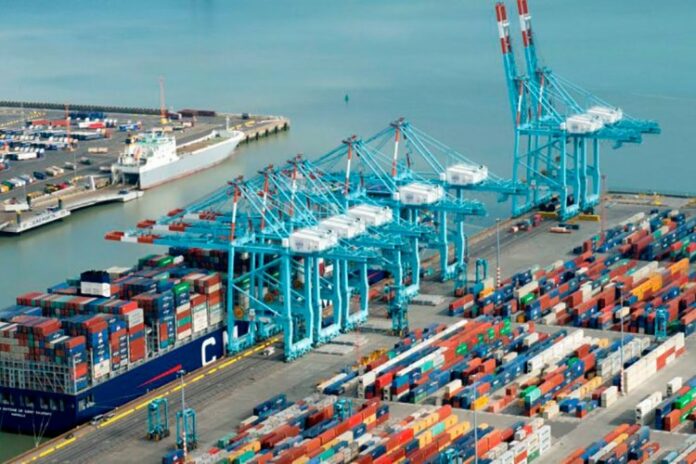
With this investment project, the Chinese Lingang Group aims to serve all players in the European import and export business, across all continents. In addition to the CSP Zeebrugge Terminal and its extensive hinterland connections, the port now has all the assets to further expand its deepsea activities and anchor them in Zeebrugge.

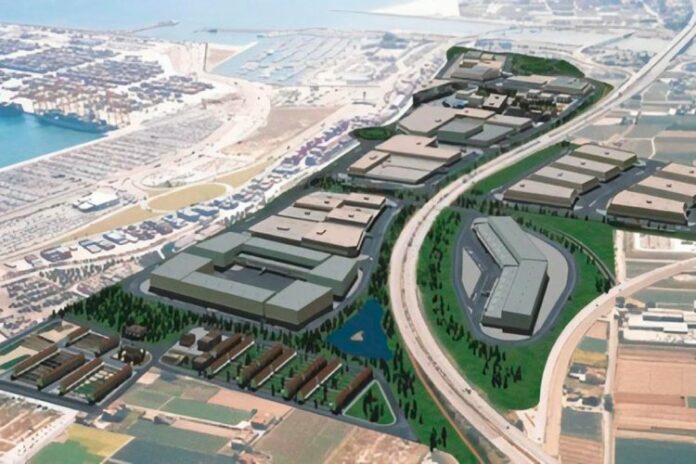
The Lingang Group, a developer of industrial parks, has started the construction of a 76,000m² logistics platform in the port of Zeebrugge. The site, which will be divided into 10 units each with 10 loading and unloading docks and turnkey office facilities, is one of the largest logistics projects in West Flanders. It will also include a 22,000 m² container yard, an access building with offices, parking space for 200 cars, a waiting area and a drop-off zone for trucks. With this investment, Lingang aims to attract and accommodate international logistics players who import goods by container to Europe or vice versa. The focus is initially on e-commerce, automotive cargo and food.

For this logistics project, Lingang will cooperate with Chinese container operator Cosco Shipping Ports (CSP). Cosco acquired the APM deep-sea container terminal in Zeebrugge in 2017 with the aim of developing it into a Northern European hub.

The group was looking for a port with sufficient capacity, good maritime accessibility, high productivity and a favourable location in relation to markets to invest in. The choice fell on Zeebrugge, because as a coastal port it has all these assets. Since the takeover, CSP has invested considerably in the terminal, resulting in a yearly growth of 30% of the deep-sea container services, putting Zeebrugge back on the international container map. The development of a logistics cluster is fully in line with the ambition to attract additional container traffic to the CSP Zeebrugge Terminal.

Jie Hu, CEO Lingang Overseas Belgium, Lingang Group, said:

“The port of Zeebrugge has many similarities with the Yangshan Deep Water Port in Shanghai, where we developed a similar logistics platform 10 years ago. Both are real gateways where such an investment can facilitate deep sea volume growth. We focus on logistics operators, but with the steep growth of ecommerce through Covid-19, we see many opportunities there as well. I would certainly also like to express my appreciation for the cooperation with Port of Zeebrugge. Despite the extra challenges in the past year due to Covid-19, we were able to work out the project in a very constructive way and are now ready to start construction.”

The laying of the foundation stone took place today and the site is expected to be completed in August 2022. In addition to this 15 ha site, Lingang has an option to develop an additional 15 ha. This will be developed in a second phase, which will also include a direct rail connection with a branch line to the warehouse.

Tom Hautekiet, CEO Port of Zeebrugge, said:

“This investment project, which is of an unprecedented scale, is the perfect addition to the CSP deepsea container platform and our excellent hinterland connections and will make an important contribution to the expansion and anchoring of our deepsea services. In doing so, we will strengthen and leverage our role as a gateway for international cargo flows. It is a wonderful example of a win-win cooperation between China and Europe.”

Dirk De fauw, mayor of Bruges and chairman of the Zeebrugge port authority, said:

“As a coastal port, Zeebrugge has all the capabilities to play a leading role in the field of deepsea services. We are therefore very pleased that Lingang has chosen Zeebrugge for this major project. manage more than 2 million m² logistics facilities of distribution zones in the Shanghai region and bring with them the know-how and experience to attract world players to Zeebrugge. I am convinced that this logistics platform will considerably strengthen our economic position, both globally and in the region.”


Port of Valencia starts refurbishment works of the Logistics Activities Zone

0

The works for the refurbishment of the ZAL of the Port of Valencia will begin next July and will last 10 months. The Ministry of Transport, Mobility and Urban Agenda, through Sepes, Entidad Estatal de Suelo, has formalised the contract for the works for the municipal reception of the ZAL of the port of València, with the Unión Temporal de Empresas, Edificación Logística, Industrial y Terciaria, S.L. – Arias Infraestructuras, S.A. for 3.3 million euros.

The works correspond to the revised text of the corrective measures project for the municipal reception of the ZAL of the Port of València, approved on 30 April 2020 by the Valencia City Council.

In addition, the contracts for the consultancy services corresponding to the project management, quality control, health and safety of the works have been formalised for a total amount of 200,490 euros.

With the execution of these works and their municipal reception, a space which will be an economic driving force for the whole region will be consolidated for the city.

The Logistics Activities Zone (ZAL) of the port of Valencia was developed in accordance with the collaboration agreement signed on 23 June 1998 between the Generalitat Valenciana, Valencia City Council and Sepes.

The area on which the ZAL has been developed has a surface area of 72 hectares, of which 683,232 m² belong to the ZAL itself and the rest is destined for the railway accesses to the port of Valencia.

The objective of the development of the ZAL is to boost the activity of the port of Valencia, through the installation of a large number of service providers and logistics activities in its immediate surroundings, thus promoting the economic activity of the City of Valencia and, through its influence, that of the whole of the Valencian Community.

The investment made to date by MITMA, through the State Land Entity, amounts to 133 million euros.

In this regard, it should be noted that the Board of Directors of the Valencia Intermodal and Logistics Platform (VPI Logística) approved the award of four blocks or plots in the Logistics Activities Zone (ZAL) to the companies Grupo Raminatrans, QA Pimba, MSC and Medlog Iberia, firms which submitted their bids and opted for the right of superficies to develop their business projects in the facilities of the logistics platform. The awarding of the contract to VPI Logística (a company in which the Port Authority of Valencia holds 98.4% of the capital) is conditional on the completion of the works and the reception of the conditioning of the land by the Valencia City Council.

Wärtsilä to supply Cargo Handling System for four new VLGC

0

The technology group Wärtsilä will supply its advanced Cargo Handling System for four new 91,000 cbm capacity Very Large Gas Carrier (VLGC) vessels being built for the Norway-based fleet owner Avance Gas.

The ships are under construction at the Daewoo Shipbuilding & Marine Engineering (DSME) yard in South Korea. The orders with Wärtsilä were placed by DSME in April and May 2021.

Hans Jakob Buvarp, Sales Manager, Wärtsilä Gas Solutions, explained:

“Wärtsilä is the world’s largest supplier of complete cargo handling systems for gas carriers, and there is a good reason for us holding that position. We have the technology and we have the in-house competences that ensure that each customer gets the exact system needed for his specific needs.”

The Wärtsilä equipment is expected to be delivered to the yard in May 2022. Wärtsilä has previously delivered similar systems for an earlier series of Avance Gas vessels.

Wärtsilä Gas Solutions is a market leader with innovative systems and lifecycle solutions for the gas value chain. Our main focus areas are the handling of gas in seaborne transport (storage, fuel, transfer and BOG management), gas to power, liquefaction and biogas solutions. We help our customers on the journey towards a sustainable future through a focus on lifecycle, innovation and digitalisation.

Subsea Integration Alliance awarded EPCI contract offshore Norway

0

Subsea 7 has announced the award of a sizeable(1) contract by OKEA to Subsea Integration Alliance(2) for the Hasselmus project, seven kilometres north west of the Draugen platform in the southern Norwegian Sea.

The project work scope covers the engineering, procurement, construction, and installation (EPCI) of the subsea production systems (SPS) and subsea pipelines (SURF) for a single subsea well with direct tie-back to the Draugen production platform. The SURF scope comprises approximately nine kilometres of pipe-in-pipe flowline and associated structures in water depths of approximately 250 metres.

Project management and engineering will commence immediately at Subsea 7’s offices in Stavanger, Norway. Fabrication of the pipelines will take place at Subsea 7’s spoolbase at Vigra, Norway and offshore operations will be executed in 2022 and 2023.

Monica Bjørkmann, VP Subsea 7 Norway said:

“We are delighted to be awarded this contract by OKEA. It acknowledges the value potential of Subsea Integration Alliance’s seamlessly integrated and optimised offering, and extends our relationship with OKEA that began with conceptual studies. We look forward to continuing the journey on the Hasselmus field development with safety, reliability and quality at the forefront throughout.”

Stuart Fitzgerald, CEO Subsea Integration Alliance LLC said:

“This award to Subsea Integration Alliance supports our strategy for early engagement, full subsea system delivery, and our track record with OKEA. Working in partnership with OKEA has supported optimised solutions, early decision making and shortened delivery time, ultimately improving cost efficiency throughout the entire field lifecycle. We look forward to continuing to support this objective for the Hasselmus project”.

De Nora completes acquisition of UV Technologies Division

0

De Nora has announced that the acquisition of the UV Technologies Division (“CCUV”) from Calgon Carbon Corporation has been formally completed.

The deal covers the products, brands, and assets of UV ballast water management system (BWMS) world leader Hyde Marine, as well as municipal and industrial water treatment brands RAYOX, SENTINEL and C3 SERIES UV.

The acquisition – first announced last month – creates one of the largest and most experienced ballast water management system (BWMS) manufacturers in the world. Through the De Nora BALPURE® electrolytic disinfection (EC) BWMS and the Hyde Marine ultra-violet (UV) Hyde GUARDIAN® BWMS, De Nora is now one of the few suppliers able to offer both UV and EC BWMS over a full range of flows – providing the perfect solution for any vessel type or route.​

This increased range and manufacturing scale provides even more flexibility for shipowners at a critical time, as the industry seeks to comply with the International Maritime Organization’s Ballast Water Management Convention (BWMC) and the USCG’s ballast water regulations.​

Matt Granitto, General Manager at De Nora Marine Technologies, said:

“We are delighted to have formally completed the acquisition of CCUV and are excited to begin leveraging the strengths of both De Nora and Hyde Marine’s people, products, and manufacturing infrastructure to offer even better value to the market.​

“This news is particularly timely for the industry, as demand for BWMS retrofits for existing ships is expected to rapidly increase over the coming 18 months. Being able to increase manufacturing and offer more choice between industry-leading systems means that we have created a world-beating offering – for any vessel, with any requirements.”

DCSA launches programme to speed up standards adoption

0

Digital Container Shipping Association (DCSA) in conjunction with its nine member carriers, today launched the DCSA Adopter Programme, which enables solution and service providers to validate adoption of DCSA standards based on the DCSA Self-certification Checklist (SCC).

The DCSA Adopter Programme will enable customers of container shipping as well as other industry stakeholders to streamline vendor selection when seeking standards-based, interoperable solutions.

Organisations that have adopted a DCSA standard can complete the corresponding DCSA SCC, which reflects requirements for successful integration of a DCSA standard into a product, facility or service. The first standards to be available for the Adopter Programme are the DCSA Standard for the Bill of Lading 1.0 (part of the DCSA electronic documentation initiative) and Track & Trace 1.2. Checklists for other DCSA standards suitable for the Adopter Programme will be added in the future.

Any organisation in the market for solutions or services can request evidence of DCSA standards adoption in an industry-wide standard format (the DCSA SCC) when issuing RFIs, RFPs and tender requests. In turn, vendors responding will be able to provide pre-filled documents along with the outputs of DCSA API tools demonstrating their adopter status.

The DCSA Adopter Programme Handbook can be freely downloaded from the DCSA web site. This document is the starting point for any organisation that wishes to learn more about the programme – both those that are adopting standards, and those that wish to evaluate the interoperability of potential partner companies. The SCC for DCSA Standards can also be freely downloaded from the respective standards pages on the DCSA web site.

Organisations that have adopted a DCSA standard are asked to register with DCSA to assist in reporting functions. Adopters will be notified by email when the standard or SCC is updated, enabling them to validate adoption of the updated standard.

Jordi Espin Vallbona, Strategic Relations Manager, European Shippers’ Council, said:

“The work DCSA is doing is necessary to move the industry toward greater visibility and reliability for our members and shippers around the world. Like DCSA, we are committed to furthering digital transformation of the container shipping industry, and over the coming year we intend to drive activities with our members in conjunction with DCSA in support of our mutual goals. We are thrilled to see that they’ve launched a free program for anyone who wants to publicly demonstrate adoption of their standards. This will make it easy for our members to choose carriers, freight forwarders, solutions providers and other stakeholders that offer standards-based services and solutions.”

Kenneth Lim, Assistant Chief Executive (Industry) of Maritime and Port Authority of Singapore, said:

“We welcome DCSA’s continued efforts in pushing for open-source standards, which will be critical in realising a highly digitalised and connected container shipping ecosystem. In our recent call-for-proposal to pilot and adopt electronic bills of lading, we identified DCSA’s standards on data and processes relating to bill of lading preparation and issuance as a set of relevant guidelines for carriers and technology solution providers to adopt.”

Thomas Bagge, DCSA CEO, said:

“We have been asked by customers of the shipping industry as well as solution and service providers to make the process of identifying standards-based offerings easier. The Adopter Programme is our starting point for creating clarity around what constitutes successful standards adoption. We also wanted to focus on high priorities for shippers, such as eBL and Track & Trace, while keeping the programme free and easy for everyone to use. DCSA standards adopters now have a way to self-validate and publicly demonstrate their status as a leader in digital transformation. For shippers and freight forwarders, the programme will help them short-list solutions designed to interoperate based on DCSA standards.”  

Suntrace and Innosea collaborate on Maldives floating solar project

0

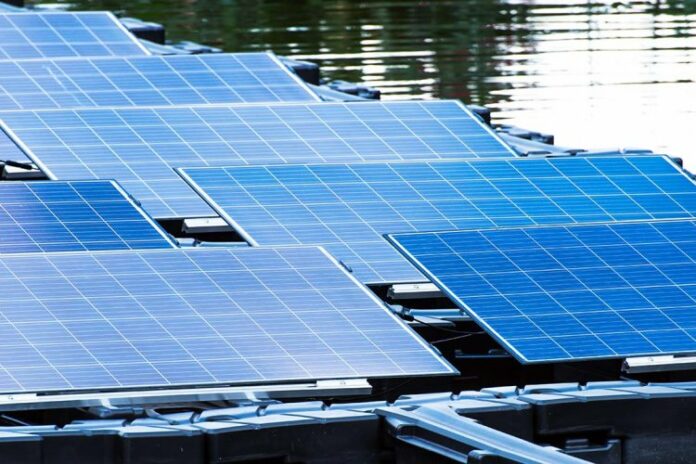
Innosea has been appointed to a consortium led by German Suntrace GmbH, tasked with the development and tender support of a marine floating solar photovoltaics project (FPV) in the Maldives.

Innosea will team up with Suntrace, a Hamburg-based independent renewable energy advisor, as well as Renewable Energy Maldives (REM) and two environmental and social consultants to work on this forward-looking project.

The assignment encompasses technical support to the Maldivian government to develop floating solar in seawater near various islands within the archipelago. As such, Innosea will provide preliminary estimates of the potential for FPV in two regions of the archipelago, proposals on international best practices for FPV development, support to the upcoming tendering process and coordination for the deployment of a 12-month site-specific data collection.

The project is part of the Accelerating Renewable Energy Integration and Sustainable Energy (ARISE) programme – an initiative funded by the World Bank to accelerate the integration of renewable energy sources in the Maldives and in particular island states, to overcome challenges caused by climate change.

Benoit Briere, Snr. Project Manager, Innosea, said:

“We enjoy the challenge of every renewable project we are involved with. Nonetheless, given the Maldives’ vulnerable situation with regards to rising ocean levels caused by global warming, this project is especially meaningful.”

The project also includes a 12-month current and wave measurement campaign to qualify site conditions and allow for further site selection and FPV plant design.

Raúl Granados, Head of Renewable Energy Resources at Suntrace, said:

“We are getting used to large 3-digit MW solar Photovoltaic power plants, but we forget the significant impact that just 1 MWp can do for communities in small islands. Maritime FPV application is a great opportunity to help avoid frequent power shutdowns and intermittent power supply and to provide a fully satisfactory energy supply. The transition towards a Net Zero Future with low-to-no impact to the environment is possible for the Maldives. We are looking forward to supporting the Maldivians in this challenging goal.”

Suntrace, the renewable energy business line of Dornier Group – an international infrastructure advisor of sustainable solutions – will provide technical and advisory services across all project phases from origination to operation. The company has already contributed to 150 renewable energy projects in over 50 countries with an overall capacity of 10 GW.

Benoit Briere adds:

“We are proud to be chosen to join this international consortium and to work with Suntrace, on this pioneering project. We look forward to applying our floating solar technology expertise to the project, which will help support a cleaner energy future for Maldives and the surrounding island regions.”

GTT’s new technology receives Final Approval from three classification societies

0

GTT has received the Final Approval for its NO96 Super+ technology from the classification societies Bureau Veritas, DNV and Lloyd’s Register.

The new NO96 Super+ technology is an evolution of the NO96 containment system maintaining its principal features, in particular the double Invar® metallic membranes and the mechanical anchors fixing the insulation panels to the hull.

NO96 Super+ offers the advantage of reducing the heat ingress inside the tank by integrating insulating Reinforced Polyurethane Foam (R-PUF) panels instead of plywood boxes. Thermal performance is additionally improved by the addition of Glass Wool joints, inserted between adjacent foam panels.

With this innovation, GTT provides a solution to reduce the evaporation of the cargo, with NO96 Super+ guaranteeing ship-owners a daily Boil Off Rate (BOR) of 0.085% of volume for the current standard size design of LNG Carrier of 174.000 m3.

Mr. Philippe Berterottière, Chairman and CEO of GTT declared:

“As a result of these Final Approvals, GTT is able to offer its ship-owner and shipyard partners the new NO96 Super+ technology, an innovative containment system with a greatly reduced Boil Off Rate. Reducing Boil Off Rate is essential for the industry as ship-owners and shipyards face ever increasing economic and environmental challenges.”