-1.6 C
New York
Home Blog Page 589

Second Siemens Gamesa offshore turbine awarded typhoon-resistant type certificate

0

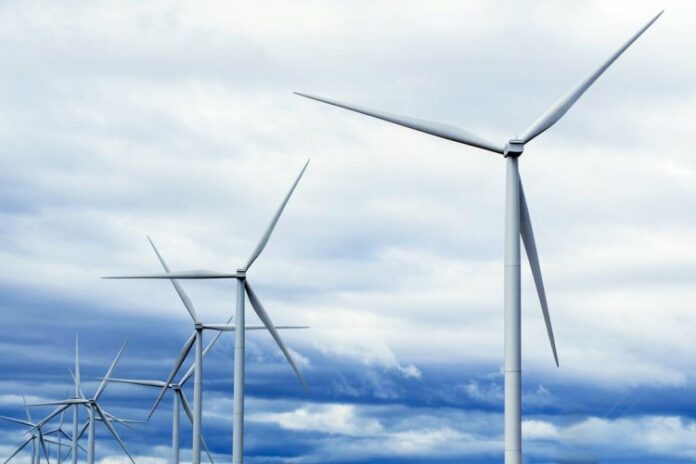
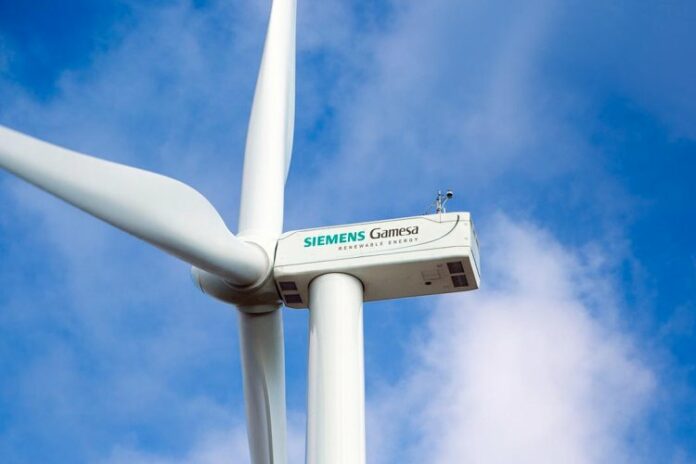
Siemens Gamesa recently became one of the first turbine manufacturers worldwide to receive a second rotor-nacelle assembly (RNA) IEC type certificate covering resistance to extreme wind conditions. Issued by TÜV NORD, the SG 11.0-200 DD offshore wind turbine joins the SG 8.0-167 DD offshore wind turbine with this certification.

Both Siemens Gamesa machines are thus able to withstand Typhoon- or T-class wind speeds as determined by the IEC reaching 57 meters per second for 10 minutes and three-second gusts of up to 79.8 meters per second.

Marc Becker, CEO of the Siemens Gamesa Offshore Business Unit, says:

“We are driven to ensure that our turbines can sustain the extreme weather events such as typhoons seen in Asia Pacific. We’re thus tremendously proud to have received this second rotor-nacelle assembly type certification. With the region poised to become even more significant globally, it strengthens our focus on delivering value to our customers.”

As of today, over 1,200 units of the offshore Direct Drive platform are installed and operating across the globe, including in Asia Pacific on Formosa 1 project in Taiwan. The robustness of the installed fleet is demonstrated via availability rates across the 1,200 units of above 97% in calendar year 2020.

In addition to T-Class wind speed compliance, Siemens Gamesa is working closely with local authorities and certifying bodies to ensure that all applicable standards are considered. For example, the company is part of the international ACE (Alleviating Cyclone and Earthquake challenges for wind farms) Joint Industry Project. The initiative aims at gathering cross-industry experiences to align wind turbine design methodologies for extreme environmental conditions.

Siemens Gamesa has also been developing its offshore platform to operate in both high and low ambient temperatures, thus reducing thermal limitation and increasing annual energy production while preserving turbine lifetime. Those product features will contribute to the further expansion of offshore wind in Asia Pacific, where it is meant to play an important part in the decarbonization of society. In Japan, the government revealed late 2020 long-term and visionary objectives for the industry, with 30-45 GW to be installed by 2040.

Niels Steenberg, Siemens Gamesa Executive General Manager for Offshore in Asia-Pacific, says:

“Throughout the years, we have established a unique track record in the industry, including in Asia Pacific, as we installed and maintain the very first commercial project in Taiwan, Formosa 1. Going forward, we will leverage this experience and prepare to deliver the highest possible standards to support the broader adoption of offshore wind in the region.”

Russell Cato, Managing Director for Siemens Gamesa in Japan adds:

“Building up on more than 20 years of presence in Japan, Siemens Gamesa is committed to contribute to the growth of the local wind power market. On the offshore side, we firmly believe in the potential of the industry, and are encouraged in our endeavors by the strong promotion plan from the government, towards the decarbonization of society by 2050.”

The SG 11.0-200 DD turbine has a rated capacity of 11 megawatts (MW) and a 200-meter diameter rotor using 97-meter long Siemens Gamesa B97 IntegralBlades. The SG 8.0-167 DD wind turbine has a rated capacity of 8 megawatts (MW) and a 167-meter diameter rotor with a 167-meter diameter, using 81-meter long Siemens Gamesa B81 IntegralBlades. The two products utilize the same patented Siemens Gamesa Direct Drive generator technology. Both turbines, along with the larger SG 14-222 DD offshore wind turbine, are designed to sustain withstand extreme wind conditions such as those covered by T-Class compliance.
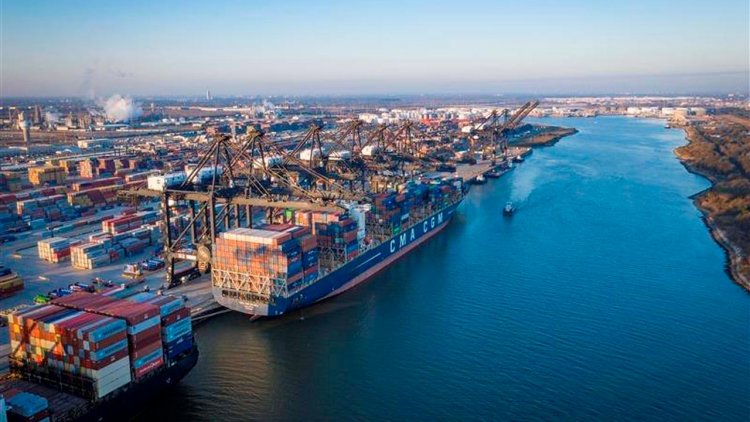
Energy transition in shipping: First BioLNG production project at a French port

0

EveRé, operator of the multi-process household waste treatment plant commissioned by Métropole Aix-Marseille-Provence, the CMA CGM Group, a world leader in shipping and logistics, Elengy, a subsidiary of Engie, operating liquefied natural gas (LNG) terminals at Fos-sur-Mer and TotalEnergies, a global multi-energy company that produces and supplies energy, have joined forces to study the feasibility of creating France’s first production unit for liquefied biomethane (BioLNG), a low-carbon alternative fuel dedicated to energy transition in the shipping industry.

Produced by converting the biodegradable part of household waste from the Marseille Provence region, BioLNG would allow for the decarbonization of shipping services departing from the Grand Port Maritime in Marseille and would be used primarily for the CMA CGM Group’s LNG-powered vessels.
The project forms a circular economic system. Using the area’s household waste will help reduce local air pollutants (nitrogen oxides, sulfur oxides and fine particles), improving air quality and quality of life for people living in the region and supporting the energy transition in the shipping industry.

BioLNG, combined with the dual-fuel gas engine technology developed by CMA CGM, reduces greenhouse gas emissions (including carbon dioxide) by at least 67% relative to well-to-wake VLSFO (the complete value chain). On the basis of a tank-to-wake measurement (at vessel level), greenhouse gas emissions are reduced by 88%.

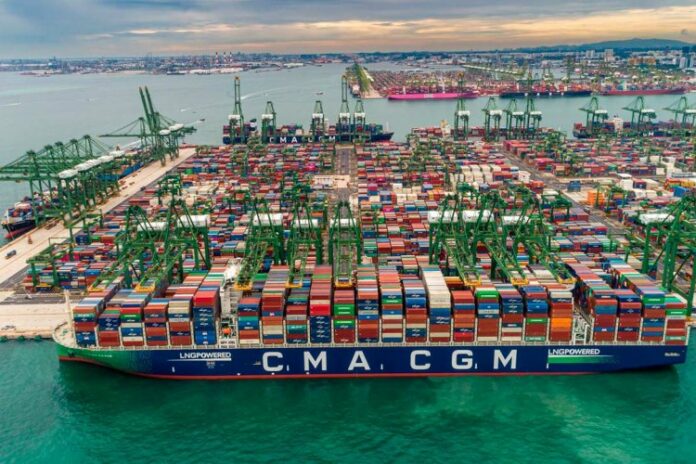
Liquefied natural gas allows for a 99% reduction in sulfur oxide emissions, a 91% reduction in fine particles emissions and a 92% reduction in nitrogen oxide emissions. By the end of 2024, 44 of the CMA CGM Group’s vessels will be powered by LNG.

The project fits perfectly into the local ecosystem, benefiting from the particularly well-suited and already existing infrastructure at the Grand Port Maritime, including EveRé’s waste methanization unit, Elengy’s LNG terminals, which will be used for the storage and delivery of the BioLNG, TotalEnergies’ bunker vessel, which will be located at the port as of January 2022, and CMA CGM’s fleet of LNG-powered vessels. The feasibility study has been launched within the framework of this large-scale project, which corresponds with the national drive to promote BioLNG as defined in France’s Mobility Orientation Law.

The CMA CGM Group, Engie and TotalEnergies have already been working together for several months as part of the Coalition for the Energy of the Future, which aims to step up the pace of development of future energy sources and technologies and to support new sustainable mobility models, thereby reducing the environmental impact of transportation and logistics.

In order to make true technological revolutions possible and achieve tangible results by 2030, the Coalition has set three main targets:
• to considerably increase clean energy supply sources;
• to reduce energy consumption per equivalent kilometer transported;
• to reduce the proportion of emissions attributable to transportation and logistics.

Alfa Laval and NMRI herald successful onboard CO2 capture using scrubber tech

0

One of the opportunities is carbon capture and storage (CCS), which took a step towards realization in recent testing performed by Alfa Laval and Japan’s National Maritime Research Institute (NMRI).

Initiated by NMRI, the CO2 capture testing project was designed to provide real-world validation of results achieved in the lab. Since it required a proven, full-scale hybrid scrubber system, Alfa Laval PureSOx played an important role. The Japanese shipowner associated with the research, who had installed PureSOx for SOx compliance on a newbuild, arranged with Alfa Laval and the shipyard to include the testing in the vessel’s sea trials.

René Diks, Head of Exhaust Gas Cleaning Systems at Alfa Laval, says:

“Alfa Laval PureSOx is a proven solution with a long track record in SOx abatement. The positive results from our project with NMRI Japan show that scrubber technology could also play a role in removing carbon at sea.”

CCS is a potential bridge technology, offering the possibility to extract carbon from emissions until carbon-neutral fuels become more viable. In a full CCS solution, carbon removed from a vessel’s exhaust gas would be stored away to prevent it from ever entering the atmosphere.

For this project, the scope was limited to showing that a scrubber could perform the CO2 capture on board. The modified PureSOx system was able to absorb CO2 from the auxiliary diesel engines in port, while operating in closed loop.

Diks says:

“Both short-term and long-term solutions will be needed to achieve IMO Greenhouse gas emission reduction targets. Much development is needed before CCS can be deployed at sea, but this preliminary testing showed clear potential in the approach. Though designed to remove SOx, PureSOx demonstrated its ability to remove CO2 while operating in closed loop.”

The research with NMRI Japan is one of many Alfa Laval projects with sustainability in focus. Alfa Laval is a member of the Getting to Zero Coalition and a Strategic Corporate Partner in Maersk Mc-Kinney Møller Center for Zero Carbon Shipping. In addition, there are numerous collaborations taking place at the Alfa Laval Test & Training Centre in Aalborg, Denmark.

Diks says:

“Decarbonizing the marine industry will demand a wide range of emission-reducing technologies in addition to new fuels. The only way to achieve those leaps is to explore possibilities together, across the industry and around the world.”

Kongsberg supplies integrated propulsion for eco-friendly bulk carrier

0

The gas-powered ship – which can be fuelled using either zero CO2 emission LBG (Liquefied Biogas) or conventional LNG – is being built for the Norwegian short sea shipping company Seaworks, utilising a design which originated with Norway’s leading vessel architects, Polarkonsult.

Having been impressed with KONGSBERG’s products, services and support on previous commercial marine projects, Polarkonsult approached KM with a view to supplying a propulsion system and LNG engine for the new bulk carrier. During the consultation, KM proposed an integrated solution which would enhance operational efficiency and prove far more cost-effective than separate systems, and this is the approach which has been agreed upon.

KM’s scope of delivery for the newbuild bulk carrier is extensive. The mechanical aspects of the integrated solution encompass steering and reduction gear, bow and stern thrusters, the rudder, a controllable pitch propeller system and a Bergen gas main engine. On the electrical and digital side, the delivery includes energy and power management systems, an energy storage unit, an electro package and a K-Chief marine automation system for monitoring and control of all key vessel functions.

Arne Markussen, Sales Manager and Senior Project Engineer, Polarkonsult, says:

“Our experience with KM as a system supplier and with their cutting-edge expertise and technical advice on the individual elements – engine, gear, propeller system, electrical, battery pack, etc. – has been of invaluable help in the design of the vessel. The personal collaboration with KM’s representatives at the various levels and subject areas has also been very good. The fact that both the shipping company, consultant and supplier have spoken the same language has also simplified the process, although of course we handle partners from other nations on a daily basis.”

The bulk carrier is now being constructed in Wuhu, China after a careful tendering process saw 15 shipyards throughout Europe and China bidding for the contract. Pandemic restrictions unavoidably slowed down the contract negotiations, resulting in a few months’ delay to the original schedule. Nevertheless, all parties concerned have shown unflagging determination to see the project through, and construction is now back on track.

Bård Bjørløw, EVP Global Sales and Marketing, Kongsberg Maritime, says:

“Owing to the exceptional global circumstances, getting the build properly under way has been a long road, which began in March 2020, but it’s a project well worth persevering with. We’re moving towards halving the emissions you’d normally associate with vessels of this size and specification, so this bulk carrier represents something of a showcase for fuel-efficient, future-focused and environmentally-friendly maritime freight transport solutions. It also exemplifies our ‘One KONGSBERG’ approach, in which numerous aspects of our business come together to share and integrate technological insights, experience and expertise.”

Companies team up to develop a pioneering fuel-efficient VLCC

0

The watchwords that dictate the business agenda of shipping companies are decarbonization, efficiency by design, and operational optimization.

There are many new technologies and concepts presently being developed, but the success of a specific design will depend on its economical sustainability, technical simplicity (that translates into reliability and operational/maintenance effectiveness), and availability of the selected fuels.

RINA is cooperating with industry leaders on an innovative ship design for a very large crude carrier (VLCC), with an unprecedented efficiency and extremely low carbon profile-whilst maintaining cargo capacity. 

RINA is working on this design concept together with Wärtsilä, global leader in smart propulsion technologies and complete lifecycle solutions, ABB, leading provider of electrical power distribution and automation, MARIN, one of the leading hydrodynamic research institutes in the maritime industry, the Liberian Administration for the support on statutory matters and a major energy company. The vessel is being designed at Shanghai Waigaoqiao Shipbuilding.

Edda Wind selects MacGregor for a further two Offshore Wind Service Vessels

0

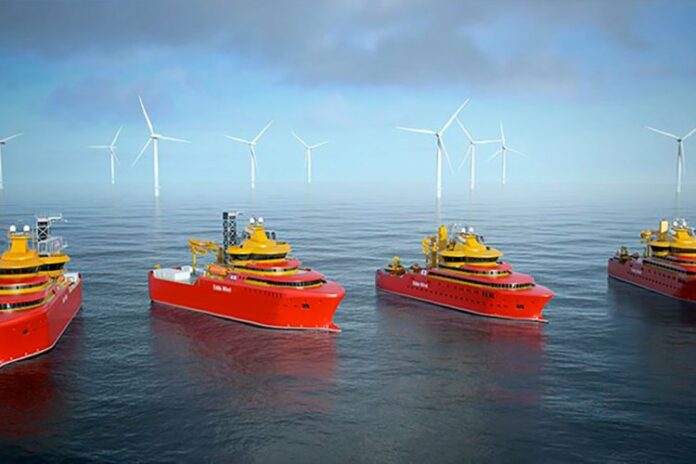
Following the receipt of equipment orders for four offshore wind service vessels announced in May 2020, MacGregor, part of Cargotec, has received an additional order for another two Commissioning Service Operation Vessels (CSOV) that will further expand the Østensjø Rederi Edda Wind fleet.

Both vessels will be built at the Astilleros Gondán shipyard in Asturias, Spain and are sisters of the two CSOVs currently under construction. Each identical equipment package consists of one electrical gangway system, one 3D compensated Colibri crane and a remote control station located on the vessel bridge.

The order was booked into Cargotec’s second quarter of 2021 order intake and the vessels will enter into service during the third quarter of 2023 and second quarter of 2024 respectively.

Both will be delivered with technology installed that reduces greenhouse gas emissions by a minimum of 30%, and will also be prepared for the future installation of zero emission hydrogen technology.

They will operate as mother vessels for wind turbine technicians as they perform commissioning and maintenance work on the offshore turbines, and will have the capacity to accommodate up to 120 personnel in high standard cabins and common areas.

Leif Byström, Head of the Offshore Solutions Division, says:

“MacGregor is delighted to have been selected again to supply critical equipment to the further two CSOV newbuildings, and we highly value the trust that Østensjø Rederi has placed in our capability to support expansion of the Edda Wind fleet.”

JFD awarded capability support contract for UK MOD Astute class submarine

0

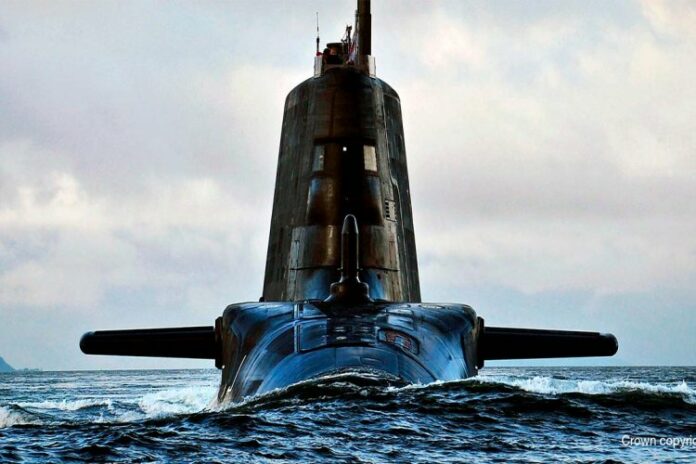
The four-year contract, which has a one-year extension option, was awarded through competitive tender and commenced 1 June 2021. It is a long-term support contract to provide equipment-level in-service support including core and non-core tasking, and the provision of spares.

JFD’s main capability areas bring focus to the provision of this contract combining expertise for both onboard and offboard systems which demands a high level of through life support to ensure the capability is ready for operations; this is at the core of JFD.

The contract will be managed out of JFD’s Capability Support Hub located a short distance from HMNB Clyde. This unique facility possesses all the support capabilities required to ensure a guaranteed service to the UK Royal Navy’s submarine fleet. JFD has partnered with RB Safety Consultants (RBSC), a medium-sized consultancy with an outstanding reputation in the submarine enterprise for providing assurance oversight.

Richard Dellar, JFD Managing Director, commented:

“I am delighted to be able to comment on this first for JFD, as navies around the world continue to rely on JFD to manage and maintain critical life support assets at exceptional levels of availability. Supporting our defence customers through long-term strategic partnerships is JFD’s core business. Our global pedigree, together with our detailed knowledge, experience, and understanding of the capability has allowed us to prepare a carefully considered and innovative offer which will deliver a tailored fit-for-purpose solution, driving best value to all stakeholders.”

Capability assurance is provided by JFD’s carefully constructed and balanced blend of experienced and knowledgeable people; efficient systems and processes; and proactive management with streamlined decision-making. All of which have been purpose-designed with one goal in mind: to guarantee that assets are ready for operational requirements, whenever needed, without compromise.

KPI OceanConnect completes first carbon neutral fuel supply

0

KPI OceanConnect today announced the successful completion of its first carbon offset transaction with a seismic research vessel owner and long-term client. The voluntary carbon units are derived from a wind farm in Texas, and verified by Verra Registry.

The announcement from KPI OceanConnect comes at a critical time for the marine fuels supply chain as it faces an acute need to reduce emissions and make genuine decarbonisation progress. With sustainability and regulatory change as two of the most important focuses for the entire shipping industry, Greenhouse Gas reduction targets for 2030 and 2050 set by the International Maritime Organization will require innovative thinking, and a proven track record of delivering expert services.

Carbon offsets allow for emissions and CO2 output to be balanced with the purchase of an equivalent qualified offset. This means purchasing verified carbon units that are equivalent to the CO2 production from emissions. These units also fund certified projects that generate clean and renewable energy, such as wind farms, solar energy, and reforestation.

Commenting on the announcement, Brian Coyne, Managing Director, Americas at KPI OceanConnect, said:

“By enabling one of bunkering’s first carbon-neutral fuel supplies, KPI OceanConnect is dedicated to exploring the development of different solutions and pathways for shipping. We feel confident in leading the way towards a sustainable future, and ensuring a smooth transition towards 2030 and 2050 for our customers.”

KPI OceanConnect’s CEO Søren Høll also commented: “This particular transaction was the result of combined efforts of multiple offices. I commend our team for putting the customer’s requirements first, and for working so well together in an area that is new for everyone.”

Aker Solutions delivers large Johan Sverdrup module

0

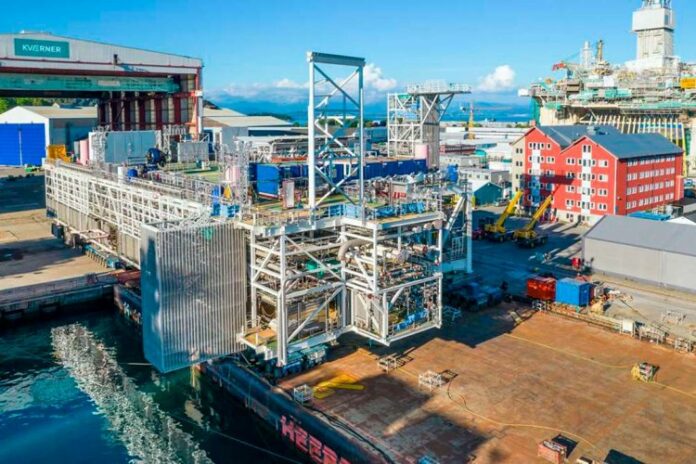
The module is a part of the field’s second development phase and is the latest in a series of large deliveries from Aker Solutions to the Johan Sverdrup field development.

Aker Solutions has been one of the biggest suppliers to the development of Johan Sverdrup. The company has, among other things, delivered front-end engineering and design (FEED) to both phases of the project, four out of five jackets, the living quarters platform and hook-up and integration services, as well as the large module that is being delivered from Aker Solutions’ yard in Stord, Norway. 

Kjetel Digre, chief executive officer of Aker Solutions, said:

“For Aker Solutions, the module as of now represents the last large, physical delivery to Johan Sverdrup. We are proud to be one of the key contributors to this gigantic field development project. Johan Sverdrup has provided enormous ripple effects for the entire industry and will produce large values for the society for decades to come.”

The module is on barge at Stord and will be towed to the Johan Sverdrup field and lifted on board the riser platform by the heavy-lift vessel Sleipnir. This operation is expected to take two days. 

Sturla Magnus, executive vice president and head of Aker Solutions’ topside and facilities business, said:

“Johan Sverdrup has been a successful project from beginning to end and is an excellent example of successful deliveries that have been both on time and to the specified quality. This is particularly impressive considering the pandemic that we have had during the project’s most hectic phase, with a strict infection control regime and periodically lack of manpower. As for the other Johan Sverdrup deliveries, we have had a very good cooperation with the client Equinor and key subcontractors.”

The 5000-ton module consists of 11 sections. Engineering and procurement were carried out by Aker Solutions’ locations in Stavanger, Bergen, Fornebu, Mumbai and London. Fabrication was carried out by Aker Solutions’ partners in Poland, as well as at the yards in Stord and Egersund. Assembly, completion, and commissioning were carried out at the Stord yard.

Castor Marine expands North Sea network with Tampnet

0

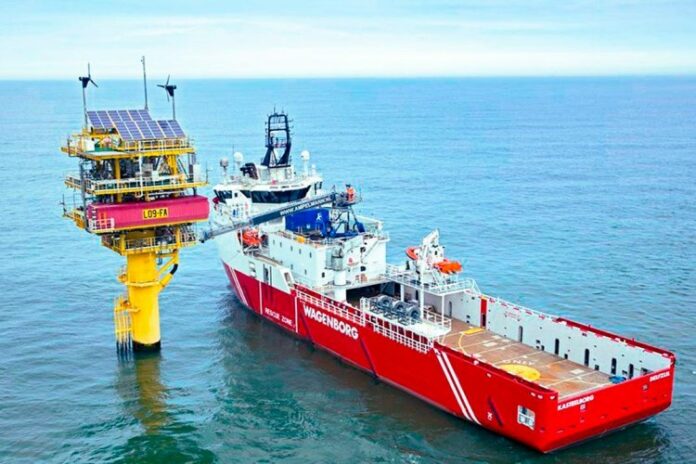
After signing, Castor Marine immediately went to work for its first 4G Tampnet client: The Walk-to-Work vessel Keizersborg went live and now has seamless 4G LTE offshore connectivity. 

With this deal, Castor Marine is now an official Tampnet Activation Point. In the past, vessels supported by Castor Marine automatically switched to the VSAT connection of the company’s own network when moving outside of 4G coverage and vice versa. Now, full 4G coverage for ship and crew is guaranteed. 

Other benefits are that customers who want Tampnet access can simply add them to their connectivity package with one telephone call, customers have less administration in relation to managing connectivity for their fleet, and they benefit from higher bandwidth enabling dedicated 4G connections in the North-Sea or a high level of North Sea redundancy, ensuring more uptime.

Castor Marine already delivers fleetwide connectivity services for the fleet of Wagenborg, where it also remotely monitors and manages all onboard equipment 24/7, ensuring the continuous operation of all the vessels. As Wagenborg’s North Sea offshore wind operations depend on a continuous and correct flow of information – both between people and machines – the company decided to go live with the new low-latency connection for its Walk-to-Work vessel Keizersborg as soon as possible. 

Hence, quickly after Castor Marine and Tampnet signed the contract, Castor’s installation engineers set up, tested and started the fast, low-latency package on the Tampnet network for immediate operations. 

Ivo Veldkamp, CEO of Castor Marine, states:

“The expansion of our services with Tampnet 4G is part of our growth strategy and our mission to ensure the best vessel connectivity anywhere in the world.  The seamless integration of Voyager VSAT with 4G LTE services from Tampnet ensures high availability for business-critical operations, reducing downtime and associated costs for all our clients. I thank Tampnet for the good cooperation from the start and look forward to serving our clients with this connectivity upgrade!”