-1.6 C
New York
Home Blog Page 588

Vattenfall starts construction of offshore wind farm Hollandse Kust Zuid

0

The fossil-free energy generated by the wind farm will benefit both households, businesses and industrial partners.

Martijn Hagens, CEO Vattenfall Netherlands:

“With the construction of the first subsidy-free offshore wind farm in the world we are starting a new chapter, demonstrating that this market is becoming mature. I am extremely proud of the step we’re now taking, bringing Dutch households and our industrial partners another step closer to fossil free living.”

Vattenfall wants to enable fossil-free living within one generation. Wind plays an important role in realising these ambitions. Currently Vattenfall operates over 1200 wind turbines and has eight wind farms under construction, both onshore and offshore.

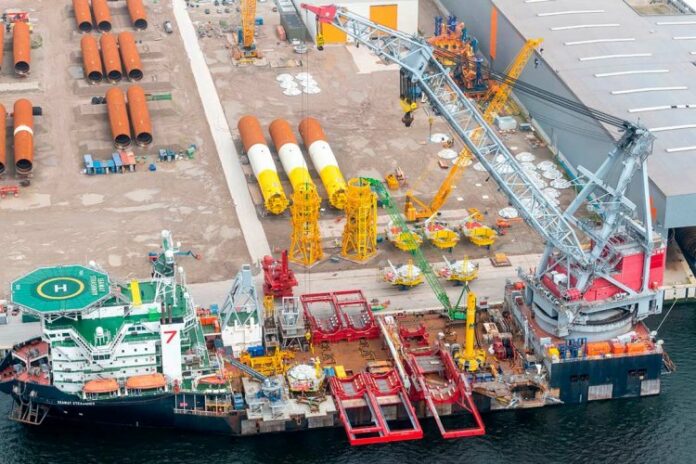
The construction works for Hollandse Kust Zuid start with the installation of monopile foundations. Each foundation is designed specifically for the location where it will be installed. The heaviest and largest monopile weighs 955 tons and is 75 metres long, while the lightest and shortest foundation still weighs 735 tons and is 62 metres long. The monopiles will be installed in water depths varying from 17 to 28 metres.

An installation vessel transports the foundations to their offshore location and positions itself at the exact location. The ship’s crane then lifts the monopile into the water and lowers it until it reaches the seabed at a depth of 17 to 28 metres. Once the foundation is in position on the seabed, a hydraulic hammer is used to drive the pile to the desired depth.

Ian Bremner, Project Director, says:

“Over the next few months, we will already install dozens of foundations. During the winter there is a scheduled break, as sea and weather conditions are often too poor to work safely. In the spring of 2022, construction will resume, and we will install the remaining foundations followed by inter array cables and turbines. The first turbines are currently scheduled to be commissioned in the spring of 2022, with all turbines expected online by summer of 2023.”

Vattenfall is building Hollandse Kust Zuid together with its recently announced partner BASF. The wind farm will be located approximately 18 kilometres off the coast of The Hague and Zandvoort, with the furthest turbines located 36 kilometres offshore. When fully operational, Hollandse Kust Zuid will be the largest offshore wind farm in the world. The 140 turbines have a combined installed capacity of 1.5 Gigawatt.

Vattenfall will make a significant part of the fossil-free electricity generated by the wind farm available to Dutch households and small businesses. BASF will use its part of the production to implement innovative, low-emission technologies at several of its production sites in Europe.
SGMF advances LNG safety standards with new guidance

0

The documents are intended to assist greater standardisation in crew competency and vessel design.

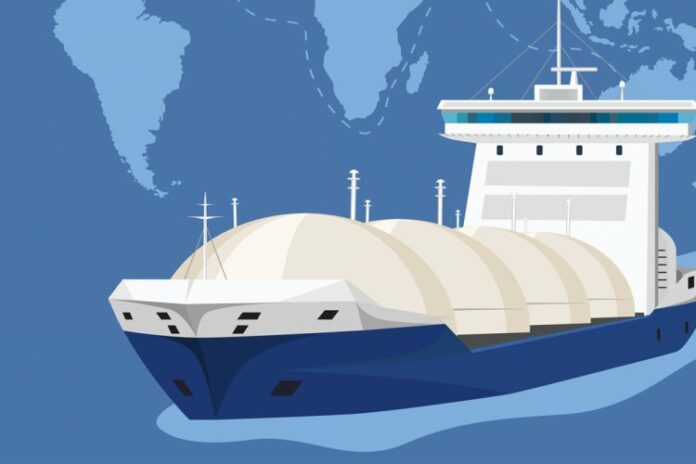
SGMF’s Operation of ships with Liquefied Natural Gas (LNG) – competency and assessment guidelines defines the skills required for any party involved in the preparation, storage, handling and use of gas as a marine fuel. The guidance can also be used by organisations developing training in these competencies.

Ray Gillett, General Manager, GTT Training and Chair of SGMF Working Group 14 said:

“The use of LNG as a fuel on marine vessels is expanding quickly. To ensure that these vessels are operated safely and efficiently it is important that crews fully understand what they are dealing with. These guidelines provide a basis for operators and training organisations to implement the necessary training to achieve that aim.”

A new Technical Guidance Note recommends on the best locations for bunker manifolds or bunker stations on gas-fuelled ships. The guidance complements existing SGMF documentation on manifold arrangements and is intended to promote compatible bunkering operations across a widening range of bunkering facilities and installations.

Bob Kamb, a member of SGMF Working Group 6.5 and formerly Manager, LNG Services ABS Group Consulting Inc, said:

“Seafarers frequently complain that ship designers don’t have to sail the ships they build. This guidance alleviates that complaint by providing a decision support framework for optimizing bunker manifold location. This is a useful tool resulting in safer, easier to implement and more efficient LNG bunkering operations.”

Both publications were prepared by working groups comprising SGMF members. They, along with an extensive library of other guidance, are available freely as part of SGMF membership.

Mark Bell, General Manager, SGMF added:

“The rhetoric around LNG is rising to fever pitch, but SGMF remains a calm voice calling for consistent safety standards to be applied to the most widely available of shipping’s alternative fuels. We are delighted that our working groups have been able to contribute further to the consolidation of safety standards with these two important publications.”

Damen & Conrad Shipyard made an agreement to build US Multi Cats

0

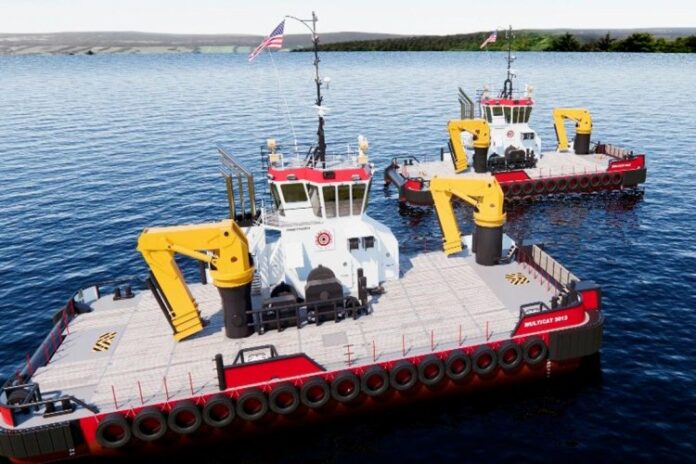
Damen Shipyards Group has concluded a licence agreement with US-based Conrad Industries. The agreement will see the Conrad Shipyard LLC construct two Damen Multi Cats 3013 for Great Lakes Dredge & Dock Corporation.

The two vessels covered by this agreement will be the first Damen Multi Cats to be built in the USA. Fully compliant with the US Coast Guard and US Army Corps of Engineers stability criteria, the versatile Multi Cat is the ideal platform for dredging support operations.

Lasse Patterson, CEO, Great Lakes Dredge & Dock Corp., said:

“This is a milestone moment for the US shipping industry and our company. The Multi Cats will give us the ability to dredge with enhanced operating efficiencies needed to maintain our shorelines and waterways.”

With its large winches and deck cranes, the Multi Cat can perform a wide range of tasks including handling submerged and floating pipelines as well as anchor handling and logistics supply. Large tank capacities onboard will ensure the Multi Cats can also supply dredgers with the required replenishments.

The Multi Cat brings efficiency to a project, eliminating the need for assorted floating support equipment such as derrick barges, tow boats and anchor barges. It also significantly increases operational safety of operations, enabling hose and pipe maintenance works to take place securely on deck reducing the risk of man overboards compared to standard industry methods utilizing floating pontoons. Damen sales manager Daan Dijxhoorn explained the process of building under licence saying:

“These Damen Technical Cooperation (DTC) licencing agreements are a means by which US-based operators are able to access Damen’s proven vessel portfolio in a manner fully compliant with the Jones Act. Licence holders construct the vessel themselves in the country, drawing upon Damen’s experience in the engineering and production of the platform and on Damen’s support throughout the building process.”

DTC support is tailored to the yard’s requirements. Assistance can be anything from provision of initial drawings to the supply of parts packages to on-site consultancy. Damen designs built under licence in the US cover a wide range of vessels types including those operating in the harbour towage, terminal operations, offshore and dredging sectors.

Construction of the first Multi Cat will begin on July 13, 2021.

Ulstein and EDGE evaluating hydrogen fuel cells for container vessel concept

0

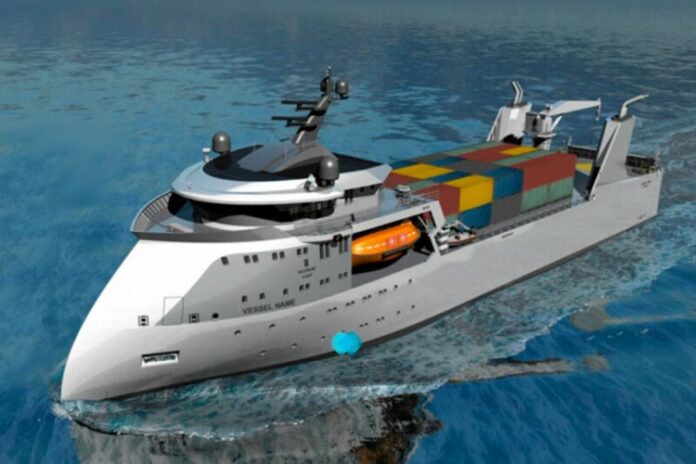
EDGE Navigation and Ulstein have recently announced their cooperation on an X-BOW container vessel concept design to facilitate green energy power solutions for fossil-free operations. 

The partners are now in the process of evaluating the use of a modular hydrogen fuel cell solution together with ABB and Ballard Power Systems.

Jakob Tolstrup-Møller, Managing Director – CEO at EDGE Navigation, says:

“Hydrogen is emerging as the energy carrier of choice across industries so we are happy to collaborate with ABB and Ballard Power Systems for developing a hydrogen fuel cell modular solution to the designs currently being developed by Ulstein Design & Solutions AS. Developing a new efficient design for container vessels incorporating the ULSTEIN X-BOW® will facilitate the transition to green energy propulsion for containerships. At EDGE Navigation we have the ambition to bring economic and scalable non-fossil fuelled containerships to the market by 2025 and with Ulstein’s innovative approach we will have the flexibility in design to adapt the vessels to the charterers’ choice of fuel.”

Tolstrup-Møller states:

“The commercial shipping share of global greenhouse gas (GHG) emissions has reached about 3%. Declining cost of renewable energy and technology enables us to develop new efficient designs that will facilitate the energy transition in the maritime industry. The paradigm shift in energy used for maritime fuel will be inevitable. Any effort to reduce the global GHG emissions must also include investment into reducing GHG emissions in the global supply chain.”

Jostein Bogen, Global Product Line Manager for Electric Solutions, ABB Marine & Ports, says:

“With the ever-increasing demand for solutions that enable sustainable, responsible shipping, we are confident that hydrogen fuel cells will play an important role in helping the marine industry meet CO2 reduction targets. We are delighted to collaborate with Ulstein and EDGE Navigation to explore the possibilities of powering a sustainable container vessel with an innovative fuel cell solution that ABB is jointly developing with Ballard Power Systems.”

Jesper Themsen, CEO of Ballard Fuel Cell Systems Europe A/S noted:

“Our PEM fuel cell systems offer a zero-emission solution with a particularly strong value proposition for medium- and heavy-duty motive applications, including marine vessels, buses, trucks and trains. We are excited to work with ABB in addressing requirements of the marine industry, as evidenced by Ulstein and EDGE Navigation’s decision to use Ballard’s fuel cell system for the X-BOW container vessel following DNV approval of the system”.

Lars Ståle Skoge, the commercial director at Ulstein Design & Solutions, said:

“In this phase of the concept development for the future, green X-BOW container vessels it is important to cooperate with forward-thinking players. We are happy that ABB and Ballard are supporting us at this stage of the project.”

Ørsted announces partnership with Falck Renewables and BlueFloat Energy

0

The consortium is set to apply for seabed leases in sites which lend themselves to the deployment of large-scale floating wind technology in the Crown Estate Scotland’s upcoming Scotwind leasing round.

Since pioneering the first ever offshore wind farm in 1991, Ørsted has developed and built more offshore wind projects than any other company in the world. Combining this unparalleled track record with BlueFloat’s unique knowledge and experience in developing, financing and executing floating wind projects and Falck Renewables’ track record in global project development and community engagement in Scotland in particular, the consortium is well placed to deliver world-class floating offshore projects.

Martin Neubert, Chief Commercial Officer at Ørsted said:

“We recently announced our strategic decision to pursue floating wind opportunities and to drive the commercialization of this technology. Today’s announcement reaffirms Ørsted’s commitment to this exciting and rapidly developing new technology. Allying our strong in-house Development, EPC and O&M capabilities with partners that have unique hands-on experience in floating wind projects and a strong local presence in Scotland will enable us to deliver an exciting new proposition for Scotland.”

Duncan Clark, Head of Region UK for Ørsted said:

“We have seen the positive, transformative impact of Ørsted’s offshore wind farms in providing clean, cheap energy for homes and businesses; investing in our supply chain and opening access to opportunities across the globe; and creating new jobs and skills that leave a lasting legacy in communities across the country. This success is something we are very keen to replicate in Scotland.

“The ScotWind leasing round is a crucial step in the Scottish Government’s plan to deliver up to 11 GW of offshore wind capacity by 2030 and will be pivotal to a truly green recovery from the COVID-19 pandemic.”

BlueFloat Energy’s CEO, Carlos Martin, said:

“Announcing our partnership with Ørsted strengthens BlueFloat Energy’s position in the floating wind market since it endorses our value proposition as a technology-neutral expert with a decade of unique experience and knowledge in developing floating wind projects. Floating wind is an emerging industry and we are excited to announce our partnership with Ørsted. It reinforces our capabilities and creates a winning consortium for a very competitive Scotwind leasing round.”

Richard Dibley, Managing Director of Falck Renewables UK, said:

“Falck Renewables are committed to taking an active role in the development of floating offshore wind projects, as we are convinced the technology will play a crucial role in helping to reach Scotland’s net zero goals.

“Ørsted’s hands-on approach to working with local communities is a great fit with our more than 15 years of experience working in Scotland to develop projects which share their economic benefit as widely as possible with local people and we are excited about the opportunities this partnership will offer Scottish communities and the supply chain.”

Unlike more traditional bottom-fixed offshore wind technology, where the turbine is mounted on top of a structure fixed to the seabed, floating wind projects use a floating foundation anchored to the seabed by mooring lines, allowing projects to be sited in deeper waters further away from the coast.

OHT and Subsea 7’s Renewables business unit to be combined

0

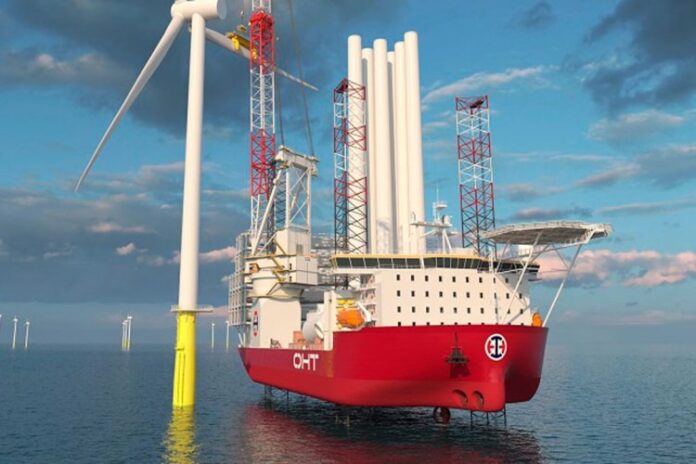
OHT ASA has announced an agreement to combine with Subsea 7 S.A. Renewables business unit, subject to customary approvals, conditions and relevant employee consultations.

The combined company will be renamed Seaway 7 ASA and will initially retain OHT’s listing on Oslo’s Euronext Growth market, with a view to a future listing on the main board of Oslo Børs.

The transaction will create:

  • A listed, pure-play renewables company, headquartered in Oslo and focused on offshore fixed wind
  • A single supplier providing an enhanced range of standalone, integrated or EPCI(2)  offerings encompassing installation of wind turbines, foundations, offshore substations, submarine cables and heavy transport
  • A key player in the industry, employing around 600 people, with an active fleet of ten vessels and two further high-specification vessels under construction
  • A global organisation with a track record of more than ten years and relationships with the majority of developers in the sector
  • A high-end, differentiated fleet with enabling capabilities and scale, allowing efficient worldwide operations, while providing vessel flexibility and optionality to clients
  • Increased exposure to the high-growth offshore wind market, with the timely and cost-efficient addition of two best-in-class foundation and turbine installation vessels in 2022 and 2023

Torgeir E. Ramstad, Chief Executive Officer, OHT said:

“This is a very significant event in the growing Renewables industry. Subsea 7 is a highly respected company and we are delighted that it sees OHT as a natural partner in creating a new global leader in renewables. We are committed to translating the leading capabilities that the combined company will offer into benefits for clients within the offshore fixed wind industry.”

John Evans, Chief Executive Officer, Subsea 7 said:

“This transaction represents an important next step in Subsea 7’s Energy Transition journey that will accelerate and enhance value creation for our shareholders. As a listed company with a comprehensive fleet and experienced management team, Seaway 7 ASA is positioned to forge an enhanced growth trajectory as a global leader in offshore wind. Subsea 7 looks forward to working closely with Seaway 7 as it launches this next exciting chapter in its evolution.”

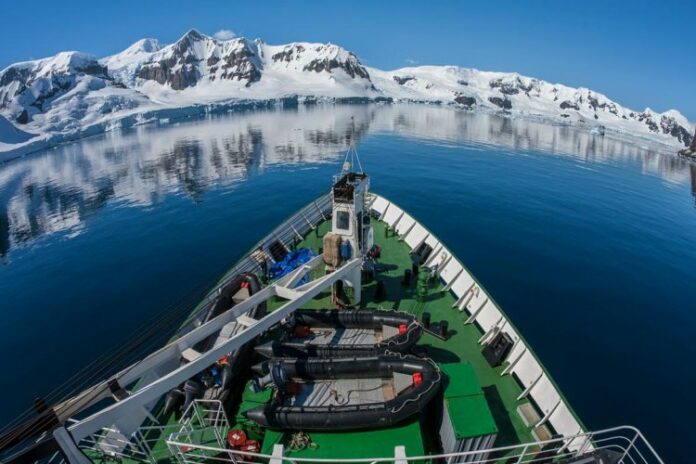
Ukraine allocates funds for a new icebreaker for Antarctic expeditions

0

The relevant order on the redistribution of some state budget expenditures provided by the Ministry of Education and Science was approved today, July 7, 2021, during a meeting of the Cabinet of Ministers.

Serhiy Shkarlet, Minister of Education and Science of Ukraine, said:

“Ukraine is one of 30 countries in the world that have year-round stations in Antarctica. And this is not only a great prestige for our country but also a great opportunity for Ukrainian scientists to work at the world level and get involved in solving global problems. The study and development of the resources of the oceans are one of the main trends in the development of science and technology in today’s globalized world, and at one time Ukraine had considerable achievements and developments in the field of marine research. Unfortunately, for the last two decades, our capabilities have been limited by the lack of research vessels in Ukraine suitable for work in the ocean, in particular the ice-class.”

Own oceanographic icebreakers will allow Ukrainian scientists after a long break to return to the study of the oceans, create research and logistics consortia with other countries, and in the future – to work not only in Antarctica but also in the Arctic and, if necessary, in other regions of the ocean.

Having its own ship will also help solve logistical problems at the Academic Vernadsky station, which can only be reached by sea and only during the short period of the Antarctic summer when the ocean around is not frozen. For the delivery of annual and seasonal expeditions, cargo, Ukraine is still forced to charter foreign vessels every year.

Dr. Evgen Dykyi, Director of the National Antarctic Scientific Center of Ukraine (NASC), said:

“Last year, when the COVID-19 pandemic had just begun, members of the 25th Ukrainian Antarctic Expedition had an extremely difficult time getting to the station. The shift was in jeopardy, and the journey lasted more than a month. Therefore, when on February 6 this year the polar explorers of the 25th UAE talked to the President of Ukraine directly from the station for the first time in history, the expedition members answered his question without much hesitation: an icebreaker. Volodymyr Zelenskyi stressed that the state would do everything necessary for this, and set the task of the Office of the President and the Government to work out a solution together. Today this decision is available. It gives the “green light” to buy a ship.”

The adopted decision of the Government must be approved by the relevant committee, after which the next step is the actual purchase of the vessel.

Wärtsilä Navigational Simulator gains new DNV Class D Certification

0

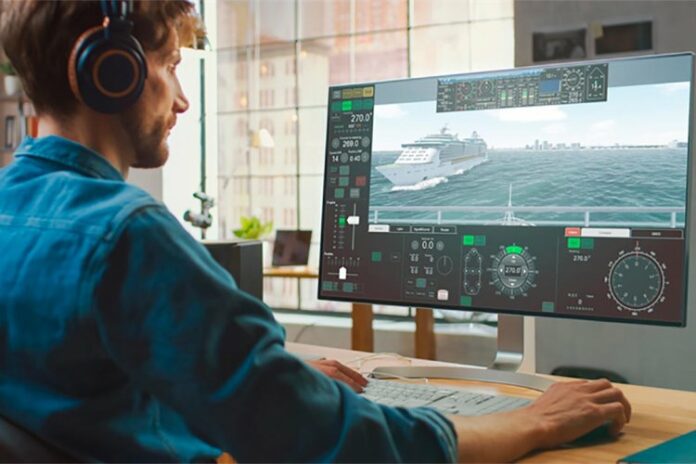
Wärtsilä Voyage’s NTPRO (Navi-Trainer Professional 5000) navigational simulator has attained certification according to the new DNV Class D standard for cloud-based simulators — making it the first certified cloud solution that offers both interactive instructor-led and student-led training. With this, the navigational simulator now has full compliance (Class A, B, C, D) with DNV’s ST-0033 Maritime Simulator Systems standard.

As the maritime industry works to identify what learning events can be effectively conducted remotely and what requires a physical presence or team interactions at a training facility, Wärtsilä Cloud solutions are certified to provide both the interactive exercise control required for mandatory (STCW) training and examination, as well as the self-directed detached exercise and assessment that can be undertaken to enhance or supplement Instructor controlled simulations. Together these simulation solutions and associated value-added services equip the training providers with all the tools needed to develop effective and targeted blended learning courses that can be considered for flag or other industry approvals.

Johan Ekvall, Head of Product, Simulation and Training at Wärtsilä Voyage, says:

“The Class D cloud simulator standards are essentially the same as the Class C classroom simulator standards. Since we use the same technology platforms in our Cloud Simulation solutions as we do for physical classroom Class C simulators, and provide both instructor-led as well as self-directed exercises, we already had all the necessary functional to meet and exceed the simulator standards for STCW as well as more advanced training applications.”

Moreover, Wärtsilä Voyage’s Cloud Simulation is a managed service that has received Product Certification from DNV, meaning that training providers using the service do not need to apply for a ‘Product Certificate’ themselves as they typically do with a physical simulator in their training centre.

The stringent lockdown measures during the pandemic accelerated the adoption of cloud training services in the last one and a half years. And given the enormous flexibility and efficiency it inherently creates, Wärtsilä Voyage expects cloud-based simulator solutions to become an industry staple.

Ekvall adds:

“The new standard for cloud training only further facilitates realisation of the value created by remote simulation and learning. It represents a further positive step in the ongoing transition towards blended learning within the maritime educational industry, officially verifying that Wärtsilä online simulation meets or exceeds the already established, and globally recognised requirements for seafarer certification.”

“Enabling instruction and training courses via personal computers, laptops and mobile devices, from anywhere and at any time has considerably increased the possibilities for shipping companies, institutes and their learners, offering the utmost flexibility and efficiency in maritime training. We strongly believe blended learning platforms are the future of maritime training.”

First of new Damen Shoalbuster named in ceremony at Damen Shipyards Hardinxveld

0

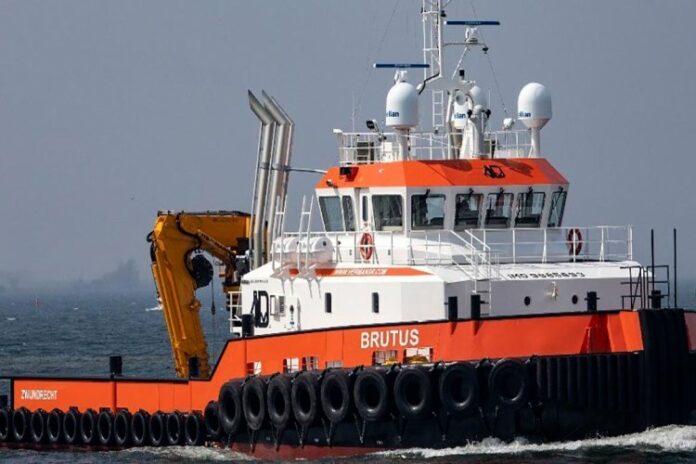
Recently a ceremony was held at Damen Shipyards Hardinxveld, to mark the naming of the first of a new model in the Damen Shoalbuster range. The ultra-shallow, Shoalbuster 3514 SD was christened Brutus by Mrs Mandy Heere-van Eijk, on behalf of the leading tug and workboat company, Herman Sr.

As part of the ceremony Mr Jack van Dodewaard, director of Herman Sr, thanked the team at the yard for the great job that they did and for their achievements despite having to battle against the headwinds of the COVID-19 pandemic. To mark the occasion, Mr Van Dodewaard was presented with a scale model of Brutus by the director of Damen Hardinxveld, Mr Jos van Woerkum, after which the latter also presented a gift to Mrs Heere-van Eijk.

The Shoalbuster 3514 SD is one of the largest and most sophisticated in the range. A substantial and versatile working platform, it measures 35 metres in length, nearly 14 metres wide and has a free deck space of 150m2. With a draught of 2.85 metres at full tank capacity and just 2.45 metres at 50%, she is able to access waters inaccessible to other vessels of a similar size and capability. Four Caterpillar C32 ACERT engines deliver a total of 3,876 bkW (5,280hp) to four 1900mm nozzles, an arrangement that contributes significantly to her shallow-water capability. And with 60 tonnes of bollard pull, she also has powerful towage capabilities.

Among the many other roles which the Brutus will be capable of taking on are PLGR operations, ROV surveys and a 600 x 800mm moonpool for multibeam access, mattress installations, UXO clearance, mooring, pushing, dredging support, ocean-going towage and general offshore supply vessel duties. Other features include four-point mooring and she is also equipped for anchor handling with an open stern complete with roller. The accommodation is comprised of twelve cabins for six to seven crew plus thirteen to fourteen additional personnel.

Brutus will be deployed primarily for wind farm support and maintenance duties where her shallow draft will allow here to work near as well as offshore. The DP2 dynamic positioning system including ancillary thrusters will ensure precise position-holding on the open sea as well in the vicinity of turbines and other structures. Her open stern will also make the vessel suitable for cable-laying operations and a sturdy aft deck HS Marine knuckle boom crane will be capable of lifting a wide assortment of cargo and equipment.

Jack van Dodewaard said:

“The Van Dodewaard family, as Herman Sr B.V., are still very happy with the good and long term cooperation with Damen Shipyards. For nearly 75 years, and across three generations, they have been our vessel supplier and we hope it will last for many more years. The fourth generation of the Van Dodewaards is taking over this year, with Erwin and Chris carrying on with the family business. I wish them good fortune and a healthy business for the coming years and hopefully they will also find their children willing to continue the cooperation with Damen and extend our fleet of Damen Workboats.”

Jos van Woerkum added:

“We are proud to have built our 14th Damen vessel to Herman Sr since we began our mutual cooperation more than 70 years ago in 1947. The Brutus is the first diesel-electric Shoalbuster with hybrid propulsion in the range, with a shallow draft, dynamic positioning 2 and compliant with the latest IMO Tier III requirements following installation of a treatment system to reduce its emissions. These features are in line with current developments within the Damen organisation that aim to make it become the most sustainable shipbuilder in the world.

“The vessel’s features include a deck load capacity of 10 tonnes per square metre, a free deck space of 200 square metres and is equipped with a heavy deck crane and two powerful winches. With 60 tonnes of bollard pull we wish Herman Sr much success with this innovative vessel and look forward to continuing our close relationship into the future.”

Norske Shell creates a virtual representation of their Ormen Lange deepwater gas field

0

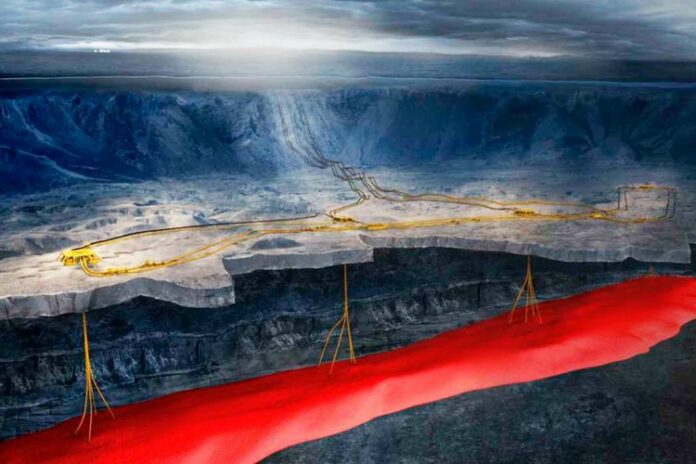
Norske Shell is using Kongsberg Digital’s digital twin solution Kognitwin® Energy to create a virtual representation of their Ormen Lange deepwater gas field. Feeding into the onshore digital twin developed at Nyhamna gas processing facility, the two will combined become the first ever fully integrated reservoir to market digital twin.

The twin solution from Kongsberg Digital will reimagine the ways of working at Shell and unlock new value in the subsea and subsurface arena. By focusing efforts on digital solutions that scale across assets and installations it is easy to expand and integrate Ormen Lange into the existing onshore dynamic digital twin developed at Nyhamna gas processing facility, resulting in the first ever fully integrated reservoir to market digital twin.

In October 2019, Norske Shell joined forces with Kongsberg Digital to operationalize an ‘asset of the future’ through a partnership development of the Nyhamna Dynamic Digital Twin, using Kongsberg Digital’s Kognitwin Energy solution. The twin was deployed and up and running by the end of the year and since January 2020 the Nyhamna Dynamic Digital Twin has been in operation and evolving continuously through monthly product releases, focusing on safe, effective and integrated work processes and optimization of production and energy use. With  Nyhamna having paved the way, the decision was made to expand the collaboration with another digital twin of the related Ormen Lange deepwater gas field, which feeds gas to Nyhamna.

Hege Skryseth, President of Kongsberg Digital and EVP KONGSBERG, says:

“With Ormen Lange, we are very proud to have been awarded the contract for the development of a second digital twin for Norske Shell. This is a direct result of our successful collaboration around the Nyhamna dynamic digital twin. We would particularly like to highlight a strong core product, Kognitwin Energy, rapid deployments, and fast time to value as unique differentiators in this ongoing project. Now, we are eager to help Norske Shell realize the full potential of their assets through integration of these two digital twins.”

The first version of the Ormen Lange digital twin comprises primarily data integrations and visualization of subsea 3D models including production and MEG pipelines, well surface locations and well-bore paths, seabed bathymetry data detailed around the production templates, built documentation and drawings, real time data from DCS and PI and much more. For disciplines and teams across the initial Ormen Lange user base – like Subsea Maintenance, Wells, Flow Assurance, Production Technology, Reservoir Engineering, Process Engineering and Operations – the twin provides unified data for everyone to access across the same work surface. This is the starting point of a longer journey where Kongsberg Digital and Norske Shell will continue to develop valuable features and target specific use cases to enable user groups, disciplines and teams with new ways of working.

Rolf Einar Sæter, Digitalisation Manager in Norske Shell, says:

“Digital twins are technology for people. The partnership model, combining Kongsberg Digital’s digital capabilities with our own employee’s expertise in the operations and maintenance domain, has been very effective in delivering use cases that let our teams to collaborate better and become more effective. This in turn enable us to save costs and optimize production whilst improving safety and environmental impact.”