-0.5 C
New York
Home Blog Page 579

Al-Hamd International Container Terminal integrates with TradeLens

0

AICT, one of Pakistan’s important container terminals in Karachi, has become the first inland depot operator in Pakistan to join TradeLens, a blockchain-powered digital container logistics platform. AICT is also the first network partner for TradeLens in Pakistan, thus leading the digitization journey of Pakistan’s container logistics and supply chain ecosystem.

TradeLens brings together data from the entire global supply chain ecosystem. This data allows TradeLens and its network partners to modernize manual and paper-based documents by replacing them with blockchain-enabled digital solutions.

AICT, located in Pakistan’s biggest industrial zone (S.I.T.E), is a well-connected container terminal in Karachi responsible for 70% of off-dock trade taking place through the port. Customers moving import and export cargo through AICT will be able to make full use of the solutions provided on the TradeLens platform such as Electronic Bill of Lading (eBL) and TradeLens products that offer true end-to-end visibility in addition to digital documentation.

Ahsan Sarwar Executive Director, AICT, said:

“Joining TradeLens is a step in the right direction for us in moving closer to our vision of leading the digital change in Pakistan’s logistics ecosystem.”

Thomas Sproat, Head of Network Development, GTD Solution Inc., and the TradeLens Platform, said:

“With the TradeLens platform, we are providing transit visibility across permissioned stakeholders through the journey of the cargo from origin to destination as well as safe and secure digital documentation. AICT has taken the first step and as more carriers, ports, customs authorities, shippers, and other logistics partners join this journey, we will be able to strengthen digitization and transform the way we do logistics globally.”

TradeLens is a neutral platform which utilizes data from shippers and cargo owners, 3PLs and freight forwarders, intermodal operators, customs and government authorities, ports and terminals, and several ocean carriers. This data along with digital documentation helps all the stakeholders in the supply chain with in-depth visibility for taking informed decisions and move towards highly efficient process that are no more manual, paper-based.

Aruna Hussain, Managing Director, Maersk Pakistan, said:

“AICT joining TradeLens is a great development towards digitizing logistics in Pakistan. As more and more partners join the network, the whole logistics ecosystem will start transforming into an efficient system that will benefit everyone involved. TradeLens can play a game changing role for the country and has the potential to be an integral part of Pakistan Single Window project. We look forward to more stakeholder in other parts of the supply chain to join the network and together work towards digitized future of Pakistan’s logistics.” 

Maersk is one of the largest shipping and logistics companies in Pakistan. As an initial developer of the TradeLens platform along with IBM, Maersk has also played a fundamental role in enabling the onboarding of AICT on TradeLens network.

The TradeLens ecosystem now includes more than 300 organizations – encompassing ten ocean carriers and data from more than 600 ports and terminals. TradeLens has already processed 42 million container shipments, nearly 2.2 billion events and some 20 million documents. In total, five of the top six global shipping carriers are now integrated onto the platform contributing to the digitization of documentation and automated workflows.
Study: Cromarty Firth ideally located for the UK’s largest green hydrogen electrolyser

0

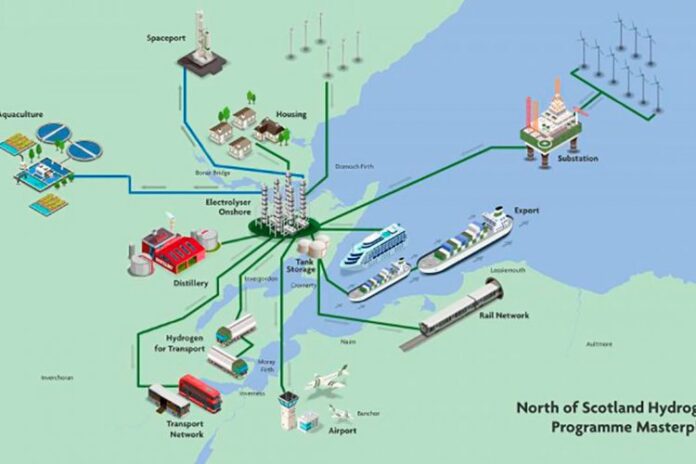
The Cromarty Firth would be the ideal home to the UK’s largest green hydrogen electrolyser, according to a study examining the feasibility of the project.

The North of Scotland Hydrogen Programme ‘Distilleries Project’ study identified a number of sites around the Firth deemed fit to host a 35MW electrolyser facility by 2024, producing up to 14 tonnes of green hydrogen per day.

The facility could be further expanded to meet growing demand from across Scotland, the UK and internationally for green hydrogen. This zero carbon fuel forms a key part of the Scottish Government’s decarbonisation strategy and would provide a massive contribution to the ambitions of becoming a leading hydrogen economy by 2030 and net-zero by 2045.

The study examined the viability of a green hydrogen hub in the Cromarty Firth supplying distilleries in the region with hydrogen at a competitive price to help decarbonise their heating and processes in making whisky.

It was backed by partners including ScottishPower, Pale Blue Dot (A Storegga Group Company), Port of Cromarty Firth, and drinks giants Glenmorangie, Whyte & Mackay and Diageo.

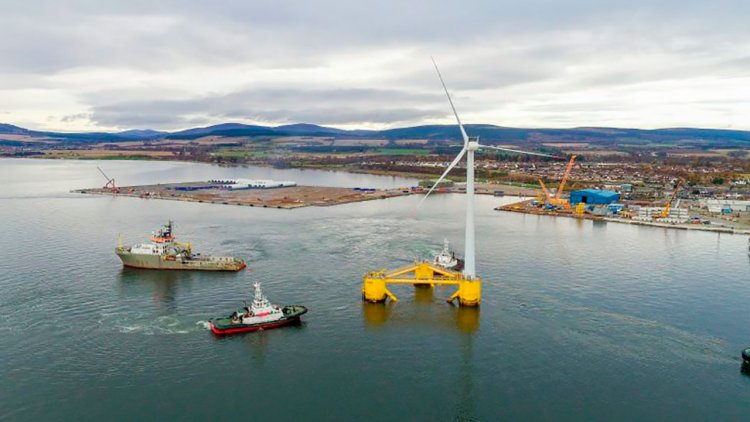
The report said the Cromarty Firth’s suitability was boosted by a large regional concentration of renewable energy potential, including future offshore wind development sites which would be able to supply the volume of clean electricity needed for the electrolyser.

Coupled with this substantial offshore wind resource stood an already significant existing infrastructure in the Cromarty Firth, as well as a proven track record of success in renewables, an experienced local supply chain and extremely strong links to industry, transport and heat networks.

The study acknowledges green hydrogen’s role as a sustainable, safe, long-term energy solution that is vital for those who cannot decarbonise their operations through renewable electricity alone.

It proposes a phased development for the facility. Phase 1 would see the electrolyser in place by 2024 to meet local and distillery demands and to prove the technology at this scale. A second phase would lead to an expansion of green hydrogen to meet growing energy demands nationally and internationally.

Following the feasibility study success, the project will now move into its next stage of development which will include detailed engineering, community engagement and commercial development. This will prepare the project for a final investment decision, by 2023.

Bob Buskie, Chief Executive of the Port of Cromarty Firth, said:

“This is fantastic news for both the Cromarty Firth and for the country’s ambitions to become a leading hydrogen nation, with targets for Scotland to generate 5GW of renewable and low-carbon hydrogen by 2030 – enough to power the equivalent of 1.8 million homes.

“Phase 1 of the electrolyser could be up and running, and the first hydrogen produced, by 2024 in what will be one of the biggest electrolysers in the UK. Such a facility will be a game changer not only for industries across the Highlands and Scotland, but also for the UK and internationally as we will be able to export green hydrogen to energy markets around the globe.”

Barry Carruthers, Hydrogen Director at ScottishPower, said:

“This is an industry leading project, harnessing the region’s rich, renewable energy to help support industries and sectors near the Port of Cromarty Firth on their own decarbonisation journeys. The North of Scotland Hydrogen Programme will see the Highlands become home to one of the UK’s largest green hydrogen facilities and we’re looking forward to moving ahead with our partners, the Scottish Government, Highland Council and all local stakeholders as we move into the next stages of the project.

“We’re in a climate emergency and so we have to focus on zero emission technologies – green hydrogen offers the long-term, sustainable, zero emission solution for industries, sectors and businesses that cannot be supported by renewable electricity alone. With only months to go until COP26, one of the most important climate summits, we’re showing what can be achieved when industry collaborates in order to tackle climate change.”

Nick Cooper, Chief Executive of Storegga, said:

“This study confirms that the Cromarty Firth region is well positioned to play a leading role in Scotland’s green hydrogen economy. The consortium has jointly delivered a feasibility assessment that demonstrates the viability of the Phase 1 green hydrogen production plant. The plant will be developed in phases to become one of Europe’s largest hydrogen electrolysers.”

Dr. Peter Nelson, Operations Director for the Glenmorangie Company, added:

“We have all learnt a huge amount from the feasibility study into the potential of hydrogen as an alternative fuel source and excitingly for us it is firmly rooted in, and relevant to, the particular needs and challenges we all face in the North of Scotland.

It is a great example of collaboration across different companies and sectors and we look forward to progressing discussions further.”

Keith Miller, Distillation & Maturation Director, Diageo, said:

“This was a great feasibility study to understand the potential of hydrogen in the Cromarty Firth area and we look forward to understanding the next steps.”

Crime scene tape set to revolutionize microplastics research

0

An adhesive tape patented by Staffordshire University researchers to recover trace evidence from crimes scenes is being adopted to analyze microplastics more efficiently.

Man-made polymer particles or ‘microplastics’ are proven to be present in land, air and water environments. However, despite extensive global studies, there is no standardized approach for their collection and analysis.

Currently, studies regularly involve retrieving microplastic samples from water using a filtration method. Samples are commonly analyzed in situ on the filter or after removal from it by hand, which is time consuming and risks accidental loss of the particles and cross contamination.

Claire Gwinnett, Professor of Forensic and Environmental Science, is part of the team that created Easylift tape more than a decade ago and has more recently applied her expertise in fiber analysis to microplastics.

She explained:

“Easylift tape was developed for the forensic market. However, what we have found is that the same benefits are true when looking at particulates from any environment.

“We realized that it holds great potential for microplastics work particularly when you are out in the field, for example on a boat or on a beach, where the risk of losing or contaminating your microplastic samples is huge.”

A new paper, published in Environmental Advances, addresses the shortcomings of current research methods and sets out a new workflow using Easylift tape. The technique uses the self-adhesive tape to ‘lift’ microplastic particles from a filter then safely preserves them between the tape and a sheet of suitable material—in this case glass.

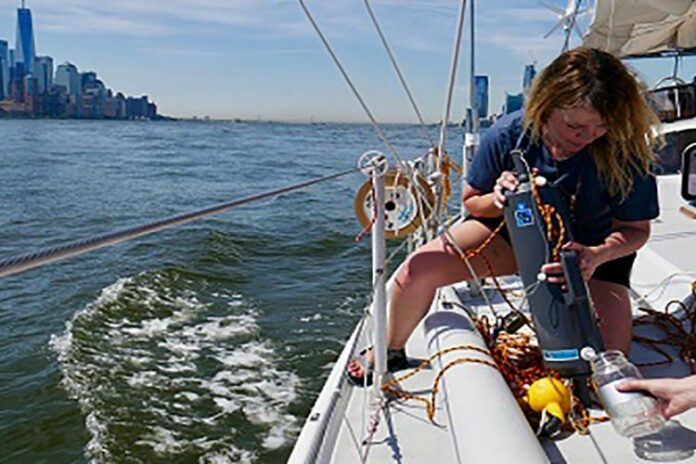
This method was trialed by Professor Gwinnett during an expedition to collect microplastic samples along the Hudson River in New York with the Rozalia Project where it proved highly effective, with a mean fiber recovery rate of 96.4%. It also enables multiple analytical techniques to be applied to the samples afterwards and preserves them for future study.

Professor Gwinnett said:

“The ultimate goal is that this will become the standardized workflow for microplastics research across the world. At the moment, scientists are extrapolating data and it is only through constant monitoring that we will we truly know how much microplastic pollution is out there. If there is a standardized method to globally track microplastics then we can much better understand the risks and where we should be targeting our efforts for mitigation.

“We know plastic pollution is widespread, but we need to understand how much is in different locations, where it has come from and where it is going. What we need is a global collaborative effort to gather that large-scale data.”

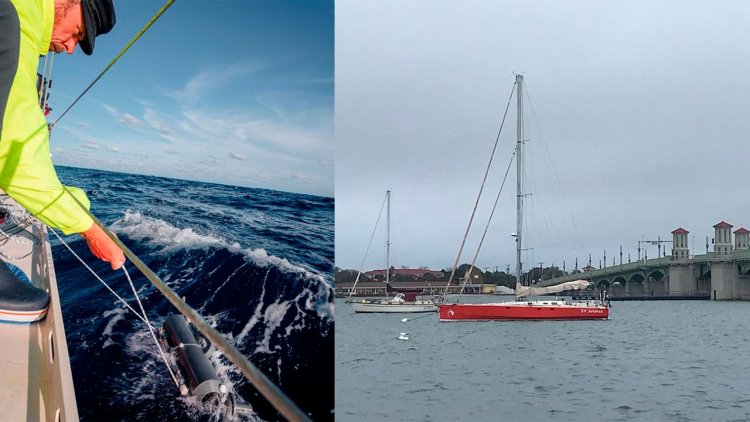
Easylift tape is already being employed more widely and was used to collect microplastic samples during a transatlantic sailing expedition on former racing vessel the SV Jolokia last year. The Marine Education Centre based in New York State is also training ‘citizen scientists’ to take samples from the Hudson River and other locations using the tape.

Staffordshire University is now collaborating with the University of Oxford and Nekton Mission to analyze microplastic samples from an expedition to the Antarctic where these particulates will be retrieved from ice cores using Easylift tape.

Professor Gwinnett added:

“We need the ability for people to constantly monitor plastic pollution without massive expertise and the beauty of Easylift is that it can be used by anyone—volunteers, sailing crews, people working in waste-water management can all use this in a robust way.

“It will allow us to share microplastic samples with partner institutions across the world for further analysis and to validate research methods. As with evidence recovered from crime scenes, we will also be able to store microplastic samples to be re-examined in a decade’s time or longer. Being able to collaborate and share research in this way is an exciting step forward.”

Tallink Group and Port of Tallinn to give away free travel vouchers to passengers

0

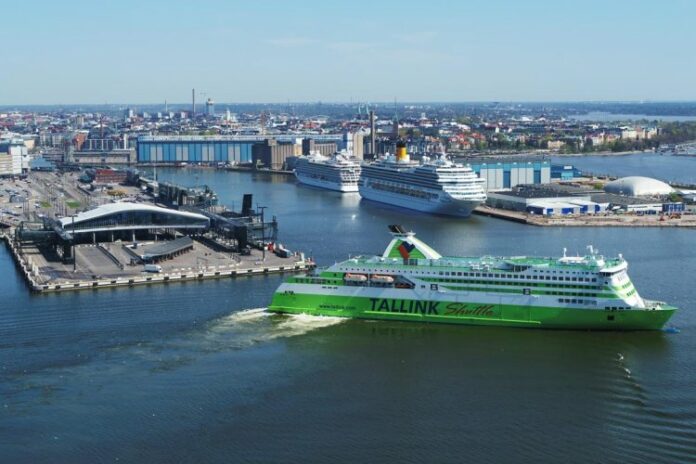
Tallink Group and the Port of Tallinn have teamed up to help speed up and support the vaccination drive in Estonia and will be giving away free travel vouchers to passengers who get vaccinated on board Tallink vessels Star and Megastar between 29 July and 15 August.  The voucher will enable every passenger who gets vaccinated against coronavirus on board during the said period to enjoy one free 5-hour mini cruise on the Tallinn-Helsinki route before 30 December 2021.

Vaccination on Tallink’s shuttle vessels Star and Megastar between 29 July and 15 August will be carried out by medical company Eldred OÜ and their qualified medical personnel. The vaccines used are the single-dose Janssen and the two-dose Pfizer, which means that also families with children over the age of 12 are welcome to come and get vaccinated.

The free vaccinations are available to all Estonian citizens and residents only as the vaccines used on board during this period have been supplied from the Estonian national vaccine supply.

Paavo Nõgene, CEO of Tallink Grupp, said:

“The solution to this pandemic is vaccination. Tallink has wanted to and done its best to help speed along the vaccination drive in Estonia already since spring and has helped provide greater protection against the virus to nearly 1000 Estonian citizens and residents through two short-term vaccination pilots on board in June and July.  

Also, our maritime workers in Estonia, out of whom 84% have already been vaccinated to date, are a great example to us all and help us ensure that we continue to offer the safest service possible. We want to help our country avoid going into a third wave of the pandemic by continuing to offer vaccination opportunities on board and this time will also say thank you to everyone who gets vaccinated with a little thank you in the form of a free mini cruise from us and our good partners, Port of Tallinn.“ 

Valdo Kalm, CEO of the Port of Tallinn, added:

“Getting vaccinated against coronavirus must be made as easy and accessible as possible for people.  Our joint initiative with Tallink has been inspired exactly by this goal. Getting vaccinated on board enables people to combine doing something that is enjoyable with something that is necessary. I hope that people will take this opportunity to get vaccinated on the vessels and together we can protect more people against the virus in Estonia and help ensure that we can return life to normal in our country as soon as possible.“

Industry first as OSI’s deep sea mineral riser design reviewed by ABS

0

A deep sea mineral riser system capable of reaching more than 6,000 meters beneath the waves has been design reviewed by ABS in an industry first.

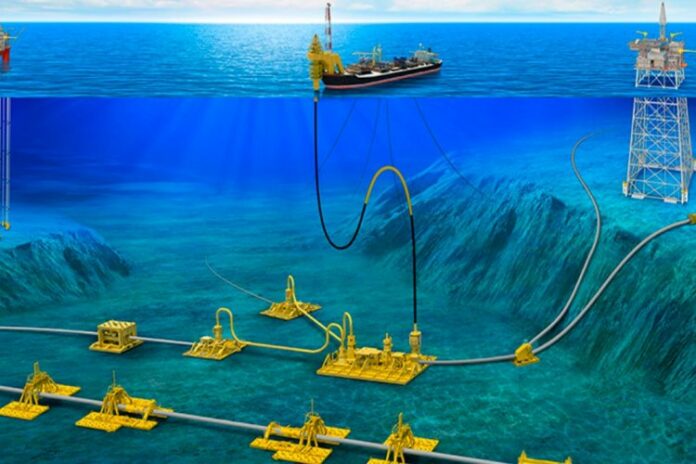
Developed by Oil States Industries (OSI), the Merlin™ Deepsea Riser System reviewed by ABS is designed to collect polymetallic nodules 6,000 meters below the surface of the Pacific. It is the first time a deep sea mineral riser has undergone design review by a Classification organization.

The system is designed in accordance with the ABS Guide for Subsea Mining, which was published in October 2020 and sets out Class requirements for the design, construction, installation and survey of mobile offshore mining units. ABS is supporting OSI on the next phase of the project, which is the construction and certification of the riser.

Matt Tremblay, ABS Senior Vice President, Global Offshore, said:

“This technology opens up a new frontier in deep sea mineral extraction, capable of operating in harsh conditions and at extreme depths. We are proud to be able to support this pioneering project. ABS is committed to working to support the safe implementation of the technology, which has a role to play in securing the minerals utilized in electric vehicle batteries, solar panels, and other systems which support the energy transition.”

Brian Mizell, OSI’s Vice President of Business Development, said:

“We are pleased to have worked with ABS on the design review and qualification to Class requirements of this deep sea mineral riser system. The design, manufacture, and deployment of this system further solidifies OSI’s position as a leading integrator of complete deep sea minerals systems and supports our energy transition initiatives.”

The Merlin Riser, which won an Offshore Technology Conference Spotlight on New Technology® Award earlier this year and is now under construction, has been contracted for operations in the remote Pacific Ocean Clarion Clipperton Zone once.

Stena RoRo orders two new ships from the Chinese shipyard CMI Jinling

0

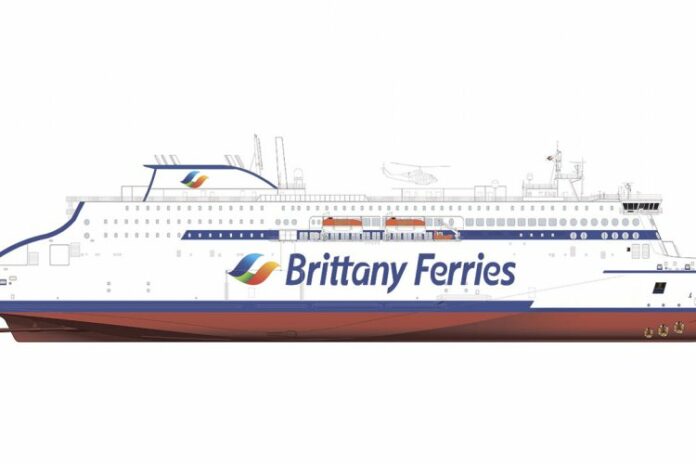
These are the 11th and 12th Stena E-Flexer vessels in the RoPax class developed by Stena RoRo and delivery is slated for 2024 and 2025.

At the same time, long-term charter contracts have been signed with the French ferry company Brittany Ferries. The ships will operate between Portsmouth in the UK and Quistreham (Caen) and St.  Malo in France, respectively, two of Brittany Ferries’ primary routes.

The two ships, together with three previously ordered E-Flexer class vessels, will renew and modernize Brittany Ferries’ current fleet of cargo and passenger ships.  The first ferry, the Galicia, was delivered in the autumn of 2020. The second will be delivered in November 2021 and the third in 2023. The two new ferries have a capacity of 2,377 and 2,517 lane meters, respectively, and both carry up to 1,400 persons onboard. 

The four most recently ordered ferries are equipped for LNG operation, entailing that they can run on LNG, biogas or other new fuels such as ammonia. In addition, the ships now ordered will also be equipped with a large battery hybrid package for energy consumption of 10 MWh for propulsion and maneuvering in port. They will also be equipped with an 8 MW electric shore connection for charging the batteries which entails an environmentally friendly stay in port. The large battery capacity enables speeds up to 17.5 knots on battery power alone.

Per Westling, managing director for Stena RoRo AB, says:

“The advanced and future-proof propulsion system developed for these vessels means that they can be operated with several different types of fuel. This makes them well prepared for the new fuels not yet commercially available, but that will need to be developed and used in the future.”

Christophe Mathieu, CEO for Brittany Ferries, says:

“We are pleased to confirm our two new orders for E-Flexer vessels, which have each proven to be adaptable not only to our specific customer- and market-related needs, but also enable us to take a significant step forward in terms of our strong commitment to sustainability.”

WinGD first to deliver space-saving on-engine NOx aftertreatment

0

Swiss engine developer WinGD has celebrated the launch of the first marine two-stroke engine to carry its own NOx abatement solution, offering dramatic reductions in space requirements and installation costs for shipyards seeking to comply with the strictest IMO NOx emission limits.

The X52 low-speed engine with integrated Selective Catalytic Reduction (iSCR) was launched during a ceremony at Dalian Marine Diesel Co. in China. The six cylinder two-stroke engine, with a maximum continuous output of 11,640 kW, will be installed on a 50,000-tonne tanker built by CSSC Chengxi Shipyard for Japanese owner Kumiai Senpaku.

WinGD Director of Global Sales, Volkmar Galke said:

“SCR is a well-proven way of reducing toxic NOx emissions. Making a more compact, on-engine solution has occupied developers for a long time and we’re delighted to have reached this landmark with the help of our partners, and to be able to offer big cost savings and even greater ship design flexibility to our customers.”

SCR is one of the most effective methods of reducing NOx emissions in line with IMO’s Tier III requirements. As with all off-engine aftertreatment methods there are multiple constraints: high exhaust temperatures are required for effective operation; additional installation costs are incurred for auxiliary equipment alongside the engine; and more space is required for additional equipment, meaning less flexibility in ship design and cargo carrying configurations.

The X52 engine will have a high-pressure SCR reactor integrated on-engine, directly to the exhaust manifold. This means less off-engine auxiliary equipment and piping is required, reducing installation costs and space requirements. The location of the SCR directly upstream of the turbocharger also means higher operation temperatures, conducive to more effective NOx removal. The iSCR-fitted engine also offers low heat dissipation, easy switching between IMO Tier II and IMO Tier III modes, and WinGD’s latest automation and control systems with monitoring and predictive diagnostic features. Lastly it offers customers fuel flexibility in that HP-SCRs can still run on high sulphur fuels which extends the savings to reduced operational costs.

The X52 engine with iSCR is the latest collaborative project between WinGD and the China Shipbuilding Power Engineering Institute (CSPI), both owned by China State Shipbuilding Corp’s CSSC Power Group. International collaborations are key to WinGD’s vision of powering the shipping industry’s sustainable energy transition, delivering future-ready customer solutions that ensure continuous progress towards IMO’s environmental goals.

NOx emissions aftertreatment is needed for all marine engines burning heavy fuel oil or marine diesel. WinGD aims to make iSCR available as a first step for single turbocharger applications of its diesel-burning X-series low-speed engines. While NOx abatement is also needed for high-pressure engines using LNG, WinGD’s low-pressure X-DF dual-fuel engines comply with IMO Tier III without aftertreatment – again reducing installation costs, complexity and space requirements for shipyards while reducing CAPEX and OPEX for ship owners.

MBDA and Naval Group join forces to develop new remote assistance solutions

0

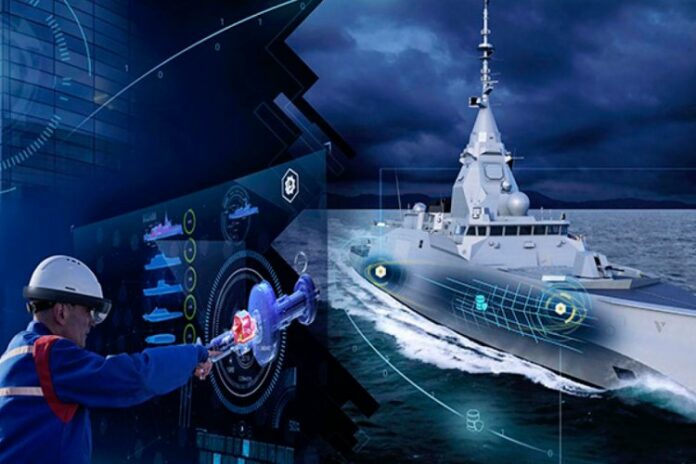
The remote assistance service deployed by Naval Group and MBDA for the French Navy achieves several objectives: provide prompt diagnostics and a repair solution to naval systems users in all locations and in all circumstances.

Remote assistance is a secure, end-to-end encrypted multimedia communication system linking the ship with onshore support facilities. It enables the crew to set up a fully confidential, real-time, dialogue with the French Navy and other state and/or industry experts to; assist diagnostics in the case of breakdowns; provide greater autonomy for the maintenance personnel; and help with the preparation for maintenance periods on returning from missions. Remote assistance can thus help improve the availability of ships in operation. 

Deployment of remote assistance has already begun to the multi-mission frigates (FREMM) and the aircraft carrier Charles de Gaulle, as well as to the Toulon Fleet Support Service (SSF), the Brest SSF and connecting them with MBDA and Naval Group industrial sites. 

Pascal Gendre, MBDA Group Customer Support & Services Director, stresses:

“We are well aware of the critical nature of our products and systems for the armed forces, and MBDA has always made a point of honour of working with its customers throughout the life cycle of their equipment, guaranteeing them a high level of operational availability.”

Vincent Martinot-Lagarde, Naval Group Director of Services, adds:

“This remote assistance solution developed with MBDA contributes to offering our customers greater operational availability of their ships. The remote assistance service enables simultaneous discussions with the French Navy fleet support service and the crew of a ship to assist the crew and solve a technical problem at sea. Furthermore, the remote support kit can be deployed as part of the preparation of an upkeep period for an overhaul of the ship.”

Shell delivers first gas from Barracuda Project

0

This marks a significant milestone in the delivery of gas both domestically and internationally through Atlantic LNG.

Maarten Wetselaar, Director of Integrated Gas, Renewable and Energy Solutions, said:

“Today’s announcement strengthens the resilience and competitiveness of Shell’s position in Trinidad and Tobago. This is a key growth opportunity that supports our long-term strategy in the country as well as our global LNG growth ambitions.”

Block 5C, known as Project Barracuda, is a backfill project with approximately 25,000 barrels of oil equivalent per day (boe/d) (140 mmscf/d) of sustained near-term gas production with peak production expected to be approximately 40,000 boe/d (220 mmscf/d). It is Shell’s first greenfield project in the country and one of its largest in Trinidad and Tobago since the BG Group acquisition.

Eugene Okpere, Shell’s Senior VP and Country Chair, said:

“We are immensely proud of our people and the remarkable work it took to achieve this milestone, particularly given that drilling began in May 2020 during the COVID-19 pandemic. Our execution strategy had to be completely overhauled to deliver our business plan, all while working remotely. It required tremendous resilience, adaptability and commitment.”

The ECMA is one of the most prolific gas-producing areas in Trinidad and Tobago. As part of Shell’s development strategy, the company has sought ways to access the significant volumes that exist in the ECMA and to bring them online.

Fast facts

  • First gas at Barracuda was reached on July 18, 2021, and the estimated production for Barracuda represents 100% total gross figures.
  • The Barracuda project comprises two subsea wells (both 100% Shell owned), one in the Endeavour field and the other in the Bounty field. Both are tied back to Shell’s Dolphin platform.
  • These are two of the deepest development wells in Trinidad and Tobago; Endeavour was drilled to a depth of 20,000 feet (6,096 metres) while Bounty was drilled to a depth of 16,000 feet (4,877 metres).
  • Shell now looks forward to the delivery of the four-well development project in Block 22 and NCMA 4, known as the Colibri project. This is a joint venture with Heritage Petroleum Company Limited. First gas from Colibri is expected in 2022.
  • Shell announced Final Investment Decision for Project Barracuda in January 2020.

AIDA Cruises expands cruise program with new voyages with AIDAprima and AIDAblu

0

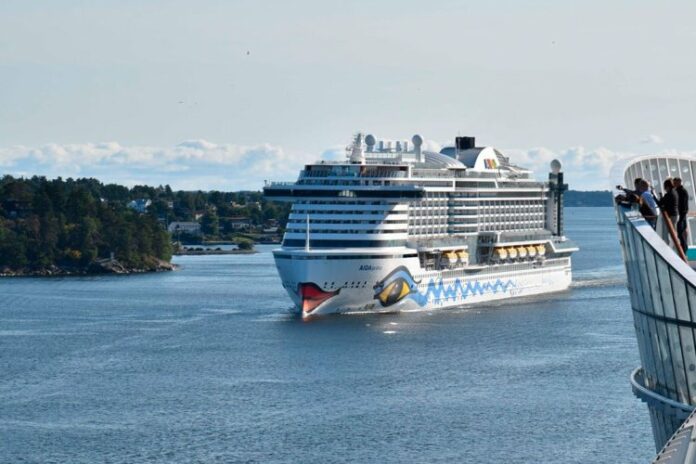
AIDAprima will expand its season in Hamburg and will call at various destinations in Western Europe as of Oct. 30, 2021, to April 2022.

After the end of the Greece season, AIDAblu will be deployed in the Canary Islands from November until the end of December 2021. At the beginning of 2022, AIDAblu sets course for the Mediterranean, offering seven-day cruises from Palma de Mallorca in January and February. From the end of February 2022, Civitavecchia will be the start and destination port for voyages to beautiful metropolises in Italy, followed by fascinating roundtrips from Corfu through the archipelago of ancient Greece, starting in April 2022.

AIDA Cruises will shortly announce its complete holiday program for the fall/winter season 2021-2022.

Due to the new travel offers and ongoing travel restrictions in several regions of the world, some cruises with AIDAmira, AIDAvita, AIDAdiva, AIDAnova, AIDAluna, AIDAbella, AIDAaura, AIDAprima and AIDAblu between August 2021 and April 2022 cannot take place as originally planned or have to be adjusted.

Guests who were booked on impacted cruises and their travel advisors are being notified.