-1.2 C
New York
Home Blog Page 575

Four players sign MoU to study commercial-scale hydrogen imports to the Netherlands

0

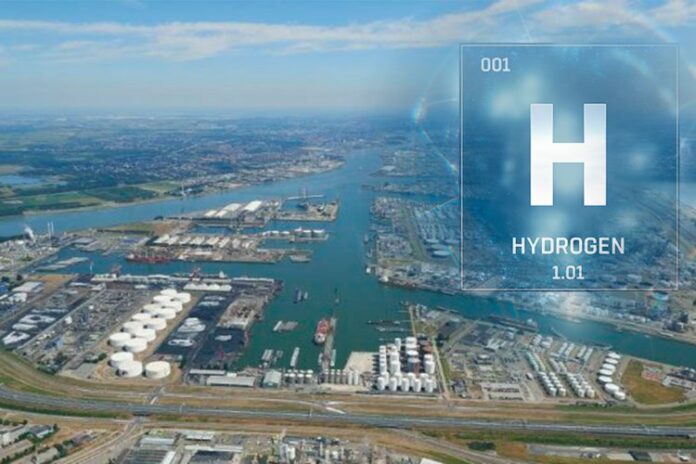
The Port of Rotterdam Authority (POR), Koole Terminals, Chiyoda Corporation and Mitsubishi Corporation have entered into an MoU for the joint-study of commercial-scale imports of hydrogen to the Port of Rotterdam utilizing Chiyoda’s hydrogen storage and transportation technology (SPERA HydrogenTM).

In May 2020, POR announced its Hydrogen Vision, under which it is aiming at developing green hydrogen supply chains for Northwestern Europe and becoming a hub for hydrogen imports. Its goals are to bring in 20 million tons of hydrogen annually by 2050, with tiered volume targets of 100,000 – 200,000 tons by 2025 and 300,000 – 400,000 tons by 2030.
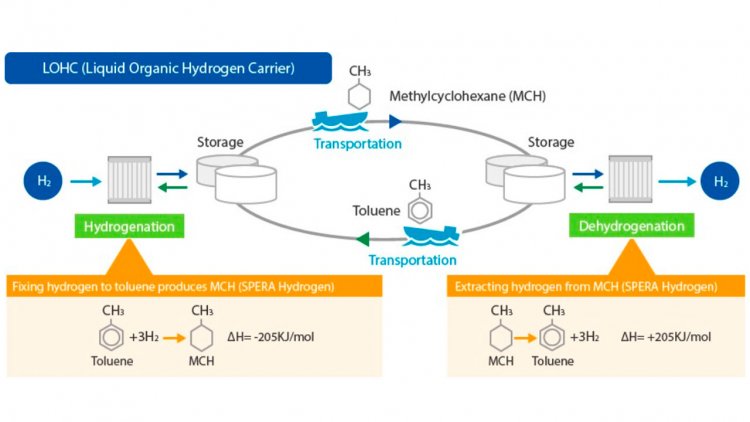
Successfully completed in December 2020, the first international hydrogen supply chain utilizing SPERA Hydrogen connects the Nation of Brunei and Japan’s Kawasaki City. The technology is expected to play an important role in the realization of more commercial-scale hydrogen supply chains around the world. Backed by a strong and shared interest in both Chiyoda’s technology and its commercial potential, the aforementioned parties to this MoU have already engaged in numerous discussions regarding future applications and opportunities.

In accordance with the terms of this MoU, MC will take the lead in forging a hydrogen business value chain. Through this and other initiatives, the sogo shosha is demonstrating its commitment to environmental conservation and the development of sustainable societies by helping to achieve long-term emission-reduction targets and accelerate energy transitions in Europe.

*SPERA Hydrogen is an organic chemical hydride (OCH) hydrogen storage and transportation technology. LOHC (liquid organic hydrogen carrier) technologies allow hydrogen to be safely transported in chemical tankers at normal atmospheric temperature and pressure.
Satcom Global launches industry first with AuraNow VSAT

0

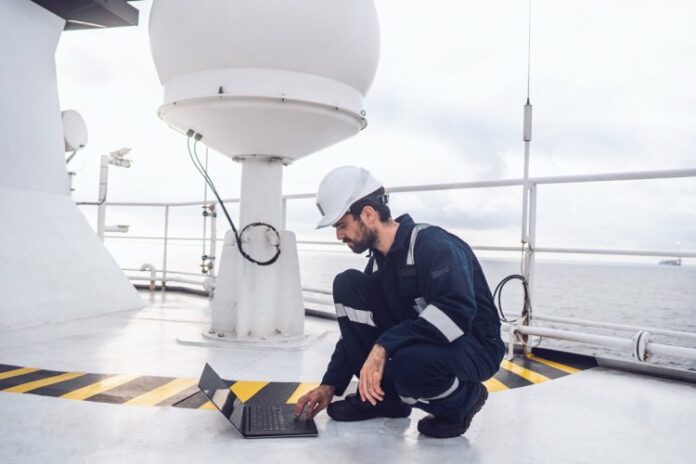
Satcom Global is breaking new ground with the launch of AuraNow, a maritime VSAT solution offering unprecedented flexibility, enabling simultaneous access to high performance bandwidth along with significant cost savings.

For the very first time, vessel managers and owners will be empowered to make unlimited changes to their onboard connectivity. They will have the ability to upgrade, downgrade and even suspend their service on-demand via a dedicated and secure customer portal. Unlike existing VSAT services available today, AuraNow customers will not be penalised for lowering their service plan or suspending their service.

Ian Robinson, CEO at Satcom Global, commented:

“AuraNow is a true industry first, designed to support the real needs of the communications user, rather than to capitalise on locking customers into prohibitive lengthy contracts. AuraNow is the only platform optimised to satisfy the connectivity required by the maritime community now, and long into the future. We urge all vessel managers and owners to explore the extensive benefits of AuraNow, before committing to yet another restrictive service plan.”

AuraNow meets current market challenges head on, at a time where vessels require an increasing amount of capacity to support more sophisticated digital applications, but the challenge remains to balance the communications budget. With bandwidth packages charged via daily increment, AuraNow allows customers to adjust their connectivity and spend, in line with their day to day and emerging requirements.

The unique AuraNow solution allows ship owners and IT managers to access a wide range of new applications onboard for a short period of time with minimal cost implications. Bandwidth can be upgraded at any time, at the touch of a button, to support activities such as remote audits, vessel inspections and crew training. Similarly, maritime industries that operate seasonally or on a charter basis, will have the ability to deploy communications only when they are needed, and when vessels are sailing. Vessels will no longer need to overcommit to plans or pay for bandwidth they do not consistently need.

A number of early adopters including PACC Ship and Pritchard-Gordon Tankers are already users of the new maritime VSAT solution.

Dual-fuel LNG carrier Diamond Gas Victoria delivered

0

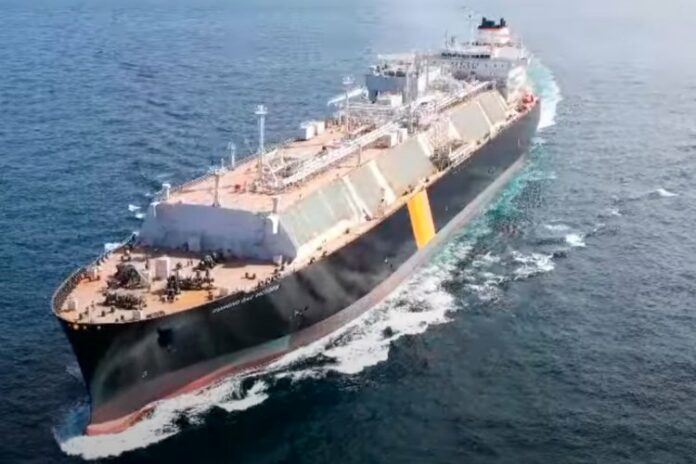
On July 28, the liquefied natural gas (LNG) carrier Diamond Gas Victoria was delivered. The new ship will transport LNG from British Columbia for the LNG Canada project, as well as from other locations around the world, under a long-term time-charter contract with Diamond Gas International Pte. Ltd., a wholly owned subsidiary of Mitsubishi Corporation (MC), which has a stake in the LNG Canada project.

The vessel was built at Hyundai Samho Heavy Industries and is owned by NYK, Asia LNG Transport Dua Sdn. Bhd. (ALT Dua), and MC through the joint venture Diamond LNG Shipping 6 Pte. Ltd. The NYK Group will be responsible for ship management.

Diamond Gas Victoria is equipped with a state-of-the-art WinGD-made dual-fuel slow-speed diesel engine (i.e., X-DF diesel engine) that has superior fuel-consumption efficiency and can operate on marine gas oil or boil off gas stored in the cargo tank. The vessel will also feature a re-liquefaction system that can use re-liquefied excess boil-off gas and return it to the cargo tank.

The cargo tank will be a 174,000 cubic meter capacity membrane-type tank that will make use of advanced insulating materials to suppress the boil-off rate (percentage of gas volume that vaporizes during navigation) in the cargo tank and realize superior efficiency and economical LNG transportation.

Outline of Vessel:

  • Length overall: 297.16 meters
  • Breadth: about 46.40 meters
  • Gross tonnage: 117,564 tons
  • Main engine: X-DF engine
  • Cargo tank capacity: about 174,000 cubic meters
  • Shipbuilder: Hyundai Samho Heavy Industries Co. Ltd.
  • Flag state: Singapore

OHT wind turbine installation vessel to operate with a broad scope of Wärtsilä solutions

0

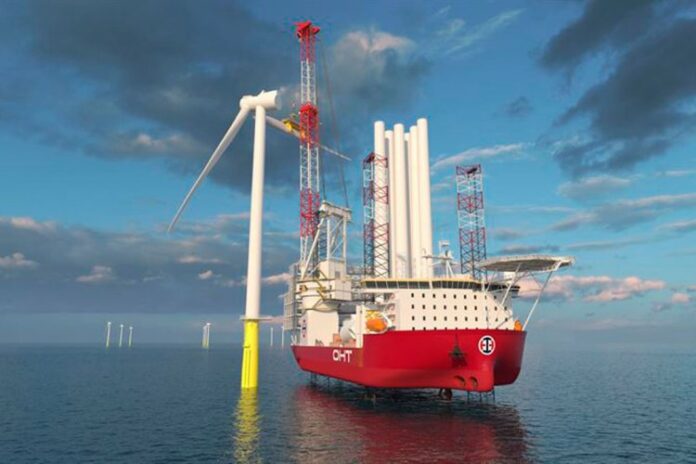
The technology group Wärtsilä has been selected to supply an integrated propulsion and dynamic positioning thruster solution, including the engines, a Wärtsilä NOx reducer emission abatement system, as well as steerable and tunnel thrusters to deliver optimum performance for vessel dynamic positioning in this new wind turbine installation vessel (WTIV). 

The ship is being built at the China Merchants Heavy Industry (Jiangsu) Co yard for Norwegian heavy transport and WTG installation contractor OHT ASA, and is the first of two next-generation WTIVs to be added to the OHT fleet. The order with Wärtsilä was placed in May 2021. 

The GustoMSC NG-14000XL-G design jack-up vessel is customised for offshore wind turbine installation and XL monopile foundations. The vessel will feature a telescopic crane with a maximum capacity of 2,500t and a maximum lifting height of approximately 165 metres. The compact design of the Wärtsilä thrusters is an important benefit since the weight of all onboard equipment can be critical for a jack-up vessel. The lightweight Wärtsilä thruster package meets this requirement while delivering excellent station-keeping capability. 

Torben Mikkelsen, OHT’s Newbuild Project Manager, says:

“There is rapid growth in demand for the installation of offshore wind turbines, and the vessels designed to carry out this construction work need to be state-of-the-art. The same applies to the propulsion solutions because reliable and efficient dynamic positioning is essential in all sea conditions. The full scope of Wärtsilä solutions will provide the operational and environmental performance demanded for the next-generation market.”

Dirk Folchert, Senior Sales Manager, Wärtsilä Marine Power, says:

“The aim is always to provide optimal propulsion performance for efficient vessel operations, and the advanced range of Wärtsilä solutions selected for this ship will do just that. By enabling efficient free sailing and outstanding dynamic positioning, we are at the same time contributing to the decarbonisation of shipping.”

The Wärtsilä scope includes four Wärtsilä 32 and two Wärtsilä 20 engines, the Wärtsilä NOx reducer (NOR) system, five steerable thrusters and one Wärtsilä tunnel thruster. Delivery to the yard will take place during the first half of 2022. The ship is expected to be delivered during the second quarter of 2023. 

Effective station-keeping is enhanced by the thrusters’ proven retractable system, which has an energy efficient 8-degree tilting feature. This reduces the power need and, therefore, also fuel consumption. The thrusters also deliver thrust that can be up to 23 percent more effective than non-tilted units. The Wärtsilä steerable thrusters feature a modern electric steering system to provide higher redundancy, reliability, and a lower lifecycle cost. 

MARAD awards vessel acquisition management contract to Crowley

0

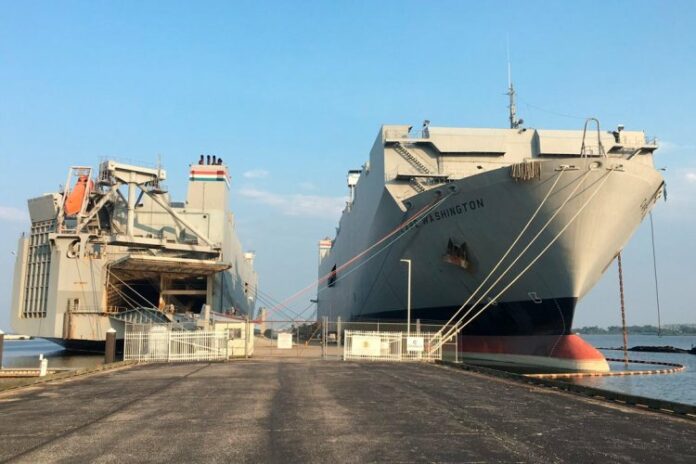
Crowley’s strategic acquisition and vessel management service will assist MARAD in the enhancement of the Ready Reserve Force (RRF), helping reduce the overall age of the fleet and increase ship reliability. The fleet executes U.S. Department of Defense (DoD) sealifts.

To carry out the contract, Crowley will use a new, proprietary information technology system to assess, research and make purchasing recommendations. Once the vessels are acquired, Crowley will oversee any required re-flagging, re-classification, modification and maintenance to ensure they are fit for service in compliance with U.S. Coast Guard, American Bureau of Shipping, and Defense Department requirements. After ships enter the fleet, Crowley will maintain and operate the vessels on behalf of MARAD.

Mike Golonka, vice president, government ship management in Crowley Solutions, said:

“A successful VAM program is important to the U.S. as a maritime nation, the maritime industry and Crowley as we mutually invest in the strength of our nation. We want to share our innovative, successful approach to vessel ownership and lifecycle engineering with the U.S. government.”

Building on over 20 years of experience managing MARAD and other government and Navy vessels, Crowley will use the web-based platform to perform data analysis of the lifecycle of vessels and their components. The SHIPFAXTM platform will provide data-driven recommendations based on essential service requirements, as well as important factors to successfully manage and operate vessels.

Crowley will execute the contract with Stena RoRo, Serco and LCE (Life Cycle Engineering), who bring specialized and unique experiences and services in acquisitions, naval ship architecture, engineering and applied technology.

Five powerful low-emission tugs for HaiSea Marine propelled by SCHOTTEL

0

These will be installed in two LNG-fuelled escort tugs, as well as in three battery-powered harbour tugs. Ordered by Canadian HaiSea Marine, a partnership between the Haisla Nation and Seaspan ULC, the vessels will provide ship assist and towing services to LNG carriers stopping at a new LNG export facility in Kitimat, British Columbia. All five tugs are scheduled to enter service in 2023.

Captain Jordan Pechie, Senior Project Manager at HaiSea Marine:
“Choosing SCHOTTEL as our propulsion supplier brings us one step closer to delivering on the promise we made to the Haisla Nation. These vessels represent the future; both quality and longevity are key. Every component on these vessels was carefully selected to ensure that this project will be generational.”

Hakan Tunç, Procurement Manager at Sanmar:

“The collaboration between Sanmar and SCHOTTEL dates back to 2004. Since then we have equipped many of our state-of-the-art vessels with quality propulsion solutions from SCHOTTEL. These new projects are taking the cooperation between Sanmar and SCHOTTEL to a new level.”

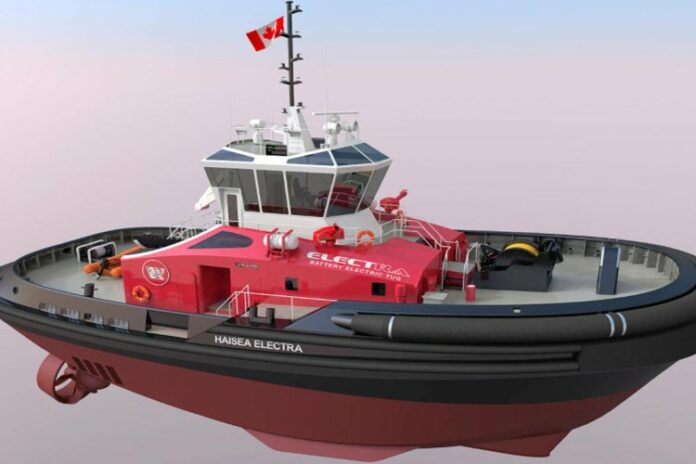
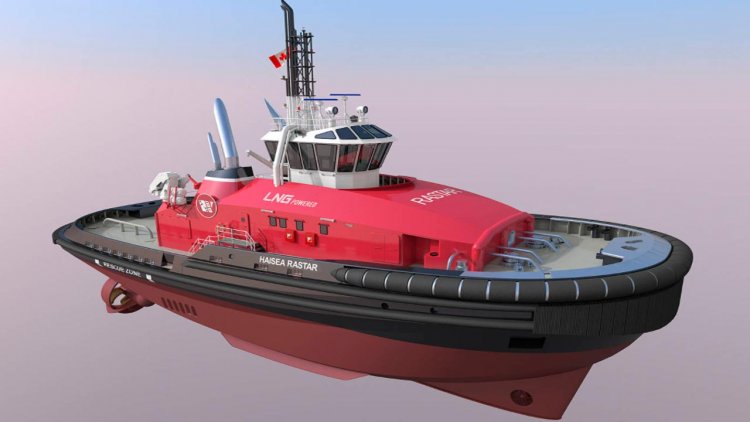
The fleet will consist of two RAstar 4000-DF dual-fuel (LNG and diesel) escort tugs and three ElectRA 2800 electric harbour tugs. Designed by Robert Allan Ltd. (RAL), the LNG tugs will be built in Sanmar Shipyards Altinova while the electric tugs will be built in Sanmar Shipyards Tuzla.

Each of the two dual-fuel escort tugs will be equipped with two SCHOTTEL RudderPropellers type SRP 610 CP featuring an input power of 3,000 kW with a propeller diameter of 3.2 m. To further enhance manoeuvrability, each vessel will be fitted with a SCHOTTEL TransverseThruster type STT 170 (250 kW).

Measuring 40 m in length and providing around 100 t of bollard pull, they will be the most powerful escort tugs on Canada’s west coast. In addition, they will feature an exhaust after-treatment system in full compliance with IMO Tier III emissions standards.

Each of the three battery electric tugs will be propelled by two SCHOTTEL CombiDrives type SCD 460 (2,100 kW each) with four-bladed propellers with a diameter of 2.6 m. This thruster setup enables the harbour tugs to achieve a bollard pull of approximately 70 t.

The ElectRA 2800 harbour tugs will operate in unison at a new LNG export facility and will be “first-of-their-class” battery-powered electric tugs. They are designed to perform their regular ship-berthing and unberthing missions using on battery power with a capacity of around 5,240 kWh. The ElectRA 2800 harbour tugs will be 28 m in length.

With an ample supply of clean hydroelectric power available at Kitimat, the harbour tugs will be able to recharge from dedicated shore charging facilities at their berths between dockings, effectively resulting in near-zero emissions when running on batteries. GHG emissions from the new tugs are expected to be significantly lower (54% and 24% respectively) than diesel-powered alternatives.

World-first order for methanol engine within container segment

0

MAN Energy Solutions has won the order to supply the world’s first, low-speed, dual-fuel engine to run on methanol within the container segment. 

Hyundai (HMD) will construct the 2,100-teu vessel in Korea for A.P. Møller – Maersk, the global integrator of container logistics, while HHI-EMD, which has already experience with LGIM engines (8 engines in operation and 12 engines under construction for methanol carriers), will build the MAN B&W 6G50ME-LGIM (-Liquid Gas Injection Methanol) type – also in Korea. The engine will be Tier III-compliant.

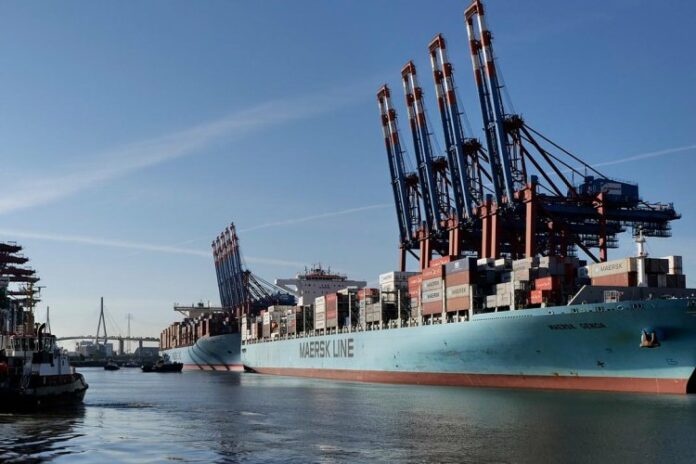
Upon launch, the newbuilding will become the very first, methanol-powered vessel that doesn’t carry methanol as cargo. Mærsk has further announced that it expects the new vessel to be powered by green methanol with bio-fuel employed as pilot oil. The vessel is set to enter service in 2023 and will sail in the network of Sealand Europe – a Maersk company- the Baltic shipping route between Nortern Europe and the Bay of Botnia.

Bjarne Foldager, Senior Vice President and Head of Two-Stroke Business, MAN Energy Solutions, said:

“Maersk is displaying great leadership in adopting renewable methanol as part of its decarbonisation strategy – and well ahead of its initial 2030-ambition. For our part, we are designing dual-fuel technology that meets the growing customer demand for sustainable shipping chains and, here, our ME-LGIM engine plays an important role. It’s particularly pleasing to see it make its debut within the important container segment.”

“Our other ME-LGIM references have proven methanol as a clean, efficient and safe, marine fuel that offers a clear path to decarbonisation through significant greenhouse-gas reductions, when produced from renewable energy sources. In general, as we move towards a zero-carbon future, MAN Energy Solutions’ dual-fuel engine portfolio is well positioned to handle whatever alternative fuels the market brings.”

MAN Energy Solutions states that its low-speed, dual-fuel references now exceed  408 units, with the ME-GI recording over 1.7 million operating hours on LNG alone, while the ME-LGI platform has accumulated more than 110,000 dual-fuel running hours.

AIDA Cruises restarts AIDAluna in September from Kiel

0

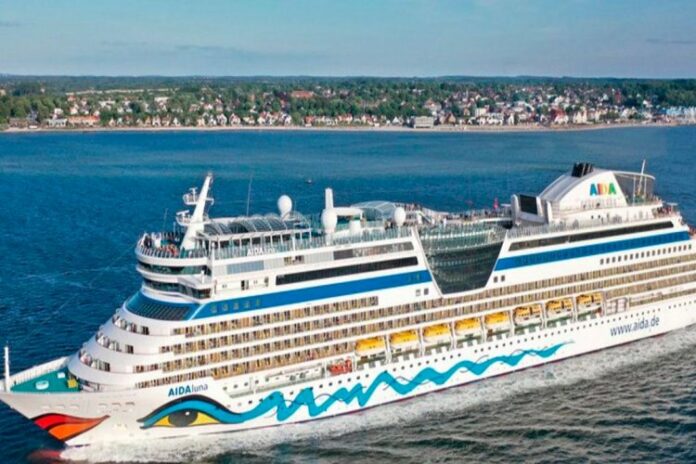
Up to and including Oct. 14, 2021, a variety of travel dates for three- and four-day cruises departing from Kiel are now available for booking.

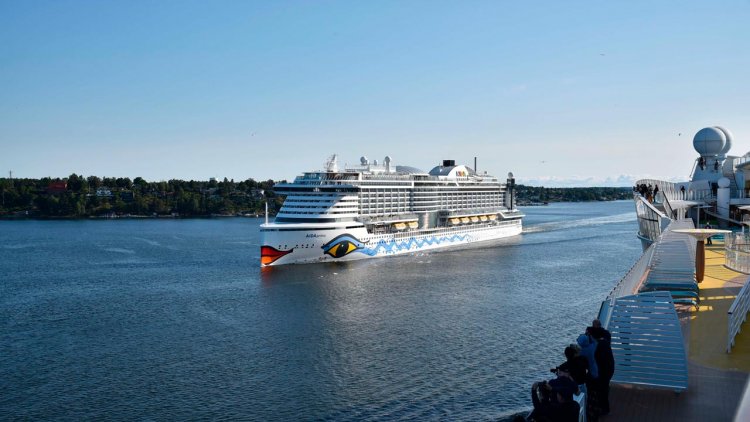
In May 2021 AIDA Cruises opened the cruise season in Kiel with AIDAprima, which is currently sailing seven-day voyages every Saturday in the Baltic Sea calling at Gothenburg, Visby on the island of Gotland and Stockholm until Oct. 23, 2021.

By the end of this year AIDA Cruises plans to have 10 ships sailing, offering travelers a broad range of vacation options — including its highly anticipated new ship, AIDAcosma, to be delivered in December 2021.

PSA and ONE sign MoU to reduce GHG emissions

0

In support of industry-wide efforts to decarbonise and to push for sustainable maritime transport, PSA Corporation Ltd (PSA Corp), a wholly-owned subsidiary of PSA International Pte Ltd, and Ocean Network Express Pte. Ltd (ONE) will work in tandem to take the lead on proactive environmental stewardship by advancing sustainable green solutions with likeminded partners.

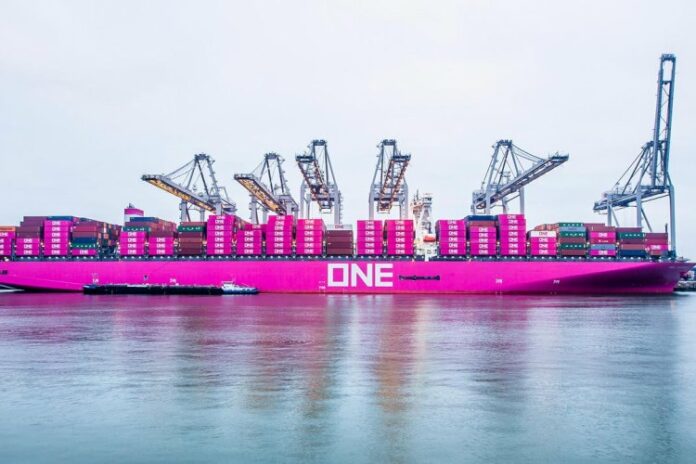
PSA Corp and ONE, one of the world’s top ocean carriers, today signed a Memorandum of Understanding (MOU) to reduce greenhouses gases (GHG) emissions, working towards a more responsible and greener maritime and shipping industry of the future, and pointing the way towards embracing sustainable practices across their businesses.

The MOU brings together two like-minded and eco-conscious organisations, both established names in their fields, to share, co-create and implement solutions to reduce GHG emissions across scopes. The collaboration includes areas relating to container flow enhancement and terminal services for ONE’s operations, which will lead to a reduction of carbon dioxide emissions.

Mr Ong Kim Pong, Regional CEO Southeast Asia, PSA International, said:

“Sustainability is at the core of PSA’s business strategy and we are completely en rapport with ONE to reduce GHG emissions, a global imperative, through our collective efforts. ONE has been a steadfast and longstanding partner of PSA and we are delighted to work with them to achieve carbon footprint reduction, combat climate change, and build a maritime and shipping industry that is resilient to environment-related uncertainties.”

Mr Yasuki Iwai, Managing Director of Product and Network Division of ONE, said:

“As ONE, we regard green shipping not only as a target to meet, but more importantly, one of our key corporate responsibilities to our society and international community. The bilateral relationship with PSA has been founded on mutual open-mindedness and continues to thrive on our like-mindedness. We are very pleased to see this long-term partnership getting elevated to a higher level now, where both parties stand firm together and tackle this common challenge of GHG emission reduction in shipping.”

Norwegian authorities grants consent for start-up of the Duva field

0

The authorities have granted consent for start-up of the Duva field in the North Sea, where the operator Neptune Energy estimates the reserves at about 11 million standard cubic metres of oil equivalent (71 million barrels of o.e.)

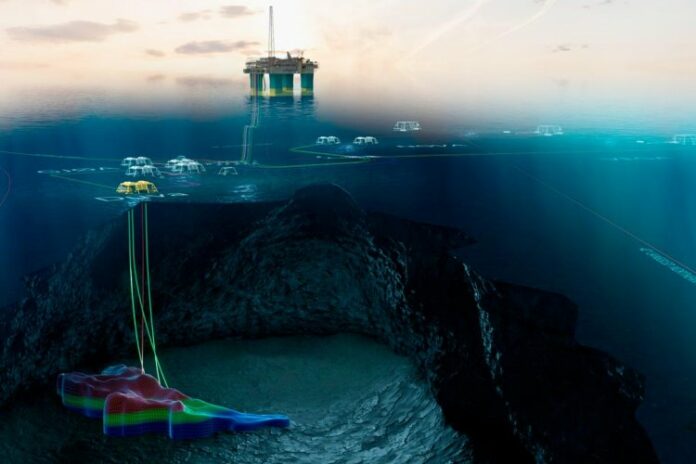
The Duva oil and gas field – in production licence 636 – was discovered as recently as in 2016 and is ready for start-up with a subsea installation comprising four wells; three oil producers and one gas producer.

The field is located 14 kilometres northeast of the Gjøa field and the subsea template is tied into existing subsea infrastructure on Gjøa. From there, the product stream is routed from Duva to the platform on the Gjøa field for processing and export. The oil goes to Mongstad in Vestland county, while the gas is sent to the United Kingdom.

According to the operator, the project has cost about NOK 5.1 billion. In spite of the pandemic, the project was only delayed by a few months, and Neptune Energy expects to come on stream in August.

Kalmar Ildstad, Director of licence management in the Norwegian Petroleum Directorate, says:

“Duva is the first discovery to be developed in the Agat Formation, and we’re hoping for additional discoveries and developments in the same formation. This development is a good example of how to utilise existing infrastructure in adjacent licences in tail-end production to achieve good, cost-effective solutions for the companies and society.”