-1.2 C
New York
Home Blog Page 574

SBM Offshore signed LOI for FPSO Alexandre de Gusmão lease and operate contracts

0

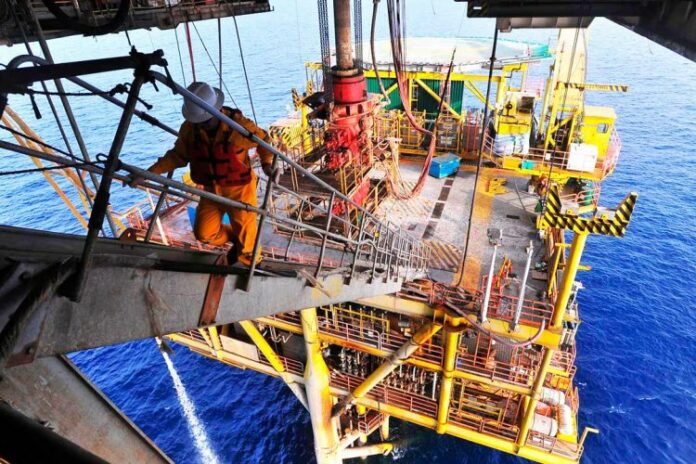
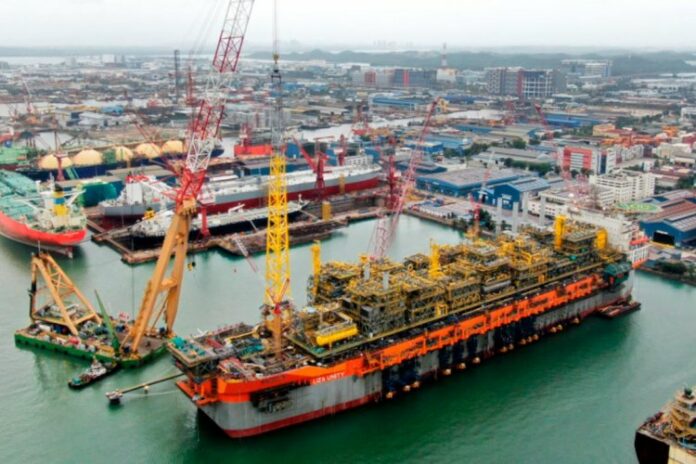
SBM Offshore has signed with Petróleo Brasileiro S.A. (Petrobras) the Letter of Intent for a 22.5 years lease and operate contracts of FPSO Alexandre de Gusmão. The unit will be deployed at the Mero field in the Santos Basin offshore Brazil, approximately 160 kilometers from Arraial do Cabo, Rio de Janeiro state, in Brazil.

The Libra block, where the Mero field is located, is under a Production Sharing Agreement to a Consortium comprised of Petrobras with 40 percent, Shell Brasil with 20 percent, Total Energies with 20 percent, CNODC and CNOOC with 10 percent each and the state-owned company Pré-Sal Petróleo SA as manager of the Production Sharing Contract.

SBM Offshore will design and construct the FPSO Alexandre de Gusmão using its industry leading Fast4Ward® program as it incorporates the Company’s new build Multi-Purpose Floater (MPF) hull combined with several standardized topsides modules. SBM Offshore’s fifth MPF hull has been allocated to this project. Completion of the FPSO is expected in 2024.

The FPSO will be designed to produce 180,000 barrels of oil per day and treat 12 million standard cubic meters of gas per day. Furthermore, the unit will have a water injection capacity of 250,000 barrels per day and a minimum storage capacity of 1.4 million barrels of crude oil. The unit will be spread moored in approximately 1,900 meters water depth.

Bruno Chabas, CEO of SBM Offshore, commented:

“The signing of this Letter of Intent is the second major project award this year by our key client Petrobras. Our industry leading Fast4Ward® program continues to address clients’ needs to develop large-scale and complex FPSOs providing cost efficient and low GHG intensity solutions.”

Jadestone debuts as new upstream investor and operator in Malaysia

0

Jadestone Energy Holdings Ltd, a subsidiary of Singapore-based Jadestone Energy plc (Jadestone) has become the latest upstream investor in Malaysia through its acquisition of SapuraOMV Upstream (PM) Inc (SapuraOMV PM), a subsidiary of SapuraOMV Upstream Sdn Bhd (SapuraOMV). 

SapuraOMV PM holds participating interests in producing assets located offshore Peninsular Malaysia, namely the AAKBNLP, PM318, PM323 and PM329 Production Sharing Contracts (PSC). The company is the operator of PM323 and PM329 PSCs. 

Jadestone is listed on the Alternative Investment Market (AIM) of the London Stock Exchange and has operatorship experience in oil and gas fields across the Asia-Pacific region. 

PETRONAS Senior Vice President of Malaysia Petroleum Management, Mohamed Firouz Asnan said:

“We welcome Jadestone’s debut in Malaysia’s upstream sector. This is a testament that the country remains attractive with diverse investment opportunities available to suit different investors’ appetite and capabilities. Having the right asset placed in the hands of the right player unlocks its full potential, thus maximising returns for both our upstream investors and PETRONAS as the custodian of hydrocarbon resources in Malaysia. 

“We believe Jadestone’s experience and skills in extending asset life, combined with its focus on enhancing production and cost optimisation, will improve margins whilst prolonging the economic life of offshore fields, contributing to the overall sustainability of the oil and gas production for the country.” 

SapuraOMV and Jadestone had earlier entered into a conditional Sale and Purchase Agreement (SPA) on 30 April 2021. The conditions include, among others, the regulatory approval from PETRONAS which was granted on 15 July 2021. The acquisition was completed on 1 August 2021.

MOL to build series of four LNG-fueled car carriers

0

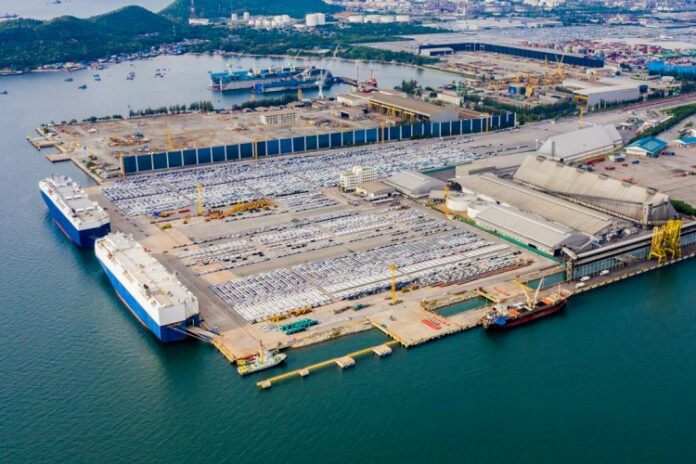
Mitsui O.S.K. Lines has announced that it reached an agreement with Shin Kurushima Dockyard and Nihon Shipyard to build four 7,000-unit capacity car carriers using environment-friendly liquefied natural gas (LNG) as their main fuel.

Compared to conventional marine fuel oil, LNG is expected to reduce emissions of carbon dioxide (CO2) which is a greenhouse gas (GHG), by about 25-30%, sulfur oxide (SOx) by 100%, and nitrogen oxide (NOx) by about 85%. The vessels are slated for delivery in succession starting in 2024.

In June 2021, MOL established the “MOL Group Environmental Vision 2.1” as a guide to achieving net zero GHG emissions by 2050.
It plans to launch about 90 LNG-fueled vessels by 2030, under its strategy calling for “Adoption of Clean Alternative Fuels” to achieve that target.

In addition to the LNG-fueled vessel projects that the MOL Group has been working on, we will promote the use of LNG-fuel for car carriers, starting with this decision.

MOL is accelerating its preparations for the launch of environment-friendly vessels using not only LNG fuel but also biofuels, which are reaching the practical application stage, while continuing to research the use of ammonia and other next-generation fuels.

PONANT takes delivery of Le Commandant Charcot first polar exploration ship

0

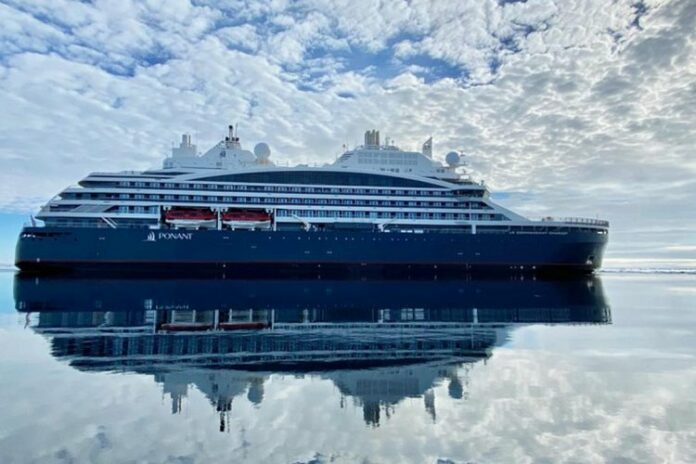
Luxury French cruise line Ponant has taken delivery of its first polar exploration ship, Le Commandant Charcot.

Ponant says the vessel is the first hybrid electric polar exploration ship powered by Liquefied Natural Gas (LNG) and the result of a six-year partnership between the line and experts including Stirling Design International, Aker Arctic and Vard, a subsidiary of Fincantieri.

The 13th ship in Ponant’s fleet was handed over at the Vard shipyard in Norway on July 29 during a flag exchange ceremony.

Le Commandant Charcot features 123 staterooms and will deal with 100% of its waste on board.

The Polar Class PC2 ship will be fitted with facilities and equipment for research, providing “a platform for observation, research and analysis to study water, air, ice and biodiversity in extreme polar regions”.

The 245-guest vessel will also offer citizen science, expert lectures, kayaking, hovercraft rides, hiking and ice fishing.

The ship will sail some of the world’s most remote regions including the North Pole, Northeast Greenland National Park, a circumnavigation of the Svalbard archipelago, the Bellingshausen Sea, the Weddell Sea and the Larsen Ice Shelf.

Chief executive Hervé Gastinel said:

“Delivery of Le Commandant Charcot is both a culmination and the beginning of a new kind of odyssey for the company.

“The construction of this prototype ship demanded extremely high standards in terms of quality. I am proud of the work that our teams have accomplished.

“We are welcoming into our fleet a ship that will offer so much more than just a voyage of exploration, but rather a truly inspiring and fascinating discovery of a still little-known polar world.”

Subsea 7 announces floating wind acquisition

0

Subsea 7 has announced that it has entered into an agreement to acquire a majority interest in the equity of Nautilus Floating Solutions S.L. a developer of technology for the floating wind market based in Bilbao, Spain.

Nautilus has developed a promising concept for a floating wind foundation based on a semi-submersible steel structure that supports a centrally-placed wind turbine. Subsea 7 will provide technical expertise, and engineering and project management capabilities, to support the advancement of this design and it is envisaged that the concept will be included in tenders for demonstrator or pilot projects in 2021 and beyond.

Subsea 7 will acquire a controlling interest of 59.12% in Nautilus and will assume four of the seven positions on Nautilus’ Board of Directors. Tecnalia, the leading Research and Technological Development Centre in Europe and Vicinay, a world class design, manufacturer, and supplier of mooring systems for the Oil & Gas and Floating Wind industries, will remain shareholders of Nautilus with equity interests of 29.14% and 11.74% respectively.

Nautilus will remain an autonomous company with strong roots in the Basque Country of Spain, teaming with its network of regional, national and international partners. It will benefit from the support of Subsea 7 in various upcoming bids with key clients in the floating wind industry. While actively supporting the further development of the Nautilus concept, Subsea 7 will also continue to engage with other technology providers to support client, regional or supply chain specificities.

Subsea 7 and Nautilus will collaborate closely with Seaway 7 ASA (the recently announced combination of Subsea 7’s fixed wind activities and OHT ASA) to ensure aligned client engagement and that the capabilities within the broader group are fully leveraged.

John Evans, Chief Executive Officer, Subsea 7 commented:

“The agreement with Nautilus represents an exciting opportunity for Subsea 7 to further our involvement in the technology being developed for the floating wind market. Involvement at an early stage allows the development of this concept to benefit from our technical know-how, experience in delivering EPCI projects, and to maximise the value creation opportunity for our clients and shareholders. Following the agreements with OHT ASA in offshore fixed wind, and with Simply Blue Energy in floating wind, this is another step in the realisation of the Group’s strategy to proactively participate in the Energy Transition.”

Shipping losses remain at historic lows, study says

0

The international shipping industry continued its long-term positive safety trend over the past year but has to master Covid challenges, apply the learnings from the Ever Given Suez Canal incident and prepare for cyber and climate change challenges ahead.

The number of large vessels lost remained at record low levels in 2020, while reported incidents declined year-on-year, according to marine insurer Allianz Global Corporate & Specialty SE’s (AGCS) Safety & Shipping Review 2021.

Captain Rahul Khanna, Global Head of Marine Risk Consulting at AGCS, says:

“The shipping sector has shown great resilience through the coronavirus pandemic, as evidenced by strong trade volumes and the recovery we are seeing in several parts of the industry today. Total losses are at historic low levels for the third year running. However, it is not all smooth sailing. The ongoing crew crisis, the increasing number of issues posed by larger vessels, growing concerns around supply chain delays and disruptions, as well as complying with environmental targets, bring significant risk management challenges for ship owners and their crews.”
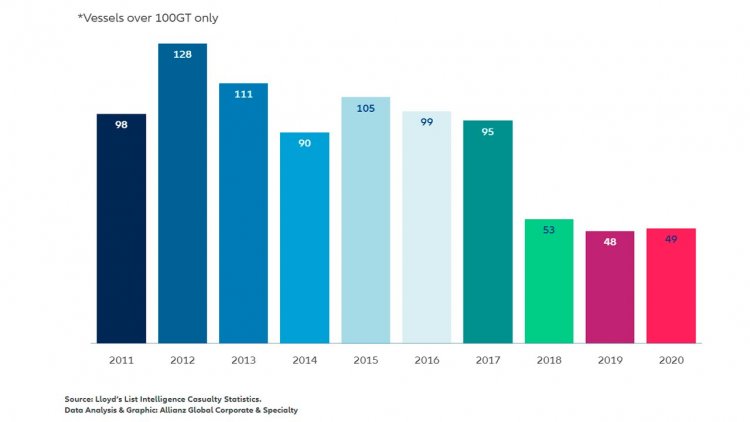
The annual AGCS study analyzes reported shipping losses and casualties (incidents) over 100 gross tons. During 2020, 49 total losses of vessels were reported globally, similar to a year earlier (48) and the second lowest total this century. This represents a 50% decline over 10 years (98 in 2011). The number of shipping incidents declined from 2,818 to 2,703 in 2020 (by 4%). There have been more than 870 shipping losses over the past decade.

The South China, Indochina, Indonesia and Philippines maritime region remains the global loss hotspot, accounting for one in every three losses in 2020 (16) with incidents up year-on-year. Cargo ships (18) account for more than a third of vessels lost in the past year and 40% of total losses over the past decade. Foundered (sunk/submerged) was the main cause of total losses over the past year, accounting for one in two vessels. Machinery damage/failure was the top cause of shipping incidents globally, accounting for 40%.
Despite the devastating economic impact of Covid-19, the effect on maritime trade has been less than first feared. Global seaborne trade volumes are on course to surpass 2019 levels this year after declining slightly in 2020. However, the recovery remains volatile. Covid-19-related delays at ports and shipping capacity management problems have led to congestion at peak times and a shortage of empty containers. In June 2021, it was estimated there was a record 300 freighters waiting to enter overcrowded ports. The time container ships are spending waiting for port berths has more than doubled since 2019.

The crew change situation on vessels is a humanitarian crisis which continues to affect the health and wellbeing of seafarers. In March 2021, it was estimated some 200,000 seafarers remained on board vessels unable to be repatriated due to Covid-19 restrictions. Extended periods at sea can lead to mental fatigue and poor decision-making, which ultimately impact safety. There have already been shipping incidents which have featured crews who have been on board for longer than they should have. Seafarer training is suffering, while attracting new talent is problematic given working conditions. Future crew shortages could impact the surge in demand for shipping as international trade rebounds.

Although Covid-19 has resulted in limited direct marine claims to date, the sector has not been spared significant loss activity. 

Justus Heinrich, Global Product Leader, Marine Hull, at AGCS, says:

“Overall, the frequency of marine claims has not reduced. We are also seeing an increased cost of hull and machinery claims due to delays in the manufacture and delivery of spare parts, as well as a squeeze on available shipyard space. Costs associated with salvage and repairs have also increased.” 

In future, insurers could potentially see an uptick in machinery breakdown claims if Covid-19 has affected crews’ ability to carry out maintenance or follow manufacturers’ protocols.
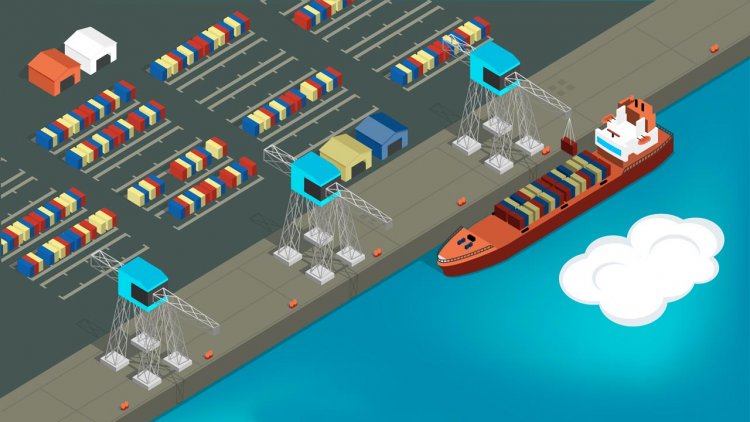
The blocking of the Suez Canal by the Ever Given container ship in March 2021 is the latest in a growing list of incidents involving large vessels or mega-ships. Ships have become ever-larger as shipping companies seek economies of scale and fuel efficiency. The largest container ships break the 20,000 teu mark, with vessels over 24,000 teu on order – capacity of container ships vessels alone has increased by 1,500% over 50 years and has more than doubled over the past 15 years.

Captain Nitin Chopra, Senior Marine Risk Consultant at AGCS, says:

“Larger vessels present unique risks. Responding to incidents is more complex and expensive. Approach channels to existing ports may have been dredged deeper and berths and wharfs extended to accommodate large vessels but the overall size of ports has remained the same. As a result, a ‘miss’ can turn into a ‘hit’ more often for the ultra-large container vessels.” 

If the Ever Given had not been freed, salvage would have required the lengthy process of unloading some 18,000 containers, requiring specialist cranes. The wreck removal of the large car carrier, Golden Ray, which capsized in US waters in 2019 with more than 4,000 vehicles on it has taken over a year and a half and cost several hundreds of millions of dollars.

The number of fires on board large vessels has increased significantly in recent years. There was a record 40 cargo-related fires alone in 2019. Across all vessel types, the number of fires/explosions resulting in total losses increased again in 2020, hitting a four-year high of 10. Fires often start in containers, which can be the result of non-/mis-declaration of hazardous cargo, such as chemicals and batteries. When mis-declared, these might be improperly packed and stowed on board, which can result in ignition and/or complicate detection and firefighting. Major incidents have shown container fires can easily get out of control and result in the crew abandoning the vessel on safety grounds, thus increasing the size of loss.

Loss of containers at sea also spiked last year (over 3,000) and have continued at a high level in 2021, disrupting supply chains and posing a potential pollution and navigation risk. The number lost is the worst in seven years. Larger vessels, more extreme weather, a surge in freight rates and mis-declared cargo weights (leading to container stack collapse), as well as the surge in demand for consumer goods may all be contributing to this increase. There are growing questions about how containers are secured on board ships.
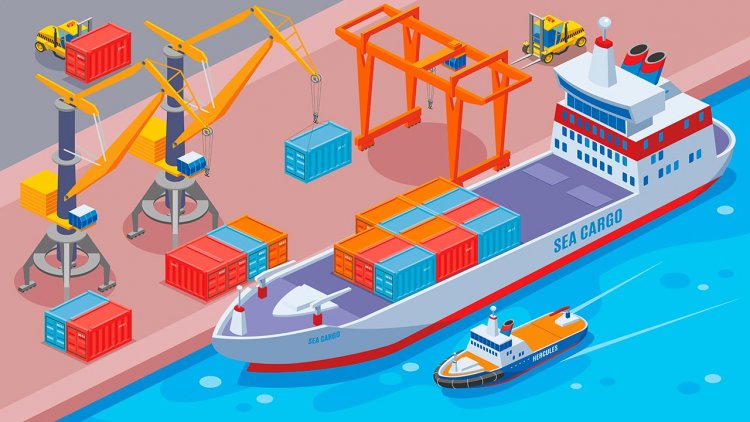
Maritime supply chain resilience is in the spotlight after a series of recent events. The Ever Given incident sent shockwaves through global supply chains dependent on seaborne transport. It compounded delays and disruption already caused by trade disputes, extreme weather, the pandemic and surges in demand for containerized goods and commodities. 

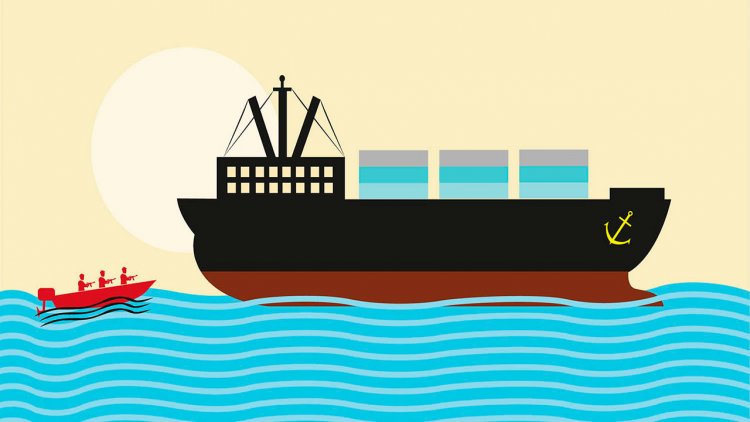
The world’s piracy hotspot, the Gulf of Guinea, accounted for over 95% of crew numbers kidnapped worldwide in 2020. Last year, 130 crew were kidnapped in 22 incidents in the region – the highest number ever – and the problem has continued. Vessels are being targeted further away from the shore – over 200 nautical miles (nm) in some cases. The Covid-19 pandemic could exacerbate piracy as it is tied to underlying social, political and economic problems, which could deteriorate further. Former hotspots like Somalia could re-emerge.

The report also notes that all four of the world’s largest shipping companies have already been hit by cyber attacks, and with geopolitical conflict increasingly played out in cyber space, concerns are growing about a potential strike on critical maritime infrastructure, such as a major port or shipping route. Increased awareness of – and regulation around – cyber risk is translating into an uptake of cyber insurance by shipping companies, although mostly for shore-based operations to date.
With momentum gathering behind international efforts to tackle climate change, the shipping industry is likely to come under increasing pressure to accelerate its efforts. 

Last year, the cap on the sulphur content of ships’ fuel was cut. Known as IMO 2020, the cut is expected to reduce emissions of harmful sulphur oxide (SOx) from shipping by 77%. Insurers have seen a number of machinery damage claims related to scrubbers, which remove SOx from exhaust gases for vessels using heavy marine fuel.

According to the report, the South China, Indochina, Indonesia and Philippines maritime region is also the major loss location of the past decade (224 vessels), driven by high levels of local and international trade, congested ports and busy shipping lanes, older fleets and extreme weather exposure. Together, the South China, Indochina, Indonesia and Philippines, East Mediterranean and Black Sea, and Japan, Korea and North China maritime regions account for half of the 876 shipping losses of the past 10 years (437).

Neptune Energy installs world’s longest ETH production pipeline

0

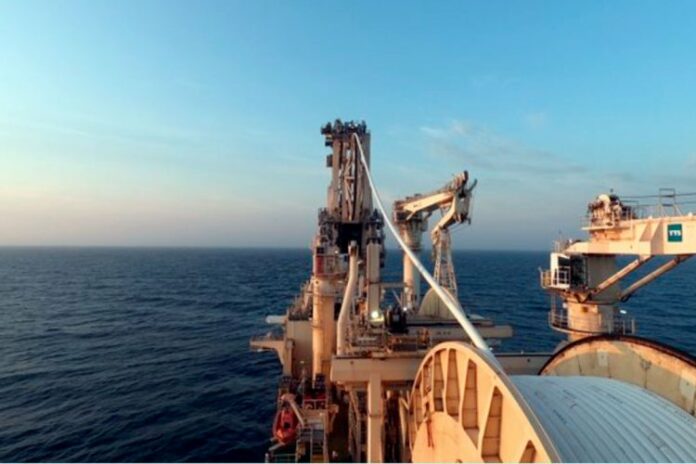
Neptune Energy today announced the safe and successful installation and testing of the world’s longest trace-heated subsea production pipeline at its operated Fenja field in the Norwegian sea.

The innovative use of the ETH pipe-in-pipe significantly reduced the potential cost of the development by enabling the field to be tied back to existing infrastructure.

Neptune Energy’s Director of Projects and Engineering in Norway, Erik Oppedal, said:

“Completing the installation and testing of the ETH pipe is a great technical achievement and a major step forward in the development of the Fenja field. The ETH pipe-in-pipe solution is crucial for extracting the oil, and is a creative, cost-effective approach that permitted us to tie the field back to existing infrastructure.

“Norway is an important part of Neptune’s geographically-diverse portfolio and this is an excellent example of the company’s commitment to investing in the region and adopting advanced technologies to overcome challenges.”

The ETH pipeline was developed and qualified through a collaborative approach with TechnipFMC. Due to the high wax content of the Fenja field’s oil, the contents of the pipeline must be warmed to a temperature above 28-degrees Celsius before starting the flow after a scheduled shut down or interruption. During normal production, the temperature in the pipeline would be well above this temperature.

Ståle Ryggvik, TechnipFMC’s Project Director, added:

“The successful completion of the Fenja ETH pipe-in-pipe installation has been made possible through our unique iEPCI™ project capabilities, close collaboration with Neptune Energy, and by leveraging TechnipFMC’s extensive experience in the technology. This technology has the potential to unlock future developments with challenging reservoir properties.”

The offshore installation was carried out across two subsea campaigns in 2020 and 2021 by TechnipFMC’s vessel, approximately 120 kilometres north of Kristiansund, Norway, at a water depth of about 320 metres. The fabrication and assembly of the ETH-pipe was conducted by TechnipFMC.

Drilling of the Fenja production wells is scheduled to begin in fourth quarter, 2021, by the Deepsea Yantai drilling rig.

Partners: Neptune Energy (Operator, 30%), Vår Energi, (45%), Suncor Energy (17.5%), DNO (7.5%)

Russian Arctic warming leads to major ice loss

0

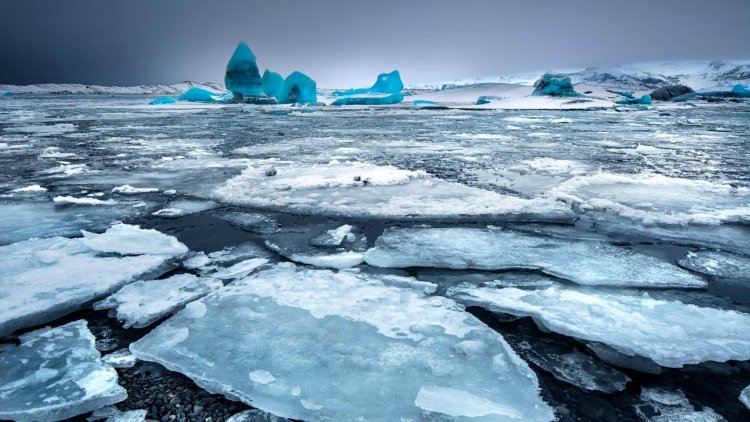
Glaciers and ice caps in two archipelagos in the Russian Arctic are losing enough meltwater to fill nearly five million Olympic-size swimming pools each year, research shows.

Satellite data suggests that the amount of ice lost between 2010 and 2018 would put an area the size of the Netherlands under seven feet of water.

Warming of the Arctic Ocean appears to play a key role in accelerating ice loss from two large groups of islands that border the Kara Sea, researchers say.

The Edinburgh team mapped data collected by the European Space Agency’s CryoSat-2 research satellite to monitor changes to the surface height and mass of ice caps and glaciers.

Comparing these with climate data for the same period revealed a clear link between rising atmospheric and ocean temperatures and increased ice loss from two archipelagos.

The team’s analysis shows that the Novaya Zemlya and Severnaya Zemlya archipelagos—which cover a combined area of around 50,000 square miles—lost 11.4 billion tons of ice each year between 2010 and 2018.

Thinning of the ice has already had a major impact on the stability of some of the region’s glaciers and ice caps, which could further increase ice loss in the future, the team says.

Compared to the relatively small size of glaciers, ice caps are large bodies of ice several hundred meters thick that cover areas of up to around 8,000 square miles in the region. Some of these store ice up to 12,000 years old, which provides scientists with valuable long-term records of the Arctic climate.

Findings from the study add to a body of research suggesting that conditions in the Arctic Ocean are becoming more like those in the North Atlantic, which is much warmer.

The study could help predict future ice loss in regions experiencing similar patterns of atmospheric and ocean temperature change, and improve global sea level predictions, the team says.

The research, published in the Journal of Geophysical Research: Earth Surface, was supported by the European Space Agency.

Dr. Paul Tepes, School of GeoSciences, says:

“The Russian Arctic is largely inaccessible, but satellite data has enabled us to monitor changes to its ice caps and glaciers. As has been observed elsewhere in the world, ice loss in the region is accelerating. As the climate continues to warm, significant ice loss in the Russian Arctic will have clear impacts for sea level rise.”

Wärtsilä providing optimised maintenance for Brazilian river tugs

0

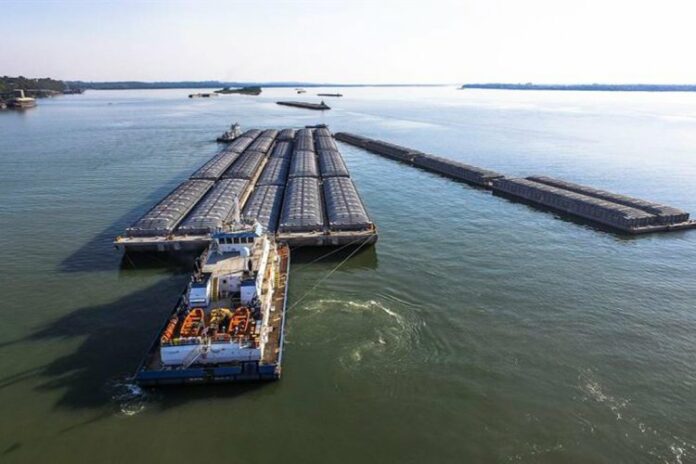
The technology group Wärtsilä has signed a seven-year long-term Optimised Maintenance Agreement to support the operations of two river pusher tugs operating in Northern Brazil. The vessels are owned by Hidrovias do Brasil, a leader in South American river transportation. This agreement, the second of its type with Hidrovias, was signed in April, 2021.

The vessels operate with Wärtsilä 20 engines, often in shallow waters and remote locations. These challenging operating conditions make the planning and execution of maintenance procedures difficult. This agreement, therefore, allows the customer to focus on its core business knowing that the service level is efficient and the long-term costs fully predictable.

Included in the agreement are Wärtsilä’s Data-Driven Dynamic Maintenance Planning and Expert Insight innovations to deliver remote operational and technical support. The service also includes other important benefits, such as an insight to fuel efficiency, maximised uptime with maintenance being carried out on an ‘as-needed’ basis rather than according to a set number of operating hours, spare parts planning and coordination, and personnel training.

Ricardo Brandalise, Maintenance Manager, Hidrovias do Brasil, says:

“Long-term maintenance contracts guarantee the reliability and availability of the Wärtsilä engines installed in our main pushers. Under this contract we receive technical support from the manufacturer of the engines, parts for preventative maintenance, and remote monitoring of the engines’ performance. Because of the gains it provides when well managed, maintenance is a strategic area for us. Therefore, we identified the need to continue with a long-term contract in partnership with Wärtsilä.” 

Marcelo Barthaburu, General Manager, Agreement Sales Americas, Wärtsilä Marine Power, says:

“Optimised Maintenance agreements are part of Wärtsilä’s Lifecycle Solutions offering, and are designed to improve our customers’ business performance and competitiveness. With these agreements, we are able to increase availability and ensure optimal efficiency. The addition of Expert Insight to our lifecycle offering takes predictive maintenance and optimisation to levels never seen before, thus enabling reduced unplanned maintenance and optimised fuel efficiency with a corresponding reduction in emissions. We are pleased to continue strengthening our partnership with Hidrovias do Brasil with this agreement.”

The earlier agreement with Hidrovias, signed in 2017, covers eight river pusher tugs operating in Paraguay.

World’s first hybrid-powered Surface Effect Ship classed by Bureau Veritas

0

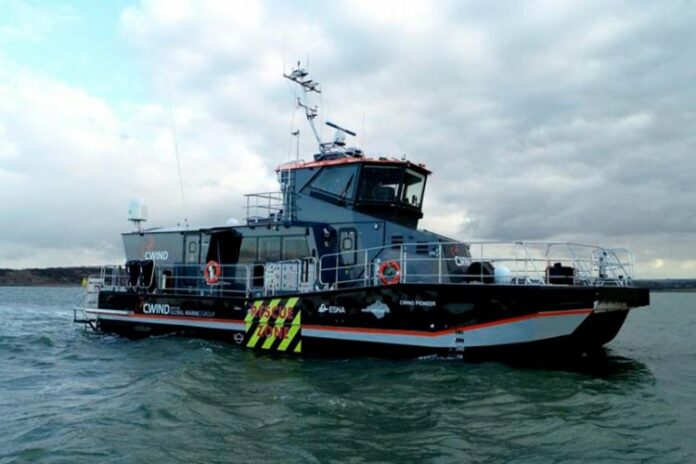
Bureau Veritas (BV), a world leader in testing, inspection, and certification (TIC), has classified the world’s first hybrid-powered Surface Effect Ship (SES), the CWind Pioneer, which features an air cushion, twin hulls and an innovative diesel and electric drivetrain with considerable battery storage onboard.

CWind is a leading provider of project services, crew transfer vessels (CTVs), and training for the offshore wind industry. With a capacity of 24 passengers, the CWind Pioneer is a direct response to the needs of the offshore wind industry for innovative technologies that reduce CO2 emissions and provide cost-effective services to windfarms located further offshore. The CWind Pioneer can operate at speeds exceeding 43 kts, and can transfer personnel safely and comfortably even in extreme weather conditions with significant wave heights up to 2m, permitting greater operational windows.

Its air cushion motion control system provides significant advantages, with smoother and more comfortable conditions on-board and increased operational days offshore. The CWind Pioneer is being used at the Borssele 1 and 2 offshore wind farms in the Netherlands.

The CWind Pioneer is indeed a pioneer in many aspects. It is a first of its kind with a hybrid diesel and battery electric power system, which enables the vessel to operate purely on battery power alongside or at slow speeds, such as when transiting restricted waterways or on standby in the windfarm, which helps reduce fuel consumption, reduce [diesel] engine running hours and lower CO2 emissions.

This Electric Hybrid technology reduces engine wear and consequently maintenance costs. The reduced noise and vibration levels also provide greater comfort for offshore personnel, helping to ensure that they are fit for work when arriving at the offshore wind farms.

However, the electric hybrid system implementation comes with a good level of complexity that needs to be managed carefully. BV’s notation ‘Electric-Hybrid’ addresses the complexity of these systems, defining requirements for storage, power distribution, control and instrumentation, as well as tests that must be carried out especially when it relates to power management and critical safety considerations, such as thermal runaway.

As a leading training provider to the offshore wind industry, CWind has developed their own rigorous training course for operators of the CWind Pioneer, ensuring the crew have the skills necessary to manage the systems onboard. 

Herman Spilker, VP North Europe for Bureau Veritas, commented:

“Through the diversity of our fleet, Bureau Veritas has built high technical expertise which help support the development of the CWind Pioneer’s step-change design and eco-friendly operations. We are proud of this superb achievement and we wish its technicians and crew safe and comfortable sailing.”