-1.9 C
New York
Home Blog Page 572

DNV and Nakilat JDP works to improve vessel software reliability and quality

0

The JDP, which was initiated in 2020 by Nakilat, has resulted in the launch of a new DNV Recommended Practice (DNV-RP-0582), published in June 2021.

Today, critical vessel functions rely heavily on computerized software-based systems that are becoming more complex, automated and integrated. Software failures or reliability issues can now result in significant safety risks, as well as lost revenue due to off-hire days. To help address these risks, DNV and Nakilat brought together shipyards – DSME, Hudong-Zhonghua, HHI and SHI, with system suppliers – ABB, Honeywell, Kongsberg and Wärtsilä, to contribute to the development of the RP.

Nakilat Chief Executive Officer Eng. Abdullah Al-Sulaiti said:

“With one of the largest LNG shipping fleets in the world, we are intimately aware of the importance of Information Technology (IT) integrity in ensuring safe, sustainable and reliable vessel operations. With the experience gained from completing our own fleet-wide digitalization exercise, we are pleased to be partnering with key players in the industry to share our insights and contribute towards the improvement of vessel IT and computerization reliability and quality. The newly published RP will act as a key enabler for the safe implementation of new digital technologies onboard, helping other vessel managers and owners to mitigate the risks of digitalisation while improving the safety of the crew, environment, vessel and cargo.”

Knut Ørbeck-Nilssen, CEO of DNV Maritime, said:

“Our recent white paper highlighted an emerging safety gap in shipping rooted in the rapid digitalization of the industry and the increasingly complex on-board systems of modern vessels. Addressing these emerging risks is essential to our mission as a classification society, but it requires a collective effort. This is why we are very pleased that there is such a strong industry participation in this project, as it further underlines the growing importance of this topic. The RP is designed to help owners and operators deal with software in the same way they would machinery or other physical systems onboard and with the RP now available, we hope to see this implemented soon in both newbuildings and the existing fleet.”

The Recommended Practice (RP) provides guidance on the handling of complex software and computer-based systems throughout a vessel’s life cycle (design, construction, commissioning, and operation). By focusing on system integration and software change handling, the RP works to improve software reliability and quality.

Further the RP may be used as a contractual element/requirement in newbuilding or conversion projects, and/or as guidelines for suppliers, system integrators and owners/operators to check compliance and the ongoing status of systems. The RP can also assist in establishing maintenance plans, service level agreements and life cycle warranties for software, provides a process to assess project timelines and risks, including alignment across sister vessels, and provides recommendations to increase the interoperability and integrability of vessel software and systems to vessels at both the newbuilding and operational phases.

Study: Ocean current system seems to be approaching a tipping point

0

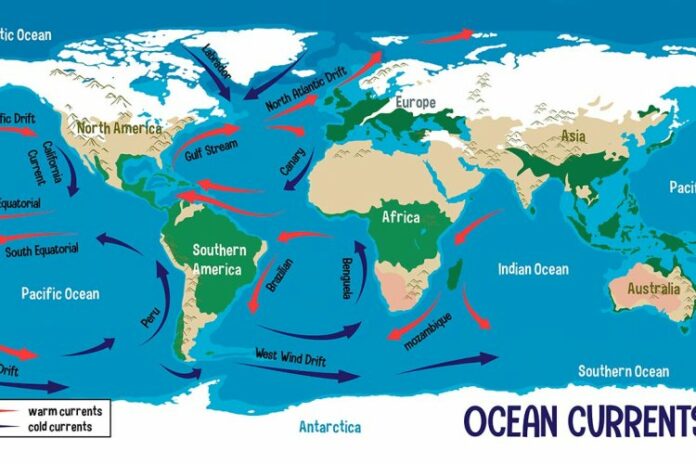
The Atlantic Meridional Overturning Circulation (AMOC) may have been losing stability in the course of the last century, a new study by Niklas Boers, published in Nature Climate Change, suggests.

The finding is worrying as well as a surprise. The AMOC, to which also the Gulf stream belongs, is responsible for the relatively mild temperatures in Europe and influences weather systems worldwide. A collapse of this ocean current system, which has so far not been considered likely under the current levels of global warming will therefore have severe consequences on global and especially European weather and climate. The study is part of the European TiPES project, coordinated by the University of Copenhagen, Denmark and the Potsdam Institute for Climate Impact Research, Germany.

The AMOC is the key circulation system of the Atlantic Ocean. It moves heat from the Tropical region to the Northern hemisphere by transporting warm water masses northward at the ocean surface, and returning as a cool current southward at the bottom of the ocean.

Model simulations and data from so-called paleoclimate proxy records suggest that the AMOC can be in two distinct modes: A strong mode, which is currently attained—and an alternative, substantially weaker mode of operation. This bi-stability implies that abrupt transitions between the two circulation modes are in principle possible.

Because the AMOC redistributes heat, it influences weather patterns globally. A collapse from the currently attained strong circulation mode would therefore—among other impacts—cool Europe substantially as well as strongly impact the tropical monsoon systems.

It has been shown previously that the AMOC is currently at its weakest in more than 1000 years. However, so far it has remained unclear whether the observed weakening only corresponds to a change in the mean circulation state, or whether it is associated with an actual loss of dynamical stability.

Niklas Boers, author of the study, says:

“The difference is crucial. Because the loss of dynamical stability would imply that the AMOC has approached its critical threshold beyond which an abrupt and potentially irreversible transition to the weak mode could occur.”

Long-term observational data of the strength of the AMOC does unfortunately not exist. But the AMOC leaves so-called fingerprints in sea-surface temperature and salinity patterns of the Atlantic ocean. It is a detailed analysis of these fingerprints that now suggests that the AMOC weakening during the last century is indeed likely to be associated with a loss of stability, and thus with the approaching of a critical threshold beyond which the circulation system could collapse.

The finding is not only worrying but also quite surprising as an abrupt transition of the AMOC has so far been expected to occur at global warming levels much higher than the current 1.2 degrees Celsius.

Boers explains:

“Most evidence suggests that the recent AMOC weakening is caused directly by the warming of the northern Atlantic ocean. But according to our understanding, this would be unlikely to lead to an abrupt state transition. Stability loss that could result in such a transition would be expected following the inflow of substantial amounts of freshwater into the North Atlantic in response to melting of the Greenland ice sheet, melting Arctic sea ice and an overall enhanced precipitation and river runoff.”

Freshwater inflow and especially Greenland meltwater runoff has indeed accelerated in the last decades. However, although a first sign of regional destabilization of the Greenland Icesheet has been detected, recent Greenland runoff should not be sufficient for destabilizing the AMOC.

To understand this in-depth we need to find ways to improve the representation of the AMOC and polar ice sheets in comprehensive Earth system models and to better constrain their projections. I hope that the results presented here will help with that!”

Royal IHC hands over the world’s largest cutter suction dredger to DEME

0

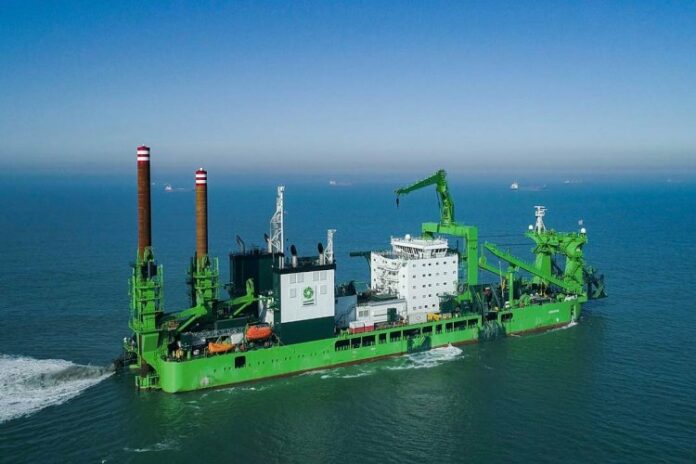
On 3 August, Royal IHC transferred cutter suction dredger SPARTACUS to DEME. 

The SPARTACUS sets a new benchmark in the global dredging market. Its ground breaking, eco-friendly design and countless innovations on board make it the only one of its kind. The SPARTACUS is the world’s largest self- propelled cutter suction dredger and the first to be powered by liquefied natural gas (LNG). The four main engines can run on LNG, MDO and HFO, and the two auxiliary engines have dual-fuel technology. With 44,180 kilowatts, the SPARTACUS is the most powerful CSD in the DEME fleet, and the strongest cutter suction dredger in the world, capable of handling even the most challenging rocky bottom formations.

The heavy cutter ladder, able to be controlled and operated from the bridge by a single person, can operate up to a dredging depth of 45 m. The ship also has a waste heat recovery system that converts heat from the exhaust gases into electrical energy.

CSD SPARTACUS will set sail to its first assignment, the Abu Qir project in Egypt. This vast greenfield project includes the reclamation of 1,000 hectares of new land, the deepening of the port’s approach channel to 23 m and the dredging of a turning basin to 22 m.

Luc Vandenbulcke, CEO DEME Group:

“SPARTACUS not only sets new standards in the dredging sector, this extraordinary vessel highlights DEME’s continual drive to pioneer, innovate and create opportunities. This willingness to keep pushing the boundaries and invest in our fleet, means that projects that were unfeasible before are now possible with ‘Spartacus’. I sincerely congratulate all teams involved for their commitment and relentless pursuit of excellence during this challenging construction process.”

Gerben Eggink, CEO Royal IHC:

“SPARTACUS has been one of the most challenging projects Royal IHC has ever undertaken Now that it has been completed and we can hand over the SPARTACUS to DEME, we are very proud of this ship. I would like to thank DEME for the good cooperation between our two companies and compliment the teams of both DEME and Royal IHC for the exceptional perseverance they have shown. We are confident to have delivered DEME a ship that is ready to take on any challenge and with which many progressive projects can be carried out.”

DNV providing technical expertise for Indonesia’s first-ever floating PV project

0

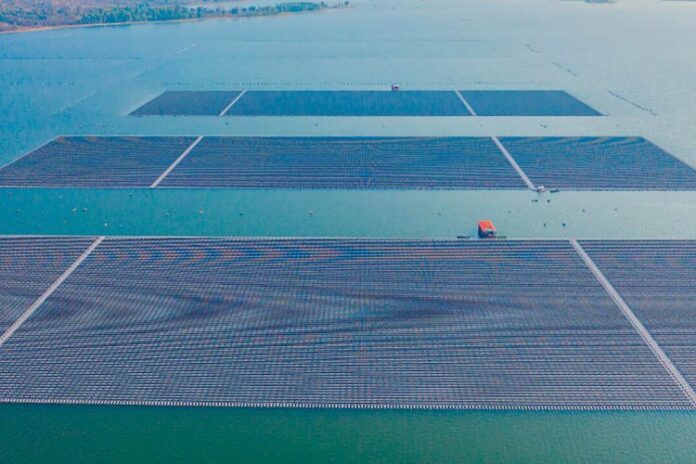
DNV acted as the Lender’s Technical Advisor, during the development phase, for Indonesia’s first-ever floating solar photovoltaic (PV) project at Cirata Reservoir in West Java. 

The project owner, PT. Pembangkitan Jawa Bali Masdar Solar Energi (PMSE), is a joint venture between the Abu Dhabi Future Energy Company PJSC – Masdar (MASDAR) and Indonesian state-owned electricity company Perusahaan Listrik Negara (PLN) subsidiary PJBI.

PMSE achieved financial close for the project on the 3rd of August after the satisfactory completion of the lender’s due diligence review. The senior debt of the floating solar project is being provided by Sumitomo Mitsui Banking Corporation, Societe Generale, and Standard Chartered Bank.

Once operational, the 145 MWac Cirata floating PV plant will be one of the largest of its kind in South East Asia. The region is already home to a number of large-scale floating PV systems including Vietnam’s 70 MW FPV system in Quang Thanh and Singapore’s 60 MW facility at Tengeh reservoir.

The Cirata floating PV project will have a plant capacity of 145 MWac. All power generated by the plant will be supplied and sold to PLN under a power purchase agreement (PPA).

DNV supported the first phase of the Cirata floating PV project, which began in April 2020 and involved pre-construction due diligence. DNV’s role included undertaking site studies, estimating solar resource data and energy yield and reviewing the financial model’s technical assumptions.

DNV also reviewed the project design, technology, PPA, Engineering, Procurement and Construction (EPC) contract and contractor, the Operation and Maintenance (O&M) contract, plan and operator. In addition to conducting a technical due diligence, DNV also evaluated the environmental and social impact assessments to ensure compliance with internal best practices and International Finance Corporation (IFC) standards.

Brice Le Gallo, Regional Director for Energy Systems Asia Pacific at DNV, said:

“DNV is delighted to be supporting PMSE in developing Indonesia’s first floating solar PV project which is expected to pioneer significant uptake in the technology as the country shifts to low-carbon power generation solutions.”

Przemek Lupa, President Director of PMSE, said:

”DNV’s experience in advising sponsors and lenders on floating PV, which is a relatively new technology, was a key differentiator and was instrumental in its selection as the lender’s technical advisor for the Cirata floating PV project.”

In addition to advising on 800 MW of installed floating PV capacity in Asia Pacific, including Singapore’s Tengeh reservoir project, DNV has been involved in a combined 2 GW of floating PV projects worldwide.

In terms of industry-shaping technical expertise, DNV led the collaborative joint industry project (JIP) involving 24 industry participants which produced a set of recommended practices for accelerating safe, sustainable and sound design, development and operations of floating solar PV projects in March 2021.

Initially considered a niche technology, floating PV is now the fastest-growing solar PV category, alongside ground-mounted utility-scale solar and rooftop PV. As of August 2020, over 60 countries have actively pursued the deployment of floating PV, with more than 35 installing an estimated 350 operational floating PV systems, equal to a total 2.6 GW of installed capacity.

The use of floating PV technology is expected to grow by an average 20% in the next five years as installation costs fall. The technology is expected to make renewable energy more viable and economic for countries and islands where land is scarce, expensive or topographically unsuitable.

For Indonesia, which has historically relied on coal, gas, geothermal and hydropower to produce electricity, the Cirata floating solar power plant is expected to pioneer significant growth in solar PV by demonstrating the technical and commercial feasibility of solar PV systems in the country.

Fincantieri and Enel Green Power Italia sign green hydrogen agreement

0

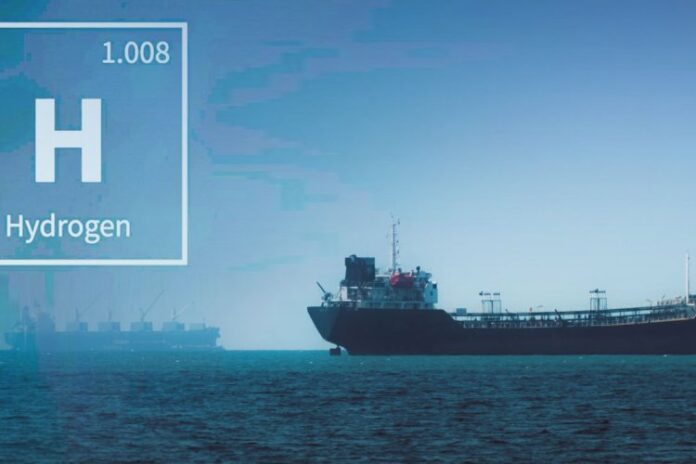
The definition of an integrated solution for the production, supply, management and use of green hydrogen for port areas and long-range maritime transport: this is the objective of the memorandum of understanding signed by Fincantieri and Enel Green Power Italia. The two companies intend to exploit their expertise and know-how in their respective sectors to identify possible sustainable and innovative solutions.

Carlo Zorzoli, Head of Business Development for Enel Green Power, commented:

“The signing of this agreement represents a further step forward in Enel Green Power’s commitment to collaborating with operators interested in developing solutions for the use of green hydrogen in sectors where electrification is not possible, thus contributing to the energy transition process through the decarbonization of industrial activities”.

Laura Luigia Martini, CEO Business Advisor and Executive Vice President Corporate Business Development of Fincantieri, said:

“The European goal of carbon neutrality by 2050 requires the creation of an industrial eco-system on which Fincantieri has been working concretely for some time through a series of operational agreements with the major Italian players for the realization of complex projects in a short time. In this way, we proactively respond not only to the Community demands that States must comply with, but we also consolidate our leadership position in the process towards a more sustainable economy and society”.

In particular, the two companies will evaluate the possibility of collaborating both in the supply of green hydrogen to naval, submarine and surface vessels, and to industrial users within the port area, including the design and construction of the necessary infrastructure elements, including storage, where necessary; and in the design and development of a system for the management of energy flows, including through the involvement of other companies from the respective groups.

Enel’s Eugenio Montale power plant in La Spezia (Liguria region) will be used as an initial test site for the activities covered by the agreement, thus launching a sustainable energy transition path for the site.

This MoU can successively undergo future binding agreements defined according to applicable rules and regulations, including those regarding operations between related parties.

Container equipment prices have peaked and are expected to moderate

0

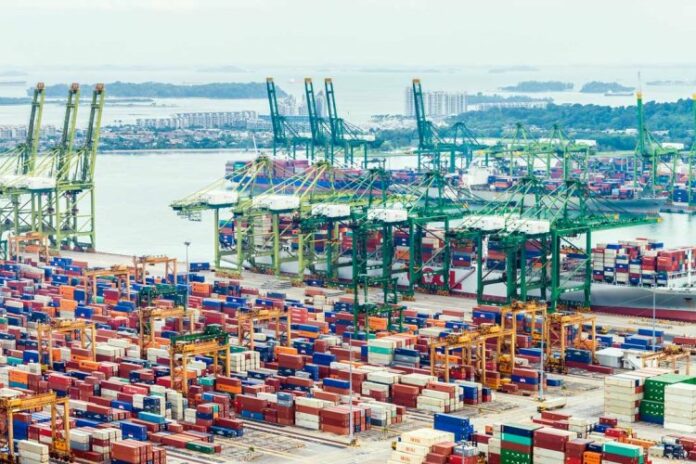
Prices of dry freight shipping containers have doubled over the past year to reach historic highs but will moderate over the next few years, according Drewry’s recently published Container Census & Leasing Annual Review and Forecast 2021/22 report.

Dry box newbuild prices rallied strongly in 2020 from the lows of the prior year to reach their highest level since 2011 by the fourth quarter, with a YoY gain of 75%. Then by 2Q21 40ft high cube containers breached the $6,500 threshold, more than doubling over the year, to reach their highest value since Drewry started monitoring container equipment prices back as far as 1998.

John Fossey, Head of Container Equipment & Leasing Research at Drewry, said:

“Pricing has been driven by soaring demand for newbuild containers as shipping lines and lessors have been seeking to rebuild fleets in the face of chronic equipment availability due to widening disruption across the container supply chain. But also increased input costs, particularly for Corten steel and flooring materials have also played a part. We expect dry box prices to peak in the third quarter and to soften thereafter, easing further over subsequent years as trade normalises.”

In sharp contrast, reefer and tank container prices changed little over 2020, but rallied in the first six months of 2021, up 6.5% and 40% YoY, respectively, in 2Q21. Prices of these specialist container types have different cost drivers to dry containers and are expected to continue rising although at a moderate pace over the next few years.

Newbuild container output has soared through the first six months of 2021, with China dry box output climbing 235% YoY to 3 million teu and reefer production more than doubling to 260,000. Drewry expects full-year production to reach 5.2 million teu, representing a 67% YoY rise. The main buyers of this equipment have been lessors, accounting for 68% of newbuild purchases. But Drewry expects carriers to invest more in their own container pools over the near term given their much improved levels of profitability.

Despite record newbuild output, insatiable demand for equipment raised utilisation of the leased fleet across all equipment types to over 99% by the second quarter of 2021, its highest level on record. This drove dry box LTL per diem rates to their highest level in 10 years, doubling over the year, bringing investment cash returns (ICRs) back to pre-pandemic levels.

Fossey added:

“Looking ahead, dry box per diems are forecast to rally 65% in 2021, the steepest rise since Drewry started recording lease rates in 1990. This acceleration will outpace that of newbuild prices as the lagging effect means that lease rates will stay higher for longer, lifting ICRs further. But thereafter we expect some softening of returns.”

Russian nuclear submarine broke down in Danish waters

0

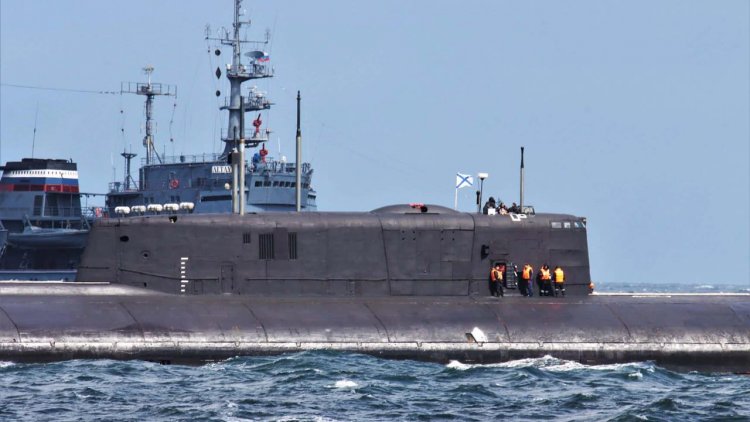
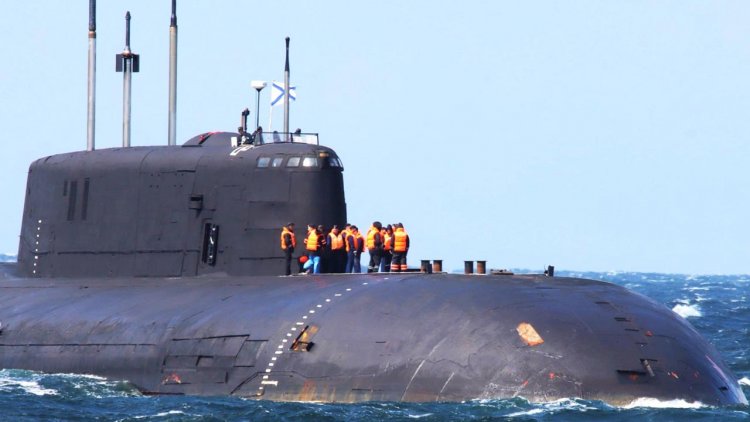
The Russian Oscar-II class nuclear guided-missile submarine Orel had an unknown problem with its propulsion system on July 30 while transiting Danish waters in the Baltic Sea near Denmark’s second-largest city Aarhus, prompting the Russian Navy to prepare to tow the submarine before it eventually resumed operation. The details of the incident aren’t exactly clear, but Russian submarines have had some issues in recent years. 

The Barents Observer reports that Orel was sailing alongside the Udaloy class anti-submarine missile destroyer Vice-Admiral Kulakov from St. Petersberg to the Kola Peninsula when the issue occurred. The crew of the Orel could reportedly be seen on the forward deck wearing life preservers while the Russian Northern Fleet’s tug Altai approached with ropes. The Danish patrol vessel HDMS Diana also approached to offer assistance and attempted unsuccessfully to make radio contact with the stricken sub, but was answered instead by the crew of the Vice-Admiral Kulakov. The Orel was being escorted by the HDMS Diana when the incident occurred.

There is no way in or out of the Baltic Sea that doesn’t cross through Danish or Swedish territorial waters, so foreign warships are typically escorted by these nations’ navies when moving through the area. These foreign ships are typically allowed to make such transits under international rules of innocent passage, so long as they meet the criteria established by Article 19 of the United Nations Convention on the Law of the Sea.

In a Facebook post, the Danish Navy’s Third Squadron wrote that this particular escort “will go down in history as both dramatic and exciting as the nuclear-powered submarine Orel of the Oscar-II class had problems with propulsion and lay dead in the water at Sejerø, where it drifted at 1.5 knots towards the island.” The post adds that the Danish Navy offered assistance to the submarine, which was “politely but not surprisingly declined.”

Once whatever issue with the submarine’s propulsion had been fixed enough to keep moving, the Russian vessels then sailed north into Skagerak, the waters between Denmark and Norway. Norway’s Joint Headquarters said that the submarine resumed its transit first on the surface, but is now once again submerged.

So far, the Russian navy hasn’t offered any explanation of the incident, leading to some concerns about what the particular issue may have been. 

Norway Joint Headquarters spokesperson Major Elisabeth Eikeland told The Barents Observer:

“It is always worrying when a vessel of this type has problems with propulsion.”

The outlet adds that Russia’s Northern Fleet is prohibited from speaking directly with foreign media. However, an earlier press statement issued by the fleet noted: 

“During the inter-fleet transition to the permanent deployment bases, the ships of the Northern Fleet will perform a set of combat training missions as part of various naval formations, which will be formed for the purpose of conducting a number of tactical exercises.”

The Orel and accompanying Northern Fleet vessels were in the Baltic Sea following a naval parade in St. Petersberg on July 25 to mark the 325th anniversary of the Russian Navy. The parade included the Orel, the Borei-A class ballistic missile submarine Knyaz Vladimir, and the Akula II class nuclear-powered attack submarine Vepr. 

In July 2019, a fire broke out on the shadowy Russian spy submarine Losharik, leaving 14 sailors dead and creating concerns over a possible nuclear incident. That same month, the 30-year-old wreck of the Soviet nuclear submarine Komsomolets was found to be leaking radiation into the Barents Sea near Norway’s Bear Island.

Russia, and the Soviet Union before it, has been particularly tight-lipped about the accidents and mishaps which have impacted its submarine fleet. In 2000, the Russian Navy lost its nuclear-powered Project 949A Oscar-class submarine Kursk, killing all 118 personnel on board and leading to a major embarrassment for the country and President Vladimir Putin, who received widespread condemnation for his handling of the incident. 

It’s important to note that we still have very few details about the nature of the incident that led to the Orel nearly being towed out of Danish waters. Clearly, the submarine’s propulsion system was not working for a period of time, but we don’t know why. Incidents involving nuclear submarines, especially ones operated by Russia/Soviet Union, have long been a cause of potential international concern, particularly given how recalcitrant the Kremlin has been known to be in terms of offering information about them.

Source: The Drive

Research: Plastic pollution and ocean acidification reduce Antarctic krill development

0

Plastic pollution combined with ocean acidification hinders the development of Antarctic krill in the Southern Ocean, research published in Marine Frontiers reveals.

Antarctic krill (Euphausia superba) are shrimp-like crustaceans that play a critical role in the polar oceans. They are the main diet of whales, penguins and seals and play a critical role in promoting the transport of carbon to the depths of the ocean. However, krill and their habitats are threated by the impacts of climate change and a wide range of pollutants, including plastics.

Scientists from British Antarctic Survey (BAS), University of Exeter and Plymouth Marine Laboratory looked at the impact of nanoplastic – the smallest form of plastic pollution, invisible to the naked eye and at least 2000 times smaller than a grain of sand – under current and future ocean acidification conditions. Antarctic krill are especially vulnerable to these environmental stressors due to their close association with sea ice, a known area where plastic accumulates and the more rapid ocean acidification at higher latitudes, such as the Southern Ocean.

The team found that krill embryos exposed to nanoplastic pollution combined with future ocean acidification conditions, were least likely to reach later developmental stages compared to embryos exposed to only nanoplastic or ocean acidification conditions as single effects.

Emily Rowlands, lead author and Marine Environmental Ecologist at British Antarctic Survey, says:

“Our results provide the first evidence that combined anthropogenic stressors (such as ocean acidification and nanoplastic pollution) can obstruct Antarctic krill development at the earliest and most sensitive embryonic stage of life. Now we need to understand whether these findings are reflective of the wider krill population.”

Dr Clara Manno, Marine Ecologist, lead of the research project at BAS and co-author says:

“Ocean acidification, which is where the pH of the ocean decreases, resulting in a less optimal environment for marine wildlife, is expected to increase, along with micro- and nanoplastic pollution as existing ocean plastic degrades. Our results show that it is critical to address plastic pollution in the context of global climate change to understand the full impact on the marine ecosystem.”

The researchers say future research into early development of krill should consider the effects of multiple impacts as a reduction in juvenile krill numbers could have serious consequences for the Antarctic food web and krill fisheries management.

ESVAGT lands large contract with TotalEnergies in Denmark

0

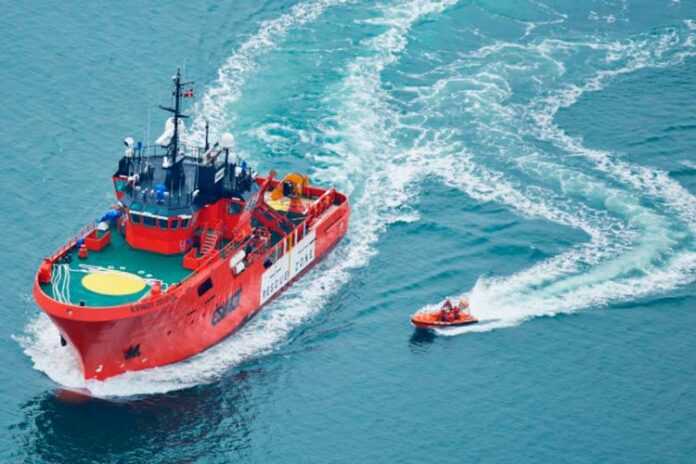
ESVAGT and TotalEnergies have closed several contracts as part of the marine spread for the Danish part of the North Sea.

The agreements involve the overall safety emergency response plus transport and transfer of goods and personnel and is based on a re-thinking of the operational structure. This is the reason why the fleet will be made up of several multi-functional vessels. In addition to safety, the agreements also focus on reducing the overall energy usage and lowering emissions.

The underlying contracts include ESVAGT Dana, a combined “walk to work” (W2W) and Emergency Response and Rescue Vessel (ERRV); two rebuild PX121 multi-functional vessels that will combine transport and ERRV; plus two ESVAGT “group 2” ERRV vessels. All have been committed on long term contracts. Additionally, TotalEnergies has extended the current contracts for three ESVAGT “group 3” ERRV vessels for different time scopes to, among other things, contribute to the Tyra project.

The new agreement is rooted in ESVAGT’s strong safety culture and years of experience making the Sea a safe workspace. At the same time, it draws on the competencies from the green transition that the shipping company started more than 10 years ago in offshore wind, where ESVAGT is a market leader.

Søren Karas, Chief Strategy and Commercial Officer in ESVAGT, says:

”ESVAGT’s ambition is to be a market leader in offshore wind and help our oil and gas customers with their transformation. We are proud to be able to close these significant contracts with TotalEnergies and see it as a result of our great partnership and the work that ESVAGT has put in over the years to secure a safe and good working environment at sea for the many Danish offshore workers.”

Rasmus Rozentals, Head of Logistics & Support to Operations, TotalEnergies, says:

“Our collaboration with ESVAGT in the Danish part of the North Sea dates back more than 40 years, and we see them as an innovative and good partner for our efforts to deliver our production in the safest manner possible. Therefore we are very happy to have finalized this deal.”

Kristian Ole Jakobsen, Deputy Chief Executive Officer in ESVAGT, adds:

”These contracts are a testament of ESVAGT’s position in Denmark and will create jobs for more than 160 sailors.”

Iridium announces partnership with Canadian Coast Guard

0

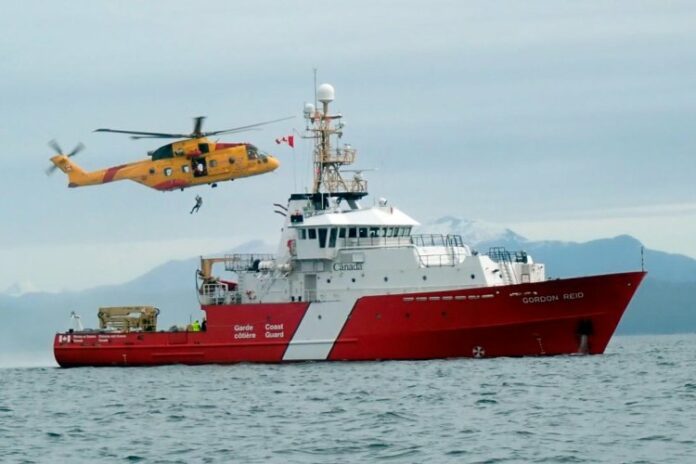
Iridium Communications Inc. has announced that the Canadian Coast Guard has adopted Iridium Certus® connectivity with support from Iridium partner MetOcean Telematics. 

The Coast Guard deployed dozens of Iridium Certus™ Thales VesseLINK™ 700 terminals on its vessels, including icebreakers, to contribute to reliable internet connectivity as crew members deliver programs and services to ensure the safety of mariners in Canadian waters and protect Canada’s marine environment. Iridium Certus delivers weather-resilient and completely global coverage, ensuring dependable connectivity in the high Arctic where the Coast Guard serves.

The Canadian Coast Guard responds to marine search and rescue and environmental incidents, provides icebreaking and aids to navigation services, and ensures waterways are safe and accessible for business year-round including in the Arctic during the operational season from June to November. While on duty in the high Arctic, the Iridium® network supports Coast Guard ships’ and crew members’ ability to stay in touch with headquarters. Iridium Certus connectivity also supports the Coast Guard’s general safety with access to navigational data and weather reports, which is a large improvement from historical solutions.

Mario Pelletier, Commissioner of the Canadian Coast Guard, says:

“Reliable internet connectivity onboard our vessels helps contribute to our crew members’ well-being and ensures that our crews are able to carry out the Canadian Coast Guard’s services to protect mariners and the marine environment. Having a support network to ensure we never lose that vital connection with our shore-based personnel and services is vital in the Arctic.”

Matt Desch, CEO, Iridium, says:

“The Canadian Coast Guard provides essential services that keep things moving safely in the Arctic waterways all year round. Iridium is proud to support the Coast Guard’s initiatives by enabling them to stay connected no matter how far north or remote their duty takes them.”

Tony Chedrawy, CEO, MetOcean Telematics, says:

“MetOcean is pleased to support the communication efforts of the Canadian Coast Guard.  Providing its members with 24/7 real-time secure voice, data, and crew communications services and support. The requirements of Coast Guard personnel while deployed in the Arctic are immeasurable, as they are dedicated to maintaining the safety of mariners as well as protecting the marine environment, within the high Arctic. MetOcean is committed to ensure that Coast Guard personnel are always connected with their command stations.”