-6.7 C
New York
Home Blog Page 570

Siemens Gamesa to double offshore blade facility

0

Siemens Gamesa will expand its successful offshore blade factory in Hull, England by 41,600 square meters, more than doubling the size of the manufacturing facilities. The expansion represents an investment of £186 million and is planned to be completed in 2023.

Manufacturing of next-generation offshore wind turbine blades will be enabled at the largest offshore wind manufacturing facility in the UK. It will grow to 77,600 square meters and add 200 additional direct jobs to the approximately 1,000 person-workforce already in place.

Marc Becker, CEO of the Siemens Gamesa Offshore Business Unit, says:

“Since our offshore blade factory opened in Hull in 2016, Siemens Gamesa has proudly served as the catalyst for the powerful growth the area has seen. The rapid development of the offshore wind industry – and continued, strong, long-term support provided by the UK government for offshore wind – has enabled us to power ahead with confidence when making these plans. We’re committed to unlocking the potential of wind energy around the globe, with solutions from Hull playing a vital role.

“Siemens Gamesa continues to be the leading supplier of offshore wind turbine technology in the world’s leading offshore wind market, the UK. Through safe, efficient, and reliable manufacturing, over 1,500 blades from Hull have been delivered to customers worldwide. We’re very much looking forward to adding to this capacity in the future.”

Manufacturing of other offshore wind turbine blade types already in the Siemens Gamesa Hull factory pipeline will continue while the expansion is constructed. In total, Siemens Gamesa has an offshore wind power order backlog of €9.4 billion as announced during its Q3 FY21 results presentation on July 30, 2021.

Clark MacFarlane, Managing Director of Siemens Gamesa UK said:

“The UK Government has provided strong and consistent support for offshore wind, having committed to a further 30 GW installed this decade, three times the current installed capacity. This underlines the commitment the UK Government has made since the Offshore Sector Deal was unveiled in early 2019.” 

ABP invests in Port of Newport after 15-year customer lease extension

0

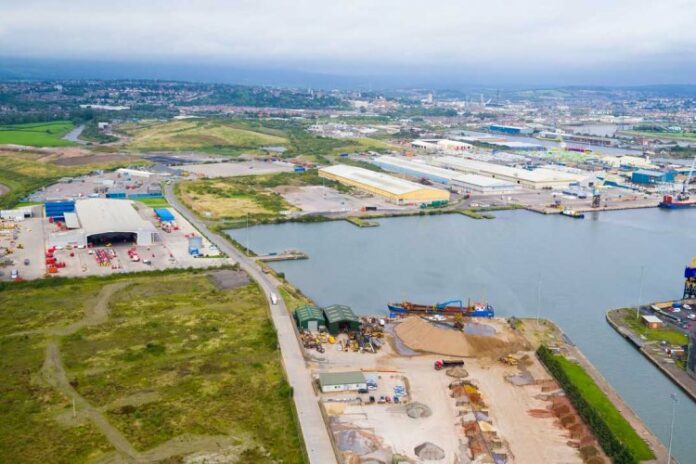
Associated British Ports (ABP) has announced a new contract extension with Asset VRS, which is a division of Hill & Smith Ltd. Asset VRS manufactures and hires temporary road barriers throughout the UK and has been a customer at the Port of Newport for 12 years.

Asset VRS has operated from South Wales for over 20 years and will now export product to Australia and New Zealand from its storage depot on Tom Lewis Way at the port.

Backed by substantial ABP investment into its facilities at the Port of Newport, Asset VRS has increased its yard capacity from 6.52 acres to 13.41 acres, with the development of a new workshop and offices. The lease extension the parties have just signed will secure the business on the port for the next 15 years.

Asset VRS General Manager, Peter Flavell, said:

“The Company currently employs 20 personnel directly at its Storage and Maintenance Depot on the ABP Docks site and contracts more than 20 companies in South Wales with an annual spend exceeding £3m.

“Increased logistical, manufacturing and assembly activity over the past 5 years has doubled its numbers of direct employees and an Apprentice recruitment programme is under review for 2022.

“Our commitment to the South Wales economy is absolute and our partnership with ABP forms a strong bond in this regard.”

Speaking about the partnership, Helen Thomas, Head of Property, Wales & Short Sea Ports, said:

“We are delighted that Hill & Smith Ltd have signed a new lease extension at Newport, and that we are able to help accommodate the growth of their business. We look forward to continuing the hard work both teams have accomplished once the work has been completed next year.”

The project will be delivered by ABP and forms part of a strategy of developing its industrial land bank, to provide a high-quality property offer to the regional and national market, helping support customer growth.

Prysmian announces delivery of the world’s most advanced cable-laying vessel

0

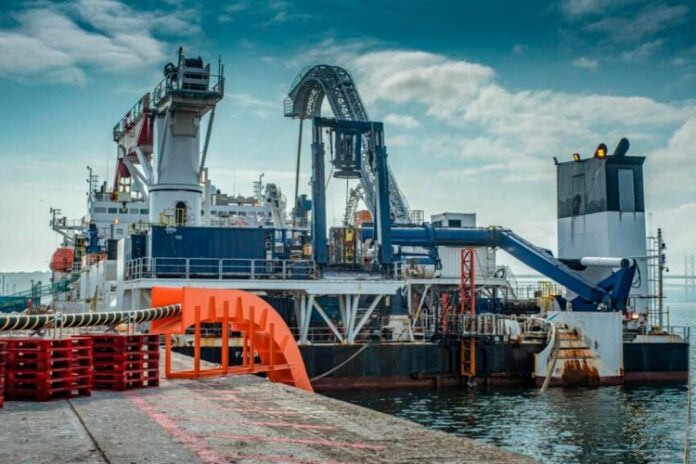
Prysmian Group announces the delivery of the record-breaking vessel Leonardo da Vinci. A unique asset to be added to the existing Group’s state-of-the-art vessel fleet, Leonardo da Vinci will allow more efficient and sustainable project execution for the development of smarter and greener power grids worldwide to support the energy transition.
 
Valerio Battista, CEO, Prysmian Group, stated:

“Leonardo da Vinci is the most efficient cable layer in the world and from now onwards it will support the Group’s long-term growth in the submarine cable installation business. It will be a game changer in strengthening our leadership in the interconnection and offshore wind farm markets.”

The first mission assigned to the Leonardo da Vinci vessel is the installation of the Viking Link submarine cable connection between the UK and Denmark, the world’s longest power interconnection. The vessel has just arrived at the Arco Felice plant — one of Prysmian’s four centers of excellence for the production of submarine cables — in order to load the cable to be installed.

Later in the year, it will be fully dedicated to the execution of other important projects such as the submarine power interconnection between the Spanish islands Lanzarote and Fuerteventura and the Saint Nazaire offshore wind farm in France. The official launching ceremony will take place by Q2 2022 so as to demonstrate Leonardo da Vinci’s superior performances and cable installation capabilities, supported by a solid projects’ execution track record.

Built by the Vard Group — one of the world leaders in the construction of specialized vessels for the offshore market, and a subsidiary of Fincantieri since January 2013 —, with a length of approximately 170 m and a breadth of about 34 m, Leonardo da Vinci offers a high degree of project versatility thanks to advanced features such as: deep water installation capabilities for depths of more than 3,000 m also thanks to a new generation cable technology armoured with lighter materials; maximum speed slight above 16 knots; 2 carousels of 7,000 and 10,000 tonnes, which ensure the highest carousel capacity in the market, enabling a reduced transportation time from the factory to the site, for an overall improved project efficiency; two independent laying lines in order to increase operative flexibility; bollard pull in excess of 180 tonnes conferring the capability to perform complex installation operations and supporting a variety of burial tools. In addition, the vessel is equipped with state-of-the-art DP3 positioning and seakeeping systems. All cable handling and installation equipment has been designed by Prysmian.

The high cable load capacity and navigation speed of Leonardo da Vinci also allow the number of cable installation campaigns of any project to be significantly reduced. The lower number of transits and the reduced transit time needed thus enable an overall decrease in CO2 emissions and a reduction in fuel consumption of approximately 40% compared to a traditional cable-laying vessel.

Leonardo da Vinci is a cutting-edge vessel also in terms of sustainable performance as it ensures reduced environmental footprint: over 80% of its lighting fittings consists of low consumption LEDs, which means a cut of the emissions produced by the generators. Moreover, it is powered by the most efficient and greenest engines that shrink by 85% the emissions of NOx and enable the vessel to be compliant with the most stringent international environmental requirements.
 

Drone helps researchers find fresh water in the sea

0

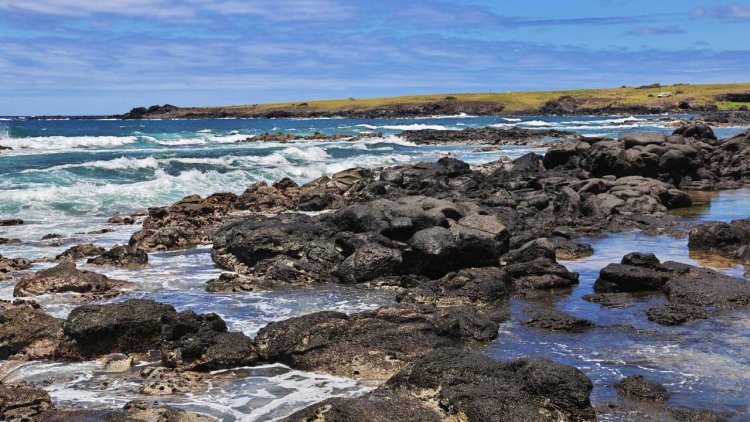
While surrounded by a vast ocean, fresh water is a scarce commodity on Rapa Nui, as the island is known to its native inhabitants. No rivers or streams cross its surface, and it sports only three small crater lakes that can dry up during periodic droughts.

Due to a quirk of geology, rainwater immediately sinks down through the porous bedrock, where it feeds an underground aquifer, explained Binghamton University’s Robert DiNapoli, a postdoctoral research associate in environmental studies and anthropology. That freshwater emerges at spots on the coastline known as coastal seeps.

DiNapoli said:

“At some of these locations on the shoreline, there is so much water coming out (from the seeps) that it’s basically fresh. It’s somewhat salty, but not unpalatably salty. It’s just not the best-tasting water, basically.”

DiNapoli, Professor of Anthropology and Environmental Studies Carl Lipo, Director of the Geophysics and Remote Sensing Laboratory Timothy De Smet and Terry Hunt of the University of Arizona recently demonstrated the effectiveness of thermal imaging drones in detecting the location of these coastal seeps. The results of their pilot project, “Thermal imaging shows submarine groundwater discharge plumes associated with ancient settlements on Rapa Nui (Easter Island, Chile),” was recently published in Remote Sensing.

It’s not possible to use satellite imagery to identify freshwater sources on Rapa Nui because the pixel sizes are too large to register the coastal seeps in any detail, DiNapoli explained. A drone, on the other hand, flies at lower altitudes and can gather high-resolution images.

Thermal imaging drones had previously been used in Hawai’i to investigate coastal seeps there. Lipo and DiNapoli, however, didn’t know if this technology would work in Rapa Nui, where the freshwater plumes were much smaller in scale. As they discovered in their pilot project, it did.
Before thermal imaging cameras, researchers literally needed to wade out into the water and measure the temperature and salinity by hand.

DiNapoli said:

“That’s really labor-intensive because you need to walk and then every 10 meters or so, you need to take a measurement.”

Not only is the drone system faster, but it provides a more substantial picture of the larger water feature, allowing researchers to see its characteristics as a whole. There is a downside, however: the heat reflecting off metal roofs and a local bonfire skewed the temperature readings on one of the flights.

Certain objects have characteristics that confuse the thermal camera, and thus their actual temperature isn’t recorded, DiNapoli explained. A metal roof in the sun, for example, tends to be quite hot, but the thermal cameras register it as cold because of the reflected radiation.

When the drone takes off, it begins calibrating and determining the area’s high and low temperatures. Anomalies such as fires throw off that calibration.

He said:

“It still gets us usable images in the sense that you can see relative differences in temperature, but the absolute temperature it’s giving us is wildly off, so it says things are much colder or much hotter than they actually are.”

In their research, Lipo and DiNapoli explore the way that ancient communities used these seeps, on an island where droughts are common.

In addition to collecting rainwater, the Rapa Nui people also constructed basin-type wells called puna that intercept the stream from the aquifer before it reaches the sea. They also built underwater dams in the ocean to prevent the seawater from mixing with the fresh water at the seep sites, although these structures have long since crumbled away.

As the first European visitors noted, the people also drank directly from the ocean at the seeps. The island’s current inhabitants still pump water directly from these freshwater spots in the sea and use it to water crops and provide water for their livestock.

The study’s results are the jumping off point for another research project, funded by a National Geographic grant, to identify the location of coastal seeps throughout the island. The thermal imaging drone will play a major role in collecting the data.

One of the questions they hope to answer is how coastal seeps respond to lengthy droughts. During their last research trip, the island was experiencing a multi-year dry spell, which dried up two of the crater lakes and sunk the third to low levels.

DiNapoli said:

“But we identified these coastal seeps all around the island. That suggests that when the island experiences these drought events, the seeps are one of the last water sources to be affected by it.”

One potential explanation: When the water goes underground after heavy rain, it likely stays in the aquifer for several years before discharging into the ocean. In their upcoming field work, DiNapoli and Lipo will try to confirm this, and determine how long it takes rainwater to make its underground journey to the sea.

Valenciaport calls for tenders for the 2030 Strategic Plan

0

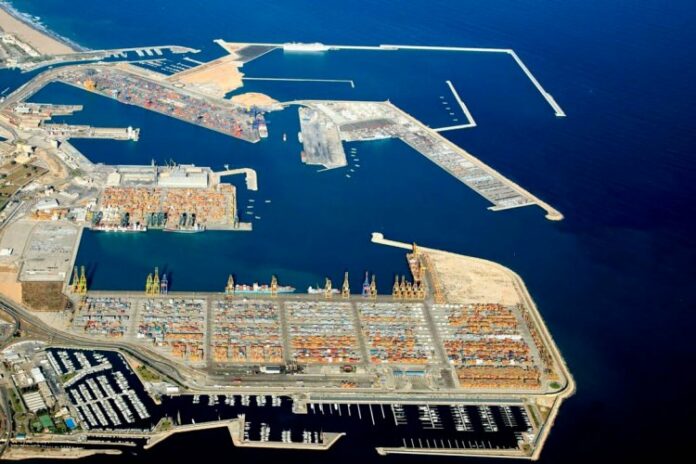
The Port Authority of Valencia (PAV) has put out to tender the technical assistance for the preparation of the Valenciaport 2030 Strategic Plan which will have five axes: 

  1. new business opportunities and technological development;
  2. energy transition, decarbonisation and the fight against climate change; 
  3. digital transformation; 
  4. innovation; 
  5. and the Port-City relationship. 

This is a key document for defining and setting Valenciaport’s objectives for the coming years to strengthen its position as a leading port hub in the Mediterranean.

The Valenciaport Strategic Plan, with a 2030 horizon, will be completed with a longer-term vision up to 2050 and will foresee a possible mid-term review in 2025. Furthermore, it must include a joint strategic proposal for Valenciaport and for each of the ports dependent on the PAV, i.e. the Port of Valencia, the Port of Sagunto and the Port of Gandia, taking into account the singularities and roles of each of them as commercial port, logistic and industrial port and city port. This Plan will be aligned with the Sustainable Development Goals of the United Nations and the Green Pact of the European Union and with the framework of the port system being designed by Puertos del Estado and in which Valenciaport is actively participating.

In recent years, important technological, economic and social changes have taken place which are influencing maritime-port activity. Geopolitical changes and changes in world trade patterns, the climate crisis that is leading us to a change of energy model, technological advances arising from digitisation and Industry 4.0, shipping company alliance policies and their vertical integration, greater public demands for participation in the public decisions that affect them, are some examples of changes in the scenarios in which we find ourselves and to which we must respond in the coming years.

In this context, a new strategic reflection is needed to redefine the mission and vision of the PAV as a whole and of each of its ports in particular, with a horizon up to 2030, in order to face these challenges and have a renewed roadmap to ensure the competitiveness of its facilities and services and their contribution to prosperity and social welfare.

This Plan, which was already put out to tender but was not awarded because no proposal passed the technical level, will include a new point to be assessed on traffic forecasts, including the evolution of containers, for the three ports managed by the PAV. The base budget for the tender is 713,565 euros including VAT and the deadline for submitting tenders will end in October.

ESVAGT and Ulstein enter into a contract for the conversion project

0

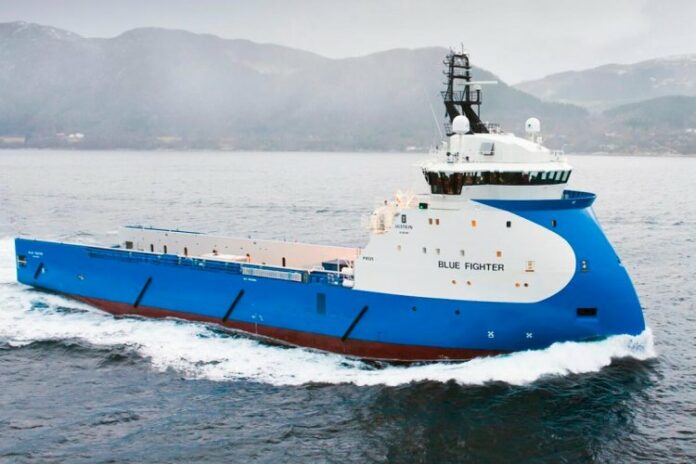
The two Platform Supply Vessels ‘Hermit Fighter’ and ‘Hermit Prosper’ will undergo conversion to Emergency Response Rescue Vessels (ERRV) and battery power at Ulstein Verft. The green transformation to hybrid propulsion will be conducted by Ulstein Power & Control.

The vessels were originally built at Ulstein Verft and are now returning to the construction yard to be upgraded to more environmentally friendly power solutions, and to a new life as ERRV vessels. The engineering work at Ulstein has commenced, and the vessels will arrive at the shipyard in October 2021.

The scope of work by Ulstein includes project management, procurement, engineering, production and power & control deliveries. A battery deck house with grid support unit for hybrid power will be prepared, the methanol tanks will be rebuilt to carry liquids under the OSV Chemical Code, and on the main deck new prefabricated deck houses will be installed accommodating rescue zones, and new ESVAGT type Fast Rescue Boats.

DCEO of ESVAGT Kristian Ole Jakobsen says:

“This is indeed highly important projects for ESVAGT, and we therefore appreciate the contracts with Ulstein Verft and Ulstein Power & Control for optimization of functionalities and improved energy and emission efficiencies of these high-quality X-BOW vessels.”

Rolf Ottar Rovde, sales manager at Ulstein Power & Control. Rovde continues:

“This is an important contract for Ulstein. We will prepare these vessels to a greener propulsion setup which include battery powering. These upgrades will reduce fuel consumption and emissions and prolong the lifetime of the diesel engines.”

“Ulstein Power & Control delivered the power and automation solutions to the vessels as newbuilds. Our delivery now includes the power and automation system for the battery package, frequency converter, drives and switchboard reconstruction as well as installation and commissioning.”

Both vessels are scheduled to stay at Ulstein Verft for 6 weeks starting in October. The final installation and commissioning of the hybrid system will be done during spring 2022 and in line with the vessels’ operational schedule.

Ove Dimmen, sales manager at Ulstein Verft, says:

“We are looking forward to modifying two competitive PSVs into suitable and fuel-efficient ERRV vessels. The timing suits the yard’s construction program and the project supports our strategy of providing sustainable solutions to our customers. This “mid-life” upgrade of vessel systems is an important milestone in order to make the existing fleet more fuel efficient.”

CEO Ulstein Group, Cathrine Kristiseter Marti, comments:

“We are delighted to work with ESVAGT again. This project shows that Ulstein can be a long-term partner working to ensure future competitiveness and sustainable growth for our customers,” concludes the CEO.

The ‘Hermit Fighter’ and ‘Hermit Prosper’, yard numbers 291 and 294 from Ulstein Verft, were both delivered in 2012. They are the two first vessels of the successful PX121 design from Ulstein Design & Solutions AS.

TSA orders Damen Transshipment Crane Barge for handling Caresize vessels

0

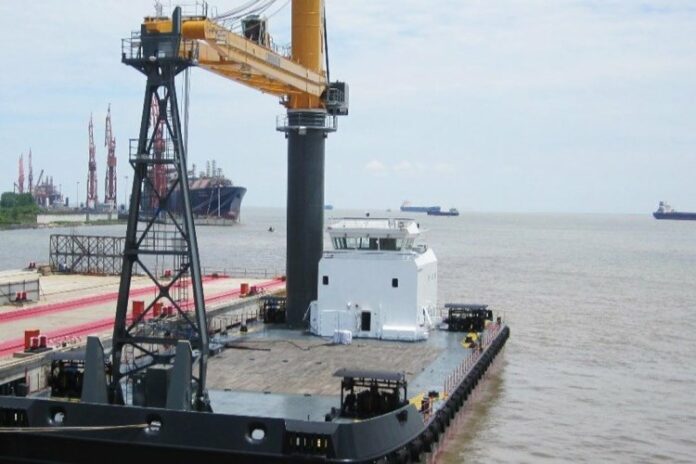
Damen has received an order for a Transshipment Crane Barge from the Australian company Transhipment Services Australia (TSA). As it is able to supply the new Crane Barge 6324 directly from stock, Damen will fulfil the order in a period of only four weeks.

TSA has been contracted by Metro Mining to provide transshipment services for its Bauxite Hills Project located along the Skardon River on Cape York Peninsula, north of Weipa in Far North Queensland. With a presence in three sites across Australia, TSA will operate the Damen Floating Crane Barge and has a fleet of five tugs and six dumb barges that have been successfully transhipping for Metro for four years. The company has also operated Damen tugs and Shoalbusters in the past.

Sjoerd de Bruin, Damen Sales Manager Asia Pacific, responsible for Australia, New Zealand and the South Pacific, comments:

“We are delighted that we could make this happen and very quickly, in just four weeks from the initial client enquiry to delivery into Australia. Not only are we partly customising the barge during this time, we have also arranged the finance through our Customer Finance Department.”

Mr de Bruin explains:

“Damen was keen to make every effort to support TSA. If we had gone to the external financing options the lead time could take up to sixteen weeks given the summer holiday period, therefore our Customer Finance Department stepped in.

“All the different Damen departments worked together to support our client – Design & Proposal, Finance, Legal and all of our colleagues in Yichang, China. And given the financial arrangements, our Board also had to approve the deal. It is an impressive team effort.”

Joint owner of TSA, Darren Hedley stated that Damen is renowned worldwide for its quality marine fleet, reliable floating cranes and professional service:

“Our previous experience with Damen vessels has always been rewarding and we are all very excited to welcome this new vessel into the fleet and to commence loading Capesize ships in October of this year.”

At 63 x 24 metres, the Damen Crane Barge is equipped with a grab with a 15 cubic metre capacity and TSA is expecting to load at an impressive rate of 16,000 to 20,000 tonnes per day.

Once the client- and class requirements are completed, the new Crane Barge will be transported from Shanghai to Australia by an oceangoing tug by one of TSA’s contractors. Damen is also offering an extended warranty to TSA and support from the Damen Brisbane Service Hub. On the day of the vessel’s arrival, a Service Engineer will be present and support TSA with all the documentation and paperwork, carry out the technical handover and provide maintenance training.

TSA’s new Damen Crane Barge 6324 is expected to be operational in Q4 2021.

Metro Mining Limited has earmarked an expansion strategy to ultimately achieve an annual production of 6 million tonnes. A key element of this was for Metro to have the capability to load Capesize vessels. Converting to larger Capesize vessels will reduce the unit freight rates.

Opinion: Reefer container freight rates to outgun dry cargo rates in 2022

0

Reefer container freight rates have risen sharply through 2021, but in contrast to dry cargo rates, are forecast to rise further in 2022, driven by catch up on North-South routes, according to Drewry’s recently published Reefer Shipping Annual Review and Forecast 2021/22 report.

Drewry’s Global Reefer Container Freight Rate Index, a weighted average of rates across the top 15 reefer intensive deepsea trade routes, rose 32% over the year to 2Q21 and by the end of 3Q21 these gains are expected to reach as much as 50% (see chart). But these advances are dwarfed by the recent surge in dry container freight rates which have seen average container carrier unit revenues more than double over the same period.

The resurgence in reefer freight rates has not been uniform across all trades. Pricing recovery has been particularly strong on the main East-West routes, where vessel capacity conditions have been noticeably tight. But North-South trades have generally seen less price inflation, particularly on export routes from WCSA, Central America and Southern Africa.

Drewry’s head of reefer shipping research Philip Gray said:

“In contrast to dry container freight rates which are expected to decline in 2022 as trade conditions normalise, reefer container freight rates are forecast to continue rising as price inflation feeds into North-South routes when long term contract rates are renewed. Most reefer cargo on these trades moves on long term contracts.”

The key driver of reefer freight rate inflation has been capacity related, as perishables shippers have competed with higher paying dry freight BCOs for scarce containership slots, despite ample reefer plug capacity provision. Meanwhile, continued disruption across container supply chains has led to acute shortages of reefer container equipment, already challenged by the particularly imbalanced nature of reefer trades.

Gray added:

“We believe that these conditions are short term and will self-correct as trade normalises from mid-2022. However, we expect reefer container equipment availability to remain an issue for certain trades during their peak seasons, as the global fleet is not expected to keep pace with rising cargo demand, despite record output of newbuild containers.”

These conditions have provided short term reprieve to specialised reefer vessels, as some BCOs have returned to the mode seeking relief from congested container supply chains. But despite these developments Drewry estimates that the specialised reefer vessel’s share of the perishables trade fell to 12% in 2020 and is expected to decline further into single figures over the next few years.

Hence, despite a 0.4% decline in global seaborne perishables trade in 2020 to 132 million tonnes, containership reefer liftings advanced 0.3% to 5.4 million teu. Further modal share gains and buoyant cargo demand will see containerised reefer traffic expand at a faster pace than dry cargo trade from 2022.

The contraction in overall seaborne perishables trade in 2020 was much milder than for dry cargo, demonstrating the stronger resilience of reefer trades to economic shock. The trade was particularly impacted by a shuttered hospitality sector which reduced demand for deciduous fruit, fresh vegetables and frozen potatoes, while Covid-19 containment measures cut crop production and fish catches. Meanwhile, an outbreak of fusarium TR4 disease in the Philippines weakened growth in banana trades. But cargo demand was supported by a booming pork trade, owing to African Swine Fever driven imports into China.

Seaborne reefer traffic picked up through 1H21, expanding 4.8% YoY, led by meat, citrus and exotics trades but is not expected to expand at the same pace as dry cargo through the remainder of the year as it is not recovering from as deep a contraction in 2020.

Gray concluded:

“A combination of buoyant cargo growth and tight capacity conditions will continue to support reefer container freight rates and specialised vessel charter earnings. However, charter rates for larger reefer vessels that have been in particularly high demand of late are expected to wane as capacity conditions ease.”

NnG’s spare export cable delivered safely to the Port of Rosyth

0

A 100 ton spare export cable for the Neart na Gaoithe (NnG) Offshore Wind Farm has arrived at the Port of Rosyth where it will be stored for a minimum five years on a purpose-built cable carousel.

The Port of Rosyth, owned by Forth Ports, will provide secure quayside storage and warehousing for all the spare onshore and offshore export cables and cable accessories required for the operational phase of the NnG Windfarm.

The port will facilitate the storage of this equipment initially during the construction period and potentially for the 25 year operation life of the Windfarm.

NnG is now using three of the Scottish port operator’s facilities for construction of the project with its marine hub based at the Port of Dundee and the Port of Leith operating as the project’s marine logistics base for pile casings.

NnG, jointly owned by EDF Renewables and ESB, will supply enough low carbon electricity for around 375,000* homes and has a capacity of c. 450MW of low carbon energy and will offset over 400,000 tonnes of Co2 emissions each year

Matthias Haag, NnG Project Director, said:

“After a competitive tendering process we are pleased to announce the Port of Rosyth as our storage facility for our onshore and inter array cables.

“The Port of Rosyth will provide secure warehousing and quayside storage within close proximity to the site of the wind farm and this partnership with Forth Ports is further evidence that NnG will use the Scottish supply chain wherever possible.

“Since starting offshore construction of NnG in August last year the Port of Leith has been operating as our marine logistics base for the pile casings and the Port of Dundee is where we will assemble all 54 turbines before they are installed on site. We’re really excited that the Port of Rosyth will also now have a long-term role in the project.”

Massimo Galletta, Prysmian Group’s Project Director for NnG, said:

“We are very proud of being part of this strategic project, proving Prysmian Group’s state-of-the-art cable technology, know-how and project execution expertise to support the growing renewable energy industry.”

Derek Knox, Senior Port Manager at Port of Rosyth, said:

“The NnG project is a major offshore renewables project for Scotland and we are pleased that the Port of Rosyth is being used for the next 25 years as secure long-term quayside storage and warehousing. Rosyth will also provide short term construction project support for NnG. Around our business, we are also playing a key role in supporting the NnG project at our ports in Leith and in Dundee.”

Doosan Heavy to build four storage tanks for Dangjin LNG Terminal Phase 1 Project

0

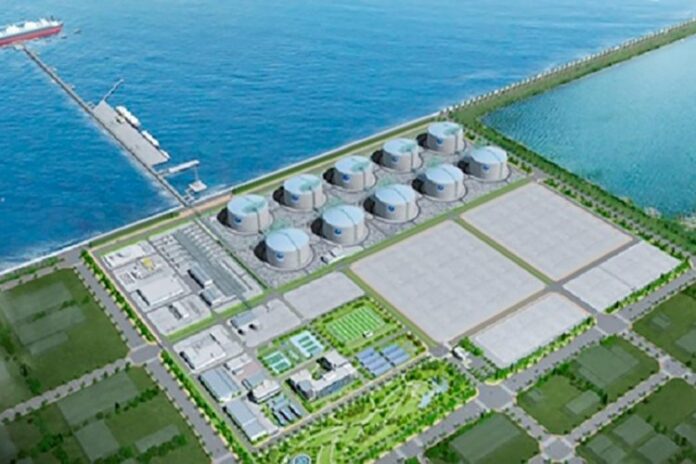
Doosan Heavy Industries & Construction announced on July 30th that it had signed a contract with Korea Gas Corporation to build four LNG storage tanks for the Dangjin LNG Terminal Phase 1 project. The contract is valued to be approximately 610 billion won.

The project, which is being pursued to promote a stable supply of LNG in South Korea, involves constructing a LNG terminal on the 890,000㎡-sized grounds of the Seokmun Industrial Complex in Dangjin of South Chungcheong Province. The storage tanks are to be built above-ground and there will be a total of four 270,000㎘ LNG tanks, the largest-to-date in South Korea, and auxiliary equipment such as cryogenic pumps, being supplied for the project. Construction will commence this coming August and is slated to be completed by December 2025.

Doosan Heavy formed a consortium with Kuil Construction, a local construction company, to participate in the competitive bid, from which they ultimately emerged as the winner. Doosan will be shouldering 90% of the consortium obligations, while Kuil Construction will be taking on 10%.

Inwon Park, CEO of Doosan Heavy’s Plant EPC Business Group, said:

“According to the ‘14th Long-Term Natural Gas Supply & Demand Plan,’ South Korea’s LNG demand is forecast to rise from 46 million tons in 2021 to 53 million tons by 2034. As we expect that the demand for LNG storage tanks will also rise accordingly, we will endeavor to win more orders in this area.”

Starting with the order for the Incheon LNG terminal storage tank units 11 and 12 which the company won in 1997, Doosan Heavy has successively won orders for a total of nine LNG storage tanks, including the order for Pyeongtaek LNG storage tank units 18 and 19 which was won in 2007, the Tongyeong LNG storage tank units 15 and 16 and the Samcheok LNG storage tank units 5 to 7.