-0.2 C
New York
Home Blog Page 561

PGS completes another successful GeoStreamer X Program

0

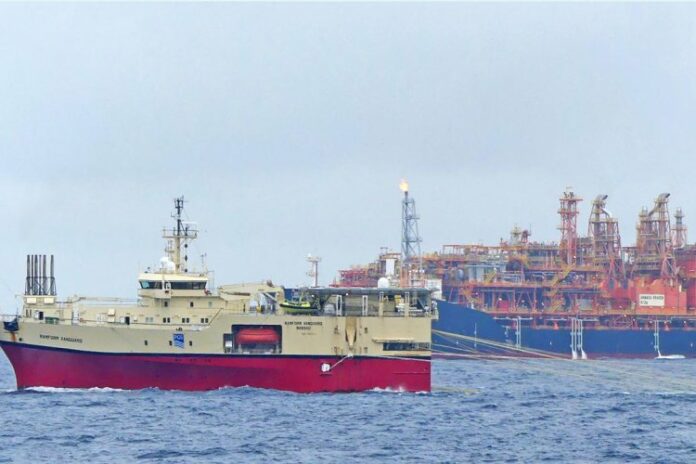
Ramform Vanguard acquired the MultiClient survey, covering two new azimuths of 200 sq. km, in July 2021. First GeoStreamer X data will be available Q2 2022.

GeoStreamer X is an advanced high-density multi-azimuth solution that can be complementary to existing GeoStreamer coverage. It provides high-end nearfield exploration data to resolve imaging challenges.

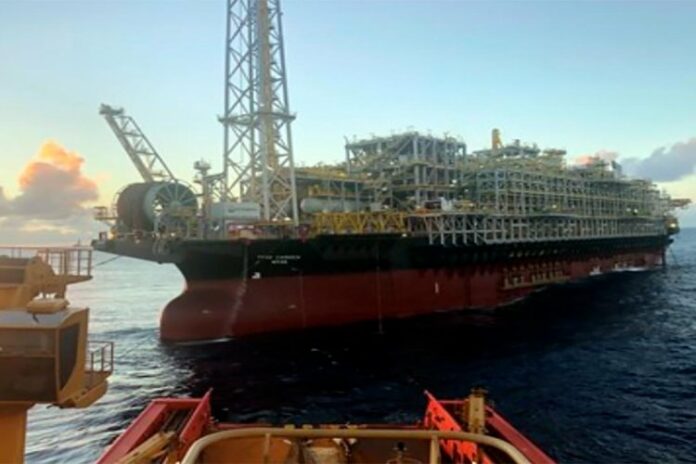
The Kraken field lies in blocks 9/2b and 9/2c within the P1575 license. The reservoir is oil-bearing Paleocene Heimdal sands. Kraken North, Central, and South are produced using an FPSO. EnQuest is the operator and owns a 70.5% interest in the asset. The remaining stake is co-owned by Cairn Energy.

The new GeoStreamer X survey was prefunded by the P1575 group, with a clear goal of gaining a new understanding of the block, in order to fully evaluate the development potential of a new western area and nearfield opportunities (ILX).

Seismic acquisition around the Kraken FPSO was planned and executed in close cooperation between PGS and the operator. Mark Johnson Geophysicist and Data Lead at EnQuest commented:

“There was excellent communication with the Kraken FPSO throughout the execution of the project which ensures smooth permitting of the seismic vessel together with other simultaneous operations. I very much appreciate the coordinated effort of the PGS crew and the Reps aboard the FPSO and the seismic vessels for their overall planning efficiency and especially in the delivery of the close passes.”

Sónia Pereira, PGS Vice President Data Sales Europe, said:

“With GeoStreamer X data, both exploration and production teams achieve better illumination in their targeted areas, which enables much-improved fault definition and saves drill time with accurate targeted positioning. A key part of this project was to see any nearfield potential that could be explored and tied back to the Kraken field.”

MOL and MELTIN sign MoU to introduce remotely controlled robots in ocean shipping business

0

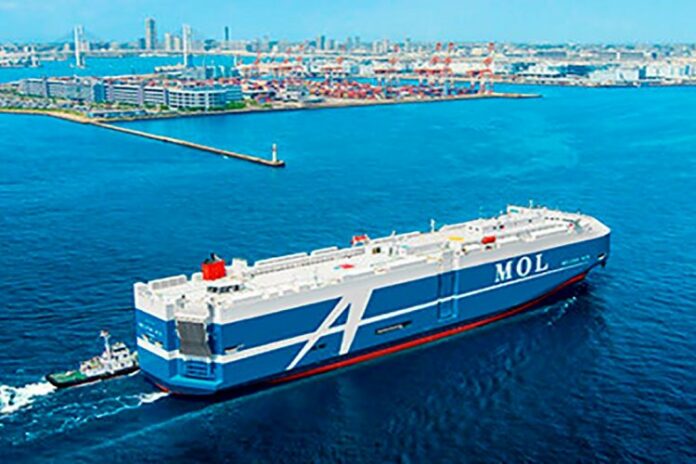
Mitsui O.S.K. Lines, Ltd.  and MELTIN MMI Co., Ltd. have announced the signing of memorandum of understanding (MoU) for installation of remotely controlled robots (Note 1) in ocean shipping operations, including vessels, associated businesses, and offshore businesses.

The objective of the MoU is a joint study by MOL and MELTIN to introduce a MELTIN’s remote-control robotic technology for adoption in MOL’s ocean shipping-related operations.

Issues facing the shipping business include not only prevention of marine accidents and ensuring safe operation, but also improving transport quality to more effectively meet customer needs. Therefore, it is becoming more and more important for the industry to take a mid- and long-term viewpoint in finding solutions by adopting new technologies such as autonomous navigation and remote control. The introduction of MELTIN’s remote-control robotic technology, being developed with the assumption that it will be used in areas such as dangerous, time-consuming work or duties done in extremely high and low-temperature environments, can also help reduce the workload on seafarers, particularly in tasks that present challenges to hands-on operation.

MOL and MELTIN have repeatedly studied the possibility of addressing a wide variety of issues in the ocean shipping industry by introducing MELTIN’s technology. In addition, major advances have been made in the high-speed onboard telecommunication environment in recent years, so MOL expects synergistic effects by combining improved telecommunication with MELTIN’s remote-control robotic technology. Both companies are committed to building a strategic relationship to introduce MELTIN’s technology and proceed with more detailed and specific studies, which led to the conclusion of the MoU.

The companies will push forward more discussion and action to study details specific to different vessel types and routes for introduction of remotely controlled robots and associated technologies, with an eye toward not only determining the feasibility of introduction and the level of onboard telecommunication technology required at sea, but also implementing Proof of Concept (PoC), which assumes practical use.

Petrobras starts production of FPSO Carioca in Sépia field

0

The platform, a FPSO type (floating production storage and offloading unit of oil and gas), is located approximately 200 km off the coast of the state of Rio de Janeiro, in water depths of 2,200 meters.

The FPSO Carioca, unit chartered from Modec, has the capacity to process up to 180,000 barrels of oil per day and to compress up to 6 million cubic meters of natural gas.

The project foresees the interconnection of seven producing wells and four injection wells to the FPSO. The oil production will be flown out by offloading vessels, while the gas production will be drained through the pre-salt gas pipeline routes. The project also has a system to remove CO2 from the gas produced and to reinject it into the reservoir, reducing the release of carbon dioxide into the atmosphere and improving its oil recovery.

The Sépia shared reservoir is composed by Sépia and Sépia Leste fields, located in the Transfer of Rights and Concession (BM-S-24) areas, respectively, operated by Petrobras (97.6%), in partnership with Petrogal Brasil S.A. (2.4%).

Port of Tallinn looks to develop a hydrogen hub in Estonia

0

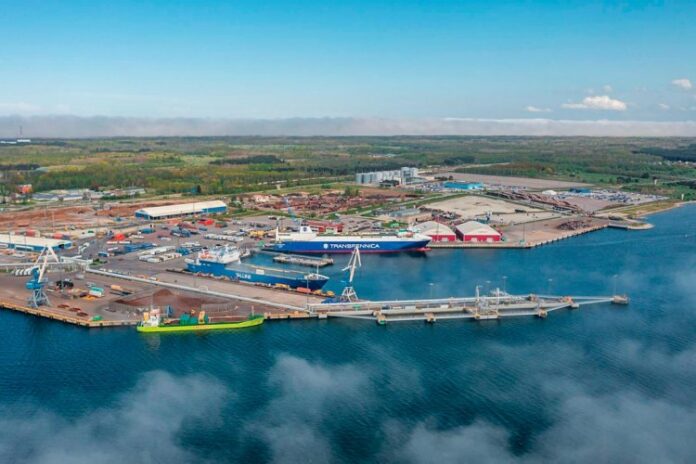
Port of Tallinn has unveiled an ambitious plan to design the hub of the Baltic Sea green infrastructure in Estonia together with the partners, which would contribute to Estonia’s climate neutrality goals and increase the country’s competitiveness. It is also looking for the best ways to convert ferries to hydrogen fuel and to provide hydrogen refuelling capacity in the Old Harbour for cruise ships.

The company plans to focus more and more on creating a green energy ecosystem in the industrial parks of Muuga Harbour and Paldiski South Harbour. 

Margus Vihman, member of the management board and chief commercial officer of Port of Tallinn, said:

“The wind farm service campus could be built in these ports in the future. Also, the plan of building a hydrogen terminal could be attractive for the industries that do not produce energy themselves, but would like to take part in the green revolution and rebuild their production. We are developing an attractive value proposition for both local and international investors.

“The European Green Deal, ambitious climate goals and hydrogen strategy create a very good opportunity to build climate-friendly green infrastructure in Estonia with the support of the European Union. This would contribute to full transformation of the transport sector on the one hand and give a further boost to the renewable energy sector on the other hand, which will provide an incentive to produce green hydrogen, especially in the situations where there is a lot of cheap electricity at the market.”

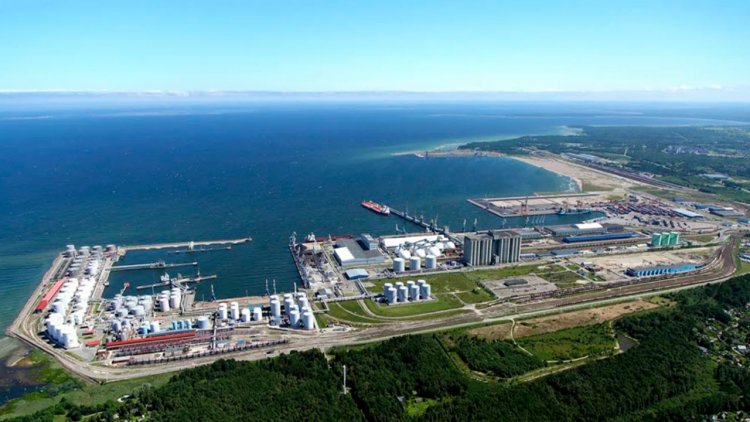
Paldiski South Harbour is ice-free which fits well for the export and import of hydrogen in terms of location. The thematic plan of the Paldiski LNG terminal also envisages the construction of the infrastructure necessary for the transportation of hydrogen. The hydrogen storage facility of 25,000 m3 is planned in cooperation with Alexela. The latter would enable the export and import of hydrogen in the Baltic Sea region, thus allowing the transition of the Estonian economy to clean energy sources. There is still no hydrogen terminal in the area of Gulf of Finland today.

The favourable location also speaks in favour of Muuga Harbour, as well as the fact that Rail Baltic will start there, which will open up several additional business opportunities. According to Port of Tallinn there will be a need for bunkering hydrogen or other green fuels in the east-west corridor of the Baltic Sea in the future, which is suitable for both Muuga and Paldiski South Harbour.

Paldiski South Harbour, with its ice-free and existing port infrastructure, is also very suitable as a service port for offshore wind farms due to its location and there are also opportunities to build the required service campus. With the increase in the share of wind energy in Estonia, the infrastructure would also support the production of green hydrogen in Estonia.

Vihman said:

“We should encourage each other and look for allies. Port of Tallinn is ready to act immediately and step on it. We want Estonia to become the number one hydrogen country in the world. However, in order to make this a reality, we need cooperation between the private and public sectors.” 

In cooperation with the Dutch Embassy and the company & Flux, a study has been conducted in Port of Tallinn on the possibilities and potentiality of using green hydrogen in ports, which revealed that Estonia could be a suitable location as a hub for hydrogen infrastructure in the Baltic Sea. The port has also entered into an agreement with the port of Hamburg with common intentions to work together on the development of the hydrogen infrastructure value chain.

Port of Tallinn is also researching various shore power solutions for cruise ships – including hydrogen electricity generation. The company is considering converting its inter-island ferries to more environmentally friendly fuels and hydrogen is a potentially suitable alternative for this purpose.

BC Ferries announces the names of the newest Island Class ferries

0

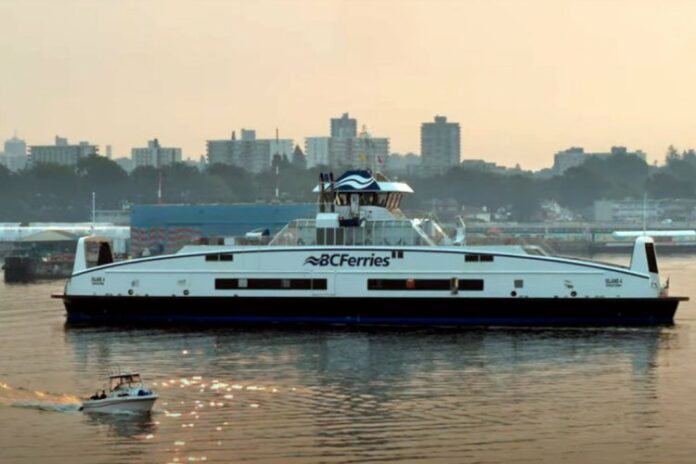
BC Ferries revealed the names of its third and fourth Island Class ferries at a special naming ceremony at Victoria’s Point Hope Maritime. Island Nagalis and Island K’ulut’a are the newest vessels to enter the fleet, allowing two-ship service to begin on the Campbell River – Quadra Island route in 2022.

BC Ferries selected the names following a community engagement process. The names celebrate the important connection to some of the coastal communities the ferries will serve. In both Kwak̓wala and Lik̓wala, two of the Kwakwaka’wakw dialects, Nagalis means “dawn on the land” and K’ulut’a is the name for Porpoise. Today’s ceremony began with a few words from   BC Ferries, representatives from We Wai Kai and Wei Wai Kum nations, and dignitaries, followed by the unveiling of the ships’ names and the christening of the hulls.

In keeping with maritime tradition, BC Ferries selected sponsors for each of the ships. These roles are important – each sponsor bestows the ship with good luck and protection for all those who travel on them. Each ship has a community sponsor and a sponsor from the BC Ferries family. In recognition of her achievement and service with BC Ferries, Fleet Strategic Planning Manager Joanne Doyle christened Island Nagalis along with Lorraine Henderson from Wei Wai Kum First Nation representing the community. June Johnson from We Wai Kai Nation joined BC Ferries’ Crewing Advisor Jennifer Thacker to christen Island K’ulut’a.

BC Ferries is pleased to partner with the First Peoples’ Cultural Council (FPCC) once again to commission original artwork from Indigenous artists for the interior of the Island Class vessels. The art recognizes Indigenous peoples as stewards and original mariners of B.C.’s coastal waterways. FPCC will manage the open call to artists, and facilitate an equitable selection process. Further details will be announced in the fall.

Island Class ferries have the capacity to carry 47 vehicles and up to 400 passengers and crew. They are battery equipped ships designed for future full electric operation. The ships are fitted with hybrid technology that bridges the gap until shore charging infrastructure and funding becomes available in B.C. From the exterior details to the engines, the design of the new vessels reduces underwater radiated noise, lowers emissions and improves customer service.

CSM and Khobar-based Spectrum Group sign strategic joint venture

0

Columbia Shipmanagement has entered into a strategic joint venture with Khobar-based Spectrum Group in a move that will see the Kingdom of Saudi Arabia and the neighbouring Middle East region emerge as one of the most technologically advanced and optimised ship management service centres in the world.

The new company, CSM Saudi Arabia, will be a truly Arabic company operating at the highest international standards with a portfolio of ship management and ancillary services specifically tailored for the Kingdom of Saudi Arabia, United Arab Emirates and other clients in the region.

CSM Saudi Arabia will undertake the immediate management of 35 offshore units and jack-up rigs with more to follow, drawing on an expert team of between 70 and 80 staff taken from both companies. It will focus heavily on local talent, training, and the optimisation of people and processes.

By mirroring the ship and crew management operations currently in play throughout CSM’s network of global offices, CSM Saudi Arabia will allow the Kingdom to leapfrog international technological and environmental advances and place it firmly at the forefront of developments in the shipping and energy sectors.

Mark O’Neil, President and CEO of Columbia Shipmanagement, said the new entity will aim to expand its bespoke services reach within the Kingdom as well as in Abu Dhabi and the other Emirates, with similar operating models, “while always being sympathetic to the individual needs and requirements of the particular Emirate and clients within. CSM is wholly committed to the region.”

Abu Dhabi Maritime Academy (ADMA), a subsidiary of Abu Dhabi Ports, also recently signed a Memorandum of Understanding (MoU) with Columbia Shipmanagement to develop training programmes, as well as the provision of consultancy services focused on the applications of alternative fuels, efficiency enhancement and Artificial Intelligence within maritime operations. 

Hamad Al-Saati, CEO & Chairman of Spectrum Group, said:

“The partnership with CSM is at the heart of our transformation plan for elevating the ship management service delivery in the Kingdom and the region. CSM Saudi Arabia will transfer the most advanced technologies in this field to the Kingdom positioning it as a regional hub, increase job opportunities and enable local talent to employ state of the art technologies for the first time.”

World’s largest floating wind farm built to ABS Class

0

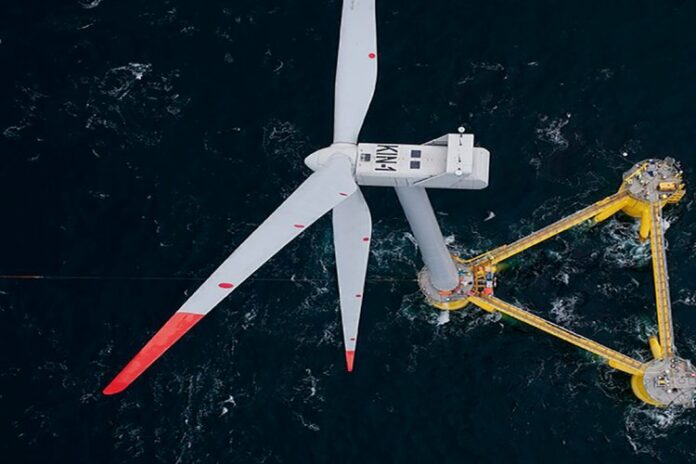
Installation of the world’s largest floating offshore wind farm, the ABS-Classed Kincardine Offshore Wind has been completed.

The 48MW project, approximately 15km off the southeast coast of Aberdeenshire, at water depths ranging between 60m to 80m, is expected to generate up to 218GWh of clean electricity a year, which will be enough to power approximately 55,000 Scottish households.

ABS Class services to the facility include verifying full compliance with the ABS Guide for Building and Classing Floating Offshore Wind Turbines, and cover all phases of the project including design, fabrication, transport and service inspections.  As well as being constructed to ABS Class, each of the five floating turbines is flagged with the Republic of the Marshall Islands (RMI).  ABS worked closely with the RMI to determine applicable IMO requirements and performed reviews as the RMI’s Recognized Organization.

Matthew Tremblay, ABS Senior Vice President, Global Offshore, said:

“ABS is the global leader in the Classification of floating offshore wind, with our Guide used for more than 80MW of floating turbines now installed. As the leading Classification organization for the offshore industry since the very first offshore installations, we can use this extensive experience to support the safe development of the floating offshore wind industry. This exciting project demonstrates the potential of floating turbines and we are confident they will have an increasingly prominent role to play in the development of sustainable energy all over the world.”

The Kincardine floating offshore wind farm is being developed by Kincardine Offshore Wind, a wholly-owned subsidiary of Pilot Offshore Renewables (POR). Cobra Wind, a subsidiary of ACS Group, is responsible for the engineering, design, supply, construction, and commissioning of the Kincardine floating wind farm.

As part of its commitment to the industry, ABS has produced two highly detailed reports into the U.S. offshore wind sector this year. Download copies of the reports, as well as a range of other industry-leading support and guidance from ABS here.

A copy of the ABS Guide for Building and Classing Floating Offshore Wind Turbines can be downloaded here

First VLOC fitted with air cushion completes its first voyage

0

The first VLOC fitted with an air cushion to cut fuel use and emissions has completed its first voyage.

The new technology on the 325,000-dwt VLOC Sea Victoria (built 2021) is part of ambitious plans by charterer Vale and maker Silverstream Technologies to expand the use of the carbon-cutting system.

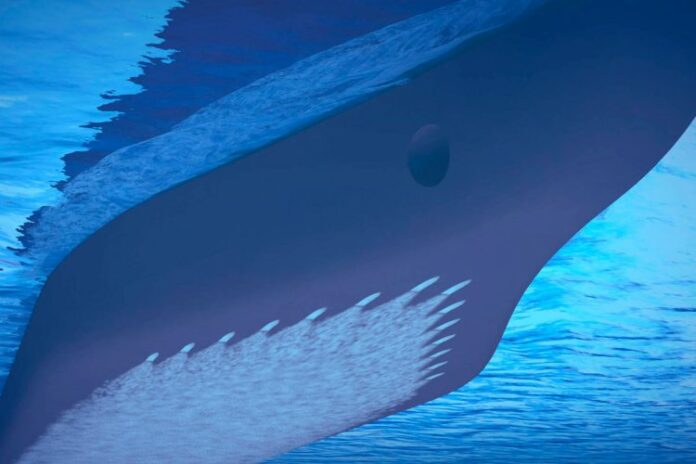
The Silverstream air lubrication system produces a carpet of bubbles to reduce friction between the hull and water, and will be assessed over a one-year period with results verified by classification society Lloyd’s Register.

Rodrigo Bermelho, shipping technical manager at Vale, said it was too early to report on the system’s performance. He said:

“Expectations point to a fuel reduction of around 5% to 8% per ship. In a year, a single vessel would stop emitting up to 5,600 tonnes of CO2.”

Ten compressors were installed on the ship’s deck to send air to 20 bubble-producing devices under the hull when the system was fitted on the Pan Ocean-owned Sea Victoria at a cost of $5.5m.

UK-based Silverstream chief executive Noah Silberschmidt said savings of 5.1% were measured on tests over several months on Grimaldi ro-ros in the Mediterranean earlier this year and Shell has reported up to 7.5% in the past.

He said:

“We have 59 commercial contracts under our belt. We know pretty much what it is saving on a big flat-bottomed vessel. There shouldn’t be any surprises, but we don’t want to prematurely go out and say something until we can prove it with data with third-party verification.”
Silberschmidt added that at constant engine revolutions per minute, it is typically possible to see an immediate shaft power reduction of 1.2 MW to 1.5 MW when the system is switched on.

Bermelho said the Silverstream technology is easy to retrofit to any type of vessel. Vale has more than 100 similar ships among its fleet of guaibamax and Valemax large bulk carriers, and more installations could be decided within the next year.

Vale’s ships are on long-term contracts of affreightment, but the group has paid the entire cost of the pilot installations of the Silverstream technology as well as the Norsepower rotor sails it has fitted on another VLOC newbuilding owned by Pan Ocean. It has negotiated ways to measure fuel-saving gains in the contracts.

Although the split incentive issue can be a problem, Silberschmidt said it has not been so with Carnival Corp as it owns the ships to which it has fitted the system, while other long-term charterers such as Shell often act as owners.

He said a number of companies with large vessels have contacted Silverstream since seeing what Vale is doing.

Silberschmidt said:

“We are working on or have installed 42 projects. A lot more will be announced in the next four to six weeks. We want to ensure all newbuilds will have our technology. I do not see why in a couple of years’ time, 200 to 300 of the 600 large vessels built each year will not have the Silverstream system.”

Silberschmidt hopes for conversions on existing vessels in the range of 50 to 100 ships over the next five years, he added.
The Sea Victoria installation took 35 days at Chinese shipyard Yiu Lian Dockyards (Shekou).

Vale has ambitious goals to cut emissions across the group that include reducing its Scope 3 emissions, which relate to assets not owned or controlled by the group, by 15% by 2035.

The mining giant estimates it can gain emission reductions ranging from 40% to 80% if its guaibamax ships are powered by methanol and ammonia, and up to 23% in the case of LNG.

Earlier this year, Vale signed a memorandum of understanding with 23 companies to study the use of ammonia as an alternative marine fuel.

Many of Vale’s second-generation VLOCs already in operation have been designed for future installation of LNG systems, and Bermelho said Vale is involved in a programme to develop a multi-fuel tank that will be capable of storing and consuming LNG, methanol and ammonia within possibly three years.

If the Silverstream technology was installed across the entire fleet, he added that a 4.4% reduction in annual emissions from the maritime transport of iron ore would be possible.

New ILO-supported health and safety app welcomed by dockers’ unions

0

Dockers’ unions are welcoming the launch of a new safety app that helps teach workers how to identify and reduce hazards in ports.

Port workers who download the OSH Ports app and complete the short course can then take an assessment and receive an official completion certificate. The app is supported by the International Labour Organization’s International Training Centre (ILO-ITC), whose experts provided important contributions to its content.

The new occupational safety and health training app is funded by the ITF Seafarers’ Trust and is free to download. OSH Ports is available on the Google Play Store for Android devices. The content and curriculum of the app was developed with strong input from dockworkers themselves through ITF-affiliated unions, in addition to those of the ILO-ITC.

Paddy Crumlin, chair of the ITF Dockers’ Section, said:

“This is an app developed by dockers, for dockers backed up by expert technical advice. Because it’s been driven by workers, everything in there has been built from the ground up with a docker in mind.”

The app takes port workers through occupational health and safety fundamentals specific to the ports sector, covering how and why things go wrong in ports, identifying hazards and risks that may affect workers and their workmates, and best-practice guidance on how they can contribute to accident investigations. The app is available in both English and in Arabic.

Crumlin, who is also an ITF Seafarers’ Trust trustee, said the charity was being approached to help reduce the concerning number of preventable accidents and fatalities in ports. He said that the ITF Seafarers’ Trust and unions have been working together to reduce workplace accidents and deaths particularly in the Middle East and north Africa.

He said:

“Right now, it makes complete sense to roll out this important tool first to the Arab World. Dockers, seafarers and fishers in the region face deadly risks every day due to a lack of adequate investment in safety, and safety and health education.”

“While it’s up to the port owners, the governments, or the global operators who own the assets, to stump up the cash for safer equipment; what we can do as dockers’ unions is help educate our sisters and brothers to think safer, spot dangers, prevent accidents where they can, and speak up when they see fatal shortcuts being taken.”

Dockers’ unions say they see the app as the first phase of a wider push to reduce accidents and fatalities at ports in accident hotspots such as the Arab World region.

Jessica Isbister from ILWU Canada and vice chair of the ITF Dockers’ Section Occupational Safety and Health Working Group, said:

“Every docker should use this app, complete the course and encourage your workmates to use it too. This is the first stage of our campaign to reduce accidents and fatalities in our industry in the Arab World. The next stage will be to identify leaders to undertake secondary training with industry experts to give them the knowledge and confidence to go back and make significant changes to improve the health and safety of their ports.”

Scandinavia’s largest offshore wind farm to be inaugurated on September 6th

0

His Royal Highness the Danish Crown Prince and the Danish Minister for Industry, Business and Financial Affairs Simon Kollerup will inaugurate Scandinavia’s largest offshore wind farm Kriegers Flak in the Baltic Sea.

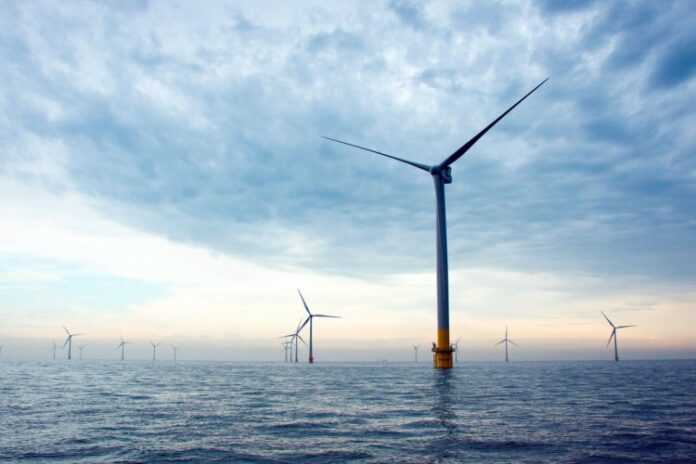
All 72 offshore wind turbines are in place to supply fossil-free power at Vattenfall’s newest and to date largest offshore wind farm, Kriegers Flak. The park has a production capacity of 604 MW, corresponding to the annual consumption of approx. 600,000 Danish households.

This makes Kriegers Flak Denmark’s and Scandinavia’s largest offshore wind farm and increases Danish electricity production from wind turbines by about 16 percent.

Kriegers Flak will be officially inaugurated by HRH the Crown Prince at a reception on September 6th at Geocenter Møns Klint, from where you can see Kriegers Flak, located 15-40 kilometers off the coast.

Anna Borg, CEO of Vattenfall, says:

“We are very proud of the contribution that Kriegers Flak brings to the wind energy production in Denmark and to the green transition. After a successful construction process, Kriegers Flak is now ready to provide green power to Danish homes and industry, and we look forward to His Royal Highness and the Minister coming to mark this great occasion with us.”