-1 C
New York
Home Blog Page 559

Artificial intelligence to help predict Arctic sea ice loss

0

A new AI (artificial intelligence) tool is set to enable scientists to more accurately forecast Arctic sea ice conditions months into the future. The improved predictions could underpin new early-warning systems that protect Arctic wildlife and coastal communities from the impacts of sea ice loss.

Published this week in the journal Nature Communications, an international team of researchers led by British Antarctic Survey (BAS) and The Alan Turing Institute describe how the AI system, IceNet, addresses the challenge of producing accurate Arctic sea ice forecasts for the season ahead—something that has eluded scientists for decades.

Sea ice, a vast layer of frozen sea water that appears at the North and South poles, is notoriously difficult to forecast because of its complex relationship with the atmosphere above and ocean below. The sensitivity of sea ice to increasing temperatures has caused the summer Arctic sea ice area to halve over the past four decades, equivalent to the loss of an area around 25 times the size of Great Britain. These accelerating changes have dramatic consequences for our climate, for Arctic ecosystems, and Indigenous and local communities whose livelihoods are tied to the seasonal sea ice cycle.

IceNet, the AI predictive tool, is almost 95% accurate in predicting whether sea ice will be present two months ahead—better than the leading physics-based model.

Lead author Tom Andersson, Data Scientist at the BAS AI Lab and funded by The Alan Turing Institute, explains:

“The Arctic is a region on the frontline of climate change and has seen substantial warming over the last 40 years. IceNet has the potential to fill an urgent gap in forecasting sea ice for Arctic sustainability efforts and runs thousands of times faster than traditional methods.”

Dr. Scott Hosking, Principal Investigator, Co-leader of the BAS AI Lab and Senior Research Fellow at The Alan Turing Institute, says:

“I’m excited to see how AI is making us rethink how we undertake environmental research. Our new sea ice forecasting framework fuses data from satellite sensors with the output of climate models in ways traditional systems simply couldn’t achieve.”

Unlike conventional forecasting systems that attempt to model the laws of physics directly, the authors designed IceNet based on a concept called deep learning. Through this approach, the model ‘learns’ how sea ice changes from thousands of years of climate simulation data, along with decades of observational data to predict the extent of Arctic sea ice months into the future.

Tom Andersson concludes:

“Now we’ve demonstrated that AI can accurately forecast sea ice, our next goal is to develop a daily version of the model and have it running publicly in real-time, just like weather forecasts. This could operate as an early warning system for risks associated with rapid sea ice loss.”
Royal IHC to perform operations and maintenance on APC’s CSD ALKAMARAH

0

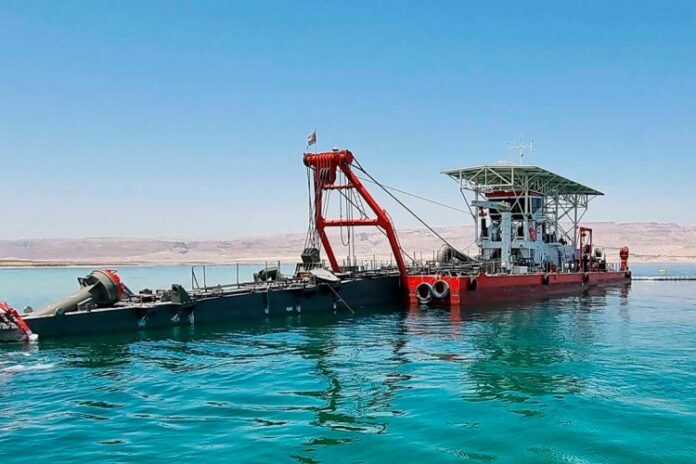
Royal IHC and Arab Potash Company (APC) from Jordan have prolonged their relationship with the signing of an operation and maintenance contract for the latest delivered customised cutter suction dredger ALKARAMAH.

The vessel was delivered by Royal IHC early 2021 and has been put into operation at the Dead Sea in Jordan, where it is being used to excavate the sea bed to construct a new pier for the company’s pumps station. This contract  builds on the positive results of a three-year maintenance contract between APC and Royal IHC on two cutter suction dredgers JARASH (a custom-built CSD) and MUTAH (Beaver® 40), both delivered by Royal IHC.

With this new contract, Royal IHC will provide the operational crew to perform the dredging operation on ALKARAMAH’s first dredging job; the development of a new pump station inlet that will be used to pump water from the Dead Sea to the mining ponds of APC. Dredging in the Dead Sea is specialist work due to the depth. For dredging up to 32 metres it is not possible to use the vessel’s spud poles. Instead, the ALKARAMAH will be operated with a christmas tree configuration which requires the specialist operational knowledge, to be provided by the Royal IHC crew, to make sure the vessel is working at its utmost efficiency. The crew will also work according to a detailed dredging plan developed by Royal IHC’s dredging consultants.

The contract also comprises a maintenance agreement for the operational period in order to achieve and maintain an agreed level of uptime and sustainable performance of the dredger. All maintenance and repair work will be managed and executed by a dedicated team of IHC maintenance engineers from the local built workshop on APC’s premises.

Royal IHC will operate and maintain the ALKARAMAH working at the intake basin of Dead Sea for a period of 9 months or until the dredging plan is completed.

Area Sales Director Amin Ezzeddin says:

“On behalf of everyone working at Royal IHC worldwide, we would like to thank APC for the continued trust in IHC highlighted by the signing of the ALKAMARAH operations and maintenance contract. The unique environmental conditions at the APC sites provides us with endless learning and development opportunities catalysing innovation. And with this we trust that we can further contribute to the competitiveness of APC in the global mining market.”

DEME’s installation vessel ‘Sea Installer’ will get a major crane upgrade

0

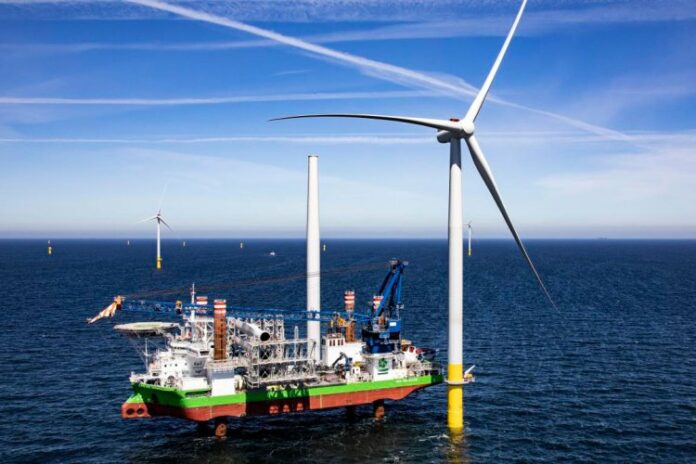
DEME Offshore’s  DP2 jack-up installation vessel ‘Sea Installer’ will get a major crane upgrade when the capacity is increased from 900 tonnes to 1,600 tonnes. Being built by leading crane manufacturer Huisman, the new crane will enable ‘Sea Installer’ to handle the next generation of offshore wind turbines.

The upgraded ‘Sea Installer’ will be deployed for the first time at the 800 MW Vineyard Wind 1 project, one of the first large-scale wind farms in the US.  Vineyard Wind 1 will feature 62 GE Haliade-X offshore turbines. These giants have a 220 m rotor, 107 m blades and will be a staggering 248 m high.

Marro Vreys, Business Unit Director Wind Turbine Generators (WTG) at DEME Offshore:

“We are willing to make the necessary investment in new technology to make sure that our fleet is ready for the future. This allows us to maintain our position as the industry leader in WTG installation and also to assist the offshore wind sector as it looks to take the next step, deploying even more powerful turbines.”

To prepare for the future, DEME embarked on a multi-year fleet investment programme which has enabled the company to have the most versatile and high-tech fleet in the industry today. In order to remain a leader in turbine installation, DEME also secured an option to upgrade the crane on jack-up installation vessel ‘Sea Challenger’.

‘Sea installer’ is currently being deployed at the Hornsea Two offshore wind farm in the UK. Vineyard Wind 1 will be the company’s first offshore wind project in the US.

Mitsubishi Shipbuilding and TotalEnergies initiate feasibility study of LCO2 Carrier

0

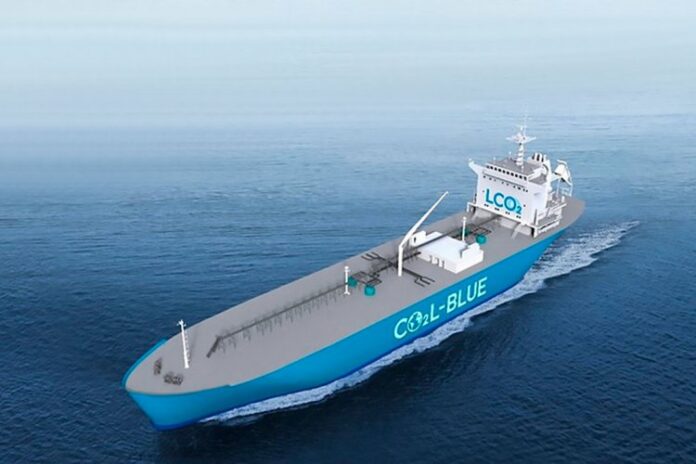
Mitsubishi Shipbuilding, a part of Mitsubishi Heavy Industries (MHI) Group, has initiated a feasibility study with TotalEnergies for development of a liquefied CO2 (LCO2) carrier. By furthering development of technologies to reduce the volume of CO2 emissions in the oil and gas industry, MHI Group aims to strengthen its businesses supporting strategic efforts for energy transition.

MHI Group is pursuing a range of measures for a decarbonized society, and establishing a CO2 ecosystem is a key part of that effort. Further, carbon dioxide capture, utilization, and storage (CCUS) is attracting attention worldwide as an effective means to achieve decarbonization. LCO2 carriers play a pivotal role in transporting CO2 from its emission sources to storage sites or facilities for utilization, and demand for these vessels is expected to increase in the future.

Mitsubishi Shipbuilding is actively pursuing commercialization of LCO2 carriers, and this project is expected to make a significant contribution to the establishment of a CO2 ecosystem in the CO2 transport sector, which will be an essential component of the CCUS value chain. MHI Group is aiming to contribute to the construction of the CCUS value chain that spans the sea and land by bringing together the knowledge of the Group companies, such as the advanced gas handling technologies accumulated by Mitsubishi Shipbuilding in building liquefied petroleum gas (LPG) carriers and liquefied natural gas (LNG) carriers, and the CO2 capture technologies of Mitsubishi Heavy Industries Engineering which has the world’s leading market share.

Bruno Seilhan, Vice President CCUS at TotalEnergies, said:

“We are pleased to partner with Mitsubishi, whose expertise in shipbuilding is well proven, in order to study large tonnage liquid CO2 carrier opportunities. Such vessels will be key to accommodate the expected surge in transported CO2 volumes for geological storage triggered by the acceleration in net zero carbon targets worldwide and to meet world industrial emitters’ needs. It is fully aligned with our Climate Ambition to get to net zero emissions by 2050.”

Toru Kitamura, President of Mitsubishi Shipbuilding said:

“We are pleased that TotalEnergies, which plays an important role in the world’s leading CCUS value chain market, has expressed high regard for our technology and experience. We believe that LCO2 carriers are an effective solution for achieving a decarbonized world. We will continue to actively pursue technology development in cooperation with partners seeking to achieve decarbonization using LCO2 carriers, with the aim of market formation for the CCUS value chain.”

Going forward, through this joint project with TotalEnergies, MHI Group will continue to develop and offer a wide range of technologies related to the LCO2 carriers essential to building a CCUS value chain, and contribute to the realization of a decarbonized society.

GE Renewable Energy and PKN ORLEN sign MOU on offshore wind in Poland

0

GE Renewable Energy and PKN ORLEN have signed a Memorandum of Understanding to explore ways to work together to support the development of offshore wind projects in Poland, a country expected to award up to 10.9 GW of offshore wind projects by 2030 and up to 28 GW of offshore wind by 2050. The agreement can help accelerate the energy transition in Poland by helping the country take full advantage of its offshore wind resources.

GE Renewable Energy is already an active player in the Polish wind market with over 300 onshore wind turbines delivering 900 MW, with almost half of that coming online since 2018. 

With this new MoU, GE continues to showcase its ambition to support Poland in meeting its renewable energy goals and aims to further collaborate with local suppliers and help them develop their capacity to support the growing offshore wind industry in Poland and more broadly. 

Jérôme Pécresse, Senior Vice President, GE & CEO, GE Renewable Energy, said:

“Poland is well positioned to use offshore wind resources to help accelerate the energy transition. The agreement that we are signing today charts a path to take pragmatic steps that can take full advantage of Poland substantial offshore wind resources to create win-win outcomes in terms of the environment and economic development.”

Daniel Obajtek, President of the Management Board of PKN ORLEN said:

“We are the leader of the energy transformation in Central Europe. We are implementing a strategy that assumes an increase in capacity from renewable energy sources to over 2.5 GW at the end of this decade. We want to achieve this level mainly by investing in offshore wind energy and, at the same time, expanding the RES portfolio with additional capacity in onshore wind farms. The agreement we signed with GE Renewable Energy supports the implementation of these ambitious goals. The experience gained thanks to this cooperation and the joint involvement in the development of the Polish offshore wind energy sector will make a significant part of the developing offshore market a share of Polish capital in the upcoming concession procedure.”

The government of Poland has announced plans to award up to 10.9 GW of offshore wind by 2030 and offers new sea areas enabling development of future offshore wind projects. Country’s offshore wind capacity is estimated to be 28 GWs by 2050.  The country is also well positioned to serve the broader efforts to develop offshore wind in the Baltic region.

ADNOC L&S acquires six line boats to provide marine services in Abu Dhabi

0

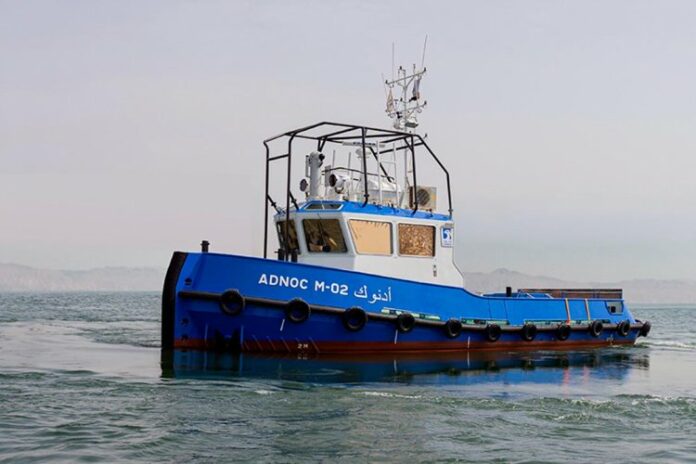
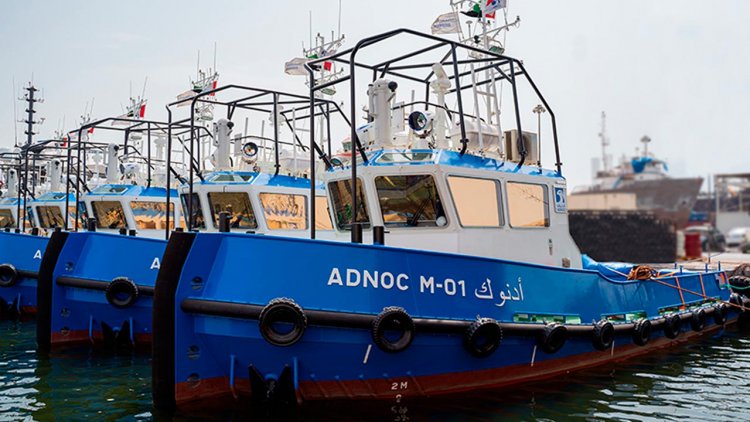
ADNOC Logistics & Services, the shipping and maritime logistics arm of the Abu Dhabi National Oil Company (ADNOC), has announced the acquisition of six line boats to provide critical marine services across petroleum ports in Abu Dhabi. All six vessels are the Damen Stan Tug 1606 type, and were contracted directly from Sharjah-based Albwardy Damen, as part of ADNOC Group’s commitment to boost In-Country Value across its operations. 

The steel hulled, twin screw vessels are powered by two Caterpillar engines providing nearly 16 tonnes of bollard pull. With their proven design, these line boats enable ADNOC L&S to continue providing reliable and efficient operations to the Petroleum Ports Authority (PPA) in Abu Dhabi. 

Captain Abdulkareem Al Masabi, CEO of ADNOC L&S, said:

“The acquisition of these state-of-the-art line boats from Albwardy Damen is aligned with our strategy of growing the ADNOC L&S fleet with highly specialized marine services, including comprehensive port operations for customers in the UAE and worldwide. We are committed to boost our operations by contributing to the development of high-end shipbuilding and repair capabilities within the UAE. The country is emerging as a global hub for maritime and shipping operations, and we continue to enhance the business environment for shipping and affiliated sectors through such targeted capital expenditure.” 

Line boats are multi-purpose boats used by ADNOC L&S’ Logistics and Marine Services for assisting in berthing and unberthing tankers, and handling hoses, at the oil terminals. 

Pascal Slingerland, Regional Sales Director – Middle East of Albwardy Damen, added:

“We are grateful for the long-lasting relationship with ADNOC Group. We have invested heavily in our UAE base with new shipbuilding and ship repair facilities so we can support the full range of repairs and requirements during the lifetime of a vessel. This includes the construction of new boats in the UAE and drydocking in addition to the Damen Services Team in the UAE, which offers niche services for the maritime industry.”

The contract was awarded in July 2020 to Albwardy Damen, a subsidiary of Damen Shipyards Group, a Netherlands-headquartered global shipbuilding, defense and engineering services company. Four of the vessels were delivered in May 2021 and another two in June 2021. Damen Shipyards Group has previously delivered 33 vessels to ADNOC Group across its operating companies.  

Transocean secures contract for newbuild, ultra-deepwater drillship

0

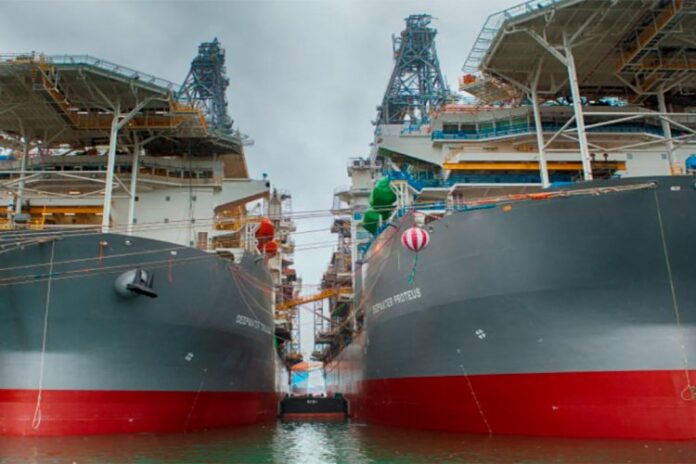
Transocean Ltd. announced today that BOE Exploration & Production LLC awarded Transocean a $252 million firm contract for its newbuild ultra-deepwater drillship, the Deepwater Atlas, including a mobilization fee of $30 million. 

This award results from the final investment decision of BOE and the Shenandoah working interest owners to sanction the previously announced Shenandoah project in the U.S. Gulf of Mexico.

The Shenandoah program comprises two phases. Once delivered from the shipyard, the Deepwater Atlas is expected to commence operations in the third quarter of 2022, initially using dual blowout preventers (“BOP”) rated to 15,000 psi. The initial drilling program is expected to last approximately 255 days and result in approximately $80 million of contract drilling revenue.

Upon completion of the initial drilling program, a 20,000 psi BOP will be installed on the rig, making it Transocean’s second asset with a 20,000 psi-rated well control system. The BOP installation and commissioning is expected to last 45 to 60 days, contributing approximately $17 million of revenue. Following the 20,000 psi BOP installation, the Deepwater Atlas will commence the second phase of the project – the well completion program. This phase is expected to last approximately 275 days and contribute approximately $125 million of contract drilling revenue.

President and Chief Executive Officer, Jeremy Thigpen, said:

“This is a significant milestone for Transocean, BOE and the Shenandoah partners, as we jointly venture into this new frontier of ultra-deepwater drilling. We are extremely pleased to have secured the maiden contract for the Deepwater Atlas; the first of our two 8th generation ultra-deepwater drillships that will enter the market in 2022, both of which will be outfitted for 20,000 psi ultra-deepwater well operations. We are very encouraged by the growing list, across multiple customers, of 20,000 psi opportunities in the U.S. Gulf of Mexico. And, with the only two assets in the world specifically designed to maximize efficiencies for 20,000 psi well completions, we are the undisputed market leader in this space, and thus excited about the future prospects for these state-of-the art assets.”

Two Incat Crowther’s vessels will service the Hornsea Project 2

0

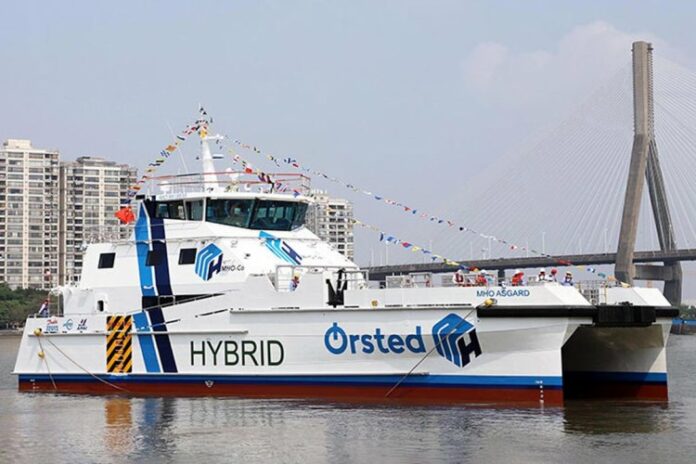
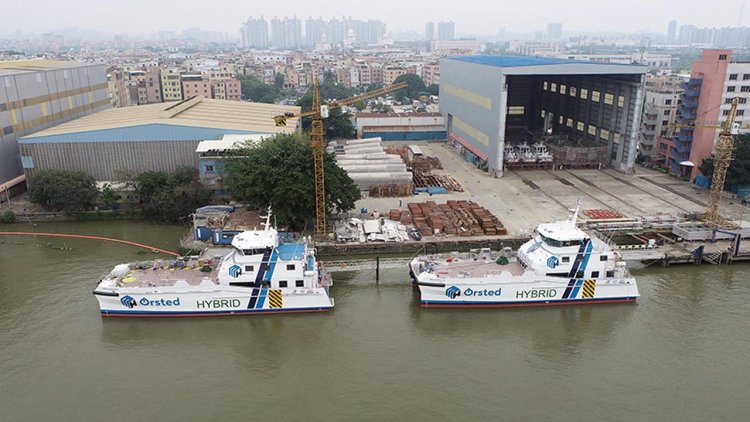
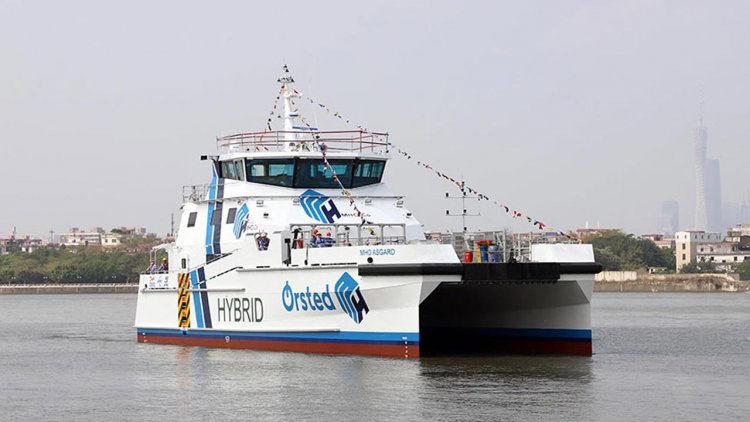
Incat Crowther announces the delivery of a pair of Incat Crowther 35 CTVs. Recently delivered by AFAI Southern Shipyard, MHO Asgard and MHO Apollo are the first hybrid CTVs in operation with extensive zero-emission capability. 

MHO Asgard and MHO Apollo are powered by an advanced propulsion system that was developed in collaboration with Danfoss and Volvo Penta. The system comprises a pair of diesel drivetrains and a pair of diesel-electric drivetrains, each driving Volvo Penta IPS drives. The main diesel engines are Volvo Penta D13s, producing 515kW each. The generators used for the diesel-electric propulsion train are Volvo Penta D8-MH units. A further 3 of these units are located in the hulls amidship, alongside a Volvo Penta D5 used as a harbour generator. Propulsion is via highly efficient Volvo IPS units. Additionally, a Corvus battery system provides stored power for zero-emission operation.

The system offers exceptional flexibility, allowing the vessel to operate in zero-emission electric mode for up to 8 hours, or in combination with diesel propulsion for a maximum speed of 25 knots. The flexibility is enhanced by the use of multiple modular generators, meaning power generation can be optimized for the operational profile.

Incat Crowther worked with MHO-Co to develop a design that improved on its predecessors, offering even more space and functionality. The incredibly flexible layout features a vast 110m2 foredeck with multiple tie-downs, deck crane, moon pool and the capability to take B2W, Bring-to-Work systems. The Z-Bridge BTW system has been trialled on MHO Esbjerg.

MHO Asgard and MHO Apollo accommodate 24 technicians in mid-deck cabins. A comfortable saloon for technicians is located on the main deck with 24 suspended seats, lockers, a pantry and a separate mess. Additional technician rest spaces are also located on this deck, as is a large wet room with lockers and showers.

MHO-Co CEO and founder, Mik Henriksen, says:

“Designing and building hybrid CTVs is a huge step in the environmental direction, and I am proud that we at MHO-Co have found partners who share our vision for sustainable development in the offshore industry.”

Ed Dudson, Managing Director of Incat Crowther Europe says:

“MHO Asgard and MHO Apollo demonstrate Incat Crowther’s growing reputation for collaboration with operators and developers of new propulsion technologies, delivering fully-integrated solutions based on proven platforms.”

DNV updates standard for floating wind turbine structures

0

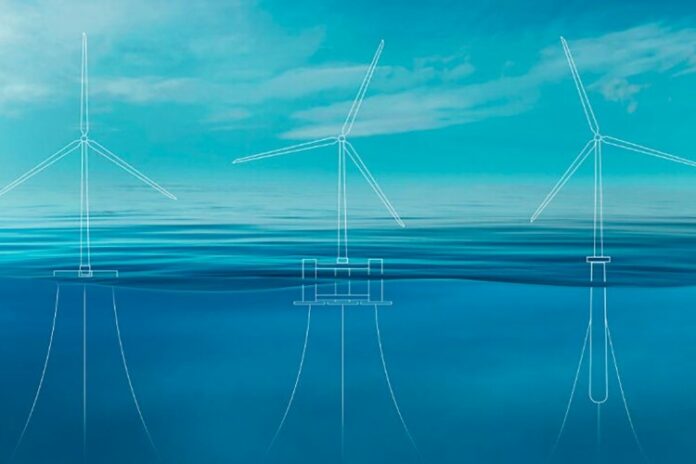
DNV has updated the DNV-ST-0119 standard for floating wind turbine structures. The updated standard includes numerous technical improvements that allow the industry to further optimize floating wind turbine structures while maintaining a sufficient level of safety.

The main change is a completely revised section on floating stability. In addition, various clarifications and updates have been implemented throughout the standard. The improvements are based on industry feedback as well as DNV’s own gap analyses and experience from projects.

Kim Sandgaard-Mørk, Executive Vice President for Renewables Certification at DNV, explains:

“With the need for decarbonization ever more urgent, floating wind has the potential to make a significant contribution. It could represent as much as 2% of global power supply by 2050. Sharing of lessons learned in acknowledged industry standards, such as those from DNV, are crucial for establishing an efficient fabrication supply chain, increased affordability and scaling up of floating wind deployments.”

Kimon Argyriadis, Director for Floating Wind Certification at DNV, says:

“Reducing costs and at the same time increasing confidence remain the key issues for floating wind. Experience shows that certification against an acknowledged and up-to-date industry standard, is the most trusted way to deliver stakeholder confidence. It indicates that risks have been understood and minimized, ensuring quality and reliability of emerging floating wind projects.”

Inspired by the first full-scale turbine, Hywind Demo, DNV issued its first guideline in 2009. This was later developed into a full-fledged standard in collaboration with ten partners and issued in 2013. Building on experience from prototypes, research projects and the world’s first floating wind farm, Hywind Scotland, a new update was issued in 2018. The latest version of the standard, DNV-ST-0119, concentrates on clarifying certain issues and making the floating stability requirements more suited for floating wind.

Both the service specification for certification of floating wind turbines, DNVGL-SE-0422 from 2018, which covers the development stages of floating wind concept towards farm deployment, and the 2020 published class rules, DNVGL-RU-OU-0512, refer to the standard for technical requirements.

KDI announces four contracts with maritime training centers in South Korea

0

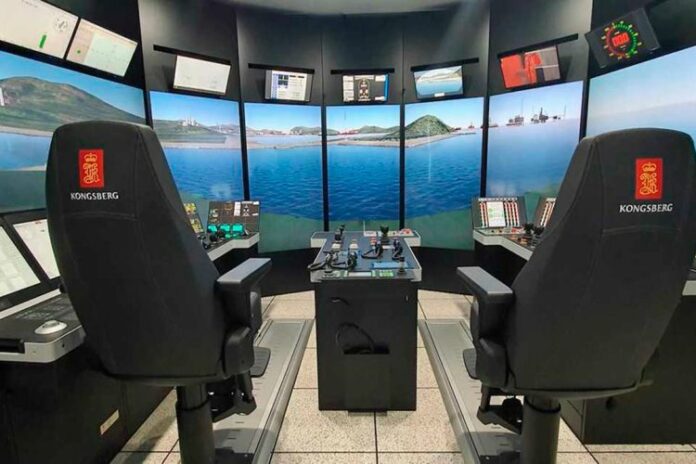
Kongsberg Digital (KDI) has announced four successive contracts with highly respected maritime training centers, schools and universities in South Korea.

In the first quarter of 2021, the successful delivery of K-Sim Offshore and DP simulators to the Korea Institute of Maritime and Fishery Technology (KIMFT) was closely followed by the handover of K-Sim Mooring simulators to the Busan Techno Park foundation, an organization dedicated to the development of mid- and long-term strategies and policies for local industries.

KDI has recently been awarded contracts by two of Korea’s most distinguished educational establishments. In June and July respectively, Busan National Maritime High School and Incheon National Maritime High School both commissioned KDI to deliver K-Sim Navigation ship’s bridge simulators in Q4 2021.

The four new contracts consolidate a mutually rewarding relationship with South Korean training institutes. This relationship received an earlier boost in 2019, when a full suite of KDI simulator systems was delivered to the Korea Maritime and Ocean University (KMOU) and Mokpo National Maritime University (MMU) for installation on two identical training ships: T/S SEGERO and T/S HANNARA.

Each of the four customers are united in agreement that KDI Maritime Simulation was awarded the contracts because of the quality, scope, functionality and flexibility of its simulators, in addition to the high level of trust associated with the KONGSBERG brand. KIMFT, which is a new investor in KDI technology, will be using the K-Sim simulators to train researchers and industry personnel in a complete series of offshore and dynamic positioning operations. Incheon National Maritime High School, another new KDI customer, will be deploying its K-Sim Navigation ship’s bridge simulators to provide students with highly realistic training using vessels, objects and equipment that behave and interact as they would in real life.

Meanwhile, Busan Techno Park and Busan National Maritime High School will be expanding their existing range of K-Sim simulators to enhance interoperability. By utilizing add-on features on the advanced and dynamic new devices such as offshore mooring, the oil-spill function and SMART objects, they will have high-fidelity, cost-effective, future-proof simulators on their respective premises which are equipped to seamlessly accommodate new technologies as they emerge.

Andreas Jagtøyen, Executive Vice President Digital Ocean, Kongsberg Digital, says:

“These contracts are all very important for KDI, securing our market leading position for maritime training in Asia. South Korea is a key global player in the journey towards Maritime 4.0, with its highly successful ship-building and ship-owning companies. By securing these contracts, KDI has gained valuable partners to support the industry in this venture. This is a country also having a large offshore and fishing fleet, and we are confident that KDI simulator training will be of vital importance in supplying this industry with the best-qualified and most efficient crew and operators for many years to come.”